Mike Trasatti - CEO | Board Member | Mentor
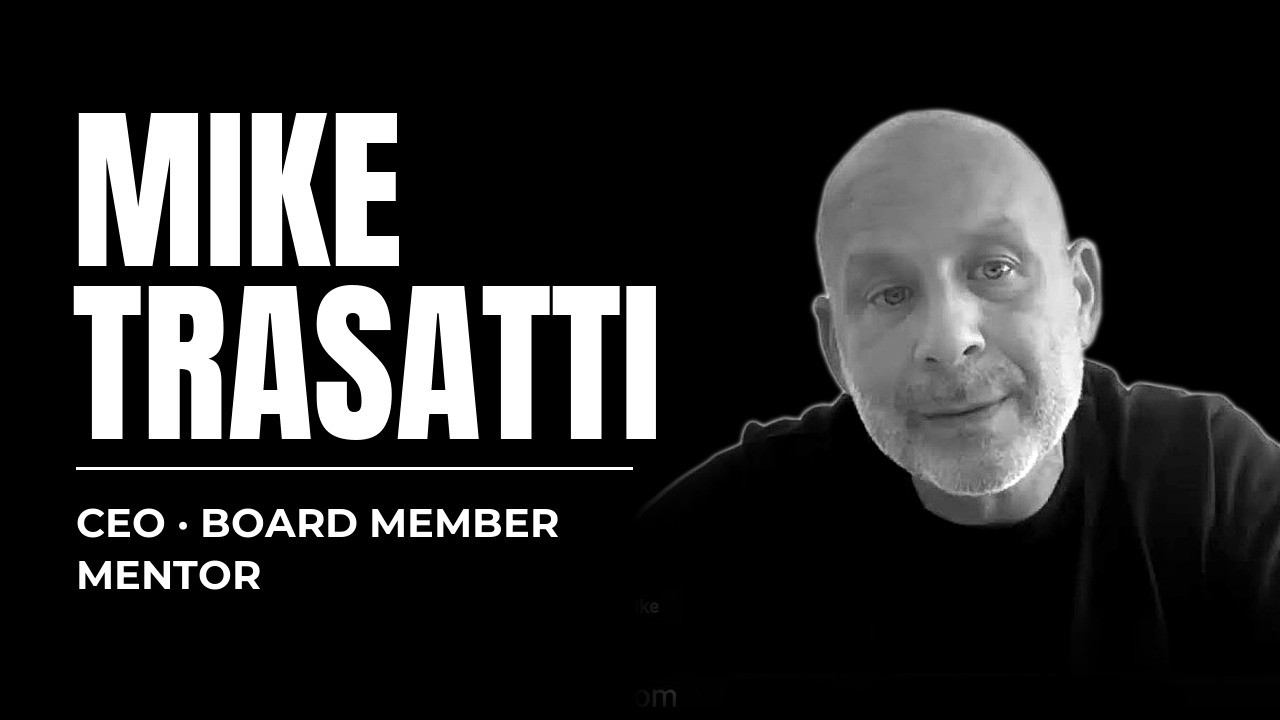
In this interview, Charles Cormier talks with Mike Trasatti, the former CEO of DealerBuilt and current founder/CEO of Buying Signals. Trasatti recounts his 14‑15‑year tenure at DealerBuilt, describing how he and co‑founder John Hosmer built an enterprise‑grade dealer management system (DMS) during the 2008 financial crisis, overcame thin dealer margins, and grew the business through relationship‑based sales rather than cold calling. He explains the strategic timing of DealerBuilt’s recapitalization and exit, noting working‑capital pressures and the need to re‑equitize the team, as well as the two‑year non‑compete that followed. After the exit, Trasatti and his wife purchased a ranch in North Keller, a brief “pseudo‑retirement” that sparked a new entrepreneurial idea. Partnering with marketing expert Kendall, he launched Buying Signals to solve the chronic data‑hygiene problems in the automotive ecosystem, acquiring a brokerage data‑broker to complete the data pipeline. The company offers a hybrid SaaS‑agency model: an upfront setup fee, ongoing monthly data‑cleaning and hygiene services, and optional marketing/CRM integrations, all delivered with hands‑on engagement rather than a pure self‑service product. Trasatti discusses how dealerships, largely family‑owned, have recovered post‑COVID, adopting more intelligence and data‑driven operations. He also notes that Buying Signals serves other fragmented verticals such as restaurants, firearms, and retail, leveraging the same data‑lifecycle expertise. Throughout, he emphasizes trust‑building, relationship focus, and deep domain knowledge as differentiators.
Chapters
Welcome to another CEO Is In Bud. We have Mike Tresati with us today. Mike is CEO at Buying Signals since a year now. He's done a bunch of interesting things. We're talking about Capone Springs and Farms the other day. And yeah, Mike starting his own industry business after 17 years at DealerBuilt, had a significant exit in that one. That's an interesting company we're going to talk about. Mike's background is just fascinating. Uh, so Mike, glad to have you on the pod. Tell us a bit more about yourself and what you've been up to.
Oh, great to be here, Charles. Um, besides running a mile a minute like most people are, so, uh, left my previous, uh, gig, uh, running DealerBuilt in '23, took some time off, uh, to, to, to run a horse ranch business. So we had— we were fortunate enough to get some land in North Keller in the DFW area. But, you know, I had an— I'm always interested in solving problems that people don't want to solve because they're not terribly exciting. So the DMS space would actually be one of them, right? It's very— it's lethargic. It's system of records that's sticky. People don't want to change. They don't want to leave their prior, their prior provider because of all the mess. Well, today we're taking a journey on, on data in the new business and how really poor the data is in the automotive ecosystem. And for whatever reason, there's a lot of folks trying to solve the problem, but we're just looking at it at the root, at the root cause. Like, get to the source of where your data resides and how it marshals between systems., and we work our way towards then what do you use with it and how do you flower that data to make, to make better decisions. So it's been keeping me very busy. Uh, we're growing our business. Um, so it's all good.
And let's talk about, uh, DealerBuilt, which I think was your first home run. Um, stayed 15 years, 17 years actually, at that company. So tell us about that adventure, that life adventure.
Yes, I think it's 14 years, but the years blend, right? So DealerBuilt was a company that we, John Hosmer and I, we launched from what he started in 2007. But if you go back and he was a dealer, he was a car dealer in Mason City, Iowa. If you're ever familiar with how cold things can get in the US, But I'm going to make a long story short, right? It was prior to, prior to DealerBuilt, I consulted startups in the space and consulted the largest player in this space on what could potentially be needed in the automotive industry. Going back to my '90s when I was at PricewaterhouseCoopers and I was a CPA, but I was in technology, I learned a lot about Oracle and SAP. So when I met John, I says, John, I, you know, we, there's an idea out there that we could build an enterprise-grade solution in automotive and, and break into a market that nobody wanted to, nobody was, it was tough to break into. I mean, it was billion-dollar competitors. We didn't have much money. We wrote a business plan in 2008, right when the market, market crashed. So we just kind of rolled our sleeves up, Charles, and and created value in the industry for dealers who wanted this alternative solution. And we went from the little engine that could. We didn't listen to the advice of many good people that, you know, don't, don't do this. It's going to kill you. It's going to, it's going to, it's going to dry up all your time and money and resources. We just kind of jumped and it worked.
Yeah, I mean, uh, it worked, right? That's a, that's a very, uh, summary-ish type of phrase for an adventure that for many ups and downs, right? Like 15 years, uh, building what you built is not easy, right? Like, what were the challenges, uh, up there? Because yeah, it's like you need to have a nice sales system to reach out to these dealerships. Uh, probably in your days it was like cold calling them, right? Or, uh, emailing them out. Um, what were, what were the major victories that what were the major failures along the way? How did you surmount all of these?
I'll give you two stories and I think it will sum it up for the vertical that we were in because the automotive dealer, people don't realize how thin their margins are. Triple net, you're 2.5%. I mean, they're not, you know, so it's a very tight business, but our breakout dealer really actually said no to us at first, and, uh, they kept us on one of their stores. It was the original Pimp My Ride studio in California, right? They kept us on that store, and we revised the software, and we just called up the office manager and said, hey, take a look. I know that you've moved on, And she looked at it and according to her story, she walked into the office and said, I just saw these guys build a system, revise a system that could operate our entire enterprise in 4 months. So that got us in the door and they were struggling with their current provider that they did chose. And Charles, I'm going to make a long— I'm trying to make a long story short. The CFO called me up and my first response was, I hope it works out for you because it's a lot of work and effort. And if it doesn't, we're here. So we closed that deal. And within the same month, another dealer, and these dealers I knew from my previous consulting. So it wasn't cold calling per se. These were relationships. So check that box. Relationships matter. And integrity in the business matters because you got to keep those relationships up. And they visited us not 3 weeks after our breakout dealer. Our breakout dealer was 10 times bigger than any other dealer we had, and everybody thought I was crazy. And I said, crazy? I said, I don't think so. I think if they come in here and see this system operating, this is the worst it will ever be. Memorial Day weekend, 3 weeks into an install. And then I'll say the final thing, Charles, that really had to take us over the edge, especially for people that are listening in tough break in markets, at some point there is a trust factor that has to exist. They have to trust what you're saying. And the deal, the second deal was about ready. We're about ready to lose it. And I went up to Cincinnati, sat with the owners, and it quickly became, well, you don't know if you trust what I'm saying. You go, yeah, yeah. I said, well, I can't, I can't help you there. I said, all you can go by is my track record and how we're building the business. This. That landed us our 2. And then if you don't lose focus on making them extremely happy, the rest came. They came to us.
And didn't you offer like free trial for them to earn your trust?
No, no free trial. Interesting.
And what was it up front? Was it like a couple of thousands back then? What was the model, or was it SaaS model?
It was a combination. So the automotive sector was SaaS probably before the word became popular. So there was a monthly subscription with all of the providers. Interesting. Back then it would cost a dealer— I think it's changed now, Charles, but back then it was— it could be $60,000, $50,000 a rooftop training conversion site onsite training, right? I mean, these are not, these are not models where you can hit a button, try it. You're talking about a system that operates every aspect of an automobile dealership: sales, service, inventory, accounting, payroll, all the integrations with the factories, all the integrations with third parties. You are— this is not a turnkey, hit a button and it's going to go. Interesting.
And the exit, why? Been like 15 years at that company, was your baby. Why was it a good time to move on?
Well, it was time to recap the business. So we hit a point, so we, as, and John and I talked through this, right? Like, when, when do you go to that recap, that next level, right? And you try and hold off as long as possible because if you're growing your business at 20-25%, you know, every dollar is worth 5 times that when it comes to an exit or a recap. We got to the point where we were stretching our working capital thin enough that, and the growth was there, that it was the right time to go after and seek some capital. Some of the partners wanted some chips off the table as well. So that's always a part of it, right? So they wanted to, Hey, I've risked myself from here. I looked at it and like, well, you know, gives me a time to re-equitize myself, right? Which is natural and normal for someone who's coming in who wants to continue operating the business from someone who may have, you know, started something. So it was a combination of tightening working capital growth and re-equitizing the team.
How life-changing was it after? I mean, you bought a ranch, right? And did you feel that it's like, I made it, right? And, or did you get bored into your micro or pseudo-retirement?
Yeah, I think this is— I don't want to sound cliché-ish, but it is in my experience the sensation of of a success lasted about 15 minutes.
It's not cliché, it's the reality. That's like, if you're a go-getter, that's, that's how you feel.
Yeah. Um, I bought—
we bought—
it was an accident buying the land. It was an accident, um, a good accident, uh, because we were just looking for a couple acres and this thing just landed in our laps. My wife didn't love the house, but she liked the land. I got a whole story there, Charles. I don't think we have time to go into it. That whole— we are down to 2 homes and one she loved and the one she just really despised. But the land is all around it and the land was at a great price point. But when it comes to changing your mind, or maybe you're now no longer trying to figure out how you're going to pay a bill because you have a little bit of money in your pocket, that was very short-lived. Very, very short-lived.
So what happened after you were at the ranch, were with the horses, the animals, the views, the nature, gave some break to your nervous system, I guess, and then came a new idea, um, buying signals. So what, uh, what prompted you to start that one?
So Kendall and I, um, and he helped me near the end of the dealer-built days kind of put some spark into our sales and our sales cycle. So we talked and we kept in touch and we thought about, well, what, what can— what journey do we not complete or that we want to complete that may have not been, been come to fruition? So he's an— he's a marketing expert. He's, he's a marketing guru. And I'm, I'm always interested in that component of the business because I was more of the operator and the technologist and the vision behind with John on how to get the DMS inside the doors. But I love the data. I love the idea of how do we marshal data in a better way and be able to give dealers a better view of the customer's journey, the vehicle journey, but where it matters. So We talked enough to say, let's, let's go into business. Let's go into business. He had the idea of the marketing side. I had the data side. And then we merged with a brokerage firm. We basically acquired a brokerage data broker company because that piece was kind of missing, was, okay, so we know how the data works inside the ecosystem. Kendall knows the marketing component and how to marshal this data to have real, real value and propensity to purchase. Identity, and really fine-tuning. But we didn't really understand where data is sourced from to get it cleansed, get it hygiene and enriched. So, and that's how this whole thing formed. And from there, it took a while for us to get the process down, the cadence down, but, but that's, that's basically how it launched.
And did you have a non-compete, like, after exiting your last one? Like, weren't you restrained by that?
Oh yeah, there's a 2-year non-compete. Yeah, okay, that ended in '20. Yeah, yeah, we're not really in a competitive component of the business anyway, um, it's a complementary component. So, um, but like any other exit, um, usually they tie, they tie the, the C-levels down for a couple years.
And dealership is your thing, right? Like, uh, will you always stay in that niche because that's what you know and that's how you just make money? No, no, uh, it is when you've been in the horse business, that's pretty much of a pivot.
Yeah, well, the horse, the horse is kind of more like a hobby and it was an accident. Our business does other verticals. We have a, we have restaurants, um, that were, and we're, and, and, you know, my daughter works with us and We're, we're doing a, a great job with the restaurant, you know, really engaging at a social, in the social media component, right? The creative that we're doing with them. We didn't touch on how AI plays a part in our world today. We're in Class 3 firearms. We have some other retail businesses. So it is not just automotive. It just seems to be automotive is an area that we could probably leverage our knowledge the best in the full lifecycle of data, the data ecosystem. So when you talk about restaurants, it's very fragmented. I mean, there are, there's quite a few point-of-sale systems, there's different ways and models you go about, you know, how people search for restaurants and what turns them on and the competition of that. So There's different elements to those verticals that we play in, but the automotive is where we do the full lifecycle, the full cycle from prospecting and propensity to purchase all the way through following up on a sale or write-up.
And let's talk about like COVID for a moment in automotive, because I feel that's also like when you exited, like what happened to dealerships at that time and Tell me about like the revival of dealerships nowadays. I feel they're, they're recuperating everything that they've lost, right? Like, uh, there's been a time in which there wasn't enough car for enough demand, right?
Right. So, you know, dealers— there's about 18,000 dealership rooftops in the US alone, new car, and they're still— the majority still own by single and folks that are, you know, family businesses. People think that there's a large segment that are owned by these big conglomerates. So I tout that there could be more entrepreneurs in the automotive retail space than any other vertical just because of the sheer size and nature and risks involved. In operating a dealership. If you think through the building, the personnel, the regulations, the whole gamut of what it takes to run a dealership. Today, they're really— they continue to get smarter. They continue to bring in more intelligence into their operations, both human intelligence and systems. They've recovered really well. But it will go like this. The car business, you know, I remember our family dealership was in 1976, I think it was. Our family dealership was right across the street from a Datsun store. '75. And, you know, when gas, the gas guzzlers, and there were, you know, those were some tough times for some of the American-made car dealers. So it has its ebbs and flows, Charles, but right now I think the dealer community is pretty well positioned to, one, provide great service to customers, and two, you know, continue to be a good steward to the communities.
Tell me a bit more about buying signals. There's a lot of people in that niche. The last guest on my pod was also in that niche. I think, yeah, I love your domain and I think it's like clearer, your page and all of that. But yeah, I think is Adam Robinson, right? Our B2B. Since his days, there's been tons of guys starting signals-based business and I'm a sales guy, right? And I do cold email. I leverage lots of these platforms. I can't say I had an ROI on most of these, even when people visit my websites, like, okay, yeah, sure. You visited my website, then what, right? Like, um, um, I guess I could have done it better. Do you guess I'd only scratched the surface? Why start a business in that niche? Like, what need have you identified, and how are you different than, uh, competitors?
I would, I would put it in a couple ways, and I'm going to go back to some of the conversations I've had when I was in front of dealers making choices about switching their DMS, and it was more to do with, I hope you're not running away from something to come to me. I hope that I have something that you see that's going to create value for you right now. I'll take, I'll take the other business because it does, it does exist. So for us, we're not, we're not looking to, like, we don't sit in a room going, how are we going to beat that competitor and that competitor? We're We're more in the room going, people are coming to us with problems and we're seeing problems and can we solve those problems? So the data ecosystem in the automotive space is complicated. And I don't think there's many people that really understand it in a way that we do. And we have a desire, even if it helps one of our competitors, which we have agencies that work with us. So we're like, you know, look, if we can get the data clean for you, That'll just make whatever you do downstream or upstream that much more effective for your clients. So we're more in the problem-solving business. And if we can solve problems, then we're going to see additional— we're going to— the fog clears and then there's that next problem. And that's kind of how we're growing our business is by solving the customer's problems. When it comes to the differentiator, the most is going to be You know, we, we understand the data really, really well. We keep in-house how to, how to source that data, and we know how to put it back into the system of records and empower the dealers at the grassroots level to make better decisions.
I was muted. Is it SaaS model? Is it agency model? Like, if I want to work with you, what's the the model here?
It's a combination of things. So it's part SaaS, but it's not a SaaS business in the sense that you're going to turn something on and it's going to go, right? You know, we, we, um, when it comes to— so then if you take, if you take a look at the DMS space itself, right, and the, and the, and the data, and then the CRM, some of these systems are rather old and some of them are rather young. All of them have issues. With their data somewhere. So from that perspective, we advise a monthly cleanse, a monthly hygiene, and we give data back. This is how the data deteriorates or improves every month. But we also sit down with the dealer and go through it with them. So it's not like, you know, you hire us and we leave you alone. We kind of want to be engaged to understand the data with the dealers.
So let's say an upfront fee to set up this system and then monthly. Is that the model? Like a couple of thousands and then a couple of hundreds? How do you get these clients? Do you use your own champagne to get them? It's like, I don't know, cold outreach method and then It's like, hey, I saw you on my website, I saw you this and that. You use your own product to generate your own pipeline?
So we're, we're kind of growing the business right now. We have enough demand that we haven't, we haven't really had to market much. Now there's hygiene business and there's marketing business. So if we're concentrating more on the hygiene side, the initial, the initial, the initial time you go through, you're going to, you're going to, you're going to evaluate and process you know, a whole volume of data sets. And then on a monthly basis, it scales down. So you'll get an upfront charge. Then when dealers start asking, what do I do with it, right? Or I also want to market. I also want to, you know, I want to know who's coming to my website. I want to know these other elements. Those are all, you know, monthly subscriptions on the marketing side. Hey, I want to do a Google ad. I want to spend this, I want to look at this creative. So it's a combination of things, but there is, there is some setup and then there's, and then there's monthly maintenance. You're on mute.
Sorry about that. I said I love the website domain as well. Yeah, buying signals is, it's pretty on target. It's pretty explanatory, right? Where can people find out more about you, Mike?
So it's buying signals.com is, is where you go. Um, it, you know, and, and, you know, we may appear to be new in a startup, but these are, these are ideas that, and, and, and, and, and components that, that's been nurturing, some in my head and some in Kendall's, for, for, for, you know, I would say probably a decade or more. So, but buying signals.com is where you'd be able to find more about what we do and what we offer. LinkedIn— we're on LinkedIn as well. We have a site on LinkedIn.
There you go. So that was Mike and Charles Cormier for another
More from Charles


Founder Wisdom: the audiobook, version 2 (5 hours of stories from founders and CEOs)

8 CEO Questions I Love Asking: the audiobook (64 founders answer, in their own words)





