Mikhail (Misha) Krymov - Entrepreneur | AI & Spatial Products | Creative Real Estate
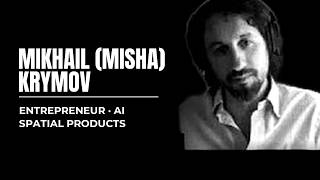
In this Founder Wisdom episode, host Charles Cormier interviews Mikhail (Misha) Krymov, a Russian‑born architect turned AI entrepreneur. Misha recounts his early life in Moscow, his MIT fellowship that pivoted him from architecture to entrepreneurship, and the founding of his architectural studio Arch Group. He then describes his first consumer‑product venture, Sleepbox, a Western‑adapted capsule‑hotel concept that expanded to seven countries before COVID‑19 forced a shutdown, prompting a period of grief and reflection. After exiting Sleepbox, Misha launched Morpheus, an enterprise‑focused metaverse platform for training and team‑building, and shares his candid view that VR is not dead but still lacks a killer use case. He explains his current work leading Arma AI, an AI R&D studio, and ARMRA, a consultancy bridging AI and real‑estate, while also developing an ed‑tech science curriculum platform, a “wisdom on demand” faith app, and a European AI research consortium. The conversation also touches on his architectural competition projects, notably a conceptual Auschwitz memorial that explores the psychology of ordinary people becoming perpetrators, and his broader reflections on human‑machine interaction, the shift from mechanical to conversational interfaces, and the impact of political environments on innovation. Misha concludes by directing listeners to his website and LinkedIn for further connection.
Chapters
Welcome to another Founder Wisdom podcast. We have Mikhail Krymov, aka Misha, with us today. He's an entrepreneur. He's in AI and spatial products, creative real estate, uh, MIT fellow, or something that has to do with, uh, MIT fellowship. Um, currently building a company called, let's see, Abra Studio. You have Morpheus as well that you exited, uh, couple of months ago, Sleepbox was another cool one. I love the concept of Sleepbox. We're going to talk about this one. So, Mikhail, I'm glad to have you on the pod. Tell us a bit more about yourself and what you're up to.
Yeah, Charles, great to be here. Thank you for having me. I go by Misha. So Misha is good. Mikhail is like my passport name. And yeah, I mean, right now, All Everything Is AI. I'm working on building a couple of new projects, products for customers and internal basically startups. I'm leading AI R&D studio, Arma AI, based in Miami but with a team in Europe. And I think that the whole thesis that I'm exploring in this work is that in our collaboration with machines, we're shifting from mechanical interactions, like when you press a button and, you know, it does what you ask it to, towards more, you know, obviously conversational, but really like a person-to-person interaction. It's the difference is like between driving a car or riding a horse. And with a horse, you know, it's always a negotiation. So, it's not doing what you were just, you know, saying to do. So, this change in the way we're working with machines in our quest to be more productive, I think opens incredible space for exploration and innovation and new products and new dilemmas. Et cetera.
There you go. Um, yeah, horse and car analogy. As a guy that will own a couple of horses, I still find a use for horses. They're great. They help me free my mind, and, uh, horses can go where cars can't, you know. Like, that's another very important factor.
But, but with machines, we have kind of the opposite. Like, it, it, it is a good analogy in terms of user experience or like how indirect the, the management is. But if you just imagine the horse, that machines are more powerful than horses, right? Cars. That's why, like, that's how we perceive it. But if you now imagine that a horse is more powerful than machine, then here we are with AI, right?
No, I, I just love questioning analogies like that, right? Oh, it's obvious that the, the machine is better than the horse, but For guys like me, if I have a ranch and if I want to create more energy in myself and more money, I would use a horse rather than a machine most of the time. Or I would find just about— let's talk about your background here. You started your life in Russia. Tell me a bit more about this part of your life and why you moved to America.
Yeah, I've been— I've lived in Russia, in Moscow, uh which is kind of slightly different, I guess, until I was 11, 12 years ago, I left. And, you know, it was a great time when it was a window of, you know, change and that we're built like there is a brighter future to build. And I was an architect, so felt like a personal mission and the quest and It was a very, looking back, it was a good time of, you know, that change and creativity. But then obviously, you know, things turned in a different direction and I just realized that I kind of want to build a better future somewhere else. And I was accepted into fellowship program at MIT, kind of reprogrammed my brain there. And, uh, basically left my architecture path and started my entrepreneurship path, for better or worse, um, since then.
Nice. And that fellowship, how hard was it to get, and was it life-changing for you? Because you couldn't have moved to America without this fellowship, right?
I could, I could. I received that extraordinary ability visa anyway, so that was more just a good use for my first year to kind of get into, you know, how things actually work, like to position myself better for a long run. And it was a, you know, it was like 12 people from all over, from around the world who were accepted to that fellowship. So it was a pretty high, high bar. But it's Hogwarts, really. Hogwarts for adults.
So nice. Um, I like the analogy. And with Arch Group, you spent like almost 10 years of your life building that one.
That's an architectural company.
Yeah. Yes. To what degree did you scale it? 100 corporate clients? Did you sell that business? Because it seems still running.
It's still running. Uh, I left it to my partner. My partner is still, you know, creating, like, building stuff. Uh, So it's still just an ongoing live company, but obviously kind of the vibe is, is different without me. It's not the same. Uh, so yeah, but you know, architecture studio is an extension of, of a founder to even larger extent than any other business.
So, oh yeah, 100%. And but that led you to Sleepbox, right? So fresh landed in America, uh, where did the idea come from and Where did you scale that one?
Well, that was just kind of a design idea, like how to solve, you know, problems we see with design, like after sleeping on the floor in the Paris airport, that, you know, it should be a bit—
because we see that concept in Japan, right? But we haven't seen it in many places.
I've asked myself the same question, like, yeah, well, first, in Japan there are capsules there, you cannot— there are not rooms there. This kind of experience is not good for Western culture. Like, or if to say it bluntly, people don't want to speak to sleep in the morgue. So, uh, so in a coffin, right? So like, we wanted to reinvent the whole experience so it's, it's more, you know, comfortable basically, right? And more like for perception, like we're not in Japan, so, uh, So, um, so that was— so we did that, and that created a huge press interest and then business interest. And then we've launched in 7 countries, including when I was here in the US in Washington Airport. Uh, and that was all pre-COVID, and COVID was not great for hospitality business, especially airport hospitality business, as you can imagine. Uh, but it was an incredible journey where I knew from day one that I'm doing this kind of to build a billion-dollar company, but mostly to evolve as a just human. Like, for me, that was learning. I was doing it to learn, to understand things, kind of, you know, I hoped to make a lot of money on that one, but I kind of knew that I'm learning. So, that was an interesting ride.
So what happened specifically, right? Give us the, the details. So you scaled it to some degree, was already hard enough as a business, right? And then COVID happened. Like, did you feel like a foot around your neck? Like, what was the, the emotions going through your, your head at that time?
Well, uh, uh, emotions, um, PTSD. Well, all of the— all of them. But, you know, like, we had the air We had that business of lounges in airports. We also had a pipeline of urban, like, city hotel projects in partnerships with Marriotts and, uh, with Marriott in particular in San Diego. So, um, it was a like hospitality company, and then COVID comes, our airports are just shut down and kind of with unclear date of opening. And like looking back, you know, it just took 1 year or something. And all our hotel deals are just, you know, falling apart because no new hotels are being built or invested in in that time. So emotions, relief, I guess. After 10 years of building this, I was like, okay, this is done. Moving to the next thing. I don't need to do this anymore. I mean, I'm kind of joking. I mean, not to me. That was not the first emotion. But, but, uh, that's the emotion I kind of— when I think about all this, I'd love to, uh, you know, to stick to, like, keep in my, in my memory.
What happened after that? So you wiped out your, your losses, I guess, and you went, uh, all into Morpheus.
That's true, yeah, because that was also— I, you know, I looked around, um, uh, and I think that's also always a very beautiful and precious moment when something ends. And I've read a book about this at that time, by the way, like how to, you know, how to go through—
how to mourn your— your—
no, no, no, that's, that's another question.
Yes.
Oh my God, that's a, that's a deep one.
No, your, your next act, right? Like how to— but yeah, and learn lessons to launch better.
Yeah, the biggest insight from the book that I actually, you know, I mentioned that book because I'm, I'm positioning myself to, to, to share wisdom, uh, founder's wisdom. The most important thing that after something ends, a relationship maybe, you know, uh, or anything, not to jump to your next thing immediately, but to give yourself that time of uncertainty and clarity, uh, like in between, that's time in between. Is, uh, the most— like, if you skip it and you immediately stop doing something else, you just missed that opportunity to find something better. So, but it's very hard because you are kind of pressured to, you know, to do something, to be efficient, to be useful, etc. So just allowing yourself, like, giving that space to— so, uh, but, uh, and, uh, talking about Morpheus, um, at that time I looked around like, okay, like, what actually have changed? Like, I've done, you know, hospital Delta for 10 years, but what are these 4 new forces that shape the world where the opportunity is? And at that time, uh, that was Quest 2, uh, headset that just appeared that changed the rules of access to virtual reality, uh, that you cannot like have a standalone good quality experience, uh, and, uh, I've tried like nearly 100 like about 100 of different, like dozens of different apps. And I really had my aha moments there. Like, I was like, this is like, this does something to me. It's a new medium. So what can it do with this medium? And that led me to, there is a huge, this new space, but there is no business, like actually successful business app. So You know, so I'm gonna do that and build a platform for training, team building for enterprise, but really just the enterprise metaverse. Yeah.
Morpheus looked really good. All your work, I like the aesthetics of it. It reflects that, yeah, you're good at this, right? But XR, VR had its days, right? Like Meta famously pivoted away from it. Is VR dead nowadays? Like, what's your take on that?
Business-wise, yes, uh, definitely. Like, there is no money there. I don't see them— I mean, I know there are people who still can do something in this location-based VR that is doing better, and but still, I Like, no, I won't bet my money on VR right now. I wouldn't recommend that. But at the same time, technology-wise, experience-wise, definitely not. Those still, those eye-opening or mind-opening experiences, they are, they still live there. So, but it lacks its killer use case. This is true. And hardware is still bulky and uncomfortable enough to be a barrier for entry. So, it's just a niche thing, obviously. So, the point is, it's— I don't think it's dead, really, because I don't think it was properly born yet. It's still like we're still pregnant with virtuality.
Pregnant with VR. Um, yeah, I mean, we can all see like a version of reality in which like, yeah, we spend a lot of time in a reality that's not this one, if we can even call this reality a reality, right?
Right.
Which is another topic for another podcast. Um, but it's also like, I think just like there's a lot of AI fears, there's a lot of people that are pissed about a potential version of reality in which a bunch of people are hooked on VR porn and just like not living in the same world. I mean, that's a choice to make, right? I wouldn't— maybe I would just advise people on double-check that. Uh, there would be people that would hybridize it, right? Like live in reality, live a bit of their time in a virtual reality. I bought the, the Quest back then. I never really hooked on it because It was like such headaches, right, when trying this thing, and the apps weren't fully ready yet. So yeah, not sure what to think about that one, right? But, uh, I think the pivot of Meta, like, and they invested like $20 or $30 billion plus in it, like, signified something and signaled to the market that, yeah, this would move away. Um, Abras Studio. ARMRA, which are your two new—
Well, ARMRA is just my consultancy, like real estate. It's, uh, but, uh, ARM AI is, uh, is, is, is that, uh, actual, you know, business and let's say umbrella under which several AI projects and initiatives are, um, growing.
And how are you spending your days nowadays? Sort of my question, how do you segment your day-to-day?
Oh, fluidly, but between different AI projects really. I still prototype a bit for our internal projects, but mostly speaking to people really. I still, as before, my job and my Tools, but in a very good sense, not in a cynical sense, are people. I work with people. That's what I do better than anything else. And I think that's even— it's not that I do better, that's irrelevant. That's a better way to do things, to create a group of people who are good at something and, you know, and go in the same direction. So That's basically that across different projects. We're building a huge, really interesting edtech platform for science curriculums and investigations. We're— I'm building— I'm now exploring faith app, or like wisdom on demand. That's a new thing, so stay tuned. Hopefully you'll hear some more. And we're launching research initiatives with Europe, like 25 leading European AI scientists that I have access to through my partners and American business. So, the point of that initiative, that's very new also, just a hot announcement, is that there are things that are brewing in science world like new concept, new ideas. It's completely disconnected from the reality of business. So, I'm kind of, I want to find that overlap, that bridge to identify the most promising also points of growth where, you know, the future is, is being forged, uh, for everyone's benefit and for business, of course.
I want to cover some of your projects as well that you did, like architecturally. Some are quite impressive, uh, some striking, right? Um, people can check them, by the way, on your website, right?
Yeah.
Yeah, and you can just scroll down and check all the projects. The first one that struck me, because I did visited some of these, um, concentration camps in Germany, was Auschwitz. Can you tell us a bit more about this one?
Yeah, that was a competition project, but, um, uh, it was not built obviously. But I think that, uh, that was my— like, architecture was my way back then to express my beliefs and insights. Same thing that is now, you know, just products and companies. And in this particular project, the idea was that there were two corridors, underground and this one above ground. And underground corridor, just straight line, was dedicated not to victims, but— and I'm, you know, I'm of Jewish origin myself— but, uh, not the victims, but to, uh, those who became torturers, uh, Nazis, because they were regular people who were transformed, uh, with forces outside of their control, really, pretty much, into, you know—
but is that true? Is that really true?
Well, we're, we're, we're approaching a very sensitive political, uh, boundary here, uh, because I witnessed the same process later in my life, uh, with, you know, my people. So I can say that yes, I, I do believe that. And by the way, so, and the idea of this— there are three signs experiments, very famous one, like prison, Milgram's prison experiment, like, and a couple of others that are mentioned here.
And that's why we should always strive to never be ordinary. I think that's my disclaimer.
Yes, yes, yes. But at the same time, be pretty realistic that we are pretty ordinary in that ambition.
Yeah, I mean, I would rather die than to convert myself into an executioner and a tyrant, right? Um, and I value life, and many people do, so that's not an understatement.
Yes, yes, many people do make this choice, and I, I probably— I, I think that I may, you know, do that too, but many people don't do that and stay.
Yeah, back then it was just very hard to walk out the ranks as well. There's an argument to be made about this, but— and arguably we're seeing something similar in the US right now with Trump, so be careful with which guy right now.
Um, well, we're seeing that across the, across the board.
Uh, oh yeah, across the board.
Yes, yes, worldwide, you know, Russia, US. Uh, I think it's time— like, this was kind of my personal, you know, prophecy, uh, that project. And, uh, just now the history—
to me, it's that we can— yes, that we can look at ordinary people that converted themselves to demons, sort of. So there's a message for sure, right? It's not 100%, there's nothing like black or white in life. But me, I love the design, the fact that it's transparent and that you could walk just like a prisoner. It makes you feel that, yeah, you're—
scroll down, scroll down a little bit. Uh, yeah, this, this image in the middle. So, uh, in the end of that Underground Corridor. The idea was to have a huge glass cube with 6 million mobile phones. Some of them are working. Obviously, there were no mobile phones back then, so it's a metaphor for today's people. But, you know, 6 million phones that represent, you know, lives. So I think that was also an interesting take on, like, phone is representing life today, same way, you know, those pairs of shoes or glasses did in other museums.
Yeah, um, another one that is striking is this one here. Like, that was my favorite one to Russia.
That was my favorite one to Russia. It was also competition to victims of political, you know, persecution. So obviously was never built, but that was basically my way to say that—
why wasn't it built?
We guys, yeah, surprise, surprise, right? Uh, uh, and, uh, Yeah, uh, like, we guys are living in the camp here, so, you know, just—
yeah, very striking. And that Big Brother is watching over you, right? Like, um, I spent— I spent some time in China myself, and I've been reflecting on that this weekend, right? Like, China— China is great, people are great, but yeah, again, CCP at the top, always watching your every move, is I mean, they're not watching, but they could, and that's just enough, you know. It's like, hey, I have a revolver and I can use it anytime I want. Um, that's enough to just stifle and stop innovation, right? Like, imagine what it feels like— I mean, you've been part of Russia, but take like an AI Chinese, uh, lab CEO, right? He's building constantly with the government over their shoulder and how to please this guy and that guy, rather than just like going all out and innovating. I think a lot of people are, are saying that AI— China has a part in the AI arms race, but I wouldn't believe that. I think their, their very system is like stopping innovation. And even worse, it's a brain drain. Most people like you, right, like they go in the US, uh, to work because they don't want to feel that I still believe in freedom, and in the US I do, uh, with all the, with all the challenges, you know. Yeah, even with Trump, you know, you know that you can say what you want at all times and not be persecuted for it, and that, that is gigantic. We— I take it for, for granted, but it shouldn't be taken for granted.
No, nothing, nothing should. That's, that's, that, that became pretty clear in the last years, I think.
Yeah, yeah, for sure. Hey, let's do another round sometime soon. Already on time here. Misha, where can people find out more about you and your work?
Well, um, krimov.com. I think that's a good entry point. I'd love to connect on LinkedIn with, you know, whoever is interested. And I, uh, yeah, I'd love to connect to people who are looking to build something humanistic with AI tech and explore this, this, this space.
That was Misha and Charles Cormier for another
More from Charles


Founder Wisdom: the audiobook, version 2 (5 hours of stories from founders and CEOs)

8 CEO Questions I Love Asking: the audiobook (64 founders answer, in their own words)





