Nectarios Economakis - Partner @ Amiral Ventures
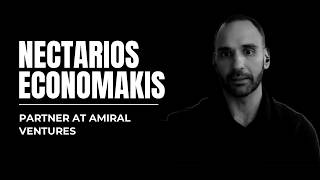
Nectarios Economakis runs Amiral Ventures, a Montreal seed fund with $40 million that aims to keep Canadian talent home. The fund backs founders from AI labs like Mila and emerging clusters in quantum and photonics, but Canada loses talent to the US and lacks venture capital compared to Silicon Valley or Toronto.
Chapters
Welcome to another VC Wisdom pod. We have Nektarios Economakis with us today. He's a partner at Admiral Ventures in Montreal, Canada, my native MTL. I've known about Nektarios for some, quite some time now. He's been in the tech community in Montreal for a long time. Maybe that's when you were at, was it called Bon Look or something like that, or did I hallucinate that?
I, well, I know bulk well. I invested in the company, but I was never in the company.
So yeah, you invest in that one. Uh, there was another company we might want to talk about, Frank and Oak, right? Was that also Montreal? Frank and Oak?
Frank and Oak was Montreal. Yeah, it was a good success story. Uh, I know the guy founder as well. Uh, they were a customer of mine back in my old life.
Um, so yeah, I know, uh, so I've known about you in these days, which might have been like 2017 for some reason. Um, and yeah, I saw that you're now part of Emerald. I'm intrigued, uh, in the Montreal tech startup scenes and AIs and what we are accomplishing, what we could have accomplished. I'm glad to have you on today. Uh, tell us a bit more about yourself and, uh, what you've been up to.
Well, first off, thanks for having me on, Charles. It's always good to speak to fellow Quebecer, even the one that's left for greener pastures. So yeah, so I help run a VC fund. So we invest in, you know, cool startups and, you know, we're talking about this in the prep, but it's like, there's just not enough money in Canada. Like, so a lot of people end up leaving and for good reason, like there's not enough VC capital, capital that understands the game of startups. So we're trying to build a seed fund that helps founders as best we can. And, you know, it's a small fund. We did our first close of $40 million. We hope to, you know, keep fundraising this year. And invest in the best Canadian founders we can and help keep some of them here. You know, like, and the issue that we, you know, the reason we started this fund is like the best people leave, you know, the best people get funded in the US or want to leave. So the only way to keep them is like offer them something that's of equal, if not greater substance, right? So like we have to build a value prop that earns the right for people to want to stay here. So that's the ethos of the fund.
And what can that value prop be in your case? Um, you were a consultant before, you've seen a lot of startups, some succeed, some fail. Like, what's your extra value prop?
Listen, like, I'm not gonna bullshit you, right? Like, you know, it's money, right? Like, we sell money. So at the base level, it's like, you know, the value-add meme of the VC. Um, so ultimately, I'm, you know, selling, selling money to people, but I hope to believe that we're able to bring something above that. Right? But at the fundamental level, it's really, it's really about the capital. We're 3 partners in the fund that started this. We all have started companies before. My partner Fred's been down the VC route with, you know, the ups and downs and, you know, scaling and exit. My partner Dom, you know, started his own fund before, did 2 IPOs. So he's seen all the types of deal making, all the kind of stuff that companies go through in their life cycle. Uh, and you mentioned my past, you know, like Google and also running my own consulting firm. So trying to help CEOs and boards and founders. So the first one is empathy. It's like, we know that, you know, where we sit in the value chain is that the founders are doing all the work, right? So we're there to support and help, but, you know, try and help if we can, and if not, get out of the way, you know? So we're not trying to create meetings for meeting's sake. And yes, above and beyond that, we want to structure our fund in a way that does actually pragmatically add value, right? So like, us, the founders, we want to be like, you know, the conciliaries of the founders we work with, right? So when the shit hits the fan, be that phone call late on a Friday night or Saturday night and help them brainstorm or just like commiserate on some of their challenges. The next level, we have like 50 founders that invested as LPs. So we use their expertise, their networks to support our portfolio as much as we can. And eventually we'll hire people, have them on a payroll and like, you know, build the platform practice. Uh, so, you know, super inspired by funds like A16z and what they do, right? Uh, obviously a little bit of a smaller scale, but we think that's the type of approach that, you know, resonates with founders, is like trying to help as much, be hands-on, understand the journey, uh, that it takes, and also just help at the critical time. It's like we're not there for 24/7 support, we're not operational, we own a small percentage of the company, right? Uh, it's there to help during critical inflection points, during critical decisions.
A16Z, you mean the media company that does, uh, $300 million a year in management fee?
Yeah, it's like a marketing firm that does investments on the side.
Would— and I would not put my money with A16Z, uh, personally, right? Um, you've seen a lot in the Montreal scene, uh, successes and failure. Tell me about Boat, and do we have like a moat in Montreal? What makes it special as founders?
Well, it's, it's a tough question. Like, generally speaking, like, success and failures are always like super context-specific, right? Like, why a company, you know, one particular company succeeds or fails is not really related to their, their geo per se, right? So it's hard to say. It's like, oh, what's in the water in Montreal? Like, and particularly when we're talking about technology, uh, where it's like it's borderless, right? You sell, you sell globally first versus locally usually, right? Your first customers, you acquire them online or whatever, right? So There isn't one particular thing. Maybe to talk a little bit, because your question does hint at what's going on in this local ecosystem. We have the most important, you know, raw material that we need to start companies, which is the people, the founders, right? The brilliant, you know, the research scientists, the gritty entrepreneurs, the salespeople. Like, we have all the right conditions. And particularly, like, you know, there's a few different areas of pockets that, you know, that really stand out in terms of our cities. One is just like one of like 7 AI labs that that are like world-renowned, like here called Mila, which churns out like world-class AI scientists every single year. And part of the problem is that they leave to go to California because that's where all the money is, right? So we need more tech companies here to keep them here and pay them well, right? And also capital for the ones that want to start companies. So that, that's one of the, the key— you want to say advantages, but also it's not perfect quite yet. And then we also have quite a few other tech hubs that are, that are growing in importance, like Quantum in Sherbrooke is really cool. There's a photonics out of out of Quebec City. There's even semiconductors out of Bromont, like obviously much smaller, but we have a lot of— yep, yeah, there's a whole sector.
My parents live there, let's— let me visit them next time.
I'm— maybe Nvidia is gonna buy a company from there. Um, so, um, yeah, that's, uh, to go back to your question of like, you know, when I started my career in like in, in digital realm, like '03 or '04, there was like literally nothing. And then I want to say like the big bang moment for tech in, in Quebec specifically was like around '07, is really want to take off. So it's like, it's less than 20 years old, right? So we're like still in the first, first and a half generation of starting companies, selling them, recycling that, you know, the talent, the money back into the ecosystem. So of course it's much smaller, right? It's an emerging market versus like, you know, obviously other areas like, you know, like not even to compare California, but like things like places like Toronto or Boston, New York that are more, more far along because they just been around longer, right? So I think it's just name, name of the game is, you know, we have a lot less experience, less money coming into the ecosystem as a result.
And semiconductors in Bromont, do you mean like IBM and Teledyne? Like, uh, okay, but they're like startups, uh, actually there's a few.
Yeah, there's a few. Yeah, there's a few out of Bromont, but there's also quite a few like out of, particularly out of Ontario that we're keeping an eye on, like some really cool semi companies. As if you follow the semi space, like there's like a really big company that starts with an N. It's like the most valuable company in the world. It's, it's really showing that this, this, the market for semis is huge, right? So there's going to be a bunch of startups forming for all, you know, particular smaller applications, different types of edge computing. And so a lot of founders are tackling this area, and we actually have some expertise in Canada. So it's, it's a space to follow for sure.
I'm gonna stop by on my next 10K run. I, I always like run in front of their, their plans. I didn't know that they were up to something. Taladine's probably gonna snipe me down if I try to, um, so it's okay. On the startup scene, yes, um, there's Mila, that's incredible. There's Josh Bengio that's doing great things, uh, maybe a bit more capitalistic side of things and, uh, could unblock things. Yes, I agree, there's nothing really special in the water, although there are some components in Montreal. The creativity, I think, is next level in Montreal. I've seen that time and time again. What is the number one unblocker? Is it more VC firms like yours? Is that— would capital, like, stimulate more startup interest and start the flywheel?
Listen, like, you're asking an investor, it's like, for me, like, you know, I'm a hammer, everything's a nail. Of course, we need way more money. We need way more Inovias and Georgians, you know, like, investing at, you know, like, at all levels of the stack. So yes, money is a big component of it. Um, I think part of it is also just showing people that it's possible to do it from here. I think particularly with young builders, they assume they have to move or incorporate in Delaware, and, and not because they particularly want to, they just assume that's the path to have success, right?
And I think this is, is lovely, let me just tell you that.
Sorry, oh, Stripe Atlas, yeah, is lovely.
It's like so simple.
At the end. So yeah, exactly.
Um, and that's like such a genius play. I mean, I don't think it was the play, but like being the US government, I'd be like, thank you, Stripe Atlas.
Um, so I think part of my, you know, like my motivation in this new job is showing people you can do it from here if you want to, right? So like I've met so many smart founders that have had successes, that have built companies from zero to IPO, and they just chose to do it here, right? So like, for whatever reason, their family, their value systems align with being here. I'm not saying like the US is evil or whatever, and like, yes, that whole 51st state crap has just been annoying, uh, but you know, like my partner Fred raised the Series B in California, right? And then had an exit to a US company. So like, we need that connectivity with the US, uh, but I think if we think of our local system, like you want to build like a strong local economy, well, we need tech. It's obviously the future. So I'm thinking about how do we keep some of these people here But the way you keep them is by helping, you know, like this notion of a rising tide lifts all boats.
Yeah, US is not evil, just their current president, which reflects most US people. But I don't deal with US people on my side. I deal mostly with founders, CEOs, investors, and these guys are incredibly smart. And most of them obviously opposed to 51st state or whatever bullshit that is, um, which is clownery, right? Like, it's a lot of media clowning around. Yeah, like what if Quebec or Ontario could have like an easier structure? What if it could be easier to incorporate in these states? You think that changes things? Because coming back to Stripe Atlas, me, I want simplicity as a founder, right? It's $500 USD, bing, bang, boom, they do everything for me. So what if the Canadian government was like, hey Stripe, let's start like a joint program and so easy to incorporate. Wouldn't that like be a low-hanging fruit?
I think so. Like, going back, I think the corporation thing is like a small detail, right? Like, people will start going—
immigration, right? Like, I think facility of incorporation and immigration, it helps you, uh, get the Canadian immigrant, uh, status, which I think has fallen a couple of steps as of recent.
I think, you know, what the US is doing with the H-1B and the O-1, I think those are, those are incredible programs. So I think that's more like the policy side, what can be done for sure. Uh, like, but your question of like for founders specifically, it's like when you start a company, you're like, oh, like I'll start a company only if it's easy to incorporate. It's like everything is like super hard about starting a company, right? So I don't think that's like the fundamental question, right? And some questions founders ask is like, okay, well, if I exit, what, you know, what, what does that look like, right? And there's, I think, a little bit of misnomers or myths around like, oh, if I exit and like if I'm a US company, I'll make more money versus being Canadian. And that's actually not true. Like, tax laws actually, after a certain level, are more beneficial if you sell in Canada, even if, um, even if you sell most of the US or the US companies and acquire. So if you, if you do the math, and there's a really good, you know, like, uh, BBC report that kind of demystified this, is to actually make more money in your pocket, uh, if you exit. So I think that's, that's probably one of the key variables people should kind of be aware of versus, like, incorporation, which is, like, I don't think as critical if you ask me, because US investors like tier ones will invest in Canadian-based companies all the time. Like, it happens every week here. So it's not a blocker for to receive investment or to sell if you're, if you're based here, right?
So, uh, here's my counter to this. I'm anti-establishment, and any second I spend doing bureaucratic stuff is 100x energy spent, right? So I'm down to do like stuff that will help my bottom line, but Spending my time talking to fucking government and their bureaucracy drives me nuts. So if I can just click 3 buttons and wire 500 CAD or USD to somewhere or someplace, I'll do it, right? And me, I already have businesses, right? So it's incorporating new ones. And as a founder, I think you have so many things that it becomes, these small things, they become quite stressful, right? So that's the counter to this. What about, innovation hubs like Waterloo. I catch your clip with Johan, which is pretty funny, uh, Silicon Valley's, uh, Waterloo rapper. I like that. Uh, I spoke with a Canadian YC founder today and I mentioned it and he laughed as well because he's an ex-Waterloo in San Francisco. Um, Waterloo did a great job, right? What about in Toronto? We had Geoffrey Hinton there. Uh, we got the brain drain on him too, but, uh, Aren't we on to something here?
100%. Yeah, like a lot of fundamental tech innovations have started here, right? Like even in the current world of AI, like Ilya Sutskever, like Geoffrey Hinton, Yoshua, like, uh, the writers of the Transformer paper, their founders go here. It's like we have a lot of the scientists and the research being done here, but like historically, and it's true, we suck at building companies, commercializing. So that's really kind of that is hard to argue with, right? Like, all the value creation, the trillions of dollars have gone to the US, but like the fundamental breakthrough ideas have happened, you know, like have come out of Canadian minds, right? Even DeepMind, right? Like, one of the co-founders is Canadian, right? So, um, the, the brain behind reinforcement learning that let the AlphaGo, uh, the Transformer paper, like I mentioned, with Aiden was one of the co-founders. Muhammad is not Canadian, he's Egyptian. Uh, it's— I'm gonna, uh, David Silver is Canadian.
I didn't know that David was in the mix. Anyway, go on.
Yeah, yeah, I think he's a co-founder, but also like he was just an early employee, and the person behind some of the greatest technical breakthroughs in RL, uh, was, was David. Um, so anyways, yeah, so I'm kind of ranting a little bit, but yeah, so it's like going back to my point about the, the— we have the raw materials, the people, uh, but we should give them money, right? And we should help build bigger companies here. I think it's It's a very obvious statement. At the same time, uh, you know, like, kind of have to level sense. Say, look at the chessboard. It's like, we're not the US, and it's not like everyone pretending to be the next Silicon Valley. That's— there's only one. It's because it's like, it's like French wine. It's like, why is French wine the best? Because they've been doing it for, you know, 25 generations, right? So why is Silicon Valley the, the epicenter of tech?
Napa, there's Okanagan Valley, there's all— there's Chile, there's all these hubs that have taken over, right? So it's possible to take over.
It's possible. It's possible to, to, to catch up, and I think we can, right? So we're not there yet, and I think we could accelerate, uh, we— given the new technologies at our disposal. But you also have to understand where the playing field is, and maybe that's where policy can come in and making it more tax-friendly, make it easier to incorporate. To your point, it should be a 3-click thing. I don't know, I haven't incorporated a company in a while, so it was like— I'm trying to think, uh, that should be even before that, like university incubators.
Have a commercially minded person tell Jeffrey he's on to something and keeping him in Canada, right? Like, keep him away from the brain drain. Would that make sense?
Um, I think so. I think so, 100%. Like, I think having, having a better IP transfer, uh, you know, policy out of our universities, you know, like, uh, that's obviously a thing to do as well. So yeah, there's lots, lots of work done. So it's like, we're not— you know, there's no one— I don't think anyone's patting themselves on the back. There's a lot of work to be done. I think the one way to show forward is showing the ambition of the— these crazy entrepreneurs that we have that are already doing it here, you know. And, you know, there's showing them the— Vitaly. Yeah, totally. Yeah, exactly. The founder of Ethereum. It's like, uh, I was gonna say, yeah, yeah, I would say, you know, he studied, you know, the— how long— how many years was he here, right?
Uh, just Yeah, like a couple months, and Vitaly was longer. His dad's still in Toronto.
So, um, yeah, going back to the joke about, you know, SF being a Waterloo rapper, it's like the Americans are not dumb. Like, a lot of the VCs come and pillage talent from Waterloo because we know we do a shitty job of keeping people here, right? So, uh, and so it's like some really disappointing stat of like 80% of Waterloo grads, uh, when they graduate are voted that they want to leave, they want to go to the US. And I see, who can blame them? Like, there's way higher quality jobs in tech and that pay way more, uh, so you can't really blame them. So the only way to keep them is like to offer something economically just as viable. So building companies here.
Yeah, and just from a political advantage, right, just take the fact that US is not so friendly on the immigration side of things, take advantage of that as a government, right? That's your attractor. If we look at it from a funnel, from a business perspective, right, get them to study and to launch startups. Do provide them like, uh, mentors, especially on the business side of things if they're going to be technical. And do keep them in Canada with massive incentives, right? So that we don't suffer from the brain drain as much, right? And have a little wall with like Elon, Vitalik, Ilya,, uh, with like all their pictures when they walk in the lab every day. Uh, is that the funnel?
Listen, I think, um, you know, what I like doing with my job is like we do events, like, like I think like most VCs, and we bring great entrepreneurs, you know, like not most of that we haven't funded, and just put them on the stage. And because I really think about this visceral human desire of like you learn by emulation, you learn what by, by seeing people. So if you like I think what Elon's done in the Valley is like he's just shown the scale of ambition. A lot of people are like, holy shit, this guy's swinging for the stars, right? Literally on the day of the SpaceX IPO. So I think what I try to do is like show founders like, hey, if you want to do it here, look, there's really great companies that have done here, that have decided to build here, sell globally, raise money anywhere. So I think that's part of it as well is Yes, pictures on the wall. Like, look at these people that have decided to do it here.
And do you feel you're sort of responsible for a revolution? Is that like a manifesto on your wall every day?
I think it's part of what drives me for sure, but at the same time, you have to stay humble. It's like I'm like one small little cog in the wheel, right? So, uh, life is short. I hope to make an impact and like, you know, writing term sheets for seed stage companies, right? So like, that's the job. So it's like, I'm not going to save the planet. Um, but I think it's part of what's needed, you know, to help, to help boost, uh, you know, boost this flywheel.
Yeah, we haven't talked about like risk as well. I feel risk in Canada is like, there is a danger to always going more on the social side of things and it's like de-risking the equation. I think we need, we need more of that in Canada, um, without safety nets. What do you think about that?
Um, well, we already live in a social democracy, right? There's so many— like, more so than the US, right? So like, yes, taxes and all this, but it's like, like, we're not in a third world country here, right? So we have safety nets for, for people. I think we should emphasize more talent immigration, particularly around tech, right, to get people to come, and then give people a little bit more tax incentive to start companies, right? So on the policy side, that's it. But I think At the same time, it's like, I think you're an entrepreneur, if you start companies, you know that, you know, no one's coming to help you, you know, like, you can't sell your product, that's what it is, right? So it's all on you to figure it out. I think the government can help a bit more to help support these rebels.
And is Montreal a nice city for these, uh, founders to live their lives and found companies at the same time and don't go crazy?
Um, listen, like, it's, it's a cosmopolitan city, right? So I'm gonna, I'm not gonna, I'm not gonna try and sell you on it, you know, like, I think I think a lot of people choose to make their lives here. I think a lot of people come and leave, and I think it's all good, right? So you can leave and come back. I think it's a great city, right? So I think it— like, people laugh about the winter, but it's okay. Like, winter could be great for grinding. So it's like working hard and not getting distracted by shiny objects. Um, so I think, you know, I'm pro— I'm not pro-Montréal, I'm pro-Canada. Like, I think the whole country has great places you can, you can you can live, raise a family, or just choose, choose a path that makes you happy, uh, while building, you know, a very arduous startup.
Yeah, viva la vitamin D deficiency. Um, what's next steps for your funds? What's, uh, what are the next, uh, major pillars here? What do you want to accomplish this year?
This year it's all about finding great people and giving them, you know, money. So like, we're working on our 5th investment, hope to finish with like 6, 7 this year. We're still fundraising, so that's part of it, so adding it to the pile. We've just hired our first employee, Nico, that just joined the team. That's great. So it's like, it's fun. It's like we're building the firm, right? So thinking about like actually working on the business, deploying capital into smart founders, and then we're still trying to convince LPs that, you know, hopefully earn their trust and give good returns. So it's fun. It's like building company. Yeah, like again, I'm not building out like I have my job. Yes, the fundraising part is maybe harder for VCs than founders, I feel, because it's like I'm only selling a dream and a PowerPoint, but I don't need to worry about PMF. Like, someone's gonna take my money. Obviously I want to give it to the right founders, so my job is a little bit easier in that regard than a truly novel discovery, right? I'm saying a little bit of a commodity. Uh, so it's, it's the early days of Fund 1 of a new fund, so like it's all about reputation, helping people, um, and trying to pay it forward.
Nice. Are you raising LP capital outside, uh, Canada?
Not yet. We hope to maybe for subsequent funds. Like, it just— it's hard for, for a fund outside of the US that hasn't built the relationships, doesn't have return, uh, to kind of to go knock on those doors. So it'll be a little bit of a waste of time. And expression in French, coups d'épée dans l'eau.
Can you repeat that? Can you repeat that one?
Sorry, give me a second, but I think I lost, uh, I lost you there. Sorry.
Yeah, what, what did you say?
What I said, the French expression of a coup d'épée dans l'eau.
Oh sure, yeah, yeah, yeah, for sure. Nectar, thanks for being on today. Uh, always nice taking some news from you and my native Montreal. I do want to personally make an impact in Montreal as well, feel the duty. Patriotism. Uh, where can people find out more, more about you and your fund?
Check out our website, amiral.vc. And the word amiral in French means flagship, so that's the idea, is like invest in the next tech flagships.
Love it. Does Nectar
More from Charles


Founder Wisdom: the audiobook, version 2 (5 hours of stories from founders and CEOs)

8 CEO Questions I Love Asking: the audiobook (64 founders answer, in their own words)





