Nick Shaw - CEO & Co-Founder of RP Strength
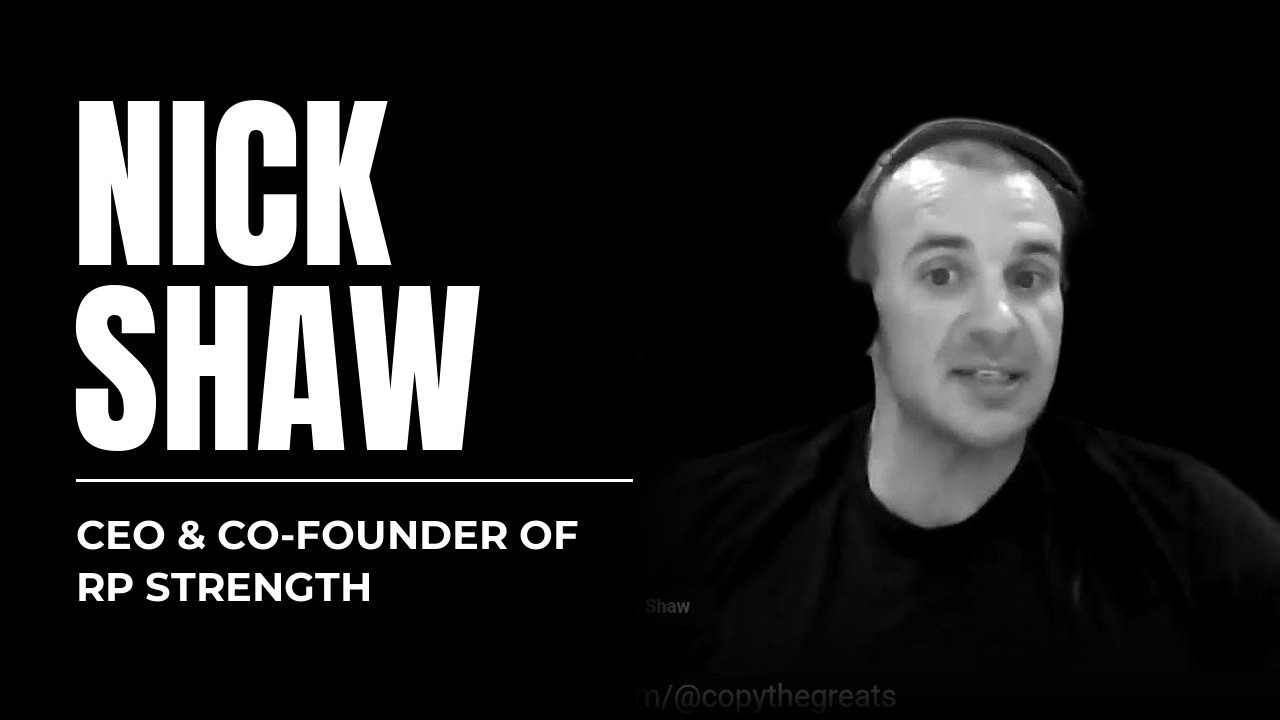
In this Founder Wisdom episode, host Charles Cormier interviews Nick Shaw, the co‑founder and CEO of RP Strength, a performance‑focused training and nutrition company that serves elite athletes such as CrossFit Games champions, Olympians, UFC fighters, Navy SEALs and more. The conversation traces Nick’s personal journey from a teenage weight‑lifting enthusiast to a college‑era partnership with Dr. Mike that birthed RP Strength around 2011‑12. They discuss the early grind of personal‑training in New York, the hard‑earned lesson of always paying contractors and employees on time, and how low overhead and disciplined cash‑flow helped the business survive. Nick explains the company’s training philosophy – periodization, strategic deloads, tapering for competition, and the importance of meeting elite athletes where they are rather than over‑engineering programs. He shares nutrition basics (whole‑food meal‑prep, cost‑effective protein sources, bulk buying at Costco) and his stance on tech tools like wearables and sleep trackers, noting both benefits and potential pitfalls. The interview also covers coaching elite clients (Rich Froning, Annie Thorisdottir), the psychological edge required for top performance, recovery strategies, and practical advice for busy founders on diet, recovery, and using data‑driven devices. The episode ends with pointers to RP Strength’s website, YouTube channel, and apps for those wanting to learn more.
Chapters
Welcome to another Founder Wisdom pod. We have Nick Shaw with us. Nick is a founder and CEO at RP Strength, scaled that business to great heights. Uh, he works with, uh, great clients, world-class athletes including CrossFit Games champions, international medalists in weightlifting, UFC fighters, Navy SEALs, and Olympians. So Nick, welcome to the pod. Tell us a bit more about yourself, what you're up to.
Hey, awesome, thanks for having me on. Appreciate it, good to be here. Uh, yeah, well, my kind of, uh, life is all about fitness, so it's really cool to kind of take that passion from the time I was, you know, a teenager getting into sports, getting into lifting, and, you know, somehow over the years being able to make that into a really cool business that's helped a lot of people. A lot of education out there from RP. And yeah, it's just really cool to see what it's evolved into, you know, over— shoot, I don't know, about the last 20 years or so of my life.
And how were you as a kid? Did you always have that mindset? For example, I was introduced to the gym at 15 by my brother and never really looked back. Like, gym is fundamentally part of who I am, lifting stuff, right? Like, how were you as a kid?
I mean, very similar. I had a brother who was 4 years older than me. He played high school sports, and so we had some old rickety weights in my parents' basement, and that's where I got started. And luckily my high school had a pretty decent setup. So like, basically my sophomore year of high school— so sophomore, junior, senior years— we had something called Advanced PE, which was basically just weightlifting that we had, I think 3 times a week or something like that. So I've just always been into it. I just love the idea that you put in a lot of work, you get out, you know, a lot of results, and you can't really fake it. There's nothing to be, you know, sort of bought. Um, it's all about, you know, hard work, and over time you can, you know, sort of periodize things. And that's kind of where our company name comes from. So you can approach things a little bit smarter. But, uh, yeah, very much like you, I've always been into fitness, and I've always had the bug, uh, for that. And I'm forever grateful for that, you know, because some people I don't think are as interested Um, you know, not sure why. It's obviously, uh, something that I'm all about, but I love it. I can't, uh, you know, I'll always be into lifting. That's no matter what.
Yeah, looking back in my mindset, I was never super good at sports except, uh, outlasting the other kids, like at cardio to be precise. I would beat the crap out of everyone, whether it was my ego. I had good hearts as well, but I was born asthmatic, you know, which is weird. Um, and I think that transcended into the gym. I wouldn't outlive that much people of my age at the gym, but I was definitely top 5%. But were you that kind of kid? While I was lifting, uh, 25s each side, you were like at 45 already at like 16 or 17?
Or, uh, hey, so I don't know about that. So I actually was a distance runner in high school, so I was, I was not, you know, very big, but I love lifting. It's funny that basically everything you've said about how you got into it is very similar to mine. And I don't think that's, you know, by coincidence there. There's just something about it. I wasn't particularly talented at sports either, but then I realized that if I could outwork people, like, I stood a chance and could, you know, kind of make something of myself. And, you know, I don't know what it is. I just think my parents, think genetics, whatever it was that I was blessed with, but I've always wanted to kind of stand out from the crowd and not be average. And I love that. And, you know, once I sort of figured out that sports and lifting weights and fitness was a good way to, use that for my own good, and then later, you know, I guess the good of, you know, potentially literally millions of other people, right, with our YouTube channel. Um, you know, I'm forever grateful for that. Uh, whatever it is called, genetics, I don't know, but it's, it's something that I'm super proud of and, uh, super grateful, fortunate to have.
Yeah, because I had this one friend that, um, yeah, visibly, genetically, he was more, uh, gifted. He had like an 8-pack, you know, at 18, and I don't think he would outlift us, but he would just look better in the mirror. At what, uh, at what age, uh, specifically did you knew that, uh, this could scale for you and you started taking it really seriously?
Um, I always loved fitness. I would say it never became something that I thought I could make a living out of until in college I met my colleague who later started RP with me, Dr. Mike. He kind of convinced me. I always had that competitive drive, but I kind of missed that the first couple years at college. And then he introduced into like bodybuilding and powerlifting, and that kind of got me sucked back in, and I realized that I loved it and wanted to do that. And that kind of reinvigorated me for— because I always thought I was going to be something like an athletic director just because I really, really love sports. But then once I got, I guess, around the idea of I could make fitness and what I really love to do kind of into a career— and again, the career was just starting off as like a personal trainer in New York City. That's where, you know, Mike and I both started. Um, so I would say probably sometime around then. And then like once we were training people for a while, we kind of thought that the way we did things could work really well. Um, you know, for example, if you take— you talked about your friend that was really sort of genetically gifted. Well, if you take that person and apply more strategic thinking when it comes to nutrition and training and all that, like, that's how you really get these people that become, you know, the very best in the world. And so that's— that was probably when I first realized that maybe we were on to something. And this was, call it like 2011, 2012, something like that. So almost 15 years ago.
And on the business side, right, like my first business was a brain supplement, a nootropic, right, and failed miserably. Uh, health was always a priority for me, but I realized quickly that health wasn't necessarily money. Has that played out differently for you? Could you make good amounts of money with, uh, health products or services?
So I don't have a first like huge failure like that, so to speak. I will say we both started as personal trainers in New York City working in private personal training studio, and it was not very lucrative. We had to bust our tail. We did not get paid very well. Uh, there's a whole lot of other things I could probably say about that. I won't go into the details about all the bad stuff, but to me that was kind of like a lot of learning lessons. So for one example, um, they didn't have direct deposit, and so sometimes they would give us paychecks on Friday and they're like, oh, you can't actually cash this until Monday. Now again, we're poor personal trainers, so like at the time that makes a really big difference.. And I just remember, because I think, you know, I remember thinking to myself, if I ever run a business, like ever, I will always pay people on time. And I still do to this very day. Like, I don't care if it's contractors, I don't care if it's employees, you know, third-party vendor, like whatever it is, it's like, no, we get an invoice, like we're going to pay it fairly soon. Now we're lucky and fortunate that, you know, we've got, um, we don't have cash flow issues, which is how we do things. And, you know, we don't have a ton of like overhead and expenses. So I get like, not everyone can do that. But to me, that was like something that always stood out to me. And it's like, I'll never not pay people on time. It's just a fundamental rule of how I'm going to conduct myself when it comes to business. And I think so far it's, you know, treated— because you got to imagine there's probably a lot of people out there that don't do that. And so when you're a contractor or something and you don't get paid on time, or you're like net 30, next net 60, and then 90, whatever it is, right, the crazy stuff, um, man, when you pay people lickety-split right on time, like, you're gonna, you're gonna move up their list of importance. They're gonna make— yeah, I want to take care of this person first because they always pay on time. So to me, like, that was a really valuable lesson that, you know, you kind of learned from, you know, a lot of the ups and downs, so to speak, early on. Because, you know, we were— and I was probably 21, 22 at the time— like, we were living 3 people and technically a 1-bedroom in New York City, but kind of had like a home office, whatever.
So it's 3 bulky bodybuilders.
Uh, it was 2 of us and a female powerlifter. So yeah, it was quite, quite the unusual combination. But again, like, it takes you— when you've gone through the bad and you've gone through the shit, and like you said, you've, you know, had a failure. Listen, we failed all the time in RP with different stuff. Like, it really does make you appreciate when things do go well. And so I'm always— I always kind of try to remind myself of that. And, you know, right now I have some kind of like personal stuff going on. I just have to remind myself that like, you know what, even like the worst day in my kind of my new world, my new life, is way better than the old life that I had. So it's just I try to remind myself of that.
Yeah, it's actually useful to, to have lived the struggle. I mean, I come from middle upper class sort of privilege, right? But quickly I, I tried to cut any nets that I had at like 17, 18, right? Really tried to be by my own. And I lived the struggle for sure as well. And I would not take it back because you developed some callus, right? Like after you've been through these moments. In your case, the payment stuff as a bodybuilder, right, or just someone that power lifts, like your burn rate is pretty high as well. How did you keep that low? Because you eat so much food, right?
Uh, yeah, I mean, it's so funny. I was just in New York last month and was doing like this little private boat tour, which is awesome, around like the southern tip of Manhattan. So you get to see all the really cool stuff. And I remember the person that I was with, I was like, hey, you see over there? Like, there used to be a Costco over there. So we used to take the subway And we would have these like carts that we would take with us. We would get on the subway, you know, ride for 30 minutes or whatever, get off, have to walk like whatever, 10, 15 blocks to the Costco, go shop, you know, buy all that stuff in bulk, right? Because it's better deals. We got to load it all the way back and we got to carry that big-ass thing down into the subway. Like, those are the times that you talk about those calluses. I will always remember that. So how did we make it work when we eat a lot of food and all that? Like that stuff was the priority. You know, we weren't saving money, we weren't investing money back then. It's like you pay rent, you buy your food, you know, you pay for your gym membership, and like that's kind of all you do. So again, I'm super grateful for those lessons because man, it makes me appreciate everything now way more.
Still love Costco to this day. I worked there.
Same here, same here.
Yeah, I gotta love Costco, man. Such a great business model. Also, um, did you buy the Costco whey or were you like more specific about like your protein powder?
Man, on that, I don't remember. I remember we would buy like tons of bulk meat, um, man, probably whatever they had at the time. So what's interesting is, you know, this is— we're talking 2010 or something like that. And, you know, now if you go to Costco, the plethora of like protein supplements they have is like 20 times more than they ever had back then. So I gotta imagine they probably had like gold standard, like Optimum Gold Standard back then in the day. We probably just bought that. Because again, even though it's not like on the cheap end, it's still a good deal because it's at Costco. So it's just kind of like whatever Costco has, you know you're going to get a pretty good deal. And so yeah, I mean, again, those are the priorities. So you're like, well, protein powder is a priority, you need it, use it every day. And when you look at it from a pure efficiency standpoint, you're like, you know, 2 scoops is 50 grams of protein. That's going to cost you what, a couple dollars? Like, that's hard to beat even with, um, you know, chicken, beef, whatever it is. So it ends up being a pretty good deal overall.
And is it true that the more you pay, the higher quality? Like, how did your costs evolve to nowadays?
Um, I'm not one to spend, I guess, a ton on really fancy foods and things like that.
Like, I still like my health. I spend at least $5,000 to $10,000 on my health every month.
I probably have to look at all the costs on that because I have, like, I have a home gym Um, but I do have a gym membership that I also use. Uh, I've got like a bunch of different supplements that I take. Uh, I have like an online doctor that I can, you know, go to for, you know, various needs and all that. So I don't know the cost off the top of my head, but it's definitely a priority. Um, obviously health and fitness is always a priority, so I can make sure to carve out time in my morning so I can work out, you know, lift weights. I pretty much always get, you know, 10K+ steps a day. Um, I, I eat a lot of the same things. Like, I don't need a lot of super, super fancy foods. Like, a lot of just meal prep, you know, whether it's chicken, rice, and broccoli, or, you know, some rice and ground turkey and green beans, or, you know, whatever it is. Um, I like rice cakes. Weird, but, you know, most people—
oh, they're good with peanut butter and honey, man. That's classic. Um, and bananas. Um, what's the 80/20 for, like, a founder or CEO that you would coach, right? Like, what's the essential?
In terms of you just like health and fitness?
Diet, uh, diet expenses and routines.
Um, mostly whole good quality foods. So think of your lean proteins like chicken, fish, uh, you know, red meat too. You can obviously work that in. Um, you know, lower fat, maybe dairy products, eggs. Those are all good choices. Again, this is off the top of my head. This is not a like conclusive list. Um, you know, lots of whole foods. You've got, you know, fruits and veggies in there, uh, really, really important. And then I guess, you know, the carbohydrates, it sort of depends on your, your goals and energy needs. So I know like you and I talked before, you do a lot of like ultra stuff, so I'm gonna assume you probably have a pretty good, you know, decent amount of carbs. Uh, you know, healthy fats, things like nuts, olive oils, avocados, those are all sort of good options as well. And that's kind of your 80/20, um Because if you go out to eat, maybe you stick to like more lean proteins and vegetables, you know, steamed or grilled stuff like that. Those are always good choices. Yeah, you know, if you do that for most of your meals most of the time, you're in a pretty good spot. And then, you know, if you're a business owner, you're traveling around, you're doing dinners and stuff, whatever, like you don't have to stress about it too much as long as that's not kind of like the, uh, the bulk of what you're doing, right?
Yeah, meal prep I think is a must for like a busy executive, right? It not only does it save you time, but it, it's like an autopilot mechanism of leaning you out or making you look better and healthier and more energetic. What about these fancy devices? I have the Oura Ring, the Whoop, I have the Eight Sleep. Is that like a no-brainer as well?
Um, so I think it depends. If you've got the resources and you can afford some of this stuff, I think it's probably a good idea. Uh, like I've got a, I've got a Fitbit. That's sort of what I wear. I use it primarily to track sleep, and I like how they've kind of evolved. So it's, I think it's Google Health now. Um, it's pretty interesting. It'll send me some like little updates throughout the day. I find those really interesting. And I, again, it's sort of just like a good reminder. Here's the thing, I guess, on sleep trackers that, and again, I think it's probably good in general for most people. It's kind of like a good reminder. So like MyFitnessPal for the longest time was good because it helped people just become aware of what they're eating. So like, you know, all about that. And I think if you wear like a, you know, wearable, something like that, it's just like a good reminder because no one wants to see bad scores if they wake up in the morning. So it's almost kind of this little reminder to be like, oh, hey, you know, I need to go to sleep, or, you know, I need to do X, Y, and Z. So I think it's good from that standpoint. The one catch that I will possibly give is sometimes, like, if you know you had a bad night's sleep, or like maybe you didn't even have— like, in your opinion, you're like, I didn't I felt like I slept okay. But if it gives you a wrong score, sometimes that can kind of get in people's head. And then you're like, well, I guess maybe I do need to take it easier. And it's like, that's fine, I think, for the average person. But like, if you're training for something, like sometimes you just got to kind of know that you got to push the pedal a little bit here and there. So that would just be maybe something to be aware of if you kind of use it to guide too much of what you do.
Right. Let's look at my sleep score from last week. I was sick. I told you, right? Like last time we spoke, I had flu. Uh, so it started like at a terrible 74. I think it's like the worst score I've got. Uh, call it Monday, then 83, then 86, then 90, 95, 96 on Saturday night. Got food poisoning on Saturday, and, and yesterday was 73, man. I think it's my lowest score ever. But Eight Sleep tells me like, oh, you've got these 3 trends, right? Like your resting heart rate is fucked. Your heart rate variability is fucked, your breath rate as well. This means you're sick, right? And yeah, it was right. Um, yeah, what's your— what's a protocol for one, flu, and two, food poisoning? Does that mean also generally that my— my immune system is weakened, maybe for stress? I don't know.
So something like food poisoning, uh, that one's hard to say. Like, you just— like, what do you do during that? I would literally— whatever you can. You know, you just basically trying to keep your, you know, your, your head above water, so to speak. I think you just do whatever you can to get by and just hopefully it flushes out, you know, after 24 hours and you're kind of back at it. Um, the flu or something like that is, is probably, you know, a lot worse because that can last for a few days. And usually if you're not eating much, you can't keep stuff down, then obviously your weight will drop. You might, you know, lose some, some muscle or something like that if you can't train for, you know, a week or so. Uh, man, at that point, you know, Again, this probably depends on resource because obviously not everyone can go and do this, but it'd be like an IV. I think nowadays there's places you can kind of go, um, obviously if you're not, you know, gonna, gonna spread your illness to people, you could go do that. Maybe after a couple days that might be a good way, especially if you have trouble keeping stuff down. But it's really hard in those instances. Like, that's why hopefully you just don't— they don't happen too often. And if they do happen, it's just like you kind of let it ride.
Yeah, it didn't happen in a while. My gut was crap for like probably 3 years in my ultra running career. I was trying out like a keto diet, like high in fat, which is terrible idea when you're running. Um, I think I fixed that mostly. Yes, it's like terrible. Um, and yeah, like, uh, today my routine, my protocol was, believe it or not, Wim Hof. It's like Wim Hof breathing, like just getting my stomach oxygenated with a bunch of like stomach teas, right? Uh, sun exposure on my gut as well. It's a weird one, but— and lots of water, right? And just now, like at 2 PM, I'm starting to feel well, but it was a struggle the full day.
Well, I think what you mentioned there— so you mentioned 3 things. So Wim Hof, so it's just like kind of a focus on breathing, which is probably good for mindfulness. Miserableness, you just become more aware of things. Um, you mentioned, uh, sorry, you also mentioned lots of water and the water.
Yeah, yeah.
So water is a really good one. Was it— what was the second one? What was the one?
Uh, well, there was Wim Hof, there was the teas, and there was the water. I don't think it was a— I guess the, the second one you could say mindset, like just enduring the pain and the miserableness and going through meetings, right? I think that's a big one. But, uh, And yeah, knowing that I'll be better on the other side and just maybe testing food, right? For example, these bars, um, I eat them when I'm doing ultras, so my gut loves them. So I just like eat a little bit of, of that and see if I can digest. And yeah, I could. So, but yeah, solid food was a no-no today. Other than that, yeah, it's tough.
Yeah, there's not a whole lot you can do, unfortunately.
Your clients um, the Navy SEALs and all of these people. When did they start, uh, when did you start catching their attention? When was it like, oh shit, Nick is like top of food chain, I need to work with him to increase my performance?
Uh, it took a while. So when we first started out, we worked with, um, and this is probably pretty typical, but like if you're a coach, you start out with just kind of close friends and family, things like that. You get a bunch of referrals, you build up. This is in the early days of social media. Um, it probably took like a few years to start getting some kind of bigger athletes and influencers. And then even from there, it still took a handful of years before we really got into like the really, really top folks. Like, so we, we probably started RP in 2011, 2012, somewhere around there. I think it was 2018 when we started working with Rich Froning, that, that was like, hey, this is— this, this guy's literally the best in the world. And then like once you get someone like that, it's obviously a lot easier to get more because of the social proof aspect. So again, you know, it took what, 5+ years before we ever got really, uh, anyone of like that, that caliber. We had some, you know, decent people, but maybe in like, you know, like the sport of weightlifting or powerlifting, things like that. It's cool to work with some of the best in the world, but it's not quite as popular as, you know, something like CrossFit or indoor, you know, some of the bigger sports. So yeah, 5, 6 years really before we kind of got, uh, you know, out there like that.
How do you coach a guy like Rich that's so fucking elite?
Yeah, so I will tell you, I've got a good story because Uh, he had some people back in the day that were also very high caliber, and one of the biggest mistakes that I made was thinking that they needed everything so fine-tuned. Like, I'm talking down to like the minute. They would train 3 times a day, so I was trying to time all their meals. So like, hey, they're done with this training session, they need X amount of food to get ready for the next one, you know. And then the same thing, they should repeat, because then they're going to go back in the third day. And so for me, it was like, it was definitely an ego thing. Where I was like, I need to make this perfect. Like, I need to make a good impression for, you know, this person. And what was funny— now, there were some confounding variables there, like they were in the middle of a move from a different country over here to Tennessee and whatnot. But I just, I distinctly remember it because they just never followed it. Why? Because it was, it was one of these things where it was so advanced, so like the person never had it.
It's too much, man. They already have so much in their minds, you know.
So, yep. And to me, that was a huge learning lesson because again, it's probably 2018, like I think fall of 2018. And I just remember thinking like, I blew it. I was like, this was my shot, I blew it. So I'm like, I'm screwed. And so then something happened where Rich was like, hey, I want to do— you know, I still want to follow this, but like, hey, I want to incorporate some fasting into it. And so I just was like, all right, like, we can do that. Here are the trade-offs. I'm like, it's probably not ideal for your morning session, but you know, we can— as long as we hit like the overall calories or macros, which is the most important part, the timing matters a little bit less. Now as you get more and more advanced, you become more elite, the timing does probably a little bit more. But again, I was like, these are the trade-offs, are you okay with that? And he was like, yep, I'm cool with that. He's like, just build around that. And so to me, it was a big learning lesson from that failed experience where I said, you know what, I'm not going to force something on someone. I'm going to meet them where they're at. I'm just going to explain the trade-offs, and then here's how I would normally do it from a quote-unquote optimal standpoint. Well, now I'm going to take this person's preferences, I'm going to build it in so it incorporates that while still hitting the main principles. Then lo and behold, you know, he was able to use that for a handful of years like with no problems, and he just kind of became a machine. And a lot of times the, the best people in the world, it's pretty cool to watch them operate because like once they kind of get things down, um, like, uh, do you know Annie Thorisdottir? She won the CrossFit Games a couple times. Yeah, nicest person in the entire world. Uh, same with her husband, you know, their, their whole family. But, uh, like she just literally could— I could be like, hey, Thursday at 3 PM, and like she would know exactly what the macros were for that meal. Like she was just on autopilot. So it was really cool to watch some of these people operate at that really high level.
And these high performers, um, what percent do it to compensate for something or trauma vs, um, doing it for healthy reasons?
Yes, a good question. Uh, I'm not sure on that one. I think that, you know, someone like Rich is— and I think he's probably said this before, so I don't think I'm like saying anything inappropriate here. And Rich is a great guy, by the way. The whole family, everything up there in Tennessee, they're all awesome.
People.
Um, he's probably like addicted to exercise, like, and I think he would readily admit that.
I'm addicted to exercise. You're probably too. Like, I couldn't stop one day.
Um, there's probably some truth to that. Um, I do— I, I guess sometimes when you're, I guess, quote unquote addicted to it, but you can still know like when to ease off the gas pedal here and there. So there's something called like deload. So every, you know, now and again you sort of ease back on training intentionally so you can kind of take the next step forward, so to speak. Like, that's kind of the art of periodization. It's like 3 steps forward, ease off for a little bit so you don't go backwards, and then you kind of keep going like that. Um, sometimes, you know, some, some people get that and they're just like, hey, I'm, I'm a machine, I need to operate to the fullest, you know, extent of my ability. And they're willing to listen to that sports science. Sometimes people will just ignore that because they just like training too much. And you're like, well, you're probably going to get beat up and get hurt.. And so like how I describe deloads to some people is you're going to deload eventually. Now it can be voluntary and you can sort of do it proactively where you're like, yeah, you know, hey, every 5th or 6th week I'm going to back off a little bit just to let my body rest. And some people just, they don't understand that, right? They just like working out too much. They like that feeling, whatever it is. And that's cool. Like, I get it. I love training, but you'll probably end up hurt at some point. And so you'll have to sort of reactively take time off. And so that's what I try to tell people is like, you have those two choices. At some point you're going to take time off, like whether you get— taper. Yes.
Yep.
Yep.
Tapering for competition. It's dumb not taking a taper. 100% dumb.
Yep. Yep. And that's literally straight up part of periodization. Yep. So if you want to perform to the full, like to the best of your ability, there has to be some sports science and periodization applied. Absolutely.
Yeah. What do you call it? Active recovery workout, right? So, um, I may do some of these before my ultra, like a week or two before. Just like not full intensity, right? Like, uh, just keeping my energy, my creatine in. Um, but yeah, like, tapers are essential. Yeah, I've never like pushed very hard before a competition day. Um, and I think we all need like some kind of chip on our shoulders to reach greatness to some degree. I think it's an end, right? Can be healthy as well to, to have that. But fundamentally, to compete and reach the highest levels, you, you need to, to have like, uh, oh, I'm gonna prove them fucking wrong, right? Like, you need to a bit, a bit of that. Even the Annie, or whatever her name is, like, she's very nice, like, uh, in interviews and all of that, but like on the CrossFit, uh, field, she's a beast, right? Like, she's in full competition mode, and she's— I mean, she may help if she's winning, but like, she won't, she won't give you any easy one. And that, that's how it should be. That's competition, right?
Yeah. So really interesting thing about, uh, usually high-level performers is sometimes they can flip the switch. So a lot of times, um, you know, to be like a professional athlete or something like that, especially in bodybuilding, you, you have to be really good at just being able to relax. Like, if you're not in the gym, you're pretty mellow, right? Like, imagine, you know, a marathon runner. Well, they go and train for hours a day. I'm gonna guess most of the rest of the day they're not also being super, super duper active. I mean, some might, but like, if you really want to perform to the the best of your ability, you need to be really good at recovery. So like, that's, that's a little interesting kind of dynamic there. And, uh, you know, sometimes people get it, sometimes not. Um, it's like you said, you know, when you're going into competition, you got to know that you're, you're not training balls to the wall a few days before. Like, that— you just don't do that.
And what bodybuilders or powerlifters have you studied, right? Like Arnold's a classic. Uh, I mean, there's Jay Cutler and all these guys. Like, what, what notes have you taken from these guys?
Uh, the most famous movie of all time when it comes to bodybuilding, Pumping Iron, right? Like, what was Arnold doing? He was smoking weed. Like, again, he was really like eating burgers.
Yeah, gigantic.
And so like, uh, bodybuilding is an interesting example because like once contest prep hits, you really kind of dial it in. But like the rest of the year, so what's really interesting is a lot of time the really, really best top-level guys, they'll compete at the Olympia. Usually that's in the fall, and then they, they might take like a month or two off to just like let their body heal, uh, kind of take like a health phase. Because in bodybuilding, it's really interesting because there's obviously a lot of like performance-enhancing drugs involved. So sometimes you just need to back off all that, let your body recover, really heal up, and then like after a couple months, it's not that hard to get back into shape. So the guys that do that are probably going to do a lot better— guys and girls, I should say, not just guys. Um, the, the best in the world, a really good example of that is, uh, Mat Fraser. Like, he was one that— and I remember because at the time RP was a little new in the CrossFit world, and when we first got into it, it was like all paleo, so people wanted to like only eat quote-unquote healthy foods. And then we come in and we're like, listen, you're gonna be training 4 hours a day, you gotta have a shitload of carbs. And I remember, um, because I know kind of his, his agent or whatever, and, and his wife as well And dude, he would be eating cheeseburgers, he would be eating like kids' cereal at the CrossFit Games and all these things. And I was like, that's actually the best way to do it because you need to basically rapidly refill your glycogen. So like one of the best things you can have is something like kids' cereal. I know it sounds weird, right? It's the same with like Gatorade and sports drinks, but like there's a reason that high-level athletes drink this when they're performing because they need to basically fill up that gas tank as fast as they possibly can.
Yes, fully agree with that. Uh, dude, thanks for being on today. Where can, uh, people find out more about you?
Yeah, best spot is rpstrength.com. That's the company website. And then one of the best places, especially if you are interested in like sport performance, nutrition, you know, like hypertrophy training, how to put on muscle, uh, RP Strength YouTube channel has like a different video on basically anything fitness related you can think of. It's all free. You can, you know, watch it on YouTube anytime you want. That's the beauty of the internet these days. You can go and learn a ton. And then, you know, we've got some apps and stuff like that which you can you can find through our website. But usually those are the two best spots to find out all about RP. And, uh, yeah, well, I hope folks like it. And my buddy is a pretty entertaining individual on YouTube.
This is Nick Shaw and Charles Cormier
More from Charles


Founder Wisdom: the audiobook, version 2 (5 hours of stories from founders and CEOs)

8 CEO Questions I Love Asking: the audiobook (64 founders answer, in their own words)





