Nikhil Yadala - Founder @Healome
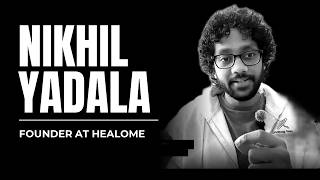
Nikhil Yadala built Healome and OpenAge AI to measure aging through blood proteomics instead of unreliable methylation clocks or wearables like Whoop. He argues for measurable interventions: fasting, vitamin D3, and HIIT, and created infrastructure for personalized dosage trials where users can safely test peptides while tracking side effects.
Chapters
Welcome to another Founder Wisdom pod. We have Nikhil Yadala with us today. He's the founder at Healome and at LongevityGPT. I used to have my own LongevityGPT as well, Nikhil, so you might want to trademark sue me on that. And he's an ex-ML at Microsoft, uh, promising guy to, to be honest, looking at his profile in SF. Uh, quite intriguing background. Nikhil, can you tell us a bit more about yourself and what you've been up to?
Yeah, thanks, Charles. This has been great. Uh, yeah, so a little bit about myself is, um, I am originally from mathematics and computer science background. Uh, you know, it was around 15 years ago that I decided that we need to solve aging, uh, because that is the root cause of a lot of suffering. There are so many people in the world who cannot afford even a single meal a week, and even instilling some trillion dollars into economy is not going to solve the problem because of of how economies at scale are structured. So when I was a kid, I got this idea that if you give everybody good health, then everybody can fight for themselves and they can go in whatever they need. So I decided that we need to solve aging. And then I used to think that you need to make drugs because solving any disease means making some drugs. So I was in computer science and math studying drug discovery. And then I was at Microsoft Research building large language models. To understand how to build such large models that can aid in AI. And then I was in academia at Carnegie Mellon, and then the more I got into this aging and academia, the more snake oil I discovered in the field. And I realized aging is never going to be solved if you just continue to do everything as everybody does, which is, you know, just sleep well, eat well, all of that will still result in cancers, Alzheimer's, all kinds of diseases, and people still die a very bad death. Uh, so that's when I came out of academia, and then I started the company, uh, HeaLom, to solve for the biomarkers of aging. And that's how my journey has been last 6 years.
Nice. How do you measure your age nowadays, and how scientific is it?
Yeah, yeah. So, uh, that's it. That's a very great question. You know, like, when— back when we started in 2020, it was not even a thing about biological age. You know, people used to ask, what is biological age? But now, uh, it is such a buzzword on the internet to, to also know your biological age. And, uh, one of the reasons that actually frustrates me a lot is how much misinformation that's there in this problem of measuring aging properly. And you have big corporations sending you lots of ads to do the wrong thing. And there is so much money beyond it too. And people tend to take wrong metrics into consideration, and then they go on their life as if they got a diagnosis from a doctor or so on. And this is a problem that we basically wanted to solve, which is why I created OpenAge AI. Which are the best models to measure aging that are more accurate than anything else. So today, how you measure aging, to answer your question, on the internet when you search biological age test, most tests you get is methylation tests. So it measures, um, how many of your genes are methylated or not, and then it is some AI model that tells you a number. Now the issue with this number is it's not interpretable. It tells you you are biologically 24 or 54. It doesn't tell you why. It doesn't tell you what you should do. And the second thing is it's not actionable, uh, in the sense it doesn't tell you what you should do. And then the worst thing about it is, uh, there is a huge variance. If you do the test 2 times in a row, you will get your biological age to be 10 to 20 years different. It basically doesn't capture your signal properly at a personal level. It's a good metric for a cohort, but not at a personal level. So you have all these issues with biological age today. So anything— if anybody tells you biological age is a very specific number, you have to take it with a huge grain of salt.
The Whoop biological age score, how accurate is it?
So, so I, so I have nothing against Whoop, right? I actually use Whoop too, ever since they launched, and I have been upgrading upgrading all of their hardware too, because I use it to measure heart rate, heart rate variability, and so on and so forth. Among all the aging metrics, WHOOP has got, I would say, the worst way of measuring the age. That's because— so let's take a step back and try to understand, like, why is it— like, what does it mean to measure something, right? So if somebody got cancer and let's say They went to a doctor and the doctor put them on a few rounds of chemotherapy. Now in the follow-up visit, if the doctor tells, hey man, I see that you have taken all of your medicines and you have been on chemo for the last 2 months, and I know from this trial data that 80% of the people who are on this chemo generally get cured, so I am declaring you cancer-free. We don't even need to do any more tests. I'm confident that if you do this, uh, you are cancer-free. You know, that's basically taking conclusions based on correlations. So now the thing with Whoop age is, uh, if you sleep well and if you got some 10,000 steps, um, then it assumes that you are healthy. You know, we know if you sleep well, uh, I mean, you could sleep all day, but if you got no work done and if you are stressed about some other huge stressor in your life, you are still aging faster. So just focusing on sleep or step count doesn't do justice to what is happening deep inside the body. It is just a weak correlation of what generally constitutes as a healthy weight or a healthy way of living. And, and so, you know, it's a very weak signal, I would say. You know, like if your, if your body is like in a completely different position since yesterday, maybe because you got injected with some poison or something, then yeah, even though it's a weak signal, it may still directionally be correct. But for your day-to-day purposes, if you want to know, oh, did I age better this month compared to last month, um, looking at just weak correlations is not scientific enough.
But isn't there a better way than having my blood drawn out? Like, it sucks to have a needle in your arm. Like, isn't there a better solution than this? That's not invasive?
Yeah, so, uh, that— there are good solutions. Um, so one of the solutions, but then each one of them again have— they come with their own set of problems. So we need to basically, uh, make a decision of trade-off based on whatever preferences are here, right? So, uh, there are much more better functional markers like your grip strength, VO2 max, or your maximum heart rate that you can take your heart to go through without dying. or, or your resting heart rate. Again, again, like, you know, resting heart rate least could be zero, but that means you are dead. So like, how less can it go while you are maintaining, uh, like a functioning body and a proper homeostasis? So these are all very good biomarkers that tell you exactly where your aging is. However, these are on the other end of the spectrum in the sense by the time it tells you a number, the damage has already happened if the number is bad. So you don't get insights into what to tune in your day-to-day habits or supplements or dosages, because this number is much more— it's much more useful to understand what happened in the past, not what's going to happen in the future. And then the thing with the blood too, you know, even if you are drawing blood every now and then, as long as you are using these methylation panels, it is on this other end of the spectrum. It is way too early and it is way too unactionable and black box It tells you some number. Yes, downstream something can happen, but you don't know what is going to happen. It's like kind of, um, not worth the effort, I would say. You need to get your blood drawn out, you need to like, you need to ship it to the lab, you need to do so much hard work, and it is still not clinically relevant or actionable. There is actually a sweet spot in between, which is, uh, still using blood draw, but your regular blood biomarker panels that that you could get yearly screened with your GP, or also with just a few drops of blood that goes into blood proteomics. So these are the two modes of measurement that we actually do with this open source, open age AI models, because this gives you a very deep insight into exactly which organ is aging faster or slower and by how much. And the moment you go into the proteomics layer, These are specialized advanced panels. It only requires a couple of drops of blood. It's not like taking vials of blood out. Also, you could just prick and do it. And within a week of doing some intervention, it's going to tell you, is this intervention working, or is it going in a positive direction or a negative direction?
What's your biological age versus your real one, or your fake one, should I say? And what's the protocols you apply to de-age on your side?
Yeah, awesome. So, um, my biological age is, uh, as I always tell, that number is not a single number. It has to come with a lot of context. So my biological age is, uh, I would say 24 plus the context. The missing context that people don't tell is this: which clock are you using? What is the error rate of the clock? And what is the hazard ratio of the clock. These are all the ways in which you measure the efficacy of the clock. And then it also tells you which part inside the body is it mostly measuring. Is it measuring the blood age, or is it measuring your immune system age, or is it measuring something in general? If so, what it means is it's measuring your risk of death or time to death, which means if your age is lesser, then your time to death because of all-cause mortality is lesser. Um, so given all of this extra context, what I would say is that my biological age through the OpenAI model is 24, plus there is a hazard ratio of 1.13, and then there is an MAE of 3 years, which means if at all there is a supplement that tells you I can age by 1 year, uh, like I can, I can slow down my aging by 1 year, I cannot test it with this, because even if the clock tells you, oh yeah, after you took this supplement, uh, your age is now 22, you actually de-aged by 2 years, but then 2 is within the error range because error range is 3. So unless an intervention has a drastic effect of slowing down your aging by more than 3 years, you should not use this clock at its face value.
And then, okay, but how long have you been on this earth? And are your biomarkers like way healthier than people your age? That's sort of my question.
Oh yeah, no, no. So I, uh, so I, I, I'm 29 right now. Uh, yeah, yeah, my biomarkers are a little bit, uh, better than what they're supposed to be, but there was a time it was extremely worse.
Uh, so my biological founder life, ramen life.
Yeah, yeah, yeah, it was like, uh, 39, uh, just 6 years ago when I was 23, my biological age was 39.
But why would you attribute that? Was you were employed back then, right? Was it stressful for you to work at a corporation or like what was it?
Yeah. So multiple things. It was also around the time when I quit my employment and started the company. So when I was working there, I was stressed that I am not doing what I want to do in life. And then I started doing what I wanted to do in life. Now I'm stressed that I'm not able to do it.
Yeah. Pick your poison, right? Community is also a big one, big surprising one. What are protocols that you apply on yourself to de-age?
Uh, so in my case, I actually don't use, uh, most things that people are advised to use. Uh, I, I'm, I'm very focused on fasting, uh, and also I take vitamin D3 supplements. So I also have other autoimmune conditions. So, uh, anyone with autoimmune conditions, they have to keep, uh, their diet in super strict control. Uh, if you, if you go on diet a little bit left or right, it gives you so much inflammation and other symptoms. So I tend to take a very, uh, conservative approach to doing things because there are also other, other, other conditions and diseases that I need to be wary of.
I've done the fasting stuff, just like it didn't scale with my ultra running career. And I don't know, your Indian ancestry— Indians have a good, uh, history with like fasting, like me. It's like a lot— I need a lot of carbs, and oddly enough, like breads and cheeses because of my European descent. I feel that's like my feel-good diet because for a long time my gut wasn't, uh, optimal. Uh, you only take D3, right? Like, I have a mountain of supplements staring at me at my left here. I tend to, uh, like Qualia as a brand a lot, right? Uh, and you— but you're not so big on supplementation because you've scientifically tested and you've not seen it do a big difference in you? Like, what's your thesis on that?
Yeah, for me, uh, personally, uh, it was not much of a difference. But then we have lots of you, we have thousands of users who take different supplements, and there are a lot of people who have huge benefits. Like, it's like their life is completely different in the way how they feel, the amount of energy they have. Uh, so you gotta measure on your own and then establish at a personal and equal one level what's like your best regimen for it.
Yeah, me, it's, uh, it's more like probably 68% of these supplements are nootropics, right? My first company was a nootropic about 12 years ago, right? Um, and then I would say like, yeah, nowadays it's creatine, but not creatine in powder form. Um, and the why is simple— it has cognitive benefits, but also the explosion I'm looking for in sports makes a huge difference. And I take it in pill form and in creatine HCL. Uh, it's, it's huge. Like, in powder, it messes up my gut. I don't feel it much. Uh, in pills, HCL forms, is crazy how much, uh, I feel it. Um, physical activity— what's your protocol regarding this?
So I, uh, so I'm, I'm a lot more into calisthenics. So, uh, so I tend— so I previously used to be more into gymming, uh, like going into gym and strength training. And then eventually what has happened is it felt a little bit not inspiring and boring. And so whenever that happens, I tend to not go there. So I figured out I need to do something that's like challenging me all the time. So calisthenics is time efficient, right?
Because going to the gym is not time efficient. What's not nice about gym also is the bacterias and the quality of the air. There's so many people sweating, is disgusting. Um, that's why I switched my home gym here. Um, lifting weights though is, is huge for me. Like, I was talking to, uh, one of my partners the other day, and he's like, I have problems sleeping. My diagnostic and prognostic for him is like, just go lift very heavy shit. Go do some squats, you know, with as much weight as you can. He told me he had knee issues and couldn't, but it's like, if you work your leg muscles, just gonna sleep like a baby because it released so much like chemicals in your blood dopamine and the feel-good type of things, and your body is just not going to have inside you. So that feel— that gym is huge. But yeah, calisthenics, I've ran on— I've ran on your protocol for many years, uh, fasting and calisthenics, HIIT specifically, right? So we're just going YouTube, pop a 30-minute HIIT, and they're so good for VO2 max, which is one of the best metrics for longevity, right?
Yeah, exactly. Yeah, yeah. No, strength training is, is great too. So, um, I love doing I love doing that too. So, uh, especially, uh, what I tell myself is this, you know, when you are feeling like too bad or you're feeling like crap, you may like— you would come up with all the reasons to not go to gym. But there was never a single time when I come out of gym sad. Like, you know, like you just have to somehow like take yourselves there and lift weights. If you can manage to do that, there is never a single time you are sad after doing that.
Yeah, because it's the hardest thing you'll do, right? It's the most life-threatening thing you'll do, especially if you're a nerd behind working with it behind a screen, like on a full-time basis. I was talking to a military guy today, and that's the reason why a bunch of veterans are studs when you hire them, is that their life was threatened before physically, right? So now you put them in an enterprise context, they're like, yeah, so what, you know, I can do that, I can work 16-hour days, I don't care. Um, Brian Johnson. I like the guy. I think he's been like a huge influence, misunderstood. And yes, he takes content probably like too far sometimes, but genius, this guy. Have you followed some of his content, some of his principles, building your own business?
Uh, yes, yes. So, so, so, uh, a very important thing I really love about Brian Johnson is how easy he has made it for the common people who are not interested in healthcare at all, right? Who are not interested in improving themselves. He made it like a, he made it a movement that people think about regularly. You know, it's not a funny, or how do you phrase it? Like, you know, previously, if you are trying to be healthy, oh, you are seen as this nerd who has to go off the rules and kind of—
Yeah, he made it mainstream. He made it LA sexy.
Yeah, yeah, yeah, exactly. So, so being— if that is a crazy thing, being able to do that, because the entire field has been trying to do that for several decades with so many, uh, with so many supplements and therapeutics and all of that, but it still did not become mainstream. Uh, but then bringing a change of thought, um, in the common people was such a huge, uh, thing.
It's a good fight, right? Like, and it's a one that you can win. Uh, because people, you know, love saying, oh shit, billionaires living forever and all that. But I think Bryan's genius is like winning this battle. Yeah, sure, he gets a bunch of haters, but humans are slowly but surely understanding. Which is funny, like if you ask you and I why we're like, dude, let's fucking live forever, there's no reason why we would not want to live forever. But keep in mind, most people are sad, you know, and people are not happy with their existence.
So that's, that's the battle that he's He's making it cool.
And being a biohacker himself, I think he manages cortisol amazingly, right? It's like he sleeps well under the surface, right? Like, that's what the biometrics show. Even, even the Eight Sleep score, talking about that, right? Like, his 99% or 100% score. Like, are you— are these scientific? Like, my Eight Sleep, sometimes I got my WhatsApp message, they told me that my REM was lower Yeah.
Okay.
I'm like, okay, but I felt way better today than I was yesterday. And yesterday you told me that my sleep was way better. So have you evaluated that score as well?
So I haven't particularly used Eight Sleep, but also an important thing that, that's important to consider here is that a lot of these things sometimes are not as accurate, but also the other times when they are accurate, there is a delayed effect. So, uh, if it— if your sleep score today is good, it actually affects you the next week or something. Sometimes it depends on what your body finally got the chance to rejuvenate from. Same with, uh, if you take, uh, it's like for a specific type of people, if they take a lot of alcohol, let us say today, the sleep score today is of course bad, but then it had— but then it also has a delayed effect on your heart rate and heart rate variability throughout the following week., and in the following week, if the metrics are good, they may be wondering, what did I do? I was staying perfectly healthy, but then it was because the previous week they had alcohol. So a lot of these things have delayed effects with a delayed time, and we don't even know what the timing is, which is what makes it all very difficult to establish this causal relationship between what did I do versus why exactly am I feeling good or bad. And so we need better metrics for that. So even what Bryan Johnson does is use some of his aging clocks, and so they all have all these issues. So for Bryan Johnson, he's extremely tested, uh, with all kinds of tests, so he can eventually say, okay, this particular thing is the reason I'm feeling good. But for others whose daily job is not doing testing, we— it's very difficult for us to use these variables and establish clearly what worked, what didn't work.
Yeah, Brian's a fucking replicant, you know, like that's a nice one that I would want to hang out with, but that's, that's how he looks from, uh, the normal human eyes. Um, I had Max Mitryon, whatever his name is, intriguing guys, uh, CEO of Superpower. Are you— how are you gonna compete against these guys?
Uh, so again, so Superpower I think is also even— is also now, uh, talking a lot about, about peptides. Specific supplements and drugs. So in our case, we actually don't sell any specific supplement or protocols. So what we do is establish these frameworks that help you do these decentralized trials and also at a personalized level understand what is the right way to titrate a dosage. For example, if you are taking a peptide, should you increase the dosage? Should you decrease it? And how much of a side effect does it have on your liver or kidney? And if so, what other thing can you add to the stack to mitigate those side effects? So building this infrastructure and platform and the algorithms behind it is what we majorly focus on.
Love it. And where can people find out more about you, Nikhil?
I would say on Twitter, x.com/nikhilkedala. Or OpenAI. Also my personal website, lesswrong.games.
Yeah, I've seen that. I subscribed to that one. That was neat.
More from Charles


Founder Wisdom: the audiobook, version 2 (5 hours of stories from founders and CEOs)

8 CEO Questions I Love Asking: the audiobook (64 founders answer, in their own words)





