Nikita Bridan - CEO+Co-Founder at Oilstainlab
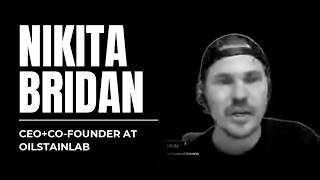
In this CEOism Pod episode, host Charles Cormier interviews Nikita Bridan, the CEO and co‑founder of Oil Stain Lab, a Los Angeles‑based boutique hyper‑car maker. Bridan explains the company’s evolution from the tribute‑style Half 11 to the ambitious HF11, a 2,000‑lb, ultra‑lightweight, carbon‑tub sports car that prioritises raw, analog driving experience while maintaining Formula‑1‑grade safety. He discusses the philosophy of “danger as thrill” versus actual safety, the target market of high‑net‑worth “maniacs” who value quality of time over time‑saving conveniences, and how the HF11’s price ($1.8‑$2.3 M) positions it against heavier, more powerful supercars like Koenigsegg and Bugatti. Bridan outlines the company’s unique funding model—initial self‑funding, an angel investor, and a Series A where early customer deposits are converted into SAFE notes— and provides a production timeline, noting the first carbon chassis is expected in July and describing an OEM‑style build process that aims for repeatability. He addresses daily‑driver practicality (ergonomics, climate control, snow testing in Aspen), the brand’s broader ecosystem (luxury merchandise, plans for a lower‑cost model), and marketing tactics centered on storytelling, social media, and a community of “11 Maniacs” who act as brand ambassadors. The interview also touches on Bridan’s early design education in Italy, the decision to stay analog in an electrified era, and the niche market dynamics comparable to private‑jet ownership.
Chapters
Welcome to another CEOism Pod. We have Nikita Bryden with us today. He's the CEO and co-founder at Oil Stain Lab, the head of mischief. And when you'll see a car, you'll get the understanding that, yeah, this guy's a madman. Like, you built something pretty crazy here, Nikita. Tell us what's up. Tell us, yeah, the product of your genius.
[FOREIGN LANGUAGE] Yeah, yeah, so yeah, co-founder here at Oil Stain Lab. We're based here in Los Angeles. We built an original car called the Half 11, which was kind of a tribute to the wild '60s motorsport. And then people kind of got excited about that, so we started a more ambitious project, which is called the HF11. Car built from scratch, ultra lightweight, super analog, raw driving experience. Basically, trying to be the craziest car on the street for true enthusiasts. And the interesting part is, like, we actually embrace, like, electrification, I think, unlike most supercar makers. So we actually believe in it and are building it.
For true car enthusiasts or for crazy people that enjoy risks, is that the right definition of, like, building a machine that generates more adrenaline? Are you, like— playing with your life and/or investment? Because if we talk about Gunterwerks, Gunterwerks are relatively safe, right? But they're also such a thrill. Um, or educate us on that. Does— is danger equal to thrill is equal to what you're building?
Yeah, it's, you know, it's interesting how we perceive danger, right? Like, if you go on a roller coaster, you perceive it as dangerous, but you know it's utterly safe, right? So I think there's that interesting dichotomy where our car is actually a bespoke carbon tub. So it's ultra safe. It's what they use in, you know, endurance racing or Formula 1. It's the safest sort of structure. So once you're inside, you're very, very safe. But the idea or the experience of danger is certainly something we try to bring in and like amplify. And we use another term actually where effort equals enjoyment, right? So a lot of people that want to drive, they want to— Yeah. To be part of it, they wanna have skills, they wanna be part of that special maniac crew that can extract full performance. And so that's who we target at, basically, the maniacs that are really fully engaged and want to be engaged.
And just for context, as soon as we finish this podcast, I'm gonna hop on my S1000, so I'm like a fellow maniac, right? To go get the haircut. Shout out to my wife from buying this hat. Because I look like shit right now. The cars look amazing. I think the previous version, I didn't like the design, but it seems like they got the head lift. It seems like the car is so low also on the ground. It's manual. Give us a bit more detail about why you think what you built is like what the ultimate car enthusiast wants.
Yeah, yes. I mean, we learned a lot with the original car. The original car was built sort of was never commercial. It was just as a tribute to the '60s. We wanted to get away from computers, and my brother and I specifically wanted to just learn how to build things with our hands. Whereas the new car is a reflection of our past, which was OEM car designers for all the big car companies and putting, you know, millions of cars on the road. So it's a much more refined, much more luxurious thing, but still we wanted to keep everything that we learned from that the original and what resonated with people. I mean, number one thing is lightweight, right? And cars today are just so much heavier than, you know, for decades it's been basically a problem. So we've kind of decided, okay, 2,000 pounds, it's about the lightest you could make a car, roughly 900 kilos. You don't need a ton of power, you know, and then just put the biggest, widest tires you can on it and it's pure mechanical grip. So, people that have driven like a go-kart or a shifter kart, they'll immediately recognize like what that driving experience is and how different it is than a production car. And so that's where we're aiming. We're aiming towards that purity that, you know, it's just a skateboard, it's a go-kart, it's simplicity. And I think that's really missing. So we hope that resonates.
And the difference between Gunterwerks, what is it? Gunterwerks seems like fine craftsmanship collector's car, although I would take it on the track track all the time, if you ask me. And I take it everywhere, dude. I drive that shit everywhere because every time I drive, I want to get an experience, right? Like, my philosophy is not point A to point B. It's like having fun while I get there. And just like you, right, I spend way too much time behind my screen. I want to get out of my head. I want to bring all these ideas that I have and synthesize them. So who's your ICP, basically, is what I'm asking.
Our ICP, right. Yeah, no, I mean, I think, you know, the car is— I think in cars today, the obsession is to save time, right? Everything that's in a car, in a modern car, is sort of designed to save you time, right? If you on the commute, you know, hands-free this, take phone calls. Our approach is like radically different. We want quality of time. So you may not drive our car all the time. We certainly hope you do. But if you don't, you'll remember and cherish that time. And so it's the pure distillation of engagement and time well spent as opposed to time saved, which is really just time wasted, right? So that's kind of how we look at it. And from a use case, same thing. You know, it's like we want you to use it every day, but we understand a $2 million card can't be used every day.
So is that the price tag to HF11? Is that, uh, $2 million?
Yeah, yeah, it starts at $1.8 million and then for $2.3 million.
Why would they not buy a Koenigsegg or like some crazy shit like, uh, a Lamborghini Venom or— I forgot— or Bugatti, right? Like What's the difference?
Yeah, of course. Yeah, so I mean, the big difference now— it's funny to say this because I think at $1.8 million, we're actually— we're cheap. Bugattis now are $5 million or so. Koenigseggs are $4 million. So there's that. Yeah, exactly. But the biggest thing is I think we are the ones that are focused purely on driving experience in the corners or in the real world, as opposed to, you know, Koenigsegg has 2,000 horsepower. They're incredible machines, super fast, very luxurious, but they're also very, very, very heavy compared to our cars, about 50, 60% heavier. A Bugatti is, you know, 2 or 3 times heavier. And there's no electric cars that are even remotely under like 5,000 pounds.
So— Yeah.
We have a unique advantage where it's weight and it's connection, right? The less there is to filter the experience, the more pure the experience is.
Why did these big boys didn't think of reducing the weight of it and thought about driving experience? And Christian Koenigsegg is like a genius, this guy. Why hasn't he thought of that? Why are you guys playing different games?
Yeah, so there's a number of reasons. Number one is obviously they've established a pathway that they're on, and in many ways it's a hedonistic treadmill, right? You can't tell your customers, "We're gonna eliminate this luxury feature, we're gonna eliminate this to save weight." So there's that. Then there's the fact that they've been around for 30 years. They started where we started. Which was a lighter car with less power. And every generation they add more power. As you add more power, you need bigger brakes, bigger wheels, bigger suspension, bigger this, and it all adds up. And constantly the cars are just getting bigger, heavier. And that's been sort of the trend, I would say, you know, is making these cars more usable. You know, we are a brand new company. We offer something that's totally different and totally focused on something different. So we're closer to like, Gordon Murray T.50, you know, with the center seat, which is a very lightweight car. It's a very raw car. And again, something that's very usable. It's not intimidating like a Koenigsegg. A Koenigsegg is a proper, proper machine. Ours are a little less intimidating from the horsepower point of view, but more connected from the purity side.
Yeah, why can't I stop thinking about the image of Elon and Till driving their F1 McLaren and flipping over? The car was like so light. Light and so powerful. Are you building something around these lines as well?
I think, you know, yeah, if you look at the original McLaren F1, 650 horsepower around 2,100 pounds, it's very similar to our car. Not a lot of downforce. We— I think tire and suspension technology has come a long way, so it's a little bit safer. But I think also, yeah, maybe a lack of ability potentially there with Elon and Mr. Bean, Roland.
Elon was a top driver back then. Talking about electrification, right, like the Tesla Roadster, I believe it's called, that looks like a proper car as well. Like, are they gonna one day get into that category? One day?
Yeah, I mean, we've obviously We all saw it get launched many, many years ago. We've all heard the rumors of where it's headed, where it's going, how it's going to jump up and use rocket boosters and all that. I think, again, you know, we're stuck in this era of cars where they need to float down a river, they need to fly, they need to jump over potholes. And it's like, well, what happened to just a pure driver's car? So that's what we're focused on. I think the Tesla will be the fastest 0 to 60 car by far, right? Right. Boosters and do all that. We don't care about that. We're actually going to be quite slow, relatively speaking, because we stick with a manual transmission. So you still shift gears in the EV. It's not a totally foreign analog experience. Like, it's nostalgic in a way.
Interesting. Yeah, the Sam Altman refund request to Roadster to Elon was quite epic of an email back then.
Yeah.
If I bring it on a track next to Gutenberg, it's not Gutenberg, I keep forgetting the name, how does it compare? Because you say a daily driver, I'm like, dude, really? Like, are people really gonna step down? Is it comfortable? Is it really a daily driver? It makes a hell of a fucking sound. I heard it like on Yeah, this test track. Are you sure it's a daily driver is my first question.
Yeah, so I mean, with the new car, it certainly is more daily-able than the original car. The original car barely had doors or whatever, right? The new car will fit someone who's 6'4" with a helmet very comfortably. There's a lot of room in there. Bespoke carbon chassis, which basically means we can make it very, It's a stiff platform, so we can isolate the suspension from the cabin because of that. You know, there'll be air conditioning, there'll be everything you sort of expect from a modern-day car. The reason we designed actually our own carbon tub is we wanted to use other people's tubs. It would've saved us many years in development. But kind of the drawbacks of using other tubs is you have to live with their compromises or, you know, their chosen direction. And so—
Mm-hmm.
Because we did our own, we were able to fix a lot of the ergonomic issues that you see. You know, for example, in a Valkyrie, you're rotated in, you know, I think 5 degrees towards center. So it's a very unique driving position that isn't comfortable. So we've been able to basically package kind of a 911 inside of our car, kind of a 911 driving experience, but inside a much lower, wider shape. So I think you can drive it. Our ground clearance is not extreme. It's similar to what you'd see with like a GT4, a 718 GT4. GT4. So I don't think you'll even really need a nose lift to kind of get over speed bumps. So yeah, obviously it's for maniacs, so they have to be a little crazy to drive it every day, but I think it's doable.
And you brought that thing to Toronto the other day. How does it do? How does it do in snow?
So we've, uh, we've raced on snow actually in Aspen with with FAT Ice Race. They organized an event in '24, no, early '25, maybe early '25. And so yeah, we took it out onto the snow and we're drifting and racing on an ice track. Again, the original car, no weather sealing, snow's flying into the interior, very different than the new car. The new car is very much almost a luxury car compared to that. So, um, yeah, lessons were learned.
When was your move from Canada to the US? Tell me a bit more about that.
Yeah, um, yeah, grew up in Halifax, Nova Scotia, and then a little bit in London, Ontario, then back to Halifax. And then at 13, my brother and I decided that's it, we want to be car designers, and basically put a portfolio together and got accepted into a school in Italy. And at 14 dropped out of high school, moved to Italy to study car design with all the legends— Giugiaro and Pininfarina, Bertone. So yeah, a path started very, very early. Oh, you're on mute right now.
With that crazy early path in your life, what took you so long to launch your own company?
Yeah, wow. So I mean, you know, I think growing up as a kid, the dream was always be a car designer and become, you know, this successful corporate designer for a car company, become a chief designer. And then, you know, obviously had a decent career, had some success, and also realized that maybe that's not the dream. Maybe the dream is actually something different. And at that point, the dream sort of switched to, you know, having our own company, but not necessarily building our own cars. And then once we built the original prototype and people started asking, you know, kind of about it to try and purchase it, then, you know, you pivot again. But I think for us and the company, the appeal has always been to solve problems, right? And to create products that people say is possible. Mm-hmm. But find these new business models, find these new solutions, and create these compelling problem-solving products. It's not necessarily about the cars. If we weren't doing cars, we'd be doing planes or spaceships or other products or something else. We'd be solving something else.
Other batshit stuff. The car itself, who's funding all of that? It takes a lot of money, right, to launch a car company, especially if you're building everything from scratch like you do, which is insane. Who funded that? I must guess like at least $5-10 million that you raised so far, right?
Yeah, yeah, so I mean, initially the first sort of program was all self-funded by my brother and I. Again, we did in car design, not millionaires, but enough to sort of, yeah, get the first car off the ground and build it over a couple years. After that, we were basically to put together a deal with an angel So the angel came in and that sort of really shifted us into development of the first car, pre-seed or whatever you want to call that. Then we've basically now sort of opened up a Series A, which is quite cool the way we've structured it. We've got 11 maniacs, so they put down a deposit on the cars, and that deposit is actually an investment in the company. So it goes through a SAFE. Okay. And that way you raise from your believers, right? The people that are buying your product. And then obviously you've got the regular investment pathway, sort of a SAFE note, Series A, whatever. That's also kind of running concurrently to that. So that's how it's being funded.
Interesting. When's the first car going to be produced and how much can you produce? What's your production capacity? With something so custom and artisanal?
Yeah, um, so first car, you know, basically all the engineering and everything started about 3 years ago, uh, so for 3 years it's been all on the computer, uh, pieces have now been starting to come out over the last 12 months, and then we're waiting on the first carbon chassis. So that's been the most difficult thing I've ever done in my life, uh, I would never do it again. But I probably would because I'm a maniac. But it's been a long project. So first hub is due in July. So once we get that in July, we can finally put, you know, the engine, the interior, everything together. We've structured the way the cars are designed. You know, everyone always brags about, oh, it takes us 10,000 hours to build this car. And, and that's great. That's, that's not exactly the best way to structure a business, right? Everything's hand-built, which means it's not repeatable. So our car actually is quite— we've taken almost an OEM approach. You know, a Rolls-Royce takes about 800 hours to put together. A Rolls-Royce is built very, very well. It's a very complicated car. Um, you know, whereas a Guntherwerks, they'll say, oh, it's 5,000 hours. The problem is with with the Gunthers, they start with a used car, right? A damaged old car that needs—
Really?
Like a full restoration. Yeah, it's an old 911. So it needs a full restoration, then they can start upgrading it. And so with us, we start with all new components. We can basically minimize the hours, which means we can put those hours to where it really matters, which is like quality, perceived quality, and really nice components as opposed to, you know, sanding each little bit because, the car has been crashed and it's off a little bit, right?
And doesn't that affect the end weight? Like, that must seriously disadvantage the car from a weight perspective to use like a very old structure.
Yeah, so yeah, I mean, if you're referring to like what they call the restomods, which would be a Singer or Guntherwerks or any of these other ones, they're using old chassis which are very like you said, heavy, they're steel, right? And they're not sophisticated. So then you need to go in and add a bunch of bracing because the tires today are so sticky, they'll crack a chassis in half. So you gotta go in, you gotta put a cage, you gotta weld all this stuff. And then yeah, you can add as much carbon as you want on top. You've added a bunch of steel already, right?
So. The best marketing strategy in a car company is to get as many on the roads, right? But the nature of your company and, mission, I guess, to make like a few units is sort of counteracts that. Like, what's, what's the best way to get as many clients as possible? Or is that even a goal, right? I'm thinking of like super promoter, you just give the car to one guy, he's just gonna fucking bring it everywhere and turn heads, and there you go, that's your marketing, right? Uh, what do you think about that?
Yeah, I mean, fundamentally, that's kind of what our 11 Maniacs are. They're the guys that believe in the company, and they, they understand they're getting an early car, and they want to be part of it. They want to be part of the family, right? And part of that experience. Like, it's very rare that a new car comes online and you can be part of it. So, you know, they're, they're all eager to take the car to, yeah, Malibu, park it at the beach, take it into LA, show everybody in Beverly Hills.
You don't ever park that. You don't want to park it.
Yeah. Exactly. And, you know, so, but it's funny because we've got, obviously, we've got two facets to the business. We've got the extremely expensive cars, right? Very limited production, but the brand is actually really inclusive because we do a lot of merch, we do chairs, we do furniture, we do coffee tampers, we do all these other things where, okay, you can't afford it, but you can still be part of the brand. And the items aren't, you know, a t-shirt with a logo on it like Ferrari does or something. Like, they're actually compelling, really nice luxury products. So we've got that, and then we dream, of course, at some point to do a cheaper car so that we can scale, right? So that's phase 2 of the business.
I would fully embrace the maniac brands, and I would go in the Tesla parking lot, and I would do endless donuts for like probably 10 minutes, and then I would hire like a towing car that would say like police on it and just like Maniac Police or something like that, and I'd tow it back. Uh, I had to organize like stunts like that, like Ken Block style. You've probably studied that, Maniac.
Yeah, yeah, absolutely. I think you're, you're right on the right track. I mean, we, we have quite a few ideas once the first car is up and running of what we do at like Monterey Car Week, and getting kicked out is, is certainly on the agenda.
Part of the Beatles.
Exactly.
This last question before I let you go. Your current clients, is it like word of mouth? Like, because these are rich people, obviously, right? Like probably over $10 mil net worth. How do you target these guys? Or you don't, you just let the word of mouth and the product do the marketing?
Yeah, it's interesting. I mean, we've, we've heavily focused on storytelling on social media, um, and that's most of what we do for outreach. We don't really pay for print or any luxury magazines or anything like that. Um, what's interesting is, you know, obviously some of these guys are a little older, right? Like, once you get to, to that level of wealth, you're looking at 50, 60-year-olds. And so A lot of the time it's their kid who will tell them, Dad, like, this car is sick. Like, they're doing the coolest stuff. Like, you need to go talk to them. And so, so many times we've had like an 18 or a 19-year-old kid reach out, and it's easy to blow them off, but it's like, you know, it's like— so, um, yeah, yeah, it's, uh, driving lessons in that fucking car.
Burns the clutch on day 2. Oh man, that's crazy. Oh yeah, another good ad would be like, hey, midlife crisis. Hey, rich dude, midlife crisis. Yeah, come on over, we've got something for you. Um, thank you for—
yeah, sorry, I was just gonna add one more thing. It's, it's a very interesting market because it's like the jet market. If you've bought one private jet, you're more likely to buy another private jet. And so it's such a different market than anything else where you don't really have competitors. You have places where they can allocate their money, but it's not really competition, you know, like they can have one of each.
People keep their private jets, dude, like they have 3.
Oh yeah.
Why?
One's never enough, is it?
Okay, so they actually collect, okay, well, I mean, the excuse would be like, yeah, I could rent it while I'm not using it. Like, I've never heard about someone collecting private jet, except like, obviously, like a fucking Dubai or Qatar prince or whatever, that just like, yes, pure obscenity, right? But I didn't know that. On cars, yeah, fully, because there's collectors, right? Private jet, interesting. I'm gonna research that.
Need your wide body, like A330, you know, then you need your G8, you know, just that's for the family. What about the kids? They need a jet, you know.
Interesting. Okay, I'll research it. Uh, you open up my mind. Didn't know that was an actual thing. But no, I mean, I could see myself, I don't know, like a jet, maybe, uh, one that's more recreational. Uh, helicopter, of course, because it's different machine. And yeah, just like different purpose. Maybe one that's very large to accommodate a group of people, right? Okay, I can get that. Um, yeah, Proper Maniac. Uh, there you go. Uh, Nikita, where can people find out more about you and the company?
Yeah, yeah, I think, uh, if they want to follow us, we're most active on Instagram, Oil Stain Lab, and obviously the website, oilstainlab.com.
There you go. So that was Nikita and Charles Cormier for another founder.
More from Charles


Founder Wisdom: the audiobook, version 2 (5 hours of stories from founders and CEOs)

8 CEO Questions I Love Asking: the audiobook (64 founders answer, in their own words)





