Noah Schömann - Co-Founder SYLO
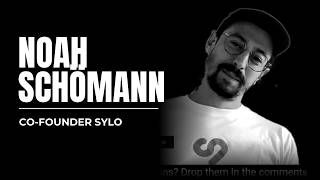
In this Founder Wisdom Podcast episode, host Charles Cormier interviews Noah Schömann, co‑founder of Sylo (formerly Silo), about his transition from a sales leadership career to championing meditation for mental resilience. Noah explains how chronic stress and burnout in high‑pressure sales and startup environments motivated him to create a personalized, AI‑driven meditation platform. The product uses a large language model to generate custom meditation scripts based on user‑provided goals or challenges, renders them in selectable AI voices (via 11Labs), and structures a 90‑day routine to build habit. Upcoming features include wearable integrations (Apple Watch, heart‑rate and HRV tracking). They discuss go‑to‑market hurdles, creative low‑budget growth hacks, and their current pre‑seed funding status with plans to raise again after product‑market fit. Noah shares personal practices—flexible meditation frequency, the importance of recovery, vacations, and micro‑breaks—and contrasts guided group sessions with individualized meditations. The conversation also touches on physiological factors (caffeine, post‑meal timing, lying‑down vs. seated meditation) and the difficulty many newcomers face. Finally, they provide contact information (sylo.digital.com, app stores) for listeners.
Chapters
Welcome to another Founder Wisdom Podcast. We have Noah Schulman with us today. He's co-founder at Silo. He's building AI-powered mental resilience. He's next head of sales at Marta and Liquid. He's in Berlin. I had the guy on my meditation group. I got to know him a bit more. You just had a kid, Noah, is that right?
No, no kids, no kids for me, not that I'm aware of.
The picture on your LinkedIn looks like you're carrying a baby, isn't that?
It is actually a baby, but it's my sister's kid, it's my nephew.
Oh, nice. Well, congrats to her. I just had mine and it's a lot of work. You need meditation in your life as soon as you have a kid.
Oh yeah, it's crazy. Parents, parents love to meditate.
Yes, yes, yeah, we need to. Tell me a bit more about yourself. How did you go from sales to meditation at the center of your life?
That's a fair question. So I have been meditating all along, all the time, basically since over a decade. So meditation has always been part of the practice for me, and especially while I was leading different sales teams, I was always trying to emphasize a bit of mental work here and there. For some it worked, for others it didn't. So I realized that there's a few things off with, let's say, the way meditation is presented on one hand, and also the way the big apps are currently working. So I decided to change that.
Yeah, tell me, what was your highest performance job, right? And you said you've been meditating for decades, it's not, I guess you didn't start it out in meditation with like, uh, on the healing side of things, but mostly optimizing, right? You were just like, oh, this is a tool that I can use to sell more. I see Dogebank here. Uh, is that, uh, when you— around the time you started meditating and outperforming your peers?
I'm not sure about outperforming, but at least I stayed calm while doing the same job.
Interesting.
It has always been a tool, that's right. I just saw colleagues, you know, right and left from me getting sick, getting fired, getting whatever, and it was also due to increased amount of work and just days and hours and then stress and pressure. So I thought, okay, if I already started my path kind of in that direction and I'm now not you know, building up the routines to take care of my mental health, I probably never will. So let's start this right and start this directly. So I was meditating, not on a, you know, I think a lot of people do the mistake and they're like, I need to have that billion-dollar morning routine. I will meditate every morning until the rest of my life kind of thing. And then you start for 2 days, it goes right, and then you fail once and then you're like, okay, it doesn't work and stop. I realized at some point I'm just someone that meditates, and that's okay. And I meditate sometimes a few times even a day. Sometimes I don't meditate for 3 days. I just try to keep it as like a regular thing I do without pushing me like as a next chore, because I think then it doesn't really make sense.
Interesting. And your peers, right? Like, um, You were in sales, you saw some of them burn out a lot. Is it because it's like a pressure cooker environment and they're just on, on, on all the time and after work was over, they didn't know how to just chill, they didn't have like a recovery protocol? Is that what you're even seeing nowadays?
Yeah, definitely yes. I guess everyone has their own type of protocols and some work better and others were less great and some are just coping mechanisms. So yes, that is what I've seen. And it's also, I had a very interesting meeting a week ago with a friend who's also in cooperation with a company that is working in meditation on site. And he was like, you know what, working with people that meditate is so chill. They're like relaxed, stress-free. It's not about emotions, it's just about the topic. And I think it's kind of a mental hygiene everyone should be at least doing something there.
What about like crazy high performers like Elon that never even meditated 1 minute in their lives?
Probably.
Are they just anomalies or is that a way to go?
I think—
That's even a good question. It is a— I think like it's a recipe for failure and Elon's definitely an anomaly, right?
I think he, in a lot of sense, he's an anomaly. He also— I saw that at a podcast, he was asked about his screen time, his phone screen time. It was 1 minute.
Oh, 1 minute, huh?
Yeah, I'm not sure how many people watching this have a screen time of 1 minute on a normal day.
Okay, so he responds on his computer on X because he's on X all the time. So I cannot see like of a more toxic or the lack of technology hygiene than Elon, by the way, because X is like the number one cesspool and he's always on there shitposting.
So fair enough. Um, yeah, nonetheless, I'm not sure.
It's just another like Elon latent lie, you know. He's like, hey guys, look at my screen time. Okay, Sherlock, but you spend it on your computer. What's the difference?
Probably, probably does. But I mean, I'm not sure if he's a a role model. I mean, specifically a lot of entrepreneurial things, but about mental health, I'm not sure if—
Oh no, he's the antithesis to, to that. But I think, um, well, you tell me what you think on that. I think personally every founder should take some time to chill on a daily basis and should have a recovery stack. That's my take on it. I'm aiming for— other dominance in many fields, and I'm very patient, right? And I'm not seeking to go like full force and burn out because I'm minded around that way. But I also know that to make it with the billion-dollar goals that I have, for example, you need to do like a strong blitz, right? And sometimes that will affect your mental health. I think that's like the mindset if you see like most founders in Silicon Valley raising and being super successful. Let's take YC, for example, right? They work like 16-hour days, if not more. But, you know, I've tested the other side of like not chilling and not having a recovery protocol, and means like just turning over and over in bed at night and not being able to sleep and dreaming about business. And then I wake up even shitty the next day, have like a debt that I need to pay, and then I bury it with more coffee or whatever fucking thing.
Yeah.
And then that depth gets me deeper and deeper, right? So Elon had a couple of health crises, and I think these take us back in many ways, right? And these are like totally chaotic to manage, and a net loss, and you, it's like in an ultra, right? Like in, I often listen to ultra podcasts about Moab, which is like a 240-mile race.
Wow.
And sometimes when they go too fast, they just bonk out, right? Literally need to sit down for 10 hours. And so, okay, sure, you've gained 3 hours on your competition, but then you need to sit down for 10, right? So probably not the best play.
Not worth it, yeah.
I'd rather go for scale, right? So just like small improvement of 1% on a daily basis. What do you think about that?
I think it makes a lot of sense. And I also think it's not about you necessarily need to meditate an hour a day. You can have 16-hour days where you don't meditate. Maybe you meditate at least, let's say, 3, 4 times a week, and you can still do your 10-hour, 14-hour days if that's what you're into and that's what you're up for. I think for the vast majority of people, that's usually not how they spend their time. And even for the ones that do do a lot of high performance, at least people that I know are always either fully on or fully off, and then they do 100-hour work weeks, and then they have a week of vacation, or, or, um, they have weeks where they work a lot less. So I'm more of like, find the middle ground in some things. And if you want to have that high performance, just try to sprinkle in some sort of break times. And also, at least for me personally, I usually make the best decisions when I'm well rested compared to super stressed, have like 10 things on my mind, And today with AI, I think it's much more about making that right decision than creating that next email campaign because that's usually just a 10-minute prompt away.
Yeah, I like it. Vacations also, right? Sometimes, I mean, you're European and Europeans stay like way too far, like 6 weeks vacation, which in my opinion is totally counterproductive if you have a life purpose, right? Because my goal was, when I was 18 was just chilling, right? And just having fun, purely, pure hedonism. But I have a purpose nowadays, so why would I take such a break? But for me as a guy that kept crunching and crunching reps in business, right? And not taking vacations, I've discovered how game-changing vacations were. Like even if it's 4 days, right? Like I went to a beach about 2 weeks ago for 4 days. Mm-hmm.
Nice.
And that was fucking good, man. Like, I could just like sleep, not think too much of business. I would take emails for like, what, 15, 20 minutes? But one, disconnecting was easier, and that took practice, right? That took many vacations. And two, my brain consolidated insights. It got clarity, right? Like, I think when we're high performers, we're always on that performance treadmill, and we can plateau a lot of time, 'cause we're trying to optimize for 0.0001%. And that's really hard because you're already like at the top and I couldn't get past that plateau. It's like, what am I missing here, right? And there's like so much noise and just like taking 4 days allowed me to just get clarity on what my bottleneck was and unlock that when I came back. What do you think about that?
Yeah, I think again makes a ton of sense, right? To kind of zoom out. I try to do this almost every 3 months for like 1 or 2 days where I try to do an entire day. Something that has nothing to do with meditation or Silo or anything and try to really get a new perspective on the same challenges. And I think you come back with a fresh mind. But if you're always down there in the trenches kind of trying to fix the next 5 things, you— I think sometimes I even turn blind in a way. Where in Germany we have the saying where you don't see, um, the, uh, the, the forest because of all the trees.
Yeah, yeah, yeah, I'd love that saying. Hey, we have a question from Marianne. What are you building right now and how do you use your own tool to get better?
That's a fair question. I'm building personalized meditation. So basically the way it works is you chat with an LLM that has been fed a ton of like scientific data on reflection and journaling. And then you kind of dig down to either a problem or a goal or some sort of state where you want to go or issue that you want to discuss. And then there's a personalized meditation being created just for you. So we'll have your name will be written for you, and the audio file will be by the voice, you know, that you choose by an AI voice from 11Labs. And that way you can consume the particular meditation that you need next.
Mm-hmm.
And not only that, but it helps you to build a routine within 90 days. So you will be hooked to be like, okay, that was my first meditation. What's my second? What's my third? How is that kind of going to continue? I'm using that on a daily basis. I think there's two angles, right? One is me having a personal challenge or issue or something that I want to reflect on. And then the other thing is just testing the app. Yeah. And those are kind of obviously gets mixed sometimes. And then I meditate with it as well. That's how I use it.
That's intriguing. Why launch a company in that space if, because it's a hard niche, right?
Like let's say— Oh yeah, it's a lot of people doing mental health.
Like convincing people that they should meditate is like, It's like, hey, be aware of something you're not aware of. Dude, like I sell obvious stuff, right? Like I do go-to-market as a service, I do fundraising as a service, I'm in the money space. It's like, hey, do you want more money? Okay, sure, pay me a couple grand and I'll multiply that by like 10 to 100x, right? I'm in an easy niche, like even cavemen are aware of that. But trying to sell meditation to people harder. I have a counterpoint to that, which is that I deal with a lot of CEOs and founders, and as you know, I send them like an automatic email, hey, do you want to join my CEO meditation group? And I'm getting lots of interest for that. So, tell me a bit more about that nuance here of selling mindfulness and meditation.
So, first of all, I think Peter Thiel said that in his book that If there's something you know to be true, but society doesn't agree, there's a huge opportunity. And I believe meditation helps you, and it's not a belief, it's based on science that cortisol will lower, that your sleep quality will improve, your focus will improve, and all these other benefits. But a lot of people still see meditation as this woo esoteric kind of spiritual religion where it can be, and it is for a lot of people, but also doesn't need to be. And it, like, from, from a scientific perspective, it isn't. You can do meditation, it will lead to your biomarkers being changed, like your brain will change, your cortisol levels will drop. And that is true, that, that is just a fact. And also is a fact that stress is increasing, that people at least in Germany, but I can imagine in the US it's similar, are waiting for a therapy appointment for months and months and months, or they are in crazy expensive. And that being said, we use meditation for prevention. So we want people to regularly take care of their mental health so that they don't even need to necessarily go to a professional. Doesn't mean that if you have a true sickness, no need to go to a psychologist and can do that with a meditation app. I'm sure everyone here is aware, but the issue is rising that people are stressed, that the world is moving faster and faster, and people cannot kind of hang on to it. And meditation is an obvious solution to this. Plus, us at Silo, we have a clear differentiation towards anyone else offering personalized meditation, which isn't being done the way we do it.
You have two co-founders, right?
Yeah.
As an investor, I'm looking at this and like, how can I get return on my check here? So it's like, why did you decided to launch with two co-founders?
So one thing is, I think we have a technical co-founder who's obviously brings a lot of skills to the table that I, don't have. And I think especially, and I thought that differently when I started to kind of knit around with Lovable in the beginning, especially now in the time of AI, it will be super useful to have a co-founder that has technical capability, capabilities that come before AI was kind of getting bigger and bigger. A lot of apps have been killed in the App Store that were AI-built. Yeah. Ours obviously wasn't and isn't, and therefore it's not a problem. And second, I think there's so much things as a founder you need to do from marketing, sales, you know, content creation, UGC, organic, social, improving your product, testing that. You will get much further if you have a bigger team compared to just being on your own. Yeah.
Are you raising right now? Like, what's the next step for you?
We're currently not raising. Let's say we're exploring the thought of raising in the next upcoming months, but not at the moment. We raised a pre-seed end of last year, and we are still in the phase of, you know, building out the product, getting all the features done, getting a lot of feedback from the users, improving the product itself, and testing a ton of, go-to-market channels, which has been tough, to be honest. Yeah, because obviously there's the obvious channels that have been played by the big players that have big budgets that usually don't work out for us. So we have to get creative, and there's a few things we do that aren't that expensive that can kind of, let's say, hack, hack growth a tiny bit. But once we have that perfectly in place, realistically we will start another funding round.
As the stress gets higher in your startup, do you find yourself meditating more, or is it just like a daily routine that is established and you don't change it?
No, it changes. It's not, it's not a, it's not a fixed thing. It changes. I would say I, I rather meditate a bit more the more stressful it gets. I would say, yeah, that's That's probably true, but it's not because I feel like doing it. It's rather because I know I need it then.
What about guided meditation? My CEO meditation group, it's not guided, but it's like a fixed time, makes people accountable. What do you think about the different concepts here of meditation?
I love the, what you call the CEO meditation around, let's say, I think it's amazing. Yeah, it's kind of a, you know, other people are also doing it at the same time. So you're a bit more committed. You have a date set to it. That's something I adore about it. What it doesn't have, what individualized meditation does is it kind of touches on your specific issues and problems. And most people I've met that are not into meditation, try to turn a timer on 10 minutes and tell them to do nothing. 90% will fail.
Why?
Because they're not used to it. And it's very normally, we talk about adverse—
It's challenging, right?
It's super challenging. It's adverse effects of meditation. A lot of people that start meditation actually get more anxiety in the beginning because they're not used to this and it stresses them out to stay still, to stay silent. And therefore in that particular moment, if you then hear a voice that you choose your own and that kind of guides you through this experience, it's much easier for the people to hang on to this.
Yesterday I had the CEO and founder of Intrude on my podcast, and she measures cortisol, right, and, and stress on her app. It's pretty fun. So my, my counter to what you just said is, is meditation actually mostly about controlling your physio—
physiology?
I noticed that on my groups when I take L-theanine and I meditate, I have a deep meditation.
Oh, wow.
And when I'm like just hype and I have too much caffeine in my blood and I start meditating, it's way more challenging. So should I just take a chill pill like every, before every meditation session? Or like, should I meditate after a very hard workout? Like, is there something to be said about the physiology and, Or if I throw myself in a meditation after a very stressful exchange with a client, should I not expect to get in the zone after, what, 10 minutes? Is there something to be said around that?
I'm not too sure. I just know about don'ts, not so sure about the dos here. So one odd thing is you shouldn't meditate after eating something with your blood sugar.
Oh yeah, no, that is like the gut-brain axis, right? It's like these two are connected, definitely.
And the other thing, although we now offer sleep meditations, usually if you want to reach that calm kind of inner freedom level, you shouldn't do it lying down that much and not in bed. Obviously, if you want to fall asleep, you can meditate your way to sleep, but that's a different type of meditation than one that is very awake. So that's kind of what I would look out to. But if you have a stressful call right now, you can meditate 5 minutes later. It might take you longer to reach a kind of less stressed level, but you will get there.
Do you meditate with your co-founders? And what is there to be said about, you know, first starting with a meditation and breathwork and then finishing with your co-founders of like, hey, go fucking get it, right? Like, uh, you know, guided meditation that stimulate performance. You know, there were these apps around that.
There's a few things to this. So one, yes, we do meditate regularly, usually before lunch in the office. Today I'm in home office, but when we're in the office, we do that there directly. And then every time I'm, you know, I don't know, I'm upset, I'm down, things don't work out, customers complain, things don't work, deals don't get over the finish line, I do that meditation and I reflect. And we do that together. After that meditation, we're like, Jesus Christ, that was really good. That really helped me. Oh my God, we can help so many people. Let's get on with this. You fix the bugs, you gonna do some socials, I will do whatever. You know, kind of like we have that experience, we enjoy it, we know it's great, we just need to get it out there.
Yeah.
So no, I think it's super motivating. It's not like I fall asleep after we did a meditation. And also my critical mind is always kind of questioning why the meditation is going. Okay, we can improve this, we can improve that, we can improve this. And I listen to it 1,000 times, I still find some things that I think, okay, that can be a little bit better. So it also drives us while we test the product to improve the product.
Is there something to be said about meditating before a tough meeting? You know, like maybe sometimes there's a tough client or tough investors, you know that shit's gonna go down, maybe meditate before so that you have to meditate less after the fact, right?
Yeah, I think especially when you have negotiations, I think it's super helpful because the most unprofessional thing I would say to do is like lose your temper. And if whatever situation you sit in there and you're like, okay, I expected that. I expected nothing to come out of this. I'm super relaxed and I can still talk. And people will realize over time that you are not kind of like taken off your feet easily.
Yeah. And you're more in flow state, right? So I'm not promoting like fighting, but like with my ICP, you know, like they're high performers and sometimes engaging in brain sparing gets their respect. And I love brain sparing, that's how I grow my brain. When you get hostile, when you get defensive, is that when shit starts to go wrong, right? So, like, stay playful, maybe, yeah, throw a couple of punches depending on the circumstance, but do not— it's like, I just wish I could measure my cortisol levels, right? I wish, like, this Whoop band here could just, like, in real time, tell me, like, what my cortisol is or my heart rate. I love that. And as soon as it goes over a line, I try to step it down, because I know that I'm about to not cross into win-win territory.
But the Whoop Band does measure the heart rate, right?
Yeah, but is there like a place I can see it on this computer in real time that's like, oh, chill out, Charles, start breathing more because you are getting too stressed? I don't think there's such a thing, right? Maybe I can build it, like kind of project I could vibe code pretty easily, but—
What we are actually adding in the, in the coming weeks is actually wearable integrations. Funny you're touching this, where you will see how did your heart rate kind of move throughout the meditation. We're currently like working off of Apple Watch, so I'm not sure every wearable is different, so it's going to have a different, uh, integration, I guess. But that's, uh, definitely possible. But cortisol is a tough thing to measure. It's a biomarker, right? So Apple Watch doesn't catch cortisol. It's rather like heart rate and heart rate variability.
Breathing rate, yeah.
Yeah, yeah, yeah.
I'll try you guys next time I get in an airport. I tend to get like naturally stressed when I am in that environment.
And you have time usually at an airport.
Yes, yes, yes. Noah, where can people find out more about you and the company?
You find us at silodigital.com. Sylo.digital.com. Always happy for any type of feedback. You can text us via the website, via the app. You find links to the app. We're in App Store, iOS and Android, available almost everywhere besides like crazy regions like North Korea. That, that might be tough. And we're always looking forward. I read every single user feedback. Always happy to, to find bits and pieces from people that like to meditate, how to improve this.
As Noah and Charles
More from Charles


Founder Wisdom: the audiobook, version 2 (5 hours of stories from founders and CEOs)

8 CEO Questions I Love Asking: the audiobook (64 founders answer, in their own words)





