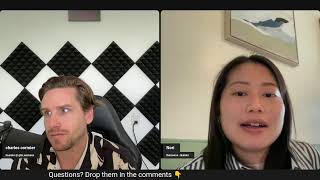
In this Founder Wisdom episode, host Charles Cormier interviews Nori Kizawa, a Japanese technologist and solo builder behind ReBrowse, a browser‑automation platform that tackles anti‑bot challenges for AI agents. Nori recounts her early fascination with Bitcoin and the Lightning Network, which led her to drop out of university and work on multiple blockchain projects, including a stint as partial CTO at Cerberus. She describes her participation in global residencies, hackathons, and hacker houses, emphasizing the value of face‑to‑face networking and the cultural shock of meeting online peers in person. The conversation shifts to her identity as a builder rather than a traditional founder, her brief co‑founder experiment, and why she prefers solo work until the right partner appears. Nori explains ReBrowse’s flagship “Login Nano” product, which solves the anti‑bot and deterministic workflow problems that existing browser‑agent tools ignore, and outlines her early‑stage startup client base and go‑to‑market strategy. The interview also touches on the closed nature of Japan’s startup ecosystem, the “Galápagos” effect, language barriers, and how multidisciplinary founders are often hard to categorize by VCs. Finally, Nori shares where listeners can follow her work—X, her personal site (n0i.com), and GitHub—and mentions her hobby of producing house music.
Chapters
Welcome to another Founder Wisdom podcast. We have Nori Kizawa with us today. She's making coding agents browse the web. She's all about MCPN softwares at ReBrowse, and we're gonna talk about her experience at the residency. I see some ODF here and a bunch of other intriguing stuff. So Nori, welcome to the pod. Tell us a bit more about yourself and what you're up to.
Yeah. Thank you so much for having me. So, I'm Nelly. And I am currently working on the browser automation using Coding Agent. And more than that, I'm really focused on solving the Leo Ward issue when it comes to applying browser agent. And I was in the residency cohorts. 6, which was happening last year from like last September to December. And I was on the kind of like a demo day and sort of— I, you know, I've been— I just started last year to explore this technology and the project. But then I was back then in actually Singapore, and then I was also in India. I have no idea what's happening in SF, but just I know that a lot of like AI thing is going here. So I would love to share like how it helps me, like how it actually helped me to understand the situation here and also was the kind of gap between the idea that I have before I'm coming here and then after I came here.
Yeah, yeah. But before we get into that, let me help deconstruct like who you are and your past, right? So—
Oh, okay. You're from Japan.
You're from Japan, right?
Yes, yeah.
And I saw, how old are you? Like 23 or something, right?
You're like— I am 28.
28. So still young and you had an obsession with Bitcoin and crypto quite early, right?
Absolutely.
So is that when you started out your entrepreneurship career?
Yes, absolutely. So I have quite probably like eccentric background. When I was 19, I discovered, my friend of mine talked to me about Bitcoin and Ethereum. I was like freshman at the university in Tokyo and I was really into that in terms of like, oh, what? How it works and all this physics and mechanics behind it. And it's kind of hard moment for me because first of all, I'm not able to find a professor who can teach me how it works. And then second, I have no idea who actually working in the building. And it turns out the people who is working in this crazy Bitcoin open source community, most of them are not really Japanese, even though Satoshi Nakamoto is a Japanese name, pseudonym. And I end up stop going to the university and then found some people who actually able to teach me What's the software? How we can make the better software? What's the distribution system look like? And I was working on Lightning Network, which is the second layer of the Bitcoin, which is extremely specific technology and encryption mechanism they use. So I was really wanting to jump in. So I quit going to the university and— Yeah, that's how I started the journey.
Nice. And okay, so you must have had some investments as well in Bitcoin because you were a trader for some time, right? And then, yeah, your first official— and you were an engineer, right? You had jobs in the meanwhile. Your first official company, was it Cerberus?
Yes.
Search. Uh, tell us a bit more about that one and why it ended about a year ago?
Sure. So, well, I started the service research because back then there was— maybe some people know— DeFi and NFT, which is basically try to make the finance application on top of the blockchain. And I was really into that. And when it comes to I wanted to have the job which is really related to what I'm working on. But I was back in Tokyo and kind of like I was unable to find the project that I really want to work on. And I came to San Francisco. I joined the hackathon. And I worked with another team member. And he eventually came to Japan. So, I blocked him to make a company. And And we started to explore that direction. But after that, the next boom came, which is the more like NFT and the token exchange marketplace. So, I end up working on probably more than like 6, 7 projects. Almost all of them are BC-backed startup projects. But I often work as kind of like partial CTO to join their team and build product from scratch. And then we managed to like do these auctions and everything as I mostly load smart contract and make sure it work safely. And yeah, so that was the 3 years of experience that I've been doing that. And actually after that, So the great things was, even though I quit going to university, kind of dropped out, but I was invited to do the lecture at the National University as a guest professor, which was very honored experience that I have. So I think it's just, it's good to say that if you have a kind of eccentric, like weird past, but if you are really sincere to keep working on your own interest and I have like like person that I, they, they can share the, uh, the achievement properly. Um, definitely the career person will be like opening, opening up.
So many of these like incubators and houses and accelerators, right? Like A16z Speedrun, ODF, uh, the residency. Why do you immerse yourself so much into, into these, uh, hacker houses or programs and What did you get out of each?
Uh, yeah, why? I don't— I think so. The last 2 years I was working on different, different, like, uh, project because back then was doing consultancy, which is more like— it's, it's like helping others to get their dream come to, uh, feeding. I was feeling like Like, I was doing what I can do, but I have a more crazy idea in terms of technology that I want to really pursue. So, like, I'm juggling the two desires where, like, you know, I can help people, I can lead the team and then make sure that everything works well. And then the other side, like, oh, there's a lot of, like, crazy project I know, and I make a time and work on these kind of things. Then this emotion is getting bigger. Like, if I— so when I started traveling, for instance, um, back then there's a lot of, like, hackathons over the world. And, um, most of people actually work ways, not really physically in the same place. Like, everything is happening remotely. So I thought one day, like, if I'm gonna die any— anyway, um, I really want to meet with them I worked with because I never seen them in person. And why not? So I started, uh, traveling, um, 2 years ago, and then met with those people actually in like 10 different cities over the world and then join hackathons and get to know— I really want to get to know who are they really. And I think it's somehow relatable, the people who is like doing nomadic thing because I think they have a lot of presence on the internet. But probably it is quite kind of like weird experience that I know those people on the internet, X, I know what they— that their belief is, what they doing. But when it comes to the real person meeting, they actually have more like charm. They have more like normal people. Like— they look like great and kind of like, you know, over— kind of overwhelming to reach out at some time because their background and achievement. So over— like, like a great— and but when it comes to the Leo person meeting, they are very like just sometimes very same, very stupid. And although their achievement is really great, so I was able to learn this, like, uh, they really normal human. And, uh, that was, um, that was really good experience for me to learn. And actually, like, I can like kind of got off that I can just be chill. I can just be chill and normal person and just I can keep pursuing curiosity to meet the right people. So that was actually a good experience. Like, I never learned if I'm like uh, my attention was caught up with this, like, career work things. Yeah.
And you consider yourself a builder more than a founder, right?
I think so, yes.
Double-click on that, because founders would get, uh, funding. Solo builders, like, maybe they like working more solo and not having a team, right? What's the difference, and why do you choose that identity?
Great question. So, when I was in residency, actually, I had a co-founder who's the guy who made the WebMCP. We explored co-foundership probably like 1.5 months. The reason I did that is because first of all, like, he's extremely good engineer. And we have the same direction. But the things I was missing is I thought like I do need a co-founder to do the startup. And it is probably true, but it's often said that if I have, you know, one co-founder in any ways, like—
Yeah.
It didn't— they're like amazing. They're probably amazing, but if you're not aligned with what they really want, I think it's important to know that it is better to be solo rather than like having the wrong teammate because they have their own things that they want to do in their life. And so, you know, I really like to work with team, but Until you get to the point, actually, there's actually a lot of like founders are starting from solo. And I think it's, it's the reality until you meet with the right person. It is better than like grabbing random people and gathering random people to make the team look better. That's, that's how I think.
Yeah. And I will add a couple of things on that, 'cause yeah, finding the right co-founder is extremely hard, especially if you're an outsider, if you're not from the Valley, right?
Absolutely, absolutely.
A lot of the best co-founders, if you check YCs, it's like guys that went to Stanford together, right? Like, yeah. Or that know each other since high school, and they're like two savages that like started coding at like 15, and it's like, you know, probably the Gates and whatever his first co-founder name was, type of partnerships, right? And I think it's really hard if you come outside of that. If you come outside of that, my formula so far has been talk to as many people, right? Like using the podcast as a front end and A/B testing stuff. So me, my funnel is like a podcast, then they become clients. If we really like each other and we've worked together for like months and months or years, then we launch business together.
Yeah. Yeah.
Exactly what happened with my last business partner, Sonny Ray, right? Like, he was, I did GTM for him and then I was like, oh, you raised $100 million, let's start fundraising as a service together, right? Like after he referred me tons of clients. So there's no like easy way to this because like you said, it's hard to get aligned on the same priorities. You need to have the same values. Me and Sunny, like, we argue like at least like once every 2 or 3 days, right? Doesn't mean that, oh, everything's gonna end, but you also need to be comfortable arguing and changing direction and adapting, right? It's just like a relationship in real life, right? Like, with my wife, I had to adapt a lot of my philosophies and accommodate her and give her some stuff. It's like give and take, right? So incredibly hard. And yeah, till you can find the right co-founder, I guess, like, solo building, right? Um, what's next for you with ReBrowse? You're like making agent browsing faster, which is like, uh, a nice market, right? Very investable. Like, there's a lot of attention there, but agents are still like not fully deployed out there, right? Like, the, the TAM is increasingly, uh, big, but it's still small, right? So like, how, how are you getting, uh What's your plan to get product-market fit there?
Oh, sorry, give me your last question again.
Yeah, product-market fit. Um, how will you get it with ReBrowse, you know? Because, so who's your ICP, right? Who's your ideal customer?
Absolutely, absolutely.
So there's— and how, how are you reaching out to them is sort of my question.
Okay, so, um, technically ReBrowse is my first product, which is more like general consumer. Like I didn't really think about the ICP at the time, but now what I'm working on is a basically the product name is a Login Nano, which is the, so when you are building agent and you wanna automate like a browsing flow, usually the one like anti-bot, is the one biggest challenge because all major 5 or 6 browser agent providers don't provide a solution end-to-end to solve the anti-bot. And so, the builder who wants to do some browser automation on your service but stuck with the anti-bot problem and then also the deterministic workflow. So, those two things is actually— Yeah. No Lily address properly. And that's why I have currently like 3 like clients, and all of them are actually startups. So, um, and they, they went on, uh, I don't know how many, like 3 or 4 like CJ startups to make sure that, hey, can you solve me my like anti-bot problem? And then they consulted 4 or 5 different— I wouldn't say the name, but the browser agent company that they are sending the browser agent and then getting funding, like Series A, Series B, Series C. And then they wouldn't be able to get the support to solve this specific problem. Because, you know, it is interesting to talk because if People once get funding, and then especially like Series A, Series B stage, they need to find and look for the big fishes. They don't care startup, they don't care individual, like people who, especially like before Navidio, and why do they care? Why do they support, especially the one-on-one support? That's gonna be loss for them. Like they're gonna lose money by helping those people. But the great thing is now we can utilize the power of coding agents. And then people actually don't need to build browser agents from scratch. But those who started, I mean, a couple of years ago, I mean, that time, having a high-quality browser agent is really valuable. So that's how they are able to raise money. And then they have a trajectory of having a bunch of annual high, like 7-figure annual contract with the enterprise. So that's why their story narrative works. But now this agent itself is going to be more commoditized. So anyone can build by their own agent in their own requirement. And why do they need to buy in for it? But what they really need is infrastructure. So that's why I think— It's going to be more on demand, but not so many well-known startups are not really addressed to solve the problem because of this timing issue of the investment and the target market. So, my target is really early-stage startups who do need to know what they need to do, but probably fail to do these automation things using the existing solution. If I say that, like, browser.use, browser.base, Stew, and all these popular browser agent tools. And then they are not perfect end-to-end because they are not meant to be. So, that's why I'm really excited to hear all this, like— Yeah. Actual, like, user experience from people from actually the Discord of this platform, because they won't say that they have trouble. They don't really vocalize it. They just leave. Oh, it doesn't for me. It doesn't work for me. Just I will try another thing. And developers just leave. And collecting those small niches and figured out, okay, this is the biggest problem, but people don't really say. So, maybe worth addressing. It's hard because it took me 6 months. Well, more than that. But I didn't want to give up. I think this is the most difficult thing to kind of like explore the problem space rather than the solution space. I think most Engineers are not really used to this kind of mental model. Me either, but I just focus on solving the problem for someone who is not really getting support from people.
As someone that's multidisciplinary and weird, do you find that some people try to categorize you and have a hard time categorizing you? One category, like VCs, for example?
Oh, you mean like, um, raising money from VC?
I don't know, really, right? Like, you're— you started in neuro— in BCIs, right? Crypto. Uh, then you, you're a builder traveling the world, and then you're starting this AI agent browsing company. And I'm saying that because I'm the same way. Like, I, I do a lot of things, and people have hard time categorizing me, right? Do you feel, you feel people try to do that, uh, on you nowadays?
That's interesting.
Uh, humans try to go for heuristics, right? Like they try to understand someone quickly in a fast way. Like, how do people categorize you nowadays?
If, uh, I would say So, I think it's hard. It's hard. But I think I am like, I'd say I am builder. Like, I like building. And especially, like, not just building, but I actually want to solve the real problem. And then paradox here is I tend to get interested in something like technologically on the edge. But usually, like, it's basically like find the solution and looking for problem. It doesn't really work. So, but if I don't know the solution, probably— Like, it's like, you know, one step forward, one step back. So, I would love to introduce myself as just a builder. And then I wouldn't even say the founder because, I mean, how many team members do I have? Just be doing by myself. And then that's why I'd like to talk about a little bit more about the— actually, the upside of like introducing me as a builder is, um, it definitely did you sort of like a good— so if I introduce myself like a founder and I'm doing startup, I'm like front Amazing. I might— So the fear, for instance, I want to talk a little bit more about Aqua Hire opportunity. A lot of good builders, and if they are doing the right things, it is natural to get the kind of opportunity that, oh, actually I invested in this company and they are looking for the people exactly like you. And I never know that before I'm coming here, but then it's pretty common, especially a lot of like early stage YC company, like Series A, like even seed, that they, you know, they can specify that what type of like tech stack that the people who's familiar with are looking for. And— Um, It could be very flexible. For instance, I can maybe have a contract with them or I can join with them or I can ask them to be a distribution partner of my project and I can help them to build. You mentioned being an outsider, it's really hard to penetrate into the market. If I introduce me as just a builder, I have an option to be able to see which path might be good for me at this current situation. It just not be like 3 million fundraising guy being the founder and then just everyone is competitor. It's not like that. Yeah.
One last thing I wanna cover before we end the pod. You're from Japan. I read the Nextpost about you. Japan is such a closed culture, you know, and I rarely talk to successful Japanese CEOs or founders. It's crazy.
Masa?
It's crazy. I mean Masa, but Masa wouldn't talk to me at this stage. I love Masa, by the way. Um, but what I'm saying for this podcast, right? Like, uh, it's just very rare that I get responses from Japan, uh, for, from CEOs and founders or successful VCs. And if it is, it's like expats living there. It's such a closed culture. It's like quiet. It's like, how would you describe it?
Um, that's a great question.
I'm reading your X post, right? And how could that be improved?
Well, so I didn't really come back there like last 3 years. I mean, they just culturally, I guess, absolutely too, it's closed. And I think simply say I'm worried about it. We have a massive issue of declining like birth rate. Overaged in general in terms of population. But I think the culture is so different, and that's one of the biggest struggle I have because, like, everyone become— obviously, like, when people graduate the school and then start working in work environment, they have to optimize their behavior and the cultural, sort of like social norm when it comes to the business meeting and then sales conversation. And then they have a pretty unique, closed and very intimate way of doing a business. In Japan, which I think good for domestic, like, things, but I think it makes it so standalone and kind of like we call it Galápagos, which is the name of island that they have a pretty unique species and kind of like ecology, but it just so— Yeah. Like no interaction with outside of the country. And then it's so weak, um, when it— whenever, like, software and even the AI, that there's a lot of people, um, have a potential to make something crazy, but just this social norm and social pressure, uh, suppress them to go all into this, all the extreme experimental technical revolution. And I think it's not good. I mean, and then there's another thing that I really want to mention is the biggest language gap. So I went to the university in Tokyo. So there's a lot of really smart kids that I was really influenced by, but then they're never gonna— like a few of them actually go to like, go work for the Chinese company and American company, but I'd say like 0.1%. Yeah. And most of them just spend their whole life in Japan and they never known, like they never been in outside of the country. Then I think it is very unique. Like I never seen any other, you know, like I have a lot of friends in India and like South America and other like Europe and UK, then never that kind of level that so, so in like inside domestic focus. And I think it's— Yeah. Yeah, it shouldn't be like that.
Yeah, I'm Canadian, right? So that we have a similar problem in Montreal. I mean, not from the quietness side of things, but, um, in our case, like, being too much on the social side of things. Saw some posts of Peter Levels on your X as well. He comments similar stuff about Europe.
Oh, really?
Yeah, Canada is not as bad as Europe, like, from, uh, a perspective of favoring startups and not paralyzing founders to start companies, but yeah, similar problem. Hey, last but not least, you do house music as well. Where can I listen to your music?
Oh, um, I didn't really publish, but I, I, well, if I do, I think I would do on my YouTube.
Yeah, please send me some beats, right? Like, uh, some of your— you put it on your LinkedIn at two places, but yeah, we need it.
It's just a joke because I think it's just a lot of people— sorry, Abby. A lot of people in LinkedIn try to protect like, I'm professional. My career is like 10 years experience in sales and Amplify is whatever. It just could be more chill. I like have music. Yeah. So that's my intention.
Great. Where can people find out more about you, Nori?
Well, I think I'm pretty active on X. Nori.com is generally like my front page. Like, ndori.com is my blog. And for my work, what I'm currently working on, I'm pretty active on GitHub. GitHub. Everything is on my page, uh, you know, n0i.com.
So that's perfect. So that was, uh, Nori and Charles Cormier for another Founder Wisdom podcast.
More from Charles


Founder Wisdom: the audiobook, version 2 (5 hours of stories from founders and CEOs)

8 CEO Questions I Love Asking: the audiobook (64 founders answer, in their own words)





