Patañjali Chary - Founder & CEO, Fourth Vital
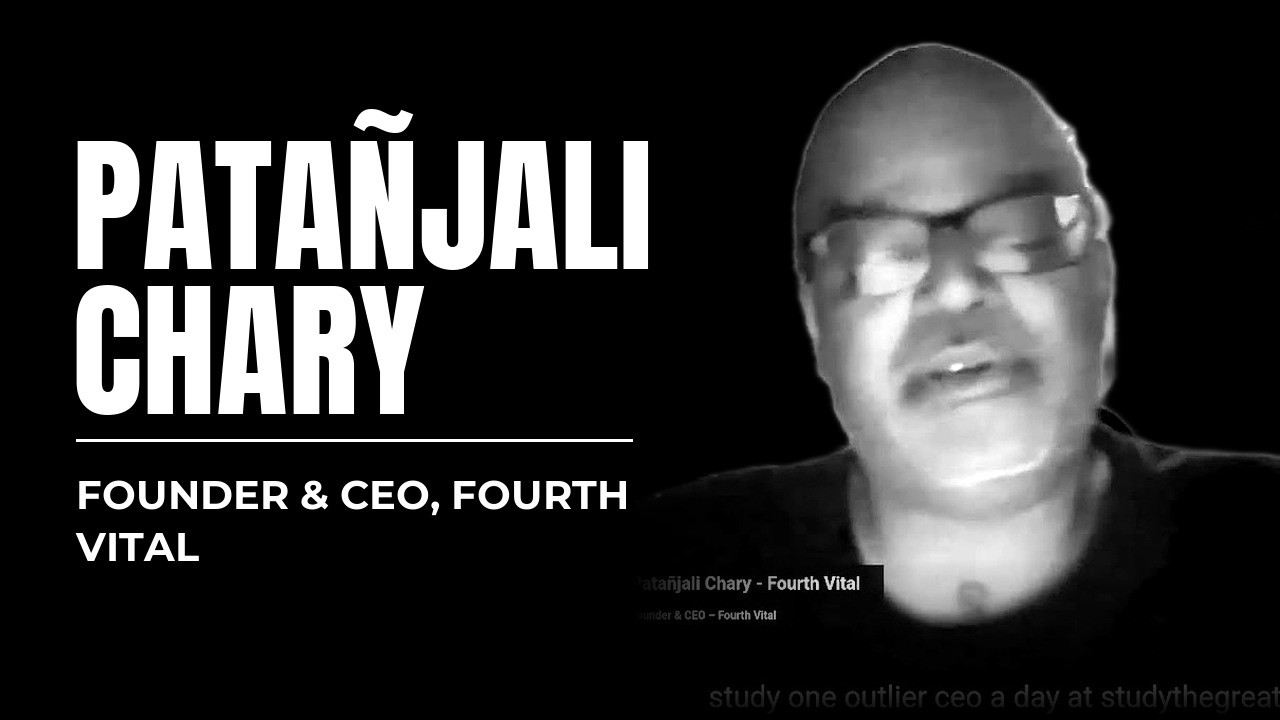
In this Founder Wisdom podcast episode, Patanjali Chary, founder and CEO of Fourth Vital, discusses his personal motivation, the technology behind his startup, and the business strategy. After losing his mother to acute kidney failure and experiencing severe health setbacks himself, Chary was driven to find earlier detection methods for kidney disease, which affects nearly a billion people worldwide, 90% of whom are unaware of their condition. Fourth Vital leverages a 35‑year‑old physiological signal—captured in a split‑second using a novel IoT edge device—to predict kidney decline well before traditional labs (eGFR, UACR) show changes. The signal is combined with EMR data and AI models that create patient‑specific vectors that evolve over time, offering a new predictive window. The company is early‑stage, bootstrapped, and now raising a $1.25 M pre‑seed round to move from prototype to an engineering validation test (EVT) and begin manufacturing in Turkey. Chary outlines a research‑use‑only (RUO) regulatory path that allows early revenue from nephrology clinics, value‑based care programs, and pharma partners while gathering data for future full regulatory approval. He describes his lean, interdisciplinary team—solo founder, medical advisor, engineering board, chief AI architect, and regulatory advisor—and his fundraising approach targeting angels, family offices, and ultra‑high‑net‑worth investors, aided by AI tools for personalized outreach. Operational challenges of running the company remotely from Turkey are noted, along with near‑term milestones: securing the raise, completing the EVT, scaling manufacturing, and onboarding initial RUO customers to collect data and generate revenue within 12‑18 months.
Chapters
Welcome to another Founder Wisdom podcast. We have Petanjali Chari with us again for round 2. Last time we talked about his story. He has a hell of a story. He's been basically coma-induced, was paralyzed by a food bacteria, and now he's back on his feet and he's running a company while doing that. It's called the Fourth Vital. So, Patanjali, welcome again to the pod. Tell us a bit more about what you're building here.
Yeah, thanks, Charles. Really grateful for having me for a second time to talk about Fourth Vital. So we are an upstream kidney risk intelligence platform, and where this all started was about 20 years ago, my mom got diagnosed with acute kidney failure, and she passed away just a few months later. And, you know, We've lost loved ones. It's difficult regardless of the circumstance, but not being a physician and being an engineer, I got really curious. Why weren't there any warnings? Why weren't there any symptoms? And what's really going on here? And as I dug into it, I was truly astonished to learn that today close to a billion people have kidney disease around the world and 90% don't know they have it, often until it's too late. And the reasons for this are primarily that the way of detecting kidney disease and decline is through routine labs, right? UACR and eGFR, which unfortunately a lot of people don't routinely get, right, in general. And even with those with, uh, other comorbidities such as diabetes, hypertension, and congestive heart failure. So I was basically asking myself a question, you know, isn't there another signal potentially in the body that we could measure that actually can detect this kidney decline earlier, sooner, in some way. My goal, of course, is prevention. But what I discovered along the way is that the same routine labs are used to detect the progression of the disease. So you don't know it gets worse until the labs tell you. And because there are no symptoms until the final stages, people often don't have a clue. And that's the 90% that we're after. And so with Fourth Vital, what we've done is I actually found this research from 35 years ago, which demonstrated by measuring this physiological signal in the body, it had a strong correlation to the onset of kidney decline as well as other diseases. And so what we've done is we've captured that signal, combined it with other data, other vitals, EMR data. And, you know, the AI element comes in because we're able to build a tailored vector per patient at a per-patient level and learn over time. how that vector changes. And that's really important because this— and what we also did along the way is we realized there wasn't an edge capture system. There's one that's 45-year-old FDA technology, but it's kind of hard to use even for physicians and nurses. It takes 3 minutes, patient has to lie still, and it's error-prone. And we actually used advanced IoT sensors and some clever software to measure that signal in a split second, get it accurate, and allow physicians to monitor these patients remotely while they're at home. So this is huge, right? And so this— something like this doesn't exist today. And what I discovered is essentially it sat in research labs for, you know, 35 years. Nobody brought it together in a simple way that physicians and patients alike could use. And so we've done that, combined that with AI to, you know, build that, um, you know, trajectory that learns over time. And, you know, I think a lot of interesting things about, you know, what we're doing, right? People are like, well, you know, there's eGFR and UACR, which are the typical blood and urine measurements. You know, what are you doing? You know, what's so different from that? We're not replacing those measurements, right? We're actually adding another window into kidney risk. And we're seeing something that they may miss. And actually clinical studies followed patients for roughly 1.5 to 6 years and found that these signals remain predictive beyond the standard kidney markers. That's the key. So the reality is this signal alone, one of the signals that we're measuring, is highly predictive beyond the standard kidney markers. So I believe with enough data over time, by collecting data from multiple clinics globally, refining our AI models, also moving our edge capture systems to something that can be used in the home. That all combined, I think, is really the key differentiator, something that's not there, you know, addressing the 90% who don't know the massive cost, $1.6 trillion a year, to treat kidney disease and all the related CKM, cardio-kidney metabolic disorders. It's a huge number, and that's only for the 10%, by the way. That's caring for the 10%. Huge opportunity here. Um, and obviously I'm motivated by unfortunately witnessing the suffering my mom went through, and I just don't want others to go through that. And I really think there's a way that we can bring all this together, uh, for the first time.
And what's the stage of the company? Is it stealth? Because the website doesn't say much. Fundraising? What's the stage of the Yeah, so we're, we're very—
we're early stage, um, primarily bootstrapped the company, very small friends and family round. Um, I've really been, um, you know, very capital efficient, shall we say, and really building, uh, with, uh, you know, building the system both myself and with the help of a lot of other people. Um, and so now we're raising our first round, $1.25 million pre-seed round, to take us to the next inflection point. And, you know, I think the main thing is that initially it was actually raising more capital because it was focused on regulatory, but it turns out that actually we can generate revenue before regulatory by taking a research-use-only pathway. So we're basically raising capital now to take our working prototype into an EVT and then a manufactured device. which we're planning to do in Turkey, actually, where we are also based now. And so, yeah, so that's basically how we've bootstrapped it primarily. And we are obviously pre-revenue. But, you know, within— with this capital raise, you know, in a short time, actually in 12 to max 18 months, we'll be able to start generating revenue. And we already have downstream partners that have spoken to us wanting just the signal even before the AI. So it's a perfect partnership, if you will. They collect data for us and we use that for both regulatory approval, refining our models along the way, of course, related to that, um, and, you know, getting a lot of feedback, um, and generating revenue as well.
And what's their alternative to using your AI? Like, can't a human do that? Can they build their own proprietary model? How hard is it to build something that can detect early signs of Kidney failure.
So if you look, I mean, there are a lot of people doing work in this area using AI for kidney disease detection. What they're primarily doing is using these same routine labs that actually don't necessarily tell you early enough, and they are using historical EMR data and going back and mining that and basically determining, um, you know, the predictability, uh, better than it is without doing that, which is great. But we believe that going farther earlier, giving physicians the insight and also patients in a certain way, allows the physicians an opportunity to intervene which does not exist today. So the current methods use all the same blood and urine markers and other data without our signal, which does not exist in a simple way. All the other models are using the standard measures as their heavyweight. And the difference with us is that we're using something unique that supersedes all the other vitals and can be very, very predictive all on its own. But we believe over time, with enough data, we'll be able to actually make it extend that timeline even further down towards prevention, which is the goal.
Are there other companies also doing that and scaling it? And how close are you to raising?
So we are with this shift recently to research use only and the current fundraising season coming back into play. We are in the stages of actually raising that capital now. In terms of other— so here's the interesting thing, right? I've talked to some downstream kidney partner players, very well-funded, very well-known actually. And they've told me point blank, nobody has this signal. Nobody else is doing this, even some of the major folks. And Part of the reason for that is that, yes, it's a hard engineering problem, and I've got a crack team of brilliant engineers, so we're able to kind of do something on the edge capture system side. Um, and without that data, you can't actually build the models in the same way, right? So that data is very critical to how we're actually developing the models.
Um, and the fundraising, how do you reach out to VCs? What's your strategy doing that?
Yeah, so, um, if you listen to, of course, the other podcasts and know my story, I haven't been able to travel, uh, for quite some time. So my original strategy before all this happened was, uh, to actually just head to a lot of meetups and whatnot in the Valley and raise capital that way, which is typically the way it's done. Um, so I've been basically reaching out to investors a variety of ways. Uh, now for this season, I'm you know, frankly using Claude quite a bit to help me kind of, uh, tailor out to specific investors. And, um, basically, uh, just recently started doing that actually. Um, so primarily targeting angels, ultra-high net worth investors, as well as family offices. Um, what I find with VCs is that, um, they're looking for more traction, and I think we're at a stage where we're right on the cusp of that additional traction. potentially, we're looking at a couple of, at least 2, uh, letter of intents, um, getting signed within this quarter actually. And I think that will help. And I know that's come up in some conversations. So I think we may be a little too early for VC from the looks of it, even a pre-seed VC. But even though I think we're beyond that, but I'm primarily targeting angels, um, ultra-high net worth investors, and And basically leveraging lists that are both out there and other from my own personal network and basically, uh, trying to raise that way.
And what does the team look like? Do you have a co-founder?
Yeah, so actually I have a medical advisor that is, um, Dr. Berman, who I hope to bring on board as a co-founder in the future once we have capital and I can essentially ensure that We don't have any conflicts of interest with his hospital and his clinical hours. And, um, but primarily I've been the solo founder from the beginning and I've had an amazing team of people, um, who've really come forward to help me. Um, you know, they actually, when they heard that I was doing this, they reached out and they said, potentially, is this true? You're, you're doing this full-time? You're all in? I said, yes, I am. I said, well, we want to help. And I said, great, I'd love you a part of the team, but I can't pay you at this point. I'm bootstrapped. And they're like, we don't care, we really believe in what you're doing. So I literally built the first version of Fourth Vital Clinic and the hardware using folks that used to work for me or with me, mostly. My board member is a very seasoned electrical engineer, and his team actually worked with me to build the first working prototype of the edge capture system. So literally, you know, entrepreneurship is a team sport. Uh, I think anything that— if people think otherwise, that, you know, it's always that founder, the brilliant founder that knows everything, you can never know everything. I think most importantly, it's important not just to know what you know, but to know what you don't know and surround yourself and bring in the people, the talent that are really the experts in that area let go and let them run with it. And that's basically what we've done. I've done that my entire career, but in this case, a very small crack team, a chief AI architect as well as an engineering architect. So, you know, people with great backgrounds from history working with GE Medical, leading data science for, you know, very large companies and small startups as well. Um, so, you know, I think it takes a very rare mix of interdisciplinary talent to execute in this space. And I also have a regulatory advisor who's a seasoned person based out of Zurich. So we've got the workings of a team ready to go, this capital raise, um, and we're raising it in tranches actually. Um, the, you know, raising it in tranches allows us to move even faster. And so $1.25 million is our target that gives us that runway and allows us to really, uh, take things to the next level.
Right. Your GTM, what does it look like?
Yeah, so, um, with this RUO strategy, research use only, right, our, uh, objective there is first looking at nephrology kidney clinics, um, that can use this data, um, that's useful for their patients, right, without diagnosis, being able collect that data. Um, also value-based care programs. So in the United States, um, value-based care basically incentivizes physicians, clinics, and even dialysis teams to identify patients higher risk. They actually get reimbursed for that. So because we believe we are more upstream, that this is going to be really of great interest. And again, we've heard from that as well. Um, and also nephrology pharma. So pharmaceutical companies in the nephrology space doing drug where this measurement is actually really useful to them. And, you know, eventually it could be a new endpoint, but I think even on an experimental basis, starting off with that, there's a real opportunity there. So I'd say those are the 3 initial classes of go-to-market in a research-use-only context pathway. But once we get to regulatory, that changes the whole go-to-market quite entirely, actually, in many ways.
And how do you— how does top of funnel start? Is it cold outreach, LinkedIn outreach? How does the— First touch starts.
Are you talking about in terms of the sales funnel and things like that when we get there? Yeah, yeah. So, um, you know, initially it's really at this early stage, I'm not looking for huge numbers of, uh, RUO customers at the, at the get-go. Basically, we're already collecting data in a top kidney hospital. Once we have the EVT and a version of the device, we'll have it. We have another 250-patient cardiorenal clinic that's ready to go. Also, in Turkey and other parts of the world, there's an interest in developing. Getting a few of those clinics on board is more than enough to collect the data that we need to refine things. But once we get closer to something where we can actually deploy, then actually what's interesting is this, is that as I've talked to physicians, there's a little bit of buzz about this. Everybody's surprised that we're able to do this and we're doing this. I've been told point blank— That's great. This is pretty incredible what you're— you've taken on and what you're doing. And so I really believe that the initial RUO customers are going to come from word of mouth, and I'm already seeing that. And, um, that's of course not the full strategy. The research use only is meant to, uh, allow us to collect data for regulatory. And once we get to regulatory, the funnel looks very different in terms of how we do the reach-outs, for sure.
Right. Um, talking about like the, the product itself, like, do you vibe code it? Like, is there— will there be like a physical aspect to it? Um, what does it look like right now? Can we try it?
Yeah, so, um, there's 3 elements to the platform. One is the edge capture system, which we've innovated, and that's basically a piece of hardware And that's what we're also— the capital raise will allow us to move that to an EVT and manufacture that. That's one part of it. The software that integrates all this is another part of it that's live already. And the third is the AI models. And so the AI models, ultimately the platform combines all these things to basically capture the signal, relate it to EMR and other data using our software, and then the models get created and evolve and learn over time. And also looking at patients that have very similar characteristics and finding patterns in them and learning from that. And again, the whole idea here is trying to develop that in a way that physicians get the earliest opportunity for intervention, right? So, and with kidney disease, what I've learned is, you know, months is huge, years is incredible. And if you look at the, as I mentioned, the clinical studies, they followed patients for roughly 1.5 to 6 years, and they found that these signals remain predictive beyond standard kidney markers. And so that's just the one signal, as I mentioned. So yeah, so anyways, that's kind of how we're approaching it. And I think there's a lot to gain from the data that we collect as well. Oh, I think you're on mute, Chris— Charles, sorry.
I think, uh, yeah, you run the company from Turkey, right? What's been challenging to run that company from there?
Well, you know, given my story, it's sort of— we've, we've ended up here because of that, but we fell in love with the country. And so setting up here has been, you know, really a bit of a dream, if you will, getting access to top engineering talent. and other resources. It's been a challenge, and I, you know, I have to be honest. I mean, the capital raise was never intended to be remote. I mean, I was— before all this stuff happened, I was planning to go to the Bay Area. January, JP Morgan has their health tech conference in San Francisco. Lots of meetups, lots of energy, and that's what my original plan was. And that didn't happen, unfortunately, for personal reasons, as you know. And so it's been a challenge, but now I think as we've sort of shifted to this research use only, there's definitely gaining interest in how people can participate in that. Soon I'll be able to travel, which will really help being able to go on site and actually meet people. I generally find that even though I can do Zoom calls pretty well, have had a lot of experience doing them, In my days at Oracle in particular, I tend to find myself do better in person, and I think that probably goes for a lot of entrepreneurs. And so I look forward to being able to do that, but it's certainly been more challenging than if I could travel and be on location, if you will.
Yeah, yeah. What do you have in sight for the next 3 months? What do you want to accomplish for this year?
Yeah, I mean, definitely we need to get this capital raise, really important. We have sort of like demand waiting in the wings. The sooner that we can get to an EVT and start testing it, it really opens up a lot of doors and a lot of opportunities. And so this is really, I would say, the priority right now. And, you know, there's lots of evolution that needs to happen eventually over time in terms of the software dealing with large amounts of data. We know how to do that. So it's not like something we haven't done before. But I think getting the EBT is really the critical part, and then a manufactured device that we can put in various clinics. Yeah.
Right, right. Uh, thanks for being on today, Pete D'Angeli. Where can people find out more about you?
Yeah, just go to forthvital.ai, F-O-U-R-T-H-V-I-T-A-L dot A-I. And our website, as you mentioned, doesn't tell a lot just yet. Hopefully soon we'll be talking a lot more about it. But you can contact me directly there. And, um, yeah, and yeah, love to hear from folks.
There you go. Let's put that in.
More from Charles


Founder Wisdom: the audiobook, version 2 (5 hours of stories from founders and CEOs)

8 CEO Questions I Love Asking: the audiobook (64 founders answer, in their own words)





