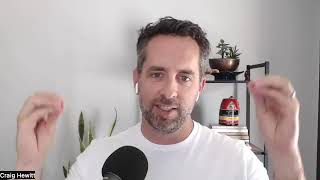
Craig Hewitt built Castos, a podcast hosting platform with seven-figure SaaS revenue, after launching his own show. He runs a hybrid model: the hosting product plus a production agency serving 80 clients. Over six years, he's added $500 to $1,500 in monthly recurring revenue each month, and now focuses on sales, team management, and AI while weighing venture funding against staying independent.
Questions this video answers
About 80 customers.
About 300 episodes.
About 6 years old.
Approximately $500–$1,500 of MRR added per month on average.
Chapters
Another CEO Wisdom podcast. We have Craig Hewitt with us. This is a podcasting edition. One of my favorite topic out there. Castles is a cool podcast app that I've heard about not so long ago. Yeah. Craig founded the app. He's the CEO of the company. He's got a couple of employees. He's got good traction as of now. Excited to talk to you, Craig, today. Can you briefly introduce you, tell us a bit more about Castos?
Yeah. Charles, thanks so much for having me. Excited to be here and, you know, share a bit about what we. What we know and have. Have done. Yeah. So I'm the Craig Hewitt. I'm the founder of Castos. We're a podcast hosting and analytics platform. We help podcasters grow their audience and monetize their content. We also have a professional services arm called Kastos Productions, where we do done for you end to end audio, video marketing assets. Work for about 80 customers right now.
Wow. So the thesis behind podcasting, you've been doing it for quite a while now, 10 years or so, which is pretty impressive. What was your thesis back then and has that thesis proved true even up to this day?
Yeah, so I got into podcasting like a lot of people, because I was a listener. I, you know, I was in sales, you know, back for a fortune, kind of 200 company or something, and was in the car all day, every day and was just like, man, there has to be something better than listening to Mike and Mike, you know, ESPN Radio or. And so I started listening to Tropical MBA and Pat Flynn and all these guys that all of us grew up on, I think. And I was like, this is great, I want to do this too. So I started my podcast, which is called Rogue Startups, and you know, we're, I don't know, 300 episodes in at this point. And. And you know, me and my co host have talked about a lot of our, you know, journey, growing and growing our businesses. We're on a bit of a break right now, but yeah, so I started a podcast and was like, this is just a cool way to meet people. With that, I started my first business, which was called Podcast Motor, which is the professional services I talked about. We call it Castos Productions now and then had a chance to get into the hosting side, and we started Kastos a couple years after that. So Kastos is about 6 years old at this point, and we're fortunate to help kind of thousands of customers as the home base for their podcast.
Let's start with your own podcast, Rogue Startups. I'M definitely going to give it a listen. Me and I know about rogues in World of Warcraft, which was one of my favorite class. I also know about rogue waves, but I don't know about rogue startups. Tell us about your best story slash episodes. Rogue startups. Got my curiosities. Like, are we talking about terminals here? Like, going rogue? Give me a hint.
Yeah, I think that the thought behind it, and it's funny, like, I was just writing about, about, like naming your podcast on LinkedIn the other day and, and like, we, we probably are due for a rebrand there because, like, the name doesn't mean as much as it used to, which was. It was kind of a contrarian play, like, as opposed to a lot of startups, or you, you go to Y Combinator and you get VC backed. Like, we both are mostly kind of bootstrapped. And so like creating a business that's profitable and sustainable and all this is, is contrarian to, to how a lot of people run businesses. You know, I think the current environment we're in, profitability is cool again, but, but for most of my time in business, like, it hasn't been cool. You know, it was raise money because it's cheap and spend as much as you can to grow as fast as you can. And like, that's just not. Not how it is anymore. And, and not kind of how Dave and I wanted to, to grow our businesses. So the, the name seemed to fit. Yeah. And to be honest, like, I think I haven't talked about this, but, like, we're probably at a place where like, something, something will change with our podcast. You know, I think a podcast is kind of like a marriage, you know, like, you're in this. And I mean, my co host, Dave Rodenbaugh and I have done 300 episodes almost, you know, so it's like we've done so much and, you know, we. I. I'll say. I don't think any podcast goes forever. Um, and so, like, whether, whether something changes with who's doing the podcast or what it's named or what its focus is, I think that's a natural progression. And for folks that are podcasting, I think you want to be pretty intentional about, like, this is the starting point and this is the stopping point, and if it changes a lot in there, like, we need to, to kind of redefine and reassess things. And I think that we're probably at that point. We just haven't done it yet.
Yeah. In the act of podcasting itself, I think me I see forever scale. Just like interviewing someone asking questions or producing content that helps grow your brain and has you meet cool folks and sharing that with the world. That was like a very powerful motivator for me. You know, I was like Mr. Change the World guy. But I wasn't doing enough in my own opinion, to, to help others succeed. And I feel that this podcast, sometimes we share bits of wisdom that might be life changing if applied appropriately for the pod itself. Yet, I mean, thesis change, right? I think I chose a good one. CEO Wisdom Podcast Founder Wisdom Podcast. I have a couple there. I don't think I will stop interviewing CEOs or founder founders themselves. Maybe that will change a little bit. The name's not the best as well. It's quite long and I'm quite obsessed with branding, so much so that I compliment people on their name nowadays if their name is two syllable, like Frank Kern, I'm like, congrats to your parents. But yeah, like, I understand it might, it might change. And yet, like, especially if you co host, I have a question for you for that. How do you choose your co host? Like, what, What's a good mix for a co host?
Yeah, so, so the podcast started with just me and for really like four or five episodes it was just me, like this me interviewing people curious, wanted to get into the industry. It's fantastic opportunity even today as podcasting has grown up a lot and changed and there's a lot more saturation. But my co host was a guest and you know, he came to me and I went to him about the same time. Was like, man, that was really fun. That was really cool. Like, we should just do this more often. And we became co hosts. So, you know, to continue the analogy, we, we dated and it went well and then we went on a few more dates and then we got, you know, we got hitched in a podcasting sense. And so I think that's the only way to go. Right? You can't just pick a person and say, hey, I'm going to reach out to this person on LinkedIn and see if they want to be my, my podcast co host. You needed to have them on. There's a, there's a podcast I used to follow where it was a host and a, a kind of set of regular co hosts. So, you know, there would be a co host for a month and then it would be a different co host for another month. And I think that's cool. Like there's, there's no rule that says it has to be you and the same person forever. It's just a little more work on you to line up those other people up.
Love it. Love that system. Yet, like I have a bunch of guests myself. A lot of these guests are podcasters like you, I think even. Yeah. So the funnel starts first, like me interviewing you. Then it's like, oh, I really love their interview. Let's do that again. Right. And then if we like it again, then let's do that again and again and then let's make it recurring. One of my favorite podcasts, my first million. That's quite a good duo, Sean and Sam. And yeah, I think there's a lot of value in co hosting because it's like I really enjoyed this person's brain. I think we're complementary. I also think that this person makes me gain more momentum. They ask good questions and they make me better versus just being alone. Yet if you take podcasts like the all in podcast, therefore on the pod, Jason Calcanis as the moderator, Chamat David Sachs and the other guy forgot his name, the scientist Friedberg. I think it can be too much sometimes to be like four on a pod. And if you're like this ambitious entrepreneur that likes to talk a lot, like waiting for your turn and your times roi, you know, maybe sometimes when they're on this call, they do like other things. Me, I certainly do that when I have boring guests. I'm like doing other things at the same time, which is my sin. Maybe I shouldn't say that that makes me look bad, but who cares, you know, like, I value honesty. What, what do you think about the all in model? Have you studied that in which there's like four folks on the same podcast?
Yeah, I don't listen to it every episode, but. But I definitely know it and I know of other shows like that. I think you're definitely right that it. The, the upside is you have a bunch of different perspectives on a topic, which is the beauty of a co host is, you know, with my first million, Sean and Sam like, they, they both have differing opinions a lot of times on, on a topic. And that's where the good energy and the kind of healthy conflict comes from. With four people, you have even more of that and more chance for, you know, an opinion that you resonate with or that is really helpful for you as a listener. Think the downside is even though those episodes are really long, I think. Right. It's really hard to. For you as a panelist to get your say in while. While everyone else is talking. So I, I mean And I'll say, like, I have led those and they're very difficult to moderate. So I, I think that that is Not a. A101 kind of level podcast to run like an interview show like this. A co host situation. Solo one is probably the next harder because just talking for 10 minutes is really hard. So I wouldn't suggest it for a beginner.
Yeah. Because every time you add one player, it multiplies the complexity of the whole. That is Rocket Scientee. I think that Jason, he pulled something really great out there, almost magical. I mean, at first, yeah, there was a lot of disruption, and then things kind of stabilized. That's also why people love this podcast, because the guys argued, like live. I love that model too, by the way, debating. I do think, though, that their pods in specifics, I mean, the main interest is showing up because there's like three billionaires and one centi millionaire on the call, and that's a lot of energy packed in one room. But I think they're going too political nowadays. And I think they're like, not only because they talk politics, but like, when they talk, you see that they rehearse, you know, and they kind of work on their. Their spiel. And me, I don't like that too much. I prefer like honesty. And by the way, to that point, there's less arguing than before. There's less discourse. Right. Because they pre talk and they plan everything. So I kind of am seeing a decline in that one. I'm not seeing a decline in mfm, though, with Sean and Sam. I think they're doing great stuff. And to me, it's always like magical to see these podcasts rise up and stay and survive. What are the ingredients to build a perennial podcast?
Yeah, I think that just staying with it is. What do they say? Just showing up is 80% of it or something? I think that's maybe a slight exaggeration, but not much. If you just show up and you care enough to be, you know, prepared and try to deliver value while you're spending that hour each week doing it, like you're going to be successful.
But the MFM boys, they, like, don't prepare much.
My opinion.
Or is that what they tell their statement?
Yeah, I think that's probably an understatement that, you know, they have a bunch of stuff that they're doing. You know, they got a. They got a WhatsApp group that they're chatting with. They have producers that are bringing them content. They people that are pulling the articles and summarizing like Yeah, I would think so. I mean we do this like riffing on topic in my show some and it's like you got to go read the blog post or you got to watch the YouTube video, or you got to know what the hell's going on and see this thing on Twitter. And like, while that's a part of a lot of our kind of digital lives, it takes some intentionality. And I would just say for folks who want to do that, like, don't discount that, that like if you got 40 or 50 hours a week that you're doing your real job and you want to start this, the hour that you record and then maybe some of the other time that you're just kind of in this world, but, but it's not nothing.
Love it, Love that take I think as well their basic os. Even before preparation, I think. Yeah, preparation. Even if they do it must be like 15 of the equation. I think that the, the, the great 50 is just staying up to date and having your day job, just like researching and finding out cool stuff, acting upon that stuff and getting like golden, golden nuggets. And most importantly, just being 1% better every day. Me, even if I wouldn't prepare for anything, I think I'm always going to add value because I speak to folks like you 5 to 10x times a day, you know.
Yeah.
So I just extract stuff and I, I, I digest it and then I somewhat recycle it in a Charles way. Thank you for these insights. Now I want to talk about Castos itself. I want to talk first about the SaaS model and then the agency model or vice versa, whichever you want to start with. Because a lot of people, they use the agency model to build the SaaS model. So tell us about that, whichever one you want to start with.
Yeah, I mean, I'll go sequentially, I guess. So yeah, we started the I call it a product I service, but you could call it an agency. We're not an agency because we don't do anything. We only do a certain bucket of things, probably like you do.
Yeah.
So we started the productized service where we do editing and production. Now it all includes video and short clips. The idea being people like me and people like you and business owners who want to create content don't have the time or expertise to create really interesting looking video or really good sounding audio and all the marketing assets that we should have to promote a podcast. And we do that. So you record a week later, it's ready for you. And it's how I quit my Day job. It's how we funded the acquisition of the WordPress plugin that started Kastos. It's how we funded the development of the Castos platform. And yeah, I mean, a lot of people shit on productized services and agencies and service work, and it is hands down the best way to make money, the best way to get started. And I mean, probably the best way to create, like a sustainable lifestyle business. And to me, that doesn't have a negative connotation as a really positive connotation if it aligns with your values. The downside is it's, you know, unless you do it really, really right, you're kind of always looking for, you know, new customer acquisition channels and sales. Your interaction with customers is a little more intense than with software. But. But I mean, I'll just tell you, like, our productized service side of the business is more profitable than our SaaS because we reinvest in product development so much in SaaS, even at the point we're at, which is in, you know, seven figures on SaaS side. Right. So, but I think all that to be said, the best is both you, you look at like ProfitWell, right? Patrick Campbell, right? They did both. They did the product or service to build the SaaS. And each can kind of complement and kind of lever each other up. And that's where we are right now. I mean, I'll tell you today my biggest focus is on our services because we have some really interesting things we want to do. And if we can take and double the volume of our services, we can kind of self fund a bunch of other stuff we want to do, whether it's acquisitions or building more product or whatever. So, yeah, I really like the hybrid model because the best part is like, customers come to us and they want their problem solved. And instead of us saying, okay, well, you got to go find this guy in Upwork and you got to hire this, you got to get this agency over here and you got to figure all this stuff out just like, record, send it to us, and we'll take care of everything else. And like, if you're solving customers problems, there's a lot of, a lot of value there.
Love it, dude. Love it, love it, love it. I didn't know that ProfitWell had a productized SAS or whatever. Like, was it consulting?
So they were an, they were a pricing agency. Yeah, it wasn't even productized. It was, you know, Patrick Campbell would come in and tell you all about your pricing and run surveys and all this and.
Yeah, right. And what a Niche. Right. Like pricing is such a, a low hanging fruit in business. It's like you can almost instantly make more 25 to 50% more cash just by changing your pricing and warding and phrasing your pricing packages. Well, so yeah, profit well and I love the company name and I'm seeking to get the guy on the pod because he's quite cool. But talking about Gastos, I mean seven figures on the SaaS side, is it somewhat equal on the productized service side of things?
It's a bit less, but yeah, it's, it's similar.
Yeah, that's pretty impressive. Yeah, love it. How long did it take to build all of that? Like at first was it struggle for the first three to four years and then you saw peaks of the sun at year five and now you had year six and seven. Yeah.
I mean what's been interesting on the productized service side, you might relate. We had customers on day one I announced that communities and social media and we had customers and we got more customers and then we kind of plateaued when I frankly kind of lost interest. And we were at you know, 30, 40,000amonth for a while, kind of reworked some things. Change our pricing change our model, it bumped back up and then it kind of, you know, stayed at a, at a point for a while. The SaaS side, it, we've been growing the same kind of absolute amounts every month for six years. You know, we've been adding you know, 500 to 1500 dollars of MRR a month on average for six years. And that's just kind of like where we get, in some months it's a little better and some months we get enterprise customers and stuff but we've not had like a hockey stick inflection point in there. But just like consistently adding MRR and that, that's cool. I mean at a, with a self serve SaaS model that continues to grow over time, it can be quite, I don't want to say automatic because that's, that's disingenuous but, but like there's not a lot you have to do. You can say okay, I'm going to inject myself into this product decision or I'm going to inject myself into this marketing decision or process. But the rest of it, I mean we have developers, we have product folks, we have support team, they're all amazing, they all know what they're supposed to do and we have OKRs that we set for, for them to know what the goalpost is and where I want to get involved. I can and do. But know having the product built makes it to where it can be a hands off, you know, kind of business.
Right. I prefer slow growth too. I'm guessing your churn is very low as a CEO nowadays. What you spend your time on.
I spend a lot of time on sales. Right now. I, I love sales. It's, it's my background and, and like kind of where, where I came from, I spend my time on sales for, for our services. And it's just really rewarding. It's a lot of fun. It's pretty high value for me as a CEO. The rest of my time is pretty evenly split between kind of team management and one on ones and things like that, and then kind of directing where the product is headed. Things like AI have really shaken things up a lot, made some people nervous and so really trying to take a practical approach at like, hey, what, you know, what's going on here? Where's this thing going? Where do we need to be in six months and two years and make sure that we have the people and the money and the processes to do that?
You mentioned lifestyle business. Me, it's like taking this to another level. First, I don't think I'm going to die. And second, I think that I'm improving 1% every day, which means that even if I balance out all the aspects of my life, I will reach $1 trillion faster than the next guy. Give me. Yeah, a lot of years, a lot of decades. What's your take on the lifestyle business? What do you mean by that?
Well, I'll tell you. Generally, like, my, my thoughts on this have evolved a lot. You know, when we we've raised some money and, and doing that flips a switch in your head about how you think about the trajectory of your business. For good or for bad. I, I don't know, like, it's not entirely good or entirely bad. We raised it because we thought there was an opportunity in the podcasting space, which there is, and there was, and we capitalized on it. At this point, I see a smaller magnitude of opportunity so we wouldn't raise more money because I don't think we can go in 10 times our business in three years, which is what you would need to do if you, if you raised money. So, so I think that they just very generally like raising money versus having a lifestyle business mostly has to do with like the magnitude of the opportunity you have and how much having more money would help you because for a lot of people, like, the opportunity isn't big enough and More money wouldn't make a big enough difference to help you get there or get there faster. For me, I think we all as entrepreneurs do this because we don't want to have a boss like first and foremost and want to have the opportunity to have a significant like financial outcome. And the change for me was thinking that always meant selling my business. And now I realize it could be selling my business and it could just be making enough money to where I don't worry about money and I save for my kids college and we go on vacation a few times a year and all those things which I'll tell you, a lot of people say that's really easy as an entrepreneur and it is really freaking hard. And I know a ton of people who on the outside are very successful and I'll say me included. And on the inside it's like if I'm going to take an extra thousand dollars out of the business, that's like, I feel really bad about that. If I have 20 grand in savings in the bank account, I feel really bad about taking more salary. And I think this is where there's a big shift happening probably in businesses right now as we've all been growth, growth, growth, growth, growth because the exit multiples are so high. And now we're all saying like, maybe the big financial opportunity for me is just doing this for a long time, making the kind of money I want. At the same time, my business probably will grow because I'm healthy mentally and physically around my business and the ultimate outcome will be better. It probably will just take longer and it won't be that hockey stick kind of VC backed outcome, but just like linear. Grow a thousand dollars a month and do it for 10 years instead of three. Along the way you'll make a little more money. You'll probably have about the same outcome. It just takes longer.
Love it. Again, people that say, that's easy. No, you're definitely either lying or I mean you had almost balance from day one or you had a very good coach. I think coaches are good to just like not break but modify some of our beliefs because yeah, as founders it's like company, company, company. Then if you shift into, yeah, taking a bit more money, taking a break, you might feel some discomforts. But yeah, all you need is to change a voice in, in your head. And obviously you might get external feedback from partners or employees saying, hey, maybe you took too much there. Well, I mean they're, they're biased too, you know, so you just need to get comfortable with that. And yeah, more scalable mindset. But just like everything when you start this, I remember when I took my first year off after a couple of years. Yeah, it was discourse in my head. Then I took two, then I took three, then I. I think I'm at four now. And again, this might change, you know, this, this life is seasons. Sometimes this year I'm like more in hustle mode with the, the economy that's like not too good. You know, I've been logging at least two to three hours more per day. So that puts me in the 12 or 16 hour range per day, which is. And I feel comfortable. You know, I'm not super stressed out. I'm happy with that. So, yeah, tough decisions there. And yeah, this is a challenging but beautiful journey. And that's better than having a boss telling you what to do. Like you said, Fred, you've added lots of value today. Thank you for showing up. Where can people find out more about you? In Kastos.
Yeah. So for Kastos, kastos.com, C-A-S-T-O s.com and for me, Best Place is probably my website. So, Craighewitt me, I write a weekly newsletter called Founder Insights where I kind of recap something I've learned really recently. And I send that out every Saturday morning.
More from Charles


Founder Wisdom: the audiobook, version 2 (5 hours of stories from founders and CEOs)

8 CEO Questions I Love Asking: the audiobook (64 founders answer, in their own words)





