🎙️ Podcasting, YC, SalesAI, PMF and Scale | Howie Xu interviewing Charles Cormier
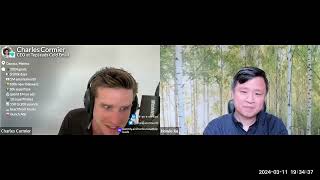
In this YouTube interview, Howie Xu talks with serial entrepreneur and podcaster Charles Cormier about his evolution from a nootropic startup founder to a prolific interviewer of over 2,000 CEOs and founders. Charles explains how he built two core businesses: Top Leads, an outreach‑as‑a‑service that uses tools like Apollo and SendGrid to generate cold‑email pipelines, and Pod Buyer, a podcast‑as‑a‑service that leverages those same outreach channels to book high‑profile guests, convert 5‑10% of them into paying clients, and accelerate trust within his network. The conversation covers practical tactics for scaling outreach, the role of AI tools (Opus AI for video shorts, Clay/Klay for automated email drafting, virtual twins), and the strategic value of podcasts for founders—especially YC startups—as a growth channel, market‑fit discovery tool, and personal branding platform. Charles shares his vision of AI‑generated podcasts, the future of solopreneurship powered by software, and his personal goal‑setting framework (e.g., aiming for occasional $100k revenue days). Throughout, he emphasizes the importance of speed, data‑driven iteration, and building deep human connections in an increasingly automated world.
Chapters
Hello, everyone. This is How Wei Xu. I'm a Silicon Valley executive. I'm talking to Charles Cormier, a friend of mine. Now, he interviewed me a couple of months ago, and I really found his work to be intriguing. And I told him that, can I interview you? And then he said, sure. So that's why I'm talking to you, Charles. Hey, Charles.
Thanks to you, Howie. Again, it was a pleasure interviewing you and you have quite the impressive background.
So the reason I reached out to you back again is in the last few months and, or maybe last couple of years, podcaster has become a thing. It went from a minority to, you hear lots of people doing that. And I've always been thinking, why is that, right? You know, what happened? What's the value to the people who are doing the interview and also to the people who are listening? Because in some ways, right, it's a lot kind of a. In some ways, it's easier to read a book or read a lot of things. Why? To watch or listen. But clearly there are far more people doing the listening, doing the watching, doing that sort of thing. There must be a good reason. So I thought, hey, you know, you have been doing this for a while, and I would love to learn from you. That's why I'm, you know, talking to you. Maybe we can start with, you know, you know, what got you into podcast in the first place, right?
So my first startup was a supplement startup. It was a nootropic for the brain. That was 10 years ago. Then I founded a bunch of marketing agencies, a bunch of other projects on the side that we could talk about. I founded more than 100 startups, everything considered equal. And I realized that, okay, at some point, you know, I was sitting in this bed house in Mexico and I was like, I need to give more. So, and I also always had this experimental mindset, right? So I thought, why not launch a podcast? I launched a pod because I already knew how to outreach to CEOs and founders at scale. I use Apollo, I use SendGrid to do that. And next thing I knew, I had a calendar full of podcast meeting. And I thought, oh, this is interesting. I can add value to the world for free. I can grow my network, right? With billionaires sometimes that I interview on this podcast, I can convert 5 to 10% into clients and I can learn. I've always been a book freak. And I realized that I didn't even need to open books anymore. I could just ask directly my questions to the source, right? While running my businesses, of course, So I thought, like, this activity is so iky, guy. It's so, like fulfilling, like all the areas that I want to be great at. I'm making money out of it. I'm helping the world. And the world needs more podcasts and more quality information, right? So I was like, okay, this is fun. And that's what I'm going to spend 50% of my days doing, interviewing top CEOs and founders. And, you know, here we are today. I've been like three years into that, interviewed more than 2,000 CEOs and founders, interviewed probably like 10K over the last 10 years that I've been active as an entrepreneur. And I'm still going as strong as ever.
Wow, 2000 CEOs. Let's unpack a little, a little bit, right? You mentioned that before you started doing all of this, you already know a lot of the CEOs. You already have a lot of good connections. I'm assuming that by doing this, you expanded your network far more than what you, you know, when you started. Is that true?
Yeah. Before that it was clients, right? Clients of my agencies, a bunch of founders, a bunch of CEOs. I've always been good at sell. So I always had a packed calendar, 20 plus meetings a day with new people, which is quite interesting for the brain. And yeah, my network. What's fun is that I finished these podcasts, you know, and I'm like, hey, Howie, I spoke with this guy this other day. He's a FinTech SAS in Estonia. He's looking for 500k in funding, and I think you'd be the ideal investor for him. So I just connect people like that and create opportunities at sc. And my theory, I call it accelerating trust. You know, accelerating trust has been like a very strong keyword to me this year. And this means first opening the door with a Win win offer, like a podcast, and then after that, deepening the trust nodes through micro transactions. So connecting you with someone, right? Delivering the podcast, publishing the podcast, you getting a couple of clients because of the podcast we did. And eventually the web not only goes wide, but the web goes deep and is really strong, is high quality silk if you want. And with that, I can fulfill my vision of creating the strongest startup ecosystem in the world.
Cool. So this is the four, you know, I got onto your show, you know, did an interview, and then, and then people reach out to Howie, hey, Howie, you are doing fintech or you're doing this. So there's clearly benefit for me and for you who are, as a host, you Expand your network, you kind of get more trust from the people you interviewed with. Right. And also probably some audience. Do you also get some from the business point of view, like a direct business point of view? How, how do you see that angle? How, how. How does, how does the podcast help your business? Directly, indirectly? I see a lot of that. I get it.
Yeah. Well, CEOs and founders in tech, they happen to be my ideal customer Personas as well. For various of my businesses, tech founders and CEOs are probably 25% of my clientele nowadays. So I try to.
Maybe this is the opportunity for you to just elaborate a little bit about your business, your business model, so that the content.
Nowadays I do a bunch of things, but two of my main businesses, one is called outreach as a service. Right? So like cold emailing people to get more sales. I also do the same, but to raise funding. Right. For people. The second main business that I run, guess what it is, it's podcasting as a service. So that's the smart thing. Two smart things here. One, the cold email as a service, how do I sell it to my clients through cold email. Right? And that's the same way I reach out to you for my podcast. The podcasting as a service, how do I sell it to my clients? By having them on a podcast first, right? So that's the smart system behind it. And I outreach my ideal customer Persona. And plus this Persona, usually they are friends with other similar ideal customer Persona to mine. So when the podcast is published on your LinkedIn, all your friends, all your investor friends, they see it. All your techie friends, they see it and they're like, okay, who's this Charles guy? What does he do? Oh, podcasting as a service. Oh, I like podcasts. I want to start my own. And next thing you know, 5 to 10% becomes my client.
Got it? Got it. So 5 or 10% of the people you interviewed became your. Would have become your client as to. To. To get a PO as a service. I get it for the outreach. How does that help? Meaning that I. You mean I actually needed some outreach, you know, outreach to my own customers and using you as a service.
Yeah. The thing is that the front door to podcasting as a service is outreach. How do I get new people on the podcast? I use this tool called Apollo, which is a YC startup, a billion dollar startup, and they are a database and they are also a cold emailing tool. So they give you 10,000 contacts per month. I connected with Sendgrid and I can send up to 50,000 emails per month to a bunch of CEOs, to a bunch of founders saying, hey, Charles, do you want to be on the podcast? We will talk about fintech and Top Leads. Can I send you more information? Once a person tell me yes, I just send them a template with the full information about my podcast and I filter them through that. I'm like, I only talk with high performers. This is not a PR show. Da da da. And then people confirmed and they're plugged in my calendar. So it's pretty systematic.
So, meaning that for the outreach, you do outreach just to invite people to do podcasts? Basically. Podcast and outreach, even though those are two startups, two different companies, but they are kind of a tangled together very much. Is that what you're saying?
Right. The cold outreach in itself. So my company for that is called Top Leads. Right. For the, the podcast, it's called Pod Buyer. For the outreach itself. Most people nowadays, they still hire me for direct sales meeting using Apollo as well. The only difference is that we're, we're not inviting people to podcasts, we're inviting them for demo call. Right? That still works, but it's harder. That's actually why I started my podcast business is because I, I would see that it's harder in this market to convince people to hop on a demo call at first. And nowadays you need to be a bit more strategic. You need to invite them to podcast first, make friends with them, send them a newsletter, send them information about yourself, and eventually convert them into clients.
Very interesting. So you are basically saying that it's easier, relatively speaking, on this planet, nothing is easy. But it's easier to get people to, to be intrigued, to be on your podcast, then jumping on a call, zoom call to look at your demo. Right. Basically.
Right. I mean, my brain, at first it was like that, but what I discovered is that it's complimentary. So someone that will say yes to demo call will be immediately interested in your solution. Right. But someone that's like more successful, let's say like a billionaire. Right. He won't accept to come on a demo call.
Never.
But he might accept a podcast call, interview him about his background and so forth, and eventually that guy will close big time. So the podcast closing rate is lower than the direct sales demo call closing rate, but when it closes, it closes big time. It's a bigger transaction usually.
Right, right, right. But wait a second. The billionaire or the CEO, they're not going to be the person who says, oh, I like your product, let me sign a check. You still need to work with, I don't know, the IT director or whatnot, Right?
Yeah, most of the time. So the billionaires are an interesting example because there's all kinds of billionaires, right? There's billionaires that are almost retired and are just investing and they're spending time on their yacht and their jet skis, Right. Most of the time, these won't convert because they're just busy enjoying lives. But if you're talking, and that would be like, I don't know, Larry or Sergey, um, if you're talking to Elon, even getting Elon as on a pod is hard. You can see he's been on Joe Rogan. He's been on multiple podcasts. I call Elon people tier one guests. You know, tier one guests, they're very hard to get me. Most of the time I can get access to Tier 2 guests. For Tier 1 guests, you need, like, major views. Now if I would metaphorically think of getting Elon in my sales pipeline, that would be incredibly hard. And yes, I would have to do account based marketing, which means that I would have to reach to multiple people inside Tesla or Neuralink or Gro. Groq engineers, I think, is the way I would take. Because that's what his, his obsession is nowadays on Gro AI. And eventually, yes, maybe I could convince them to introduce me to Elon.
Right, right, right, right. But, you know, but you know, Elon Musk is one of the kind, right? You know, there's only one.
He's a tough target. Um, but he is susceptible. Like, he's been on podcasts, right? Elon, he likes to talk to people that, you know, do not censor stuff like Joe Rogan. Right? And he loves. He's not. Boisterous is not the right word, but he loves showing his wildness out there. You can see his memes and all of that. So me, I'll get Elon in less than two years on my podcast, most probably. And I would play these cards, you know, and I'm very similar to Elon myself in terms of personality. I'm very odd. I do not like censorship. I like freedom. And I'm a moonshot as well. And we could talk about these moonshots, right? Because I'm obsessed with AGI longevity and Neuralink stuff. You know, that's. That's the stuff. Ideally, I'd be spending 100% of my time on and not podcasting.
Wow, that's interesting. You know, you, you, Elon is on your list. You know, you are targeting to get him within two, two years. I really, really wish you good luck. And then, you know, I'm going to, to, to follow you closely on that.
Yeah, maybe you can introduce me to Reid Hoffman as well, which is one of my favorite guy in the game. I, I think you, you know, Reed for sure. And yeah, I love what you reads, producing, whether it's LinkedIn. I, I never thought I'd be loving LinkedIn, but I love LinkedIn. And yeah, his new product hei buy is quite fascinating as well.
Cool. So basically from your own business model point of view, you are kind of helping other companies, whether big or small companies, to reach out to build a trust so that they can do so. You feel like a podcast is a really, really good medium, you know, to build a. Accelerate the trust as you, as you mentioned. That's very interesting. Let me, let me just ask a question, you know, a slightly different question as I mentioned earlier, right. Why podcast in the first place? Because, you know, if I want to learn something, I mean, sure, between you and me having a conversation, that's great, but for a person who just wanted to know a product, it's much easier to read a paragraph or this and that rather than watching 20 minutes of the podcast. It's, it's relatively inefficient, at least on the surface. Any point of view on this topic?
Yeah. Well, you should start your podcast, right? Like not listen to podcasts, but start your podcast. And really the burning questions that you have, you can ask them to all the top folks now. Conversations, right. And using words and speaking, it's not perfect as a means of getting information. That's one of my great obsessions as well, education. Um, and I'm being a bit extreme when I say that I don't read books anymore, right. I still have a bunch of audiobooks, like 400 to be precise, on my audible.
Let me put it bluntly, right? If you have two hours tonight, you know, before bedtime, you want to, you know, spend. What would you do? You watch two hours of podcast or you're going to read a two hours of book?
No, like when I go to the gym, I listen spots. When I'm sitting on the toilet, I listen to podcast. I have like all these habits right before going to sleep. My favorite habit for listeners out there is reading a Wikipedia. Most likely, most of the time it's about a successful person, not only in business, could be a politician, could be a rebel. Wikipedia is probably humanity's greatest treasure right now. People underestimate that. And I, I called it going On a. A wiki rabbit hole, right? So I have the. The wiki app right on my phone. So it's right here. And then so right now I'm reading about Yang Zishan, which is a Chinese rebel, and he was on Times front cover in 1928. Very interesting guy. He was a warlord, but he was also doing good. And the insights I got from this guy is that he tried to bring innovation and some of the western world's technological innovations when it comes to medicine, when it comes to building city, he brought that to China. And. And then I go into rabbit holes. So there's a bunch of links right, in Wikipedia. So I just press long on one and just go for save later, right? And next thing you know, I have a full library of interesting people to read about. And that gets me to sleep in like 15 minutes. Plus it feeds my brain with cool stuff.
How much time do you spend on the podcast?
Meaning like five to 10 meetings a day, which is four to five hours
a day is you are hosting, I'm talking about, you are watching, you are listening.
Watching podcasts. Not much, you know, like time on the toilet or when I run to the gym. I'm listening. By the way, my favorite podcast is my first million. It's quite good. Then you would have all in podcast. Do you know about that one?
Yeah, I know that one. Very good one.
Yeah, it's a good one. So I watched that one and a couple more. Yeah, Logan Barlett shows quite good as well. He's a vc. Yeah, very good one. So I have these three, and while back in the days I used to listen to like 10 to 15.
What is the third one?
My first million with Sean Puri and Sam Parr. It's very good one. It's mostly about startup ideas and so forth. I get lots of inspiration. Plus they bring humor to podcasts, which I also want to bring to mind. You know, like having fun and having a laugh and making people have fun, not not being only about education, but also about entertainment.
Wow, that's interesting. So basically you are kind of a primarily using podcast as a way to get hold of or build out your network. Accelerate the trust.
Yeah. And also one important thesis behind podcasting and building your network, we need to think in terms of the AI age, right? And one boat, in my opinion, is connecting with humans, because an AI won't be able to build a meaningful relationship with a human up until some point. And I think humans will value other humans and their connections and their trust and their emotions. So let's say that I was the first to bring you on a podcast, right. You're going to be like, oh, I'm going to remember Charles my whole life. And then if I'm nice to you, which I am, I'm a nice guy, plus I add value to people all the time, then you're going to build a trust node with me. Then I'm referring you to this deal. You make a whole load of money. You go to vacation with your family because of that. And like, oh, well, Charles is. Is a very nice guy. We're going to become friends. And actually that's what's happening with my bond. People become clients. But the evolution to me after clients is someone becoming my friend. And then we meet in real life through my masterminds. I had this Montreal mastermind three weeks ago. We went to the spa. We brainstorm about business. We had a bunch of insights. We went to the restaurant. And I think that's like the final evolution of my podcast. And if I would want to push that further, I'd love to eventually build entrepreneur land, which would be my country or my country and a bunch of other entrepreneurs country in which 100% of the population would be entrepreneurial. Because that's my crusade nowadays. I want people to start businesses. That's a great crusade of mine.
Wow. So anything else? You know, in the AI era, right. You know, it's going to be a very different world with chatgpt Sora more and more in the next few years. How we, you know, learn things, how we do work in that world. How do you think this podcasting is going to be evolving, more important or how do you look at it? We are marching world. That's going to be very different from what we have today.
Yeah. Two aspects that I study a lot like sales. AI and podcasting. AI, Podcasting. AI. There's already a bunch of AI and podcasting. So for example, this podcast, we could post YouTube short out of it with Opus AI. That's a top startup. Ex tiktokers I think they went to found that it's really cool.
It automatically Opus is a great tool.
It's amazing. So there's already that right. In the outreach that I send you, there's high likelihoods that there was AI too. You can also picture Charles AI and Howie AI having a conversation right now. This is not rocket science. There. There would probably be less ums be colder questions which would take the humanity out of it as well, which would be a bit weird. But that that is about to come, right? This is videos. It's two AIs interacting with one another. And then that's the fun. That's a great fun. That will. That we will witness. What? Right, like what's the level of Charles AI and what's the level of Ahawi's AI? What's of the level? What model is always AI using? Is Charles using a lower model because he doesn't have money to pay for a higher AI model? So it will become fun. You know, your AI could be stronger than mine and it could ask tough questions and my AI would be like, I'm dumb. And. Yeah, that would be funny. Anyway, so you could picture the. The future of virtual twins, right, in terms of AI and podcasting with sales AI. It's a fascinating world. I think that most salespeople are not going to have sales profession. I think most of it is going to be done by AIs eventually. That could come in with, okay, here's what I have to offer and here's what you need. And then there would be a blockchain transaction between both AIs of buying and selling. But before that happens, you know, like, I'm using this app called klay.com and for my cold outreach, it's pretty amazing what you can do with that because it's like an excel sheet with ChatGPT. Right. So you can tell it. Okay, give me three reasons why, how we would be a good fit for top leads. Right? And then it would take all the top leads, data, all your company's data, and craft a message in which we both share some interests. Right. So that's the kind of outreach that Clay can do. And plus it has access to all sources of data out there. So that would be the future of sales AI. And yeah, podcasting AI, it'll be pretty fun. And if you've seen already, there's been the Joe Rogan AI podcast that's been published on YouTube. It's a guy that did a passion project and has Elon Musk interview people that. Not Elon Musk has Joe Rogan interview people that he hasn't interviewed yet, like Trump. And it's pretty cool. The result
meaning that he's talking to Trump as if Trump is there on the other side.
Yeah, with the Joe Rogan voice, the Joe Rogan expressions. I think it's still far fetched because Joe Rogan would ask tough questions to Trump. You know, we didn't have a conversation with Trump, I think, or I would like to think, who knows? That would be fun, actually.
I see. I was Actually about to ask a question, you know, maybe it's related to what you just discussed. So it sounds like you are having fun and then making good progress in terms of the being providing the podcast as a service as well as the cold outreach as a service. Does this scale, right? You know, the one question is you are doing a good job, probably even making money, profitable, whatnot, but does this scale, right? Is that bottleneck? You know, you, I, last I checked you, you also have 24 hours a day, right? And what's your thoughts?
Yeah, scale is my favorite word. So does it? Scale is probably one of my favorite question that I ask myself probably every day, right. The podcast experiment has been going for more than three years now and my gut still hasn't told me that it doesn't scale. Now if I ask myself this question, if I ask my brain this question, I think networking with individual and creating connections, emotional connections with humans will scale for a very long time, even in the age of AI. So call it like probably a boat of 60 plus years. Just like me connecting with top people and making deals with other humans. That is until the neuralink comes and we, that's stuff to picture like what the future would look like, sales and money. It does scale, you know, because if I get money, I can invest it in places and make more money. So that's cool as well. Learning, learning skills forever. Because if I learn, I can start a bunch of business, right? Like these CEOs and these founders, they give me ideas all the time of what business to start, of what copy to write in my next cold email campaign, of what tell this client that asked me this specific questions. So I'm constantly learning. And the last thing, giving out free data to people, that's good, right? Like that's giving out value for new entrepreneurs to start business. So it really meets like my full scale ikigai. And yeah, I think it's one of the most scalable activity one can do out there. Even more than starting a SaaS or an AI SaaS. Because starting an AI SaaS. Yeah, I mean first it's really hard. You need to have the skills, you need to find funding in most cases. I'm not sure still if I'm a believer in getting funding myself as a, a libertarian. And yeah, but I'm also doing that, right? I'm also starting a bunch of SaaS with a bunch of co founders, the technical co founders, I'm in charge of cells, the zero to one guy. But yeah, podcasting, doing that like 40 to 30% of my days, I think it's very scalable.
So you are doing what, four to six hours a day hosting the podcast, right?
Yeah, and these are 12 to 16 hour days that I crunch routinely because I biohack with people like that that sponsor my podcast, by the way. Qualiam bio optimizers. I've been a biohacker since 10 years. My first company was a nootropic. And yeah, basically I take care of myself a lot so that I can go all in for like 16 hours a day.
Wow. And three years into it, you know, you don't feel like your hour is the bottleneck to grow your business yet. Right.
So another cool or interesting story about me is that I hired and I fired a thousand humans in the last 10 years. I had call centers with 200 employees. I had a LinkedIn agency and a Legion agency with a bunch of employees. So I decided two years ago, that was a very important decision, my entrepreneurial life, to not bet on hiring nine to five humans anymore and to fully create automatic systems and to work with AIs instead of humans. I still work with humans, but in partnerships and in co founderships. But nowadays I spend it fully on building systems and. And yeah, not like hiring your employees
are robots at this point, whether so.
Right. They're softwares. So let's say that I want more leads, right? I pay Apollo more. Let's say that I want more YouTube shorts, I pay Opus more. So yeah, they're. And I'm really bullish on that. It doesn't mean I don't don't like humans. I love humans and learning more about them. But yeah, from a work and capitalistic perspective, I'm way more believing in softwares than humans, which is contrarian.
Interesting. Basically I think that by using some SaaS tools, otherwise I would have spent 10 hours. Now I only spend half an hour, you know, so be it. I just spend those half an hour myself instead of hiring an employee to do that for 10 hours a day or however many hours a day. That's kind of what you're saying, right?
Maybe I can explain that, by the way. Okay, so first, dealing with humans is emotionally hard most of the time. If you're anything like me, you'll only have the budget to hire C and B players. If you want to hire A players, you need to make big money bets. In Silicon valley that means 300k to a million a year per employee. Right? Which is hard to sustain. You need funding and I'm not for funding. As of now, as I mentioned, that's 1, 2 I I quoted on my LinkedIn today. Software stay, humans leave. And that is truth. If you look at the average stay of a human nowadays, it's maximum two years in companies, you know, they stay software stacks, they, they leave. I mean and software stacks, they're there to stay. Sometimes they break, yes, the servers go down, but most of the time they're always active and they keep on delivering forever. And last but not least, I think that me personally, it was a form of laziness hiring all these humans. I was like it's going to be easy, I'm going to hire a human. They're going to learn quick and they do by the way, but then their performance go down and that's over. While programming a software, at first you need to deliver lots of energy to get it off the ground. But once it's off the ground, it keeps on delivering forever. So that's my thesis.
Very interesting. So you are kind of in some ways painting a picture that if everyone follows you as the role model you are, you are advocating a picture that there will be a lot of the solopreneur kind of the scenarios out there, right? Whether doing Charlie stuff or doing John or Joe doing some solopreneur, you see less and less like a John or Charlie has to hire 10 people to do the work.
Right? That's exactly it. And I used to hate on solopreneurs because I was like Mr. Having 200 friggin employees, right? And by the way that's big bias, you know, like I am very good sometimes at convincing myself of the wrong stuff. So that's one important lessons for listeners here. When you're smart, sometimes you convince yourself of falsehood just for justifying your own mediocrity. So let that sink in. That's a very good one. But in, in that case here. That's exactly right. Like one quote that puts it pretty well nowadays is Sam Altman's one person billion dollar company. That's my vision because I, I used to think that solopreneurs were low ambitions, right? They had no cost, they wanted to keep the business lifestyle. But yeah, nowadays my vision is I'm going to be somewhat solo, I'm going to have partners, right? Equally competent entrepreneurs to me or partners. And the rest is going to be executed by robots as it should.
Very interesting, very interesting. So yeah, I actually had a similar view on this for a while as well. I do believe that solopreneur is going to thrive more over the next few years partially because of AI Technology. But I think what you are mentioning is not just AI, just SaaS. Overall. SaaS is a employee in some ways, right? Is a software employee for, for the company, basically. That's very interesting.
So if you check freelancing numbers, they're also going up. Right. So I'm, I'm not meaning like everyone should be Silicon Valley founders, probably more advocating for. You should take some charge of yourselves. Right. And I know it's easy to get like one contract with one employer, but the future is most probably an AI bot checking for company contracts and pairing freelancers with, for unquote companies or bigger brothers. So I think that would be more like the future and not like big employer one contract. Sign this NDA, you're restrained. You're going to do the nine to five. You can't say this, you can't do that. I think it's going to be more freedom oriented.
Right, right, right. You know, the, I think, you know, we are all humans. Humans want to interact with humans. You know, in many ways that's why you, as you said, right. You know, you still are very much open to having partners. Right. You know, but at the same time, from your point of view, a lot of the work or tasks can be resolved by the software, basically. So software is eating the world from that point of view.
And what do you think of AI's humanizing interactions? Like readoffman, right? Like hey PI hei is like this coach psychotherapist. Do you think that us humans can have human quote unquote Interactions with AIs?
Well, you, you mentioned a little bit earlier, right? You know, I mean someone can not someone. The AI can do Charlie's interviews. Charlie AI can do the interview too. However, you said it that if you compare the Charlie AI versus the real Charlie. I think that my strong suspicion is, you know, the, the AI version cannot ask a very deep as relevant questions as you. At least not as frequent, as systematic. Right. I don't think we are going to close that gap at least in the near future because that's a tough order. Right? That's, that's, that's tough thing to do. But, but if you just, you know, do some commercial, do some, you know, I wouldn't say shallow, but you know, less in depth, less domain specific. I can totally see John AI, Charlie AI, Howie AI can ask some, you know, interesting enough questions and get it going. From that point of view, the world is pretty scary. Right. You know, we already have a lot more AI generated content in the text. Right. Paragraph. Marketing stuff. I Wouldn't be surprised that in the, in the not too far away of the future, there will be more AI generated podcast than human generated AI in a podcast. I don't think we are there today. Right. You know, if you're talking about corporate marketing documents, potentially we are either already there or we are there soon. But for the podcast, we are not there soon. But I wouldn't be surprised that it's going to happen in the not too far away future. That's sort of how I think about it.
And do you think that AIs will always be these dumb bots? Sort of. And that humans will always be in charge of innovating and pushing the boundaries? Because let's take the virtual twin example in podcast. If I teach it that if I give all the how we data to my AI, right? And if my AI listens to your current responses, your AI's responses on the pod, and I tell it, stay in the present and use 80% of what Howie AI tells you right now, plus 20% of the data that you scrape to formulate your question. I'm not seeing why it couldn't bring up better questions than myself right now. If I teach it the right algorithm. Right. But that would need to come from a human. So do you think at some point the algorithm itself of the podcast will be able to teach itself a better question asking algorithm than I?
Yeah, like I said, I think if you ask for, if you're talking about good enough questions, I think Charlie AI, Howie AI can do that soon, if not already yet. The question is asking some very intriguing question, right? I think AI may still have some gap. That being said, I would also argue that even, let's say Charlie becomes the best podcaster person on the planet and can ask very intriguing questions. But guess what, you are still not going to be as consistent as AI. Right. Because you could get up in the morning, I didn't sleep too well, I'm going to talk to Howie, but I'm not at the best of myself. And then in that mode, right, you may not be as good as Charlie AI, but I'm also pretty sure that there are very, very intriguing question because you have such a domain knowledge, you have such a context. And then sure, the Charlie AI may import or ingest certain documents, but it doesn't ingest everything you know in your head. Right. So from that point of view, I think there will still be gap. But you asked a very good question. You know, I think before you ask the question, I was actually saying that the good enough Charlie AI is still years away, but now that I think about it, it may still not be there today. Right. But it's not far. It's not like years you can build. You can fine tune your Charlie AI to a level. I think it's actually pretty good. I mean, if anything, I actually love ChatGPT. I mean people say ChatGPT good or bad. Yeah, all that sort of things. Right. But one thing ChatGPT is really, really good is be a, be a, be a partner at a brainstorming discussion table. Right. Hey, what do you think? Right. You know, this and you know, I'm going to talk to Charlie. Tell me 10 questions I may ask. Maybe seven out of the 10 or even nine out of the 10. Yeah. I'm not sure I'm going to, but there will likely be at least one of them. Oh, I didn't think about it. Right. Okay. At least you reminded me, you know, to ask Charlie about it. So this is one of those things. I think a podcast is the same thing. Right. Even though Charlie am not ask all the other questions that you feel like, you know, that's going to blow your socks away. I bet there are questions that you say, oh, that's a decent question because I forgot to ask. But the consistency level of the AI or Charlie AI is actually impressive.
The AI has the data forever. The consistency like you said. So that doesn't leave the human with much. Yeah. Because the human, I might be low energy. I might forget about things. Right. Then ChatGPT. Yes. It's a good shaman. Okay. It's a good friend. You know, it's like having a nice philosophical discussion with a friend. Chat GPT doesn't get offended easily. Well, I mean it's, it's a bit woke but like it will, if you ask it something, it will do it. Right. And as humans we, we love when we ask something, a tool, something, and we get an instant reply back that's like immediate dopamine. So yeah, great partner to ask any questions, to have philosophical discussions, to ask science questions. It's amazing.
Good. I have one last question for you. So going back to Elon Musk, right. You know, it's on your list to invite him on your, your show within two years. But you know, there are hundreds of thousands of CEOs or the leaders. That's not, they are not Elon Musk. Why, why they should, you know, be the. On the podcast, do you feel like, you know, imagine, you know, YC company CEO in the next, you know, three years. Do you think each and every YC company CEO should have their own podcast or be on the podcast as frequent as possible, right? That's one point of view. And then the other point of view is hey Mr. CEO, just the laser focus to solve your problem. Right? Podcast, that's great. The bonus do that occasionally, that's fine. But don't make that a primary thinking. Right. So how do you think about this? This topic?
Yeah, it's a good question. Okay, well first. Yeah, Elon will be on the pond. Nowadays sometimes I struggle when I get people that are not as high performers as I would think they are or humans that are kidding themselves. I get a bit discouraged. But then I'm like, okay, I do this for free and I do this to do good, right? So at least I provide them their first experience. I give them some type of feedback. If I'm break brave enough, right? Because it's tough to give feedback to people without breaking their hearts and breaking yours. Then your YC question. Well, I get a bunch of YC founders on the bot all the time. Today launched two campaigns targeting YC Winter 24 startups. I mean they're the best founders in the world. If they should have their own podcast, I mean I'm biased but I would say like that the non technical founders should have the podcast and they should invite like highly relevant people for all the reasons I mentioned, right? Learning, doing sales, growing their network, pivoting quick, you know, and having a main growth channel. I do think that podcast can be a main growth channel. If you think of various podcasts, my first million is a good example or all in podcasts. On podcasts it's for humans a bit different. But my first million, it's two folks and there's been a bunch of founders that have grown companies to gigantic size through their, their podcast as a channel Today we didn't really talk about like sponsoring your podcast, you know, but that's another way which you can make money, right? And you can fund your company with that money. Plus you can get nice products. So with ramen noodles you can get nice nootropics and stimulate your brain to build a better startup. So I would say yes. But I think of Paul Graham every time I try to give advice to YC startups and that's always hard. Paul Graham is a sage. He's, he's a top man. He's yet the, the top gun in this field. So I would recommend in their case that they micro start that, you know, 5 to 10% of the time what I would definitely recommend all YC founders to do is cold outreach. And I think most YC startups already do cold outreach. Cold outreach is the best channel of all. You compare everything. Facebook ads, LinkedIn ads, calls, texts, messages. You compare everything. Cold email always win. So I would recommend that 100 of them do cold outreach. I would recommend that, I don't know, probably 50 should launch a podcast.
Wait a second. The cold outreach always win. Is that a too strong a statement?
Always B2B in B2B, not in B2C.
As opposed to warming troll or what are you.
No, like. As opposed to any other, like, paid methods, right? So ads or. Or even not. Not all paid methods, like SEO, for example. Cold outreach is so powerful. If you want to raise money, you know, you called outreach someone and then you ask them for warm intro, you know. Hey, can you connect me with Howie? Sure. Zone. True cold email. We do this all the time. So yeah, at this point, Apollo is like frigging $100 per month, you know, and SendGrid is $20, so that's $120 stack to reach out 10,000 people and send them 50,000 emails per month. So there's like room for error, you know, and it's not like blowing thousands and thousands on meta ads, for example.
I see. So essentially you're saying that as a, as a YC founder, they should spend 5 to 10% of time on podcast. Right? You know, selling their stuff or getting the message out. And on top of that, you feel like code outreach, that's orthogonal to the podcast or not. Right. They shouldn't do.
Because when you think about it, me, I'm also, I have a deep obsession with data. And when you send 50,000 emails to 10,000 contacts on a monthly basis, you get to the core of what YC is, which is product market fit. Right? In their case, it's founder product market fit that they're aiming for. But if you want to find out product market fit as quick as possible, you email a bunch of people and you monitor their responses, right? And then if you want even higher quality of data, you ask these people to come on a podcast and ask them a list of questions. And you do that enough times, you know exactly what your product market fit is after some time.
That's a very nice playbook. So basically, you are answering my question very directly, right? The for YC founders out there, they should leverage podcasts. They should have spent 5 or 10% of the time. They should separate. They should leverage the code outreach. But then when you do the alcohol Outreach, maybe some of them, invite some of them to your podcast or whatnot. So everyone should have, should, should be a podcast hoster in many ways, right? Maybe using Charlie Charles Cormier's podcast as service, or maybe not, but they should be their podcast host in many ways. You are articulating a point of view that doing a podcast, let's say I'm doing a podcast. The value is not just for the listener, but also for the people doing the podcast, right? So I remember this legendary CEO, Intel's co founder, Andy Grove. He actually I read, you know, one of, in one of his books, he said something that actually, you know, I remember to this date, he basically given, he basically said, hey, how important the status report is, right?
He.
He want people to sending weekly status report. And he made one argument. He said, you know, status report is for people who write it mostly, not for people to read it. That's a pretty profound statement, right? Because, you know, before that I thought, okay, status reporter for the people who read a status report, answer the questions or whatnot. Said, no, no, no, that's actually more for people to write for, for your own benefit when you write it, even if zero people ever, ever, you know, read your email 100%. What you asking is here, right? Podcast, I'm doing the podcast. There is a value for me. And then of course, hopefully there's a value for the listeners too, but, but, you know, even for the value for yourself, that's already, you know, enough. If that's the only thing you get, hell yeah.
Writing is thinking, speaking is thinking, and it's like a loop, right? So every time I get on a podcast with someone, I write down ideas that they give me. I take these ideas and I write cold emails with them so that yet I get more product feedback and, and then you dig and you dig and you dig and ultimately you find diamonds, you know, in terms of product market fit. So me, every day I'm gonna write something. Every day I'm gonna write an email, you know, like, and I develop my own thinking. And at first you hear crickets, right? When you attack a new market. Like for example, right now I'm, I'm trying to offer my cold outreach, my cold outreach services to VCS directly so that they can use me to help their startups find funding, plus send emails. And I take equity in their startups, right? Venture partners, the position for that or eir, you've been a night eir, so you know about that. And I would also help them raise more funds and get on Podcasts, for example. But before today I didn't know how to phrase that. Today I got on a call with a VC partner that I had first on my podcast, second I had them on my mastermind. And today he was like, okay, Charles is a beast. I need to have him in my vc. And he provided me the templates to outreach at scale and do that EIR or venture partner service of mine. And I feel that I'm getting closer to the objective. Before that, I didn't know how to phrase any of that. I didn't even know what I wanted to. So the more feedback you get, the more you test it against the market, the closer you get to product market fit.
And then you actually do find a time between the cars to reflect on the podcast and then write it down, take actions. Right. That's very important too.
Yeah, because I always have top energy and this, my style of writing is immediate. I just take all this energy and I put it like. And I type really fast. So let's say that in one minute I'll have an email written, you know, and normally I send a sequence of three emails in, in one campaign, but if I don't have time, I'll just, I'll just write one email and add like 3000 contacts to it and test it immediately. I'm obsessed with speed because a lot of people nowadays, they go in Paris paralysis analysis, they never get anything done because they constantly doubt themselves. Right? Oh, this is not good enough. Oh, the VCs are going to reject me. You know, like me, I instantly act on feedback. I instantly get negative responses sometimes, but I instantly improve, which means that I can get 100 times faster to product market fit than most people out there.
Great, great. So I know that I was going to ask you the last question, but since I was watching you, your WhatsApp, your screen, let me ask you last, last question before we close you on your screen it says, you know, 10K. You know, you are 20, 24 goals, 10,000 super fans, 100,000 new followers, 1 million emails a month and then $1, sorry, 100K per day. Or what is that goal? I was just asking what is that? What is the 100k days? What does that mean?
Yeah, it needs to make 100, 100k per day sometimes of the year. Right. Like not every day because that would mean like an outrageous number which is not like that outrageous.
But wanted to have a few days that you are making 100k revenue. That's sort of the, the goal you wanted to reach.
Yeah. Am I there yet. I haven't had the 100k day so far but 100k day if you think about it in my case because I sell my 3 months product at 10k right. It would need to make 10 cells per day which is not that much like far fetched. Right. But and, and the, the math on 100k days times 365, that would be pretty outrageous. That would be 365 million per year. Right. Which is quite a lot.
I'm just saying that you know, by watching that, that stats 100k days, that's actually better than 90% if not more, you know, SaaS companies out there. Right.
You know the, the lesson here is I've been setting goals for 10 years. You've been setting goals for like what, 40, 30 years. I, I'm probably a bit more than 10 years, like 15 years in my case. But I've tried a bunch of things, right. I've tried the 12 week year. I, I tried like a whole bunch of strategies, Tony Robbins way of setting goals and so forth and nowadays I just go with what feels explosive to my brain. Like if I would reach any of these thing on my screen, by the way, the 10 super affiliates, I might reach it. The 150 to 200 pounds. I'm 170 pounds right now, so I'm muscling up. The beachfront house also is coming my way pretty quick. The AGI have already partnered with someone but the point is if I would reach one of these I'd be like holy man, this is incredible. So that's how I set goals nowadays. It's not like spending hundreds of hours defining my goals and segmenting them. I've tried that. All that didn't really work in my case. I go with these really explosive goals that are easy for my brain to understand.
Wow, this is a fantastic. Charles Cormier CEO at Top Leads, Cold Email as well as the podcast as a service. You know, it's super nice to have a chance to talk to you today and I learned so much. I'm pretty sure our audience is going to learn a lot from you. Thank you.
More from Charles


Founder Wisdom: the audiobook, version 2 (5 hours of stories from founders and CEOs)

8 CEO Questions I Love Asking: the audiobook (64 founders answer, in their own words)





