Rashid Mushkani - Co-founder & CEO, Cocoon Lab | Lecturer at Université de Montréal
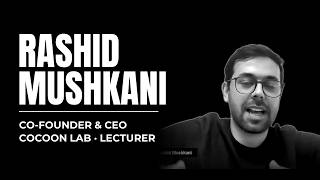
In this AI Wisdom podcast episode, host Charles Cormier interviews Rashid Mushkani, co‑founder and CEO of Cocoon Lab and a lecturer at Université de Montréal. Rashid explains that Cocoon Lab builds AI tools aimed at removing the repetitive, low‑creativity tasks that architects face, positioning AI as a collaborator rather than a replacement. He recounts his upbringing in Kabul, describing a city that felt safe and vibrant despite media portrayals of conflict, and reflects on how foreign aid shaped urban life. A scholarship from Japan’s JICA enabled him to research how to make cities more welcoming for Afghan women, an experience that later informed his design‑focused AI work. Moving to Montreal, Rashid was surprised by cultural differences—particularly the climate, the “niceness” of interpersonal communication, and the multicultural fabric of the city. He critiques the Montreal AI ecosystem for its abundant talent (e.g., Mila) but limited commercialization, citing cultural and capital constraints that push researchers to the U.S. for venture support. On broader AI topics, Rashid discusses the distinction between current “jagged” intelligence and the pursuit of AGI, emphasizing the importance of lifelong and active learning, and expressing caution about frontier labs’ risky experiments toward superintelligence. He also comments on AI governance, noting that the EU and even China are more proactive than the U.S. or Canada, and mentions recent U.S. moves toward a regulatory body. The conversation ends with Rashid directing listeners to cocoonlab.ai and Mila for more information.
Chapters
Welcome to another AI Wisdom podcast. We have Rashid Mushkani with us today. Uh, he's a co-founder and CEO at Cocoon Lab, lecturer at Université de Montréal. Guy is fascinating already. Uh, grew up in Kabul, of all places, Afghanistan, then, uh, spent some time in Japan. So I'm just like, uh, very intrigued by your background. I'm eager to jump right in. So Rashid, welcome to the pod. Tell us a bit more about yourself and what you've been up to.
My pleasure, thanks for having me. So, um, I'm— we are building Cocoon, which is a product out of Cocoon Lab. We have other products as well, but our company is really focused on, on not replacing architects. So that's, that's a brief description, but our company stemmed out of this notion of like, nowadays AI is there to replace everyone. And we had a workshop back in 2 years ago at NeurIPS, which is one of the big AI conferences. And then their artist was like, we want AI to do our less fun jobs. We don't want it to replace our like creativity in a sense. And this was kind of our idea to let's make a company which facilitates the this less fun things, like remove these less fun tasks out of one of the creative professions, which is architecture, which was once I was an architect. So it was really easy for me to start from this perspective. So that's what Cocoon Lab does. And that's what we do. We have our co-founders as well. Apart from this, which is a company, I'm at the end of my PhD at the University of Montreal, where I also teach. So I teach mainly about AI and design and also about cities. Of course, all— most of the AI technologies we get deployed within cities, and there are a lot of like people's, people's problem rather than technological problem. So how we deal with those, um, this is also part of my teaching and my research as well. So Yeah, that's, that's a bit of current at the moment.
Yeah, right. Let's start with Kabul, shall we? Um, I looked at your architectural work, by the way, in Kabul. It's gorgeous. Um, amazing. It's— to my brain, it's odd to find this in Kabul, right? Like, even looking at the pictures, like, beautiful architecture, and on the background there's like, yeah, slums, sort of. This is like, um Yeah, and you told me that the media perception of Kabul is not what it is, but my internal compass is like, yeah, 90% like being in Kabul is sort of dangerous. Um, so tell me, tell me like if I'm wrong here, tell me about your background, possibly like where you grew up as a kid, right? Like, um, how was Kabul for you?
Um, so as a kid, when you grew up, you actually don't know what really war means. And when I grew up, it was really at the stage where US was there. There was like a foreign intervention in the country. It was kind of a— at the beginning, they established a blanket of like, of territorial safety within Kabul. They tried to establish some sort of safe peripheral security parameter, in a sense. Americans. And then there were like other troops were coming in. So this was, this was, Kabul was really safe up until 2008 or 2007. Early 2007, there was some like blasts and some bombing that happened. But I was really kid at those, those times. And I didn't know what really war means. But I went to school and then I started going to university. Overall, for me, it was quite nice because we had our family, we had our neighborhoods, everything was booming and bustling. Of course, there was a lot of money being injected through foreign aid. And that money was like being compounded within cities rather than going to villages, which in Afghanistan, there's always issue of between fighting between cities and villages. Because in villages people live in different lifestyle and the cities people have different lifestyles. So there's like a clash between cultures and lifestyles and overall ways of life. Yeah, and for me it was safe. I didn't, I didn't even felt that there's a, there's a, there are issues because once you get accustomed to it, that's one factor. Another factor is the way we speak about about incidents. So most of the time media has the calamity to report. That's what the media does. But apart from that, Kabul is like, and was like, a 5 million inhabitant city. It's really bustling with life. It has rich tradition and culture. There are a lot of people living there. Of course, nowadays the issue with women is really, really Uh, it's really a pity to talk about overall, but, um, but apart from that, the city itself is quite, uh, quite rich in tradition and culture.
Yeah, right. I'm in Mexico, right? Like, uh, and there's all this, these, uh, media portrayals about the cartels. And yes, these things happen, but not in Oaxaca, right? Like, uh, it's like hundreds of miles from here on the border from where I am. And I never felt them, like, even remotely physically, right? Things like the media, like you said, like, I see it in the news, and then friends and family reach out for stuff that happened in Puerto Vallarta, which is hundreds of miles here, and they're like, hey, they burned the fucking Costco down or something like that. And I'm like, yeah, whatever, right? Like, I'm not there. I know it happens, but it's like pockets. Is it the same scenario in Kabul? Of what you felt or lived?
Yes, yes, exactly. That's, that's totally it. Um, usually, usually those security blasts, they were happening close to where the security establishments were, but the way it gets portrayed, it's, it's like everyone, everyone. And of course, this doesn't impact 5 million people, but in a way, it's, it's worrisome because of mental safety it impacts you. But once you're like one year past the— this event, it gets normalized, so you get used to it, right?
Then why move to Japan? Tell me about that move. Yeah, that was pretty drastic move as well, from Kabul to Japan.
Yeah, so I got— I got a scholarship. It was really a good scholarship from the government of Japan, and they call it JICA. JICA stands for Japan International Cooperation Agency, and they were like funding, funding young people who wanted to do research and make a career for themselves. Yeah, I got the scholarship and I went to Japan and I stayed there for a few years doing research. My main research at that point was how to make cities good for women, for women of Afghanistan. So the issue that Like once, because people, it's people themselves, they make the environment in a way which is catered to their needs. So slowly the environment becomes a reflection of their reality, of their culture. Oh yeah. So now that the environment is more kind of not welcoming for women, how we can make it more welcoming for women? So this was my research agenda during those times.
So why is Japan so culturally closed? You know, like I've I mean, first, you're the first guy that lived in Kabul that I talked to. I'm not saying that Afghanistan is closed. I think it's a different set of problems. I think, uh, just the opportunities are limited there. But Japan is notorious for not wanting to do business with pretty much anywhere. Um, I reached out to a bunch of Japanese founders, CEOs, tried to have them on my podcast. They're very closed. Similar stuff happening in Brazil, although I had many CEOs and founders of Brazilian CEOs and founders on my podcast, but yeah, Brazil's like more on the economic side of things. So what's in their environment in Japan makes them close to the rest of the world, if that is a good presumption?
And they are so fundamentally the way they speak about themselves is they are shy. But they're not—
they're proud also, very proud.
Yeah, but they're not like— I, I didn't find them close. So my personal experience was kind of, okay, I went to Japan, I expected some sort of cultural differences, but when I came to Montreal, of course I've been to a lot of cities, but when I came to Montreal, I wasn't expecting a cultural shock because I was like thinking, okay, this is an American city, this— everyone lives there, like it's it's more kind of a cosmopolitan city. But I turned out to be wrong. Like, I got more culturally shocked living in Montreal than in Japan.
Wow. Okay, let's double-click on that. Tell me why.
It's because, uh, it's because you see, uh, first thing is you don't expect— the actual expectation is like you expect to be, uh, to be— there are differences in culture in Japan. And you're mindful because you know that there will be differences. But in Montreal, you expect there's no differences, but when you see that there are differences, then, uh, you get surprised.
So first thing is, well, winter for one, right? Like, winter makes people stay indoor, so that's a weird thing. Um, tell me, tell me what you're referring to though, because Montreal is very multicultural. Um, it's not as warm as people depict, you know, like the people generally speaking. But yeah, I'm yet to make my thesis on that. Like, tell me more about your firsthand experience because I'm biased, I live there.
Yeah, so the one big— in terms of culture, would be culture of niceness, which is not only particular to Montreal but overall North American context. It's like people, Eastern people, they are like— when they say sentences, they are sometimes mean to each other, but they're not mean that they actually meant to be mean. But in, in more kind of Western context or kind of Canadian context, more, more, uh, more narrowly, they're like more nicer even if they, they mean to be mean.
Huh, that's intriguing. I would expect that more from the Eastern culture. I've been in Hong Kong and these, like, people have a genuine hard time of being adversarial. Um, in Montreal, uh, we're more artistic, a bit more upfront, a bit more emotional. Um, I would expect, like, less of that in Montreal, interestingly enough. But I grew up in the suburbs, right? So it's— and also, it's like, what neighborhood are you talking about? Is it, like, uh, South Shore? Is it Le Plateau? Is it, uh, people that you cross paths at University Montréal or Milan. Uh, but yeah, let's— tell me more. Let's, let's finish your thesis on that one. I'm curious.
Yeah, it's as you mentioned, it's about the weather, it's about the clothing, it's about the, the sports. Like, if you, if you grew up in an environment which is, which is a bit more kind of warm, then you, you— first, first winter is so, it's so harsh, it's dramatic. Did you want to escape?
It's PTSD-ish. Yeah, for like my wife, she's Mexican, right? So, but she liked it. It's like with enough layers of clothing that— but the traumatic experience is when you step off the plane and the cold hits you for the first time, you know? And then you wait outside of Pierre Elliott Trudeau and you're like, dude, how am I gonna fucking survive here? Um, the air is fresher in Canada, I can tell you that. Like, that's a noticeable difference that, um, I noticed. Everything is cleaner. And there's more space, right? Like, VS, probably Kabul or Tokyo or Hong Kong. Uh, Hong Kong, I was a bit traumatized by how hot it was and how less clean it was than like my, my native Montreal. I definitely realized that. But I generally, yeah, like, on the capitalistic side of things, for sure, I think that's important, one of my values. And Montreal is doing less good on that side, I feel. But on a personal human level, like, Quebec people are pretty much hilarious, right? Like, why did we invest so much in, like, our artists? Um, and yeah, just like, if you've spent time in bars, you know, like, people are just really funny. Um, is, is one thing that I've found. We've got good talent. Let's talk about AI, right? And the AI scene in Montreal specifically. I feel we've sort of been left behind and we have Yoshua, you know, like he's a legend, but less on the capitalistic side of things. If only I could get him more on the commercializing stuff because I feel that this is super important in a capitalist system. And I mean, we can sign all the fucking letters we want about stopping AI's progress, but that won't have any incidence in an AI arm race. Do you feel a similar way? I do think it's important that we should talk about AI ethics. It's super duper important and to make sure that this baby of ours like doesn't turn on us or reflect our worst values, but I do feel that we need to commercialize stuff, especially from Montreal, if we want the final super intelligence to have her value. Lots in there, but any thoughts on what I just mentioned here or blurbed?
Yeah, yeah, that's really one of the important points to discuss, and also for the city itself, and not only for the city but overall for Canada to face. Of course, there has been a lot of pushes lately, recently in a sense, with this new government and with the agenda of sovereign AI, they're trying to have research commercialized. Like Mila, for a lot of years, was one of the biggest research institutes in the world. Now it's not one of the biggest. It's one of the biggest, but it's not the biggest. We have a lot of talent here, but we don't usually translate it into business. Most of the people who do research, if they got interested into business, like what you call them, venture scientists, they go to Valley to do the business, to open up a business, because they find a lot of money and opportunities there as a startup, and also they find a lot of support and ecosystem around them. So in Montreal itself, we have this institute, we have this talent. At some point, a lot of founders they like kind of have their links here, but what happens is like we cannot contain them or we cannot like provide opportunities for them to develop their business here. It's first because of the ecosystem and because of like the VCs and the support that people, the founders get, and also the opportunities overall. So they're trying, at Mila we have our venture team at the moment, which are really working hard to change this. And also Vector, which is another AI institute in Toronto, they're also trying to have this approach. But it will take time. It will take a lot of time and also cultural shift. Yeah, that's the thing.
Sorry, is this the bottleneck, the culture, or is it capital. I guess they're both the same side of the problem, right?
Yeah, culture and capital. So for me personally, for our startup, we get a lot of interest from US-based VCs, which they are like, they're interested, and one of their questions at the end is like, are you guys thinking of incorporating in States as well? And for us, with this situation that's happening at the moment in States, I don't know how you see things happening, but For us, it's just a president, dude.
The president will pass, you know. Just go on Stripe Atlas, $500 USD, Delaware Inc. That's it. I, you know, I've definitely— I'm 96% anti-Trump on my side, but that, that's like a political system, right? So I spoke with this guy that, yeah, I'll definitely put you in touch with. He's building a coalition, um, of AI researchers from Europe, Australia, Canada to fight off what's happening right now in the US, which is that US is in an arm race trying to beat China and sort of leaving all its allies behind, right? They're just cutting us off, which is stupid at best, right? At best, it's such a bad business strategy. It won't scale. So yeah, you know, the administrations are not, um, it's people generally. I think, yeah, another interesting question is, do you feel that, for example, the AI arm race, right, Sam Altman and Dario, do you feel that they will crack superintelligence? I would tend to say that they're missing many pieces to do it and that the current AI arms race won't necessarily lead to superintelligence. What do you think about that?
So the question of superintelligence would be a bit distant and it would be difficult to speak on, but AGI, as they put it, general intelligence, I think that's achievable and they will definitely crack it.
Hasn't that already been achieved? Like AI is already performing better than most humans at pretty much everything.
Yes.
Except physical domains, of course, but yeah.
Yeah. So there's a, There's an ongoing trend on like, if I want to wash my car, there's a 50-meter distance car wash. Should I go there by walk or by car? Then the AI will give you, you have to walk there. There's a 50-meter distance. You don't need to go by car. So like the, and also there's a, there's a word that Andrew, Andrew Karpathy uses is like a jagged intelligence. It's like at the moment we have this jagged intelligence. I don't know to what extent we call this— this is the kind of a terminological problem. I don't know to what extent we call this EGI, but it's lacking, it's lacking a lot of fundamental—
lots of nuances and precise terms, right? I guess it's like the general level of intelligence. My— we all have different definitions to intelligence. My is the your capacity to achieve your goals in the most energy-efficient way. And I think that's hard to sort of challenge because— and AI is cracking a lot of things there because it takes a token or two, a couple of small watts. Like, I'm not sure what comes before watts, like milliwatts or whatever. And maybe a bit of water to cool the thing down, but it's extremely energy efficient at tracking most of my problem, right? Do you feel that we need the agentic revolution to achieve AGI or superintelligence? Do you think that's the main gateway between the two? Like if something's recursive and it can learn off its errors and improve on that? And yeah, how will we get there? Because there's so many bottlenecks in the agentic problem.
Yeah, this life— we have a paradigm in machine learning which is called lifelong learning. I think that would be a huge leap if we were able to solve that challenge. And also like active learning. At the moment, no AI that's out there has this capacity of active learning and lifelong learning. And we have breakthroughs in these two kind of fields or areas, then we will have much closer, we would be much closer to a kind of general intelligence rather than superintelligence. For superintelligence, I think labs, frontier labs are looking at synthetic data at the moment. And that's one of their biggest, biggest area of research. And also doing this recursive self-correcting processes through this recursive self-correcting process. But yeah, but that's kind of more kind of a cooking problem. It's like you have to cook different, you have to add different mixtures and different ingredients, spices, and see what will the outcome be. The main challenge is that the space of outcomes is so vast and so open that you can end up having anything. And this is risky. This is way more risky than they are able to handle it. And these, like, Frontier Labs, in my end, my personal feeling is like, and my personal belief is that they have— they don't have the right to, to have that kind of— to run that kind of experiments or do, do that kind of things with the with the overall humanity's future, in a sense, because it's risky. Even if there's like 0.0001% risk of extinction, that's too big, and that's not up to them to decide. This is up to like at least a few group of people to have a say. Do we want this or not? And if we want it, how we want it. It's not like doing research is bad. It's not like doing creating value is bad. It's positive, it's good, but it has to be kind of more safer than what the race, as you put it, is happening at the moment. Everyone's racing because, yeah, if we don't do it, others would do it. Like, this is not a valid argument. This is kind of like a 5-year-old wish.
Yeah, it's very childish, very primitive arguments, right? Doesn't have a lot of substance as well. If you start questioning the argument, like, don't these guys, these smart guys, right, like, that build smart tools to answer that type of questions, didn't they use their own tools to answer these types of questions? Didn't they do like a bit more brainstorming with the intelligence itself? And yet it's going to affect everyone. So the question is like, why governments are not regulating this? I think there's been something in the EU as of recent, but have you pondered about this?
Yes, in terms of governance, EU is doing good compared to other countries, and China itself is doing good. There was a study published last year, like there's a— there are one on the AI side, there are conferences which have different, which are in different scopes. One of the big conferences have the FACT scope, which is fairness, accountability, and transparency overall. So there was a research paper published in this conference that they actually looked into which, at the moment, which country is regulating more AI. And among them, one of them was China. You would be surprised because China themselves, they are looking to regulate it. And comparing that to States or to Canada, it's like we are really at the bottom. But last, Yeah, I think 2 days ago, 3 days ago in Washington, there was news that the government is looking to create some sort of a regulatory body who is like made up of some experts, which allows some sort of vetting for models before they're released. It's surprising. It's kind of good, but the intention wasn't good. If you read about the intention, the intention is to give first access to government, which, wow, this is— with the current government, certainly, yeah, regulation on AI.
Yeah, right. And it's so simplistic, right? The intentions. And, uh, it's like someone playing poker but showing their cards, right? Um, I'd love to have a round two with you. It's already, uh, we're already on time. The next guest is here. But Rashid, where can people, uh, find out more about you and your company?
Yeah, so we are koonlab.ai and also at Mila. We are always at Mila. We have office there and yeah, we would be happy to chat and talk.
I was, uh, Rashid and
More from Charles


Founder Wisdom: the audiobook, version 2 (5 hours of stories from founders and CEOs)

8 CEO Questions I Love Asking: the audiobook (64 founders answer, in their own words)





