Russell Sean Languedoc - AI4EBITDA.com
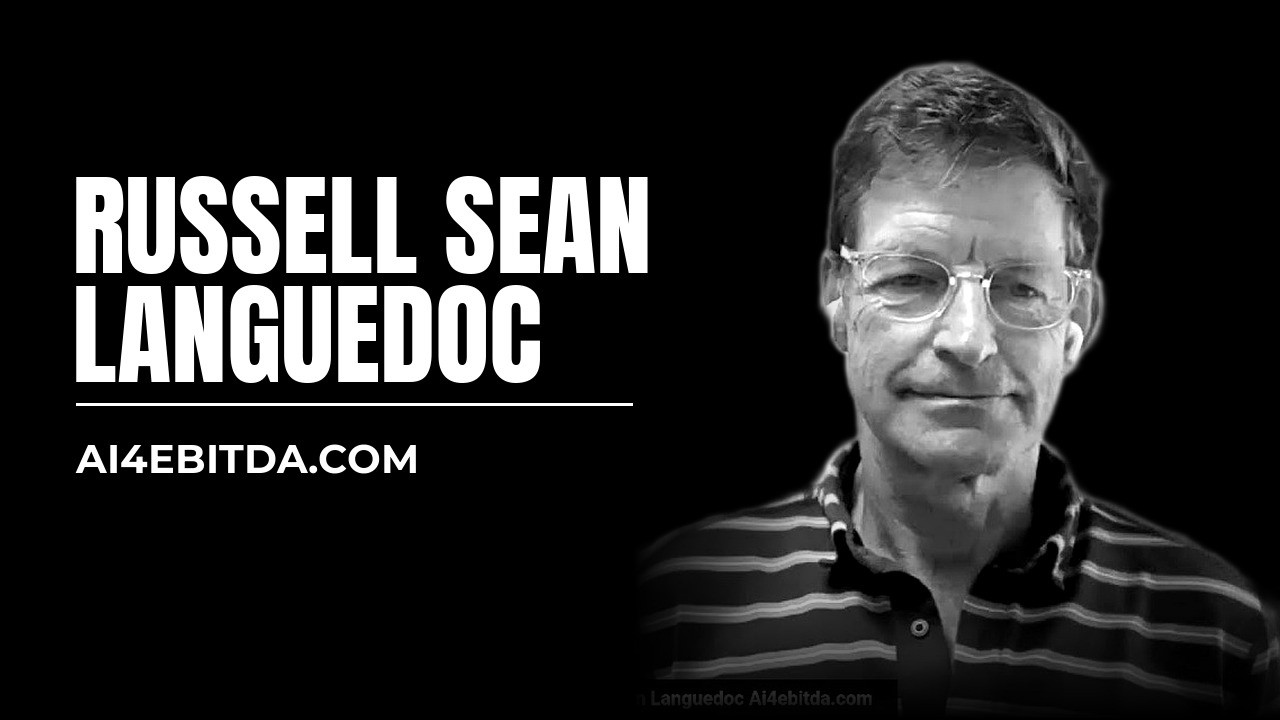
Russell Sean Languedoc built AI4EBITDA, a platform that analyzes organizational text to predict why AI projects fail. For a $500M automotive modernization project, it raised success odds from 35% to 60% by restructuring team assignments based on hidden capabilities. Sean argues AI adoption stalls because of people, not technology.
Chapters
Welcome to another CEOism podcast. We have Russell Sean Langdock with us. He's a 5x CEO right now. Decision architecture platform is what he's into at AI for EBITDA. You can find it at ai4ebitda.com. EBITDA, that word is like always a tongue flipper, right?
It is hard to spell too. Yeah, earnings before interest, taxes, depreciation.
Yeah, which is a word we like as VCs and financially oriented people. But yeah, I had Sean, I think a year or two ago on the podcast. He also runs Outforce.ai, member at GTM Fund. So Russell, welcome to the pod again. Tell us a bit more about yourself and what you're up to.
Yes, thanks. So I do go by Sean. LinkedIn only allowed me to use my passport info, so my first name is Russell, but yeah, I go by Sean. So yeah, thanks for having me, Charles. Very fun to be with a co-Quebecer.
What are you up to? Canadian.
So I've been building— so I've built a lot of tech companies and I advise a lot of tech, a lot of companies, and then rolled into private equity quite a bit. And private equity's non-tech companies were having struggles with AI. moving either beyond, either with any kind of a program or just beyond pilots. And I found with technology, everything, every wave of technology, and I've been through many, I started in the '90s, has had its, you know, this is going to change everything. And everything slowly, slowly, slowly changes. And there's been good reasons for slow changes in a lot of companies because the UX/UI didn't work or it didn't connect to data well. And there are a lot of things that go on. But now, AI is headless. There's no reason for any holdback except people. And so, the truth of all these slow changes is actually percolating in that it's the people who either do or don't want to change. Who's championing what's changing? Who's holding it back? And who's going to follow? And so, AI for EBITDA has a method of figuring out who that is at any level of the organization. Any change, any mandate, not just AI, and figuring out how people think in the organization, what their motivations are. And it's not survey-based. It's not a DiSC or Hogan or Myers-Briggs, which people often game anyway. This is all based on psycholinguistic profile, which is reading what people have published, looking at word density, which is a signature on who you really are.
And the TLDR of your background, um, yeah, you leased, uh, 1.2 million square foot tower office.
You got that? Yeah, yeah, yeah.
The Olympics, you brought the Olympics to Vancouver.
Oh, I, I not single-handedly by any means of the—
yeah, you helped, right?
Yeah, yeah, yeah.
Um, and then you ran a media company, uh, you worked with like big brands like Land Rover, Adidas, um, ran Strada as well. So SaaS, then you became sort of a mentor investor in the startup world, right? Like C100 investor as well. And finally, that's your— is that like your final, uh, most potent evolution right now? Do you feel like you're, you're, you're in the right waters?
I really do. I think that I honestly, my North Star on this is that especially for non-tech companies that have missed these waves, this is the biggest opportunity for rapid acceleration and wicked growth. And the companies, you know, if you think about it, mobile, which is probably one of the later waves, um, if anyone of your audience can remember mobile coming in, everyone's going mobile first, mobile first, mobile first. But the place that was mobile first was Kenya. It had the highest adoption rate because they had no infrastructure on internet. So, they weren't using desktops and mobile became the place. So, in non-tech companies, they've missed a lot, you know, digital transformation, mobile, everything else. And often for, sometimes for good reasons. But this is an opportunity. People look at it as a cost-cutting opportunity. I look at it as an ability to 10x the company. And those that come onto that are going to really accelerate beyond their peers.
Okay. And the current platform, I'm looking at it right now, you plug in your data, then what do you get out of the tool? you get like next steps as a company owner? Who's your ICP and what do they get in the end? What's your offer?
Our ICP is mid-market and up. We have 7 Fortune 50 companies in our customer base, 11 Fortune 100s. But we go down to companies that are 200 or more people. We call it the Dunbar number. We don't call it the Dunbar number. The Dunbar number is you should know within a company of 150 people just about everybody pretty well. But beyond that, you start to have lack of visibility. And it gets even bigger as you get into bigger organizations. So yes, we usually come in at a larger organization with a project that might be struggling and assess why it's struggling based on who's working on what and what their thinking capacities are. A good example would be a large auto manufacturer where we came in. They had a half a billion-dollar modernization project. that was stumbling. The leadership thought it was going great. Reporting to the board, everything's green. But below them were people who had been promoted through the organization, as often happens in large organizations. People who get promoted tend to be good at execution under the old terms of what good execution was. And so, they got rewarded with promotions. So, that means that somebody who could be a forklift driver moves into becoming a manager becomes a vice president. And now, that person is being charged with making decisions about technology for which they're not— they don't have the capability or the capacity. And then, they're relying on people below them. So, that's exactly what happened. The people in the middle didn't have the capability or capacity to understand what was really going on at the bottom level. The bottom level, you had engineers burning out because they're working so hard trying to get this project on the rails. One engineer had 9 projects of his own. And so, the middle manager is going, oh, this guy's great. He works so hard. He's got 9 projects. That's 45 minutes per project per day. It's just not going to work. So, they had an assessment of 85% chance of success. We came in with a 35% chance of success. They said, no way you can do that. And so, we showed them their own profiles based on our data intake, which requires No surveys. It's all based on external data. And we run it through about 657 algorithms. We've got 15 years of data longitudinally on 410 million people and over a million companies. So, we've got statistical significance in our analysis and blew the leadership away on how accurate we were about them. So, they gave us the green light to go forward. And what we did was we looked at supporting the lower layer, which is burning out, bringing some of the lower layer into the higher level. So that's, that's what decision architecture is. It's not— the org chart is technical debt, if you could think about it. But you have people with— who are really amazing at AI, or amazing thought leaders, or amazing at something that some of the people in the authority ranks aren't. And so we started pairing people up and across. And that helped bring everybody's level up but also brought the information up to the level that it should be at where it is.
And how did you get these Fortune 50 clients? Is it from your existing network?
Some from existing network. My partner is an ex-Google guy, so he's also got a very strong network. And some from referral. Large thinking institutions have seen what we do, looked at the science behind what we've done, and bring us in. Now we're starting to also work with some channel partners, some of the larger consulting firms, because they have great strategies. They just, they don't survive contact with the org chart.
Interesting. It's like Deloitte but on AI storage, sort of. Uh, do the company need to give you deep data access, and is that a point of friction?
That's the beautiful part— zero. We can even, for a small company, help them identify their next best acquisition or next best customer based on data associated with who they are and the psychological profiles of the people they want to acquire. So, there's a better cultural— shorter cultural gap between what they do and who their next customer is or who their next purchase is.
But what's the main product in Beachhead? Because you named many. You named acquisition. You named like put this guy of this role in this other role. Is there like one specific field that your AI is incredibly good in? Or yourself, I guess, because it's hybrid AI and—
Yeah, yeah. So I mean, anybody who can get into an enterprise customer loves to be an enterprise customer. They tend to be long and you can go wide. So one, you know, a smaller company with 250 people or so, you know, will be one and done there generally. But with larger organizations, there's many departments and many ways to go. So our ideal customer is a larger enterprise customer and generally from the operator.
Super hard to get a hold of, right? Like, so other than if it's referrals, it's— do you do like some GTM? Like, personally, what I do for enterprise clients, people in like top positions at Fortune 1000s, right? Like, I invite them to podcasts, I learn about them, I filter them. I talk to them, I listen to their needs, right? And I offer them something, which is a podcast interview, before I ask something on their end. Do you use a similar strategy to get them through the funnel?
So far, not. I did podcasts with Outforce.ai, but with this one, I'm going and actually giving them some free information right away. Here's you and here's what you look like. And here's a letter to your spouse. that describes you. We can do this for everybody in your organization. Wouldn't it be amazing to see below 2 levels? And I've just done that, for example, for a Canadian company that's just getting a new CEO. So, the new CEO is coming in. It's like they're opening a box of chocolates. They have no idea where they're going to get hit and where they're going to get liked. And so, we can map that out for them.
Interesting. Yeah, humans love a fortune teller, right? It's like, here's who you are. And more importantly, it's not just ego. Well, I mean, it's someone that sits down and tries to understand them, right? Like, I guess the world needs way more of that, right? Just like, hey, who's— here's your potential personality, right? And this may fit your expectations and so forth. And obviously this can be very useful in the organizational context of things, right? Because personalities may clash together, right? How did you get—
You bring up a great point, Charles. Sorry to interrupt, but the post-diagnostics is understanding who would be a great mentor within the organization and who needs— who has some gaps that need to be mentored and where are the strengths in the organization. So mapping across departments, across functions is what we're really good at as well.
It's pretty interesting that the company's name is like Ebbita, and then you're talking about the human and personality part to that. Is that a beachhead? Is that a Trojan horse, right? Like you talk about technical stuff but then you get on the soft stuff once you're in.
Well, because it's the soft stuff that's holding up the EBITDA. AI is not— the data on AI penetrating organizations is horrific. It's 15%. And some of that is because pilots don't get sponsored beyond pilots. But most of that is people-oriented. So, if you're going to drive some change through, whether it's AI or whether it's some other efficiency model or a growth model, whatever it is, you need to have people on board. You ever see that movie about how to build a crowd and get things going? You know, where people are dancing at an outdoor concert? It's pretty funny. Check it out on YouTube.
It's called How to Build a Crowd?
How to Get Momentum in a Crowd, right? And so, this one guy is just dancing like crazy and then he starts teaching somebody else how to dance. And then eventually, the whole crowd's up and dancing.
Oh yeah, for sure.
It's an old TED Talk. But that's the thing. You've got to build that momentum with the organization. But you can't know who's going to join, who's going to be first in, who's going to lead, who's going to follow, and who's going to block.
Yeah, I can just remember me at my wedding being like, taking the microphone and be like, hey, come on and dance with me.
That's like the CEO telling, hey, use AI.
Come and dance. I mean, unique opportunity to go, right? Like, don't move your ass.
That's right.
But yeah, I mean, humans are very social creatures. Do you feel that corporations will stay around if like AIs can do better and if corporations are so slow to actually adapt and if we can see 2, 3 humans' organizations hyperscale the way corporations do in like 10 to 100x less time?
There's a lot of change coming. Absolutely. But it will create new things as well and how people work. So, we have this graphic that shows how AI is replacing a lot of the bottom-end work, right? So, junior entry is hard. And what happens is some people say, okay, let's just eliminate all that. Then, you're just sitting steady at the same revenue model. But if you can train your people to move into the top right quadrant and be innovation-oriented and forward-thinking, then you can 10x the company with the same number of people. And that's the opportunity.
Maybe we'll see like, I'm not sure, right? Like, but, you know, Blockbuster versus Netflix type of switch, right? Or yeah, like, I think we're gonna see more of that. We're gonna see like, these young and nimble companies acquire older ones. I feel, I feel that the plates are definitely turning now. The only thing that corporations have, in my opinion, because I don't consider humans to be asset at this stage, it's capital. They're hypercapitalized. And their brand.
Install base, distribution.
What is install base?
Distribution.
Okay, so what do you mean precisely by distribution?
So, when I think about how technology has changed over time and when you built companies, what was your moat? For a long time, your moat was the number of engineers you had, right? Good engineers. That's gone. That is no longer a moat. People can replicate almost any application at any time. But if you have distribution, then you can upgrade to your client base far more easily and communicate to your client base. It's just like the old days when we were selling software. The installed base would say, oh yeah, that's in our pipeline. They'll be ready in 6 months. The biggest lie ever, right? But it kept them on the client. And the same thing with AI. We are making things more efficient. We're going to reduce costs. We're going to make your user experience headless. All those things can happen. And that's the installed base that would be very hard to beat for— and they have customer relationships, all these things. These, these are assets, absolute assets. Technology doesn't change anything. It's people who are willing to change that change things.
I think technology will take a soul in itself pretty soon as well. It's going to be agentic. We just haven't witnessed it, but I don't think we're that far away from that. Like AGI itself, I do think we're still a distance. Maybe I was wrong on some of my assessments, like checking how Claude, how Anthropic and OpenAI are deploying nowadays. But agentic—
Grok came pretty close with its latest, uh, chief of staff. Yeah. Um, but yeah, no, you're right. Yes, functions, you know, day-to-day functions and processes are going to be replaced by agents. Absolutely.
Interesting. And when was that deployed? What part was like so impressive about it? I haven't A/B tested it, that achieved that?
Multi-agent orchestration and, uh, and the ability to manage with simple prompts. What would normally— what would take you probably 2 or 3 hours on, uh, Anthropic is now minutes.
Okay.
But Anthropic's gonna switch and flip and beat that too. I mean, it just— these, these horse races are just— yeah.
Yeah, it's like one day, which is fascinating, which is cool, but I think it's sort of false. It limits innovation to some degree because they're all doing like the same and they're all looking— they're horses without blinders, right? They just keep on looking at each other. So it slows down innovation. Plus they're all running on the same track. Well, should be a Mustang running in the mountains and just doing crazy things, right? I guess they have like—
There are Mustangs running in the mountains though.
Like who?
Well, I just have to assume. You think of all the engineers that are getting laid off at these larger companies. Think of all the engineers that haven't even started and have ideas.
Yeah, yeah. Then there's strong chance that one of these like wilder guys with weird backgrounds actually, uh, created it. I think the motivation is there generally and the race is here, um, but I think You like, people are, the person that will create AGI will leverage that motivation without looking necessarily at what the guys are doing. There's been like these neuromorphic chips, you know, like thinking more like a brain architecture than you need to make it replicable. There are bottlenecks as well at the end of the day, right? Electricity and data centers and all of that.
Mm-hmm.
But there could be like innovative processes, like you've seen blockchains and like, you know, software leveraging like all the hardware we have on Earth technically. we could build something very interesting if you would leverage in packets like my computer, your computer, and a bunch of other computers, right?
Distributed computing back to the '90s, right?
Yeah, yeah, yeah, yeah. I have like 5 or 10 of these computers here, like give me money and maybe I'll plug them back on, you know?
It's, you know, I have the domain Pied Piper from Silicon Valley.
.com?
Yeah, no, just CA. Yeah.
Oh, that's CA. Yeah.
I couldn't get .com.
Pretty good.
Yeah, yeah, it'd be great.
So what's on your radar? Like what top goals do you have for this year? What do you want to accomplish? And yeah, how are you leveraging all these AI agents to advance your company and your clients?
So for me, it's leveraging those who already have distribution. So, letting— so, you know, the big consulting firms, Accenture, Deloitte, etc., are selling hours. And they sell hours based on, you know, a strategy and deployment. And, you know, their old model is starting to break and they're laying a lot of people off. But this is a model that allows them to identify where the company needs help. And when I talk about pairing people up, that, that doesn't happen on its own. That happens with a lot of human effort as well. And I think that's where these consulting firms can benefit from our technology, and we can provide it to them so that they can distribute it to a bigger number of clients for us. So my, my big goal is to have at least 3 of the big consulting firms And what do you charge these big boys?
Like, is it 6, 7-figure contracts a year? Or, and what do they get in return precisely?
So, when we come in with diagnostics, we generally try and come in at a bite size that's small enough that it's easy to get through the organization as a proof point. And then it'll grow from there. So, for example, that manufacturing company, it was one project, one department. And we started off with just a few assessments and then we rolled it into the whole organization. And then now, we're going around the globe with their entire management team. So yeah, it gets into the big digits but the returns are so clear. You know, half a billion dollar project was going to be— was 35% chance of success. We now got it up to 60%.
Yeah, that's crazy. So, these guys would use you to be— to have like higher success chance in their clients. Is that what you're saying? Is like partnership model?
Yeah, yeah, because everything is the same. Oh, let's do a survey. Well, how surveys— how many surveys can you do at an enterprise? And there's just fatigue. So, you're giving them some really good new insights on how people work. And then, you're leveraging that to upgrade your— the staff and optimize for a more efficient operation.
And where does that bring Outforce.ai? Are you still running that one? You're full-time in that new thing?
Yeah, we still do that. Outforce.ai is basically a database of large— of any sized agency that is a software development agency for AI or for anything else. And the problem that people have when they're looking for an outsourced service is there's just so much noise and so little signal about who's good at what. So, we've built this database over the last 7 years and figured out who's good at what in what domain. So, you don't have to teach them about how to run, how your business runs, and are very efficient using AI in enabling a better outcome and a faster outcome.
Got it. Well, Sean, thanks for being on the podcast. Where can people find out more about you?
ai-freebida.com. Uh, and, and that's what AI should be for. It's free. But, uh, yes, for sure.
And Charles, for
More from Charles


Founder Wisdom: the audiobook, version 2 (5 hours of stories from founders and CEOs)

8 CEO Questions I Love Asking: the audiobook (64 founders answer, in their own words)





