Scott Kelly - CEO of Black Dog Venture Partners
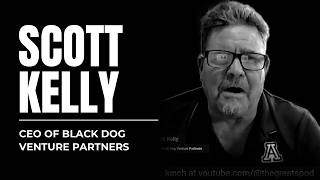
In this VC Wisdom podcast episode, host Charles Cormier interviews Scott Kelly, CEO of Black Dog Venture Partners and founder of the VC Fast Pitch accelerator. Kelly recounts his 35‑year career that began on the New York Stock Exchange, moved through investment banking, and transitioned into serial entrepreneurship with multiple successful exits. He explains how he built Black Dog Venture Partners, raising roughly $5 billion for portfolio companies, creating a 16,000‑member investor syndicate, and running accelerator programs, webinars, and events such as VC Fast Pitch and Investors & Innovators. Kelly shares his philosophy on founder support, emphasizing that fundraising is just one piece of a broader go‑to‑market puzzle that includes sales, partnerships, and product‑market fit. He discusses current fundraising dynamics, noting AI’s impact on capital availability and heightened expectations for early‑stage revenue. The conversation covers the strategic use of content—podcasts, webinars, and events—to build relationships and pipelines, and Kelly’s adoption of AI tools like Boardy for calendar and deal‑flow management. He highlights emerging sector opportunities in construction tech, property tech, and music tech, and reflects on his daily routine, productivity habits, and continuous learning through books, podcasts, and AI platforms. Contact information and resources are provided at the end of the interview.
Chapters
Welcome to another VC Wisdom pod. We have Scott Kelly on. He's the CEO of Black Dog Ventures and host of VC Fast Pitch. He's very much into venture capital and business development, just like myself. So very good fit so far. And Scott has come on my Spark Tank show, and I just love his mentality and how he thinks. So, Scott, welcome to the pod. Tell us a bit more about yourself and what you're up to.
Yeah, thanks for having me. Yeah, a little background on me. Yeah, like I said, uh, I've been on both sides of the deal for about 35 years. Started out on the New York Stock Exchange early '80s, investment banker in the late '80s, early '90s, taking tech companies public. Uh, '93 I became a founder for the first time and launched 3 companies during the '90s, which I successfully exited. 2000, had a brief retirement. After another— after that, I set up another business in sports and entertainment, sold that a few years later, and that's when I launched Black Dog Venture Partners. And I was doing, uh, more or less some angel investing at the time, and some of the later-stage venture capital firms just started to send me companies that were too early for them. And that's how we launched our accelerator. And since that time, we've raised about $5 billion for these companies, about 30 exits. Um, we've built an investor syndicate of about 16,000 investors, um, and host a series of webinars and podcasts here in the US and around the country. Um, and recently moved to Florida where I continue to run my business today.
I love all of this. So did you start in, uh, business dev and merge to venture capitalists? Like, tell me a bit more about your career and when you first discovered VC.
I, I, I tell everybody I've been in some form of sales my entire life. And, you know, um, when I moved to San Francisco, I was, you know, working with companies, helping them raise money and selling their opportunities to investors when they went public. Uh, then when I launched my 3 companies during the internet boom, there was a lot of biz dev that I had to do just for my own companies. And so I was able to take what I learned and the relationship I had to, to now make that a part of our business. I've got 40,000 business partners, um, that, uh, get our newsletter. Uh, we have great relationships with distributors and other folks that can help a company scale. So we combine that along with our ability to help them fund their business.
And how did your career start is sort of my question for people that want to relate to what you're doing. You start as a founder, right? Like, when did you exactly get in VC?
Yeah, I got in VC, um, primary right around 2000 after I had exited a few companies. Then I decided to really do more angel investing, uh, participate in some venture funds, um, and then I've been doing that, like I said, ever since the early 2000s, right?
So you started off right out the gate as an entrepreneur, right? Like in investment banking. That's pretty uncommon, right? So it's like, uh, were you born this way? Were your parents entrepreneurs? Like, why start like a crazy man off the gate with like, I'm gonna manage my own self and my own company?
Well, it's interesting, you know, I, I, I've probably been an entrepreneur since my early teens. I've always had some business selling some product or service, you know. When I was in college, you know, we would sell slices of pizzas in the dorm to, to pay for the beer money. So we were always entrepreneurial. And I think what happened was after a little bit of time working for someone else, I learned that I wasn't a very good employee. And so I decided that— it was interesting, when I was in investment banking, I had a really successful week in the business. I had generated more commissions in a week than the entire firm did the year prior. And I was in San Francisco doing that. Our CEO was in Los Angeles and decided to host a big party to celebrate the company's great week. And everyone was invited except me. And I was 93% of the firm's revenue that week. And that really told me that, that, and when I found out that I was making 3 times my CEO, I decided that it's better for me to move into the C-suite, uh, myself.
And you started in music and beer, is that like what I'm reading well here?
I, I've dabbled in some of my hobbies became businesses, you know, in the, um, what happened in, uh, during the mid-'90s, I had gotten very involved in craft brewing and launched a small craft brewery which we ran for a couple years and sold that during the boom, uh, in that era. Um, but the music story was pretty interesting. I was in my home outside of San Francisco and I was reading the classified ad, and there was a classified ad with a hip-hop label looking for an investor. And I tell people, I was fat, dumb, and happy then, so I invested in the record label knowing nothing about the music business. And 3 months later, by some stroke of luck, our first artist won a contest on MTV um, and a few months later we win gold. So the next thing I knew, I went from being an investment banker and investor to running a record label. And, uh, so, uh, we still dabble in the music business today. We actually have a music tech accelerator now. We work with music tech companies to help them scale. But, um, yeah, so I, I, I, I made a decision in my life that I want to do the work with the companies that I enjoy talking about and with entrepreneurs I enjoy working with.
And what was your first big home run, like when you knew you'd make it and you wouldn't need to work one day more in your life anymore?
Yeah, I think probably our very— or one of our two of our well-known, better-known home runs is I was very involved when I was an investment banker in the launch of some really big startups at the time, like MP3.com, the the beginning of music streaming. Uh, and that was a very successful, uh, fundraising we did for them. As an entrepreneur, back in the late '90s, I launched an online mortgage company, one of the first online mortgage companies in the business. And we eventually got acquired by a publicly traded company, which eventually got acquired by Wells Fargo. So that was— those are pretty— two, two examples of some pretty successful deals I was involved in.
So like 7-figure exits for you, is that somewhat accurate?
They— well, they were a little bit more than 7 figures. They were high 8 figures, those exits.
So why keep working after that?
You know, it's interesting you say that. I tell people I've unsuccessfully retired twice. So in 2000, I thought I was going to retire and I got bored. So I just started another business. When I moved to Florida a few years ago, I thought I was going to retire again. And I realized I'm 62 years old. I'm, I'm not that old and my golf game's terrible and I can only fish a couple of times a week and I go crazy. So I decided to keep doing what I'm doing.
And with the wealth of experience that you have, I feel it's like your duty to give back to founders, right?
Exactly. You know, we do a lot of webinars, we do a lot of, you know, mentorship for entrepreneurs. You know, I was fortunate in my early career to have some great people influence me. And, you know, today, you know, I have the ability to do the same.
And the founders that you advise, most of the time they have mostly problems with raising capital and go-to-market. Is that the case in like 80% of founders, or—
Yes and no. I tell people that, you know, I— we solve problems and create opportunities for entrepreneurs. Sometimes those problems are solved by money. Many times they can be solved by something else. Um, you know, for example, a couple years ago we had a company that was raising— wanted to raise $2 million. I looked at their product and I said, hey, how about I go out and try to find some buyers of this product? And we ended up selling $2 million of the product. So no, they didn't— they had not have to raise the money, but they got revenue without giving away anything. And so I think raising money is hard work. Being an entrepreneur is hard work. And so what we do is we see what the real problem is or what the real opportunity is, and then we work towards solving that problem or taking advantage of that opportunity. And again, sometimes it's money, sometimes it's putting the right people on the team, sometimes it's put them in front of somebody who will buy their product or service.
I love it. Your clients nowadays, they're founders. Do you also work with VCs to help them raise funds? Like, what's your main business activity?
We work primarily with entrepreneurs, um, but we do, you know, have a lot of relationships with endowments and family offices and others that are interested in reaching out to venture capital firms. So we have worked with a few venture capital firms. It's, it's something we'll probably do more of in the future, but because honestly, it's, it's probably as difficult for a new found— a new founder to raise money. It is for a new fund manager, right?
Um, and the founders nowadays, can you give us an idea of, uh, what kind of fundraising climates are they getting themselves into nowadays? It's easy to raise money, like, what's the, the market?
Well, you know, AI has done two things. One, you know, AI as an industry has really sucked up all the air in fundraising, number one. And number two, because it's become far easier to launch a company, the expectations from investors is higher now. You know, it used to be you could raise, you know, $5 million and build an MVP in 24 months, but those days are gone for the most part. Most investors are now, even at the seed stage, are assuming that a company has built something and is generating revenue. So for companies and founders that can build and sell, fundraising has gotten easier. For those that don't, it's gotten harder.
Nowadays you can also vibe code stuff incredibly quickly, right? So I feel that most can like create products, but no one knows how to actually sell their thing, and Even before you start building a product, you, you sort of need to know your clients, right? And that's selling, because if you don't, you're just going to build the product no one's going to use. What do you have to say about that?
Exactly. You know, I, I tell entrepreneurs all the time, make sure you, you know who you have a lot of buyers before you build something. You know, in some cases, the market can tell you what you have to change, but in a lot of cases, that's too late.
Yeah, I mean, the other thing with fundraising nowadays, I feel that the market has very much gone into winner takes all. You know, like it's obvious to fund the next Cursor or, you know, the next Scale AI, but these folks, they get like pretty much 90% of the capital. While if you're starting something, you don't have a background, right? You're not like an ex, FANG or something, it's like, it's hard to actually raise something. What do you have to say about that?
Yeah, it is difficult. And I think entrepreneurs really have to understand, really fundraising is marketing and sales. And it really starts out with the founders making sure they're talking to the right investors. You know, VC firms get all the press. But a lot of entrepreneurs are raising their capital from friends and family, high net worth individuals, and accredited investors that no one knows about. And so I think it's really important for entrepreneurs to understand is that, you know, don't do the spray and pray approach, you know, of posting something in someone's LinkedIn DM and hoping they're going to do something. You know, it's like anything, you have to build a list, you have to qualify them, you have to build the funnel, You have to build relationships with these people, um, before you can raise money from these people.
You feel podcasts are one of the best relationship scaling engine?
I think podcasts and content in general are very good tools because obviously what that does is gives you an opportunity to tell your story uninterrupted, you know, to an audience that you can create on your own, and you don't necessarily have to rely on social media channels to do that. Um, so I think podcast as a tool is very valuable. Now, I am a big believer in, you know, all of these tools, but they have to end up with something. You know, back in the '90s, I would tell people when we were building websites, back when that was the newest thing, is they have to do two things. One, either sell a product or service, or two, capture a data file, an email address or a phone number so you can go back and sell a product or service. Everything else is what we used to call flying baloney. Um, so I think podcasts as part of your plan are a great tool, uh, but I think you have to have a more succinct plan and a way to build your funnel, get to know your funnel, and then sell through your funnel.
Yeah, that's intriguing. Um, I feel Some of the founders that I coach have started a podcast and, uh, are talking to investors on their podcast. That's a huge strategy. Of course you need to have something, right? But I find it so hard to get a hold of investors nowadays. And if you target them well, if you build a relationship first, if you have a connection and there's chemistry on the podcast first, and then on the back end you can ask them like, hey, would you look at my deck? Do you know someone that would be interested in investing in that? I think that's a genius and super scalable play.
I, I think it definitely can work. Now, I would be careful to just to, uh, create a little bit of distance from the time you have them on the podcast and the time you ask them for something. Um, but again, um, I, I tell people all the time, when you're reaching out to investors Don't ask what you need from them first. Ask what you can do for them first. I, I believe in that. And obviously a podcast is a great way to help them, you know, in their business.
Yeah. What, uh, latest founders, uh, have caught your attention as of late in AI? It can be like ones that raise the gigantic round of— have exited. What's catching your attention nowadays?
Yeah, I, I think what's happening now is that several industries that have never used technology to any real extent are now leaning into AI. I think things like construction tech and property tech are huge opportunities. We have several companies that have been successful in that regard. So I think now it's coming down to using AI to take old industries and create new opportunities. That's where I'm seeing the real, the real possibilities.
What about the latest IPOs like, uh, SpaceX at 72x valuation? Isn't that telling about how the market is shifting, right? Like towards monopolizing attention, creating narratives ahead of IPOs. Like, is, is that like changing in the venture market?
Well, it's interesting that, you know, these days look very similar to 1997 and 1998. I'm, I'm old enough to remember those days. You know, there is a lot of hype around a lot of big names, um, and they are taking a lot of the oxygen out of the room in terms of fundraising. But you— but investors have to be careful, you know. You have to understand something: when, when a company goes public, you know, a lot of times other people are selling that stock. So as much as you believe in buying it, their belief is in selling it, and you got to be careful about that. And I— we were involved in a lot of IPOs in my career where they skyrocket in the beginning, and then honestly, after the holding period of many of the investors expires in 30 or 60 days, the stocks, you know, tumble for a period of time. Um, you know, I, I think people have to be— especially individual investors— just have to be very careful and very pragmatic. Um, do I think companies like SpaceX have huge opportunities? Absolutely. Um, But like, just like venture capital or even angel investing, you got to be willing to understand the volatility and, and have the ability to withstand that volatility.
Tell me about your event strategy to attract founders as of late. How does that scale?
Yeah, so we've, we've done— we on, on average do 1 to 2 webinars a month where we provide interesting learning opportunities for entrepreneurs to find new tools and, and new ways to build their business and get in front of investors. Uh, that's been a great way to add more people to our network. We also host, uh, two event series, one called VC Fast Pitch. We've had— we've been hosting those events for about 15 years. Uh, we do them monthly online, and then we do different venues around the country. And we've, we've helped entrepreneurs raise about $130 million just from those events alone. Uh, and then we have another curated event called Investors and Innovators where we just bring in investors into the room where they can network and share deal flow. You know, we're hosting one of those events in New York at the end of July. Uh, we actually on July 23rd, we have our online version of our VC Fast Pitch event. Um, and that's been a really good way to talk to more entrepreneurs, connect with more investors, and, and, and then eventually connect the two.
Right. Um, I think that's how we met, like Spark Tank, right? Like to have you on as a VC on the show. I think that's an amazing strategy to help the community, but also to get clients, right? Like, seems like the sweet spot for sure. Have you been using Boardy as well to get more deals? Like, what's your take on that?
Honestly, I am all in on Boardy, 100%. I signed up for Boardy Pro. Anyone listening in, I've got a few free memberships to give out. Um, it's interesting, I was very reluctant, and I've never had anyone manage my calendar. I never had an assistant man on my calendar. I never used a calendar app. Um, and honestly, now Bordy manages my calendar, and every morning I wake up and he gives me a rundown of my day. He gives me notes about the call I'm going to take. Um, and honestly, I, I tell him people I want to meet and he helps facilitate the introduction. So I, I think, um, there's a lot of good AI tools out there, but, um, Gordy's on to something.
And as a company, like, don't you feel they're still trying to find product-market fit? At first it was like $10,000 a month, I think, to get like your CEO. Then they pivoted to a a lower, uh, SaaS model, $100 a month, and the calendar thing? Like, when will they settle into PMF, in your opinion?
Well, I think what they're doing is a really interesting strategy now. Um, it is the strategy that Facebook used. You know, they didn't concentrate on generating revenue for a while. They built a large network, and that's effectively what Boardy's doing now. I mean, I, I don't pay a membership fee. They're offering you know, the first year free. And honestly, what you do is you— they're getting thousands upon thousands of people effectively hooked onto the platform. And then like any freemium model, they're going to provide an opportunity to pay for it later. Uh, so I think their, their model in the short term is expensive, but I think in the long term it's going to build significant— they already have a large audience. You know, you can go on LinkedIn, you see the, the spinning gold box on, you know, every third post. So they're definitely doing something right in terms of the, the branding and the outreach.
Yeah, Andrew D'Souza, founder, Canadian founder, is a beast, you know, like, uh, ex-co-founder of a bank, um, with Michelle, which was a dragon on the show. So yeah, total beast, like, uh, super good at content, great at product, right? Like, that, that guy's very investible, and even if their business model doesn't make sense right now, I'd still invest in— I feel they just closed a round, right? Like a couple months ago.
Yeah, they did close some financing. And, you know, they're obviously— they're going to need to raise more money because obviously the, the cost of tokens to do what they're doing becomes increasingly more expensive as they go. But I think what they're doing is if they can— if they can survive the year of building all these people in their network, uh, they're going to have a lot of people that are going to be interested in paying for the product later, and probably a lot of people interested in investing later, right? Yeah.
Um, did you— do you still invest nowadays? Like, what's, uh, what's on your mind?
We primarily invest through SPVs. So basically, um, we launched an SPV for a company in med tech space that we've, uh, We're leading that round. Um, we— I just, I made this conscious decision several years ago not to run a formal fund. Uh, the SPV provides me more flexibility and provides entrepreneurs and investors a better opportunity to kind of pick their, their opportunities versus having to count on the manager to do that for them.
Right, right. Um, you're in cybersecurity, you're in gaming, you're in music. Like, uh, how do you keep the focus nowadays?
Well, I think the reality is, is that one, I am a workaholic and I am very organized. You know, what I try to do is I try to connect the dots. So we, you know, when we're in the music industry, we are building relationships with music tech founders to help them grow their business. In cybersecurity, we built a network of cybersecurity companies that have complementary businesses they can work with. And we built a network of investors in cybersecurity that are interested in those opportunities to invest with us. Yeah, I love it.
What does a day in your life look like as a workaholic?
A day in the life. So it's 3:34 East Coast time here. You are my 12th phone call and I've got 2 more. That's my average day. I am on calls constantly. I am up at 6, probably between 4:30 and 5 o'clock in the morning, get a little exercise in, and then I'm responding to the 200 emails that are in my inbox. Um, and then the rest of the day is doing 3 things: talking entrepreneurs, talking to founders, or talking to both of them at the same time.
Any weird habits that you have, uh, in store to increase performance in yourself?
I don't know if they're weird habits, but I am a— I'm a big believer in having some quiet time. You know, the beauty of where I live now is I'm on the beach. I can walk on the beach and just— I used to do it to forget things, but now it's a tool for me to learn, figure out new things when I'm not dealing in the middle of a phone call or sending emails or on a podcast. You know, I can just walk on the beach and think all of myself. Um, um, and, and honestly, one of my favorite things to do is, you know, go to concerts and listen to the music. You know, it's, it's interesting, you know, music provides all kinds of inspiration, including business inspiration.
Yeah, I love it. Uh, what are you, or how are you learning nowadays? Any podcasts, audiobooks, AI systems that you have?
Yeah, I mean, I am, um, I'm obviously trying to learn some more AI tools. I listen to a lot about podcasts and, uh, informational content on, you know, Lovable and Claude and new AI tools that are out there so I could be, uh, better skilled, uh, at that. Um, I listen to— okay, I mean, I'm— I listen to more ebooks than anything else. Um, I'm rereading a couple of my favorite books right now. And really just to relearn some habits I've forgotten over time. So, love it.
Scott, where can people find out more about you?
Uh, you can find me on my website blackdogceo.com. You can find me on all social media at Black Dog CEO, and you can reach out to me via email to scott@blackdogvp.
That was Scott
More from Charles


Founder Wisdom: the audiobook, version 2 (5 hours of stories from founders and CEOs)

8 CEO Questions I Love Asking: the audiobook (64 founders answer, in their own words)





