Sharif Bennett - Co-Founder at CineBlock
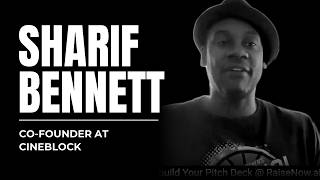
Sharif Bennett built CineBlock, a FINRA- and SEC-compliant platform that lets regular people invest in independent films. Mid-budget movies between $1-5 million have trouble getting financed, so CineBlock turns investors into promoters through community marketing. Horror, franchises, and biopics have historically been the most profitable films to fund.
Chapters
Welcome to another Founder Wisdom podcast. We have Sharif Banat with us today, co-founder at Cinebloc. He's in New Jersey, has an interesting background, was previously an account exec at some tech firms, worked at IBM as well, and now is the Chief Evangelist Officer at Cinebloc. He's going to tell us in a moment what he does, but in broad lines, a fintech company democratizes entertainment, media, finance, investing, monetization, uh, by developing user-friendly apps. So Sharif, tell us a bit more about yourself and what you've been up to.
Yeah, thank you. Well, a little bit about me, uh, originally from Rockland County, New York, right across, uh, the Tappan Zee Bridge. Um, avid Yankees fan. Been fortunate enough to have lived, uh, uh, in a few cities across the country, so I am a fan of traveling. Um, was always a film enthusiast, uh, along with my, my co-founders. And, um, we decided to, uh, tackle this journey together as a unit after attempting to do it, uh, individually. I myself, I have a background— you mentioned my background in tech sales, but I also had a background in, in stand-up, uh, as well as improvised comedy. I, I was in a few independent films. But, um, when my friend propositioned me with this idea of developing our own business and democratizing film finance, I literally said, "I want in," because we realized that we were much stronger cohesively rather than doing things individually.
Interesting. Democratizing is always like a word broadly used out there. What do you do specifically? You provide finance to filmmakers with good ideas, but otherwise that wouldn't be able to get that money in the traditional industry? Tell us a bit more about the— yeah, this is a big problem you're solving.
Yeah, so if we take a look at the industry as a whole, right, there's some real gaps in terms of financing for independent filmmakers. The majority of films that the average person sees, gets notified of, are big budget sort of Marvel movies with, you know, these $100 million budgets, and 50% of that is going just to marketing, period. Whereas the smaller films that are generally between $1 and, and $5 million really aren't getting the financing needs it is that they require in order to, to get, you know, from script to production. So we would just— so what we decided was to focus on this particular niche, right? And we had already seen this model happening in, in different spaces. So for the past 15 years, you had a number of filmmakers going to platforms or going to crowdfunding platforms like Kickstarter or GoFundMe, for example, right? And so people are already familiar with this idea of crowdfunding in support of films. We decided to put a spin on it and make it equity crowdfunding, so that instead of people who donate to a campaign getting a t-shirt or a coffee mug at the end of it, instead they can, they can invest and get actual equity. And that equity is either in terms of actual ownership of the film itself and that film IP, or doing things like revenue generation splits where they see a percentage of that distribution at a later date. But the whole concept is basically if we fractionalize the investment, making it smaller so that a regular everyday or retail investor could participate in it in the same way that they, uh, donate with Kickstarter, then really crowds and fans and supporters could be used as a major financing tool that filmmakers can leverage in order to get that financing gap handled. Does that make sense?
Has that existed before? Did the law change so that now it's possible? Like, why hasn't this been done before?
Yeah, great question. I, um, why hadn't it been done before? I think it took a number of things happening, right? Um, I think it took one— there was the JOBS Act that was under a previous administration, under Barack Obama, which, uh, increased the amounts, um, for legalized, uh, crowdfunding, right? Raising it from $1 million to $5 million. Um, secondly, it took the industry shifting, uh, in ways which hurt the small independent filmmaker with this focus on already existing IP and storytelling. I think things like COVID, where people then stopped going to theaters for an extended period. I think the writer strikes, um, where there wasn't new content released for like basically an 18-month period. Um, I think it also technology, which has now made it so that you don't have to be directly in front of or adjacent to a filmmaker, uh, in order to invest in that project. So all of these things basically created a Molotov cocktail that allowed for a platform like ours, uh, to be developed.
I have this friend that's, uh, raising for his movie, has great ideas. He wants to create, uh, the next, or yeah, the next Blade Runner, which is pretty hard to do, right? Like trying to reproduce what John McAvoy did with, uh, the last Blade Runner. And I was like, yeah, uh, I want to finance you, um, till I learned that the returns were extremely low, uh, that Blade Runner even lost money, right? Like, and Blade Runner is a masterpiece. Like, it's, uh, the latest Blade Runner, it's like so good. So why would I invest in a movie for non-heart reasons, right? Like, if I just want purely good returns, like, it seems I'd rather play the casino than fund a movie.
It's a great question. Um, part of it, and one of the things that we're also tackling, is transparency. So you touched upon something there when you're like, this movie, which is considered a classic, didn't make money. One of the things that has to be factored in is what's called Hollywood accounting. This is where a film creates an LLC specifically for— a studio creates an LLC specifically for a movie. They then tell the writers, directors, investors, actors, etc., etc., that they'll see a percentage of the profits of the film. What then happens is that, is that studio then throws every expense under the sun into that LLC— marketing, sales, anything they can, any level of promotion— to make it look as if the movie didn't make money. So one of the things, and one of the ways our platforms differ, is that we're going to give filmmakers the ability to be more transparent with their spending, right? Um, we're going to make it so that, uh, it's clearly labeled or clearly, uh, specifies the, uh, type of return they can get, especially with something like a revenue generation sort of model. Where an investor would get $125 back and then X percentage of potential distribution rights. And when I say distribution rights, that means if that film lands on a Netflix and Amazon or even in theaters, an investor will know, like, okay, I get X percentage every time this is streamed or watched, right? Um, so much of it is about transparency, right? So when we talk about films not being profitable, it's in part because films were kept in the dark, oftentimes to investors. Now, secondly, um, as you mentioned, gambling, right? Someone can always go to, to, to gamble, uh, their money away. There's always inherent risk in any investment, right? So we as a platform would be lying to you, and I would be lying to you if we told you that every single movie that comes on our platform is going to make money, just like every single stock that you can invest in on the market is not going to make money. Right? This is really more about carving out that niche of people who might have historically, um, or at least should I say the first group we want to carve out are the people who may have just donated to a Kickstarter campaign. Why donate, right? Now invest, right? And then from there grow out the fan base.
My question is more like, how is it a different asset class than let's say real estate or stock, or in my case, uh, tech investment as a venture capitalist, right?
Well, I mean, it's IP ownership, right? And one of the things like we've seen when we think about IP ownership, right, it's all the things that can go potentially with a film. It's not just what that movie makes in theaters, it's potentially marketing dollars. It's if there's paraphernalia, all of those things that that filmmaker can then roll into the larger deal that ultimately they're asking investors for. So we need to sort of take a step back and say, all right, well, what is the tot— what does actual entertainment IP look like? It's like, oh, okay, on top of the film, on top of the streaming, it's also merchandising. It's also this brand name, etc. All of that, you know, goes into that film. So it is a different type of asset class, but one for the first time that's now being made available to retail investors to take part in.
Right. Can you give me examples of home runs and movies that have been incredibly popular and have been forever yielding? Are these like the Spielbergs? Type of movies, or these, I don't know, Pursuit of Happiness, or, you know, like Marvel. I very much despise Marvel's movies. They're so unoriginal. And actually, this will lead to my next question. I'll keep it for now, but give me ideas of blockbuster movies and why they've been so profitable. Yes, a movie like Blade Runner, that is my favorite, but it's probably too niche, right? And too dark, too long to be profitable. Can you give me an idea of that?
Well, I think when any— when we think of the term entertainment IP and everything that encompasses it, I think the first thing that comes to my mind and a lot of fans out there is a film like Star Wars, right? Imagine if people had ownership of a piece of that franchise and ultimately Lucasfilm, right, right, and Lucasfilms, and ultimately what it was, it was, uh sold for, right? But then we also think about too, um, horror films. Like, that's a subsection of films that are generally referred to as being the most profitable. There's a whole section of, of investors who are like, I want my horror films cheap, I want it no more than $50,000 to $100,000 because I'm expecting, you know, maybe a $4 or $5 million return. So then we turn around to something like a Blair Witch, right, which, you know, once again then produced sequels, etc. And maintains, you know, sort of streaming rights. I think, um, also streaming has fundamentally changed the equation now for when we think of what films and television is like, because oftentimes there can be this continual model where you're getting constant revenue, uh, etc., etc. Um, so those are two that, you know, immediately come to mind, right? But you mentioned Marvel. Yes, so there's Marvel IP, right? And the reality is, I, I think We're beginning to see a shift because the Marvel films, which most recently blew up, I'd say around 2000 with the launch of the X-Men franchise, and for about a 20-year period, this is what Hollywood was doing and this is what was making money. But now we're beginning to see that it's sort of plateaued. And if we take a look at how the industry is sort of pivoting, they're now moving to more, uh, bio-based films. So the success of the new Michael Jackson film, there is the Springsteen movie, there's the Bob Dylan movie. We're now going to see, in my personal opinion, over the course of the next 5 to 7 years, a lot more biographical films. Why? Because there's an existing fan base, there's a soundtrack that can be manipulated that people, that people want, that want to hear. So you can then boost record sales on Spotify, etc., for these previous artists. So I think we're gonna, we're gonna see a shift now in terms of the films that Hollywood greenlights.
Yeah, and just this weekend I was thinking about going to see the Michael Jackson movie, and my justificator as a semi-serious movie consumer was like, yeah, at least I'm gonna hear a couple Michael Jackson songs, you know, and these are always good, and then some visuals to accompany them. So yeah, it can't be that bad, right? I also checked the length of the movie as someone that doesn't have a lot of time in their hands, so I think it's important that the movies not be like, uh, 2 hours 30, especially if it's not gonna be a master player, a genius, uh, screenwriting like Blade Runner, Dune, for example. Um, how can a guy that is crowdfunded, let's call it $5 million, compete against a Hollywood machine that would fund the same movie but for $50 million?
Yeah, so it all— I mean, once again, it's— I mean, how do you compete, right? So it— let's, let's take a step back, right? So historically what had happened was that a filmmaker would come with this idea, this script, and basically beg accredited investors, people with, you know, a net worth of $1 million or more, you know, can you please help me finance this film to make it, etc., etc. They then make the film. It's then, um shown, hopefully, right, once it's made at one of the major film festivals, then hopefully it's picked up by a major distributor, right, to then be shown in theaters or something like that. That was the path and has been the path for, for quite some time. What we're saying— and when I say we, myself, the founders of my company— have a different framework of thinking is you no longer have to just beg Hollywood to pick up your film. What you can do now is crowdfund your project. And it's not just about raising the $5 million, like I said, or like you said. What happens is that— let's just think about this on an individual level. Charles, you see a film it is that you like, you, or, or an idea it is that you like. You're like, oh my God, I'm gonna give $500 to this film, right? The film, uh, the crowdfund is then completed. The filmmaker then creates a trailer. You, because you invested your $500 in it, say, wait, I want to see this do well. Not only do I believe that this film could do well, I want to see my financial return. So what you're then going to do is go on to your social media and you're going to promote it. The first time you see that trailer, you're going to say, oh my God, this is awesome. I'm going to put this on my social media. I'm going to put this on my Instagram. I'm going to put it on my LinkedIn, etc. And then when the announcement about the movie is coming out, you're going to do the exact same thing. Now multiply that by the 20,000 people who may invest in that campaign. What that filmmaker has essentially done is created a guerrilla marketing campaign by having an entire community invest and support his film. Now, these bigwigs at Hollywood can't deny the fact that this film has been seen, all the amount of clicks that it's gotten on YouTube, people who viewed the trailer, all the commentary, all the data points. They then say to themselves, oh my God, we can't miss this. Look at all the buzz surrounding this project. We need to speak to that filmmaker. So it's not really about competing against Hollywood, but it's really more about saying we're going to utilize our communities and in essence democratize. And that's when we talk about democratizing this film finance to make it so that these gatekeepers aren't in control of what films are just coming out. The people who support it are now going to be in control of what films are now being made and put out there.
I get that, but, um, democratizing also implies that there's people that are less qualified to see if, one, I have talent to make a movie, and two, to see if there's commercial viability to the movie. The counter to that is that Marvel movies have, in my opinion, have been incredibly bad, but I'm not a good judge at that. I think Marvel movies are good at generating money, right? Like, they're good at generating generic movies that won't shock the world, that won't be like 9.5 on 10, but that are solid, like 7.5 on 10 for the masses and keep on generating money. So I'm just worried about the returns here, um, as an investor, right? That'd be like— I'm unsure. But I, I love what you're building though. It's quite original. Do you have competition in that space?
There's always competition, right? Whether it's on the crowdfunding side, whether it's Kickstarter or Seed and Spark or Indiegogo. If it's on the equity crowdfunding side, whether it's WeFunder or StartEngine, or even if it's something like an Angel Studios. So there's always competition. The real question is, is anyone combining the different technologies and the frameworks it is that we have in a package similar to ours? I would venture out to say no. But to get to the point that you were talking about earlier, right, when we talk about gatekeepers, let's take a look at the gatekeepers who've existed over the past 10 years. Have they done a really good job of putting movies out there that people liked and made money?
Yeah, mostly. I mean, if we talk about the Spielbergs, for example, I think it's broken. I think the process is, is broken. Double-click on the technologies that you're saying, like, what's, uh, what technology do you have on your platform that makes it different?
Uh, it's not the technology that makes it different. It's fundamentally about the— first off, the licensing it is that we have, right? So we are FINRA SEC compliant, so we're dealing in equity. So that's something that Kickstarter, Seed&Spark, GoFundMe can't do. If we take a look then at the equity crowdfunding platforms that are FINRA SEC compliant and allow for equity crowdfunding, they don't focus specifically on films and entertainment like we do. Like a WeFunder or a StartEngine. We are very, very specific for entertainment IP for those purposes, right? So we're leveraging a lot of ideas that were already in existence, but now putting it into one singular place as a place for filmmakers and investors to align to say, this is what we want to see and this is what we want to support.
I had one question and point when we started that I wanted to ask. Is it the best way to democratize filmmaking AI tools like Nanobanana that allows pretty much anyone to create some AI content in a cheapish way and in a goodish way? Isn't that like the number one democratizer of filmmaking?
I would say it's a tool to be utilized, right? So what AI is really going to do is going to really cheapen— cheapen's a bad word— make it much easier for every per— for people now to generate content. That's the beauty of AI. Is it very scary? Yes, absolutely. Will people run the risk of being sued for using like images that are already out there? Absolutely. But at its core, what I think it can do is really expedite the editing process, um, the costume design process, etc., to get film made— films made more quickly and much more affordable, and thereby increasing the amount of filmmakers out there. So it's absolutely a tool to do it. The question then becomes, though, is with that, is how does it change the fan experience? Does it change the fan experience? And AI in and of itself doesn't do that, right?
Um, because I would, as a financier, I would just like finance their credits, and I would probably point them to the right direction, to the right platform to take all these nano banana bits and piece them together. I think I have a client that is also in that space, in the screenplay space, and try to unify everything. Is that in your plan to just, uh, probably finance credits or give them access to the best platforms to make their movie cheap? Because even if you raise them $1 million and they build AI films Uh, I think they could make a very good movie like with $1 million, uh, fully digitally.
Absolutely. Our goal then ultimately is to become a distribution vehicle, but at this point we're not there yet, right? Right now our focus is on ensuring, uh, successful equity crowdfund— crowd raises, right? And that's really about getting more filmmakers on the platform. That's about educating filmmakers that this is a new framework it is that they can have to raise funds, and for fans and potential investors out there to say, hey, there's a new asset class that you can participate in at a very reduced fractionalized cost. Unlike other places, filmmakers aren't going to come here and ask you for $10,000. For a simple $100, you, you may potentially be able to invest in a film, right? That money that you might spend gambling, right, that you might spend sports betting put it towards a, put it towards a concept, a community it is that you support as well.
So you can accept unaccredited investors?
Correct. Our platform is, is designed for both accredited and non-accredited investors. The whole idea of bringing in retail investors is something that's fundamentally new to the concept of film finance, right?
And the licenses, did it take you a while to get them, or lots of money? Were there costs to being like FINRA accredited or whatever?
Uh, I mean, there's, there's cost to the application. It was really more about time, right? So for people out there who don't know, so FINRA is the financial industry regulatory authority that oversees crowdfunding portals. They work in conjunction with the SEC. What we wanted to do before launching was ensure that we were following and adhering to the most strict guidelines so that investors could feel safe about our platform and the projects that come there. Now, it normally— it's a multi-year process in order to get funded, or excuse me, in order to get that certification. So for us, it took about 2 years, which is actually quicker than most organizations out there. Um, so it was, it was a very, it was a very long, grueling process, but absolutely worth it because it's one of the things that separates us from many of the other crowdfunding portals that are out there.
You're cracking the chicken-egg problem as a marketplace. You need to raise funds on one side, and two, you need to find filmmakers on the other. How do you crack that chicken Yeah, I mean, it's a great question, right?
So it's a balance. I tell people we're almost like Tinder for entertainment IP or for filmmakers, right? So, and I always have to caveat people with this concept: platforms do not— I heard this quote and, uh, I did not invent this, but I will say it— platforms do not bring investors, systems do. I'm gonna say that again: platforms do not bring investors, systems do. So what we've done in order to crack that chicken or the egg is we inherently, on top of building a platform, is we have to build a system that facilitates crowdfunding. Now, we've, we've implemented that now with our newest sort of issuers, and we put them through essentially equity crowdfunding boot camp on our platform. It's part of the reason they're going to pay— they're paying for our services, right? So what it consists of is identifying their existing communities right? Either building them up for a period, and then once that community is built, leveraging it vis-à-vis email, social media campaigns, etc. So to the point where, uh, just like a film has a trailer for that film and you see that trailer 2 to 3 months before the film comes out, we do the exact same thing with the campaign. And so prior to that campaign start, let's say, you know, someone wants to do a campaign for May 6th, which is today, 2 months prior to that, we're going to be emailing their existing networks, their Substacks, their etc. We're going to be reaching out to our internal communities vis-à-vis social media, our newsletter, and basically putting the word out to the communities that, hey, this campaign is coming, right? And that's part of the system that's being built here at Cineblock.
Sharif, thanks for being on today. Uh, where can people find out more about you? And Cineblock.
Yes, please check us out, cineblockfilms.com. You can follow me, Sharif Bennett, on LinkedIn. You can follow us, Cineblock Films, on LinkedIn. We are always posting. But yes, please come check us out.
That was Sharif and Charles for
More from Charles


Founder Wisdom: the audiobook, version 2 (5 hours of stories from founders and CEOs)

8 CEO Questions I Love Asking: the audiobook (64 founders answer, in their own words)





