She rebuilt her full life and business at 49
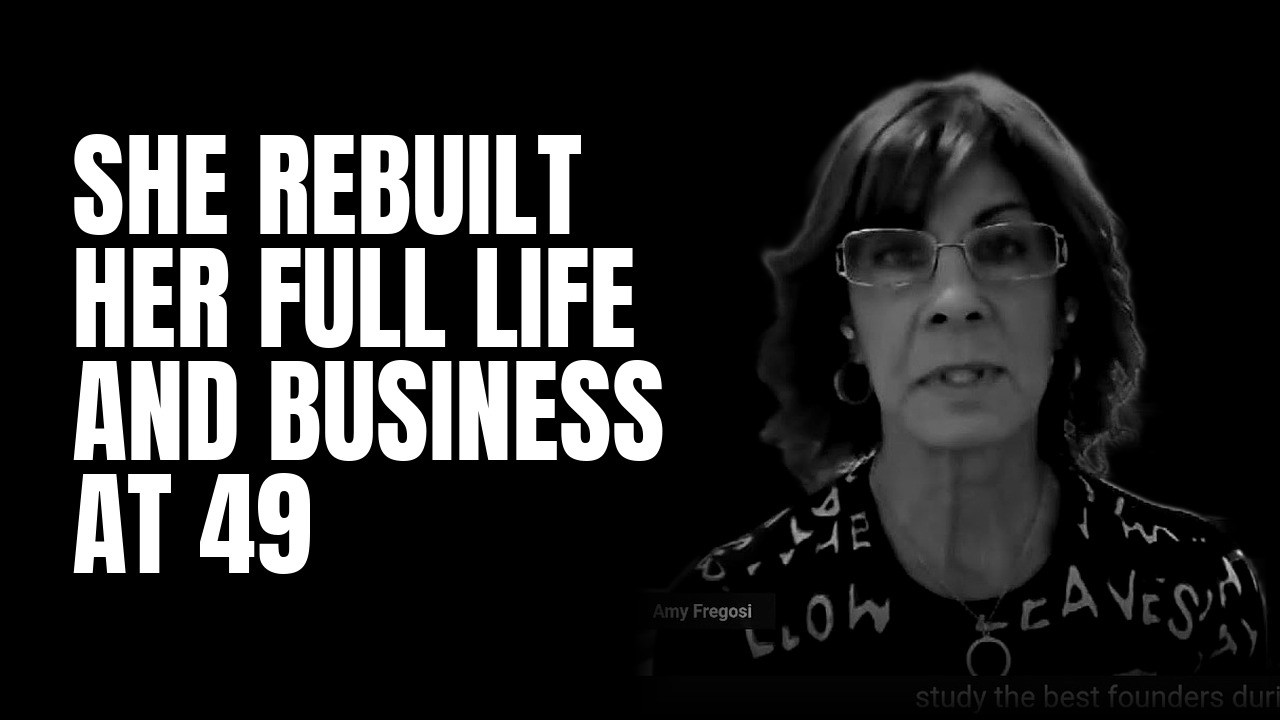
In this Founder Wisdom podcast, host Charles Cormier interviews Amy Fragozzi, CEO and founder of Mondolfo Interior Design, about her journey of rebuilding her personal and professional life after a divorce at age 49. Amy describes how an athlete’s mindset—cultivated through childhood sports and martial arts—shapes her discipline, consistency, and resilience as a self‑employed interior designer. She recounts the challenges of losing financial control during her marriage, the impact of COVID on her business, and the step‑by‑step process of restarting her firm, growing from zero to about 15 active residential projects for high‑end $4‑6 million homes. Amy outlines her daily routine (early wake‑up, walks, prayer, hands‑on project management), her small team structure, and the importance of communication and client care. The conversation covers her client acquisition channels—networking, referrals from builders, realtors, and Google—and her strategic focus on residential work while exploring office and restaurant projects. Amy shares her 2024 goals: increased visibility, more partnerships, and getting her work featured in design magazines. Throughout, she emphasizes mindset, consistency, and the willingness to let go of control to scale.
Chapters
Welcome to another Founder Wisdom podcast. We have Amy Brigozi with us today. Uh, Amy's CEO and founder of Mondolfo Interior Design. Uh, she's full service. She does kitchens and baths and furnitures and decor in Burlingame, California. Amy, welcome to the pod. Tell us a bit more about yourself and what you're up to.
Thank you so much, Charles. I appreciate that. Wonderful introduction. So my name is Amy Fragozzi. I am a San Francisco Bay Area native and I've always loved design and art and things like that. I primarily consider myself an athlete, but I think having the athlete's mindset really goes into being self-employed and having a job as detailed as interior design. I have I think at this point in time about 15 projects. I've taken on a few new ones. Some are full remodels, which I really love doing because it's the entire home. It gets taken down to the studs. And I have quite a few kitchens and bathrooms that I do. I also do design custom furniture. So I work with furniture makers, some in LA, some located in Northern California to get my goals accomplished. I've done lots of interesting things, and I— that's just kind of what I'm doing right now.
And why'd you consider yourself an athlete first before anything?
Well, um, as a child, I loved being outside. I never wanted to be inside, so I was a free-roamer, and you know, since probably about the age of about 4 or 5, we had horses. So I just really always loved being out in nature and exploring, doing things, being outside. And then when I got to be old enough, I started playing sports, and sports really formed and shaped me. I was on competitive teams, so I played soccer and softball, and I'm very a petite person. I'm 5 feet tall and I probably weigh about 105. So to compete as a kind of a smaller person with everyone else, I had to actually try harder. I had to develop my skills because, you know, if you're playing a sport and someone is exceptionally taller than you, you have to have— you have to be really skilled with what your skill set is. You have to, you know, just develop your skills. You have to analyze yourself constantly. How can you get better? So that mindset I've taken with me through my whole life. And, you know, and I also had a hard lesson that I learned, but that has helped me with every single thing that I do. And I was probably about 12 or 13, and I was sitting on the bench and I was upset.. And I come from a family where we have a professional— we had a professional baseball player at the time. And so I was given a talking to and I was saying, look, if you want to be a starter, a consistent starter, you need to— when your coach says run 4 laps, you run 6. You know, you, you take all your weaknesses and you make them your strengths. And so that really works in everything. And so I'm still an athlete. Now, do I compete? No. But, you know, I'm a black belt in mixed martial arts. I've done pretty much every sport except for basketball. And but that athlete's mindset helps through every adversity, every single obstacle. And I really think that is important for anyone who wants to be self-employed or in any type of business where you are your own self-motivator.
Yeah, I love that. And you rebuilt your full life at 49. How was that?
Yes, well, I'm still rebuilding, but, um, that was a challenge. I was, um, that's, uh, my husband and I, we separated. I got married really young when I was 21, and we owned businesses together, so I've always had the entrepreneurial spirit. But, um, I was basically kind of left with nothing. So, um, you know, I had to rely on, uh, my instincts and intuition to figure out what I needed to do, how I needed to do it, um, and taking small steps. And that's kind of where the athlete's mindset mentality comes in to play. Uh, but I— if you would have told me, um, you know, when I when I started this path that I would have such the rich life that I have today, the connections that I have, the amazing human beings that are in my life. I, I never would have believed it, or to the fact that I had an idea, I made it come to fruition, and every day I work on my idea, and my idea was to own an interior design business. And, um, it's, uh, the, the time and effort that it takes is well worth the agony and the toil and the self-doubt and having to get up and the obstacles. And because there's lots of wins, but there's also being self-employed, running a business is not just only me showing up and doing the design work and doing all the details and doing the AutoCAD. There's I have to network, I have to make connections, I have to meet people, I have to get out. So it's— there's everything else to it, and including all the financials. So it's, it's, it's a work in progress, but I'm really proud of myself.
Yes, so you should be. Um, you feel that this happens a lot to women, like, uh, divorces, and they're not— they supported their partners in their business, but they don't get anything?
Yes, I know quite a few women this, this has happened to, and all of them have been able to rebound. And, and the, the thing that I noticed, yes, it does happen because, you know, when you are young and you marry young, you don't really consider your future, how your future is going to lay out, how it's going to plan out. So the thing is, is that you have to be able to pivot. And where women are extremely gifted— and I'm not saying that men aren't— but we have wonderful relationships with each other. We have supportive relationships. So women can get through a lot of trials and tribulations because we have supportive friends. And, um, and I, I know lots of men who have their own trials and tribulations, but they don't have the support network that women do just because we are really empathetic to each other and show a lot of compassion and support and do introductions. You know, we'll bring meals to people when they're down on their luck. I mean, it's just a kind of a different mindset being a woman. And I'm going to be honest, when I was young, I was kind of competitive. I didn't really want to have all these close relationships, but now I cherish them.
So, and isn't the option, the fair option, when someone, uh, takes a part of the business that you help build, to like go in courts and get that rightful part? Because you guys were life partners, that's one part, but also if you both worked in the business, it's only fair that you get, uh, your share, right? I make it sound simple, it's way more complicated than that, but, uh, what, what What do you have to say about this?
Well, um, it was a kind of a complicated situation because I was married for 27 years and I didn't have full financial control. In fact, I didn't even know a lot of the finances. Um, I didn't know the numbers. I didn't even really know what I was supposed to know because, you know, when you're in a relationship that long, people kind of get roles. And you just play your role. And my role was kind of like, you know, I was, I was the mother, I was the wife, you know, I'm just managing a lot of things. I, you know, helped in the business as well. And being an interior designer, guess who did the interiors? So yeah, it was this kind of all kind of really more or less kind of transpired during COVID So it was really hard to get the support and help that I needed. Lots of things occurred and happened, and there just really wasn't the support there because of the situation of COVID And I kind of exhausted my financial means to support myself to fight those fights that I needed to. And at a certain point, I decided to accept my situation and move on because I needed to I thought it was more important that I put my energy into rebuilding myself than worrying about all the things that I should have had. And was that easy to do? No. But if there's anyone who's listening that really wants to know how to change your life, you need to let go of the past and change what you can and accept what you can't and put all that time and effort into your now. And your tomorrow.
Oh, I love this. And where does that take you today? Because since COVID it's been what, 6 years now? And looking back, you had nothing. Look at what you've built today. Uh, it's pretty impressive, no?
Yeah, I think so. Yeah.
What does the business look like? Like, in COVID, you had nothing. You started prospecting, you started reaching out to folks you knew. Right? And slowly you grew a small, uh, but fierce roster of clients, and today you have like 13 clients, you said?
Um, I, I have projects, 13 projects. Um, or I think it, I, it just grew. I got, I got 2 more yesterday, so I think it's about 15 now. Um, thank you. Uh, so I had, during COVID I had to pause my business for a little bit because of the situation. Um, you know, no one wanted anyone in their homes. So I went and I worked for a design firm for a few years, and then I restarted my business. But I've— I, I love what I do, and the rebuilding part is something that I'm still working on. You know, I have goals, dreams, and aspirations, but the thing is, every day, no matter what your obstacle is, you have to get up and you have to put on your best face forward and with a positive attitude because that attracts positive people and great clients. So you gotta get up every day and design your life. So for many years, I said to myself every single day, "Amy, you've got this, you can make this work." And I do a lot of self-talk and I, And I, I learned how to do that in sports. So here we go, I'm bringing sports back into how I've managed my life. But sports is everything, and being consistent and disciplined is everything. You don't have consistency, you don't have discipline. And I put consistency first over discipline, but they go hand in hand. And to be self-employed and to run a company, you have to have consistency and discipline?
You have to, uh, to survive when you start, right? Like, there's no ways around it. Then it only takes one day or one minute or one hour with your own toxic mind to fuck up everything, basically.
100%.
It's like so easy to, to become toxic and just go down the cortisol rabbit hole, right? And never go— never come back, right? So mindset is super essential. And the, the more you strengthen your mind, the faster the, the quote-unquote struggle and survival will be over, right? Like, uh, it took me lots of time to get past, uh, that, that struggle period in business. Back then I had, uh, Tony Robbins and all these mindset people in my ears pretty much all the time, and, uh, podcasts. And with time I've sort of let go of them. Doesn't mean that it's not important just means that these teachings, they've solidified, right? And nowadays I just need to spend time, I don't know, learning more technical stuff. But you absolutely need that mindset. It's like the base base, right? As an entrepreneur, you, you can't move forward without it. You need to be sort of delusional. You need to ignore the naysayers, and you need to keep a positive attitude and face. And yes, discipline, right? Discipline wasn't taught to me naturally. I was like middle upper class, um, and I don't know, it's playing video games and being distracted by all kinds of things back then. But then I learned martial arts at 17, Muay Thai to be precise. And since then I've always like cultivated a very strict regimen. Every day I'm working out, every day I'm stepping in the sauna and meditating and stuff like that. So that's, uh, that's super important when you start. Um, in your case, what does a day-to-day, uh, look like? Like, at what time do you get up? What habits do you cultivate for, uh, greatness?
Well, um, I wake up every day, uh, probably around 6:00 AM. Um, I have coffee. It's really important for me, for me in my life. And then, um, I go for a walk I don't run anymore. I have torn meniscuses on both knees, but I go for a walk. I walk anywhere between 40 to 60 miles a week. It just kind of depends on how busy I am. So that's really important. While I'm walking, I don't meditate per se, but I do pray and I pray for my family. I pray for, you know, for people I know that need a little love. And I also ask for help for myself, and I find that to be very centered— centering. So I also make sure— I'm kind of an unusual person. I do not wear sunscreen because I want the sun on me. I want the sun awakening my body. I like that. I like being out in the sun. I Then I, then I come back home and, you know, then I, I shower, answer emails, do texts, and then I hop in my car and I come to work. So, and then work in my day varies because when projects are in construction, I have to be really flexible. I get a lot of phone calls. There's a lot of moving parts. And that's actually when you're thinking on your feet, super exciting because there's a lot of details. And then especially when you're running many, many projects, and things are in different stages. I have to really be on top of everything. Details are incredibly important in what I do, and also being a very good communicator. So you always need to be following up, communicating, doing the best that you can. Look, we're humans and there's only so much we can do, but you want to let everybody know that they're special and they're important to you because being a service business, I'm not— I'm selling myself and my skills. So I need to make sure that all the clients that do hire me know that they're very important people to me. And that's the most important part of my day.
So do you do mostly sales nowadays? And how big is the current team?
So I have two other members on my team, and We have, uh, I do primarily sales, but I also do like all that, a lot of the technical work. So, um, one offers support with, uh, renderings and things like that, and the other one does more of the, um, uh, I guess like the paperwork, uh, bookkeeping, things like that. But, um, I, I feel like it— I'm still not ready to let go of, uh, some of the technical parts to it because, um, You know, being self-employed and having the discipline and all that stuff, you kind of become a bit of a control freak. And I do know that in order to grow, I'll have to let go of some things. But, um, you know, in time, that's part of the plan. And, um, but, you know, it's also learning what you have to learn, how to manage people, learn how to give them really excellent, um, systems and processes so that way they can be successful and support the business as a whole.
And you serve very high-end clients, right?
Like $4 million homes plus, um, a lot of them are $6 million plus, right? But also, um, if someone just needs a kitchen or a bathroom and we can offer that, we'll do that too.
So yeah, how do you get a hold of these people then? And how, uh, how do you sell these more, uh, sophisticated buyers? Okay, so you—
Well, that has been the process of doing networking and getting myself out there because I am technically the brand of the company because all the designs come from inside my head and just listening to what the clients want. Really, you have to be an excellent listener. You have to discern what it is that they're trying to tell you. A lot of people know what they don't like, they don't know what they like. So I have to translate all these thoughts and feelings into something that's tangible for them. But it's a process. But I really enjoy what I do and I'm happy to come to work every day.
There you go. And what are your objectives for this year? If you have 14 projects, do you 1:30 by the end of this year. What are your goals?
I would like this year to be my biggest and best year, and it's already kind of turning out that way. And I'm very, very happy and very pleased. But it's a lot of hard work, a lot of long hours. And my goals for this year are to— I would like to have my work in a magazine. I have had my work in one magazine. An outdoor kitchen that is very unique, but I would like to have my work in some of the local design magazines. So that's, that's my goal for that. I want to also increase my visibility for my business and, and just increase my partnerships. That's how I've gotten to where I am, is with partnerships and networking.
Um, your clients, do they refer you other clients? What is your main growth strategy?
Uh, so it's interesting, I get a lot— some people just find me on Google, some people I'm referred to through other builders, general contractors, and realtors. So, um, I have found that they are really great sources of prospective clients because they're there. We, even though we do different jobs, we're all in the residential market. So, and I also refer out as well when I think that something is a good fit for someone, I'll refer them to whatever the need may be, but all in the residential market. So it's really important to make a lot of connections even with different trades. Because you just never know when someone's going to call you up and say, hey, I have a triplex that needs remodeling, could you help me out? So, um, I do get some referrals from clients, but primarily it's just from people in the residential sphere.
In the commercial portfolio, what's your strategy to extend that?
I'm considering possibly retracting that because I'm enjoying the residential market so much right now, and that's kind of booming. Although I am looking— I like doing offices. I have done several restaurants because I used to own them, so that's— but restaurants can be tricky because you have the ADA laws to abide by, and, you know, sometimes the budgets are pretty strict, and, um, but you can be very creative even with a strict budget. But I, I primarily like doing offices, so I actually have a proposal, or pardon me, a consultation for an office for a tech company tomorrow. So those are also fun because it's just furnishings and artwork and things like that. So it's not— I'm not moving walls like I do in a residence.
I love it. Well, thanks for being on, Amy. Where can people find out more about you?
Well, um, please look me up on Instagram @mondolfo.interiordesign. Or you can look me up at mandolfointeriordesign.com. And I just really am so grateful for this opportunity. Thank you so much, Charles. It's been a pleasure chatting with you.
Thank you. So that was Amy and Charles for another Founder
More from Charles


Founder Wisdom: the audiobook, version 2 (5 hours of stories from founders and CEOs)

8 CEO Questions I Love Asking: the audiobook (64 founders answer, in their own words)





