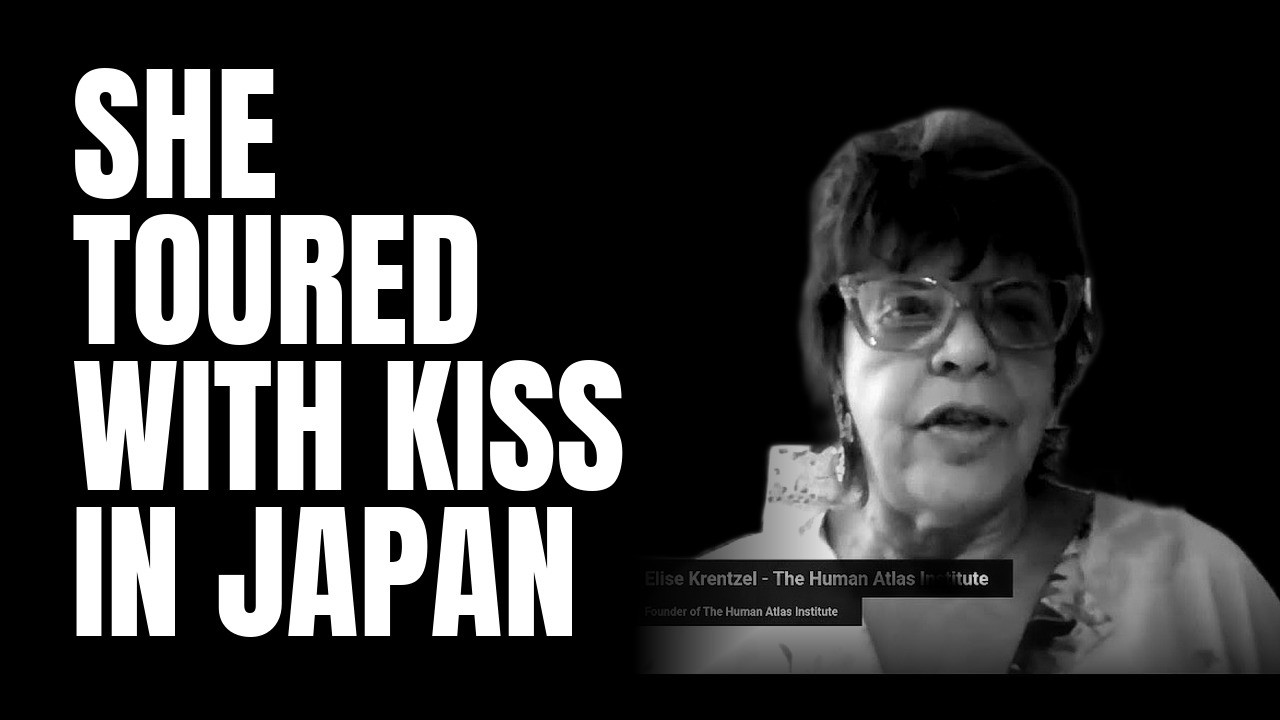
In this Founder Wisdom podcast episode, host Charles Cormier interviews Elise Krenzel, a serial entrepreneur, strategic business advisor, nonfiction ghostwriter, and coach. Elise recounts how, as a teenage freelance journalist, she landed a spot on KISS’s Japan tour, which sparked her decision to stay in Japan and launch a talent‑booking agency that introduced punk rock to the market. She later founded EK International and a CD‑ROM travel‑guide publishing company (Bob Media) that produced GPS‑enabled travel guides before the internet, scaling the venture to 80 employees before a nervous breakdown led her to sell her shares. Elise describes subsequent ventures: setting up BBDO’s European internet division, creating one of Europe’s first travel blogs, and navigating multicultural marriages (Japanese, Swiss, Dutch). After moving back to the U.S. to care for her ill mother, she raised a child at 44, wrote a memoir (Rogue Entrepreneur), and now runs EK Editorial & Coaching, helping CEOs and founders craft their stories. She is also developing the Human Atlas Institute, a venture focused on immersive perception. Throughout, she emphasizes the importance of relationships, slow‑movement business practices, and the lessons learned from diverse cultural experiences.
Chapters
Welcome to another Founder Wisdom pod. We have Elise Kranzel with us today. Elise is a strategic business advisor, nonfiction ghostwriter, and coach for founders and executives in Austin, Texas. She has quite the story. So Elise, welcome to the pod. Tell us a bit more about yourself and what you've been through.
Thank you so much for being here, um, and inviting me, Charles. Well, what I've been through, oh my gosh. That's a lifetime of many exciting ups and downs. I'm a serial entrepreneur, and I started when I was basically 19 years old. I was the bureau chief of Billboard magazine in Japan, and that happened because I toured with the rock band KISS, wound up staying after the band went home, stayed for 5 years. And started a booking and talent agency and introduced punk rock to the market, which then led me to return to my native New York City and introduce Japanese brands in the '80s and up to the 1990, including Shiseido and Kirin beer and Wako lingerie to the US market. That was a niche that very few people, at least on the East Coast, were doing. That led me to meeting someone who was in the multimedia industry, which was the big buzzword then in the late '80s. CGI was just brand new. Can you imagine? Pre-internet. And I formed a partnership with this gentleman who was a musician, composer, and programmer. And one thing led to another. I then moved to Switzerland, which is where he was located, started a production company of travel CDs, did some research in San Francisco and found out, wait a minute, CD-ROM is the thing. So we essentially Transferred the programming from CDI to CD-ROM. I raised venture capital from a Dutch B2B magazine concern and created a publishing company. So moving out of production into an actual publishing company where we produce CD-ROMs, travel guides called Bob Media. Travel guides of European cities that had GPS pre-internet. Mind-blowing, right? Imagine that. So 1995, we expanded from 4 people to 80 people. I ha— I'm a visionary. I'm a creative entrepreneur. I'm not a COO. So I almost had a nervous breakdown. It was awful. It was great but awful. And I sold my shares in '96 and decided I'm going back to my first love, which is writing, but also coaching people. And I say coaching, it wasn't as an industry, but it was something that came naturally to me. In fact, my cousin said to me when I was 16, he says, why are you a journalist? You should be a psychologist, which I brushed off like, nah, I like writing. What happened after I sold the company was I moved to France. I did write a book, then went back to the Netherlands and worked with BBDO, the largest ad agency in the world at the time, and I set up their European internet division. Now, I'm not a tech person. But I am a futurist. So I understood from a consumer, from a user side, how the agency could sell this to their clients and how they could creatively manage the then nascent, you know, internet to create websites. And what we did was introduce a delivery service. This is I think 1997, '89, I can't remember, a delivery service for the largest supermarket chain in the Netherlands, Albert Heijn. Okay. Then I introduced, I think it was one of the first travel blogs in Europe, which I then monetized. You can find it on the Wayback Machine now. It's called Travel with Elise: Making Modern Memories. And went all over, did travel writing. That was terrific. Then I had a child, my first and only. So I gave birth when I was 44. Did everything opposite because for me every day is opposite day. Let's—
hey, let's start with KISS. Okay, how did you landed that? And wasn't that like crazy and very different? I mean, yeah, one can picture like a rock star doing it, touring in its RV in the US, but in Japan, isn't it different? Like, was, was the rock culture established there? Tell us a bit more about these times.
Okay, these times. So, so what was the first question? How it started or how it happened?
Yeah, how it happened and your, your experience, right? Like, what, what it created in you.
Okay, but then we have to get up to the present moment because the last thing that we talked about was in the late '90s, okay? We need to get up to speed for another decade or two. All right. So what happened was that I was a freelance journalist while I was still in high school. And knowing that the competition is so intense in New York City, I said, I need a strategy. And the strategy for me was to become the New York correspondent for British and Canadian trade and consumer publications. Now, Being on the trade side is not glamorous. You're writing about the industry that you're in. But for me, that was the ticket to get into the— into the boardrooms that I wanted to be in. What happened was that when I got a phone call from KISS's manager, I was still relatively unknown. I was writing for Circus magazine as a consumer publication, one of the big ones at the time. And I— they said, "We want you to come because our tour after Japan is Canada, so write about the band." And I said no. Anyway, 3 weeks later they called me back, and then I decided yes because I was allowed to write whatever I wanted to write. And I was one of 9 journalists that went on the tour. So, that's how that happened.
Interesting. Okay, and how was it? How was the experience? Because Japan is quite different. And what did you learn from your time there?
Okay, so first off, Japan— what I found was that Japan— KISS didn't make Japan, Japan made KISS. They already had an infrastructure for spectacle, an infrastructure based on their engineering mentality. It was an integrated situation, an integrated, a vertical integrated industry. Everything worked with precision. So we toured, I don't know, 10 cities, maybe more or less, and everything worked just like a Sony Walkman. It was just incredible and The Japanese were already doing advertisements like liquor with, with celebrities way before America did it. Now, America did that in the '50s. Japan was doing that in the '70s, and then it came back to America in the late '80s or '90s.
Interesting. How did it change you, that tour?
Well, it changed me because I decided to stay and live there. The culture was so opposite of America. It's subtle, it's aesthetic, it's traditional, it's futuristic. I thought I was living in a spaceship, truly. 1977, can you imagine? Air— paper-thin air conditioners on the wall, televisions that had a button in the back to switch the language to the VO, to the original version. Sliding doors at retail, sliding doors. You didn't have to push a door. You didn't have to pull and get confused. Do I push or pull? No, slid. And a million other things. Bullet trains. We still don't have that in the United States.
Yeah, it's crazy engineering, like you said. Okay, you came back from that and you start your own company. That was your first one, EK International, right?
Right, it was my second company.
Again, which one was the first one?
Well, it was in Japan. It was called Dorna Publishing Agency, and it was a talent and booking agency.
Got it. And EK International, what caught my attention was, uh, Benny Hana. So you've witnessed Jim Simmons, um, you've also witnessed, uh, what's Rocky Hyo-ki? That was his name, right?
Yes.
That guy was, uh, is pretty crazy, right? In a good, uh, good and bad ways.
Yeah, he, he was a cigarette boat racer.
How did you get to learn to, to work with him? Uh, and what—
it was an introduction from somebody in Japan.
Yeah.
And I was, I was going back to work on the 20th anniversary campaign, and it was only for a year. I, I wound up staying in the States. It was a 2-year project. And, and then I opened up my own agency. I said, okay, I'm staying, right?
And at what point, what was your first like big home run, would you say, in your enterprises that you started?
Well, when you say home run, what do you mean?
Financial home run?
Well, it's probably the booking and talent agency, my very first venture. Wow.
So off the gate, what do you attribute that to? Is it luck, or were you just right place, right time? Why? Why? I mean, I didn't get the home run from the get-go. I got like first base, maybe second base.
But yeah, let's define home run.
It's life-changing money.
Yeah.
Financial freedom.
Okay. So, yeah, first, that was my first venture. And why? Because, look, I was a high school student. And I was a freelance journalist. And then I graduated high school, and I'm taking all sorts of jobs. So when you go from that to six figures, I consider that a home run.
Were you always entrepreneurial? Where did that foundership emerge in you?
I was always entrepreneurial. I realized it when I was about 15, when I decided, oh, you, you should be a music journalist. Um, and I think I get it from my father, who's deceased. My father was the original— he's the OG, um, digital nomad. He was a salesman and could— I mean, he used to be proud to say, I could sell ice to the Eskimos. You know, that kind of mentality from—
well, that's, that's great. Still is, right? Uh, I mean, can't say that, but I, I I still think that salesmanship is undervalued. And nowadays it's relationship building, right? And question asking, diagnosing, right? More than it is to hard sell someone. Hard selling doesn't work anymore. But being a good salesman is still something most people aren't good at. And if you are, then you should be proud of. My grandfather was also a salesman.
Look, I mean, everything that I do, if you're— whether as an interviewer, as a ghostwriter, or in facilitating my latest venture, the Human Atlas Institute. It's about relationships. And my dad taught me that he always had relationships with all the people that he ever sold to. You know, he used to bring flowers, or he would bring them if I traveled somewhere. And he had Jamaican clients. He said, hey, when you're in Jamaica, please go get me XYZ so I could bring it to them. You know, I would— when I was in South Africa and I— he's like, bring back that, that— what is it called? Uh, biltong. Bring it back so I could give it to my clients.
Yeah, that's interesting. And traveling back in your days also wasn't common. Like, you were like very much of an outlier going to Japan, right? And all these places. So I guess you also got that from your father, which is a huge gift, right? I traveled a little bit with my parents. I'm not sure if that started the digital nomad bug in me, but, uh, certainly helped, right? Um, while I was building some businesses. But you were super OG. I mean, no one was doing that in your days, like building a business and traveling at the same time. Like, no one ever was doing that, let alone being female.
Can you imagine?
How did you handle that? Like, uh, must have got unwanted attention.
Uh, You know what, I have to tell you, Charles, the name of my most recent book, which will be released on August 27th, it's a memoir, it's a sequel to my first one, it's called Rogue Entrepreneur: Building a Life the World Didn't Wait For.
I like the, the title, Rogue Entrepreneur. Um, and what will we find in that book? I mean, we— before we get to that, right, just want to follow the, the timeline of, of the story here. So You have financial success, you're traveling the world, you're being creative, you have everything that you want, right? But you said you're like this creative entrepreneur, you're a visionary, and you don't do well in scale. And you sort of like had a panic attack at like scaling that GPS company, right? Was that the inflection point in which you scale, scale, scale the mountain, then you reach the top, and then you're like, oh shit, this is pretty high?
Yeah. Well, it wasn't, oh shit, this is pretty, pretty high. It was, oh shit, I don't want to manage 80 people.
Because, okay, because what happened then? What, what did you do then? To just quit, or did you exit? You sold your shares?
I exited. I sold my shares because I realized, no, no, no, this is out of control. I'm not creating— yes, I'm creating marketing campaigns for the products we sold. I brought the products to vision. I brought the capital to bear to create and distribute that vision. However, now in the running, in the hiring and firing, and this was in the Netherlands, so it's also now in yet another culture which has a very different employment regimen, you can say, than in the US or in Switzerland or in Japan. So learning that and realizing, wait a minute, a lot of these people here, not everybody, Netherlanders, you know, tut mir leid, not everybody, but it's a slacker kind of mentality. At least it was then. Because wait, hey, I don't have to do much. I, you know, I can, I can skate, I don't have to produce much, but I'm a very driven and self-driven person. So yeah, you need to do much if you're going to work with me and go above and beyond, and you'll be rewarded. You'll be rewarded, but I'm not going to reward somebody who just wants to take up space, right?
Yeah, no, Netherlands is hard to start any business. I've often talked with, uh, Netherlands founders, and even to this day, uh, it's too socialistically driven and it's hard to compete in there. What came after that?
So after I sold that, I, I was, as I was saying, I sold my shares, I went to France, I wrote a book, I came back to the Netherlands to work with BBDO, the ad agency. That was a 1-year contract. Then I did the travel blog, then I got married, then I had a child, and then I moved back to the States because my mother was ill, and that was 2008. So moved back to New York, sort of taking care of her, raising my son at 44.
Yeah, how was that?
That was fantastic. It was one of the greatest achievements of my life.
Yeah, yeah, of course it is. It's super hard to raise a kid. Um, is your son entrepreneurial nowadays?
You know, it's very interesting. My son is 25 years old. And he's, he studied to be a mechanical engineer. And he's not entrepreneurial to create his own business, but he is an amazing imaginary visionary in his thinking and how he views economics, manufacturing.
So he'd be a very good hire for Sony.
He would be great in any consumer electronics hardware development. That's what he wants to do, you know, hardware engineering, mechanical engineering for consumer products. Plus, he is a cinephile, so anything about film, from the actual film making to the actual content Oh my God, he's a walking, you know, cinephile Wikipedia, right?
And I think you spoke about multicultural marriage to your husband or something. How did that go?
Well, I've had a couple of husbands. I don't have to get into too much detail, but let's put it this way. The first was Japanese, the second was Swiss, and the third was Dutch.
Oh man. What was the difference between all of them?
Well, the difference was that with the Japanese one, I had to walk 5 steps behind him.
Oh man.
And that didn't last.
Yeah, yeah.
With the Swiss one, um, I say there were holes in the marriage. It was the case of a great Swiss cheese meltdown. He and I were partners. He's, he's man number 2, the, the programmer, the musician, and that's how we created the, the digital travel guide company. And number 3, the Dutch. I say I ditch the Dutch in a dike.
Oh, and okay, 2008, uh, on the back of the crisis, right, financial crisis, everyone was freaking out. What happened after? What's your next and I guess final evolution, right, is writing accompanying founders and CEOs to write their books?
No, that's not the final.
What— which one is the final? Or you probably don't have a finality, but whatever. If we would write like a, a good old structured book.
No, no, no. What happened afterward is that I moved to Austin with my son. I divorced, my mom passed away, moved to Austin, Texas. Don't ask me why, but it became a great place to be.
Great city.
Yeah. And while I've been here, a couple of different iterations, had a PR company which morphed into an editorial agency, which is what I'm still doing, EK Editorial and Coaching. So I work specifically with CEOs, leaders, founders to write a story that matters. What does that mean? It means I'm writing and researching and digging the why of their story, excavating the gems like an archaeologist. So I'm not just writing your success story. I'm writing how that happened and why. Like you are interviewing me or anybody else on this podcast. You want to know what's behind the person, not just the accolades. Right.
Yeah. Which is fascinating, which is fun, right? It's like creating your own mental movie, uh, while listening to someone that lived a lot of, uh, different experiences than you did, right? It's, uh, it's quite entertaining. If you're a business nerd, you can also take lessons from this and apply them to your own empire. Plus you build relationships while you're doing so. Why don't you have a podcast, by the way?
Ah, too much to do, and it's about choice, right? Uh, It's just too much. I don't want to be overwhelmed. So, do you know, I was saying earlier that I do the opposite, right? I've always done opposite. So now that there's AI, well, there's a look, there's been AI, computer is AI. So it's not like new AI. But now that everybody's jumping on that bandwagon, I'm doing the opposite. I'm doing slow. Movement. So no podcast, no YouTube. For me, it's in person. It's developing relationships slowly, methodically, one by one, word of mouth. I'm not advertising, and I don't care. It's taken me 10 years, and that's fine, because my next iteration, in addition to the writing. The one I'm currently working on is called the Human Atlas Institute, and it is still in the making. But over the last month, I've decided many things, such as the tagline. That takes a while to understand your mission and your vision and to get it into words so that others can relate to it. And my headline is, where lived immersion alters perception, right?
Then it's like 12 liters per session. Yo, yeah, it looks pretty cool. Um, I'll dig into it. Elise, where can people find out more about you?
Okay, on LinkedIn. Under my name, Elise Krenzel, on my website, elisekrenzel.com. And the other social media, I, you know, great, Facebook, Instagram. It's much more for me a, a nice little, um, place where I can put up some personal photos or things that I'm doing. But basically LinkedIn and my website.
There you go. That was Elise Krenzel and Charles Cormier for another
More from Charles


Founder Wisdom: the audiobook, version 2 (5 hours of stories from founders and CEOs)

8 CEO Questions I Love Asking: the audiobook (64 founders answer, in their own words)





