she was the only woman in a boy's club
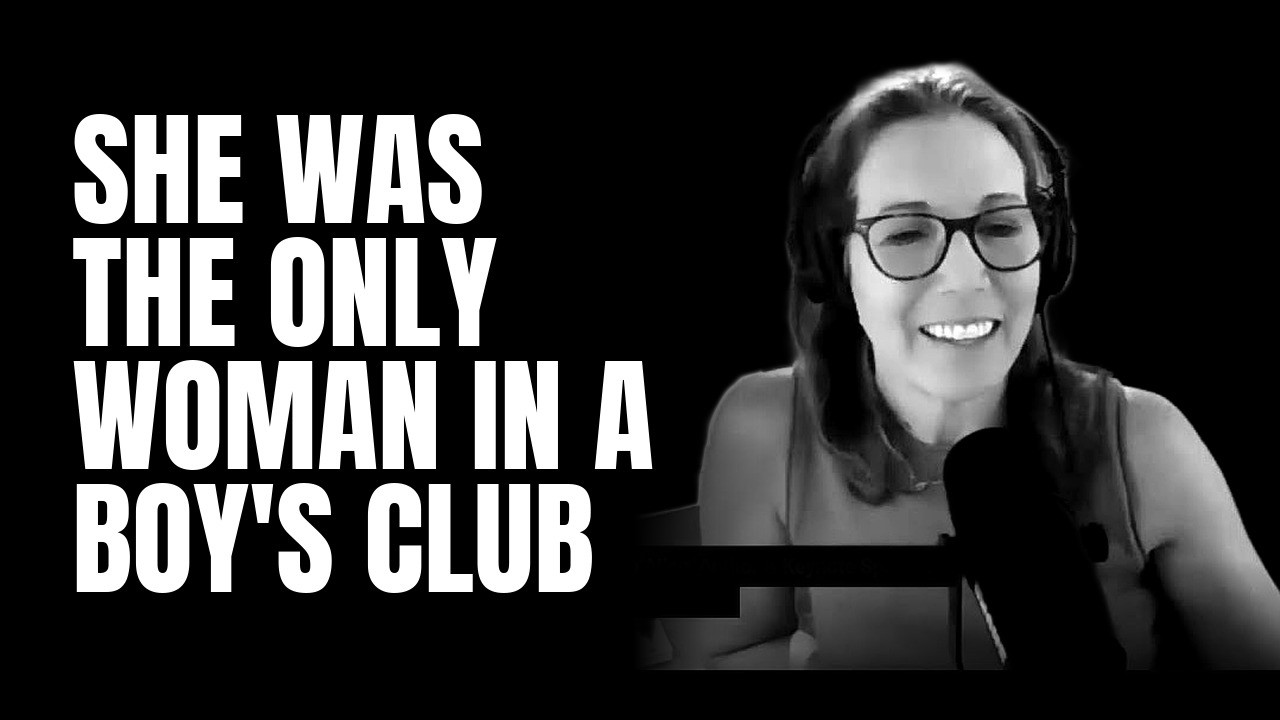
In this Founder Wisdom Podcast episode, host Charles Cormier interviews Barb Allen, a former tradeswoman, construction superintendent, keynote speaker, and founder of 14 Percenters and Lovosity. Allen recounts her 25‑plus‑year career in a male‑dominated industry where women comprise less than 14% of the workforce and under 4% of trades. She describes how she entered construction by chance, became the first woman hired as a superintendent trainee, and learned every trade on the job. Throughout her career she faced bullying, harassment, and a constant need to prove herself, leading her to adopt a “perseverance” mindset. Allen discusses the isolation of being the only woman on site, her avoidance of other women early on, and the later challenge of learning to communicate with female colleagues. She reflects on the personal toll of long hours, stress, and a strained marriage, and shares a pivotal moment when a supportive boss forced her to take a weekend off, highlighting the importance of work‑life balance. A major theme is “awakening unconscious bias.” Allen explains how she shifted from confronting bias with aggression to prompting others to recognize their assumptions, using examples like being called the “safety girl.” She emphasizes that most construction workers have never seen a woman superintendent, so intentional awareness‑raising is needed. The conversation expands to broader gender dynamics: the difficulty men may feel when a partner earns more, evolving family roles, and the desire for both parents to share parenting responsibilities. Allen critiques social media’s polarizing effect on gender discourse and calls for honest, curiosity‑driven conversations. The episode also touches on historical examples such as Mary Kay, illustrating how women founders have faced systemic bias. Allen shares personal experiences of salary inequity she uncovered as an operations director, the lack of corrective action, and how that spurred her to leave corporate work and focus full‑time on advocacy. She outlines the funding gap for women founders—women receive roughly one‑tenth of venture capital—and suggests that women’s tendency toward humility and relationship‑driven communication can be misinterpreted as lack of confidence, creating a “sticky rung” in fundraising. Finally, she promotes her platforms (ConstructionBarb.com, 14 Percenters, Lovosity) as resources for rethinking the obvious, increasing awareness, and supporting women in construction and entrepreneurship.
Chapters
Welcome to another Founder Wisdom Podcast. We have Barb Allen with us. Barb is a keynote speaker and author, construction professional, former tradeswoman. She has her own podcast as well. She's challenging the norms, um, in recruitment. I would say she's been one of the only women that I've ever spoken to in construction. It's such a man's field, right?
Yeah.
Um, and she's also founder of 14 Percenters. We're going to talk about that one and Lovosity. in Kansas City. So Barb, welcome to the podcast. Tell us a bit more about yourself and what you've been up to.
Yeah, absolutely. I spent my entire career in construction, and like you said, one of the very few women there. Less than 14% of the entire industry is women, and less than 4% make up our trades. And I was even a tradeswoman for over a decade. So I spent more than 25 years in the industry, and then I started speaking on stages about 4 years ago, trying to help our workforce shortage issue that we have across the industry.
That's, uh, that's a long time in the construction industry, right? 2 decades surrounded by men. Why did you get in and how did you stay for so long? Because I would believe a lot of people would doubt you in that space. So tell us the story.
Yeah, I, I got in, I randomly stumbled across upon the degree of construction management when I was in college. I had no idea you could even get a degree to go in construction. I just saw it as a job that people took, not a career path. And I found it through a career path. And then I knew immediately that I wanted to be on a job site. I wanted to run a job site. I wanted to be the top dog in charge of everything that was happening on a job site. And no, it was not easy. I mean, as soon as I graduated from college, the company I started with, I was the first woman they ever hired to train to become a job site superintendent, and they put me in the carpenters union. I literally put on carpenter bags and learned how to set cabinets, install countertops, install doors, hardware, concrete formwork, like the whole thing. I learned how to do it. And it was from the beginning, it was kind of people looking at me like, whose daughter is this? How long is she going to stick around? Um, and then once they realized I wasn't going anywhere, then they tried to get me to go places by bullying and harassment and Eventually I had to learn to stand up for myself and make a name for myself and just kept going. Perseverance.
Very inspiring. Did you have peers, like women in that space? Did you gals speak together of like, what is happening here?
No, I did not have peers. I did not have women mentors. I honestly, and I say this from the stage, I spent the first 15 years of my career avoiding women when I saw them. Like, I wasn't mean to other women, but I literally, like, I so just wanted to fit in. I wanted to be one of the guys. I wanted to just be and not be the girl. And so I felt like associating with other women would make me, oh, one of the girls. And I so just wanted to be one of the guys that I avoided other women. And It wasn't until I had been in the industry for, man, over probably close to 20 years before I got into a position where I started working around more women. And that was— I was just— I didn't know how. Like, there's such different communication styles between men and women, and I had adopted this male communication style, and now all of a sudden I was working with women and I did not feel like anyone liked me, like, because I did not know how to communicate with them. And it took me a while, and then eventually I just became this huge advocate for women in the industry because there's so much possibility here.
Yeah. Um, how did you not go crazy? Is, uh, or did you feel at some point you cracked the code? You know, like you were, oh, now I fit in. Oh, I can use my charm as a woman to get them, blah, blah, blah.
Like, did you You know, I had, I never thought about it that way, but yeah, I think I had to figure out what worked for me because I tried for a long time to try to emulate the men that I worked with and around and for to see like, okay, that works. Let me, let me try that. And when you are 5'5, 115 pounds and a female talking to people the same way as 6'2 bald bearded beer belly plaid shirt wearing guy does, does not work. You, I had to figure out how to, you know, communicate with them in a way that made them want to work with me and work for me. And man, it, it, it took, it took a while. I started leading people 2 years out of college, and I think I led people for 10 years before I was any good at it.
Right. What, um, did, did the stats speak for themselves also? Like, did you just forget about your identity at some point, or your gender, your physical body, and you were like, I'm doing like 5, 10x better than the boys. Just look at my track record.
Yeah, I, I think that plays a— I think that plays a big part in it. You do. You absolutely— or at least I did. Not all women have the same experience in these predominantly male industries, but I lost a lot of who I was. And it wasn't until after I left the build environment in 2022 that all of a sudden I even realized that it had just become so much of who I was today that I didn't realize That's not who I really was. And I actually have a keynote titled Who Am I Now? Because it happens so much to those of us in these industries trying to fit in, trying to figure out how we gain the respect and the authority that we need, that we absolutely lose pieces of ourselves.
Right. I'm looking at some of your projects here, right? So you started as a carpenter in '97. And then this one is— I mean, they're all crazy projects, right? Hospital.
Yeah.
Valencia Place. Sprint World Headquarters. Um, Allied Insurance headquarters. Obviously weren't in charge building the full thing, but these are fairly gigantic projects, no?
Yeah, yeah. I worked on projects from $3 million to $120 million throughout my career. I had, I had some really great projects.
How did you handle that pressure?
Um, I put in way more hours than anyone really should. Um, and it, like, to be honest, I mean, it's, it's a factor in why my marriage didn't work. It was— I, I didn't, I didn't deal with it very well. I just kept saying, I got to be better than the guys, I got to be better than the guys, I gotta, I gotta know more, I gotta do more, I gotta show more. And It wasn't until a boss, a really great boss, stepped in one day and said, you need a weekend off. I'm going to come in and run your job site for the day or for the whole— for the weekend. I was like, absolutely not. I can't have my boss doing my job for me on a weekend. And it wasn't a conversation. He's like, this is happening. I am stepping in. You have to figure out how to find some kind of balance in your life and lower the stress that you're dealing with. Because I— what I realized is I'm the person that's making everybody miserable because I'm so stressed out. I'm passing it around to everyone else that I'm working with, and they are feeding off of my energy. So if I'm stressed, it stresses all 450 other people on the job site out.
Yeah. Um, yesterday I spoke with another power woman, and she said she had 3 kids and her husband was the one staying at home. I— and personally, as a man, I have a daughter, right? I'm a man's man. But I want my daughter to be a founder and to have her own stuff and not to depend on a man. But personally, I could never withstand, uh, someone that close to me making more money than me and taking care of, of like house duties like that. Um, and I, I feel probably 90% of men are that way. I think this is changing nowadays, but do you think most men can handle that? uh, their spouse can make more than them and should be the one taking care of kids?
Um, I, I think that it is— I think that it is hard for a lot of men to make less money than the— than their partner. But I, I also know it would be really hard for me, you know. I— for my relationships, I basically make—
Because you're competitive. It's not even a gender thing. I just— yeah, I want to make more money than everyone, basically, not just my spouse.
So yeah, well, and you know, talking to the woman that you talked to who has 3 kids, I— for me, I got to a point like, I don't— like, when I was married and we were talking about kids, my question was, who's gonna raise them? Like, we both are gone from 5 AM to 7 PM. I'm like, who would raise these kids? And I would have loved if he'd stepped up and said, hey, I'll stay home. But I, I'm just not someone who could have stayed at home with kids. Ultimately, I decided not to have kids, and I, I when I see families figuring it out and finding more of a way to do it together. That is the biggest transition that I hope for, is that it's not men now staying home with the kids, that it is families working together. Both partners are figuring out how to be 50% parents. And sometimes some phases of our careers, that means one's 70% and one's 30%, and then later phases it switches the opposite way. But I think that especially younger generations, They are figuring it out. Like, they want to spend time with their kids. They want to, they want to be home and they want to go to the basketball games or the cheerleading practice or whatever it is. Unlike when I was coming up in the industry, it was like the dads were working and the moms were taking the kids to everything. And I think, I think that's such a great change for the younger generations. They just, they're like, they're not going to put up with the same kind of work crap and hours that we did.
Yeah, I think me and my wife are 90/10 right now. I have 2 90s as well. It's not like I don't want to spend time with my daughter. It's probably my favorite thing to do on a daily basis because I'm like so cerebral and always in the action, and she's just a little love machine. I'm gonna spend a lot of time with her though. That's my quote-unquote excuse when she matures. One, through sports, right? Because I love doing sports right now. I mean you can't really call this sports, like her following me on the runs and, and such things. But also I want to launch an AI school for kids, right? So her education, I'm gonna be pretty obsessed about it, right? Like how to use AIs, how to learn, how to scale this. But yeah, it's, it's a fascinating topic. My wife loves, uh, taking care of kids, but it's, it's a very heavy charge. Let's face it, it's hard. It's not easy to, to be a mom. uh, way easier to be a dad, right? But yeah, these— and there's a lot of gender talk nowadays. Uh, what is your feeling on the market right nowadays? We've seen a lot of toxic shit like, uh, Andrew Tate type of stuff, right? Of like misogyny, right? And then there's also woke side of things of, um, on the other side sometimes. Uh, it's, it's a bit confusing, right, for kids?
Yeah.
A lot of kids don't know what their identity is as well, which is normal when you start in life. It's all confusing, right?
Yeah.
What is your observation of the perceptions and the market around gender nowadays?
Yeah, I think that our social media feeds are filled with what we read, and that's what hurts us. So if we are someone who feels strongly a certain way and we continue to click on those articles and those social media posts, that our social media continues to fill us with those and the anti of those so that we continue to feel stronger in our positioning. And I think it's just so hard for people to see the other side because social media is just filling us with so much of one side. And there is— I don't think it's that polarizing overall. I think social media and media in general has made it that polarizing. And for those of us who are able to sit down and just have a honest, curious conversation where it's like, I'm not here to tell you what I believe and make you believe it. I'm here to hear what you believe. And so that I better understand, where do you even come from on, on that aspect? Right? Like, help me understand it from a completely different viewpoint. That'll help us be able to live and work and be around each other.
I think you and I, where we joined forces and minds is, I believe I'm a founder maximalist, right? So I think everyone should be a founder ultimately, and that's contrary and that's controversial because, oh, it's like, oh, some people are not made, and I think that's bullshit. I think it's human grit, right? And as a result, I want women to be founders for sure, and I think women are more susceptible to abuse nowadays because men have testosterone in them and sometimes manipulate them. I mean, women are also guilty of that, but I'm just a strong believer in freedom, right? And I think, uh, foundership can, uh, can lead you there. You're the best example of that, right? And I think, um, yeah, specifically now that I've seen my wife also go through pregnancy, I, I think women, when they're, uh, pregnant and they have a kid, they would need to work at home, right? And, and have something that doesn't require them to step in an office and be accountable to someone. So— I think women foundership is great also for the planet, generally speaking, because women are more collaborative and they think, I think, broader picture and less focus and aggression, right? I think we need more women founders. I think that's one of your causes as well. How are you contributing to that one?
Yeah, for me it's about helping people rethink what I call rethinking the obvious or awakening unconscious biases, because we have these we have these beliefs that, oh, she wouldn't want to do this, or he's not ready for a promotion, or whatever it is. But I think that helping people awaken unconscious biases is a key to that. It's a matter of effectively awakening unconscious biases so that people see things differently. What that means, and I had to learn it the hard way, is awakening an unconscious bias is like Think about for a second, Charles, do you like taking naps? Are you a nap person? You're not? Okay. I'm a nap person.
Yeah.
For people who like to take naps, when you think about how do you want someone to wake you up from a nap? You don't. Nobody's looking to be woken up from their nap. They just want to take a nap. Unconscious bias is the same way. Nobody's walking around saying, hey, will you wake up my unconscious biases? When you do it in a way that is like, biting. Like, people used to come up to me and say, oh, are you the safety girl? And it would make my blood boil. I'm like, I'm the top guy in charge. I'm not the safety girl. Like, I would bite back. And that did not awaken an unconscious bias. It made them walk away mad at me, mad at my words, calling me something that started with a B that wasn't Barb, right? Like, I had to learn how to awaken unconscious biases in another way. And I would learn to say, Well, I do kind of manage safety and quality and kind of everything. I happen to be the superintendent. I'm Barb. What's your name?
Don't you have a special hat for that or special physical appearance to show them off that you're the big boss?
You would think that there's a hat that says that, but there's not. But helping people see it in a way that just doesn't feel offensive to them, because unconscious biases are just based on our lived experiences. Most people in the construction industry today, this is a fact, have never worked on a job site with a woman superintendent. So why would they walk up to me and say, oh, are you the superintendent? It's not their lived experience. So I have to awaken it in a way that makes them go, oh shoot, I just met my first— wow, I never thought about a woman being a superintendent, instead of doing it in a way that makes them go, what a beep, right? Like It's all about— that's, that's what my message is all about, is helping people rethink things in a way that truly makes them think about it and not be mad or feel shamed or blamed or finger-pointed at.
I like that. Um, me, I think I have the opposite problem. So people don't doubt me, but they— because of my alphaism, that tend to rub people the wrong way. So like, pick your poison, you know.
I can relate.
Yeah, um, hmm, I, I could think a lot of— yeah, um, of how not to get pissed at something with what you just said, right? But it must have been so hard to— let's say that happens to you like once a month, right? It's like, shit. Uh, and you see, my brain immediately tried to fix the problem, like, oh, wear a special suit with a name tag or some shit, or I don't know, pre-send them an email or just let them know. But it Yeah, I never had— I'm privileged, right? It's like, it's a white guy, so I never had to face these things, never had to think about these things, right? Uh, do you have like models of entrepreneur women like, uh, you know, Barb Corcoran or, uh, Sara Blakely, for example? Do you look up to some women founders nowadays?
You know, I, I think in general, I don't— I'll be honest, I don't know if they're founders. I just think there's women that I look up to and think, man, I like the way way they handle themselves in certain situations. And that, that's what resonates with me. It's when woman or man handles a situation that helps me learn something or helps someone else learn something, awaken something in them without making people feel small or berated or shamed or blamed. Like, those are the women, those are the leaders that I look to and think, oh, They're, they're doing what I want to do, and I want to do it better.
Just today I was studying, uh, Mary Kay. You know Mary Kay?
Yep.
Um, she had a lot. I'm gonna send you the episode, right? I run an AI, uh, faceless channel called The Greats and love studying uncommon people. And uncommon people is equal to women, like, lots of time, because, because of what you just mentioned, right? All the adversity and Uh, she spent like 20 years at a company, right, uh, direct sales, and she recruited someone that got a promotion, uh, faster than her, although he was selling less, and the guy was making more than her. That was in 1960. And then she, she brought it up to the board, and they were like, you're thinking too much like a woman, right? And, uh, just stop, you know. You're not making any sense. And then she, she quit her job because of that. Good, good move. Started Mary Kay, right? And Mary Kay, it's, it's crazy, right? Like, they give, uh, pink Cadillacs to their best sellers, right?
Yeah.
That, I don't know, sell like $60 grand a year. And they offered 100,000 pink Cadillacs in their lifetime. That's how successful that company was. But yeah, just this morning I got to put myself in her skin. It was like Man, this is fucked, you know?
Yeah.
And that's the daily reality of women founders. So how can we change that? Or is it changing organically is another question. Do you feel this is changing without us doing much? Or do we—
No, I think it's about increasing awareness because I think many people, it's not intentional, but as you're telling that story and you said 1960, There are many people listening, well-intentioned men and women who are listening thinking, yeah, that was the '60s. This is 2026. That's not happening that often anymore. And that's bullshit. Like, it is, it is happening. And I will tell you that in 2022, in my last role as operations director, there was a day that I opened up my, my HR portal and all of a sudden I realized it looked different. And I realized that I, in that moment, had access to everyone's salaries in the entire company. And I thought, okay, I'm third in charge in this company. There's owners, there's a VP, and there's operations director. That's where I'm at. I'm thinking, I'm looking. And so I looked, there were 2 other operations directors. I looked at them. I knew what I was doing. I knew what they were doing. I looked at their salaries and the 3 of us were, were paid very differently, and I was not paid the most, and I wasn't paid equal to the most. And I had, I had a sit-down. Now granted, immediately I notified HR and said, hey, FYI, I think there's a problem with the system. I can see everyone's salary, and by the way, I checked out 6 people's in particular. Um, and then I sat down with my boss and I said, I want to know what I need to be doing to be paid the same as this guy. And he said, no, no, you guys are paid the same. And I said, well, I saw the salaries. I'm not. And they didn't fix it. I kept getting pushed off and pushed off and pushed off. And eventually—
That's so fucked up on so many levels.
Oh, so many levels. Eventually I just jumped off. And that's one of the reasons I started doing what I'm doing today full-time. Like, it's— it is increa— the answer to your question is we have to increase awareness, Especially to the amazing men who truly believe men and women are equal, because I love that they think that. But the reality is that is not what's actually happening for most of us in the world. And when you have blinders on because you believe that, you're missing it, you're not seeing it. So you can't, you can't be part of the solution if you don't see it.
I don't believe the word equality because I feel it's not what's happening on the ground. That doesn't mean I don't think a woman can be as good or better than a man. I believe in uncommon people can do like anything they'd like. Also doesn't mean I'm not trying to improve the cause, right? So as a founder, what's the best thing I can do? Is it just continue on my mission to create as many founders, which would include a disproportionate amount of women, to give them more shot because I like uncommon people? What else could I do?
Yeah, I think that finding out what keeps women from becoming founders and helping eliminate or reduce that barrier, those challenges, is, is something that you can do. Because there are so many women, I think, that want to be founders, but there are definitely things setting them back. I mean, I wanted to start my own business 10 years before I did, and finally I just got pushed in the right direction where I was just pissed off enough that I'm like, all right, it's time for me to go do something on my own.
Yeah, I like that. I'm not sure if you've studied also the funding in women is like crazy less. It's like 10x less than men. Yeah, that's a big one, right?
It is. It's ridiculous.
Because I'm a VC, if I see a woman, uh, and her numbers make sense, like I don't, I don't think I've consulted my biases, and I don't think I— I have like positive bias because you're women, because I think you're uncommon, because you face adversity, because you have grit, right? So I'm— I think I have a positive bias towards women. Maybe the old boys club is not thinking the same.
I think—
I can't fix that club. I'm against old peopleism. It's like, I, I think younger people should take power, and I'm not for conglomerates and corporations, right? But then I'm not sure how I can change that.
Yeah, I, I think that when, when we look at what keeps women from starting a, a company or getting the funding, I think one of the reasons— these, these are my personal, I'm sure if you Google it and you know the answers better than I do, the answers would be different— but one, there's just not as many women applying. for that funding, asking for the funding. And we gotta ask ourselves why. What's keeping them from wanting to do that, from feeling like they can? And one of those things is we as women tend to feel like we need to know something 120% before we jump in and ask for it or do it. But I think there's another piece of that, that when they go in front of funders, women tend to present themselves differently than men. And this is, this is what I call the sticky rung in my, in my book. I talk about how we, how we as a society judge confidence. When somebody looks— think about the way that you judge confidence in somebody. Maybe it's the way they carry themselves, the eye contact, the first to raise their hand or answer a question. Women tend to be more relationship-driven. Like you mentioned earlier, they're more collaborative. Women tend to be more humble. They tend to be more curious, and they tend to be more collaborative. And those, all 3 of those things are things that we tend to ding people for. When somebody says, oh, I made a mistake, oh, that number may be wrong, then it's like, oh, they're—
In the corporate world. In the startup world, I think it's the opposite. Or guys like me, right? Yeah, I think in corporate world, you'll get a slap on the wrist. But if you think of me, I'm super accountable. I call my fuck-ups out loud. I don't mind, like me hitting that microphone right now. I reward curiosity as well. I love asking questions and I love having conversations just in startup, but maybe the startup world is obviously not the same as the VC world, right? Like VC world is like investment banking. It's old school. It's a boys' club for sure. It's like winner takes all as well, right? And winner implies testosterone most of the time. But I get what you're saying. The corporate world— that's why I'm a non-believer in corporate, right? And I'm glad you stepped away from corporate world, and I wish you'd never come back ever again to it and have your own business, because I think you'll get a better value and a fairer valuation of your efforts, right, in the, in the free market without the, the big man, the big parasite to, to take everything on top. Uh, but yeah, fascinating convo, Barb. Thanks for opening Up my brain to this. Where can people find out more about you?
Constructionbarb.com.
I was Barb and Charles.
More from Charles


Founder Wisdom: the audiobook, version 2 (5 hours of stories from founders and CEOs)

8 CEO Questions I Love Asking: the audiobook (64 founders answer, in their own words)





