Sinon Bennett - CoFounder of Wavvest
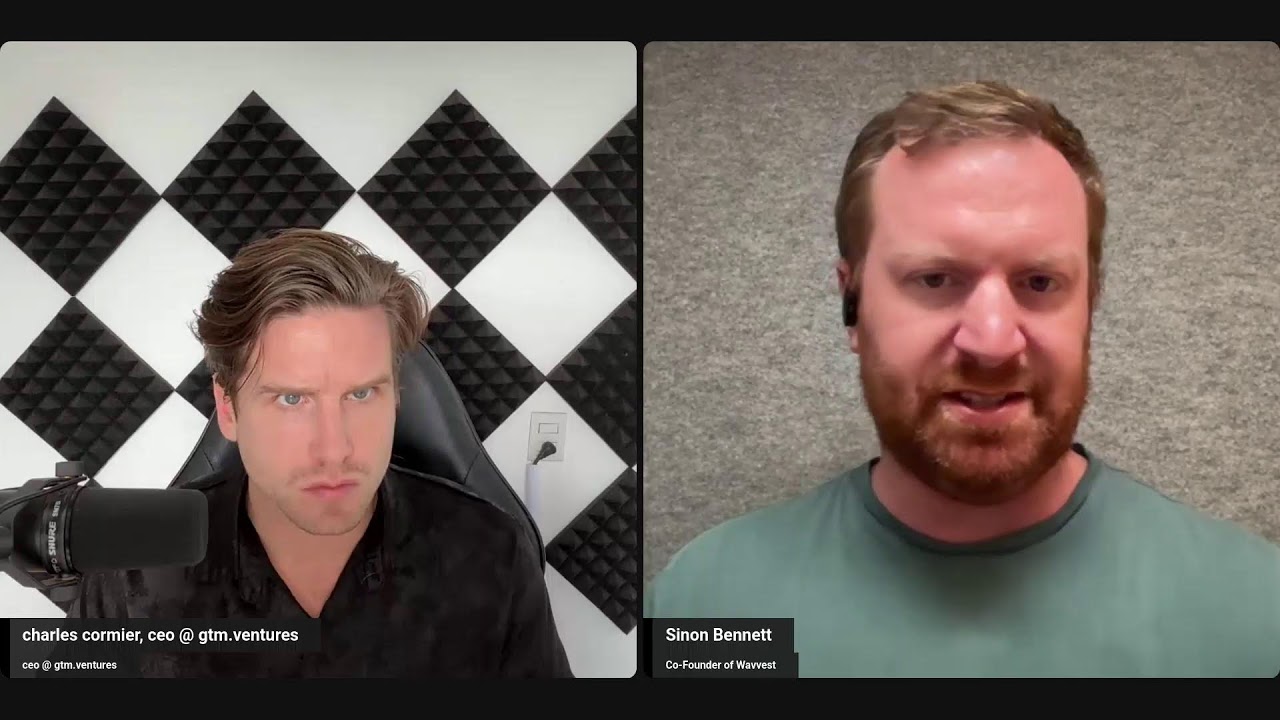
In this Founder Wisdom episode, Charles Cormier interviews Simon (Sinon) Bennett, co‑founder and CIO of Wavevest, a Chicago‑based fintech that builds an AI‑driven operating system for registered investment advisors (RIAs). Simon recounts his unconventional career path—from seven years as a nuclear submarine officer to a four‑year stint as a JPMorgan advisor—highlighting the discipline, teamwork, and resilience he carried into entrepreneurship. He explains how he and co‑founder Brendan identified a fragmented tech stack in the RIA space, initially aiming for a direct‑to‑consumer family‑office app before pivoting to a B2B2C model that unifies CRM, trading, performance reporting, and AI‑generated financial plans. Wavevest’s flagship AI planning agent ingests client data (accounts, mortgages, insurance, trusts) and produces customized, natural‑language plans, a capability they launched 1.5 years ago. The company now serves ~20 advisory firms, managing about $350 M in assets and generating $1.5 M in revenue, with a goal of $500 M AUM by year‑end. Funding to date totals $2.7 M (pre‑seed, family & friends, strategic vendor investor) and a seed round is actively being raised. Simon describes a relationship‑driven go‑to‑market approach—conferences, cold outreach, and partnerships with tech consultants—to reach COOs/CTOs of advisory firms, while end‑client awareness comes through advisors. Operational challenges center on prioritizing product work with a small engineering team, avoiding scope creep, and allocating engineering hours. He outlines co‑founder roles (Brendan as CEO handling investor relations; Simon focusing on operations, sales, and AI agent development). Wavevest engineers leverage AI agents for code generation, QA, and specialized financial‑planning sub‑agents (tax, trust, estate). The episode closes with Simon’s near‑term objectives: scaling AUM, hiring additional advisors, advancing the product roadmap, and closing the seed round.
Chapters
Welcome to another Founder Wisdom podcast. We have Simon Bennett with us today. He's the co-founder and CIO at Wavevest, located in the greater Chicago area. He's an ex-JPMorgan and also an ex-nuclear submarine officer. You'd be the second ex-nuclear submarine officer now founder on my podcast, Simon. So welcome to the pod. Tell us a bit more about yourself and what you've been up to.
Yeah, thanks for having me, Charles. So yeah, like you alluded to, working at Wavevest, founded the company about 2 years ago. You know, we saw a lot of problems in the registered investment advisor space, specifically around disconnected point solutions. So a lot of the advisors we were talking to, you know, had, you know, a CRM system, trading and rebalancing software, performance reporting tools, financial planning tools, and none of those kind of talked well to one another. And so with Wayvest, we, you know, set out to create an all-in-one operating system that also helped RIAs kind of, you know, foster next-gen engagement and make them feel more like a direct-to-consumer fintech. And then prior to that, like you said, submarine officer, so something that was not in financial services or the startup space. After my time in the Navy, worked at JPMorgan for about 4 years as an advisor where I was able to kind of, you know, see and experience all the pain points firsthand and then set out with my co-founder Brendan 2 years ago to build the company.
The submarine nuclear officer career, right? Let's start with that. 7 years of your life. What did that And isn't it weird to live in a submarine?
Yeah, the submarine's a different beast. Um, you know, the only good part is that, you know, you don't have to commute to work because you're already at work 24/7. Um, but yeah, I think the, the hardest part was probably just, you know, the lack of personal space. You know, you're constantly on top of other people, but, you know, it's a pressure-packed environment, so you kind of learn on the fly. and figuring it out and getting up to speed pretty quick. All that to say that it was a pretty positive experience, but there was definitely times where you don't see the sunlight for months at a time. And constantly working and being underwater, you miss out on a lot of weddings and funerals and kids, people having babies and stuff like that. So I'm definitely glad I'm done with it at this point in my career, but— It was a great experience at the time and I kind of wouldn't trade it for anything else.
And what did you learn? Is it discipline? Is it teamwork? Is it to thrive in a random alien environment? Uh, it's like, yeah, what did you learn from there? What did you learn from this that transcended your founder life nowadays?
Yeah, I think it's the resilience part of it and, you know, just being able to show up every day and do your job. with other people relying on you. But, you know, more specifically, I think it's the teamwork aspect that you alluded to. So, you know, having 130 or 140 people underwater, all kind of, you know, rowing in the same direction to make the submarine work. And, you know, all those people are integral to it. But also realizing that, you know, you don't always have to have the answer to every single question. Like you have, you know, kind of a team behind you and a lot of, you know, decades of operating experience. And so, you know, I think on the sub, you know, there was, you know, kind of a strict playbook to follow. And so from that aspect, it was pretty straightforward. Like, you always knew what you were supposed to do next. But I think the harder part in the startup space is that you're basically given a blank sheet of paper and you're— it's up to you to kind of figure it out. And so, you know, military experience was good for discipline and work ethic and all of that. But, you know, I think I've thrived more or liked the startup experience better because, you know, you do get to use more creativity and kind of thinking outside the box to solve different problems. Whereas in the Navy, I was, you know, more or less told what to do quite a bit. But yeah, very positive experience.
JP Morgan, how does one go from working on a nuclear submarine to JP Morgan?
So yeah, my last 2 years in the Navy, I was on shore duty. So they kind of alternate you between sea and shore duty so you don't get burned out. And when I was on shore duty in Chicago, I was going to business school at the same time. So while I was doing that, I was also recruiting for other jobs and talking to prospective employers. And I just happened to link up with a JPMorgan banker who used to be in the Navy as well and went to the same business school. And so, you know, during that process, I was able to kind of, you know, learn from him, see what his transition experience was like. And, you know, he had a lot of success at the bank. And so, you know, kind of saw that person as like somebody to look up to and somebody that could, you know, help hire me, give me a job, and, you know, after kind of spending some time doing an internship and learning more about the business. I'd always been interested in markets and finance, and so it was more of a natural transition than you might expect, just with the MBA and kind of using that as a transition mechanism to learn more about the markets and investing and all of that as a way to make the transition a little bit more seamless.
Got it. What led to Wavevest? Like, why did you start that company? And did you always have that founder flame in you?
Yeah, I think that, you know, when, you know, prior to joining JPMorgan, I just kind of assumed everything at, you know, companies was operating super efficiently and that, you know, everything was figured out. And I think when I joined a big company, I realized very quickly that not everything is actually figured out and it's not actually as seamless as you might expect. And so I think there was a disconnect between what I was seeing with direct-to-consumer fintech apps and how brick-and-mortar registered investment advisors, financial advisors were operating. And so my co-founder and I, we're coworkers at JP Morgan, And I think we saw that gap as being super massive. And so, you know, we started talking to more advisors and figuring out their pain points. And that's how we ultimately arrived on, you know, the first version of the product and then continued to iterate from there. But we definitely saw, you know, quite a bit of white space there and room to innovate. And then obviously, you know, it comes down to taking a risk. You know, I think That you know certain people are well suited for big companies and others aren't, and I'm probably somebody that wasn't, but had a lot more fun and realized like hey going off on your own, taking that risk and the leap of faith to start something. There's never a better time to do it, and you know I think you have to take the risk at some point. Otherwise, you're going to wake up in twenty years and. you know, maybe be miserable at a company. So I think it was the right place, right time, right founding team. And, you know, luckily we were able to get funded fairly quickly and, you know, get the team together and work on the product.
And what is WaveVest about? Can you tell us where the idea came from and how do you serve your customers?
Yeah, so we're an operating system for financial advisors. I think our, you know, kind of flagship product is an AI-based financial planning tool. And a lot of that was, again, right place, right time, where, you know, a lot of these large language models over the last 2 years have made significant improvements. And what we had seen is that, you know, traditional financial planning software would essentially have a very rigid output that isn't necessarily conforming to every unique client situation. And so, you know, I think that if people are paying for financial advice, they should get a customized output and it should be tailored to their unique situation. And AI was a great application of that. So taking all of the context around, let's say, their external statements, bank accounts, credit cards, mortgages, their trust documents, life insurance policies, and their unique client situation and using natural language to create a financial plan. It was something that at the time no one else was doing. We originally launched the product about a year and a half ago, and we were the first ones to kind of do that as it stands. And obviously there's been other competitors that have jumped out and, you know, done something similar over the course of the last year. But I think, you know, finding use cases for AI and trying to figure out how it applies to your specific industry is something that I think a lot of founders have definitely leaned into over the last 2 years. But that's where we've gotten the most traction.
Interesting. And how's been growth? Tell me about like the day of inception of the company. I think it was like 2.5 years ago and to where you are today. Like, uh, what has, uh, skyrocketed since then?
Yeah, it's kind of funny because we originally set out to create a direct-to-consumer fintech app where essentially it was like a family office in your pocket that covered everything from investments, insurance, tax, and trust and estate planning. Um, but we quickly pivoted to be B2B2C. Because we saw that, you know, a lot of these financial advisors, you know, essentially lacked a comprehensive tech stack that was unified, and they also lacked, you know, any kind of strong digital experience that, you know, a lot of the direct-to-consumer fintech apps like Robinhood and Betterment were delivering to customers, and a lot of the younger clientele kind of wanted to, you know, experienced something like that, even if they were working with an advisor. And so, you know, I would say over, you know, the last 2 and a half years, you know, kind of starting from scratch, you know, we work with about 20 firms right now, uh, 20 registered investment advisors, and also have an in-house advisory arm as well. And they've grown that to about $350 million in AUM. So getting a lot of traction, you know, not only on the business side, but with serving end customers through our advisors. And that's something we never originally set out to do. Like, it's definitely, we've made pivots along the way to kind of find the right niche. But yeah, some exciting traction, you know, I've gotten to over $1.5 million in revenue. But, you know, I think with any of these journeys, you kind of have to be somewhat flexible because whatever your original idea was, you might have to, you know, pivot from time to time, um, to kind of really hone in on the right, you know, product-market fit, if you will.
How is funding? Let's start with that. I mean, you've been at JP Morgan, right? So, uh, how much did you guys raise and how did that propel you?
So we've raised about $2.7 million to date, and we started off with a pre-seed VC in Washington, DC. that helped us raise that first round. And it was kind of right place, right time where our thesis on the wealth management space and how we could attack it and make improvements lined up with a white paper that they had written. And so it was kind of a natural match made in heaven where they had a theory about the space and we were attacking it the way they thought that it should be kind of, you know, taken on. And so, you know, I think with any of these things, finding the right investor that's actually going to, you know, more or less, you know, let you kind of run the show and, you know, figure out what you're gonna do next is super important. You know, obviously they give their input and their advice when it's, you know, relevant. And then in addition to that, we had some family and friends come on board. And then also raised from a strategic investor as well, that's one of our vendors. And so, you know, all those things kind of line up well. And, you know, finding real applications, I think if you can get somebody who's a user or a customer that also is willing to invest, like that lines up really well because they're giving you product feedback, but they're also invested in your success.
How do you sell to IRAs, uh, wealth managers? Like, how do you partner up with them? What's your, your favorite funnel for go-to-market?
Yeah, I mean, it is a lot of, you know, relationship-driven business. So there's a lot of, you know, conferences and things like that that we've gone to, but there's also just a lot of direct cold outreach. So, you know, finding the right, uh, niche in terms of like you know, there's specific advisor size or location that we've narrowed it down to. And then, you know, either reaching out directly via, you know, email, LinkedIn, phone call, or, um, you know, doing some kind of marketing campaigns that are, you know, directed in that, that way. Um, and then also just like a lot of industry, um, professionals, like there's a lot of people who kind of comment on the industry or known as like technology experts in the space. And so working with people like that or consultants that, you know, give advice to RAs on their tech stack and how they should set it up, really just trying to get in front of, you know, the COO or the CTO at these specific firms so that, you know, we understand their pain points and, you know, making sure that the product is kind of doing what they expect it to do.
Interesting. Um, do you— what's, what's your marketing, your favorite marketing channel to sell directly to consumers, also to end users, right? Because you talk about the B2B partnership aspect of it. Like, where do you got— where are people made aware that Wavevest exists on the web?
Yeah, I would say for the end consumers, most of that's coming directly through the advisors. So You know, that's a very relationship-driven process. And so, you know, we host various events and, you know, do mailing campaigns, email campaigns about the markets or various changes in like the tax code or different investment ideas. But I would say more of our marketing has been focused on the business side because a lot of the advisors are either getting referrals from their existing clients Or, you know, they're meeting somebody in person at various events. And that one's a lot more relationship-driven. Like, obviously bigger companies, you know, like a JPMorgan will lean into more marketing campaigns. But I think on the consumer side, it's like, you know, you can have a big, massive audience, but really, you know, at the end of the day, they have to trust the advisor. And so that's why more of it is kind of like face-to-face and not as much You know, email campaigns and traditional marketing like you would expect.
Right, right. And what's been the toughest part of running that business so far?
Yeah, I would say that, you know, the hardest part at the early stages is essentially, you know, you have all of these things you want to do, you're getting constant feedback on the products from your clients, and, you know, you only have resources to maybe attack you know, 2 or 3 problems at a time. And so I think that's the hardest part is prioritizing, you know, what's the next thing we're going to work on when you have a relatively small engineering team. Because I think, you know, there's a tendency to have, you know, product scope where the scope continues to get bigger and then you're a jack of all trades and a master of none, where essentially, you know, instead of just focusing on the 2 or 3 things that you're really good at, You can end up trying to build new features that are half-baked and, you know, aren't really what the client wanted in the first place. So I think that's the hardest part is just resource allocation, you know, not only time, money, but, you know, hours with the engineers. Like they, they can only work on so many projects at a time.
Right. And how do you complement your co-founder? What does a day in your life look like on your part versus his end?
Yeah, so Brendan is the CEO and focuses probably more on, you know, does a lot of the same things I do in terms of sales and operations. Like, we're kind of overlapping there quite a bit, but, you know, probably does more of the investor conversations. So talking to VCs, you know, we're actively raising a seed round right now. And so, you know, I think trying to divide and conquer as much as possible. So You know, if I'm doing a sales demo and Brendan has a VC meeting at the same time, that's great. We're usually rarely on the same call because I think, you know, there's so many things you have to do in a given day. But I would say more of my focus is on operations and sales. And so, you know, but I think at the end of the day, for any company, you know, founder-led sales, especially at the early stages, is key. So that relies on both co-founders selling at all times. And I don't think there's a way where, you know, even a technical co-founder like a CTO should still be involved in sales. You know, I think everyone kind of has to wear that hat to a certain extent.
And who's in charge of coding and building and what kind of agents are you deploying nowadays?
Yeah. So on the agent side, like obviously, you know, A lot of our engineers are using AI agents to develop, write code and check code and all of that before it goes into production. So I would say that's the number one use case. And then outside of that, you know, our financial planning agent, you know, for the advisors is probably what we spend the most time on. So making sure that, you know, It's QA checking everything that it's generating, that it's generating the right charts and outputs, that it's going to reference the right tax code and doing the right calculations. So, you know, like hard coding a math library inside of, you know, the planning agent and also having, you know, the agents specialize in various parts of financial planning. So, you know, for instance, like having one that's primarily focused on tax analysis or trust and estate analysis, because those are very different things, but they tie in together. So I think, you know, having the one agent to kind of QA check everything and then underlying agents under the hood that have a specialty is kind of where we've seen the most value.
Interesting. And what's next for you? What do you want to accomplish this year?
Yeah, I mean, continuing to grow the firm, grow, you know, client base, assets under management. Our goal is to be at least at $500 million in assets under management by the end of this year and recruit at least 2 or 3 more advisors. So, you know, I think from a business perspective, we have a clear line of sight to getting to those metrics. And then I would say just continuing to develop the product, make it better. You know, we have a pretty clearly defined roadmap based on client feedback. And so, you know, I think everything's set out, you know, with the next 6 months. But, you know, obviously all those things take, you know, capital and, you know, time and money to pour gas on the fire since we're getting, you know, some pretty solid traction. So. It's all about, you know, just speed and how quickly you can do it. Um, but it's, it's a little bit of a balancing act as well.
Yeah. Well, good luck on, uh, everything that's coming. Are you also opening up a new round of funding pretty soon?
Yes, we've been in active conversations with several VCs about the seed round. And so that's going on right now. So, you know, it's been a pretty exciting time, you know, hitting certain milestones like You know, getting to over a million in ARR and you know continuing to to grow the client base. So yeah, we've had a lot of interesting discussions and there's a lot of you know interest not only on the fintech-focused VCs but also the generalists as well.
Got it. That was Simon and Charles for another CEO.
More from Charles


Founder Wisdom: the audiobook, version 2 (5 hours of stories from founders and CEOs)

8 CEO Questions I Love Asking: the audiobook (64 founders answer, in their own words)





