Sven Kueenle - Founder & CEO, Rockfish Capital
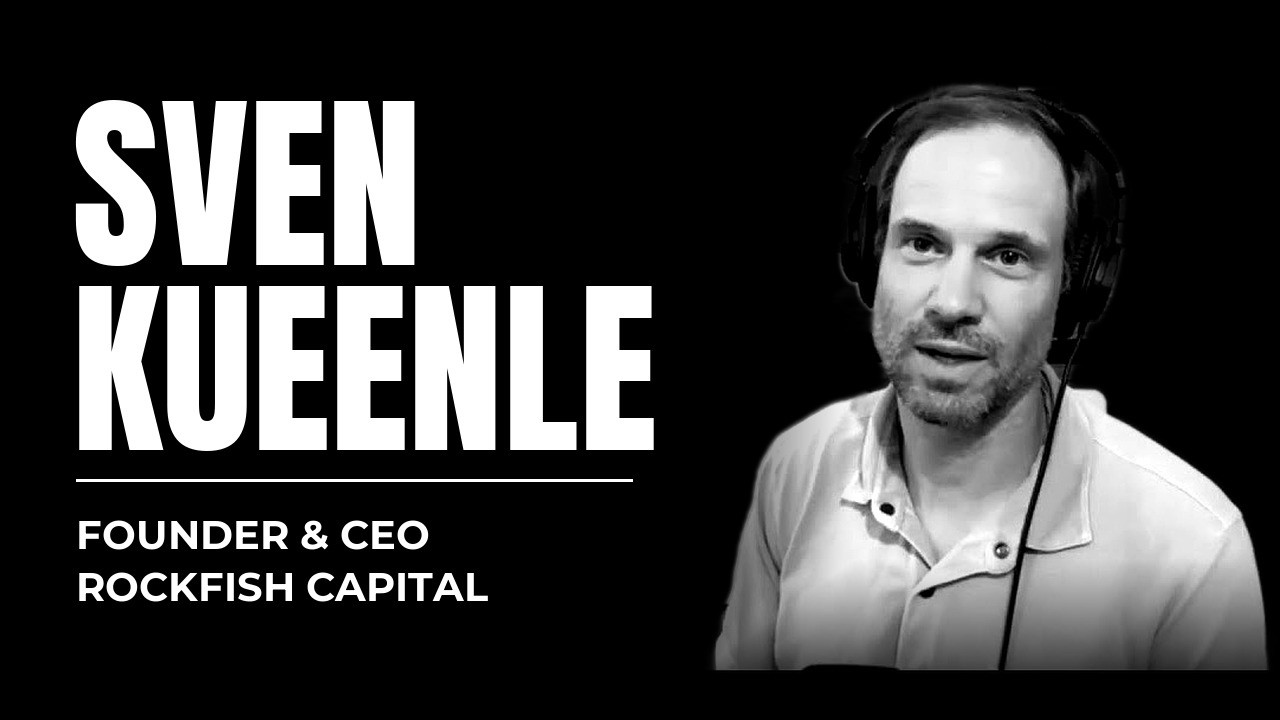
In this episode of the CEO Wisdom podcast, host Charles Cormier interviews Sven Kueenle, founder and CEO of Rockfish Capital. Kueenle recounts his two‑decade career as a professional skier and how he transitioned into real estate investing, first in Europe and later in the United States. He explains the cultural and regulatory differences between European and U.S. markets, noting the more opportunistic, faster‑moving environment in the U.S. versus the risk‑averse, highly regulated European scene. Rockfish Capital is based in Houston and focuses on acquiring institutional‑grade multifamily assets through syndication with co‑investors. In roughly three years, the firm has purchased about 600 units and aims to reach 1,000–1,200 units annually, targeting a $50 million equity raise this year, with a 70 % European and 30 % U.S. investor mix. Projected returns are 15‑20 % IRR and 5‑6 % cash‑on‑cash over a five‑year horizon. Kueenle discusses fundraising tactics, emphasizing repeat investors and referrals, and contrasts European investors’ cautious due‑diligence with the quicker decision‑making of U.S. investors. He highlights the company’s recruitment philosophy: an “athletic mindset” is a core value, leading to hires that include former professional athletes. The firm prioritizes operational excellence over speculative market timing, especially given the cyclical nature of real estate and recent interest‑rate volatility. When asked for advice, Kueenle urges aspiring fund managers to start small, gain hands‑on experience, and only later consider launching a fund. He also shares his personal CEO routine—early wake‑up, fitness, breathwork, journaling—and how skiing remains a mental reset for him. Finally, he outlines his short‑term goals: add one or two more deals, refine the company’s systems to free up strategic time, and continue scaling the platform over the next decade.
Chapters
Welcome to another CEO Wisdom podcast. Today we have Sven Quinlay with us today. Hope I'm pronouncing that right. He's the founder and CEO of Rockfish Capital. He's building a scalable multifamily portfolio in Texas, partnering with US and global investors, a former pro athlete in skiing, to be precise. So I looked at Sven's Instagram picture of him dropping from a cliff, and I was like, dude, you're crazy. Um, and I'm guessing, I'm guessing he says the same with me finishing 125-kilometer races. Ousphane, welcome to the podcast. Tell me a bit more about yourself and what you're up to.
Yeah, thanks for having me, man. I really appreciate, uh, the opportunity. And of course, you, you already said it, I mean, I'm equally excited, uh, talking to you and certainly have a lot of respect for you for what you've done and doing a 100-mile or kilometer run is, uh, that's quite an achievement. But yeah, I mean, my background, I've been, as you mentioned, a professional skier, been doing that for over 2 decades, was fortunate enough to travel the world and to some of the most amazing places, uh, from your home country, Canada, uh, to Alaska, South America, uh, New Zealand, Europe. Obviously I, Yeah, I got to travel the world and do what I love doing most for a long time, but eventually obviously there is an expiration date to a professional skiing career. And so that's when I transitioned into business. I was already investing while I was still actively skiing. And yeah, that was basically the transition to the real estate space, which is what I do nowadays. And as you mentioned, I'm— I've now built Rockfish Capital, a US-based real estate firm, and we're focusing on multifamily acquisitions.
How was the transition from Europe to US, or were you already transitioning as an athlete there? Like, because you already were in Canada and Alaska, like you said, so you already knew the culture. Was it obvious for you to launch a business there and yeah, was it like similar business market to Europe? Tell me a bit more about that transition.
Yeah, absolutely. I mean, so I've been in the industry for over a decade. I've been doing that primarily in Europe, Germany and Austria primarily, but I've always had an interest into the US market. As you said, I, you know, during my athletic years, I spent a lot of time in North America, understood the culture, uh, the, the people. I always enjoyed being in North America, um, but the real estate market is exceptionally competitive, um, in, in North America too. And so I never really saw the opportunity to come into the market, uh, given, you know, the, the rate caps being, uh, very compressed and the money being cheap and the prices just going up and up and up. And so it was a very difficult environment to get into the market. And that kind of all changed in 2022 and 2023 when the interest rate hikes occurred. And that's when I eventually saw an opportunity to come into the market, and that's when I made the market entry. And again, I had already, you know, 10 years of experience in the space.
Yeah, um, but it was still not obvious, right? Like, what's the difference of the culture between European and American?
Oh yeah, I mean, yes, thanks for asking that because I mean there is big differences. I mean, primarily, I mean, as an entrepreneur and doing business, as you know as well, the US is a very different environment than Europe. In the US, generally speaking, as you know, people are much more opportunistic. People want to do something, so they have an idea, they believe in something, and they go for it. And then they kind of figure out how to actually get to where they want to get after they already started. In Europe, and in Germany in particular, and I'm very much generalizing of course, but it, it's quite the opposite. So people would look at, you know, everything that can possibly go wrong, all 10 things, and then whatever else can also go wrong. And once they have basically, um, thought everything through, that's when they start doing business. So It generally is a very different environment, and I really enjoy, you know, the US environment to do business, generally speaking, and people are just much more open. It's much easier to get in the door, but it's also, if you don't, you know, you also get kicked out of the door much, much faster again. So yeah, it's a And of course for me, when I decided to make the move, I mean, it was a real challenge. I mean, I started from like literally scratch after I have already built, you know, a successful business in Europe and then making the leap and basically deciding to go back to square zero, starting in a new continent, new country. Certainly the rules are different. With no network, it was anything but easy. That's for sure.
So what happened with the real estate, the European real estate firm? Did you sell it to just focus fully on US or?
No, we still, so I kind of restructured a little bit. We sold most of our short-term development projects, which I already did primarily in 2021 and 2022. So that was very lucky timing in hindsight. Obviously that all happened before the interest rates went up. And so yeah, so I still have assets in Europe, but it's, you know, well managed. And so I'm pretty much doing both at this time.
Right. And in the US, how's the real estate market behaving differently from Europe? Is it moving faster as well? Give me like the comparison between the two markets. Houston specifically, I believe you're specialized in.
Yeah. So we, yeah, as I said, we're based out of Houston and the real estate market does indeed work quite different. I mean, for one, in the US you have much bigger assets in the multifamily space. So what we do, we buy institutional-grade real estate. And the way we do it, we syndicate, which basically means we partner with co-investors or limited partners, and that allows us to just, you know, acquire bigger assets and, and basically move at scale. So the U.S. real estate market is much more operational, and the, the rules and regulations in, in markets like Texas— you have to differentiate obviously whether you're in New York, California, or Texas, but those are within the US, very different markets. But that is what is of great interest. And coming from Germany where there's so much regulation, politics is heavily involved in the market, it's a very tough environment for landlords. And so that's significantly different with what we do in the US.
Right. And what's the scale at which you've grown so far in Houston specifically? So you've been like, 3 years there? Like, what have you accomplished in these 3 years? And also, why real estate? Is it because—
is it—
it's because what you know? I know that Austin is incredibly hot as a real estate scene, but why not choose, I don't know, a sports company or, or a tech company, right?
Yeah, fair question. I mean, as I said, I was already invested in real estate when I was still skiing, and that really sparked the interest. And I saw a huge potential in the space, and I really enjoyed real estate investments for the— because it is an asset class that allows you to actively sort of, um, to actively engage in your or control your investment. Unlike, you know, other assets, asset classes like stocks, you can buy stocks but you don't really have operational input that you can contribute to your investment, right? And so that is something that's very different in real estate. Also, the leverage is super interesting. And that was just the main reason why I really, yeah, went after real estate and, um, never looked back since. And, and same thing in the US. I mean, I'm just loving what we do. We as operators have responsibility for, you know, thousands of people, and we really, beyond just the economic success, we also thrive to really improve and enhance the quality of life for the people, for the communities that we cater. And You know, seeing, you know, when you transform a community and see how happy the people are with the, you know, the new operator and that kind of stuff, that, that's actually very satisfying. And so that's what I really enjoy doing too. And back to your question, it took me 18 months in the US to just build the structure, the team. Obviously for me it was very important to have solid and strong experienced team that has boots on the ground, that has been operating in the market for a long time. So that was, you know, that took quite, quite some time to build that. And then actually the first acquisition was only like 15 months ago, and since then we have acquired 600 units, and we're in the process of getting to around about 1,000 units by the end of the year.
Your investors, are they mostly European or US as well? And how do you leverage that? Yeah, that arbitrage, I guess European investors may be interested in investing in, in the US, right?
Absolutely. Yeah. And I mean, the US market is indeed very interesting to international investors. So we work with both US investors and international investors. Basically, I mean, yeah, as you mentioned, what we kind of focus on is being that bridge for international investors to have access to US assets. And yeah, there's a high interest, and European investors certainly enjoy and appreciate the opportunity to get into the to the US market.
Right. What does the LP look like? Like how much you want to raise per year? Is it $5, $10, $20 million that you're seeking to raise? Give me an idea of the fundraising goals for this year.
We're currently at around, roundabout $50 million in equity that we're raising for this year.
Okay, and is it every year that you're raising that?
Yeah, I mean, ideally we're scaling, um, right now we're, you know, as I said, at a pace of like 1,000 units, uh, per year, or 600 to 1,000. That's like the range where we're currently at, and I would like to, yeah, you know, continue to, to be at around 1,200 units per, per year if of course the market allows and it makes sense. Like, we're really focused on disciplined acquisitions. It's not just scale for the sake of scale. It also has to make sense economically, of course. So, um, right now I personally think it's a phenomenal time to buy if you're disciplined and, um, you know, look for the right opportunities. It's, it's not an easy market to operate in. Equity is also, um, quite on the defense. So, so it's, it's It's not easy, but it speaks for the current time, in my opinion. It's, again, if you're on the acquisition side, I personally think it's a really, really interesting time.
Right. And what percentage of investors are European versus US investors?
Right now, I think the majority, we're probably 70-30, 70% being European investors, 30% being US investors.
That's intriguing. Um, what kind of returns you expect on real estate versus, I don't know, stocks or other types of investments? Where do you situate yourselves in a high net worth person's portfolio?
I mean, so we obviously— it depends a little bit on the, on the asset. Some are more opportunistic, some are more stabilized. So the range that we are operating in is in You know, on a 5-year term would be 15 to 20% IRR that we project in our business plan with, you know, 5 to 6% cash on cash annually.
Your investors, how do you find them? Is it personal connections, connections of connections? What's your main engine to find them?
Yeah, I mean, that for sure is obviously given the you know, the, the equity need that our business model comes with. That's certainly, you know, it's always a bottleneck, I think, in, in pretty much all industries. But, um, yeah, it's for the most part my network, um, which is also the reason why we work a lot with European capital, because that's where I have a strong network. And then it's referrals. Um, 90% of our investors are repeat investors, and with with that, they bring more. So that's been working really well for us.
And what has been challenging about that business? Not the US one, I think this one's been going pretty well, but generally when you started in Europe, what's been challenging about that business specifically?
I mean, I think the real estate industry as a whole is, has, it happens in cycles. And so obviously in 2008, When the real estate crash happened, that was a big, big one, a major event that reset the market. And the, you know, recent interest hikes that happened in 2021 and 2022 certainly had similar effects where a lot of operators in, you know, got into trouble. And the, you know, I think From my point of view, what we're seeing now, it's actually a healthening situation because it, it really— I mean, if you look at it, you know, years ago you could literally buy anything and the market was compensating for, for any mismanagement, anything. The market was just basically doing its thing and people were making money. So it was, uh, you know, very intriguing times in real estate and a lot of people bought real estate. And, and that now, now it's just a different It really comes back to being a disciplined operator, doing your homework, doing a good job operating real estate. And I think that makes a lot of sense and that's really how it should be. And that's also what our primary focus is, that we really focus on operations and not market speculations.
And would you advise young folks to start their own real estate investment funds? Because if you can't raise from investors and you need to have balls to raise from people you don't really know initially, right? Like the zero to one, I think it gets pretty hard, right?
Yeah, it does. And I mean, my life's always been based around, you know, I always started small with anything that I did and kind of worked myself up. I mean, that was essentially the same thing in sports, obviously. And with skiing, I didn't start in Alaska skiing some of the gnarliest runs, right? Would be the equivalent to starting real estate and raising a big fund. I don't think that makes a whole lot of sense. So I would advise just start small, gain experience, and understand the space. And once you kind of have done a few projects and understand how real estate in general works, that's when you then can start thinking about investing via a fund or setting up a fund.
What's stopping you to raise $100 mil per year?
That's a very good question. I love that question. Uh, well, maybe I'm not on the, the big slope in Alaska yet. I'm working on it.
Yeah, I mean, I don't think it's a matter of balls at this stage. I think it's really a technical and systematic matter, right? It's like—
yes, absolutely right. Yeah. And I mean, we're, as I said, we, we're pretty, you know, young, uh, company. And what's really important to me is quality over quantity. So we are very heavily focused on having, you know, culture, core values. We have a very strong team with Rockfish Capital, and, and that's what I truly care about. And that is the scale and the pace that I want to go with. And so You know, the team essentially needs to grow, but it needs to grow with the right people, and that just takes time. So it's, you know, we're still growing fast enough, I think, and the time will come where we do raise the $100 million. It's just not going to be this year.
European investors, how are they different from American investors? What have you seen in the difference between Um, that's a good question.
I think generally speaking, um, at least German investors are just much more careful and second-guessing everything. So I think there's a lot of, um, yeah, a lot more hesitation, and, and rightfully so. I mean, it makes sense, you know, obviously any investor should should always, um, you know, do due diligence and understand where your money is going, of course. But I think that's just one of the things that I, that I noticed, that American investors generally are quicker with their decision-making than European investors, right?
Where do you want to take the, the company? And yeah, do you— where do you want to use in, in where do you want to use it in your own portfolio of companies, right? Do you want to launch other companies? Are you launching new ones? Are you 100% focused on that one?
Well, I'm 100% focused on Rockfish Capital. Essentially, any asset that we buy is a little bit like buying a business. That's how I look at it. Like, every one of those assets is like acquiring a business, right? So you look at, you know, the, the business model, you look at the current operations, where can you improve What adjustments can be made? Where can you potentially operate more efficient and safe costs? And that is what makes the asset and the project successful. So in essence, it really is, you know, the portfolio is like an acquisition of a whole bunch of smaller businesses. And yeah, that's how I look at it. And, you know, for the next decade, I certainly plan to grow that platform to a very substantial financial portfolio. Sorry, I lost you there. Are you on mute?
Yes, sorry about that. That was funny. Um, press the spacebar again. Downhill skiing, is that the opposite of running a real estate investment company? Like, one is adrenaline, the other is like more passive, right? Uh, or is that actually your moat? You're bringing adrenaline and energy and risk into a seemingly boring business.
Yeah, that is such a great question, and I think you're right, the worlds could probably not be more different at first sight, right? But to me, the interesting thing is that there's so much similarity. And, um, obviously in skiing, the risk is, is very physical. There's high consequences that can potentially threaten your life if things go wrong when you're out in the mountains. That's not the case when investing in real estate, but it, it also— there, the similarities are, in my experience, is about setting yourself goals, establishing a plan, executing the plan, and that's how you, at the end of the day, succeed. So I really went about doing business in a very similar way than I approached skiing, if that makes sense. You're mute again.
Last time you told me that you sort of let go on skiing and going downhill, and I'm guessing like most of your investors probably don't want you to kill yourself on a mountain, or you must have very good insurance. But are you still skiing nowadays, and how do you leverage that to sort of free your mind and get new ideas?
Yeah, I mean, obviously I don't ski as much anymore as I used to. I mean, I skied 250 days a year, so unfortunately that's not possible anymore when running a business, but I certainly still try to take any opportunity to get out there. I mean, in the wintertime, of course, it's skiing, and skiing is essentially my happy place. Whenever I'm out there, it's just like meditation. It really clears the mind, just being in the mountains. It's It's always been an amazing experience for me, and now that I'm not doing it professionally anymore, I appreciate it even more. But I think that goes for sport in general. It's just, and I mean, I'm sure you would agree, it's a great way, I think, for an entrepreneur to clear your mind. For me, if I'm not physically active, I can I can feel it, like it, it takes a mental toll on me. So physical activity is super important for me, right?
So what does a day in your CEO life look like?
I usually get up at 5 AM, and then the first thing I do in the morning is, uh, train. So I either go for a run or go to the gym, um, and then I do breathwork after that and kind of calm down before the storm. And then I usually read and journal. And then I get on the computer and start the day. And usually I try to prioritize and, you know, have like investor calls or whatever and then work with the team and just run the business basically.
You have a fairly big team. I mean, it's been like, what, 2, 3 years? I saw like, what, 10, 15, 20 employees? How do you recruit your people? And yeah, why do you need so many humans?
I mean, the, the— obviously a large number of the staff is, uh, it comes with like property management. So a lot of the people are boots on the ground, they are in the leasing office, maintenance guys. With, you know, real estate, it is a lot of work and it's a lot of hands-on work. Um, so yeah, a lot of, a lot of the jobs go towards, um, the actual property management. And then, of course, you know, acquisitions and asset management is exceptionally important, and that's where we have really talented people, and I'm super thankful for the team that I was able to put together and also their trust. I mean, frankly, they joined me when, you know, we didn't really even have an asset yet, and they just believed in me as a as an owner and leader. And I'm very grateful that I was able to bring in, uh, or bring on such, such talent, um, that is now, um, yeah, basically helping to make this journey successful.
How do you recruit them? I was just listening to the biography of, uh, was this guy's name Julian, the Tiger management guy? Forgot what his last name was, but he recruited athletes a lot for his hedge funds, right? And all the Tiger Cubs that got after that, like phenomenals, like $200, $300 billion in value. Do you recruit ex-athletes on your end?
Is that a hack? It— so one of our core values that's in the top 5 is actually athletic mindset. So it really is something that's incorporated in our DNA in the company. Of course, not everybody on the team is a former professional or athlete at all, but anybody on the team has that kind of mindset. And, so for me, I mean, I did work with recruitment companies, but the biggest and most success I've had was just through connections and recommendations and actually talking to people. And, funny enough, one of my head of acquisitions, he's a former professional hockey player, for example, and I was introduced through a friend of mine. He's a lawyer who used to play on the team with him. And so he was like, man, you should, you should talk to this guy. And, and so that's just how that came together. And, um, yeah, I, I'm super thankful that, that, that's how it happened. So yeah, again, the biggest successes I've had where I didn't even really look or know that I was, you know, recruiting someone, it just happened to be a great conversation. I was like, man, uh, I think you should be on my team. That's That's pretty much what happened.
What about partnerships? Are you working on speaking with people that could help you land better deals or land investors?
Yes. I mean, I think the real estate business as a whole truly is a people's business and it really is a team sport and you're only as good as your team is. And that goes beyond the internal team. We're really open to partnering with strategic partners, even with the competitors where we have noticed, you know, we all chase the same deals. Why not, you know, partner and take on a bigger deal together, for example? I have not done that yet, but I've had those conversations and we're certainly open for such structures.
And your top goals this year, what do you want to accomplish personally and business-wise?
Well, business-wise, my goal is to take on 1 or 2 more deals. That's what we really target right now. And then, well, on a personal level, it's primarily structuring and building the system around in the company to where it allows me to have a little more freedom to go out there and, and, you know, have more creative time. Because I've noticed that I've been so much in the weeds, uh, over the past 2 years where it's very hard to focus on what's actually most important for me to focus on, which is like, you know, staying in the 30,000 feet view. And that's what I'm, uh, kind of trying to gain back right now.
Yeah, I love it, dude. Uh, well, thanks for being on, Sven. Where can people find out more about you?
I think the easiest is probably LinkedIn. Also, you can go to rockfish.capital, that's our website, um, and you'll find an email there. You can just email me or find me on LinkedIn.
Was Sven and Charles for
More from Charles


Founder Wisdom: the audiobook, version 2 (5 hours of stories from founders and CEOs)

8 CEO Questions I Love Asking: the audiobook (64 founders answer, in their own words)





