The Opiod Crisis, Tarrifs and Scaling a Pharma Company
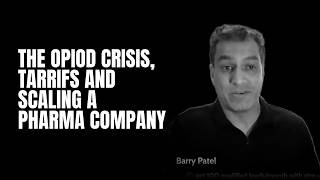
In this episode of the CEO Wisdom podcast, host Charles Cormier interviews Barry Patel, CEO and co‑founder of Galt Pharmaceuticals (also referred to as Gout Companies). Patel walks through his career from a 1990s PharmD and early work at Merck to founding Total Therapeutic Management and, in 2016, launching Galt’s unique pharmaceutical franchise system. The conversation covers the rationale behind creating a pharma‑company franchise model that replaces traditional sales‑rep structures with local entrepreneur‑franchisees who educate physicians and generate prescriptions. Patel explains the model’s economics (revenue‑share, $200k entry fee, 53 territories across 17 states, 20‑25 owners) and the ideal franchisee profile (pharmacist‑owners or seasoned healthcare sales entrepreneurs with resilience). The discussion turns to the opioid crisis, positioning Galt’s pain‑management pipeline (reviving products like Norgesic and Tylectin, expanding into migraine and neuropathic pain, and upcoming R&D) as a patient‑centric alternative to over‑promoted opioids. Supply‑chain challenges, especially tariffs on active pharmaceutical ingredients from China/India, are addressed with proactive cost‑analysis and pricing strategies. Patel outlines compliance imperatives (FDA regulations, franchisee oversight) and growth plans: adding ~20 new territories in the year, expanding corporate sales reps, and licensing or developing new IP. He touches on the possibility of an IPO, the company’s lean structure (35 employees, outsourced manufacturing), and cultural factors that keep the team resilient. The interview closes with personal habits—high‑intensity interval training, meditation, intermittent fasting—and a brief mention of the EY Entrepreneur of the Year Southeast finalist award. Throughout, Patel emphasizes entrepreneurship in healthcare, patient‑first ethics, and scalable, low‑capital franchise expansion.
Chapters
Welcome to another CEO Wisdom pod. We have Barry Patel with us today. Barry is a CEO and founder at Gout Companies, uh, it's 2025 EY Southeast, uh, EOY finalist. So it's pretty prestigious, uh, accolade. It's been an entrepreneur for quite some time now. So Gout Franchise System in 2018, uh, Total Therapeutics Management— I dug that out— '95. '95. That's a long time ago. Uh, makes you look old, Barry, but you, you still look good. So Barry, welcome to the pod. Tell us a bit more about yourself and what you're up to.
Thank you so much, Charles. Uh, yeah, that was digging in a little bit deeper there, and I'm sure there's a lot more age, uh, after that time when, uh, Total Therapeutic Management, TTMA, started. But yeah, that— it's a good sort of, uh, segue or background of, uh, kind of where we are today, because that foundation that was laid over at Total Therapeutic Management my first company, I think built a lot of the bricks for what we're doing today with Galt Pharmaceuticals, Galt Franchise Systems, because just in business, right, things are very progressive. It should be based on what you've learned. So what we do is, um, we're in the healthcare business, of course, of, uh, the pharmaceutical side of manufacturing products and commercializing them. But we do that through a very unique model, first-ever franchising model, where we don't really have armies of sales reps out there. Working territories and educating doctors, but we have entrepreneurs working in communities, working with, with their community doctors and pharmacies. And so that's a little bit different. So that's, that's kind of what we're up to. We're scaling the business and growing it. Had a lot of great, you know, last couple of years, obviously, just like any other business, it takes a while to kind of get there. We started the business in right around 2016 and really hitting our stride now.
Nice. Let's, uh, start from the beginning, right? Your PharmD— what was the original reason why you, um, got your PharmD and decided to venture into the pharma world?
Yeah, so, uh, pharmacy was something that, uh, I wanted to go in at a young age because of a family member that I had that was a pharmacist. And so that really drew me into the field, got into pharmacy school. But, uh, it really then Getting a PharmD back in those days, actually in the '90s, it wasn't a normal thing as a doctorate degree. You had to go a little bit extra, but that was a great decision back then. Now everybody gets a PharmD after the pharmacy school. But that helped build the foundation for my first job at Merck and working in the pharmaceutical world. And then, like I said, the total therapeutic management company that I had, and then now with, with Galt. So pharmacy is one side of it, but the business of pharmacy or the business of healthcare, to be quite honest, is a whole different side. And that's kind of what really, um, I was interested from the very beginning in pharmacy school to all the way to where we are today, uh, because I really believe the entrepreneurs, uh, within healthcare can make a difference, uh, in our system.
And are more— are most pharmacists actually entrepreneurs? Because in my native, uh, Canada, most are. They own their little pharmacy. They, they are already, uh, franchises, right? Like, uh, I don't know, Family Prix or Proxim is another one. Um, yet is it the case also in United States? Like, are you, uh, born right, like, as an entrepreneur when you decide to choose that profession?
Not really. Maybe, um, if you go back 50 years ago, probably, or, um, maybe even 100 years ago, because the pharmacist was the medicine man in the community, compounding and they had their own shop and the doctors would prescribe something and they would get, go to their corner pharmacy store. So majority of the United States was run by these local independent community pharmacies. And yes, that's where they are all entrepreneurs, just like a lot of other folks that were in healthcare over that time. If you look at the last 20 to 25 to 30 years, it's dominated by big chain pharmacies now. The big health systems and hospitals also have their pharmacists in inpatient pay in the inpatient side. So pharmacists are not entrepreneurial. They haven't had to be. And a lot of them, to be quite honest, go into pharmacy school because they're not. They just want a solid job. It's a good paying job and go into pharmacy because of that, that sort of security than anything else. And as you know, entrepreneurism is the opposite of security. So, so it's unique to have pharmacists that are entrepreneurs. There are some in the independent pharmacy world still, like the ones that you had mentioned. In this country right now, there's about still 20,000 independent community pharmacies out there. Almost, I guess, one-fourth to one-third of the pharmacies in the US are run independently, but the majority are run through the corporate chain stores.
But I'm guessing you're very entrepreneurial, like, compared to most folks going in your space, right? Like, you, the idea of franchising, like, was it new at that time? And yeah, tell us a bit more about where the, the Goutt idea came from.
Yeah, so the franchising is a, is, is definitely a, it's a, anything in the entrepreneurial world is absolutely finding a solution to a problem. And the problem that we were looking to solve by introducing franchising into the pharmaceutical world, and when I say pharmaceutical, not pharmacy, 'Cause like you said, there are franchised pharmacies like Medicine Shop and some of these other pharmacies that are clinics, but this is actually a pharmaceutical company franchise system where the things that our franchisees do are the actual education of healthcare providers and actually generating prescriptions for products. So that was again, as a result of solving a problem, The problem being pharmaceutical companies that do put reps out there, it's pretty inefficient. You know, you've got the Pareto principle, right? 80% of your sales are gonna be generated by 20% of your sales reps. And so when that happens, the pharma company still has to kind of carry on those 80% of reps that aren't producing. So what we decided was if you have a franchise model, if you give somebody territory that they acquire, they have skin in the game. So now they're automatically going to be thinking, I have to make this work and I have to be efficient at it. So I'm not going to, you know, do all of the things that Big Pharma does, which is, um, you know, pay for big lunches, for example, or hold big educational speaker programs and things like that that cost a lot of money, and they just do it because that's kind of been the blueprint in the past. Our franchisees are a lot more nimble. And a lot more entrepreneurial in the way they run their business and educate their healthcare providers, keeping the patient really in mind for everything they do.
And the sales rep in the pharma model as well, back then, did some sales rep like abuse of their, uh, power, right? Like I've heard about things, especially in the opioids, uh, fields of things. Did that also bring massive backlash? How, how would you solve that on your end?
Yeah, so, um, whenever there's big corporate, um, sort of goals and quotas set for a product, and then it's kind of translated down to, you know, districts across the country, states, and then individual reps, then they're going to be driven by, you know, that quota, sales quota. The patient is definitely part of that equation, but the sales quota comes first. Our model, we really seek to put the patient at the center of it, making sure that every patient gets the medication that the physician has prescribed. And these products are all meeting unmet clinical needs that aren't being satisfied already. So with that said, that education process is set up that way. Our sales playbook is set up that way. And yes, they do drive towards sales quotas themselves, But again, it's not based on at any cost. And that's sometimes what some, some of the big pharma and that, that especially the opioid sort of stories that you've heard with the big pharma companies that have been, have gotten into trouble with how that was promoted and overpromoted, that, that, that was done, you know, basically because it was not as patient-centric. What was best for the patient.
And if I try to recap what you're doing at Galt, right, you're finding the right franchisee owner. They need to be a PharmD. You give them a system, you source their products, right? You don't make the products, but you source the best products, and you have a system for them to be happy and the client to get the best quality of service possible. That's what you you do, right?
Well, what we do, we source the products in terms of we own assets, so Galt Pharmaceuticals owns the assets, or we license them in, and we have the system around it. Because to be a pharmaceutical company, you have to have an entire system from FDA regulation to compliance to supply chain training, everything. But what our franchisees do, they have access to actually market those products. They have the, the rights to do that in their territories. And that's kind of what we do is support them. So the system you're talking about is very important to have the system to help them succeed. And so whether it's training or whether it's, you know, data, IT solutions and things of that nature, that's what we strive to do.
Right. And what's your business model? Do you take a percentage of their sales? Do you just take a flat fee on a yearly basis? Give me a bit more about the economics here.
Yeah, it's a revenue share, so it's basically as much of, uh, revenue they generate in their territory based on our sales playbook as well as our system, then they will— they're— they will keep a share of whatever sales that were generated in their territory.
How many franchisees do you have right now?
So we've got, um, 53 territories across 17 different states. Um, we have about 20, 25 owners, so there are some owners that own more than one territory. And so there's some that started back in 2019 and then continued to add on new territories. Again, that's just proof in the model that it is working. That's why they would be going and buying more territories and expanding their particular presence in a particular market.
Right. And what are your expansion plans? What's, uh, what's on your radar as a CEO to grow as fast as possible for this year?
Sure, this year as well as, you know, going beyond that into our 3-year and 5-year plan, we feel very confident that we've got now our sales channels really developed out, including this franchise model, which is one of our sales channels where we're able to educate healthcare providers. We have our own corporate reps as well as we have relationships directly with independent pharmacies and certain distributors. So these, what we call our pipes, 3 different pipes where where our products can flow through in these channels. So we want to expand those pipes obviously by getting more franchisees and scaling up to that. We should be looking at 20 new franchise territories this year and then continuing to grow from there, growing on more corporate reps as well as relationships with independent pharmacies. But then to do that, you also have to have products, more products. So we have a very good pipeline of new products that will, you know, start layering in in 2027, '28, '29. New products that we're actually developing, as well as others that we may license in based on our previous model, which is really to go out and rediscover products that were out on the market that, you know, just kind of went off the market. We bring them back.
And yeah, tell me about your ideal franchisee persona.
Mm-hmm. Yes, great question, because it's not for everybody, obviously. Uh, the typical— so we have them come from two different categories. One are pharmacists. They don't have to be pharmacists. Um, they, uh, they own a pharmacy, and so they understand their community, and they build a complementary business, this franchise business, to really do some of the sales of the pharmaceutical products while their pharmacy might serve as one of the pharmacies that dispenses the drug. The others are sales-driven healthcare, sales-driven entrepreneurs. Um, those that have been in healthcare sales before, they understand how it is, uh, to, to be in the trenches and sell and then be able to kind of build a business around that. Um, they're entrepreneurial, but they're also out there working the business themselves. And sometimes then they'll go out and hire their folks. But the common element is really just, just with any business, right? They the drive to succeed, the drive to kind of really go through, um, you know, any sort of challenges and barriers, uh, the resiliency that it takes to kind of— when you're working with one healthcare provider and, and they don't want to, you know, go through and prescribe your product, going to the next and going to the next and building a system out of that. And that takes, um, some, some pretty good resiliency. So it's a characteristic probably more than, um a persona.
I'm looking at your pipeline as well, like what determines what's in that pipeline?
So we've really built an expertise in the pain management category. You mentioned the opioid crisis earlier. A lot of that happened because a lot of the older products that were very effective went away because the opioids were the ones getting all the, the, the promotion. So we've already brought back two products in Norgesic and Tylectin, and now we're going to be expanding that in the migraine world as well as in the neuropathic pain. We've got a product that's going to be in R&D, and we'll do some clinical trials with it, as well as in the headache world. Headaches are very common still, obviously, and what works for one patient may not work for another. So there needs to be choice by healthcare providers to add or, you know, substitute different products. And so we've got a couple things in the works there. So we've really built a niche into that category that we fill out for our pipeline.
What's been the most challenging thing about running, uh, your businesses?
Um, so outside influences related to supply chain that we don't control sometimes. Um, obviously you've heard news about the tariffs and things like that, so you've got to kind of reposition how you work with, uh, various manufacturers and companies. Um, and then, you know, compliance is a huge factor within our industry. Uh, the FDA kind of governs everything we do in terms of how we, uh, bring the product to market, what product, the chemistry with it behind it, but also how it's being promoted. So the challenge always is, you know, making sure that you're, you're playing by the rules and of the strictest of rules and staying well within the boundaries. So a challenge— it's not really a challenge because we have a great system around it, but we are working with franchisees that are a franchisee and they're not owned by the company. So we make sure that we do extra things to ensure that we get the most out of them when it comes to compliance.
Right. And nowadays, what does a day in your CEO life look like?
You know, playing golf pretty much every day and just, you know, watching— no, just kidding.
I wish it was.
It's— but it is, it's not as stressful as it used to be when we were still continuing to navigate some of the challenges with COVID and everything else. I think we've all as a team, the company has become pretty resilient. And they've just got this mantra of we'll figure out a way through anything. So when you're working with a team like that, it makes my job a lot easier, because you're trusting a lot of the team around you. And so my job, as well as my partner Wade Smith, he's my co-founder here at Galt. Both of us, we're really focused on scaling the business and partnerships, strategic partnerships, as well as continuing to provide guidance based on our collective 60 years of experience in healthcare and pharmaceuticals and continuing to build the strategy and strategic plan and just really continue to build that team, right, and keep that culture going so that way the machine keeps, keeps, uh, running well.
It is a model that can be IPO'd.
Would you want to become a public company one day, or, um, you know, I think if you ask most companies that go public, they don't want to sometimes just because it comes with so much, uh, baggage, if you want to say, from the time in terms of what's happening in your— in, in, um, with public reporting and just the exposure, uh, potentially even the competition and so forth. Um, on the other side, yes, it would— it helps you gain a lot more credibility because you're a public company if, uh, for, for acquisition of a new product or for franchisees to look at that this is a public company that's, that's run according to corporate governance rules. So there's, there's a plus and a minus to it. Sure, it's a possibility. It's not something that's on our radar right now. A lot of companies do that because they need to raise a lot of capital to kind of get to their next level of growth. We've been fortunate to be, you know, cash flow positive, and now we can kind of pick and choose how we want to, you know, take that next step in our journey.
And when you say the tariffs, I'm guessing most of these products are built in India, right? Like Or where, where are the products built? India, China, right?
Well, um, no, they're both— they're built here also in the US. We have manufacturers that manufacture it for us here in the US. The thing is, a lot of people don't understand about the supply chain. The actual ingredient itself, that the active pharmaceutical ingredient might come from a different country— China, Japan, or from India, or some of these other places. So that comes with a cost, that comes with a tariff, that comes with some level of control, um, and as well as so many other different pieces of the actual pharmaceutical product. If it gets manufactured as a finished pharmaceutical product in India, yes, the whole thing is subject to tariff, but it's just knowing and navigating, uh, where it comes from, where and why the price might go up. Something could be manufactured here, but if the API costs went up because of the tariffs that they had to deal with, then our costs are going to go up too.
So how have you dealt with that precisely? I've seen a bunch of AI startups that try to predict like the new updates and like fix the tariff problems, give other routes, you know, or other solutions. So how have you personally dealt with that?
It's honestly knowledge is power. So if you can be ahead of the game in terms of knowing the impacts and analyze it to your business, you can price that into you know, sort of any, any changes or adjustments that you would need to make. I mean, we haven't had to do too many except for sort of what the, what the, the, uh, the annual, uh, price, uh, you know, cost CPI index. But basically we just want to make sure that, you know, it's, it's being covered, uh, in some way.
Interesting. Um, you have 50 employees right now, is that right?
35. 35 employees.
That's a very lean company. I believe you're at what, $3 to $10 mil a year? It's like $400K per heads. How do you keep it that lean?
Well, it's a little bit higher. The revenue is a little bit higher, but basically because of our model, which relies on partners or, you know, outside, you know, distributors, independent pharmacies, working with franchisees, they're the feet on the street that we need. And usually within a company, a lot of the, the expenses and headcount is going to be the sales personnel, the core in-house staff. We also have— we outsource our manufacturing, so we don't have a manufacturing facility that, um, we, we have to hire a bunch of people. So it's really just more corporate and admin employees we have.
Are you getting onto the GLP trends? Any comments on that?
Um, we're, we're not personally. I mean, I think it's, um, great to have a product that could have so much impact on healthcare as a whole, because obviously obesity is connected to so many other disease states. So, and the fact that the costs have slowly come down because of more players on the market is really good, not just for those companies, but also for the country and the world that's using these products. You know, as long as they're used according to guidelines and what their use is for, I think it's a good thing. But for us, again, within the pharma world, you kind of stay to your niche and your expertise, and we're sort of more into that pain management area that still have a lot of room to grow in there.
The EY Awards, tell me a bit more about it.
So EY, for the last 40 years, has been really doing a great job with entrepreneurs in terms of giving them the limelight. And so we were finalists for the Entrepreneur of the Year Award for the Southeast last year. So it gives them a chance to sort of really be part of the entrepreneur community. By working with companies like ours and founders that, you know, are doing something different.
For, um, the rest of this year, what are your priorities as a CEO? Is it like developing more franchises, acquiring new IPs, new products? Like, what's the number one priority?
Yeah, the developing products is always a priority because we constantly are on the look to bring in products, license, and then, and then really advance our clinical research pipeline. So that's really a big priority. We're, we're going to be submitting a couple of applications to the FDA this year, so that is a big priority. And it's just a stepwise approach. Once you submit that application, it's still a couple of years sometimes for that product to make it all the way through, uh, because you have to do studies behind it. So building that piece of it while, uh, the franchisees and the other commercial channels continue to grow, uh, again, like I mentioned, we've got some really good leaders and team members that are really making that machine go. So I'm fortunate that they can kind of take the ball with that while, you know, Wade and I can kind of focus on the products side of it. But besides that, I think, you know, scaling the business through different ways— inorganic growth is something we look for always to see if there's the right company, right product that might fit for us a little bit more so than just kind of developing it ourselves.
And how friendly is the model? Let's say what, I want to start my own GALT, right? Like, the barrier to entry is pretty low. I believe your fees to start are lower. Tell me a bit more about that.
The actual— so, two barriers of entry. Barrier of entry to be a pharma company is very high because, you know, you have to be FDA registered, have a product, acquire and build.
I mean, like, be a franchisee for you, like, not start my own Exactly, but I wanted to kind of put that there first. Oh no, that's gigantic. I know, that's huge.
So that's why the barrier of entry— that's why these franchise systems are— the franchisees, it's appealing because they don't have to make that big investment. They get to do what they're good at. So the fee for a franchise, it's $200,000, but they get a 5-year contract on running a territory and basically doing that revenue share with us.
So I, yeah, I just love the model. I'd love so many, um, aspects of what you're doing, right? Like sort of anti-Big Pharma, and you're, you're vocal about the, the opioids crisis. I think you're building something cool. I like also that the fact that you're so lean, you've been hustling. And yeah, last question, how do you keep yourself healthy, looking like so young at your age?
Thanks. And thank you for asking that question because I know I told you to do that, but now I don't— I guess I'm blessed with genes, but I know I don't think— working out for sure, keeping regular and staying in shape that way. I do have a meditation that I do every morning that helps with sort of just more the inward process that I think everybody should go through, just so that way keeps the mind young, which keeps the rest of the body young, I think.
Nice, love it. Any meditation or Ayurvedic practices, diets, workouts?
Uh, well, just regular workouts. I mean, I do a lot of, uh, high-intensity, um, training, which is more of the HIIT process. I really believe in that just because, um, it has been shown even, uh, to induce cell repair and things. We could talk forever about that, that process. Also intermittent fasting, I think that has some studies that have shown also and helping to really reset the clock. And it's kind of like considered a biohack, but really not. It's really good for the gut to kind of clean up over 16 hours or 18 hours. So just different things that, I mean, I think everybody has to find their own, right, of way that they can gain energy or continue to really thrive.
Yeah, I love it. That was Barry Patel. You can find him out at goutfranchise.com or goutrx.com. This was another CEO wisdom.
More from Charles


Founder Wisdom: the audiobook, version 2 (5 hours of stories from founders and CEOs)

8 CEO Questions I Love Asking: the audiobook (64 founders answer, in their own words)





