Tom Charman - Co-Founder at Blok
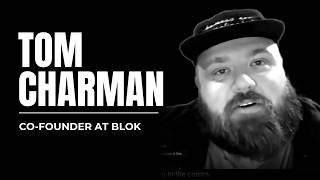
Tom Charman, co-founder of Bloq, builds tools that simulate human behavior for product teams. His research found that language models often echo the loudest voice in a group rather than seek truth, mirroring how humans behave. He raised $7.5M a year ago and targets regulated industries like healthcare and finance where better decision-making saves money.
Chapters
Welcome to another Founder Wisdom podcast. We have Tom Charman with us today. Tom is co-founder at Bloq. He's simulating human behavior, which is enough to cover the 45 minutes of our podcast today. It's fascinating as a headline. Uh, Tom, tell us a bit more about yourself and what you've been up to.
For sure. Um, I'm Tom. I, as I say, I'm one of the co-founders of Bloq. Um, Yeah, I have a background in data science. I started my career probably, well, over a decade ago building companies. Um, I've always been interested in why people do the things that they do. So kind of how do you understand, um, human behavior and how do you influence that, that behavior, um, as people are interacting with products. Essentially kind of came to the point where we're now building Block. Um, Block is in a nutshell a simulator for product teams. Our goal is to make it as easy as possible for people to be able to understand how their customers are going to behave before you put anything live. Um, and I think the kind of bigger vision for us is we kind of see simulation as a sandbox environment for adaptive user interfaces. So how do we get to the point where your version of Uber and mine is slightly differentiated based on the way that you and I are interacting with the product?
Essentially, it's fascinating. What's your background? How was your brain shaped?
Yeah, good question. Um, I am the son of a psychiatrist, so I think, um, naturally have always been interested and fascinated by human behavior. Um, and then I am the grandson of a mathematician, um, so I think the two kind of collided quite nicely for me. Um, so I've always been very interested in the statistical side and mathematical side of human decision-making, um, but then also naturally very interested in the psychological side of things as well when it comes to kind of understanding the nuances, the effect that society has on behavior. So yeah, have always been a founder, have always been a data scientist, but have those kind of two things deeply ingrained in my psyche, which is why I am the way I am.
What was your first company? I believe was Nava in 2017.
Yeah, so I built one before, but Nava was the first one I started when I left university. Essentially, we were trying to help local people discover their city better. I think there are so many sides and personalities to a city that a lot of people typically miss, particularly a city like London or New York. So we spent a lot of time basically understanding the different edges that a city can offer and then basically personalizing content and personalizing recommendations to people. Think of it as kind of like a super personalized Yelp or a super personalized TripAdvisor, um, so that we could help people work out where they wanted to go based on their preferences. And we kind of went a few steps further than that. So you could basically pull interests together as friends and basically work out the perfect place for you to all to go to. And then at the same time, obviously we were increasing footfall for particular venues based on the types of people that they were targeting. And this was kind of pre-LLMs, pre, you know, kind of, well, it was convoluted neural networks and hybrid recommendation engines. So kind of back when that was all considered artificial intelligence.
The thing I'm seeing also here, Rasa, you help people learn. So how do you learn yourself nowadays? What's your learning stack? And how does it incorporate AI?
Of course, it's a good question. I do, I think I'm probably about as millennial as it gets in that like YouTube is a big learning channel for me. I spend a lot of time listening to non-fictional information on YouTube. I never really got into podcasts without video. I like to be able to see someone's face because I think it kind of helps me understand them better. So kind of that's another way, listening to kind of people far smarter than me talk and kind of learning from what they're doing as well. And then I think the kind of biggest thing for me is like when I was at university, I studied politics. So I spend a lot of time keeping up to date with everything that's going on in the world and how all of that behavior is again influenced by everything that's going on around them. So I think it's a combination of like the, the news and then YouTube and various kind of video-based podcasts is probably my typical learning stack, but naturally within the team, we are always sharing research papers that we're reading through. We're always sharing kind of interesting news that we're reading through as well. So I would say I'm deep diving into some of the kind of more academic research as well, which has always been fascinating to me.
So probably start on top of funnel on YouTube, learning new ideas and then probably discussing them with AIs. Do you use Claude as a brainstorming partner and how do you use humans in that learning ecosystem of things? How do you select these humans specifically?
I actually don't use AI as much. Um, I think like I prefer— like I think the thing that I find frustrating about artificial intelligence is it summarizes everything too quickly, um, and it misses out on a lot of the nuance that is important, particularly in kind of like research papers and videos where they're kind of long form. I'm much more of a long form person. Um, so I think like I will watch the whole thing through or I will read the whole thing through, come to my own conclusions, and then honestly we'll go and speak to real people. I do do a little bit with Claude and I do do a little bit with OpenAI, but like, you know, typically speaking for me, the learning comes when I'm researching and then sharing those ideas with other people that have got their own thoughts, their own views, etc.
How did you get to meet all these amazing brains and surround yourself with them?
I think it helps being in San Francisco. You know, the things that I spend most of my time researching are often around artificial intelligence. And a lot of the people here, like our office is next door to Anthropic, you know, we're kind of surrounded by people that are doing interesting things. And one of the nice things about San Francisco is there are regular events which are kind of like reading sessions where you can go and read an academic paper and kind of have a discussion on it. Um, our investors host them, other people host them as well, which is quite nice. Um, I think the other way, honestly, just taking the time to reach out to someone. If you've got something interesting to share, the chances are they're going to have a conversation with you. So I think that's the other way that, um, I've been able to kind of build and grow my network over the years.
And what papers caught your attention as of late and why?
That's a good question. I'm spending a lot of time at the moment digging deep into— I recently did a LinkedIn post on this, but I'm digging deep into some of the work that's going into understanding how different models will behave. So there was a bit of research that came out fairly recently around how OpenAI's models will behave differently to Anthropic's models and basically putting them into a village scenario and then allowing them to behave and see what the outcome is. And I ended up building something myself in my spare time for a bit of fun And it's really interesting to see the underlying behaviors, the traits, the facets that exist within LLMs. And I've been digging quite deep into that to understand, you know, we, we as a company spend most of our time embedding behavior and looking deeply into kind of how different traits and characteristics of behaviors are being personified when it comes to LLMs. But it's interesting to understand a little bit deeper how you can not just understand how the LLMs are trained to behave, but how different models will influence one another in a kind of scenario where they can influence. So the thing that I essentially built out for some fun was a way for different models to communicate with one another. And the interesting finding that came out of that was not that they were seeking the truth the whole time. It was that they were often pushing their narrative, which in the case of, you know, trying to find out who did the crime in the, in the village that I built, um, more often than not, it was less the truth coming out and more the person that was the loudest in the room that would lead to the conclusion, which candidly is a lot how humans behave as well. So it makes sense.
How are LLMs, uh, behaving differently and similarly to humans?
I think it depends on the models. Um, it kind of comes down to the way that they think, the kind of context, the memory, the way that they remember things, you know, and, and different models are being trained to do things in different ways. And again, we spend a lot of time doing this ourselves. It's how do we look at things like the emotional profile, the psychographic profile, all of the different traits and facets of human behavior and how that pertains to memory and context. For me, it's the final frontier of technology. We've all been telling technology to build things for us for the last 50 years. We're now at a point where LLMs are doing a lot of that building for us, but building in a way that humans will be able to understand and enjoy experiences. That for me is the space that is still very unknown. Like the whole joke that LLMs don't have taste, really, that's the kind of final frontier of technology is how do you build technology that behaves, that acts, that influences human behavior.
Isn't it taste, um, an acquired skill that very few humans have? Isn't it the frontier of human intellect to have taste? And isn't taste like even rare? Like, I may have taste in GTN and Raz Rocket, but I'm not that naive to not say that, that an LLM could have similar taste. It seems that taste is like a pseudo moats that we invented as humans, while, uh, LLMs do have taste to it. What do you think?
I agree, although I think because LLMs are trained on the world's internet, they're, they're basically going to have the taste of the world's internet. Um, and I think really kind of the unlock, or things get interesting when you start looking at smaller models and you start looking at very like focused subsets of data that you're basically feeding to influence the model, that's when you can start to create very personalized models that if we take fashion, for example, if you asked an LLM what good fashion was, it would give you an answer. Of course, it was every LLM is trained to give us an answer that we like the sound of. But actually, the taste of someone in France is going to be fundamentally different to the taste of someone in America.. So then if you just take the data from France, can you get a more nuanced opinion on what good fashion looks like in France versus in the US? And this is super high level, but you can go so much deeper than that. And that's when you can start getting into some really interesting opinion around taste and essentially how different people around the world behave. Again, it comes down to demographics, psychographics, emotional profiles, et cetera.
You know what my gut is telling me is that taste, there's also like an emotional component and rational person slash guy like me is like, LLMs don't have emotions, they can think clearer, but it feels that emotions also add values to thinking outcomes. And I don't think how we're ever gonna inject emotions, which is energy, into machines. What do you think?
I think there are ways that you can have a machine mimic emotion. Um, you know, with what we're building, we spend a lot of time looking at things like rage clicking and kind of the emotions that do come through within a platform. Yeah, like, so rage within a platform and being able to kind of model that behavior out. Now, can a machine understand that? No, you know, we haven't got to a point where machines are sentient. Could we get to a point where machines are sentient? Well, that's the billion, trillion, quadrillion dollar problem that people are trying to solve as they move towards AGI. But I think what you can do is you can start having what we perceive as emotion as influences to how a model behaves. And that's where we're spending quite a lot of time at the moment.
And if we create humanoids and inject biochemicals in them like us, right, like cortisol, testosterone, and endorphins, serotonin, aren't these emotions in themselves? Like, can't we reproduce that?
You potentially could. I haven't actually done a whole lot of research into the biological application of kind of how these different chemicals will influence the mind, I guess kind of that there are a few people playing around with that space at the moment. It's like, can you basically build out, um, you know, artificial neurons and then see how those neurons fire based on the chemicals that you're feeding them? Um, I, I would say we're earlier in that journey at the moment. I think the focus right now is very much on digital, um, just because it's something that we can scale up and we've got the data to be able to do some interesting things with. Um, but I am quite intrigued to see if we do get to a point where you kind of organic matter will influence digital, like digital outcomes as well.
And what is Bluk essentially? Is it a research lab mostly, or how would you define yourself?
I would say we're a 70% product, 30% research lab right now. We do spend a lot of time doing research and trying to uncover some of the core characteristics of behavior and how that pertains to digital experiences. But I think when I started this company, I didn't want to be a pure research lab because I wanted to have a product that was changing the way people do things. Um, you know, fundamentally one of the things that's frustrated me is we've spent the last 20 years building the products that we love and use the same way, um, and it kind of has been the same since Petra invented Statsig. And I think we're now moving towards a world where instead of being proactive in the way that we run product building and experimentation, we can be more reactive— sorry, we can be more proactive as opposed to reactive. So in a way that instead of like kind of building something, shipping it to users, waiting to see how they behave, and then making those changes, you can start to be proactive and look at that behavior and then essentially say, okay, cool, let's make these micro iterative changes. That's the thing that I've always found fascinating. And again, it alludes towards that longer-term vision of adaptive user interfaces. So we are a research lab in the sense as it pertains to kind of understanding human behavior, but we are also building out products that are being used by some of the biggest enterprises in this world now to build better products and make faster decisions within their organizations.
And is it palantir model, like, uh, Ford's, uh, software deployment and, uh, Fortune 1000 pays you, uh, 7 figures, multi-7 figures a year for you to improve their stuff?
It's where we started. Um, we're going slightly earlier in the funnel now where we're working with kind of Series A, Series B companies as well. Um, but yeah, I think, you know, the decisions that are being made at the largest enterprises are the most, um, costly ones. You know, a process that can take 14 to 16 weeks can cost millions of dollars. Um, being able to squash that process down into 2 or 3 weeks and being able to avoid some of the poor decisions that are being made is quite literally worth millions of dollars. So that's kind of why we focused on the, the biggest problems. And for us in particular, we've spent a lot of time focusing on regulated industries, so healthcare, finance, education, where they don't have access to the same level of data that your traditional SaaS company would. Um, and actually the decisions that are made there are even more important because they can have life-changing effects on people.
Your model, I, I saw the, some screenshots on the website, like, is it dependent on multiple models? Did you build your own? You said that each had their quirks, right? So, uh, tell me a bit more about that.
Yeah, we use, um, we have, we have smaller models that we are basically fine-tuned on open source ourselves. We have, um, and then we use basically all of the kind of foundational models as well. And I think it's, you know, the goal is to, particularly in the near future, to move away from the large language models towards smaller models that can outperform. Um, you know, we're already seeing a couple of models that are either at the same level or outperforming, um, some of the existing models that are out there when, when trying to complete a specific task. Um, so I think the goal is to get to a point where we have our smaller models that are doing one thing, and then we have a larger model, which right now is an orchestration model that sits over the top. And sometimes it's OpenAI, sometimes it's Anthropic, depending on the best performing model, but would be to replace that with our own foundational model around human behavior.
You've been an investor yourself and you still have a venture partner position at Rackhouse. Have you raised some money for Blunt? Like, is there an announcement coming?
Yeah, we actually— so we raised $7.5 million just under a year ago. I think it's actually in 2 days is when we Um, officially closed our first round. Um, and then I think we will probably go and raise our Series A towards the end of this year is what we're thinking.
And 25% of the company is a research lab. Are you bullish on that model or is that Silicon Valley hype sort of, and just like showing that, oh, we can be the next Anthropic or something?
No, I think like, you know, building large language models is is going to be, I guess, less and less effective in the longer term. But I think the thing that hasn't been explored as much is the smaller language models. I see a world, and I'm seeing this world more and more now, Anthropic, OpenAI, they're becoming more expensive. People are beginning to turn them off. Like enterprises are now turning off various kind of large language models because they cost too much within the organization. Uber last week announced that every employee can only spend $1,500 a month on tokens. You know, we are beginning to see this cost cutting because it is so expensive to be able to do this. And one of the things that we're seeing happen at the same time is this kind of demand for smaller models, smaller models that are a fraction of the cost, 10 or 100 times cheaper than your large language model, and often outperforming when it comes to completing specific tasks. So I think where we excel as a lab from the research side of things is building out these models that are good at completing a specific task. Um, and then the jury is out on whether a large language model drops out the bottom when it pertains to behavior. I think the reason that you need a larger model for behavior is because there are only there are so many traits, facets of behavior that the number of parameters that you would need to be able to instill into a model are so large that I don't think a small language model would be able to do a good enough job. And that's why you're seeing companies kind of like Simile who are building out foundational model around behavior and a couple of other companies that are beginning to move towards this. But I think we'll see more. I think the moat in, you know, the thing that we hear a lot in San Francisco is there is no moat anymore. It all comes down to execution. And I think it's partially true, particularly for companies that are largely building tooling around models that exist currently. I think that is less true when you have access to very specific data sources and you are able to build out models that perform in ways that we haven't yet seen. So I think we will see more and more companies looking to build their own models. Post Hogg have just announced it. I've seen another couple of companies looking at it as well. You know, it's going to become more normal.
Interesting. Quick comment by Sam Hall, uh, saying that we are having a cool conversation. Um, question for you on the GTM side of things, quick pivot. How do you unlock all these big clients, right? Like, what's your number one GTM funnel?
Honestly, at the moment it's been inbound. Um, most of the customers that we've been speaking to have come entirely inbound, um, have heard about what we're building, excited by it, We're beginning to turn our outbound motion on now. I actually think the most successful that we've had is non-scalable, but it's physical, it's in person, it's speaking and building relationships with people, which is kind of normal for enterprise. But I think that's kind of the thing that we're seeing the most value in so far.
Do you organize events yourself?
We do, yeah, we do a lot in the office. We have a pretty big event space which allows us to kind of host dinners, host talks, host interesting events. Yeah, it's in the DNA of the company for sure.
Any event organizing hacks on the ROI side of things?
Um, sponsors are expensive.
I have a client that does them as a service, Marvelous, uh, AI. And even I, as a guy that's obsessed with GTM, I have some interest in that space, but I'm like, why would I spend a couple of thousands per night when I can generate similar results online? The counter to that is that multimillion-dollar deals are probably done physically shaking hands.
This is it. I think it's the bigger deals are done by getting to know someone. And I think that's why the physical events work for us. If we were a more traditional SaaS player, I don't think it would be the right move. So I think, you know, some of our best customers have come from the events that we've hosted for sure.
Any travel hacks for us? How do you keep your sanity traveling so much during the Tom Tour?
It's a good question. I don't really have a good answer to it. I'm so behind when it comes to kind of working out how to hack travel. You know, I think one of the things that— the only thing that I remember is when I went back to the UK for a trip, I ended up going via one of my best friends' stag dos, which meant me staying up until kind of 3:00, 4:00 a.m. in Spain and then going to bed, which was kind of a normal time for San Francisco. So it actually meant that I wasn't jet lagged because normally I get jet lagged going from west to east. East to west is fine, but west to east I normally end up quite jet lagged. So stay awake, don't fall asleep, do the usual stuff that everyone else does. That's pretty much the only advice I can give.
And Red Bulls, shout out to your new sponsor, Red Bulls. Yeah, let's discuss about the future of intelligence, right? Like, do you have timeline on AGI? What's your definition of AGI? Don't you feel we're already somewhat there?
I think, like, it's a good question. I think my definition of AGI is when we have a level of sentience there, and I think we're, we're probably a bit of a long way off of that at the moment. I mean, I think there are, there are, like, signs that we are beginning to see that the models are self-aware. Um, you know, they— when, when we've seen labs publishing research, we've seen that these models know that they have to almost act, um, in order to behave in the way that they need to behave. Yeah, yeah. Um, and, and kind of like, there's some interesting stuff happening there, but, um, I don't know, like, I've lived through one AI nuclear winter, um, and the jury is out as to whether this is going to be the one where we get to AGI. I have no doubt that the amount of value that has been created from artificial intelligence this, this time around is huge. But I would say we're still a fair few years away from true AGI.
And isn't the agentic revolution a missing piece here? The agent needs to have a full memory, needs to have context, attention, and agency. Most importantly, it needs to act and learn from its actions, the outcomes, and go into that feedback loop so that that it can exponentially increase? Isn't that the next missing piece we're about to see?
I think it could be, um, although reinforcement learning has been around for a long time, um, you know, even back when convolutional neural networks, which candidly kind of a big part of like what are underlying LLMs, um, you know, reinforcement learning is not new. Um, so I don't know whether reinforcement learning will be the thing that truly unlocks agents that can think and act for themselves. I think right now what we're seeing is some very smart technology being built that is doing a good job at perceiving or making us perceive that it's behaving in the way that we expect it to and thinking for itself. But truly it's kind of looking at a very large context window, trying to summarize that down and make the right decision. It's not really thinking for itself yet.
Which company would be the best position to achieve that?
Um, I think it's a company we haven't heard of yet. Um, I think the, I think the, you know, while I'm sure a lot of people would say Anthropic, OpenAI, Thinking Machines, you know, kind of some of these labs that already exist, the question mark for me is when companies get so big they have large expectations to deliver on the value of their company, which means that they're kind of forced down a particular path. Um, so I think it will be someone that we haven't even heard of yet that will truly get us to AGI.
And so an AI research scientist, uh, a potential lab, potentially even someone from academia, or who knows, uh, maybe an ex-Deepseeker, um, or ex-Big Four or Five AI and SF, uh, now founder. Um, so someone that's fighting in the, the shadow for like years and years and potentially has a breakthrough, like AlexNet type of researcher, or that, that would be my expectation.
Yeah. Um, and that's not to say that they won't work at Anthropic and Anthropic then does create AGI, or they could work for us, like, who knows. But, um, I think the, um The question mark is, yeah, I don't think in the current form we are there yet.
And why isn't that you if you're simulating human behavior?
I think because there is, so like for behavior we could certainly do it, but I think when you're talking about like truly sentient machines and kind of like I'm making the leap to robotics as well, you're then thinking a lot more about world models and world models mean you have to be able to take into account the environment. So taking— and the environment is less of a concern, it's more the kind of like the hands, the feet, the eyes, the smell, like all of this kind of data that has to be ingested. And the reason I think we're not quite there yet is because I haven't actually seen any datasets that are good enough, um, for actually training models that can take into some of this behavior. Like there's some stuff for vision for sure, I mean there's a lot for vision, um, and we're seeing the improvements in the way in which robots and humanoids can pick objects up, the kind of like dexterity of machines is improving. But, um, we're still a long way off at this stage. Like, you only have to look at the videos of like humanoid robots walking down the street and they don't look normal as they're walking.
So 2035 or something like that?
Yeah, I think like, I, I hesitate to put a year to it because I think it like, it just depends. Um, I would like it to happen in my lifetime. Um, But I don't know.
And what would happen then to humanity? Uh, would that disrupt the markets? Uh, would superintelligence even care about us? Wouldn't it just like fly by its own wings and leave us alone?
That's the, that's the, uh, the three-body problem, right? It's, uh, do we essentially— what is it, um, humans are ants from the three-body problem? It's, uh, you know, we— do we become a virus on this Earth wiped out by, by machines? I like to be more positive and believe that that won't happen. Um, who knows is the honest answer.
The ants on our side, ants are sometimes annoying. They eat my trees. Sometimes I exterminate them, and nowadays I'm just like, fuck it, just eat my plants.
It's true, it's true. Um, so yeah, it's that I, I would love to believe that when we do get there I can't remember what film it is, but there's— I think it's Valkyrie. It's one of the films where, like, you know, the humanity gets to the point where it can be connected to the rest of the world and that there are actually lots and lots of other species out there in the universe that will suddenly be like, congratulations, you've finally got there. We've been watching you and it's nice to see that you've made it. But who knows? That's—
bodies are probably archaic, right? Like, intelligence is probably not embodied. It's probably like data, right? Pieces of data.
Yeah, it's true.
Like, I think—
yeah, and then, you know, my silly brains interprets it, my silly human brain.
Um, hey, we have a question from Leonid. I'm not sure if you know Leonid. Do you think AI agents which run the commerce decision on behalf of humans are replicating the human shopping behavior or have its own behavior?
I think at the moment mostly they are replicating the human shopping behavior as opposed to having its own behavior at this stage. I think we could get there, but I think I hear a lot of people talking about like, oh, we're at the end of the internet. Agents are gonna do everything with other agents and there's no point building experiences for humans anymore. I challenge anyone to say that they aren't gonna use the internet. You know, like from the mundane tasks of booking a flight, like as weird as it sounds, I get some level of enjoyment out of finding the best flight and the best seat for me. So like maybe agents can do it. I don't know if I would do that. That's fair. That's, and like some people would, some people wouldn't. But when it comes to actually experiencing, so much of our time is spent online. While we may outsource tasks to agents, we are still gonna spend a lot of time on the internet.
Yeah. The agent could just return like, congrats Charles, I saved you $350.
It's true.
And you'd be like, good job. Do more of that. Yeah, and I was using like Kiwi.com today just for that, and then I had to click stuff. Like, why isn't there an agent knowing that I want the fastest? I don't care much about the price, I just like value my time, right? So stuff like that. Um, when's gonna be your first like consumer-facing product, like first SaaS? Are you gonna build such a thing, or—
um, probably not. I think, um, for us we prefer to power the the consumer powerhouses of this world. Like I see a world where the models that we are building and the experiences that we are building are powering us to move towards the next stage of e-commerce, the next stage of digital experiences. Again, for me, the long-term vision is like adaptive user— well, simulation becomes a sandbox environment for adaptive user interfaces. We could build a physical product that would be entirely adaptive, but I think we're far better off supporting those that already have the data and the knowledge to build these adaptive experiences for their customers to give them the best experience possible.
And when you, uh, do these contracts with them, is it part of the contract that you can do something with the data? You, you can feed your LLM with the data of their customers so that it can learn faster and you can serve your customers better?
It depends. We try not to, uh, I mean, we don't use the real data of any of our customers. Um, that's one of the big kind of no-nos for me is someone that kind of has a bit of a privacy background is, and is quite passionate about that. You know, the synthetic data that we get from running experiments can be used. So there's that moat that's built there around kind of like building a better model based on the experiences that are being run. We are also doing a lot of like gathering our own research and gathering our own data, which is then allowing us to build out our models as well.
Let's go with a rapid fire to finish this off. What has been the most challenging in building that business so far?
To say what's been the most challenging?
Yeah, or the most stressful.
Uh, finding the best people possible to make this company a success.
I knew it would be people-related.
Yeah, yeah, always people.
What's, what's next, uh, for you this year? What's the priority, like closing the round, uh, unlocking new big clients, products?
I think continuing to scale customers and giving them the best experience possible at the platform. And then yeah, towards the end of this year we'll probably do a round.
What's been the most rewarding about running that business? What's been your greatest victory so far?
I think the things we're hearing from our customers, um, for one, um, but also the team that we've built and the culture that we have around the company is something that I'm incredibly protective but proud of as well.
What does your day-to-day look like? Do you have habits or routines that make you successful?
Yeah, I, um, I found that building this company, I've got up a lot earlier than I used to in when I've built companies. Um, I spend— I do sleep, I do sleep, but, uh, it is disappearing fast at the moment. I think 4 to 6 hours is probably the average at the moment. So it's, uh, yeah, less sleep than perhaps I should have.
Elon standards.
Yeah, exactly, exactly. Um, but no habits. Um, I mean, Superhuman has become a super weapon for me. Um, I always make sure that I'm on top of emails given that I'm customer-facing and trying to kind of make sure that customers can be replied to as quickly as possible. Um, I think that's the biggest thing that I'm spending my time on is how do I make sure that I give the customers the most delightful experience possible. Um, and then outside of that, any day could be different depending on what's on my calendar.
One last question from Leonid again: is the future of commerce, uh, live in ChatGPT or self-evolving web pages which adapt to the human's research? I think it's two different questions.
I think personally it would be— I, I would say like self-evolving web pages. I think GPT would like it to believe believe that it would be, uh, everything would live inside GPT. Um, but I think self-evolving web pages which adapt to human search is probably going to be the most, um, certainly in the short to medium term, the most likely solution.
There you go. Well, thanks, Tom. Where can people find more about you and the company?
Good question. Um, our website, joinblock.co. Um, although we are, uh, potentially, uh, not, not fully announcing it, but we could be rebranding pretty soon. Um, so that, that the That, yeah, there's a, there's a chance that we're not far away from that. Um, nice. There, so that will be, that'll be one place. LinkedIn, um, message me on, on Twitter, like wherever. I'm everywhere. So, um, honestly, anyone can reach out to me anyway.
There you go. So I was Tom and Charles for another
More from Charles


Founder Wisdom: the audiobook, version 2 (5 hours of stories from founders and CEOs)

8 CEO Questions I Love Asking: the audiobook (64 founders answer, in their own words)





