Will Cady - CoFounder of HEAL MVMNT
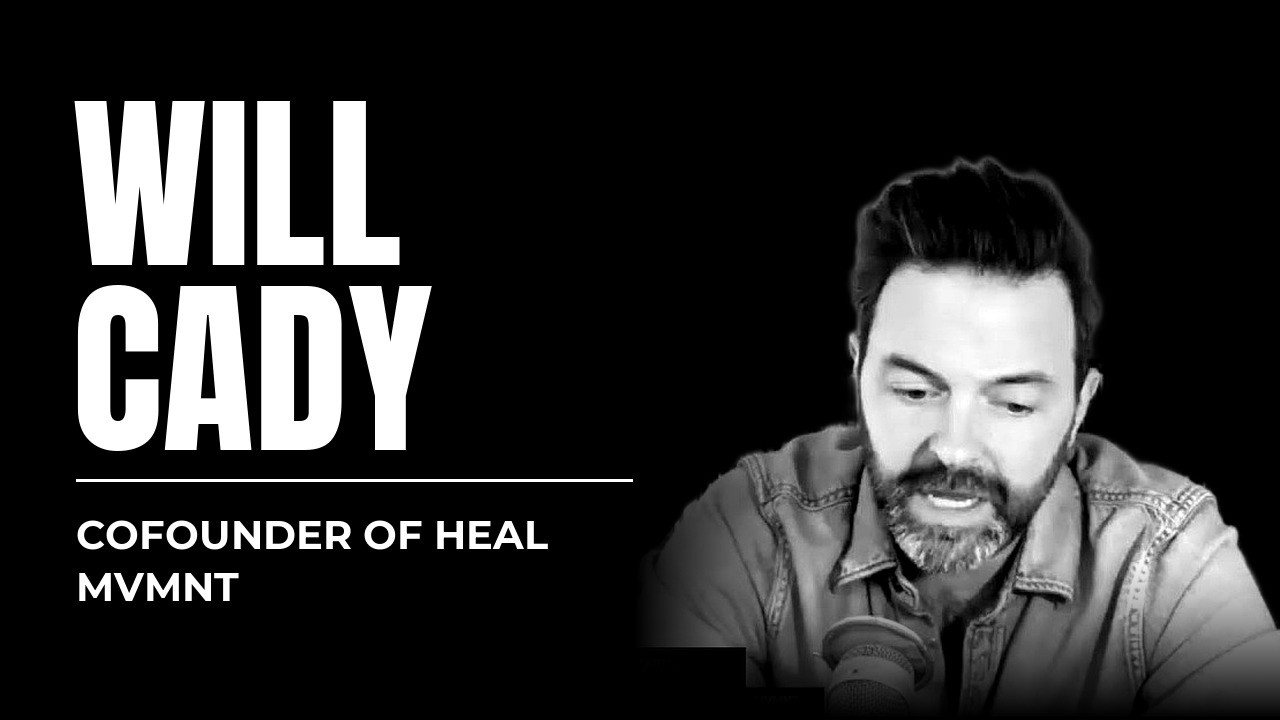
In this Founder Wisdom podcast episode, co‑founder of the HEAL Movement, Will Cady reflects on his journey from a music‑school background to a senior role at Reddit, where he built the internal creative agency Karma Lab and helped translate the platform’s chaotic community into strategic business value. He explains how the humanities—literature, philosophy, art, music—serve as a lens for asking the right questions about technology and for shaping culture within tech companies. Cady contrasts "uppercase C" creativity (personal genius) with "lowercase c" creativity (serving cultural needs) and describes how Reddit’s culture taught him humility and the importance of data‑driven cultural insights. He interprets the GameStop saga as a catalytic cultural moment that defies trend‑line analysis, illustrating the power of human‑driven transformation. After leaving Reddit, Cady co‑founded the HEAL Movement, a consulting‑first venture that aims to codify human values into AI‑enabled workflows, helping leaders define and operationalize their cultural priorities. He outlines a consulting process that starts with interrogating leadership values, translating them into language and code, ritualizing them, and selecting tools to enforce consistency. The conversation then shifts to philosophical territory: Cady argues AI is not human, emphasizing the distinction between language as code versus expression, and explores what makes us uniquely human—our embodied temporal experience, heart rhythm, and the capacity to be gateways for unseen ideas. He suggests a taxonomy of consciousness‑related terms could clarify our understanding, and both hosts discuss the future role of AI in defining consciousness. The episode ends with pointers to Cady’s work and his book.
Chapters
Welcome to another Founder Wisdom podcast. We have Will Caddy with us. Will was nearly Reddit. He helps people choose a better story. Top Adweek 50s, an author, speaker, guide, award-winning creative. His company, his current company is called the Heal Movement, MVMT. It's interesting company, right? Healing through music, I guess. So, Will, welcome to the podcast. Tell us a bit more about yourself and what you've been up to.
Yeah, nice to, nice to meet you. Glad to be on this podcast. So HEAL and HEAL Movement, it's a partner to STEM. A lot of us know what STEM is: science, technology, engineering, mathematics. I come from music school and I was an artist before that. I'm in the humanities and my entire career has been a story of bringing the power of the humanities to bear at tech companies and in the business world. It's something that has never been more important than it is right now because our technology can do just about anything. So what we have to figure out is what do we as humans want to do with it? And figuring out how to ask those questions is everything that the humanities teaches us how to do, whether that's literature, philosophy, Art, painting, music, sculpture, experiential storytelling, all of it.
Let's start with early Reddit, right? Like you have that quite often in your description. What did you do exactly there? I believe you started in what, 2017, where brand partnership that evolved into something else. Tell us the story there.
2016. So I started the Los Angeles office in 2016. It's just a very kind of small outpost for the company to see if Reddit had any relevance to LA, which is crazy to think about considering, you know, just how impactful Reddit is for the film industry and for the advertising industry. And early successes there turned into building and launching its internal creative strategy agency called Karma Lab. So spent about 8 and a half years at the company and really spent my time there, you know, trying to translate this thing, right? It was really confusing for a lot of people. It still is really confusing for a lot of people. It's like this petri dish of human culture, and leaders of industry wanted to figure out what is this and what do we do with it? How do we partner with it? What is it that is accessible to me as a, as a business? And a huge part of answering those questions really helped, you know, to contribute to Reddit, the business that we know it to be today.
Interesting. Yeah, Reddit, like, I believe, what year did they start it in? Like 2005, right?
2006, 2007, yeah.
Yeah, out of YC, hugely influential, I guess even more so nowadays with their partners, partnership with ChatGPT, right? Like, I think, yeah, what does Reddit mean for you? and what did it mean for society? Was it the highest and fastest scaling forum of all time? It's where like human, I guess, interaction was relayed and data was the product of it. What does, what did Reddit mean back then and what does it mean nowadays?
Yeah, I'm less interested in how fast Reddit scales at any point in its evolution. I'm more interested in its endurance because it really represents an original promise of the internet. It's, you know, when I started, like, the website looked like Craigslist. It looked like Wikipedia. And that is a really important aesthetic aspect to look at, right? Talk about, you know, where the humanities becomes a significantly helpful background. The visual identity of Reddit as one of these early Web2 forums, you know, that isn't really like design heavy, but it's places where people come to like talk and share a lot of text and like co-inhabit.
You are URLs online.
That spirit of gathering on the internet in that particular way, like, it's still alive on Reddit itself as a platform, whether people experience it as an app or if they're experiencing it as like a video platform, or if they're using the chat features or some of the interactive media features that are on there right now. The fact that it has been around for so long and has persevered and evolved through these different cycles in the internet from like a technology and cultural standpoint. That's the real treasure of what that thing is. It's, it's an original promise. It, it feels in different corners of Reddit the way that the internet used to feel for a lot of people that have been using it for decades.
And why did you leave Reddit?
It was complete. Got the job done. You know, I came in to, uh, to join the company in 2016 when it was, you know, trying to figure out what is the business here, and it achieved that very successfully. So for me, it was really a moment of, you know, starting the next chapter after completing a very, very positive and vibrant chapter. And I think that professionally especially, but culturally more broadly in America, we're not really taught how to end things. We're taught how to start things. And It was a time where I just felt the full gracious feeling of, uh, I'm done here. This is, this is it. We, we did it. And it's something that I'm immensely proud of.
And what was the culture of Reddit when you left? And what about like the creativity? I can't, I don't view Reddit as a creative company for some reason.
No, why not?
Because it's a forum, you know, and people just interact through it. And also the brand of Reddit was pre— to me it's chaos, right? I don't spend much time on Reddit, never did. Like there's a lot of, I don't know, trolling and shit talking in there. So yeah.
Well, that was some lessons that I learned on my way in. The way that I articulated is the difference between an uppercase C creative and a lowercase c creative. Lowercase c creative is, you know, there to serve what culture wants, what a client wants, what a community wants. And uppercase C creative is, you know, very much about their idea, their unique perspective, their genius. But lowercase c is, you know, the idea. What is it that wants to happen and how do we enable it? And so, I mean, I, you know, award-winning creative. I went to music school. I went to art school. I'm very You know, I can be very pompous about my own creativity. And when I came into it, that was not what was needed to get the job done. What was needed to get the job done was a lot closer to what we kind of call cultural insights today, in terms of looking at these different communities and how they're expressing themselves and even identifying the negative space of like, what is not happening that wants to happen? And then how do we make that possible? And so really, as a creative, your job is to get out of the way. And so I would say culturally, as a company, that organization helped me to learn how to be humble in that respect. And as much as today, you know, I'm positioning, talking about the importance of bringing what we learn from the arts and humanities, you know, to the table with what we know from technology and science, The ethos of engineers really put that in my, my head and my heart of like, what— look at the data, look at the actual reality from the numbers and from the behaviors. Like, this is what wants to happen in spite of what you want to happen. And then your job is to follow that, to be in service of that. And I think that the company really built a culture that does have a good complement of those 2 different approaches because There is that chaos element to Reddit where the community itself is going to surface the unexpected all the time, and it's going to be like catalytic and really transformative and really creative. And it's not going to be anything that the numbers were telling you was coming. It's going to be a total surprise, and you have to be ready to receive that with a smile and some warm support. And, and I think that, you know, the leaders of the company, I think a lot of the teams at the company, I think that they've really built around, you know, just a level of comfort in the discomfort of what to do when a chaotic community is being whimsical and coming up with something crazy that is gonna move the needle on culture.
Right, 'cause I guess it's beautiful on one end, it's like freedom of speech, right? But I guess sometimes it goes too far, right? Like, and then some moderation is needed, right? Like, what was, did you get any, uh, backlash from that? Like, what— and did that change your philosophy on freedom and freedom of speech throughout the years?
Well, it's the art and the science of it, right? I mean, when you look at freedom of speech and you think about like the history of the American nation and other different nations that have tried to contend with that, and the courts that have tried to contend with that, that is all looking at language and the meaning of language and the intent of language, but also the letter of language, right? So I think it's really fascinating to take a step back and, and recognize that we're in this moment where there's 2 ways that people approach that. One, which is language is like programming code, like how do we set rules and boundaries that like firmly restrict what is or is not possible? And then people that look at language as a form of expression where it is bringing into this world what has not yet been imagined. And, you know, any company that sits at the intersection of culture and technology is going to be at the forefront of asking questions that have never specifically been asked before about edge cases on defining these things.
It was the GameStop moment also while you were there, right?
Yeah.
I think that was a culturally significant moment. To me as an investor, business guy, never really made sense, right? And it's a bit weird that markets can be manipulated as such as a value investor, right? I value what company is truly worth. And in terms of GameStop, it's, yeah, it's mostly a decaying asset for sure, right? Like physical shops. And when I would look at the documentary, I was like, yeah, that doesn't make any sense. But I'm guessing you viewed it from different lens, what happened there, and how did you interpret it at that moment?
I mean, I viewed it as a cultural phenomenon, right? And so what you're seeing is people expressing what it is that they want. And I think that that is one of the prime examples to turn to when I talk about the importance of seeing how, you know, the future is determined by catalytic moments more than trend lines, because that was something that really changed people's perceptions of so many, you know, things. And it was an explosively transformative moment. It wasn't really showing in the trend lines, and I think that people should anticipate that the world and humanity are going to continue to produce these explosively transformative moments. All of the data that we use to measure and make decisions is based upon the adjacent past, but the adjacent future is built from humans and what people want, and it comes from that different place that yields explosive transformations.
Yeah, very much so. You left Reddit. Why start your own company? Like, was that your first entrepreneurial gig?
Yeah, yeah, it's, it's been a, a learning experience to, you know.
How's it been so far?
Sorry, what was that?
How's it been so far?
Well, it's been, um, I think I read this in your bio too, you're, you're a parent, you're a father.
Yes.
Yeah, so I'm a father of a 1-year-old, and so, you know, I have been with my wife, who is my co-founder, we've been building a business and starting a family. Absolutely insane to be doing. Double the chaos.
Yeah. Yeah, nice. It's also like quite a specific business, right? Like, what do you do exactly? Is it consulting at the end? Is there a software aspect behind that?
You know, I would say that the consulting journey is a discovery journey where there's a lot that you can do as an individual to provide service and expertise. And we're in the process of basically taking what we've learned through that consultative approach and figuring out what is it that we can build a solid, repeatable, scalable business upon, you know, based off of that. And, um, that's, that's a path that I would take again if I were to do it all over. There's a freedom to consulting that you are at liberty to define, you know, the, the offerings that you bring, and you're also at liberty to respond to what people want from you. And you can really discover product market fit or service market fit based upon, you know, real economic opportunity that actually presents itself.
So if I hire you, right, what will you do for me? Will you start defining my culture, interview a bunch of employees, partners of mine, scrape data? And what's the process then? Ask me questions, I guess, spend time with me.
Yeah, so I mean, I would— I'll make some assumptions right now for, you know, the purposes of providing a more specific answer. But, you know, one of those assumptions being that you probably implement a lot of AI systems into your workflow and a lot of different tasks and decisions are being automated. And so where I would want to focus on supporting your work would be on defining your values as a human and as a leader. You know, do you go fast or do you go slow? Right? That's just, you know, do you prefer your meals to be cooked hot or cold? Right? Do you take the scenic route or do you take the highways? Do you think about, you know, Hmm. your supply chain and how you dispose of, you know, your trash or recycling. Those are kind of thematic, you know, human value questions that are incredibly important for how you program the culture of an organization and program an agentic workflow to make decisions on your behalf. And so that process of interrogating what your values are is something that I would begin with and then codifying it, writing it down, like condensing that into effective language. We talked about language earlier in this conversation about how it's both expression and programming code. That's something, you know, that we would want to do is figure out first, like, express yourself, but then let's turn it into code that can actually function, you know, effectively for your system so that every different automation is consistent with the way that you would want to see it done, that these Language models are following the language on your terms, right? And then if there's any, you know, team that you have, then I would want to bring in some of the other human elements of, well, how are you ritualizing your values? How are you gathering? What are the ways that you're onboarding people, that you're training them, that you're making them, you know, a part of the team and developing them? And then finally, you know, Tools, right? What are the tools that you're using to deliver against the plan that, you know, we found from interrogating your values?
Okay. And what should I pay you and what should I expect in return? Like, what are the deliverables? And can we calculate the ROI when it comes to culture? I feel it's like still pretty broad.
Yeah. Well, so that depends on exactly what the goal of the engagement is, right? And so if you're looking at like a large enterprise, then, you know, you have aspects like, employee retention and engagements, you know, things like that. If you're looking at bringing culture into how you market and, you know, shape an online community like on Reddit, which is something that we do quite a bit, well, then you have a data trail of, you know, how engaged is the community itself? Like, is the membership growing? Are they posting a lot? Are they commenting a lot? Are they upvoting a lot? Then if there's like a specific project in terms of, yeah, we talked about, you know, the business of Charles. But if there's a rebrand or a product development, you know, project or something along those lines, well, now there's like different sort of economics as far as like how much a project like that would cost and also what the ROI is going to be, because what is it actually delivering against? Is it, you know, something that is going into market and generating revenue, or is it creating internal resilience for an operation? So there's nuances between all of those different things, and it has everything to do with what it is that the client is asking for.
How do you balance like your business stuff with the maker stuff, the music stuff, the Mystique stuff? Like, do you do some of that on a daily basis? Is it like one flowing ecosystem?
Try to be, you know, to me it's all part of one identity, me just as me and what it is that I have to offer the world. You know, there's— I think about storytelling and story doing, and the work that I do is the story doing. And I feel that it's consistent with the stories that I tell, whether through social media videos, through podcast appearances, through my writing, what I put forward in my book. I mean, my main thesis is that it's really important to be a human. To be a human being. And I— that's what I bring to my work and working with leaders is to help them be more human. That's what I bring to marketing departments if they're trying to shape the culture of their online community or Reddit strategies, to be more human. The way that I show up on LinkedIn and create some, you know, provocations is sometimes leading with vulnerability and expressing what it is that I'm feeling because I'm trying to model my humanity. My central thesis is to be human. Whether or not that's working in flow is a day-to-day, you know, challenge. Sometimes it feels like my plate is overloaded. Sometimes it feels like I'm context switching beyond what is reasonable. Sometimes it feels like I'm just like in the mud and nothing is really working. But, you know, that's something that Again, again, to go back to the arts and the humanities, like the alchemic process allows for those periods of uncertainty or confusion or overwhelm because that is how, you know, flowers sprout from well-fertilized soil. So you kind of have to be in it sometimes. And what I do is I look at my time and my energy in different blocks. It's not just about what am I doing today, but it's this week, it's this month, it's this year. It's this season, it's this lunar cycle, if you want to get to the spiritual aspects of that that are in the, the mystic component. So to me, they're all the same thing, but they just express themselves differently, and I integrate them with each other. The challenge is that the world actually sees them as different things.
Is AI human?
No.
Why not?
Because it's not. I mean, that doesn't mean—
Aliens, I'm pretty sure we would, uh, start feeling that AI is much humans. It stems from us. It takes all of our vocabulary. My opinion is very human.
Well, it's an extension of life, you know, but it's not human. It's another form of intelligence, you know. And that's not to discredit, you know, the value of AI, but I love the question because to me, it's a clear no. It's a different thing. It's not human.
I think it's very much human. We're yet to define, I mean, you talk a lot about words, right? Epistemology, what is the word to describe?
Yeah, epistemology, yep.
Yeah, something like that, right? I think we're yet to define consciousness and what general intelligence and what intelligence is, matter of fact. But I think AI is very helpful. To be human, in my opinion, is to be helpful, is to be able to accomplish goals or to help others accomplish theirs. So AI is very much doing that right now. Soon it's gonna have arms and legs and autonomy, right?
Uh-huh.
I think these things are gonna have rights eventually. I think they should have rights. I think it will have, yeah, the scary type of impact for society, but I think should integrate with us hand in glove. eventually, and I think both are gonna be able to prosper. But I think it's like a subspecies. I do consider AI to be sort of our baby, uh, to some degree.
Yeah, I mean, and that's all great. I still wouldn't call it human. Yeah, I think it's beautiful to regard artificial intelligence as our children, and I think that it's very possible that there will be a world of evolution that AI continues to go down that we're not a part of. I'm okay with that. You know, I think that we're in a time right now where we really do get to interrogate what it means to be human and everything that you just listed. I'd say the majority of what you just listed as, as these human qualities that AI is adopting. I would say that we're that and more, and it's the and more that we really get to step into. And that's where very, very much the creative side and the spiritual side of my life has a lot to offer and a lot to bear, because we are eternal beings. We are embodied in space and time to bring things that don't exist into existence in a remarkably important way, and we've lost touch with that. And so the quote unquote threat of AI taking our humanity, I think, is really interesting because I, I don't think that it can take our humanity. I think that the irreducibly human aspects of why we are a part of this planet and this universe are, um, are unassailable. And so the more that AI comes into focus, even if it, you know, onboards onto humanoid robots and, you know, is kind of physically embodied in a world that feels and looks similar to us, that is only going to clarify to us further the negative space of what we are that it cannot be, and we will know ourselves better.
And what is that human magic, in your opinion, if you'd have to point it?
I would point towards our temporal experience, the, the fact that we are embodied in space and time in a particular way. And I think it very much has a lot to do with how we experience the world, really specifically through our hearts, the way that our hearts beat. I believe, and I wrote about this in my book, that the way that your heart beats modulates your perception of time. The musician in me knows that very well. The bass player in me knows that very well, that the, the way that you feel is the way that you experience time. And when you meditate and you open up the expanse of any given present moment in time, things come through from another side. That was Carl Jung's ultimate statement in the Red Book, his like deeply personal journal that his family published only, uh, you know, a few years ago, which is that Humans are gateways that through us, that which has not yet found its expression in the world finds its expression. That comes through our hearts, not through our minds. Our minds are, you know, in service to that. They, they put the pieces together that are the portals of our hearts bring into this plane.
Well said. Um, Breathing as well, right? Rhythm.
Yeah, rhythm is a big thing.
I can't wait for consciousness to be scientifically defined. I'm pretty sure there's a special place in the brain and some kind of molecule which makes us conscious, but it's very much related to space-time. I do believe consciousness to be evolutionarily related, right? It's made so that we survive longer. It's a projection of something, which is obviously not the real thing. Yeah. No, it's just fascinating. And ironically, I think AI will help us define, but I mean, to your point, define, yes, what we are, but scientifically will help us discover more about consciousness. I feel it's a tool.
Well, there's a language element to that that I think is really fascinating for people to consider. So, you choose the word consciousness. What about sentience? What about awareness? What about some of the words in other languages and other cultures? You know, what is it that we're really trying to draw a circle around? I think that there is a tremendous amount that can be gained simply by doing a taxonomy of the words humans have used to point to that.
Yeah, the wild stuff is like we can't define it until we've sort of lived it, right? Until we have a concept of it. Will, thanks for being on the podcast. Where can people find out more about you?
willcady.com, W-I-L-L-C-A-D-Y, and on social @willcady.
More from Charles


Founder Wisdom: the audiobook, version 2 (5 hours of stories from founders and CEOs)

8 CEO Questions I Love Asking: the audiobook (64 founders answer, in their own words)





