Charles Collingwood explains the convergence limit, where electronic transition lines approach a boundary as n approaches infinity. Using helium's measured convergence-limit wavenumber of 198310.6679 cm⁻¹, he walks through converting to wavelength and calculating ionization energy: about 2367 kJ·mol⁻¹.
Chapters
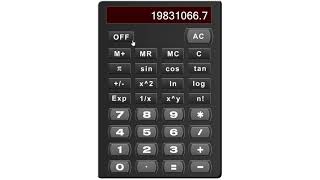
Okay, we're going to have a look at the convergence limit and how the convergence limit can be used to calculate the determine the ionization energy of an atom. We should be familiar with the hydrogen emission spectrum and the mechanism for how that spectrum is formed. You can see this on the screen. At the moment we have an electron in the N equals one level, it absorbs energy and it goes up to one of any of the levels that are available. Then the electron relaxes and emits exactly the quanta of energy that's required to take it back to another level. Now, in this particular case, it emittes the quantum of energy and return to the N equals two levels. And this would give a line in the visible spectrum in the balmer series of the hydrogen spectrum. Visible spectrum. If the electron were promoted to n equals 3, relaxed back to n equals 2, that produces a specific line. But what happens to. If we have a look at all of the other energy levels, you see, they converge to a limit. If the electron were to be promoted, absorb enough energy to get to the N equals infinity, infinity or the infinite level, it's then lost by the atom and we say that it's been ionized. So if we find a line in the spectrum which corresponds to the highest energy in, in other words, the smallest wavelength or highest frequency, then we can use that line to determine the ionization energy of the atom. Let's have a look how this is done. Let's take a question. Calculate the ionization energy of helium. If the convergence limit of the emission spectrum is 198310. 0.667. I have to remember that number. 198310-19831. Zero point, wasn't it? 667. Let's just check. Let's cheat. Yeah. 0.6679. This is the value of the con of the line in the spectrum measured in wave numbers, which is reciprocal centimeters. So if we take the reciprocal of this, this will give us the wavelength in centimeters. That's not particularly useful in centimeters. So let's divide it by 100. We'll get the wavelength in centimeters. Sorry, meters. This is the wavelength in meters. Now, we can't actually see this, but it doesn't matter. Now we're now going to apply E, the energy equals HC over lambda. And this is Planck's constant H multiplied by the speed of light multiplied by so divided by the value we have here. So if I take the value we have here and then I make a reciprocal of that, we can then multiply this by multiply by Planck's constant and then multiply it again by 2.99 exponential 8. And that gives us the energy of the wave. Now we can't actually see the number on the screen. Doesn't matter. I can copy this number in a moment, but it doesn't matter about the actual value there, because this is the energy per atom. We want the ionization energy per mole. So we must multiply this now by Avogadro's number. So we multiply by 6.02 exponential 23, and that gives us a value of 236-6613. Now this number is in joules. We divide by a thousand to give us it in kilojoules, and we have 2367. So let's go back to our value here, 2367. Put the answer in 2367 and we'll check the answer and it is correct. So we've worked out the ionization energy using the convergence limit. Remember, the convergence limit is the limit of the energy level. So the distance of the difference in energy between the energy level where the electrons lost and the energy level where the electron is in its ground state. We then apply E equals HC over lambda. E is the Planck's constant times the speed of light divided by the wavelength in meters. And this gives us an energy per atom. So we must then multiply by Avogadro's number to give us the energy per mole of atoms, the ionization energy from the convergence limit.