Charlie Epstein, Creating A Life Of Desirement With A Yield Of Dreams (#235)
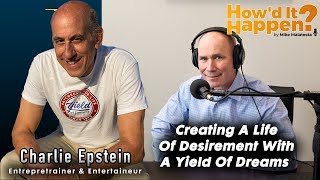
Podcast interview (How Did Happen Podcast) with Charlie Epstein in which he recounts his upbringing (musical family, entrepreneurial father), early interests in theater and athletics, and choice to major in economics while pursuing theater. He describes starting in life insurance under mentor Hillard Aaronson, building Epstein Financial and a 401k coaching brand, legal/mentorship conflict, and selling his firm to Hub International as a growth/exit strategy. Epstein also details creating a comedic one-man show 'Yield of Dreams' (with collaborators, showcases, and plans for a 30-city tour), the trademarked concept 'Desirement', and outreach resources (website/app, Desirement playing cards).
Chapters
You know, first three years I was getting out of the business every day and, you know, it was hard. It was hard. But he was there and he saw something in me that I didn't see in myself. And that's what a mentor is.
Hey, everybody. Welcome back to the How Did Happen Podcast. I am so happy to have you here today, as I am with every episode. And I am fulfilling my promise to you today as I do with every episode, to share with you an amazing success story, one that will inspire and activate greatness in you. My guest today is Charlie Epstein. Charlie, welcome to the podcast.
Thanks for having me on board, Mike. I really appreciate it.
Yeah. And let me tell you a little bit about Charlie and you kind of get excited like I am for the show. So Charlie's philosophy is do what you love and the money will follow. And he is an entrepreneur, although he has funny names for this that I'll let him talk about. Entrepr, Trainer and entertainer. I think it reads better than I could pronounce it, so I think I'm.
Just going to go with I'm just going to entreprtainer.
Entrepreneur. Okay. It says trainer.
Entrepreneur. Okay. So anyway, Charlie is an entrepreneur, he's an entertainer, he's an author, he's a podcaster, and a ton of other stuff. He has simultaneously straddled both worlds and successfully achieved his dreams that being an entrepreneur and entertainer, he brings the same passion and innovation to his work as a financial advisor, professional actor and best selling author. In all of his ventures, Charlie inspires individuals to live life with an infectious spiritual freedom for wonderment, joy, laughter and play to pursue their dreams and achieve the success that comes with living a life you love.
How can you not get behind that?
Amen.
Charlie is known nationally as the 401k coach, having trained more than 10,000 financial professionals how to best serve the needs of their clients. His two bestselling books, at least two, are paychecks for life. How to turn your 401k into a paycheck manufacturing company. Love the subtitle on that book. Charlie and Save America the secrets of a successful retirement plan. Most recently, Charlie has combined his acting and financial talents in the creation of a new one man show called Yield of Paychecks for Life. Working with a team of professional comedians, Charlie has created a financial theater experience designed to make money funny While illuminating the 15 myths of money that inhibit people's ability to achieve financial independence and live the life they've always dreamed of. Charlie's podcast is called I Believe it's called Same thing. Yield of dreams, Paychecks for life. Is that correct, Charlie? Yep. And I'm looking forward to being on Charlie's podcast later. So, Charlie, I start every show with the same question, which is, how did happen for you?
Well, I was born.
Okay, well, you get second for that. I had someone else tell me that as an answer out of 200 and some episodes. That's only the second one where it's been born.
When you come out and they hold you upside down and they slap you on the butt and you take that first breath. My mother loves to tell me that my first laugh was when they held me up.
Oh, is that right?
So that was my first big laugh being born. And I guess that resonated in my ear because.
I'm all about wonderment, joy, laughter, and play, which is the third word in my mantra, and discovery for discovery's sake. So, you know. But I also grew up in a wonderful home. My mother was an opera singer, and her father, my grandfather Henry Bertain, was concert master Radio City Music hall in the 1920s, and.
He taught violin. He was a painter. My home is full of his artwork as the rest of my members of my family. And my dad was an entrepreneur. He started his own women's clothing store in the 1950s called Deb's.
And his father, my grandfather, Max Epstein, had a very successful, thriving accounting practice in Hartford, Connecticut. So I was born with a divine discontent.
Entertainer. Entrepreneur. Entrepreneur. Entertainer. I've always been torn between those two worlds. So that's how I would answer that question.
And where. Where did both of those get started? I mean, we heard where the laughter started. That. That happened when you got hit on the album.
Growing up in a house where my mother was still singing opera and my grandfather was still painting and playing music, and growing up in a house where my father was working, you know, 16, 17 hours a day, building his business. And I would go, when I can remember, when I was 4 or 5 years old, going to the country club that my grandfather founded in Hartford, Connecticut, and he was. He and my grandmother, they were like king and queen. I mean, everybody waited on them. And I. He had a cigar and a black cup of coffee, and I was just in awe. You know, I think about you when you said you were 4 years old and you saw that construction company and you saw those trucks, and you wanted your. At 4 years old, you wanted your name on the truck.
That's right.
You know, entrepreneurs, we're all alike. It's like as children, boom. We immediately. But for me, it was, do I want my name on the business or do I want to be Billy Crystal? Bill Cosby telling the jokes.
And so growing up, I was the kid who memorized all the comedy albums and was telling the jokes and was in theater all through school and college. But I studied economics in college, so I was constantly.
Straddling both worlds. Always have, always will be.
And what was it? So let me ask you about your high school production days. What's the most memorable for you if you have one.
From your high school days?
So the first play I was ever in, I was a freshman in high school. My brother was a senior.
And my brother and his best friend produced and directed Kiss me Kate. Kiss me Kate is the story of a touring company putting on Shakespeare's the Taming of the Shrew. And the juiciest roles in that show are the two gangsters that are hired to make sure the leading actor and actress go on stage because the mobster has funded the production. And my brother cast me as one of the gangsters and his best friend cast his brother as one of the gangsters. And you get to sing this show called the song called brush up your Shakespeare. Start quoting him now. Brush up your Shakespeare and the women you will. Wow. I mean, it was a gift. And I was hooked. And then my junior year, I got to lead a music man, got to play Harold Hill. He got in trouble. My friend right here in River City. Why, sure. I'm a pool player, certainly mighty proud to say. I'm always mighty proud to say it. I consider it. The hours I spend with a cue in my hand are golden. Help me cultivate horse sense and a cool head and a keen eye. You never forget that stuff.
Is there anything that you do forget?
What was your name?
Yeah, okay.
Okay. Walked right into that one. Matt. Your producer called me Matt. So my name is Matt.
So what else were you into in high school, Charlie?
I did everything. You know, I have a daughter who's 26 and a son who just turned 20. He's in college studying musical production. And I say to my kids.
This is the time to experiment and try everything. I loved school. I was probably a unique creature. So I was in all the shows. I played saxophone in the jazz band and the orchestra. I played football, lacrosse. Finished second in the States in the high hurdles my senior year. I was editor of the paper and president of my senior class. I mean.
Underachieverable.
The world was my oyster.
Yeah.
Oh, and I was an ab student, you know, but it was all about the collaboration and Engagement with others. I didn't know that at the time.
Sure.
I wasn't. I needed Dan Sullivan to the strategic coach to pull back the curtain and say, let me show you how your mind works and everything.
Yeah. So high school was just a blast. Blast.
Okay, so you decided to go get a degree in economics when you went to college, Was there? I. I always. I always love talking to people whose parents were entrepreneurs because I always think to myself, okay, did you grow up working in the business and was it something that you liked?
So that's a good point. I. I didn't work in the business. I had the opportunity, but it was. I didn't want to do it. I mean, When I was 13, I started my own landscaping business in the neighborhood and was making, you know, $10. I was making $100 a week cash.
You know, this is 1966. 7 6. You know, this is like real money. That was a lot of money back then.
Yeah.
And then I started collecting and selling comic books and, you know, that kind of stuff. So.
I think, like you entrepreneurs, we wanted to be independent. We wanted to have our own money. I didn't want to ask my parents for money. We were middle class, so it isn't. I mean, we had a good life, But I intuitively saw my dad working hard trying to create something. I saw my grandfather working hard trying to create something. I saw my grandfather, the artist, just always poor and living, you know, And I said, well, I don't want that.
Right.
I want to build something and have that financial freedom, But I also want to be.
An entertainer. How do you do? How do you make that happen? You know?
And did you ask, Go ahead. No, go ahead, finish. Did you. Did you, I guess when you got to. To college, did you continue with the productions and did you do. I don't know if you did sports in college. I'm just trying to, like, what was your life like? Difference in college versus high school.
Yeah, when I got to college, I did. It's kind of an interesting moment.
I think everyone. You have these moments that are decisions in your life that then guide you somewhere. So here I was. I finished second in the states in the high hurdles. Of course, Massachusetts is a small state, but I thought, okay, I'm going to go off for track in college. Right. So I remember you have to try out. So I get to the tryout, and I'm getting in the blocks to run the high hurdles. And as I'm getting in the blocks, you want to talk about the gap, right?
Yep.
I turn and I look at the guy next to me, and his waist is at my ear.
And I turn, I look at the guy to the left of me, and his waist is above my head. And the high hurdles in high school, in college, they go up another five inches, okay? And I remember from the time I got in the blocks.
To the guy saying, races, take your mark, get set. You know, you're up. The gun goes off.
It's 1, 2, 3, over the first hurdle. 1, 2, 3, right? So 1, 2, 3, I sail over the first hurdle, and as I land, I stop dead in my track. So from the time I got in the blocks, the gun went off, ran the three steps, and ran over the hurdle. In my mind, I'm saying to myself, now think about this. If you even made the team and ran the high hurdles for four years, you're never going to the Olympics. You're never going to make any money in this. So what the frick are you doing? And as I hit the ground coming off the first hurdle, I just stopped in my tracks and I went, thank you. And I walked off and I said, can anybody tell me where the theater is?
And I went over to the theater and said, have you got a play I can audition for?
That's a true story. You just stop dead. And we're like, that's true story. That's. I've had enough. I've. Yeah, okay.
Like, I processed it all in the four steps of the.
Over the.
It's like, okay, right? This is not. And besides, how many. How many Jewish high hurdle Olympic stars are there? You know? And so I did. So I lived in the. I was an economics major who lived in the theater. Now I went to Colgate University, and they didn't have a theater major. And when my freshman year, I remember my dad calling me up and saying, so what are you going to major in? I said, well, I major in English and I'll minor in theater. And he said, yeah, that 50 cents will get you a cup of coffee. And I didn't want to disappoint him. So I said, I'll be an economics major on live in the theater. And he said, that'll work. Click.
See, maybe my parents should have told me that because I was an English major.
Yeah. That.
I got the greatest education. I look back on my education at Colgate. What Colgate taught me was. Is how to think.
Right.
How do you think?
I think I learned how to think, too, as an English major. Because that's all you do.
Yeah. Well, I take one philosophy, and I Took history.
I took my economics courses. But I also said, who are the best teachers?
I had a philosophy professor, she was an ex nun, and every week she would make us read An American Philosopher, Santiago. And then she'd pose one question like you did at the beginning of the show. And you only could write a page and a half. And if you wrote one word over that page and a half, you got an F.
And you had to answer in the mind of the philosopher. I'd never worked so hard in my life. It was hard, but I learned, you know, how to think. Yeah, we don't teach thinking anymore.
Right. I'll bet that came in handy too, when you wrote your books, because that's a big part of writing a book is you have to trim, trim, trim, trim, trim. Right. To get. Hopefully.
I was definitely blessed by my, by my education.
You mentioned Charlie collecting the, the art from your, from your grandfather thing was your grandfather and then the comic books. It made me think to myself, do you collect? You know, what else do you collect? I don't know if you ever collected still, still collect comic books or what else. But what, what, what do you collect?
That's a good question. I mean, I, I pretty much sold off most of the comic books. I have a wonderful Marx Brother memorabilia collection that I'll never sell. But I would say I collect experiences now.
Got it.
I don't really collect material items I love. I surround myself. It's interesting. I'm in my studio like you are, and I surround myself with my. I have my grandfather's violins and violin cases right here and photos of my parents and my grandparents. And so. And that's due to the show Yielded Dreams. But.
Yeah, I don't collect much. I'm not a material. I'm more into life and experience.
Okay. I like to ask people about that sometimes because some people just are very, very into, you know, collecting things. And it's always intriguing to me what makes somebody tick when it comes to that of thing.
I mean, you know, I'm in my office building and I love artwork, so I've got some really nice art pieces.
Okay.
But, you know, that's to create an environment and experience for, you know, people walk in and they go, oh, wow, wow.
That's got it.
Yeah.
So, okay, when you, when you got. Got through college, you. Did you start your business right away or did you continue to act after that? I kind of think you may have, but what was the path?
Yeah, well, I always thought I was going to go to New York right away and be A starving actor with all my starving acting friends. But my junior year in high school, I had to take a semester off because I studied abroad in London, the school economics. And so when I came home, I had to take a semester off. And like a good actor, I was waiting tables, you know, trying to save money.
And my father one day said to me, you know, you should make a list of all the successful business people here in town. Call them up.
Ask to take them out to lunch and ask them why they're so successful.
What a brilliant idea. So he helped me make a list of like, 10 successful people in town. One of them was a man by the name of Hillard Aaronson, who would become my mentor. He was a very success, very successful in the life insurance business. Business. And I was out to lunch with him and he said to me, you know, what are you doing right now? I said, I'm waiting tables at night. He says, what are you doing during the day? I said, I'm sleeping.
He said, why don't you come to work for me during the day? I said, and do what? He said, I'll teach you the life insurance business. Every kid's dream, of course.
Yes.
Right?
Yeah.
And I'm like, for what? I'm going to go to New York. I got it. One more semester. He said, no, come in one day a week. He was a great salesman. So I figured, what do I have to learn or lose? I can learn something. I ended up working five days a week for him for four months and waiting tables at night six nights a week. And when I went back to finish my final semester, he said, when you graduate, kid, look me up. I'm going to start a district office, and I want you to be part of it. And I was like, yeah, yeah, right. I'm going to New York. I'm going to be a starving actor. And for whatever reason, when I graduated, I.
I don't know, I was a coward. I was. Didn't think I would make it as an actor. I.
So I took him up on the offer and I went into the life insurance business right out of College at 21. It was awful.
Terrible.
But I had a mentor. I was thinking about you with Bruce Weiss. I don't know if he was your mentor.
Yeah, Butch.
I mean, Butch. Sorry.
Yeah, In a lot of ways. In a lot of ways he was.
Yeah, yeah. And so I think the most successful people had mentors.
So I was blessed for 14 years that I had this mentor in my life.
That, you know, when things were really bad and it Got shitty. And it was really tough. And the first three years, I was getting out of the business every day. And, you know, it was hard. It was hard. But he was there and he saw something in me that I didn't see in myself. And that's what a mentor is.
You know.
What were some of the things that you remember him saying to you that kept you going? Going, because. So if I understood it right, 14 years selling life insurance with him. Is that correct? Or.
So I became an agent. I became a mass mutual life insurance agent.
Okay.
And so the first three years I was doing with him life insurance, just, you know, I was building my own business and he was my mentor, so he would give me advice and guidance.
Yeah, sure.
And then. Then we branched out, started Epstein Financial. We went into the investment world, eventually the 401k world. So we built a pretty successful business that I sold this past June, as a matter of fact.
Congratulations.
Thank you. But when there was tough times, he would say, come on, we're going to go out to dinner.
And he would just listen. Or he would say, you should really call on.
This market, you know, go after physicians or go after entrepreneurs.
And then he just taught me a lot about sales and marketing. He was a consummate salesman, consummate showman. He really was real, real professional. And I wanted to be like him. So I started to act like him and dress like him and.
Yeah, okay. And it's.
A lot of times, I think, to myself, who have been my mentors, and I. I feel like I've gotten, you know, pieces from a bunch of different people, but I always. I always struggle to identify one person so clearly, like you identified.
Him. And it always makes me, you know, long for, you know, wanting to change that sort of. Maybe you could say I'm in the gap about that because.
It makes sense.
Yeah, yeah.
The biggest lesson, and I don't talk about this a lot, was our downfall.
So there came a point where the relationship was coming to an end, and he was a very controlling individual. And I'll make a long story short, but.
We had a situation that came up where I was invited to.
Referred into existing clients of his that didn't want to do business with him. And I said to him, well, I can't do business with you. Hilliard's done business with you. So let me go talk to him and see what we can work out. Now, for 15 years, he kept saying, my business will be your business. You know, you'll take over.
Sure.
I remember I walked into his office and I said, look, these were cousins of his. I said, look, I got referred into two of your cousins. They're really not happy with you. They don't want to do business with you. So here's the good news. They'll do business with me. So I'll handle the client and whatever new business is in, we'll share. And you don't lose the client because they're going to go to somebody else. And he looked at me and I'll never forget it. And he said, if you go near them, I'll take you out. I said, what? He said, I'll take you out of the business if you go near them. I said, what are you. I thought he was kidding. I said, what are you talking about? This is what we've been talking about. You know, someday you're going to hand the business over to me. I said, let's get started. So it was that line in the sand. And he threatened me. And I remember walking out of his office and I said to myself, you know what?
F you.
I'm drawing the line in the sand. So I called him up and I said, let's do business. And then the proverbial shit hit the fan. And I grew a set of balls that day that got bigger. And eventually what happened is the general agent who was running the massmutual agency in town, and you have to understand, by this point, I was the number one agent for this agency. So I had a lot of cachet. And I went and I called him up and I said, I need a place to move to. Now I'm in an office that my mentor had set up and there was another young agent. And literally in the middle of the night over the weekend, we packed everything up and moved to another space.
And then I went to the general agent. I said, one more thing. Either he goes or I go.
So you turned the tables on his threat? Basically.
So the general agent terminated his contract. And then he sued the general agent for age discrimination and stealing me. And we had to go to court.
Now, it ended badly.
But I acknowledged him every day for the good he did in my life. As a matter of fact, he's in the show, my show, Yield of Dreams. And I had to call his son up, who I hadn't spoken to in a hundred years, to get a picture of his father. And he said, why are you doing that? I said, I know things ended badly, but he's always was my mentor and he made a huge impact in my life and I'm gonna recognize him and I'm Only gonna say good things about him in the show. And his son sent me this beautiful picture of his father that I could use in the show.
But it was a defining moment where, like I said, I grew those big set of balls and I had to go to court and we won hands down. But I look back on it, and I said I learned the best from him and the worst from him and came out that much better. It's an amazing experience.
Okay, well, I'm going to give you some.
By the way, you're the first one I've ever shared that story with on a podcast.
Well, thank you. I'm so. I'm honored by that. And I'm also kind of blown away that you would have.
You know, told this very glowing story about your mentor and never brought up any of that other stuff. And I feel like.
A lot of people in your shoes would skip the story, skip the first part of the story, and they would make up something else, because you wouldn't want to give that credit to someone who ultimately, at least it seems like, may have betrayed.
All that was threatened. You, of course. Yeah.
And then went after me and tried to get me terminated and tried to get my license revoked. I mean, it got nasty. Now, you're right. Most people focus on the bitter side of the sweetness. Right.
But I guess because I'm Jewish, you know, we have an expression in Judaism that sweetness comes from the bitterness of life.
Right.
You know, that's what Passover is all about. And I think that's why his son was surprised. His son even said, you're not going to say anything bad about my father. I said, that part doesn't need to be told. The part that needs to be told is the impact that he made as my mentor. But I thought about it today, because you and I are talking about entrepreneurialism, and it takes grit, guts, and courage to be an entrepreneur. I can't wait. When you're on my podcast, we can talk about it. And.
I watch what's happening politically in this world, in this country, and how.
Negative some politicians are about entrepreneurs.
Because they're ignorant, because they've never been one.
Right.
And they've never had the guts, the courage and the grit to create something for nothing, from nothing, and create value and go through that struggle that you went through and I went through and other entrepreneurs went through. And so they don't value yet. We are the backbone of America.
Yeah.
And think of our founding fathers. Jefferson, Washington, Adams. Every one of them was an entrepreneur. Every one of them was an entrepreneur. The founding fathers were all entrepreneurs. Not one of them was a professor of something or a politician of something or, you know, I mean. Yeah, well, Matt Adams.
Well, not just a lawyer, but not just a lawyer.
He was a lawyer that ran a family business. You know. You know, at any rate, I. So I think what you do at podcasting and other people are doing, you know, interviewing entrepreneurs is huge.
I was saying, talking to my wife the other day about. Because I do agree with you that there's this narrative, right, that if you're a successful entrepreneur or successful anything, that somehow you got that by taking it away from someone else. So it's exactly the opposite of what we learn in strategic coach and abundance360 and all these other things, right? You create more, you don't take away. But there's this narrative that I think a lot of people and a lot of politicians prey on, which is we're going to create this story about how if you're successful.
You'Ve done something that's been wrong or taken away from someone and on top of that, you don't pay any taxes. And it reminded me of the last couple weeks, Elon Musk has been selling these shares of Tesla. And he said, well, why are you selling the shares? Well, I got a tax bill, billions of dollars of taxes. And I think, where's the front page story about how much taxes he's paying on whatever his options were? And that's just one example of there's always a story written about someone who didn't pay any taxes and that's like a headline. But I don't know, I never got away with that, Charlie. I already. I always had to write big checks for taxes because that's part of the game.
I'm about to write a seven figure check next April for taxes.
I've been there, unfortunately, but that's the way it goes. Painful.
It's painful, but we do it.
So, Charlie, I wanted to ask you when this, you know, you. The first couple years in the life insurance were. Were miserable, sucked I think is the word you used. And I'm wondering, you know, it sounds like this wonderment, joy, laughter and play is something you grew up with, but did it. How did it. Did that experience take it away from you and then you had to get it back somehow?
I think it's your baked in DNA.
So wonder man, joy, laughter and playing discovery for discovery's sake has always been in my blood. I mean, like talking about my high school experience, I mean, look at everything that I did. I did it out of wonderment, joy, laughter and play. Doesn't mean it wasn't hard playing football. Doing double sessions in the heat, you know, was hard. You know, practicing your saxophone scales is, you know, it's grit and hard. It's not exciting all the time, but you do that so you can get to the good stuff. And so when I started in life insurance business, I had nobody to call on. I was 21, I was right out of college. I didn't have a built in market, so I was cold calling every day. I was the cold call king.
Yeah. It was an eat what you kill sort of thing.
Yeah. So.
10, three, one. You make 10 calls, you get three appointments, you make one sale. That was my mantra. 10, three, one. So I just decided if I made more phone calls than anybody else, I'd be more successful. It's the law of numbers. And after you get through that first three years where you build up some momentum and now you've got a clientele and you're working off of referrals and you're becoming more creative with marketing and you start going, what can I do to give back to my community? And I created a family business center at the University of Massachusetts, which was to help family businesses. And out of that they came to me because they saw me as an expert in that arena. So.
I have an expression. I don't think it's mine, but it's the hard that makes it great.
I mean, if it was easy. Right. Everybody would be doing it.
Right.
So what I say 85% of the population misses out on is when it gets hard, that's when they go home.
I love when I.
And entrepreneurs, you know, the other 15%, when it gets hard, that's when we know we're getting close to success, you know.
Yeah. When it gets hard is right.
Yeah. One more no means I'm getting that closer to the. Yes.
Yeah. And it's the, you know, people.
Say all the time that, you know, maybe entrepreneurs are born and they're like, you know, it's different. And I think there may be some of that, but I think really for most of us, what it comes down to is like what you just said, you know, are you going to stop like 90% of the people or 85 or 95 or whatever percentage you put on it or. Or are you just going to keep going? And the ones that keep going, you know, that. That just being on the path helps you figure out something that getting off the path wouldn't.
Yeah.
At least that's how I feel.
I tell young people who are starting in business or doing anything, I said, you know, no. Never means never. It just means not.
Not yet. Yeah, yeah, yeah, yeah. Good.
Good, good. So.
Can I ask you about how you came to the decision to sell your company? Because I have my own story that we can talk about at some other point, but it's never.
Well, sometimes it's an easy decision if your back's really up against the wall or something, but that doesn't seem to be the case for you. And your name's on the door. You're the 401k coach. I mean, you've got this whole brand about Charlie Epstein, and it's tied to your company. Now, I know there's other parts to it. I'm not saying it's a sole thing, but it's still.
It's a challenging decision.
I think it is. I looked at it 20 years ago. I think it's a little bit different. And we'll get into it when I have you on my podcast. So, for me.
Selling the company had a number of positives. So most people sell to get out. It's a. You know, it's a. I'm going to get out of the business and sail off into the sunset.
The way I sold. It's a growth strategy. So we got acquired by a bigger financial organization called Hub International.
And for the last several years, I tried to acquire other financial practices and was a dismal failure at it. So I flipped the switch and decided, well, I'm not very good at that part, but I love to collaborate. And I was looking for how I could take some chips off the table, right? Get some money, but also.
Tap into more opportunities. So by being acquired by Hub, they're mostly a commercial insurance company. And the commercial insurance companies that they bought in town were entrepreneurs that I've known for 30 years and done business with. And they were knocking on my door and saying, hey, we need somebody like you in town to handle financial advice, financial Planning, money management, 401k, because we don't do any of that. So there was a beautiful fit for us to tap into bigger opportunities. Okay, so it's a growth strategy. It also means I don't have to be an employer anymore and deal with all the employee stuff, although I do. It was also a way for my employees to have a bigger future because they're all 30s and 40s, and my wife and I are in our 60s, so they're not worried what's going to happen when the old folks go away. So they've got upside and can see the growth. And nobody left. They all stayed. And we still run our operation, we still run our P and L hub is like, we don't know how to run your company. Just make it better. And we'll take a lot of the bs, the back office off your shoulders. So it's really exciting. And it also provided me more freedom to pursue my one man show and the other things I love to do.
Okay, well, I like that. Thank you for explaining the rationale because that's.
I had a benefit company that I sold off about 10 years ago and that was a pure sell it to get rid of it.
Okay.
You know, like you did with your waste management company. You sold it to get out of it. Yeah, yeah. I mean, I think, you know, there's the entrepreneurs that build their company to sell it for the money and then sail off into the sunset. But as I said, you know, for me it was, I could keep doing this until they carry me out in a box like my grandfather, the accountant.
Right.
Because I have, you know, my one man show and my entertainment world and my other pursuits.
So let's. Oh, go ahead, finish Charlie. Okay. The. The.
Yeah, sounds like a nice situation. So with. With yielded dreams.
This one man show, how long had you been kicking that idea around? And was it like, you know, like those goals I was talking about in my, from my strategic coach days where I had these goals that I wanted to accomplish and I wasn't getting to them because I would always put the excuse of the business in between. That's really what it came down to. It wasn't because I couldn't do them. It's just I made excuses for myself and I wanted to get to those. So I'm curious for, is that something similar or did this just sort of pop into your head one day when you were in your discovery mode and you're like, okay, I'm going to move forward on that.
This is a great question. So, you know, I've been doing the 401k coach for 12, 13 years and the first 10, 11 years were unbelievably successful because we were the only one in the space doing anything like that. You know, then everybody started getting into the coaching business and my business and it was like, you know, it plateaued and then, you know, I should have stopped the coaching company three years ago.
Okay.
You know, you hang on, your name is on it, it's your identity and you know, this is who I am. And you know, it just got. I didn't want to do it. But I kept doing it. And finally we digitized everything and made it a virtual course before COVID But I was pretty much done. I just, I was done. And I knew I wanted to go back into performing.
And so I started ruminating that, you know, I'd go back and do stand up because I had done stand up in New York City. And that's, you know, you don't need anything other than, you know, a place.
To try out material and balls, which you got from.
Yeah, yeah. So when I finally, when my CFO said, you're losing so much money in your coaching company, what the frick are you doing? I went, oh, thanks. You know, thanks for the wake up. And I said, all right, we're gonna, we're gonna shut this puppy down. That was freedom. Because now I'm gonna have all this free time to create.
Yeah.
You know, the business was running, growing, and, you know, that I could do with my eyes closed. So it just so happened, you know, I'm now ruminating I'm going to do stand up. Maybe I'll create a one man show. And I'm at Abundance360, January 2019.
And I made a list of people that I wanted to connect with, and one of them was Mike Koenigs. And at the first networking session of the first day, of the first morning, who sits next to me but Tinseltoes himself? Mike Koenigs. And I said, hey, you're one of the people I wanted to meet. He goes, well, who the hell are you?
And we had lunch together and I started telling him about, I want to do this thing. I got this idea, stand up, this one man show. So talk about collaboration. So Mike, we kept in touch for about six months, and he finally said, look, I got an idea for you. If you pay me this stupid amount of money, I'll pull together three comedians, you'll fly out to my condo in La Jolla, California, and we'll hole up for two days and we'll see if we can create your show.
And I like to say to people, you know, if you write a big enough check, you know, how big of a check do you have to write to make yourself really scared?
Right?
Like scared.
And that's what I did.
And yielded dreams was born.
And so if you.
Well, you described yourself as perhaps being a coward back when you were, you know, thinking about going to New York and being a starving.
Actor. And then you. Do you think, do you think if you hadn't run into Mike and he didn't have this skillset and this collaboration mindset, do you think you'd still be.
I don't want to say dragging your heels, because I don't know if that's what you were doing, but it sure seems like you had this thing in your mind, and it was. And of course, once you have it, what is it? What does Dan say? When your brain is open to something, your eyes and ears find it or something like that, and it sounds like.
Only see what your mind is focused on.
Yeah, yeah, yeah, yeah.
Well, it's interesting you asked that question. So the first thought I had, as you asked it was, what does it matter? Like, the answer to that question is meaningless because it didn't happen. But without being rude. I don't mean to be rude. It was. My mind's immediate reaction was like, well, that doesn't matter because I did take action.
It's sort of like people ask me the question, Charlie, do you think if you had pursued your acting career right out of school, you'd be a successful actor? And I know the answer. Yes.
Yes. Right.
But in 1988, I started pursuing my acting career, and I was successful at being a paid actor. I wasn't a movie star, but I didn't ever want to be a movie star. I just wanted to be a working actor.
Right.
I wanted to get paid for my craft. So I don't believe there's. I don't think you do either. There's no accidents in life.
Right. I wrote down, I want to meet Mike and talk to Mike about this possibility. And God, Swami the Divine, put him right next to me the first morning of the first session of the first day. Boom.
Now, it took him six months to reel me in.
And to get me to write the check and have the balls to fly out to California with nothing but what was between my ears and spend two days, from nine in the morning till nine at night, working with three comedian strangers and Mike and Marissa. And we created that outline of that show in those two days, and we laid the foundation. And then we met again in January of 2020. Then Covid hit. I built this studio that I'm in and started rehearsing the show in the studio. And finally this past August, we launched the show for the first time to live audience. And it was unbelievable beyond my wildest dreams.
So it exceeded your expectations right off the right out of.
I mean, I knew we were onto something.
Yeah.
And I just hired last week a playwright out of New York to help me rewrite the show to make it even better, because I'm going to take it on a 30 city national tour. That's my goal.
What do you think it needs to be better?
Oh, well, both nights we had like 100. The theater held 110 people, so we were almost sold out. Both nights we got 120 surveys written, surveys back from my audience. We did a talk back. Yeah, you know, there's an expression, less is more. So we just need to hack out a lot of the fad, a lot of the repetition. And as she said, more drama, less talking.
You know, more drama, less talking. Okay.
The best, you know.
Yeah, she said you need more mystery. She's a really, really great dramatist. And I'm having. We just started working together this past week and I'm just loving the way her mind works, you know. So with the comedians, it was all about, you know, jokes and storytelling. And with a playwright, it's all about letting the performance reveal what you want the audience to learn. So it's a real shift. So I'm actually scared again. I'm like, I'm like, oh, God. I just figured out how to do it this way and it worked. Now I'm back on that skinny, tight rope with no net.
Right. The skinny branches, I've heard you call it before.
I love being in that place. Okay, so if you ain't scared, you ain't alive. If you're playing it safe, you ain't alive.
So 30 city tour. When do you. Are you touring now with it? You mentioned the two sold out shows, but. So you did the two shows and then you.
It was really what I called a showcase. Invite guests, clients, get feedback, you know, test on, check writers, as Dan says. So now we've taken back that information and now we're building out, you know, rewrite the show. I'll do it again either January or March to a live audience test. Right? Rinse, wash, repeat. And then if we nail it, then we'll figure out how to go across the country and then get a Netflix or Amazon or an Apple show. And then I have an idea for a TV show that's never been done before.
Nice.
Nice. How do people see it or find out more about it?
Charlie, thanks. So your viewers just go to Yield Y I E L D. Like Field of Dreams. Go to Yield of Dreams.
And Mike, we have an app, the Yielded Dreams app. It's on the website. You can just download the app and there's a whole bunch of free goodies on there. There's my Myths of Money workshop where you can learn about all the Myths you have about your money that prevent you from achieving what you want. There's a documentary film by Nick Nanton, who's won 22 Emmy Awards for documentary film about the making of the show, which is a hoot to watch.
And give us your email and we'll keep you up to date, you know, what cities the show will be in and, you know, we're building out money myth workshops that we'll take around the country to help people get beyond their myths about money. I tell everybody my ministry in life financially is to ease your pain and suffering about your money. Because people are in pain and suffering about their money.
Yeah. And also in abandonment about it or some similar word where they just ignore it. Right.
It's unbelievable.
Hopefully it's there.
The way people relate to money is always amazing to me.
Right. Well, Charlie, by the way, Nick Natten was on my show. Have you had him on your show? Yeah, he's. He's fun. He is. He's really fun.
Very dear friend.
I'm going to watch that documentary. I didn't get a chance to do that yet, but I'm going to. I'm going to find that and watch it. Charlie Hallis, do you want people to get a hold of you? Is there any other way that you. I connect?
If you want to communicate with me, go to Charlie. C H A R L I E @ yieldtodreams live is my email if we can be of help and I also give your audience a free gift. You can download my desirement playing cards.
And there are a set of cards that help you identify your.
Three biggest priorities in life right now. Your biggest desirement, dreams and your myths about money. So just go to yieldedreams Live and you can get your free.
Set. Desirement, I really like. That's a great. That's a much better word than retirement.
Desirement. I registered and trademarked.
It. Got it. Well, Charlie, this has been a very.
Awesome first conversation. I'm so happy that you joined me today and thank you so much for coming on and sharing your story, sharing something new about you that you hadn't shared on a podcast before. That's always great. And just congratulations on.
Being a person who's committed their life to wonderment, joy, laughter, play and.
Discovery. I always forget the last one. Discovery. Yes. Which I equate to curiosity. But so, yeah, it's been a great podcast. Thanks so much for coming on. Really enjoyed.
It. Thanks so much for having me on and look forward to having you on our.
Podcast. Sounds.
Good.
Peace. Thanks for listening. To this episode of the How Did Happen? Podcast, where we believe that success doesn't happen unless you make it happen. You can subscribe to the podcast on Apple Podcasts, Google Podcasts, Stitcher, or wherever you like to listen. And while you're there, please please rate it and leave a comment as well. I'd love to hear your thoughts about the show, ideas for future guests, or whatever you'd like to share. And of course, you can always find me at mikemalatesta. Com. See you next time. Thanks again for listening to the How'd It Happen Podcast.