A simple strategy for handling "difficult patients"
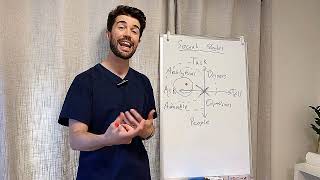
Chris from Patient Centered Training breaks down the social styles model, which sorts patients into four types based on assertiveness and drive: analytical, driver, amiable, and expressive. The framework helps healthcare workers understand why certain patients clash with their communication style and how to adjust.
You. Hey, guys. Chris From Patient Centered Training and today's video, I wanted to go through some brand new content I'm putting together for this upcoming course. This is content that I've never taught before. This is brand new, something that I found useful in my personal life for a while, but also with patients. And it's a really helpful model just to help you understand patients, to help to tailor your communication, but also how to deal with those difficult patients we all get sometimes, ones who just seem to rub us up the wrong way. So you might remember last time we talked about one way of categorizing patients that I don't do anymore, and that's the learning style. So that's visual, auditory, kinesthetic. We talked about how although it can be useful and you might get some results, you can end up pitching your communication the wrong way. Now, this is called the social styles model. This is backed up by a lot of research. It's been heavily studied, and it's been shown to be a very effective way of not just understanding people, but then learning to tailor your communication. And the way this basically worked is they studied people, they looked at people in interactions in various social settings over a long, long period. And they crunched all the data in terms of how they could analyze them and what kind of qualities they could give them. And they found that two criteria came up pretty reliably. Two spectrum. And one of those is what they call assertiveness, and the other was what they called their drive. Now, the thing I want to be clear about this is this is based on observable behavior. So this is not a model of personality. It's not telling you what somebody's, you know, innermost feelings and world experience is like. It's just looking at how they act. And that's really helpful for a couple of things because it tells us, first of all, it's quite simple and it just tells us, based on how this person's interacting, we can look at their behavior without having to try and psychoanalyze and read their minds there. So you can pick this up once you get skilled at very, very quickly with people. So the idea is you can plot people somewhere on this chart. What they call assertiveness, they don't use quite the way we would use it. They called people either ask based assertive or tell based assertive. Tell based assertive are people who are prone to being quite fast paced, just going, I'll tell you what I want to do. I'll make a choice and I'll stick with that. I might tell other people what to do. So they tend to jump in with both feet. The ask based people, they're more slower, they want to gather more information before they make a choice. So they tend to take a bit more time. They're prone to asking more questions and finding things out. So you can plot people somewhere on that spectrum. The other one is their drive. So are they driven to accomplish a task or are they driven to understand the people around them? Now people are going to sit somewhere on the spectrum. What we end up is four rough boxes. They gave each of these boxes names. The names are quite useful because they help you identify the behavior and go, ah, that looks like that box. So the one over here, this is what they called analytical. So the analytical people, they're prone to asking lots of questions as you might guess. And they're very task driven. So these are people. The stereotype might be a scientist for example. This is somebody who really wants to understand the problem at hand. But it's going to ask quite a few questions. First of all, the. So these patients might have quite a few questions for you. They respond really well to being given enough information and time. They hate being rushed and they don't want to be talking about the emotional impact of things a lot. They want to just focus on the task at hand. So people who share that task based focus but are more tell driven, these are called drivers. Now the drivers, the stereotype might be a business leader or a CEO. They tend to make very good leaders because they're quite good at going in and making decisions and being quite taking initiative there. And again they're very task driven. So you know, the head of a big company or some sort of like military leader or somebody who's a real go getter. That's kind of a stereotype view of it. Not everybody's like that, but they tend to be a bit faster. They don't want long winded explanations of things. They want to just know what's wrong, can we fix it, how long will it take? And again they're focused on really the task at hand. They want to just know what you can do for them and how you can help them get over this problem. Now the other end of the spectrum in terms of drive, we've got the ask based people who are people interested. These are called amiables. Now amiable people similar to the analyticals in that they want to find out things again, they want to gather information, they don't want to be rushed, they want to take their time to come to A decision, but they're much more interested in the people around them. These are often people who want to know about your weekend and they're not making small talk. They generally want to know how you've been because it's really important. The person they're working with is somebody they understand. They're sometimes less focused on actually getting to the task at hand. They want to really understand you before they're going to talk too much about how you can work together to solve the problem. And again, they're ask based. So you don't want to rush these people, but equally you want to just take the time to sometimes let them know that you don't have to go crossing any boundaries, but making an effort to really make them feel welcome and at home. They also respond really well to being told that you're really happy with how they've done. If you say, oh, they're a really great patient, you've done really well at your exercises, well done. I'm pleased with your progress. Those are the people who kind of sit up and smile a bit. It means a lot to them because people matter most. And then the last ones we've got, the more tell based, assertive ones who are interested in people. The these are called expressives. So the expressives, they're quite charismatic people, so they tend to talk about themselves quite a bit, but they will talk about how things have been for them, what they've been up to. They're often the life and soul of the party. They're people. If there's a few people talking, they're often the ones talking about what's going on. And again, they want to make sure people are involved, they want to make sure the whole team's working together. They're not so interested in focusing directly on the task as the people and they tend to be quite quick decision making. They want to get on with it and move on to the next thing. So these are people who will often tell you a lot about their weekend and you want to at least show an interest in that, otherwise you risk clashing with that style a little bit. But again, they're quite fast paced, they're quite extroverted and they don't want to be bogged down in the details for too long. They want to be able to get in and focus on that. So hopefully as you've been going through this, you can start to think of maybe one or two patients that you might have had that would fit in this, but also yourself. And it's important to know where you are because if I know my patient's a driver, I know I should be short and sweet and to the point and focus on what they're here for. Equally, if I know they're amiable, I need to take an interest in them. I maybe need to let them take a bit of an interest in me and give them a bit more time to reach a decision and make sure that they feel like they've got all the information and is there anything else we can do to help them? Is there anything else they wanted from today's session? You know, give them a little bit of that slower pace there, allow them to ask for things. But when it comes to difficult patients, what often happens is that these are the people who clash with us. Now, if I'm an expressive and somebody who's a driver comes in, there's going to be a bit of a clash because I might feel like they're focused a bit too much on the task and I really want to talk about more the people side of things. But we're going to both agree that, okay, we're going to be quite fast paced. I'm going to tell them what to do, they'll tell me what they want to do and move on pretty quick from there. Equally, if I was a driver and an analytical person came in, I might find them a little bit frustrating. They're asking me lots of questions, they're taking their time. But we can at least agree that we're focused on how to get them better, what that task is. The clash comes when it's both. So if you, for example, are an expressive person and an analytical person comes in, you're going to find that even harder. Most of your difficult patients are going to be here. They're going to be people you're frustrated with because they keep asking questions. They don't just want to get up and do it, they keep stopping and stalling and you're trying to talk about the impact it's going to have on their life and you're going to talk about other patients you've seen and they're just going to ask about themselves. So there's going to be a clash there. Equally, if you're amiable, often drivers can appear quite rude because they're very direct, they're quite blunt and to the point. If you're a driver, those patients come in, you probably like that, you go great. Blunt to the point. We can both talk that we can talk normally and get on with it, but amiable people would find that a clash. Equally. Driver DCs find amiable people quite hard to deal with sometimes. So you can see how these difficult patients come in and you can start to sometimes bear in mind that maybe they're not trying to be difficult. Maybe they just have a different social style to you and maybe that style is a bit of a clash. And what you can then do is yourself. You can start to build the muscle of stretching your zone. So you might be somebody who is, let's say over here you're very ask based and you're moderately task based. Now when you're really stressed out, you're just going to go to here and this is all you're going to be able to do. When you're in a better space, you're going to be able to move around here a little bit. So you can sometimes drop into the amiable zone and you're going to find it a bit easier to get on with these people here. What you can do over time is you can stretch that comfort zone further. Ideally get that to the point where you can actually sit within any one of these four at a time. And that means that even if you can't go all the way here in the expressives over there, you can at least understand them and you can get at least closer to where they're at. And you can be more flexible both in your interactions with patients and your interactions outside of practice. That's the beauty of communication skills. It's something I say in the live seminars all the time, is that these are human to human skills. These are not something that you turn on in clinic and turn off when you go home. In fact, if you do that, you won't do as well in clinic. So you can start to think if you're maybe in that analytical zone, you might try to be a little bit more tell based, assertive, maybe take a little bit more initiative, try to reach decisions a little quicker or make a choice there. Or you might try and take a bit more of an interest in people. Try to let people talk about their own weekend and actually ask some questions. Equally, if you're expressive, you might start to try and slow down and let people ask questions. Maybe slow down and ask questions yourself rather than being rushing into things and being so impulsive. Well, you might understand that not everybody wants to talk about the emotional aspect of things and the human side of things and they want to sometimes just focus on the task at hand. So I realize I've made a bit of a mess of this with that, but like I said, that should give you some Ideas on how you can both build your own muscle and stretch your own boundaries with things. And also understand that those difficult patients, they're not always trying to be difficult, sometimes they just sit in a different zone to you. And understanding that's the first step towards actually better communicating with them. So like I said, this is brand new stuff in the course. We're going to dive into this, into much more detail, specific things to look for with patients, how you can know if somebody's in one or the other particular ways you might need to modify your communication, your give your recommendations and ways that you might clash with that and also with other members of your team. So I'm really excited about this. It's going to be launching very soon. I'll be sending out some more info on when you can get that, when enrolment will open and close, and also some exclusive discounts. This is going to be the lowest price you'll ever get this course for. It's going to be really interactive. It's going to be a collaborative effort as well. So the participants who join, and it's going to be a limited number are going to help craft the course and actually help to get involved to make it the kind of course they want it to be. So it's a once in a lifetime opportunity for this. I'm not going to be doing this exact way of doing it again. And like I said, some brand new content. So if you're interested in that, you can register for my newsletter. It's the best way to find out about this. But I'll have more information coming soon. And I'm going to share another video in a few days that we're going to talk about once we understand where the patient's at and their behavior, finding out what it is they really want, just beyond getting rid of their pain, getting rid of their symptoms. And I'm going to take a deep dive into this. You've probably heard me talk about goal setting and finding their goal and things like that before. This is going to be a longer video. It's longer than today's one. And we're going to really dive into the nitty gritty of how to find it, what you're looking for, what to do with that information, how you can use it to improve both their likelihood of following your advice and their motivation, but also just to frame your care in a way that's much easier for them to understand and feels a lot better to talk about as well. It's one of the subjects I'm most passionate about. Really looking forward to showing that. And I'm going to put that video out for free, and it's going to go through loads and loads of detail. There are lots of things for you to use with your patients, so keep an eye out for that, as always. In the meantime, if you've got any questions about social styles, you can ask me equally if there's anything you want to know about the upcoming course. I've had some people asking questions about it already. By all means, get in touch. I can let you know any information you want to know. Keep an eye out for that because it's going to be launching fairly soon. And like I say, sign up to the newsletter. You'll know exactly where to find it when you want to find it. All right, then, Hope that's been helpful. Take care, guys. We'll catch up soon.










