Are You In The Lonely Chapter?
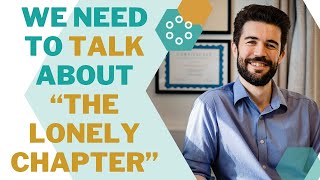
This is a YouTube video titled "Are You In The Lonely Chapter?" created in January 2024. The content is a monologue or talk where the speaker reflects on the concept of the "lonely chapter" in personal and professional growth, particularly in the context of changing practices in chiropractic care. The speaker shares personal experiences, references a podcast by Chris Williamson, and discusses the challenges and isolation often felt during transitional phases of learning and change. The video also includes a promotional message about enrollment closing for a program called the Patient Centered Tribe.
Are you ready for the lonely chapter in your journey? This is a phrase that I heard recently. I was listening to a podcast with Chris William. Being into it, I thought this was brilliant. I thought it was so true. It really resonated with me. And it's something that no one really talks about. And this is the fact that when people talk about the journey they went on, whether it was their origin story or how they achieved something. He said no one ever. He talks about the middle lonely chapter. And he explained what that was. That, you know, what often happens is people will talk about how they had this problem, they were struggling with something, and then they talk about the solution. They found that it's kind of fast track to the end of like that. I implemented that solution and got it working and everything was great. And now I'm so much happier and I'm so much better. If you've spent much time in the coaching space, you've seen people do this. I'll admit I've done it as well because I hadn't really thought about. There was this lonely chapter in the middle. And the lonely chapter is essentially the bit in between deciding you want to make a change and successfully implementing that change. And he said, it's the lonely chapter because essentially what you do is you leave the old way of doing things. And that may mean that you leave a group of people, you go, we were all doing it this way. I wanted to do something different. So I set off on my own. So you're now alone, but you haven't yet successfully mastered. You haven't put everything into place. And I'm doing it now. I feel great. There's this middle ground where you're having to learn, and that learning is the lonely chapter. You tend to feel a bit alone. You tend to feel a little bit isolated. You've stepped out of your comfort zone, but you haven't seen the success yet. And this can be quite an anxious place to be and can be quite a stressful place to be. You often find yourself going, is this the right thing? Am I doing the right thing? Is it going to work? Have I made a mistake? What do I do? You can feel a little bit lost now. I had a really big, big experience this myself many, many years ago. I hadn't been out in practice that long, only a few years, I think, and I came across pain science. And back when I graduated, we didn't. Pain science wasn't really a thing. We didn't really talk about that. I was still trained in a fairly biomechanical model of pain, let's say. And we talked a little bit about psychology, but kind of, you know, some people might fake it because of insurance and some people might get dependent on you because they're a little bit of a dependent person. That was kind of it. And I stumbled into pain science early, like before it went mainstream. I found this forum of a bunch of very extreme, mostly physiosimo ts, like real extreme, like manual therapy is just a bad thing and you shouldn't be doing it. You know, they drank the Kool Aid on like way too much pain science. But the problem was, is that I went in there, I was kind of disagreeing with stuff, but then everything I disagree with, they had a research paper that kind of like blasted apart that belief and blasted apart that belief. And as a result I realized, oh man, a lot of the ways I thought I was doing stuff is wrong and doesn't actually work. And I had what I would call a dark night of the soul because I was like, oh, my old paradigm, my old beliefs, they don't really work. They're talking about doing things differently. But of course I couldn't do things differently. I didn't know how to do that. And in all honesty, that period, I would say it probably took me six months before I felt I got my confidence back. And that was six months ago. Oh, I shouldn't be doing this. And am I creating dependency on everybody I recommend maintenance care for and like, am I actually like creating more issues long term by adjusting people? Now I was lucky that I found a mentor who helped me get out of that and get me out of a hole. And it's actually one of the only mentors that I've worked with for a number of years now. Most mentors, after about 12 months, I've realized, okay, I've learned what I need to and you're actually selling a simple solution like I talked about before, I'm going to move on. Rob Pape, this chap is he showed me a way to actually approach MSK care that was very, very different and helped me get out of that hole. However, those six months were incredibly lonely because I felt like other people didn't understand me. I felt like my colleagues, you know, I was doing stuff the way they did before. They weren't really open to this idea of maybe we're doing everything wrong. And these people who shatter the beliefs, I still wasn't one of them because I didn't know how to do it, I couldn't actually do it. And in fact, I don't now do what they recommend, which is just go completely hands off. But it was this lonely chapter in the middle. And at the time, I was questioning my whole career. I was questioning my whole. Because I wanted to be a chiropractor since I was about five years old. So, you know, I was questioning my life. It's. It's not too melodramatic to say that, and that's because I didn't know about this lonely chapter. And Chris Williamson, he talks about this in the podcast. He says, this lonely chapter, it's not a bug, it's a feature. It's actually a necessary stage of development when you're changing the way you do things. Things will get worse before they get better. You know, they talked about this a lot with professional golf players, is that they'd hire. They get really good working with the coach. They'd master this one thing, and then to progress, they'd hire a new coach and the newer coach would change the way that they swung the golf club. You can tell I'm not a golfer. But they would change their technique. And temporarily they would get worse. They would have a period of time, it could have been weeks, months, maybe even a year or so, where their skills dropped because they were learning something new. They were in that lonely chapter. They'd left what they knew that was working. They hadn't got to the point where they'd got to something that was even better and it temporarily went down. And that's very, very normal. They know this in the pro golf world. A lot of us don't know this in the chiropractor world, but when you make a change, you will end up in that lonely chapter. So I say this because it's that time of year where many people are trying something new. You know, we're getting it well into January now. You may have got some resolutions, you're trying to do something different. Maybe you're working with somebody, maybe you're. You're trying a different approach. If you feel like you'll get your frustrated a little bit alone, just know that's not necessarily a problem. Now. Sometimes it is. I can't promise that that's perfect. It's always a good sign. But know that it is part of the process. And just by knowing that, it can help reduce some of that fear of am I doing the right thing? So like I said, if you find that, you know, you are not sure, and you're looking at maybe the person you're working, the people who've inspired you do it, you're looking at them successful, going, oh well, they talked about how they were down here and now they're up there. I'm neither. Is there something wrong? Not necessarily. So what you should hopefully see over time and I would set a reminder to check back in. You should be in a couple of months time, not feeling so lonely. We do want to see that improving. But don't worry if you are hitting the lonely chapter there, it's normal, it's part of the process and over time that's what will lead to you learning more effectively. So if that's where you are, have a little think about that. If it's something you want to do in the future, you're going to change. Just be aware of that lonely chapter because as Chris said, no one talks about it. And I thought that's true. Actually, we should probably talk about that some more. So I hope that was helpful and just a reminder quickly as well. I'm going to be closing enrollment on the Patient Centered Tribe tonight. So if you did want to join, this is your last chance for a while. Then I'm going to be closing. I'm not going to be taking on any new clients for a little bit after that. The price will be going up as well. So there is this. I offered it as a new graduate price for everybody when it started out because I know there's some people on my list who've been struggling financially and those people who are really worried about cost of living and things like that. And I didn't want price to be a barrier for people who really wanted to access this. But it's been available for three months. That'll be going away. When I do reopen the doors, it will be going up to the regular practitioner price from 97amonth for new grads to 197amonth. So if you wanted to get it at the best possible price and lock that in, you can do that now. New graduates will be able to join at this price in the future, but the places will be limited. I'll probably only be taking on a couple of months because there's that many people in that. I don't want to just take on more and more and spread myself too thin. So that's available. I'll pop the link there down below. If you don't now, it's not like you'll never be able to do it again. But if you want to get the best price, just be available. That will be going away soon. So any questions on that, let me know. Otherwise I'll see you soon for another video. Take care.










