Escaping the "More Trap"
Chris explains why chasing more leads to burnout and how to tell the difference between goals driven by excitement versus fear. He shares personal examples and practical steps to find real motivation in work and life.
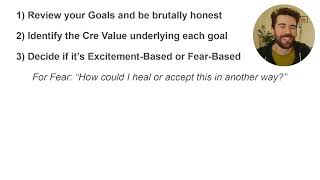
Okay, welcome to this video. I'm going to share an incredibly powerful exercise with you today that's going to help make 2025 not just a successful year, but a fun and enjoyable one that you'll look back on and go, that was one of the best years. I really, really loved that. Now, the reason I'm sharing this with you is that I, over the last several years, in fact many years really, I have seen countless practitioners fall into what I call the more trap, which is they think that they're not quite where they want to be and, and they think the way out is to have more. Whether that's more patience, more money, you know, more skills, more kit, more practice. They think it's all about growth because we live in a society that's in all honesty, pretty addicted to growth and we think that we should always be growing, especially in terms of a business and in terms of, you know, finances there as well. And I've worked with many people who, they've done it, they've grown and grown and grown and you know, some of them have been in practice decades longer than I have. They've got top notch clinical skills. They're, you know, they're fully booked, some of them already have a fully booked team as well, but they're just not having fun. They're losing the spark and they're falling out of love with practice. And they look around and they see all the coaches out there in the healthcare space generally are all talking about how to have more, more money, more profits, whatever it might be. That's the kind of promise that they're giving and that's what they help people do. Now, if you don't have enough and you need more, that's great. But the level I work with a lot of these people, they've got the more and they, they realize that more isn't really helping. The problem is, is if they don't escape the more trap, what happens is they start to fall out of love and they start to get jaded. And because they go, I've got more, I don't need more and more and more, but I've got everything I could get. You know, everything's great, like financially and numbers wise, I don't need more, but I'm not happy and I've seen something, they'll start to basically check out from practice, they'll think I'm bored now, I'm going to go on to something else. And they get like a, they start flipping houses and building a property portfolio or they start, you know, Selling like juice drinks or something like that, or start an online business like a faceless brand marketing, whatever it might be. They start doing something totally different because they've lost the spark and they go and chase it in other areas of their life. They start something new. Now, I'm not against people starting side hustles. You know, I coach as a side hustle, but I do that because I love the coaching. I didn't do it because I was bored with practice or anything like that. So you want to make sure you're doing it for the right reason, because otherwise I've seen a lot of them get jaded, fall out of it, and ultimately they just don't end up that happy. And if there's one thing I love doing, it's helping practitioners have more fun, find the joy back in practicing and not just feeling confident like they're giving great help, but actually, you know, really having that enjoyment and that fun, making it that kind of success. Not just financial success. Nothing wrong with financial success. It's often easier when you're having fun because you enjoy doing the stuff that builds the financial success. But to me, if you're not having fun, who cares what's in the bank? So those of you on my email list would have got this a couple of days ago if not. What I did is I sent you a very, very powerful question, you know, and on the face of it, it might seem like just a nice daydream. It might seem like wish fulfillment here. Now, if you haven't, don't worry because we're going to bring it up for you here. Now, the question I asked you when it comes to escaping the moor trap is what would you do if I put £10 million in your bank account tomorrow? Now, those of you who've seen this already, you should have taken 15 minutes with a pen and paper to write down some answers to this. If you haven't done that, this is your first time seeing it, stop the video now and do that. I promise you. It might not seem, it might seem like a silly question, but as we go through the rest of this, you're going to get some really powerful insights that you wouldn't have had any other way. But also, I can promise you that if you just go and watch the whole thing now and think, I'll answer that question later, when you know what's coming up after, it's going to bias and unconsciously influence your answers. You will not get as much out of it this way. So it's really important that you answer this first. So if you haven't done that, stop the video now, take 15 minutes. Don't half ass it. The more effort you put into this, the more you'll get out of it. If you don't do this, you're only just robbing yourself of actual valuable insights. And it's going to impact how this is going to go for you, I can promise you that. So hit pause, do that now, and then come. Okay, great. Assuming that you have now, what I want you to do is I want you to look at that list and we're going to go through and ask a few questions about what you've put on there. Okay? So you might have. Might put down, you want to spend it all, you know, on holidays. You might put. You want to buy a bunch of nice stuff, you might want to give it a charity. You might want to help family. Doesn't matter. What I want you to do is go back and really now ask yourself, is this true? Review them and be brutally honest. If you put, I'd give half of it to charity. When deep down you buy a really flash sports car and buy yourself a much bigger house in the swimming pool and a tennis court, get rid of, give half the charity. Be honest with yourself. This isn't about who you think you should be or who you'd like to be. It's right now, if I gave you that money, realistically, where would you spend it? It's not about trying to be a good person. It's about being honest with who you are. You're not going to show these answers to anybody. I'm not going to know what they are. No one else is. So you're only fooling yourself. If you're lying to yourself, you're the only one who's missing out there. So be brutally honest. Equally, if you wanted to put something down but you didn't because you thought it was a bit selfish. You thought, oh, I'd love to have like a Ferrari or something like that. Oh, that makes me sound a bit shallow and a bit selfish and a bit vain. Put it on the list. That's genuinely what you want. There's nothing wrong with that. There are no right or wrong answers here. You'll see why as we go through the rest of it. It's just important that you put down what is absolutely true for you right now. So review. Pause the video again. If there's anything you put on there that isn't really you, take it off. If there's anything that you kind of didn't want to put on, but secretly kind of wish put it on there. Nothing wrong with treating yourself. If you had £10 million in the bank, nobody's going to fault you for spoiling yourself a bit. That's human nature. That's what we all do. We're not saints there. So review that. Assuming that you've now done that, you now have a realistic list, a brutally honest list that is just for you, that reflects what you really do with that money. Basically. Because this isn't about money. This is just about taking money off the table and going, if money wasn't any object, what kind of life would I want? Okay, now the next one. I've jumped ahead a couple here. Identify the core value underlying each goal and decide if it's excitement based or fear based. I will get rid of that for a moment so you can see what I mean. The core value underlying the goal is what does this goal do for you? What value is this fulfilling? So, for example, you, you might want that Ferrari because you love cars and that's really exciting for you and you want to go to track days and drive around really, really fast and that's exciting and that's fun for you. Or you might want the Ferrari because it's important to you to feel successful and it's important that other people see you as successful. If they go, oh, that guy's driving a Ferrari, he must be really successful. Could be that maybe your clinic, you might want to have a big practice with a bunch of treatment rooms and loads of different therapists and a big rehab suite and some cool new technology. That might be because you want to have like a really innovative practice and maybe your core value is innovation or excellence. You want to offer the best possible care in the area. Or it might be because you think that would actually be really helpful financially. You know, we'd have a really good income if you run that kind of practice. And I'm really worried about not being financially independent. I'm worried about, you know, financial security, that kind of thing. Same goal could have very underlying core values underneath it. There's. So go and do that for each one. Apologies the typos that I put together fairly quickly there. And then for each one you want to decide is it excitement based or fear based? Now, excitement based goals, these are goals where you think about go, oh, you know, you get excited. The process of achieving that goal would inspire you would like, you would enjoy all the steps along to getting that thing. And it's something that makes you feel like inspired, you know, really, really Positive, you're going towards it because you really want to be there, you want to be at that thing. A fear based goal is where you want to achieve that because you want to avoid something that you're fearful of. You want to avoid some kind of pain or something that seems scary. So using the practice example, you might want a really great practice because it excites you. That of having an innovative, excellent practice that's cutting edge and doing new things. That would be an excitement based goal. It might be a fear based goal. If you think, well, I need that kind of practice because we need to have a good income and that would be my pension. I'm really worried about losing it all because maybe when you were younger you grew up and your parents didn't have a lot of money and they were fighting about money or they lost it all in something and you want to avoid that. So think, do I want this to achieve good stuff or to avoid bad stuff? Now there's nothing wrong with either of these at this point. You should have next to your goal the value and just categorize, is it because I want to avoid something painful or because I want to achieve something exciting? If all of them are avoiding something painful, there is nothing wrong with that. However, I can tell you that if you don't do this work, what often happens when we are working to avoid fear based things is it can lead to things like workaholism. You can end up doing more and more and more and when that comes to your practice, you will fall into the more trucks. I've got to have more, got to have more, got to have more. Because the underlying fear doesn't go away. You know, you can't have so much money that it's not possible to think, what if we lost it all? If the idea of having an innovative practice, you know, sounds exciting to you, you can achieve that and go, great, I've got it. But if you're about avoiding financial insecurity, doesn't matter how big the practice is, you're worried about what would happen if it went away. And that can lead to you feeling quite burned out and jaded later in life as well. So it's important to identify whether it's excitement based or fear based. Doesn't matter if it's fear based because what we're going to do is ask ourselves some questions, ways to help remove that fear. So if it's excitement based now what I want you to do is answer this question, how could I start enjoying this right now? And at a smaller Scale. Now, if you're getting a bit stuck on some of these, don't worry, I'm going to share with you. I'm going to be very open here and a bit vulnerable. I'm going to share with you a fear based and excitement based goal of mine. And you know how I answer these as well. So you can see what this looks like in practice. But for the excitement based goals, hit pause, look at it and go, okay, what? You know, how could I have a small version of this in my life right now? Maybe you can't have the big practice or anything right now, but how could you have a little tiny version of that at some kind of smaller scale? Take a bit of time, think this through, do hit pause on this video, go through it and start asking yourself this question now, okay? For the fear based ones, ask yourself this question. How can I heal this or accept this in some other way? What some other sort of step I could take instead of just chasing this goal? It doesn't mean that you remove the goal forever, but it means you go, well, if this is what I really want to avoid, is there a smarter way of doing it? You know, some people, for example, they feel this pressure to earn more because they're actually not great at handling money and they haven't got any kind of buffer or savings or anything like that. And I hold my hand up here because I've been there in the past and they basically have a leaky bucket. So they're always worried about trying to fill it. Maybe if they could work out a way to patch some of the holes, they wouldn't feel that pressure because it doesn't matter how much water you pour into the leaky bucket, if it keeps leaking, you're always going to be worried about it running dry. So that's the questions you want to ask. So you should have at this point again, hit pause and do this and think it through. The more effort you put into this, the more you will get out of it, the better this year is going to be, I promise you. So now you should have those answers for each of them. You know, each. The goal should be brutally honest. What's the core value? Is it excitement or fear based? And if it's exciting, how could I have more of this at a smaller scale right now? If it's fear based, how could I accept this or how could I heal this in some other way? Okay, so when you've done that, you now have achievable, realistic, actionable goals, things that you can start working on immediately. To start achieving your dreams and living the kind of goals that you want. And the cool thing about this is you will know that this is really about getting me what I want. The reason so many people feel like lost in practice. Whether you're starting out and you just don't have the spark or the excitement, or you're kind of stuck in imposter syndrome, or you've been out a few years and it's just not doing it for you. We've been out several years and run a practice and it's still not doing it for you. And you're wondering if this is really what you wanted all along. The reason you have that feeling is because you aren't making progress towards your core values. You aren't achieving meaningful things to you. You've got stuck in the more trap of chasing the numbers and the quantitative stuff rather than the qualitative things. So that's why this can be so important. It might mean that you don't change the goals and maybe you don't actually change much of what you're doing. Maybe you are still working towards the same thing, but now you'll have much more motivation because you don't got clarity on why you're doing it. And now you've got the stuff that you want to work on, you can start doing that and start making 2025 the best year yet ever. So that's the exercise. Let me run you through a couple of examples now from my own personal life when I did this earlier on. Okay, so one of the ones I had for, you know, that I've had for a few years now is I want to be able to take all the school holidays off work every year. And I mean running the clinic, seeing patients, patients have to training. I would love to be in a position where I just wasn't working at all. Now realistically writing my emails and stuff like that, I enjoy doing that, so that's fine. But when I say work, it's doing things that I think, yeah, would I rather be at home chilling out with my family? So I'd love to take every school holiday off. All the half terms, you know, the holidays, that kind of thing I works out is about three, four months a year and including that the summer holiday, the six weeks off in the summer, I'd love for the three of us to just go and spend that all in Cyprus of go out there for six weeks, not have a holiday for a couple of weeks where it's great, you get into it and then you're like, oh, I'm coming. We're going to be going back soon, but having a full six weeks in there now, if I'm being honest, I would probably rather have that in a slightly less scorching country with my pasty English complexion. But having a Greek wife, she wants to go to Cyprus. We'd all have a lot more fun there. So I'd love to be in a position to do that. And we've talked about that before, like, how great would it be to be able to do that and maybe travel. Maybe we go on a little road trip in that time as well, but basically spend six weeks on holiday somewhere in a foreign country every summer. Love to be able to do that. Not quite at the stage in my life where I can do that yet, but the identify for this, the core underlying values were fun and family. You know, I want to be able to spend that time with my family. I want to be able to have all the time. When Alexandra's off school, the three of us are there together all day, every day. We can go and do more fun things and we can spend quality time just hanging out, the three of us. A bit less pressure than, you know, getting her out the door to school and then coming home or me working all day and Cass having been at home with her on her own. And it's an excitement one for me, you know, the idea of spending quality time, you know, long strips of time with my family every year sounds great. Cass and I would also be able to have more personal times for ourselves as well. I struggle just to make it to the gym during the school holidays because Cass is flying solo during that time and, you know, it's tough for us to find time where I can go and spend even more time at the house when she's doing everything on her own. There's. And I'd love her to be able to, you know, that she's not flying solo. So we both have that personal time for ourselves and all the time together as well. The idea of that excites me. I'd love to be able to achieve that. I'd love to be able to do that. Even if I did it and it went away, I'd still be grateful the time that we had there. So for me, that's an excitement based one. Now, how could I incorporate some of this right now? Well, what I'm starting to do this year is I'm going to be taking chunks of time off during each school holiday. I'm not gonna be taking all of them off. I can't Afford and we're not in a position where the practice would do that. Well, if I was taking four months off at a time. But I'm gonna be taking little bits each holiday. I'm gonna take a chunk out of it there. I'm gonna take that off. And whether we go on holiday or not doesn't matter. I'm just gonna have a bit more downtime at home and during the half term. So for my American listeners, basically we have three terms a year and halfway through the kids get a week. Sometimes at Alexander School they get two weeks off as well. I'm going to work part time during those. So I'm going to take a day or two off there and I might just work two or three days that week. So it's not five days right the way through where I'm not there in. Cass is on her own with Alexandra trying to sort out the house, trying to take care of herself as well. You know, it's a smaller version. We can do that now. Now, you know, a few years ago that might just be. I'm just going to take Wednesdays off every half term. It could have been even smaller than that. Doesn't really matter. The point is I look at that and go, okay, I want to be up that point. It might take 20 steps to get there, but I can do step one and step two right now. You know, the thought of doing that excites me. I'm looking forward to it. That sounds really, really good fun. So that for me is one. And now I have a way to work towards something that's really meaningful and powerful for me versus I'd love to take the school holidays off, but we can't really do it. You know, it's not a black and white thing now. It's individual steps that we can take to it. So that's an excitement based one. What about fear based one? Well, for me, one of the first things I do if I had £10 million of the bank is I would pay off our mortgage. You know, I'd actually pay the early exit fees. I don't care. I would just walk into the bank and be like, bang, here's the cash. Have all of that. This house is ours. No one can take it away from us. You know, if mortgage rates skyrocket or if I lose a limb and I can't work, whatever it might be, doesn't matter. We're not going to be homeless. So that for me is quite a big one there. The values for this are security and independence. I want to make sure that our financial future is secure. And I really want to make sure that we're independent and we don't have a bank that could one day, for any reason turn around and try and take the house from us or anything like that. And that's a fear based one because a couple of things here. I'm worried about what would happen, Alexandra, if Cass and I weren't here. Hopefully we're still going to be here for quite a while. But Alexandra, she's got health issues. She needs quite a bit of support. One day we won't be here to take care of her. What's going to happen? Well, knowing that she's got the house in her name and that there's money there set aside that no one else is able to take from her, that's a big thing. Towards that I'm also concerned about protecting ourselves against future, whether it's financial crisis, ill health, something like that. Covid was a bit of a scare. This one goes back to when I was younger. Like when I was a little kid, my dad developed multiple sclerosis and he was a chiropractor. He had to stop working. He couldn't practice anymore there. And, you know, it was a little bit older than that. Like my parents separated and, you know, we had to move out of our childhood home and, you know, without getting too into it. That was a difficult time. And that, that left some wounds and that left some, you know, some scars and things like that. Well, and knowing that, you know, what if the house was taken care of and that we didn't have to worry about that, that's something I'm worried about for our future. So I'm worried about the idea of, like, what happens if I was to suddenly get sick and I couldn't work, you know, what would we do, you know, if I couldn't work at all and I was stuck in a wheelchair, what would happen? Knowing that the mortgage has paid off, that's quite a big relief for me. So, you know, it doesn't matter like what we earn now. Until we own that house, that fear is going to be there. So for me, that's more of a fear based one. And I could get myself stuck in workaholism if I wasn't actually thinking through what am I doing and how is this going to work now? How can I incorporate some of this at a smaller scale? Well, I use a program called you need a budget. I love it. It's a great budgeting program because it works the way my brain works. It works like backwards to how most budget software works there. I know some of you watching this have that as well. It's great. But you got to stay on top of it. You've got to make sure you're doing it. And I fell off the bandwagon ages ago. So I looked at this and I went, okay, you know what? I actually need to restart that because, yep, it's all well and good thinking. Earn more, earn more, you know, get more. But we had a bit of a leaky bucket because I was not tracking where our money was going there. So I restarted that. I got on top of it. I started working with a financial planner and a coach to get a better handle on our finances. Just working on some habits, some buckets, some ways of looking at the way that we spend money to really work out, where's that going? And the next step will be to stop putting away small amounts each month back into the mortgage. So repaying the mortgage at home early, putting away more money than we can right now. And, you know, we'll have worked this out because working with that planner and starting the budget will know where we're at. Now, that doesn't necessarily sound exciting, and it isn't, but I'm excited about the process of doing that because now I'm like, oh, I'd love to pay off the mortgage, but, you know, don't have six figures sitting around in bank accounts we can throw into that suddenly. So until I did this exercise, like, that'd be great, but, you know, we're not gonna be able to do that. I'll just have to live in fear for the next 25 years and hope nothing happens. Now. I'm starting to take back control now. I can look at those things and I can do all of them right now, and they are going to start giving us that security. I'm fulfilling that core value of security and independence, and I don't need to do it by doing more. I don't need a bigger practice. I can look at it and go, yeah, if we have more money coming in, it might be easier. But you know what? We're fine. We're fortunate. We're in a good position here. You know, we can live off what we've got very comfortably there. Just being a little bit better about tracking where it's going and paying a bit more attention to things that would actually fulfill that without me feeling like I need more so I can be happier without having to grow. So that's mine there. Like I said, being a bit open and vulnerable here. You don't have to necessarily go into all this really, really deep, but understanding that deeper fear for me really helped me go, what can I do now to start doing that? What would really help with that? So you can see how I've done that. You know, one excitement, one fear based one. Yours may be totally different, but whatever it is, I promise you, if you actually do this exercise, if you go through those steps there, you review them, be honest, identify the core value, work out if it's excitement or fear, and then ask yourself, how can I start enjoying this now at a smaller scale? If it's excitement, how could I heal acceptance in another way? If it's fear based? Doing that, you will then have the things that you can start working on in 2025 to make it the best year. Yeah, and I promise you the motivation will start to grow and you'll start looking forward to it. Because now you're not working on some kind of goal you feel you should have or something a bit vague. You're working on something that you can see as a clear path to achieving the things that matter most to you in life. And you make this something that you do each year. You make this a yearly habit. I promise you, things like burnout and getting jaded and falling out, they're just, they're not going to happen. So give this a try. If this is really helpful for you, let me know. I love hearing from people. Drop me an email. It's Chris at Patient Centered. Get in touch, message me on Facebook, whatever it might be. I love hearing from folks. It's why I do this stuff. It's why I started Patient Centered Training. It's not a side hustle because I'm bored and practice. It's not because we need more money. It's because I love hearing from people about the difference it's made for them. That's what really inspires and excites me. So let me know if that's been helpful. Any questions, by all means, get in touch. Otherwise, I'll see you soon for some more videos. Take care of.










