The Story Circle: A Simple Strategy to Grow your list, your team, and your practice
Chris Chippendale, a chiropractor and clinic director, explains how to use the story circle framework to engage patients, market your practice, and build your team. He walks through practical examples of weaving stories into clinical conversations and marketing to grow your list and practice.
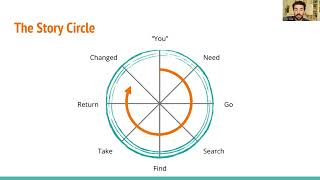
So next speaker is me. It's a little bit weird introducing myself, but essentially I'm for those who don't know, I'm a chiropractor. I also the clinic director at Senimax and Beckham chiropractic clinics and I run patient centered training where I've been helping clinicians get better results with their patients through ethical and effective communication strategies. That's my elevator pitch there essentially. And I've been working for a number of years on this. And one of the things we're going to talk about today is a really key concept. I'm going to share the screen here called the story circle. This is something I've been focusing on more and more in the past year or so. It's a really great way to actually get better results with patients and to build your practice. This is what I love about ethical communication, is that it can be a win win. Your patients do better and you do better. It doesn't have to be this myth of either you do really well and the patients suffer because you're not giving great care, you're over treating, or the patients do really well. But your diary is fine. It can be a win win there. So we're going to talk about this in a couple of different contexts today. First, although, I just wanted to share a little story about why we talk about stories. Because I'm generally quite a fact based guy, I'm quite logical, I'm quite left brained, I'm quite analytical and certainly earlier on in my career I would try to persuade people or try to convince people or try to illustrate things to my patients using facts. And facts are great when they used to back up something, but they're not particularly good for actually convincing people. Because what we need to do when we're trying to persuade somebody or try to sway them is we need to speak to the emotional brain. The emotional brain can't interpret facts. What it loves is stories. And in fact, to illustrate this really quickly, an example I, as a patient of mine, I was chatting about when I first put together my first online course. And he'd been doing this for a little while. He's worked in real estate, coaching. He's been doing this stuff for a long, long time. And we were chatting about it and he said, you should bring stories into it. And he said, look, here's a little example. He said his son when he was younger had a bit of a problem with staying dry through the night. He was wetting the bed and he was a little bit old for it. And obviously his son felt really embarrassed about this. And it got to the point where he didn't want to go and spend the night in any of his friends houses. He wouldn't go to sleepovers and things this because he was so afraid it would happen and he'd be really embarrassed and all his friends would laugh at him. And my patient noticed that he would drink a big glass of water right before he went to bed. And he tried telling him, he said, look Tim, if you don't drink the water before you go to bed, then you won't need the loo in the night, you'll be able to stay dry. Kept telling him, kept telling him, wasn't getting any, wasn't making a difference. And then he suddenly realized that he needs to take a bit of his own advice. So one day he goes to Tim and he goes, you know, I heard about a boy just like you had a problem staying dry through the night recently. And he found a solution that really worked. And Tim went, oh yeah, what's that? And he said, well, he was struggling like you were and he didn't want to go to his friends houses. He was worried his friends were going to laugh at him and he was getting really upset about it. He was getting really stressed out because he felt really embarrassed. And he realized that if he tried not to drink water in the evening, he stayed drive through the night. He tried it one time and suddenly it didn't happen. And ever since then he's gone, okay, I don't drink any water after dinner. And he stays dry through the night. And now he can go to his friends houses and he can even go to sleepovers and things like this. He's not worried about his friends laughing at him and he's having a lot more fun. And he just mentioned that story and left it. And lower bowl. Tim's getting ready for bed, goes, brushes his teeth, puts on his pajamas, doesn't drink any water, goes to sleep, stays dry through the night, has never had a problem since. And he had tried for weeks and weeks and weeks to illustrate it in the fact when all he needed was one simple story. And he told me this to illustrate the power of telling stories and I'm now sharing it with you to illustrate the power of telling stories with improving our practices as well. So I love this story because there's about three layers of just retelling it. One story can have a big effect in a number of different ways. And by using that in my first course, the feedback was much better. Actually when I started Doing it. A number of people were commenting going, oh, these stories are great. And they really helped me put it into practice. So we're going to talk about stories today, how we structure them, but how we use them to improve our practice as well. And there's three key ways you can do this. You can do this with your patients through the patient journey. Going to talk a little bit about that. You can do this through your marketing as well. It's a very powerful way to actually market your practice effectively. And you can do it to empower your team. Whether you're like Rosie and you have 16 clinicians, whether you have one associate, whether you just have a front desk ca. Whoever it is that's on your team, you can use it to empower them to actually grow and improve and become even better clinicians, even better front desk team, so that your whole practice thrives. And it's not just on you having to do all the work to drive it. Before we do that, I want you for a moment just to imagine for a second that you're a patient. Let's say you're a patient like Rosie mentioned, with migraines. You've been getting these migraines. They've been getting worse, They've been getting worse. They're stopping you from doing the things you love. They're stopping you from going out and spending time with your friends. There's maybe some activities, goals you want to achieve. But this pain's been getting worse. And, you know, family member says, oh, I knew somebody had migraines. They went to see a chiropractor. They want to see an osteopath, whoever it was, and they had some treatment and it got way better. So you decide, okay, well, I'm gonna go and find somebody. And if you're like 99 of people, the first place you're going to look is Google. And you go on Google and you have a look, you go, oh, there's some few clinics in the area. You know, one's got three stars. Well, I won't look at them. This one's got 4.8. That's pretty good. I'll have a little look. And you read the reviews because you want to see, can this person help me? You're not really interested in whether they can do other things. You're really looking for, is this going to help get rid of my migraines? And you see this review. This is an example. One of our patients who left it a while ago says, very friendly and professional staff, Clean premises, easy parking, five stars. That's great. Like, those are good things. And certainly if you don't have clean premises or your staff aren't friendly, that's going to put patients off. And it's five stars, which is nice, but that doesn't really answer this question. Now, I've taken the patient's name off because I wouldn't want them to think we're not grateful for the review. We genuinely are. However, this doesn't really help that person see what's going on. Whereas this is an example, actually, who. The patient who saw Rosie and she says a little bit more. So this is why I came in. She was very knowledgeable, sorted out my spd. I'd seen other people and they hadn't been able to do it. And she could also help with my migraines, too. They're much better now. You're looking at this going, okay, wow, Rosie can help with migraines. That's the problem I had. And also she gave me advice to train during my moonwalk this year. I wouldn't have been able to complete that without her. So not only is this somebody who can help with my migraines, but they can help me do the things I love to do, like Rosie was talking about. And if you're somebody who had, let's say, a shoulder issue, reading this is not going to put you off. You're not going to go, oh, clearly, Rosie can only sort out migraines, especially because this one talks about other things as well. But if you can see yourself in that story, because this review tells a little story, it's going to be much, much more engaging. So when you're asking for Google reviews, when you're looking to build that, you really want to help patients understand what to do. Now, I'll share in an email afterwards with everybody. I put together a little strategy for how to get more Google reviews, and I also include how to request them. So patients know to do that because we were getting some like this, much more powerful. If we can turn them into a review like that. And that's what stories can do, stories are much more powerful. It's going to really engage that patient a lot more. They're much more likely to choose you and decide you're the person they're going to go and see to try and get help with their migraines. So what is the story circle? Well, this diagram here illustrates how the story circle works. Now, the story circle is based on the hero's journey. If any of you are familiar with Joseph Campbell, he wrote very influential books called the Hero's Journey. Another one was the Hero with a Thousand Faces. Joseph Campbell was an anthropologist, and he went around the world to as many different cultures as he could, and he studied their myths and their stories and their legends. And what he found was that when you zoomed out and looked at them, we all keep telling the same story. It has the same framework. It has the same sort of arc and progression. And stories are so ancient, the earliest stories, signs of civilization. We have cave paintings on walls that go back 50, 100,000 years. They're telling stories. You can look and you can see the animals, you can see the people, you can see the hunt, you can see the kill, you can see what happens afterwards. Storytelling is really, really ancient, and there's some good evidence that we're actually wired now to understand stories. It's been such a key part of our evolution. And this structure is something that gets carried in. All the same religious myths, all the same ancient myths, modern Hollywood movies, the Marvel movies, Star Wars, Harry Potter, Lord of the Rings, you know, all these books, they fit this structure. And when a story doesn't fit this structure, it doesn't get remembered. You know, there are movies that have tried to play with this, and if you stray far from the structure, they just flop. It doesn't really work because we're looking at it and going, that doesn't make sense to me. So it's important that we use this structure. Now, the story circle is a bit of a simplified version. Story circle was developed by Dan Harmon. If you've ever seen the TV show Community, he created a roadblock. Very good show. Also Rick and Morty, which is a very popular one now. He wrote that, and he uses this for every single episode of every single show, every single movie he's ever written. And it's a really good way to understand how we can use this for our patients as well. So you imagine this circle, and there's eight points in the story circle. We're going to simplify this a bit more, but just briefly, to go through them. It starts with you, the hero, the person at the top. And there's some sort of need. So you go around the circle, you identify. There's a need. You need something. Something's missing from your life. So you go and you search for it and you look for it, and then eventually you find what it is you most need. You take that, but you pay a heavy price. There's some sacrifice you have to give up. Then you return back to where you came, but you've changed. That is A satisfying story to read. Any book or movie that you've ever read will be trying to follow that. But it's important for our patients as well, so we can think about this in a patient centered context. The you is our patient, it's not us. We are not the hero in their journey. They're the hero, but we get to help them. So they will have a need. This person is getting migraines, they're getting spd. They search, they look online. They found Rosie. They spoke to Rosie. She found the problem, she gave her guidance and her expertise. There was a solution, they took it. They had to pay a price. They had to have some treatment. They had to maybe turn up the visits. There was a time cost to it. They maybe had to change certain lifestyle things, do certain exercises. But they returned back to the life that they had, having changed. Now there is some sort of knowledge, some sort of skill. They brought something back with them. And the change part is really, really key. Because if there's no change, it's a pointless story. If Luke Skywalker went around the galaxy, defeated Darth Vader, all this stuff, and then he goes back and just lives in the desert on his own for the rest of it, has nothing to do with the rest of his life, nobody's going to find that story satisfying. So the change is really, really key. That change might be they're better equipped with some tools. Maybe they know how to prevent this from happening in the first place. Maybe they're stronger, maybe they've done some exercise. Maybe they just know that there's somebody out there who can help them. And the next time this happens, they know who to see, they know they're in good hands. So they have that reassurance. That's the story circle that our patients want to go through. So if we break this down, when I'm recommending a course of care for patients, I'm going to use this same structure when I'm explaining after the examination, the report of findings, the recommendations, conversation, whatever you call it, the first bit's the history. So everything up until they come in to see me, I'll recap that. So the patient was doing well. And then they started getting these migraines. These migraines started getting really debilitating. They stopped from doing the things they love. There's a need there now they need to get back to the things they love. And they realized it wasn't going to go away. So they went out into the world, they went into the unknown world of healthcare. And if you think of this Story circle divided from the top half and the bottom half. The top half is when they're in the known world. They know where they are, they know what's going to happen. Things are predictable. The bottom half is the unknown one. This is their sort of venturing out the village into the woods for the first time. Think of it that way. So they go into this unknown world. They have to start thinking about who they're going to see, who can help them, how are they going to solve this? And they search, they look online and they find somebody who they think can help. Maybe they've had to search a while, maybe they've tried two or three people that couldn't help, but hopefully they find that person. And then they go to see them and together they do an examination and they find the problem. This is what your examination is. You're trying to find what's going on, the reason why this person can't get back to the things they love, the thing that's stopping them doing what they want to do. And when you find that, you'll have an idea of what the solution is. So they will have to take action. There will be a price they have to pay in terms of treatment, in terms of time, in terms of different activities, whatever it might be. But at that point, when they take and then they can return to the known world, that's their care. So when I am talking to a patient about the plan, I'm going to use this exact structure. And I'm going to tell it in this order because this is the way patients will remember. So this is what was going on. This is where you are getting these problems. It's stopping you do the things you love. You were getting really fed up with it. So you came in to see me and we searched together. We found this issue in your examination. We found this joint, this muscle, this nerve. And we realized that's the problem. That's what's stopping you from getting where you want to be. And now we're going to take action. So I'm going to recommend these visits. I'm going to recommend this cell care. I'm going to recommend whatever it might be that over time is going to return you back to where you were. It's going to get rid of this issue so you're feeling better. You can be doing all the things that you love and you won't have to worry about this coming back. You'll be changed and you'll be better than you were before. So not just pain relief, but doing the things you Love to do, feeling more confident and not worried about this in the future. Doing that is much more effective than trying to get into really technical descriptions of what your treatment is going to do and how it's going to make changes to these joints or these losses. You can add that in if that's relevant for that patient. Some patients, if they're quite analytical, may want to know that. But the majority just want to hear this story and understand that you are the expert who can help them, but that it is their story. You're going to get them back to when they want to be. What you don't want to do is make yourself the hero and talk about you're going to go on this quest and you're going to find these things and you're going to overcome them. You're going to take action. You're going to get the patient, you know, the passive damsel in distress, back to where they want to be. Don't make it about yourself. It can be really easy to do because we're all really into what we do. That's. That's why we do this. We love the fact that we can help people with our hands and all our knowledge and expertise, but we have to remember that it's really about the patient. So an example I often use here is the Lion King. If you think about the Lion King, Simba had a need. He was going to be king one day, but his father dies and he doesn't know what to do. So he goes out on this quest. He goes to try and find it. He hangs around with a meerkat, the warthog, who kind of distracts him and teach him to be lazy. Doesn't really go very far. But then Rafiki, the witch doctor, the monkey comes in and he knocks him around the head. He whips some sense into him. He has this vision of his father, realizes what he needs to do. He needs to go back and face his uncle, return back to the pride Lands, take action, pay a heavy price, face his greatest fear. And then when he does that, he's changed. And at the end of that story, now he is the responsible king. He's realized being a king is not about bossing people around, it's about taking responsibility for everybody else. Your role in that story is to be Rafiki. Now, you may be with them through that journey, you may be with them a bit longer. Rafiki's there at the end, but it's not to try and be the hero. So that's the way that we can use this with Our patients. Another way with patients is you can use this if you want to try and get them to do something, maybe encourage them to make a change in their behavior. They're not necessarily on board with is you can talk about another patient you did this with. So, for example, I had a patient fairly recently where I was trying to get them to look at their diet, and it was quite clear they were eating a number of things that seemed to be flaring them up, but they were kind of not really on board. You're a chiropractor. Just crack my back. Why are you talking about diet? And so I shared this story of another patient who had a problem similar to theirs. This was the history. They had this need. We tried various things. Eventually we found that bread and pasta were really flaring them up and that when they took those out, they got way better. And it was so much more effective than any treatment we were able to do just with our hands. It made a big, big difference there. So this was this whole story circle again. And now they're doing much better. They can do the things they love. They're not having to see me very. They're feeling so much better. That is a much more persuasive way to encourage a patient to take action than trying to explain the technical specifics of how somebody with a gluten intolerance is going to be flaring up their joints through inflammation. That's helpful to add in, but you've got to have the story first speak to the emotional brain, and then we can add some knowledge to the technical brain as well, to the more logical brain. So that's how we can use this with patients. What about marketing? Marketing, we want to be using the same thing as well. So when you are putting together your website, when you're putting together posts, if you want to encourage people to come and see you to help with something, first you have to identify the problem. So you would share the problem that your ideal patient is facing, that they have this need, They've been searching for something. And what we need them to see is that you can search and you can do things, but eventually you'll need to take action. And in this case, the action would be coming to see you. Meet the guide, and together you will find the source of the issue, find out what it is they need to get better so that they get this result, they get back to what it is they want. And you can do that in very simple ways. Like Rosie was sharing your mission statement, your elevator pitch is a very small example of that reviews and testimonials can be doing that as well. Any of the copy on your website can be doing this, but you want to talk about problems your ideal patients face and then the fact that working with you will help them get the result these problem solution sets. So this is where you're struggling. Come and see us and we'll help you get back to this result and you'll see the action. It's a relatively small part of it. You don't go into a lot of detail about what it is you're necessarily going to do. So it's really about speaking their language, talk about the problem so they can resonate with it. They can go, oh, that's me. That's going to engage them and then talk about the result, the thing that's going to happen once it's solved. So they can go, yeah, that's what I really, really want. So they know you understand where I'm at right now and you understand the result that I'm offering. So if you want to learn more about this is a very good book called Story Brand. Story Brand is a similar structure, this as well. So you identify your target patient. They have this need, something they want, they going out to search for it. They meet a mentor who offers a plan that leads to success and avoids failure. Now, I don't like to really use failure as a big way to motivate people over and over, but it is something that you can talk about with patients because there's already a fear there. So you may say that this is going to help you do this and not get stuck, put up with this pain over and over and have it really get you down. You're not drilling into like how bad it's going to be if they don't. But you're speaking to a fear of theirs. It's already there. So the result can be doing something great or it can be avoiding something scary, avoiding something they don't want to do. But using the story circle can be a very powerful way of marketing. It's much better than talking about yourself a lot in the website. It's a lot better than going into specific. So many chiropractors have pages and pages about what an adjustment does the approach. Chiropractic takes all that sort of stuff. Most patients don't really care and the ones who might care don't care until they know you can help them. Remember, your marketing should be answering the question, can you help me? Talking about how chiropractic works doesn't answer that question. So if you're not getting this element in and you're not using good story circles for that, all that other stuff is going to fall flat. It's a typical thing we do in chiropractic, where we spend a lot of time talking about what we want patients to know about chiropractic, but we don't really start talking about what patients want to know, which is, can you help me? Now, the third way you can do this, you can use this with team empowerment as well. So if you've got an associate or you've got a team member, this is something you can go through periodically and use their story circle. I came across this with Joe and Steve Davison talk about this a lot in their programs, and it's a really great way. And it's again, based on the story circle hero's journey to help empower them, to take more responsibility, take more ownership, to grow, help achieve things so they can do better and you all grow as a team member. Now, I do this with our team a couple of times a year. I'll sit down one on one with each team member. Also, if somebody seems a little bit stuck, if they seem like they're a bit frustrated or something's not going well, I'll sit down and go, hey, let's do a story circle. Let's talk through this a bit. So in this case, what you would do is, first of all, you get very, very clear on where they're at and now. What's their current reality? So they can look at that and go, where are you at now? And this might be getting some objective measures. It might be the hours they're working, their pay, if a clinician patient numbers the amount their diary is full. And then you can look at some of the more experiential emotional metrics. So how confident they feel, you know, how stressed they feel. Do they feel that they're lacking in something? I will ask them, where do you rate yourself out of 10 on certain skills like communication, manipulation, rehab, adjustment, whatever it might be? Get really, really clear on exactly where they're at now. So by the end of that, they'll go, yeah, that's where I'm at right now. Then in this case, I skip ahead and I don't go to the second step. I'll find out what's your goal? Because we're trying to find out what their story is. Where do you want to be? If you don't know this about your team members, then it's very hard to know if you're all on the same boat, like Rosie was saying, you might have different goals and that's fine, but can you get an alignment for the journey? So you want to find out what their goals are longer term. Now that could be six month goals, 12 month goals. I wouldn't go into five, 10 year goals. We're getting into life coaching territory a bit there maybe, but find out what they want the next year to look. And it's really a compare and contrast to the same questions that you ask them about where are you at now? We're trying to find out where do you want to be when you're at that eight step, when you've gone through the story circle and your change and your life is better than it was before, what's changed? What's different? What's your life look at? Maybe they want to start working with a different type of patient. Maybe they want to go and upskill and learn a new technique, whatever it might be. So you find out where are they at now and where do they want to be and then we need to look at the obstacles. So then I would say, right, what is it that's in the way? And as much as possible I would want the team member to actually come up with these himself. I don't want to go, right, here's your problem. This is where you are, this is where you want to be and these are all the things you've got to do change. Because it doesn't really work well when it comes externally. So we want them to identify what are the barriers to getting them there, what are some of the actions that they need to take, what are some of the things that need to happen and you can go through that together. You may have some observations, but I would certainly, to empower them, try and share it after they've shared theirs. And I generally will say, okay, I can think of one or two things that might be important to address to get you there. I can share them if you'd to like, like. So I asked permission and then I'd share them and go, what do you think of those? To find out if it's landed or if not. But at the end of this now we can look at it and go, okay, we know you're at, we know where you want to be, we know what's got to change to get you there. So we can sit down and work out a plan. And this may be looking at, maybe there's a couple of key obstacles, like for example, improving their communication skills might help less patients dropping off, that might help Improve their numbers, that might help improve their confidence, that might help improve their results. With patients. Look for a couple of things where you can see, you know, addressing this one is going to help a few of them and then you can rank them in priority. You can go, right, what's the most important of these two? And this can be a discussion that you both have. So at the end of this, they can see their stories up, they can see the path they're on because often they feel stuck because they can't see the woods for the trees. They're kind of wandering around in the mistake. They don't know where they're trying to get to because they haven't really visualized their own goal, which means they're frustrated no matter what they do because they don't know where to head. You're lost in the woods, you might be heading in the right direction. It doesn't matter because you're second guessing yourself. And what they've seen here is that you've taken an interest in them. So this is an associate centered conversation, if you will. It's about them saying, okay, you really want to help me achieve my goals, rather than you telling the team member or the associate, here's where you should be. Bit like if you said to a patient, here's my goals for you, it's not going to work very well. So same idea, same story circle, but using it to help empower your team as well. So those are three areas that we can use this in. We've got the patient journey, we've got using it for marketing and outreach, speaking to patients, speaking their story so they can recognize themselves in it, and empowering the team as well. So that not only it's not just you having to push everything and tell everybody what to do, but you can find out where they're at, you can find out what they want and show that you're interested in helping them get there. They'll be much more on board with your recommendations when they can see you care about where they want to be, not just you trying to push them where you want them to be and then kind of dragging their feet. If you encounter that kind of resistance, then that's where you can start to find the Often there's a need to identify their goal. Maybe they don't know what it is, or maybe they just haven't had that chat with you. So very quickly, let's bring this back up. I just want to go through the three Rs for effective stories as well. So these are three things that you've got to make sure are working for the patient and working for that story if you're going to use them. Well, if you don't use these, it won't land and it won't work. So the first one is they have to be relatable. So if you're going to use an example of somebody who is a 23 year old athlete, that's maybe not going to be relatable to a 63 year old grandmother or a 52 year old CEO who doesn't like exercise. So try to pick examples of stories that can relate to them. Obviously, with the marketing, you want it to be relatable to your ideal patient. We want to make sure that we find that out. So when you're using stories to illustrate points, make sure it's relatable to that person. Also make sure the story is relevant so they have to be able to see themselves in it, but they also have to see how this story is going to help them get something that they want if they can't see the relevance. If I use an example of somebody changing their diet and it helped them sleep better through the night because they weren't getting inflamed and waking up a lot, that's not relevant to somebody. Goes, yeah, but my goal is I want to be able to go for days out with my family. So as well as relatable, they can see themselves and it's got to be relevant to their goal. And lastly, they have to be realistic. And this is realistic in the patient's eyes. So you can tell tall stories, you can tell these amazing things. If the patient doesn't think that's realistic, it's not really going to work. So when you're thinking of a story to illustrate a point, make sure that you get those three in relatable to the patient. They can see themselves in it. Relevant to them and their goal and realistic that they're going to be able to see. Okay, I think I can get there. You know, if you talk about how they achieve this by doing 45 minutes of working out every single day, you can understand. Some patients go, oh, okay. They were like me and they got where I want to be, but I don't think I'm going to be able to do that. So using those three will make it much, much easier to use those stories, particularly with helping patients. But using those examples to help your team as well and speaking to prospective patients out there when you're marketing. All right, I think we're okay for time if we've got any questions? I'm happy to open things up there with everybody. Let's stop sharing screen for a moment.
That was really interesting. Chris. When you start doing this, do you feel a bit silly because you're telling a story or does it just come naturally? That was what I was thinking.
It can feel a little silly at the start sometimes you can go, does this seem like professional, you know, like I'm going to tell a story. Depends how you introduce it. I wouldn't say, all right, sit down. Let's, let's tell you a little story. But I'll start it with, you know, I could be like, you know, I saw a patient similar to you once and they were having this kind of issue and this is where they were struggling. This was their need and this is what we found and this is to change that. So, you know, it does. It's often I'm usually doing it while I'm treating. I'm not really sort of sitting them down and having this conversation face to face. They're often on the bench while I'm doing that and then I'll sit them up and you can kind of see how it's landed if they have some questions. So if there's more of a follow on, we might do that. But usually it's I'm kind of doing it as a little throwaway thing. I'm almost going like I'm making conversation. It seems to go in a bit better that way. Yeah. So if you were to sort of sit down and formalize it, it could seem a bit stilted, but okay. Just doing a small talk works quite well.
Okay, and question here. Would you consider using examples of anonymized patient story circles on your website social media for marketing in order to engage new patients more effectively?
Yes, definitely. The best is always is if you can get some sort of testimonial like just screen grab a Google review if they do that. If a patient's willing to sit down in front of a camera, that's really powerful. But it's more of an ask than them just reading a review. But certainly you can use these stories on your social media. You can say here's a really interesting case. We saw recently a person struggling with this. This is what we found and now they're able to achieve XYZ with that. What I would try and do is don't make it all about how we found that they need to see me and I'm so great. You can mention they came with the treatment that was helping but I would try to mention something that might be useful to your prospective patient. So we found that actually part of getting them better was looking at the way they sat at their desk. And by changing that, that actually helped make a difference for them. Because that way, the message is, here's some knowledge you can use right now. You can go on this story, circle on your own immediately. That will build trust. And then if they think, okay, that's help that I need more, oh, I'll go see that chiropractor. Yeah, they really seem to know what they were talking about. But certainly I would use these out in your marketing. And anonymized ones are great because you can pick which ones are relevant for your patients too. It's always better if you can get the patient's name on it. But for confidentiality and things like that, that's a really quick and easy way to start.
And then someone else asks. When you talk about stories in marketing, would you share this as a video on social media?
Yeah, I mean, I would. I'm quite comfortable in front of camera, so I'm happy doing that and recording that. If you are, great. If you're not, you can do it in text, you can do it in a blog post. I would say find the medium that works best for you. My bias is towards video because I'm really extroverted and I like talking and I find typing a little bit too slow. But if that's outside of your comfort zone, then find something that works better for you. There's many different ways to reach people, and people engage differently. Some people prefer text. So, like, if I'm sort of flicking through social media, I very rarely watch videos. I like to. I like to put them out there, but I don't. I like to just kind of read. I don't want to be blasting stuff out my phone all the time. So finding works for you, but it doesn't have to be.
You'd be quite good at all those posts that, you know that you slide through that you have to go. You have to sort of, you know, you keep going into the next slide. Like a carousel wants carousel. That might be really. Because you could tease each bit.
Yeah, that's a really good way because you could do a little foreshadowing on each of the slides as well. That would work.
The person saying they like video, they're not extrovert too. So, like, if you like video, it could be a really good reel or something like that. Just talking to camera. Don't have to point and dance, but just telling the story. You can get it in a minute or 90 seconds and that'd be good.
You can even use the story circle. You could do, you know, you could go through that structure and go, here's one for each slide. Or go through the three phases.
Yeah.
And yeah, it's because once they start perceive as a bit of a story that instinctively hooks us. We want to hear like, oh, what's going to happen next?
Someone else says, I've tried using stories but feel stupid as I'm going through the story.
Okay. It might be that you're, you're maybe putting a bit too much pressure on the story. You might be trying to make it a bigger thing. Like I say, if you were to just pick an example that was you could kind of use as a throwaway. So like I use one with. This is a nice way to introduce maintenance care if it's relevant. If I had a patient who plays a lot of golf and is gets really competitive. I think he plays with his brothers and they meet a couple of times a month and I think they put a fair bit of money on it. They're all really competitive into this. And so he now for a while has been coming to see me a week before he'll come in for a maintenance to make sure everything's on top form to give him the best chance of winning. I throw that in with patients if they play golf because it's got to be relevant to them. I can use that as a story to introduce the concept of maintenance without saying, right, you need to have maintenance care or you should have maintenance care, or here's an option for you. I'll just tell that story. I'll say, you know, oh, yeah, I see quite a lot of golfers here. Some of them get really competitive. I've got this one patient who does this, this, this, you know, I'm just telling them something like, oh, here's a funny thing I heard the other day. So it can be like as an aside away to make small talk. That's probably a better way to start with it versus feeling like you have to tell this story that's going to create this big change. It's a way to just sow a seed. And I may do that three or four times through that care before going, okay, now that you're feeling better in your case, maintenance care would be an option. Let's have a discussion. So I try just doing it as like an almost informal throwaway first. That will help to build the muscle, I guess.
Actually, as you just said that I thought how many times do we say as colleagues to each other, oh, I had this patient who did this and I did this. And so maybe trying to say it as if you were talking to a colleague rather than to a patient. That might be.
Or it could be. Here's something my colleagues always like. If you're fairly new in practice, you don't have a lot of stories. Ask you, ask your colleagues, you know what, what sort of interesting sort of they have, what goal is it facing or whatever it might be. And you can go, yeah, a friend of mine, a colleague of mine saw somebody like that. The story doesn't have to be your patient, it doesn't have to involve you at all. I told you that bedwetting story about a kid I've never met doesn't actually have to be relevant to that in the same way. So yeah, a little kind of throwaway one like that can work a bit better than versus feeling like you're having to put the pressure on and exactly like, oh, I saw this interesting thing today, like you would with a colleague.
I, I did realize actually, also as you're talking, I was like, I never use stories. I was like, actually, whenever I'm telling a friend about anything, we actually use a story in a way then, don't we? Yeah, like if I, if I want to recommend a product and I go, well, what happened was, is I did, I had been doing this and then I did this. And that's how we generally talk. But I think maybe we don't, we're not conscious that we're doing the story because it's so ingrained in what we do when we talk.
Yeah, I mean, that's what people do. You gather people around a campfire, they all tell stories all night. Like no one has to tell them. This is what you're supposed to do. That's just what we do. But we get into professional mode and we start thinking, oh, I'm supposed to fill a certain role, I'm supposed to do it a certain way. I'm supposed to give them facts because I'm an expert. And we forget that actually just that, that human to human interaction, it's almost always telling story. I wouldn't recommend a product to you because I went, oh, yeah, I found this product and it's like 93% this and this. Like, I wouldn't do that. I go, yeah, we started using this thing. It's great. It's really helped with da da da da. That would be much more engaging than me going through the technical specifics. Of it.
Yeah. And I guess. Do you think maybe there is a bit of a worry about dropping the technical out? Because like when you train you're told to do. And this is the disc and this is the thing which actually I think a lot of us tend to drop as we go along. But do you think if you're like newer at this and there'd be a slight worry about dropping the technical but I guess you just customize it to the patient. Do you or.
Yeah, I mean you don't have to drop a technical. Some patients will want that. You'll always know because they'll ask you so what's actually happening? Like you know, when you do that, what are you actually doing? And then I'm like, great, I'll put my teaching hat on and I'll get a model out or I'll sketch a diagram. I'll usually show one on the screen because my art skills are awful. But it's. Then I'll go, great. Here's an opportunity to impart some fact based knowledge. Because they've asked for it. I don't think you need to drop it at all. We still should be educating our patients. I don't only use stories, but I would start with a story because that's going to get the emotional brain interested. And then when they're interested they're open to learning. It actually improves their learning as well as well. Because curiosity, you get greater neuroplasticity with it. It's actually, I think it's something like seven times easier to learn a skill if you're curious versus you're not curious. You're just doing it because you've been told to. So then when you bring in the technical side of things they'll learn it and remember it much better. You'll still have to repeat it. There's no way of telling somebody all the anatomical stuff that they remember day one. But I would start with a story and then bring that in afterwards as a supplement.
How do you explain how adjustment works? Do we want to do that one in a panel? One that'll probably be a better.
That's a really good one for the panel actually. Yeah. But I wouldn't say this is how everyone should do it. I think we can all explain that.
Perfect. We'll do that on the panel then. X is a good one panel.
So you will. And you will get the. The recording will be available for you. Kevin. I promise that can work a bit better than versus feeling like you're having to put the pressure on and exactly like, oh, I saw this interesting thing today, what you would be.
I did realize, actually, also, as you're talking, I never use stories. I was like, actually, whenever I'm telling a friend about anything, we actually use a story in a way then, don't we?
Yeah.
Like if I. If I want to recommend a product. And I go, well, what happened was, is I did. I had been doing this, and then I did this. And that's how we generally talk. But I think maybe we don't. We're not conscious that we're doing the story because it's so ingrained in what we do when we talk.
Yeah. I mean, that's what people do. You gather people around a campfire, they'll tell stories all like. Like, no one has to tell them. This is what you're supposed to do. That's just what we do. But we get into professional mode and we start thinking, oh, I'm supposed to fill a certain role. I'm supposed to do it a certain way. I'm supposed to give them facts because I'm an expert. And we forget that actually just that. That human. Human interaction, it's almost always telling story. I wouldn't recommend a product to you because I went, oh, yeah, I found this product, and it's like 93% this and this. Like, I wouldn't do that. I go, yeah, we started using this thing. It's. Right. It's really helped with da da da da. That would be much more engaging than me going through the technical specifics of it.
Yeah. And I guess. Do you think maybe there is a bit of a worry about dropping the technical out? Because, like, when you train, you're told to do. And this is the disc, and this is the thing, which actually, I think a lot of us tend to drop as we go along. But do you think if you're, like, newer at this and the work, there'd be a slight worry about dropping the technical, But I guess you just customize it to the patient. Do you or.
Yeah, I mean, you don't have to drop the technical. Some patients will want that. You'll always know because they'll ask you, so what's actually happening? Like, you know, when you do that, what are you actually doing? And then I'm like, great, I'll put my teaching hat on and I'll get a model out, or I'll sketch a diagram. I'll usually show one on the screen because my art skills are awful. But it's. Then I'll go, great, here's an opportunity to impart some fact based knowledge because they've asked for it. I don't think you need to drop it at all. We still should be educating our product patients. I don't only use stories, but I would start with a story because that's going to get the emotional brain interested. And then when they're interested, they're open to learning. It actually improves their learning as well. Because curiosity, you get greater neuroplasticity with it. It's actually, I think it's something like seven times easier to learn a skill if you're curious versus you're not curious. You're just doing it because you've been told to. So then when you bring in the technical side of things, they'll learn it and remember it much better. You'll still have to repeat it. There's no way of telling somebody all the anatomical stuff that they remember day one. But I would start with a story and then bring that in afterwards as a supplement to the story.
How do you explain how adjustment works? Do we want to do that one in a panel? One that would be a better panel.
That's a really good one for the panel actually. Yeah, but I wouldn't say this is.










