What Chiropractors get wrong about Philosophy
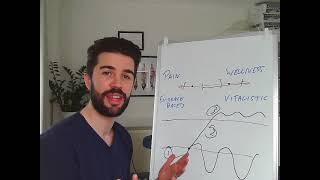
Chris Chippendale breaks down misconceptions in chiropractic philosophy, particularly around evidence-based versus vitalistic approaches and the spectrum from pain treatment to wellness care. The video pushes for more nuanced conversations within the profession.
Hey guys. Chris from Patient Centered Training. And today I wanted to talk about a couple of hot button issues in chiropractic. And this is an area where I think there's a lot of confusion, a lot of miscommunication can happen and see if we can tease this out to work out what's actually going on and how we can better understand and move forward as a profession. So this is basically on the chiropractic spectrum. Now you're probably aware of this in some form or another, even as a student. There are different philosophies within chiropractic. There are different ways at looking what we do, different ways of practicing, different types of chiropractor you could be. And what's happened is the main perception is that you have these two types. You have evidence based practitioners on one side who treat pain and then you have vitalistic practitioners on the other side who are interested in wellness and well being. And well that's created is this stereotype of evidence based chiropractors just treat pain. Vitalistic chiropractors are just interested in wellness. And there's like a divide down here and never the two shall meet. I think that's a really bad way of characterizing the profession. I think it's really unhelpful. I think it's confused and mixed around different concepts. And what we're doing is we're lumping people together in caricatures and it creates straw man arguments that then explode all over social media. And it's partly why we're in such a mess. Particularly in the uk, we have four associations. You know, philosophically it's a mess and there's not a lot of collaboration going on there. So what I wanted to do is tease these out a little bit. So an accurate way of looking at it I think is you have pain to wellness and well being on a spectrum. And this is really how comfortable you are treating somebody along their recovery in their course of care. So if we think of the road to recovery chart you might have seen before I used to use, the idea is somebody's down here, they're in pain and maybe gets a little bit worse before it gets better. Maybe it gets better slowly, maybe they get it quite quickly. That's some of the early stages of care. But then what happens is they get here and then they've got a decision to make. This is when they're out of pain. And the road to recovery chart basically says you can either continue and then get fully healthy towards wellness and well being and then you've got maintenance care here. This is kind of phase one of care. Phase two, phase three, or what might happen is that you feel better but then it comes back in, you have pain relief, you get back out. You know, it was a way of introducing the concept of wellness and well being care to people. And I don't use it anymore. I don't think it's an especially useful child. Obviously there's more than two options there. That can happen with most patients, but this is quite useful to look at that pain to well being structure. So if you're a practitioner who's focused on pain, you're really comfortable with phase one. That's where you like working. Once people are out of pain, you're not necessarily that interested. A pure wellness practitioner doesn't really want to help people here. They're looking maybe towards option two, but their focus is to get people into phase three towards that well being. Sorry about the rubbish drawing there. So wellness practitioners are focused on this, pain based practitioners are focused on that. And this confusion is that this is evidence based and this is vitalistic. Well, hopefully you're already realizing that most practitioners do not just occupy one point on this. They're not just here. For example, they might occupy a range, they might go, I'm happy with people in pain. And then once they're out of pain, their recovery is doing well. That's fine. Maybe I don't focus on wellness and optimising their health. Or you might be somebody who's really focused on here. You're happy getting people from phase two where they're just out of pain to focus here. But you're not really that interested in treating people in pain and that's absolutely fine. As long as you know that and communicate that clearly to everyone who comes in your door. I don't think there's a problem with that. It's fine to have your own preferences. Personally, I love the whole spectrum. I like taking people right from in pain and right the way to as healthy as they can be. I would say I'm a pain based well being or a pain based wellness practitioner, which doesn't make a lot of sense in the way this is often put. So that's one spectrum. What the confusion is occurring is that we are assuming that that also describes this evidence based and vitalistic and we have tied these terms and we've tied these terms together. I think that's wrong. I don't think that is an accurate picture of what's going on. It's a caricature, it's an oversimplification that then gets pushed to attack the other side. So the vitalistic practitioners attack the evidence based thing. All you care about is pain. You're just pain based. And the evidence based practitioners attack the vitalist. That saying, well you, all you care about is wellness. You're not really helping people in pain. I don't think that's really helpful. I think there is a separate spectrum for evidence based versus vitalistic practitioners and you can be at a different point or a different range in either of these. You could be a pain based practitioner with vitalistic beliefs. Now why is that? Well, this is really talking about who you like to treat, how you like to help people, how far you like to accompany them on their recovery. The evidence based versus vitalistic is your own personal beliefs about reality. It's sort of a metaphysical thing. Evidence based would be reductionist, materialistic. You just like things that are more proven. The body is a collection of parts. It's all emergent behavior. Vitalistic and vitalism is a belief in some other life force, something that animates the body. The whole is greater than the sum of its parts. A little bit like the concept of qi in Chinese medicine. It's this, this life force, if you will. And that really is personal preference. Though that doesn't come down to how you like to help people. You can believe in a vital life force that inhabits the body and gives it itself regulation and still be perfectly happy treating people in pain. Maybe you could be just wanting to focus on this flange despite having vitalistic police. You can be very evidence based on and still want to optimize people's health and well being. So I think we need to separate those two spectra because separating them is going to allow us to have much more useful, nuanced and realistic conversations and better understand each other rather than tying all these terms together. That's where a lot of problems occur within society generally is people assuming, well if you're that then you must be that. And I don't think that's true at all. So hopefully that clarifies things a little bit. All I'm really looking to do here is start a conversation. This is a conversation we need to have as a profession. We haven't been doing that because we've been mixing these terms around and we can't even get off starting box. So hopefully that's generated some thoughts for you. I'd love to hear your thoughts. I'd love to get conversation going. If you're not in the Facebook group already. Definitely join that. If you just search Patient Centered Chiropractors in Facebook looking groups, it's the top one there. I think that's the best place to have a discussion because it's not tied to fractures, it's not tied to one association or the other. But hopefully this will start in some other groups as well, and we can all start to have more realistic, more accurate, and more helpful conversations around what we do as a profession and around how we help people. So join the group Patient Centered Chiropractors. Just look it up on Facebook. Let me know if you've got any thoughts or if you want to chat about this. I think we need to just generate that conversation and I'll be back soon for another video. Anyway, take care of.










