🎯 Purpose First: Revolutionizing Non-Profit Finances with Mike Michalowicz 🎯
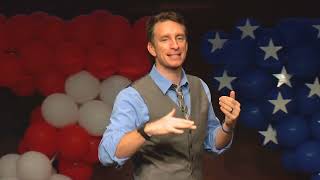
Mike Michalowicz, a high-energy entrepreneur and author known for quirky business books, brings his perspective on entrepreneurship to nonprofit finance. He's spoken at Harvard and Princeton and appears regularly in media. This is the opening of a nonprofit finance event keynote.
Now it's my pleasure to introduce to you our first speaker of the morning, Mike Bacalowicz. Now, yeah, it's not too early to clap.
Absolutely.
Now, from what I've read about Mike, I would say that we are in for a definitely entertaining hour or so, and we're pretty thankful for Mike for being able to squeeze us into your incredibly intense career and life, and it's an honor for us. To have you a part of this, this great day. And so as you can read in your program, Mike is a successful entrepreneur with boundless energy. He makes frequent appearances to the media and some schools you might have heard of, Harvard and Princeton maybe, to share his knowledge and insight to the masses. His popular books have reached even more people with his unique combination of education and inspiration. Now anyone I think that can work in the words pumpkin and toilet paper into his book titles is, he's got an interesting angle on life life and business and entrepreneurship, and I think we're all going to gain a lot from the next hour or so. Mike, we appreciate you having you here this morning, and we're looking forward to hearing how your insights can relate to our nonprofit challenges and opportunities. Ladies and gentlemen, please welcome Mike Michalowicz.
Thank you. Thanks so much. I appreciate it. Thank you. So it's— oh, I like the hand clappers. So it's funny, it was like those hand clappers, I'm from New Jersey, we have cicadas So when you hear that, I'm like, "Oh my God, the cicada attack!" I also thought it funny, all these wonderful awards and stuff, the hand clappers going crazy, that wonderful introduction of myself, and there's one person when he says, you know, "Mike McAuliffe is here," one person's like, "Oh, yeah." So thank you. It was my mother. She's in the audience. My most popular book I've written is called "Profit First," and it's kind of interesting to be here speaking with predominantly not-for-profits. I think officially, collectively, we have entered bizarro world. What's the profit guy doing here? But, you know, profit translates to sustainability. And what I want to talk about today are ways to become sustainable, ways to manage money in perhaps a way you've never thought of before, a way that's far simpler and easier. And to realize how we work with money is we have to realize that all of us, at least the majority of us in here, have an addiction. Now I know for some of you, you're like, "Oh my God, don't look at him. I don't want to admit it." No, not that addiction. No, we have an addiction to what's called axioms. Now I don't know if you're familiar with that term. It was new to me when I discovered the word. An axiom is a belief that perpetuates through society because the prior generation believed it to be true. So we believe things to be true today because the prior generation said it was true. And they believe things to be true because the prior generation to that believed it to be true. And these beliefs perpetuate throughout time. They're called axioms. And one that we're probably all familiar with is there was a time that society thought the world was flat. Remember studying this in grade school? It was around 500 BC. That we, humanity, thought the world was flat. And if you took your boat out into the ocean and you went too far out into the ocean, you could fall off of the edge of the planet. Which you can laugh at that because it's ridiculous now, but we just continued to believe it to be true. And if you look at historical maps from back in the yesteryear, you see pictures of serpents and monsters in the corner of those maps. They were there to dissuade sailors from going out far into the ocean, to put fear into them to participate in what's called coastal commerce. Just have your city trade with the local city along the coast, but never take the boats out into the ocean. Well, one day around 500 BC, Greek philosophers were studying or sitting out watching the boats kind of floating around the ports. And as the story goes, the master philosopher was sitting there with his apprentice, eating a pear. And on the pear was a spot, you know, a brown spot. And as he looked at the pear and he noticed as he twisted the pear away from him and then turned it back toward him, the spot would disappear beyond the horizon of the pear. And as he turned the pear back, it would reappear. Well, he's looking at this and then he looks out at the port and notices that as the boats navigate out of the port that they slowly sink below the horizon. And as they were returning to port, they were coming back out of the horizon. And he looks at his apprentice and says, do you know what this means? And the apprentice dutifully looks at the master and says, of course, master, the world must be round. And the master looked back at the apprentice and said, no, you idiot, it's shaped like a pear. That was a hysterical joke, if you didn't catch that. All right. And not historically accurate, I'm sure. But the rest of the story is true. The irony is it took our globe, our world, another 2,000 years to accept this new belief, this new axiom. It was in 1492 that Christopher Columbus sailed the ocean blue and other navigators started to circle the world. Those Greek philosophers, as the story goes, were stoned. Not that stoned, like stoned. Stoned after coming out with these beliefs because it was against the axiom. Everyone knew the world was flat and the first people who challenged it were stoned to death. Hopefully they did get stoned before they got stoned. That'd make it a little bit easier. I found there's another axiom that nonprofits and profits live by, and it's crushing so many businesses. It's crushing sustainability. There's an axiom, a belief that we've been told— I know you know this simple formula— that sales minus expenses, meaning donations, the money you collect, minus the expenses you incur, results in the remainder. Profit, if you're a for-profit business, or purpose if you're a non— or not, yeah, nonprofit business. The remainder is our purpose. And that's the ultimate problem. Because while logically it makes sense, you must collect money, you must spend money to sustain your business to keep it going, what's left over to serve your purpose must come last. While logically that makes sense, behaviorally it's fundamentally flawed. Because what comes last behaviorally gets ignored. Admittedly, I was not an athlete or anything even close to it in grade school. Just to give you a sense, we played kickball in grade— yeah, see, you can already tell he's horrible. Who kicks a ball like this? I do. I kick a ball like that. And I was so bad in kickball that in grade school, my gym teacher You know, kickball is kind of like baseball. You roll the ball and people kick it. For me, the gym teacher would put it still on home plate and I would still strike out. That's how bad I was. And guess when it came to picking the kid for the kickball team, who was always picked last? Me. This yucko was. And the lesson is this: when something is picked last. It's not important. It's what we want to avoid. And by having our purpose come last, we're subconsciously programming ourselves to ignore it or avoid it. It's a behavioral response. It becomes less significant. What comes first gets prioritized. Raise money, run the organization. Raise money, run the organization. And the purpose we're meant to deliver comes last. Well, what I want to share is that we need to flip the formula. And I live this all too well for myself. I've always had for-profit businesses. I'm a big participant in an organization, a not-for-profit called Kiva. I love the organization. It contributes to third-world countries and impoverished communities to bring about entrepreneurship. But I believed that the traditional formula of sales minus expenses equals profit was was the formula we used to grow our businesses, and I started to becoming living proof of it. And how it worked for me is I was building my first business, which was in technology, and after many years, I sold it to private equity. And at that moment, I made a lot of profit for myself, and I said, "Oh, profit isn't something that happens all the time. It's an event. There's a profit event." You know, when that big donor comes and that money's finally plopped down, That's when we can deliver our true purpose. And then I was in my second business was in computer forensic investigations. We helped facilitate some major criminal investigations, some of the biggest in US history up to that point where there was computer forensic evidence. And when I sold that company to a Fortune 500, that's the day that all the profit flowed in and I was now convinced that profit was not something that was baked into our business. Purpose wasn't built into us, every transaction, every donation. No, it was something What's going to happen one day in the future when that big moment happens? Now those little bullet points of my businesses, that is part of a CV. Is everyone familiar with the term CV? I always thought it stood for curriculum vitae. You know it doesn't. It stands for covers vomit. Because under the bullet points is this nasty, disgusting reality of what our organizations are like. I was barely surviving growing these businesses. I was barely surviving trying to sustain. It was a horrible ride. I remember just to pay the payroll for our organization one more month that I had to refinance my house one more time. And when payroll surpassed $200,000 a month in my second company, I remember sitting home in a cold sweat, shaking, a full breakdown, saying, "I can't finance my house again. I'm going to lose everything. Everything's gone." And just begging and dying for these big moments to come in. Some big investor to swoop in, some big donor just to give, someone to get me out of this insanity. And I thought that was just restricted to me. I found it's true for many of us. But I didn't learn the lesson just yet. Yet. After selling that second company, I received, for me, the biggest check I've ever received in my life. A lot of zeros. Now, before this, I got checks with a lot of zeros and the 1 came after the zeros. It was like 000.01. I got a penny. But this time, the first time in my life, I got a 1 in front of the zeros written with my name on it. Now, I don't know if you've ever experienced this. When I go to the bank, you know, I deposit like $20, $100. A big day is like, It's $500. First time I'm ever depositing a check of this size. Now, what happened to me as my bank account expanded, my ego admittedly exploded. And so when I sold my second company, I said, now I must show my success to the world. I will accumulate some trophies to show my success and how significant I am. And what I did, and this is true, on one day I bought a Dodge Viper, a Land Rover LR3, a BMW 7 Series, All— yeah, you can start laughing— all within 5 hours. It is technically possible if you have a personal assistant that can help you facilitate that. And I remember pulling up in my Dodge Viper. If you don't know what that car is, it's called obnoxious. And I drive up in my car, vroom, vroom, vroom, to the bank with the second deposit that had come in from Robert Half International, the second check. And I pulled up to the drive-through booth with that vacuum tube, that plastic tube you get, and there was this young teenage kid over here just clicking and clacking away, tick, tick, tick, and he's not looking at me. And I sit there, Mr. Ego, going, blah, blah, blah, blah, blah. If my exciting car doesn't catch your attention, young fella, this check deposit's going to blow your mind. So I open that vacuum seal pack, I put in my check, and listen, if you're depositing a check this size, I presume some form of ID. So I put in my license, a passport, birth certificate, the whole pack. And it shoots over. That's it. Click, clack, click, clack. Never looks up. No eye contact whatsoever. Just keeps click, clack, click, clack. Shoots back. And I'm sitting there, I'm like, what does it take to impress people? I open, I open the returned vacuum-sealed tube, and in there is the receipt for a deposit and a lollipop. Oh, and that's the moment. And that was the moment I said, oh, clearly I'm not showing what success is. I must do this on a bigger level. I moved into a town in New Jersey where I live now. It's called Mountain Lakes. Chances are you've never heard of it. It's a very small town. The irony— oh, one person. My mom is in the audience. And she has a clapper. Those freak me out. I do not do that. I'm thinking they're cicadas. No, you can. I move into Mountain Lakes. So if you know Mountain Lakes, If you know New Jersey, here's the irony. There are no mountains in New Jersey and there's no lakes. We have some hills and a few ponds. So the technical name is I live in Hilly Ponds. And I decide I'm gonna buy the biggest house in town to show my success. I decide that I'm gonna join the Mountain Lakes Club and be the highest ranked name, the biggest contributor, means the person that spends the most, will have my name up on there. And I decide I'll become an angel investor because the more businesses I invest in, if you have a good idea, I'll just throw money at you because Mr. Genius is here and we'll navigate our ways to success. Plus, I knew the formula that if we just pumped and dumped, if we just grew and grew and exited out, if we just grew and grew and that one savior came in, everything would be fixed. I knew the formula. I started 10 businesses all within a month of each other, and within 6 months, 9 of them were out of business. I saw a decline that was so fast that I was paying bills for companies that didn't even exist anymore. And I started becoming desperate, saying, well, I just got to buy my way out of this. I just got to find that one person who believes in me and is going to step in and save this. From 2006 to 2008, I lost every single dollar I had. I started lying to my family by omission. Oh, everything's fine. Everything's great. And through the night, I'd just be shaking, cold sweats, panic. And the next day, I'd say, come on, someone just save me. Something just big, something happen. My angel investing career was an abysmal failure. I prefer not to call myself anymore an angel investor. I prefer to go by the angel of death. That's how bad I was. And on February 14, 2008, I lost my last dollar. I knew because my accountant called me up and said, Mike, we're finishing your taxes a little bit early because there's really not much going on. You owe a tax bill of $20,000 because you haven't paid any taxes this year. And he goes, but there's nothing in your bank accounts. I mean, you got nothing. And I said, Keith— my accountant— Keith, what do you do when you can't pay your taxes? And he said, oh. You go to jail. And I was like, oh, thanks for the encouragement. What's the alternative? And he said, you can go on an installment plan, which if any of you have been on a tax installment plan, that's worse than going to jail. It was a pure disaster. And that was the day I realized I had to go home to my family and tell them what had happened. Everything was gone. I returned home February 14th. I don't know how you celebrate— well, maybe I do know how you celebrate February 14th. How we celebrate at our house, maybe it's different than yours, is it's like Thanksgiving. We cook a big meal together, the entire family. We then exchange cards at our table. So I have 3 children and my wife, and we will exchange cards, and I'll write to my wife what I appreciate and love about her and why I think she's amazing and give it to her. And she'll do the same for my children. And we all rotate around. Thank you. Thank you. Do it. Thank you. Thanks. Ironically, my mom didn't applaud for that one. But it's an amazing experience. And it's my favorite— it's become my favorite holiday, except for February 14, 2008. Because that was devastating. I came home and I was sullen. I mean, just dark. And my wife looked at me and she asked the words that cracked the dam. She said, "What's wrong?" And I just started to cry. And it wasn't like anything pretty. It wasn't like a— it was a— Thank you for laughing at that. Clearly, we feel very comfortable with each other already. And I sat at our dining room table in the chair and I was just bawling. My children and my wife couldn't even look at me. They're like, what's going on? What's going on? And I just started yelling, it's gone. I've stolen it. I've stolen everything. Every penny is gone. I believe that part of my life's purpose is to provide for my family. I truly and factually believe that. And I was the person who stole it all away. My daughter was 9 years old at the time and she ran out of the room. And I remember, I remember that's what I should do. I don't know if you've ever been in an experience like that. I suspect you have been. I don't know what your version of the story is, but I bet you've been there. And the moment when everything collapses, the best solution I feel is just to run away, go to a place where No one knows me. That's where I'll restart. The solution is to run away. Thing was, my daughter wasn't running away. She went to her room, and she came back with her piggy bank. She put it down in front of me, and she said, Daddy, I'm going to cover us. And I don't know if you've been there. That moment is a bizarre confluence of events, of emotion. I was so proud of my daughter. I was so ashamed and embarrassed of myself. I felt privileged to know this young woman. That moment will be with me till the day I die. My final breath will be remembering that moment. And that was rock bottom. Now, here's the irony of rock bottom. I know you've all been there. In your own way. And I suspect many people in this room, your situation was 100 times worse than that. There's a saying, when you hit rock bottom, the only way to go is up. Bullshit! It's a total lie! I don't know who said that. It's a total lie. When you hit rock bottom, At the bottom, there are shards of glass and shells and bricks and they drag along your face. It is murderous down there. When I hit rock bottom, I went through 2 years of misery, depression, what's called functional depression. It's the highest level of depression. I hope no one here has ever experienced depression of any sort, but statistically many of us have. It's a horrible position to be in. And how it manifested for me was this. I would not participate socially. You would never see me on a stage. You would never see me go out. I would not talk to friends. I'd hide away. I became an insomniac and started to drink. I am not a drinker. I'll talk a game. I'll say, hey, let's throw back a couple margaritas. Halfway through, I'm done. But not this period of my life. I started to drink, and I remember in 2008, 2000, yeah, around 2008, sitting on my couch in my house. We had to cancel television, by the way. We lost everything we owned. We moved to a rental house. We lost our cars. My daughter, who loved to go horseback riding, and it cost $20 a week, couldn't afford to do that anymore. That was gone. And I remember sitting watching television. I couldn't afford cable TV anymore. And did you know the rabbit ears still work? They do. I couldn't believe it. I put the rabbit ears on and at 2 o'clock in the morning when you're an insomniac, there's about 3 channels playing. It's all infomercials. And around me here is all these empty beer bottles. I'm wearing a white t-shirt, like an undershirt, covered with Cheetos stains. And I don't even like Cheetos. And I turn on the television and Suzanne Somers is up there with the ThighMaster. And she's clapping away. And I am like, what has my life gotten to? And as I'm saying that in my head, I look down and I had purchased the ThighMaster to finally get back in shape, and the box is sitting there. Maybe that was the true rock bottom moment. And what happened was it wasn't like all of a sudden I said, oh, I have the epiphany of life. I know how to fix all of the ills of mankind on my own. No, but it did encourage me, it did spark me to turn the channel. I flipped off Suzanne Somers And on pops a fitness expert. And she starts espousing these ideas, these thoughts that to me were mind-blowing. My mind started firing away. She was talking about physical fitness, our diets and cardiovascular fitness, and she started talking about these principles. But her opening comments to the audience that she was talking to was just fascinating. She said, you know, all of these— she's talking to her audience— she goes, you know, all these These gimmicks we have, like the ThighMaster. I'm like, yeah, I know that. I know that. And she goes, the Ab Inductor. I don't know if you ever heard of the Ab Inductor. It's a belt that you use to electrocute yourself until you're ripped. Like, I feel great. Look at my abs. She goes, all those things, they don't work. They require us to change radically behaviorally who we are. And conversely, there's the other extreme alternatives. P90X is very popular now. She goes, those fail almost for everybody. Not that they're bad systems, but they don't work with our behavior. I mean, quite frankly, if you follow the P90X routine, you are willing to work out 4 hours a day every single day until your head's about to explode, you'll get physically fit. No question about it. Yet the vast, vast majority of us fail, she explained. She said the solution is not to change our behavior, it's to build systems that work with our existing behavior. Work with our existing behavior. What do we already do? Put parameters or guardrails around that. Oh, I see some of you writing notes. I do have a worksheet for your note-taking if you want down here, so I'll give you some of the answers as we go along. Just in case you missed me. Number 1, number 1 says society's addicted to axioms is the fill-in-the-blank answer. If the prior generation says it's true, the current generations assume it to be true. And there was a statistic I didn't mention yet. 83% of small businesses are surviving check by check. 83% of nonprofits, not-for-profits are surviving check by check. Check by check. What it means is a significant donation, a significant deposit doesn't come in, we're not going to be able to sustain our organization next month. There's another statistic, I don't know if you knew this, the SBA did a study, they found that 50% of small businesses and nonprofits go out of business within the first 5 years. Have you heard that statistic? Some of you have? Yeah, it's true. 50% of businesses go out of business in the first 5 years. The other part of the statistic they don't tell is those are the lucky people, because the people that survive are barely surviving, and it's a struggle to get by. There's a certain point where our businesses, our organizations start eating our soul. We put so much into it and it never takes foot. So that's the other thing on that worksheet. I should just leave it out so I can point things out on there. But 83% is the number survive check by check. Number 2, I already mentioned it, purpose. You can exchange that word for profit. Purpose is not an event. It's not that big donor. It's not that big moment. It is a habit. It needs to be baked into every single donation that comes in. That $2 donation has purpose, and we need to extract it out immediately. Well, this fitness instructor is teaching the audience about how we need to put guardrails around our behavior. She then starts talking about nutrition, and she shared 4 principles that bring about physical fitness. And if you understand these 4 principles, I assure you they will also bring about fiscal fitness. So let's get right into it. First principle she shares is the concept of smaller plates. Now I don't know if you know this, in the American diet, and I travel the globe too, globally this is true. Did you know that the plates today are double the size they were merely 200 years ago? Our founding fathers, George Washington and all those founding fathers, ate off plates the size of our dessert trays today or dessert plates. So if you ever look at pictures of George Washington, you're like, "God, he was a pretty lean, mean fighting machine." It wasn't because his wooden teeth prevented him from eating. It's because he ate off a plate of this size. The behavior of 200 years ago and the behavior today is fill up the plate, and as our moms have told us, clean up your plate, eat everything that's on your plate. So today our plates have doubled, the servings have doubled, and we follow the same natural behavior, and our consumption have doubled, our caloric intake has doubled. Reduce the size of plates in your house. Now, I didn't necessarily believe this right away, so I'm like, I'm gonna run a little test at my house. I don't know if you've ever experienced this one. At my house, the kitchen, the garbage can in the kitchen is a pretty sizable garbage can. I have two sons and my daughter and my wife and I that use the kitchen, of course. And I notice my job, I'm the garbage man, by the way, that's my job. I take out the liner, throw the garbage away, I put a brand new liner in it, and it seems like within seconds, all of a sudden it's filled to the brim again. Like, literally, the same day I replace that liner, the garbage is just right to the top. But then if I forget to change the liner or I don't touch it for a week, it stays at that level for a full week. The lesson that she was explaining applies more than just to plates. It applies to all elements of our life. When the space is available, it gets consumed right away. So I ran a little experiment in my house. I bought one of those kitchen garbage cans at Walmart. It's like, you know, this big. And I slid that in under the sink in our kitchen. And sure enough— oh, and by the way, it's so small there's no liner. I had to use the Walmart bag that I bought it in as the liner. Within seconds, filled to the brim, but it also lasted a full week. The lesson is that our appetite expands to meet what we see available is so true, and this will translate into fiscal fitness. I'll explain how just in a second. The second principle she shared is to serve our vegetables first. In the American diet, and this is true globally too, it is tradition now to serve the meal simultaneously. What I mean by that is if I like meat and potatoes, that's my style, so I would get a steak, the potatoes, and the vegetables served simultaneously. And if you've ever experienced this, getting a meal served like that, which you probably have, that's how all restaurants serve it, you may notice what happens next. What we do is when everything's served simultaneously, we move to our preference. For me, it's the ribeye. And I'm like, oh my God, this steak, oh, this is delicious, I love this, right? And I'm eating some more, I'm watching whatever people are eating, oh, sorry, you got pasta? Mm-hmm, right? I eat my steak. Then I look at the potatoes and those mushy steamed vegetables. I'm like, "Well, the potatoes, I'll try that. Good. It's not steak, but it's okay." And then I look at the mushy steamed vegetables, I'm like, "I'll just wait on that for a second. Back to the steak." Then, you know, you start, you see people eating, it's like, "Well, I don't want to see, I don't want people to think I don't eat vegetables at all, so I'll start the cover-up." And what the cover-up is, you take your mashed potatoes and you start covering the vegetables so it looks like you ate them. And I know you know that's true because if we go to any dumpster outside of any facility, including today, the most thrown away food item always is the vegetables. So what she explained was instead change the sequence we eat our food in. I could yell at you, and you've heard it a million times, eat your vegetables, eat your vegetables. That's what my mother told me, eat my vegetables. We can hear it ad nauseam. But it won't change our behavior. Instead, again, put guardrails around what we already do. So she said, just change the sequence. Serve the vegetables first and nothing else. Just serve vegetables. So now the steamed vegetables are in front of us, we're like, I'm kind of hungry, okay, and I'll eat some. Then only after a short period of time do you introduce the rest of the meal. And what happens is nothing short of miraculous. We've now consumed vegetables, we got our vitamins and nutrients, and it's filled up some of the space in our stomach, so we eat less of the rest of the food. It brings about automatic balance. Interesting. This translates to physical fitness. The third principle she shared is to remove temptation. I don't know what your temptation is. Maybe it's chocolate chip cookies, maybe it's soda. For me, it's a thing called a Chocodile. Does anyone remember that? This is from the— one person back there. So the Chocodile, if you're not familiar with what it is, and you can verify this to be true, The Chocodile is a Twinkie covered with chocolate. It gets better because it's wrapped in love, Hostess love. And they discontinued them in the '70s. But quite frankly, with the preservatives they put into them, they're probably still pretty darn good today. And if there was one floating around here, I would fight you for it. I could sniff one of those things out in a second. And I can't resist it. And quite frankly, if there was a heap of them here, initially I'd say, "I don't need a chocolate diet. I don't need those cookies. I'm not going to eat that." I'll try to invoke willpower. Then after a few minutes, I'll think, "Let me just take a little waft of that. Oh, smells so good, but I'm not going to eat more than one bite." I take a bite and I'm like, "Oh my God, this is so good." And then, ahh! And the consumption begins. She explained that willpower is like a muscle. It fatigues. It fatigues. So she said instead of allowing the temptation sit in front of us, remove the temptation. Put it somewhere where we don't see it. And then the fourth and final principle that she shared was the frequency we eat. We go through what's called peaks and valleys. Most of us are on a 3-meal-a-day diet—breakfast, lunch, dinner—and many of us will skip a meal. Maybe not breakfast today because it was served outside, maybe not lunch today, but maybe you get home a little late and you skip dinner. I bet you many times you've skipped breakfast, rushed to get out the door. I have to get to that meeting. I have to go meet with that donor. I'm just going to head out there and I'll catch up on it later. And what we experience is peaks and valleys because we missed the meal and for breakfast, our hunger climbs, climbs, climbs, and then when mealtime comes, lunch, we overconsume. We stretch our bellies out. Oh my God, I'll never eat that much again until dinner. And we start the process again. It becomes these peaks and valleys. She explained that instead, and I know you've probably heard this, that we should eat 5 meals a day, 5 small meals a day. A small breakfast, a small meal between, a small lunch, a small meal between, and a small dinner. And what happens is instead of having these peaks and valleys, it causes our hunger sensation to be maintained at a very minimum, actually reduces the total caloric intake we have. And this also translates to physical fitness. As I was listening to this, I was like, this, this is it. This is the solution to finances. And I started documenting I started writing about it, and I used to write for the Wall Street Journal. I wrote an article for it, and it ultimately became a book. And I want to share with you the 4 principles I found that can bring around fiscal fitness. The first thing is to start with small plates in our business. Now, if there's any accountants in the room— oh, so, okay, so you're either going to love me or hate me now. We'll talk to you after the event. We'll hang out together a little bit. In traditional accounting, here's what we're told to do and what your organization needs to do. You have to know how to read your income statement, tie that to your balance sheet and your cash flow statement. Make sure you understand what's called the OCR, the operating cash ratio, and your KPIs, your key performance indicators. Tie that in together with your budget, and there, if you do that once a week, you'll know exactly where you stand financially, right? Quite frankly, I don't even know what I just talked about. Like, that stuff is so over my head. So I'm a business owner, I'm a founder of an organization. What do I do? I resort to what's called bank balance accounting. It's the bane for almost every accountant that exists. So if you throw up your mouth a little bit now, I get it. What I do is I log into my bank account and see what the balance is. I'm like, oh, all right, a lot of money came in, business is good, organization's running perfectly. All right, let's pay those bills, let's get things going. More oftenly— often I look— or oftenly, that's actually a word now. More oftenly, I— yeah, we're learning new words together. They said this would be a pretty amazing presentation. That was pretty amazing. I log into my bank account more often, and I see that there's no bank balance. And that's when panic ensues. Oh my gosh! Anybody sell anything to anyone. I don't care. Just bring money in. We'll take money from anyone. I become reactionary, but it's called bank balance accounting. And just honestly, by a show of hands, has anyone ever done that, checked your bank balances? Okay, yeah, yeah. If you raised your hand, or if you have done it, just didn't feel compelled to raise your hand, I'm telling you, this is our normal natural behavior, and it's your best ally. To check our bank balance, our best ally. But if we follow the traditional accounting principles of reading all the statements and so forth, we aren't working with our natural behavior. It's kind of like doing the P90X. It's important, it works, but for the business owner, for the person that runs the operation, it's not natural. That's what accountants and bookkeepers do. That's why we need to hire them to do that stuff. But we need to work with our natural behavior. Here's what we need to do. Set up multiple plates. Now just again, by another show of hands, how many people have one primary checking account where all of your donations come in, or if you're a for-profit organization, your sales come in and you pay your bills and expenses from that? Just by a show of hands. Okay, good, the vast majority of people raised their hands. Here's the challenge with having one primary account. It acts as a big serving tray for our business. Think about Thanksgiving. It's right around the corner. It's just weeks away. Thanksgiving, perhaps you're going to go and visit with friends or they're going to come to your house and the family's over. And that beautiful moment when the serving tray comes out and that gorgeous golden turkey is there. Now the host for that event doesn't say, here's our turkey, everyone just dive right in. Let's eat off the serving tray. No, they will Carve the turkey, apportion it for each person so everyone gets some. It's not a mad dash to just jump on the serving tray. We apportion it out. In our business, when we have one serving tray, one main checking account, our business eat off of the serving tray, just dive in, and it works to our disadvantage. In fact, we fall victim to a thing called Parkinson's Law. And of all the things I'm going to share with you tonight— today— we are going to go all the way into the evening. Of all the things I'm going to share with you this morning, Parkinson's Law is perhaps the fundamentally most important thing you must know. It is the fabric of human behavior. Now, here's what Parkinson's Law— it has nothing to do with Parkinson's disease. It was a different philosopher. Well, he was a doctor, but this was a philosopher who studied human economics and human behavior. And he discovered something with economic theorems that's wrong. It's called the demand— supply and demand curve, and perhaps you know this. In Economics 101, they say as demand increases, the more stuff people want, that supply will increase to meet it. The more people want to consume, vendors, service providers, organizations will come about to service that demand, which is true, logically but not behaviorally. He noticed that human behavior is actually the exact opposite. It's natural human behavior as supply increases that our demand will increase to meet the supply. And I just explained it with, with the plates. If you serve a large plate of food, we will actually consume, demand more of it because there's more available. But perhaps my favorite example of Parkinson's law is with toothpaste. And tonight, when you brush your teeth, just watch how you behave. Let me set the scene for us here. We'll pretend this is our kitchen— or our kitchen sink, whatever— our bathroom sink. Maybe you do brush your teeth in your kitchen. Cool. Your issue. Great. I get it. You go up to your sink here. I'll make sure everyone can see. So here's the sink. And you walk up and you pull out your toothbrush, you turn the faucet on, the water starts running, and then you grab for the toothpaste. And there's always one of two situations with the toothpaste. Maybe it's a brand new tube, right? You take out your tube and you're like, all right, you put this long bead of toothpaste on it. Yeah, I have no idea why you do this. That's your issue. All right, I'm kidding, I'm kidding. Um, you put a long bead of toothpaste on the toothbrush. And then, you know, the faucet's running, so you want to get the toothbrush a little damp. You put the toothbrush under there, and the water pushes the toothpaste, blasts it right into the sink. And we look down, and we're like, "Oh, that's disgusting. Like, all the bacteria down there? No way am I touching that. I got my new tube of toothpaste," right? You put it back on, you start brushing away. Now, scenario number 2. And you know what's coming. Scenario number 2. You take out your toothbrush, you open the drawer, and there's the tube of toothpaste and it's empty. It's all crunched up. And that's when you're like, "Oh my God, I didn't plan for this." All of a sudden we become like superheroes. You put the toothbrush down, you grab that tube of toothpaste, and you're like, "Grrr! Grrr!" You've never been so strong in your life. You start twisting and turning it. You use your knee pit as the perfect vice clamp to squeeze toothpaste. Mm, mm. It gets worse. It gets worse. Then we have the turtle moment when the toothpaste starts poking out and you're like, okay. And you got like every part of your body, you got a chin in there. You're like, okay. Just get on that toothbrush. Just get on there. And you look, and then the turtle head shoots back in. Right? Finally, by the miraculous strength that you were able to muster together, you give it one final wrench, and you dab it on the toothbrush. And like one bristle hair has one drop of toothpaste. And you're like, yeah, that's all I wanted. I'll have fresh minty breath with this. It's perfect. Oh, I just got a damp in my toothbrush. You go to the sink this time, the water bursts out again and it knocks that one droplet into the sink. You look around, no one's looking, you dive in after it. If you're laughing at that, if you're laughing at it, it's because you experienced it. And if you've experienced it, You are living Parkinson's Law. Parkinson's Law states that as the supply changes, our demand for it changes. Frugality automatically kicks in. When there's less toothpaste, of course we use less. But the greater part of Parkinson's Law is what happens next. Innovation kicks in. We go to extraordinary measures to twist and turn and extract toothpaste from that toothpaste tube. We become extraordinarily innovative, doing things we have never done before when there was a supply available. And I suspect a brand new tube of toothpaste in your house could last a couple weeks. I suspect an empty tube of toothpaste could last a couple weeks because of our changes due to Parkinson's Law. If you have one bank account at your— for your organization, that is a massive tube of toothpaste. And subconsciously we say, oh, we got the funds available, and it goes away here, it goes away there. Instead, I found that most organizations should set up 5 accounts. And actually, if you're a not-for-profit, my business partner Lynn— could you raise your hand there? She works with this system for not-for-profits, so she can answer probably even better questions She can answer your questions even better than I can. But a not-for-profit, I found, usually has 6 accounts. So a for-profit business, for the folks in the room that are for-profit, here's the 5 core accounts. The income account, which will be our serving tray, but we will never eat off that serving tray. Money will come in there. If you're a not-for-profit business, the accounts are your restricted and unrestricted funds. So you actually have 2 forms of income, the donations that come in and then the restricted donations that come in that serve for different purposes. Again, serving trays. It simply goes there for display. Then the other accounts are as follows. We have a purpose account. This is the account where the money is reserved and prepared specifically to serve the purpose of your amazing organization. Next account below that is a payroll account, right? You have to pay the bills. You likely take a salary from your own organization. You're an employee of your organization. We need to allocate money toward the payroll. And then after that we have, if you're a for-profit organization, you must reserve taxes. If you're a nonprofit, this account is reserved for the audit that's inevitably coming your way every year. So the organization must be prepared for that and have the cash reserve to pay that necessary bill. And then the final account is called OpEx. That's the short, cool acronym for operating expenses. That's what you run your business off of. And by setting up these different plates, these different accounts, it brings about instant clarity. It allows us to continue that behavior of, huh, let me log into my bank account and see what the balances are, just like you've already been doing. But now, because you've pre-allocated money to different accounts, you know what purpose each dollar is going to serve even before you look at your accounting. Before you look at your budget. You can just see it just by logging into your bank account. And maybe you've already caught on. This system's like not something new that I've invented. This is the envelope system that perhaps you or someone in your family has used. My mother did this. My mother is German, which will come into play in a second. But my mother worked for a local manufacturer in New Jersey part-time. And my dad worked for an engineering firm, and they literally had physical envelopes, these mailing envelopes lined up, and my mother written on there had one account that said food, another envelope that said the mortgage for the house that my mother and father contributed to, and then another one said give back to our church, and then another one said fun money, and there were some others too. And when my mother would come back from work for that week and got her paycheck, she would cash it in and then divide up the money based upon predetermined percentages into each account. And when she went food shopping, for example, she'd grab the food envelope, drive over to the food store, and then open it up there and see what was available. Now, the interesting thing is she always had enough money to go food shopping. But don't confuse that with always having the same amount of money. Because sometimes when she was at work, she was sick and didn't work full-time. She took less pay that week. Other times she worked overtime and more pay. But when she was at the food store and opened it up, she made do with what was in that account. The definition of Parkinson's Law: you will find innovative ways to work with what you have available. You will twist and turn your business to do things that haven't been done before when you had the money readily available. And for my mother, when she was at the food store, if there was less money in there, it was rice and beans and rice and a lot more rice. Now, the German part of my mother is when she had extra money in there, she would splurge by buying liverwurst, which if you don't know what liverwurst is, it's actually worse than it sounds. It's liver sausage. It's horrible. It's absolutely horrible. My sister and I would just beg my mother, please get sick. Please get sick, don't work anymore. This is the envelope system. You can instantly measure what you have, and the rule is simply this: whatever is in the account, that's the purpose it must serve. If it's in your operating expenses, you can't go a penny above that. That's what you have to work with. If the money's been reserved for the purpose of your organization, that's the only purpose it will ever serve. But now you can see instantly where you stand. So lesson 1 in this process, in purpose first, is to set up multiple accounts. Go to your bank and set up multiple accounts and give them a nickname for all their intentions. Okay, step 2— oh, and actually, let me go on to the sheet here in case I'm getting ahead of us, which I way am ahead of us. I think we did number 2, purpose is not an event, it's a habit. Number 3 is the concept of Parkinson's Law leverages the behavior of make do with what you got. Number 4, we talked about— this is all lessons I got from the fitness instructor— the sequence. So number 4, the blank is sequence of how things are presented to us dictates our use of those things. Number 5, if something is not available, remember, remove temptation, we don't use it. So number 5 is the word available. And number 6, we already did too, is peaks and valleys in supply cause utilization of supplies to be reactionary and emotional. When we're starving, we just consume like crazy. When we're bloated, we walk away. Peaks and valleys. And number 7 is I talked about the 5 foundational accounts, but if you're a nonprofit, we should make this 6. The 5 foundational accounts are restricted donations or income and non-restricted. So that's actually two accounts. The third account is purpose, right? We're going to reserve money. So the first two I mentioned are your serving tray. The third account is profit— I'm sorry, is purpose, or if you're a for-profit business, it would be profit. The next one is payroll for your organization. The next account is your audit account, or if you're a for-profit business, the tax account. And the final count is operating expenses. So, principle 1: set these multiple plates. The second principle she shared was to change the sequence of how we serve food. I want you to change the sequence of how you serve money. Now, traditionally, how almost every organization I've ever supported, observed, trained, worked with, I found that the behavior is relatively consistent. Have bills on the desk here and have your bank account log in here. Watch these bills pile, pile, pile, pile, pile up and keep looking in there until the moment happens where there's enough money that we can rattle down some of these bills again, and then the bills pile, pile, pile, pile, pile up. And that's what it is. It's feast and famine, feast and famine, peaks and valleys. It's a very reactionary way to run our business. And as accountants will tell us, that's the worst way to run your business. Read the income statement, the P&L, cash flow, balance sheet, tie them together, tie it to your budget and all this stuff. But as operators of the business who are doing so many other things, the shortcut, the natural behavior, log into the bank account, see what's stacked up. We have to work with our normal behavior. But here's the one little change we're gonna make that now leverages our behavior. We're gonna change the sequence. Next time money comes in, you do not pay a single bill. You do not do anything. The first thing you do is you carve up that turkey. So when money comes into those depository accounts, your restricted and non-restricted funds, you take that money and then you allocate it out as it should be based upon your budget to the different accounts. You allocate its purpose first. You put it into those envelopes first. And this will put a guardrail around that moment where you're like, oh my gosh, I just need a little extra money. I'm just going to temporarily borrow from here, from Peter to pay Paul. And then we start unwinding the system. So step 2 is change the sequence that you do things in. Step 3 in purpose first is to remove temptation. Now, that purpose account, you know, the account that we're reserving money for the person or organization, will start accumulating more and more money. Every time money comes into our organization, we put more money into that account and it starts growing. Honestly, especially as a guy who owns for-profit businesses, that money starts becoming very tempting. When the electric bill comes and I don't have enough money in my operating expense account, I'm like, well, I'll just borrow momentarily. I'll just transfer funds here and I'll make it all whole at the end of the year. And that's when panic ensues because I don't make it whole. When there is not enough money in your operating expense account to run your operations, that is your organization giving you direct, immediate feedback that you aren't running your organization efficiently enough yet. You have to find a better, more innovative way. You have to break perhaps even the rules of how organizations are traditionally run and twist and turn to extract more benefit, to extract more value out of every dollar that you must spend through your operating expense. Our operating expenses. But even with that knowledge that when there's not enough money in our operating expenses to run our operating expenses, it still is awfully tempting just for a little bit just to borrow money that we've reserved over here. So we're going to remove that temptation, those chocolate chip cookies, those Chocodiles. I don't eat those Chocodiles because they ain't around anymore. And if there's no chocolate chip cookies in this room, no one's eating chocolate chip cookies. It's only when they become available and we see it does our willpower try to kick in and then we ultimately consume. So we're gonna take that money in that purpose account and we're gonna transfer the money from your primary bank to a secondary bank. So whatever bank you work with today, I encourage you to find a secondary one. And we're gonna move money over to the second bank. Because the goal here is to get it out of sight and out of mind. Because what's out of sight and out of mind, you don't worry or think about. I have a friend, he actually had a nonprofit. They got about $5 million in donations a year, struggling to sustain the business, struggling to sustain the business. And so what we did was we, I told him about this process and I said there's certain monies you must reserve and just never even touch, never even think about, just get out of your sight so you don't worry about it. We're going to set up a second bank account. And he made a phone call to a second bank and like many banks like to tout nowadays, We're the most convenient bank in the world. So my friend, his name is Peter, he went to the second bank and said, I'd like to store some money here. Which, by the way, I found out if you would tell a banker you want to store money at a bank, they start salivating like Pavlov's dog. So the bank manager, Peter told me, came running out. He's like, oh, you want to store money with us? That's wonderful. We are the most convenient bank in the world. Quite frankly, by joining our organization and banking with us, you'll receive free ATM cards, starter checks, online banking, all these wonderful convenience options. Now what Peter said was probably the smartest thing I've ever heard someone say. He looked at the bank manager and said, "In fact, I am not looking for the most convenient bank in America. I'm looking for the most inconvenient bank in America. I don't want the starter checks, the ATM card, definitely don't want online banking." He said, "The only way I want to withdraw money to serve our purpose is when I actually drive to the bank, I ask you, the bank manager, to come out and write a cashier's check to me. And he goes, and before you do that, please slap me in the face a few times to make sure I'm serving my purpose. That's the way to remove temptation. Our natural behavior— you showed me your hands— your natural behavior is to log into your bank account, see the balances. If you can't see the balance for your bank account, You won't worry about it. If that purpose has been— that money has been stored away, stored over here, you'll just look at what's necessary, that empty tube of toothpaste that you must run your business off of, and I promise you, you'll become highly innovative, highly, highly innovative and frugal. There's a wonderful story about this. If you've ever seen the movie Apollo 13— has anyone seen Apollo 13? An amazing true story. If you haven't seen it, Let me recount what happened and show you how Parkinson's Law played into this movie. The pinnacle scene of the movie, the astronauts, US astronauts, are circumnavigating the moon trying to use the gravitational pull of the moon to launch them back to Earth. Problem is this, the astronauts radio down to Houston, "Houston, we have a real problem," and says, "We are losing oxygen." I don't know if you remember this part of the movie, the oxygen filters, true story, start failing. The astronauts radio down and say, "We have approximately 10 hours before we're gonna be out of oxygen and die." And they had days to get back to Earth. In that next scene, the lead engineer in Houston, true story, takes a box, a cardboard box, walks into a room with the other engineers, dumps this box on the table, And the 6 or 7 engineers around the table are sitting there and he says, these astronauts are about to die if they don't have an oxygen filter. Here's the parts you got to make an oxygen filter. Go do it. And it was like a tube, some radio wire, maybe a tube of toothpaste. It was a few things. And they made an oxygen filter out of it. They literally saved those astronauts out of spare parts. They MacGyvered it. That's for you MacGyver fans, all 2 of you. So— oh, now 3. All right, all right, MacGyver. OK, OK. The greatest round of applause was for MacGyver. Make note of that. They made an oxygen filter out of that. Now, here's Parkinson's Law at play. All of us are taxpayers. We have contributed money to our government, and they've given it to NASA in portion to build rocket ships that are amazing. The smartest, most intelligent people arguably in the entire country of ours work at NASA. They're extraordinarily intelligent. And when we gave them, as a country, tens of millions of dollars, that's what it cost, tens of millions of dollars to build an oxygen filter for a space capsule, They did it. They found a way to do it. When we gave them a box of a few things worth a couple hundred bucks of spare parts, they built an oxygen filter. Why didn't they do that the first time? The lesson is this. Based upon the money we make available in that operating expense account, it will dictate our behavior. And it will always be a justified reason. Of course it makes sense to cost tens of millions of dollars to make an oxygen filter. Who would ever do it another way? But when you're forced to do it, when that tube of toothpaste is almost empty, you find another way. Remove the temptation from that money that's sitting there. That's not what your money, that organization has. You are a conduit from your donors. You're taking the money and you're giving it to the purpose. That is not our organization. When I talked with Peter, he said, I have a $5 million I said, really? You run on $5 million? He's like, yeah. I said, not even close, man. You operate on a few hundred thousand dollars. You're just taking $4.8 million, taking it from one group and giving it to another. That's your job. You get paid $200,000 to do it. He's like, I never saw it that way. That's how we need to see it. By setting up this system, these multiple accounts, we're moving our purpose to serve its purpose and seeing what our business, our operation truly is, that's how we need to operate because then we'll become highly innovative and find how to use cardboard boxes to do these amazing things. The fourth and final principle she shared was to change the frequency, the frequency we eat food, and I found this actually applies to business too. So many businesses and organizations reactive. We wait for the money to come in. Finally, there's money. Let's panic and pay bills. It's this reactionary thing. I found instead we want to get into a frequency. And for almost every organization that Lynn Matthijs and I have worked with, we found that there's a perfect rhythm to go through this iteration twice a month. And actually, it seems even there's perfect days to do this. The 10th of the month and the 25th. So here's what happens. Money comes into— your donations come in, they start piling up. Your income, if you're a for-profit business, business comes in and starts piling up. Today is the 11th, so the money comes in and it sits on that serving tray. Now it just sits there, that's all it does. Tomorrow on the 12th, hopefully some more money comes in, and subsequently some more money comes in. The money just keeps piling up on that serving tray. Then on the 25th, that's one of the trigger days, all the money that's come in, we allocate out based upon our budgets to these different accounts. Those deposits, those donations, that serving tray goes back to zero. The whole turkey gets served up. Then from the 25th to the 10th, money comes in, money comes in, money comes in, and it gets allocated out on the 10th. And we keep doing this rhythm. Now, why is this important? Because it starts evoking what's called cash flow waves. Cash flow statements do this too. If you know how to read a cash flow statement, You can measure how your cash is flowing through your business, your organization. I have no idea how to read a cash flow statement. I've been studying for 5 years. I still struggle with it. I've asked my accountant to help me and he gets all messed up with it. It's not easy to necessarily read these things. But the simplified version of this is simply to watch the cash flow waves. And then, no, let me give you an analogy of this. If you've ever been to the beach, which is That's kind of ironic because we're at the beach. If you've ever been to the beach, you'll notice that people find a perfect spot to find their waves. If the water is down there where that podium is and the water waves come up here, the perfect spot is you take your beach chair and you look for right where the waves end, right there, and you put it down and you sit because now the waves touch your toes. It's a wonderful sensation. And then over time, you're sitting there and you notice, oh my gosh, I'm The waves stopped hitting me. So what do you do? You pick up your chair and you run down the beach. Everyone does it. You put your chair back down and now the waves are touching your toes again. It's the perfect spot. And of course, that moment comes when that massive wave rolls through. You're reading the book. This book is amazing. You get blown back, right? And you're laying down and like flip-flops go scattering up the mountains. That's the moment you're like, okay, time to move the chair again. And you pick up your chair and you go running back down and you find the new spot where the water's just touching your toes. And I know you've done it. I've done it. Everyone does it. But did you know that is a simplified way of measuring tidal conditions? I suspect none of us are like, oh, what's the tidal charge for today? What's the moon's gravitational pull? Is there any storms or winds that are moving the waves differently? No, we just measure the wave patterns. We can do the same thing in our organizations. Just by letting money accumulate until the 10th, trigger down to zero, 25th, it starts causing wave patterns. If a massive wave comes in, you'll notice and you'll say, what just happened? We donated. That's when you call your accountant and say, let's read the cash flow statement, let's go through the P&L, what's happening, what's causing this wonderful big wave to come in? Other times, unfortunately seems to be more often, the waves fall short. That's what Triggers you to call your professional accountant, your bookkeeper, to say, well, what do I do now? What's going on? What's the problem? You see, if we resort to always looking at our bank balance like you did, you said you raised your hand, why not use that to measure our cash flow, these patterns? What I just shared with you— oh, let me just kind of fill out some more of this thing. I want to share a final story with you. Number 8. The income account acts as a serving tray only. You only deposit income into it and then allocate money to the other accounts that we specified. Okay? There's actually homework on the back too, so you do have to flip this over. Yeah, you're like, "Oh my gosh, more homework." Number 9, purpose is used to serve. That purpose account is used to serve. The purpose account is used to serve. I know there's some for-profit businesses in here. The profit account is used to celebrate, but purpose account is used to serve. And number 10, what comes first gets allocated. So what comes first gets— I'm sorry, I'm sorry, I'm sorry. What comes first gets accomplished. I talked about the kickball story in the beginning. The ones that we want the most, we put first. If you now start putting your purpose first, it will get accomplished, and what comes last gets ignored. The formula has always been donations or sales minus expenses, and what's left over is your purpose. Purpose has always come last. I am now suggesting change that formula. It's a new formula: sales minus purpose. Take that purpose and extract it out first will result in how you must operate your business. And this little method I've just shared with you, I've taught all over the world. Yesterday morning I was in Dallas teaching it. I'm flying to Phoenix and I'm off to Mexico City. And I'm not looking forward to that visit because I can already see the questions that are coming my way. I was down there 2 weeks ago and they already kind of prepped me what's coming my way. Okay. Okay. But I've traveled the world. I'm going to Europe right after that to talk about to talk about this method, profit first or purpose first. I've shared with hundreds of thousands of people, and I've had the good fortune of being invited back now to many events saying, hey, can you share some other stuff? But when I do that, I come back and say, hey, you know, we talked about this method of purpose first, putting your purpose first, and how to handle it financially. How many people are doing it now? And to my dismay, Like one or two hands would go up, and I'm like, I promise you, these are behavioral principles. This will change your organization forever. The impact is so big. There's 30,000 companies that we've studied. They're doing this successfully. It works. Just try it. And I'd get frustrated that you wouldn't do it. And then it clicked, maybe about 2 years ago. It's not your problem. It's me. There's a mistake I was making. What I just outlined to you is a significant shift to how you operate your business. I'm asking you to do some extraordinary things. Go to your bank, set up all these different accounts, start doing this, allocate money, get into this rhythm. It's a lot of steps. And when there's a lot to do, I'm telling you, do the P90X regimen. It fails for most people. I'm putting you to the extreme. Well, there was a fascinating study conducted by 2 authors, Dan Heath and Chip Heath. They're brothers, and they wrote a book called Decisive and another book called Switch and another one called Made to Stick. But in the book Decisive, they did a behavioral study that just blew my mind. In fitness, specifically cardiovascular fitness, the ideal regimen is to run 3 times a week for 3 miles. That's the rule. If you can run 3 times a week for 3 miles, you'll achieve cardiovascular fitness. And that's the general regimen that's outlined. But most people, the vast majority that try to train on this regimen, fail. So they ran a study. They took a group of 100 people who wanted to get cardiovascular fit here and another group of 100 people that wanted to get cardiovascular fit here. They did two different things. This was called the control group. They told them, if you want to get cardiovascularly fit, run 3 miles, 3 days a week. This group, they said, Hey, do you watch television at all? And they're like, yeah. Are you willing to stand instead of sit on the couch while you watch television? And they said, yeah. And in this experiment, they started a new concept. We've all been told, raise the bar, push things up, play higher. And this time they said, you know what, we're going to lower the bar. I mean, really low. You can basically trip over it and you're still ahead of the game. What happened 2 weeks later was fascinating. 2 weeks later, they already had a 50% failure rate. Half these people couldn't keep up with that regimen. This group came back, and it's no surprise, 100% success rate. I mean, I'm just standing while I'm watching television. That's easy. And then they said to this group, you're standing watching television, are you willing to kind of just walk in place while you watch television? You're already standing, why not? 2 weeks later, another 50%. There was about 25% of people still sticking with the regimen. At the end of the month, this group, still 100% success. Now let's start fast-forwarding. Marching came to doing jumping jacks in front of the television, which came to walking around your room, to walking around the block, and within 6 months, running 3 miles, 3 days a week, and they had an 80% success rate. This group, zero. Everyone failed. Everyone failed. And I came to realize as I was reading, I was like, oh my gosh, I'm asking you just to jump in and start running 3 miles 3 times a week. So I want to give you something that you have no excuse not to do. I want you to stand in front of the television, proverbially, and here's what you do. Today, tomorrow, call your bank, your existing bank, and just add one new account. A checking account. Doesn't have to be anything special, just a checking account. And I want you to re-nickname it purpose, the word purpose. And with that one account, whatever you have been historically budgeting for your purpose, I want you to add 1% to it. Maybe 70% of your donations has been going to serve your purpose, let's now make it 71%. Maybe 80% has been going to your purpose, make it 81%. Maybe, Maybe it's been less. Just add 1%. Now here's what's going to happen. The shift to your business is almost unnoticeable. I mean, if you were allocating— if $10,000 of donations came in and you were allocating $8,000 to your purpose and running your organization off $2,000, now I'm saying allocate $8,100. If you can run it off of $2,000, you can run your organization off $1,900. Start making the shift, and the change will be nothing short of miraculous. The change won't be that your business will start exploding in purpose and be so efficient and you'll find greater ways to run your organization, but the change up here will be nothing short of extraordinary, because once you start allocating money for your purpose first, you will see your business in a whole new light. And I suspect next year, if I have the good fortune of sitting in the audience and just seeing you, that you'll have brought your organization to a level that no one else is performing, just because you are now putting your purpose first. Thank you very much. Thank you. Thank you. Thank you. All right, thank you. Thank you. Thank you so much. Thank you.










