Episode #12: Peter Walker, Benedikt Langer, Aaron Levie
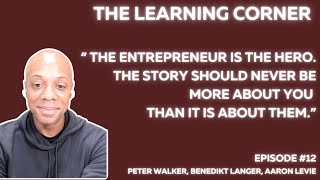
Mia Farnam and Charles Hudson review three pieces: Peter Walker on why only half of seed startups reach Series A in four years, an essay on building reputation over personal brand, and Aaron Levie on four pricing models for AI agents. They discuss what investors should do with longer funding timelines and why AI pricing will likely stay messy and experimental.
Chapters
Maybe it's just the era of venture where I was brought up, which is like the entrepreneur is the hero. You are there to support them. The story should never be more about you than it is about them. And if you can like accept that basic premise, it's actually okay to be in the background. But you also have to believe the people you're looking for will find you, even if you're not as loud as other people.
It's the week of December 9th. Welcome to the Learning Corner, a Precursor Ventures podcast.
Welcome to the Learning Corner by Precursor. I'm Mia Farnam and I'm joined by our GP and Managing Partner Charles Hudson, where we'll be talking through the articles and Goodreads that caught our team's attention over the past week. Our first article is a LinkedIn post by Peter Walker around graduation rates from C to Series A, using insights from Carta. In the post, Peter highlights a positive but challenging stat. Approximately 50% of seed funded startups successfully graduate to Series A in a four year journey. This naturally means that half of seed companies do not make it to the subsequent round, underscoring the heightened competition and increased expectations for companies at the Series A stage. While seed rounds raised between 2019 and 2020 maybe took shorter periods to graduate across the board, it does feel like the average cap out is at 50%. And so as a reminder to some of our newer listeners at Precursor, we have over 400 portfolio companies across five funds. So we have a mini data lake essential of our own that we can compare trends across. And I looked at our own data across all of our funds and the data does really tie out on our end as well. That being said, I have a few companies in my mind that took much longer than four years to get to Series A, and those companies are actually value drivers for their respective funds that they sit in. So Charles, what is investors do you think we do with this data in the moment, especially for folks who fit outside of that four year time horizon?
I read just about everything Peter writes. I think there's two dimensions to this article. One is the graduation rate, which is something I talk to LPs about all the time. They're always curious, hey what? What should we expect? And if I look back across all of our funds, 50% is about the average. But we've had some funds that were right on the nose at 50. We've had some funds that were in the 70s like fund two was in the 70s. I think that has as much to do with our skill at picking companies as it did with the market environment at that time. And as I told a bunch of RLP's, I expect graduation rates, whether you think of them measured at four year or whatever point, they're going to go down because the volume of seed funded companies relative to Series A capital is still out of balance. And I think the only way to restore balance is for the number of companies that raise Series A to go down as a percentage of the total company's fundraising, which isn't bad. It's not going to go from 50 to zero. But I wouldn't be surprised if it goes from 50 to somewhere between a quarter and 40% on average. You're less likely. And again, what this doesn't control for is founder Petting Degree, the amount raised. But I would say the other piece in this thing is four years. When I started the fund a decade ago, my expectation was most companies would go from seed to Series A in two years. Then it sort of became, well, you get like a another year of Runway if you can't make it. So now we're talking about two and a half years. And now many companies do well with the first seed and they go raise a second seed that's about the same size as the original one. And so it's not surprising to me that it takes three and four years to get to Series A. And then you get this weird feedback loop where every company that a Series A investor is meeting has essentially had two seed rounds of capital. So the expectations of performance of where those companies will be are higher and sort of the system continues to feed itself. And I think it puts a lot more pressure on seed investors to make decisions about, well, which companies are you going to continue to back? Because most companies are not raising seed rounds up front that will carry them for four years. And I think, you know, we've had other episodes where we've talked about reserves, but this is something I think about a lot is oftentimes the biggest inputs to that decision are qualitative and you know what you've learned about the team and their execution and not quantitative, not, you know, where are they in terms of ARR are. So I think it's a really important point and to your comment, I think it's easy as investors to get impatient and to want every company to work immediately right out of the box. I think about some of our top companies and fund one for many of them it wasn't clear that they were going to really work in the first four years. They managed to stay alive, they managed to get some Good things done, but it wasn't obvious that they were going to be successful. And so there's this tension between. You want to tell your investors these are the companies you should care about. And if you're like four years in, you know, I'm having this conversation with some of our LPs right now about our most recent fund. Four years in, it's only now beginning to emerge a set of companies that are likely to be the ones that matter. And as you can imagine, they want to know and I want to know much sooner. And sometimes you just have to remind yourself you have to be patient.
Were they the companies that you originally thought were going to be the fund value drivers at the moment? Looking back 10 years, every fund kind.
Of has the same arc, which is you get a couple of companies, at least we do that get out of the gates hot. Those are usually not in the end the value drivers. And I'd say by year three, I typically have some sense these are the 20 companies that are likely to matter the most. And somewhere in that 20 is the top 10 that end up really driving performance. The one thing I've noticed is Even now, Fund 1 is almost 10 years old and we still have companies that move in and out of their relative importance in that fund. I thought it was essentially settled, like no one's going to come in and no one's going to come out. But you know, you never know until it's all settled.
Peter does mention that just because you don't graduate to Series A doesn't mean that you'll shut down per se. There could be a route that you simply no longer need venture money to turn profitable or you get acquired early on. I do think most founders would love to live in a world where they don't have to go back to the well per se and continue to reach out for bencher dollars. But it's so much easier said than done. So my question is, what data points do you as a founder need to be able to know that difference of building a company that can grow irrespective of venture dollars? Or maybe this is the end of the specific company's journey?
Every company we have in our portfolio that got to profitability and continues to grow and is relevant, that decision came from the founder, it did not come from the investors. And in some cases it was a deeply held philosophical belief from the beginning. I think about like Erica at Healthy, like that was a company value for her very early. And then I think about other companies in our portfolio where the process of attempting and maybe not having a great experience raising money caused those founders to think about what would it mean to run this business in a way where we never, never are dependent on VCs ever again and how am I prepared to make those changes, number one? And number two, if I make those changes, will the business that comes out the other end still be interesting? And so those are the questions I always ask founders too. It's like it's great to get to profitability, but in service of what if you get to 3 or 4 million dollars in revenue when you're dropping a million dollars to the bottom line and you're not growing? If that's a business you want to continue to run, by all means do it. But it's also if it's not a business you want to continue to run, maybe that's the answer that it wasn't big enough to sort of warrant additional venture dollars. Very interesting that a big chunk of our top performing CPG companies have gone this route and in many cases it was in response to very tepid VC interest in funding their category. And the irony is Now I think VCs would love those companies and those founders are just uninterested. They're like we figured out how to continue to grow and make it work without your capital and is always the case. It's always easier to raise money when you don't need it. I'd be surprised if most of those companies raised anything that looks like a venture round again.
The second piece comes from the Embracing Emergence newsletter titled Building Reputation, Not a Brand. There is a lot of really good contrarian content in here, which made it for me such a quick read. But essentially it delved into the hard truths about the importance of building a reputation versus a personal brand as a fund manager. And my favorite quote was there is nothing intrinsically wrong with building a personal brand. But the way I understand the personal brand is it is nearly disguised as a shortcut to long term success. But things that look like shortcuts are often detours. So the newsletter quite plainly states that personal brand should be the result of a successful fund and not the other way around. And I know that this was written specifically to start conversations about fundraising strategies for emerging fund managers. But the concept of personal brand is so pervasive in every corner of venture and the startup ecosystem. And a friend of mine and I were getting coffee and we laughed recently of how much peacocking occurs and venture from one investor to another, oftentimes with both of them never having returned a single dollar back to the fund during the lifetime of their job. So as wild as that seems, and as much as I absolutely agree with the sentiment that reputation is the stronger long term investment, we as an ecosystem are pelted by personal brands and so it occurs at the fund manager level, at the investor level, at the founder level as well. Like how do we as an ecosystem recalibrate from that?
I think it's really hard because when I got into venture there was no social media, there were no venture celebrity. Maybe like, maybe like John Doer, there were a couple of venture celebrities, but not really. Most venture capitalists were like pretty anonymous people actually it's funny I read this, this article, I can't remember it, which was like when venture became retail and a lot of what they point to is actually like DFJ as a firm that was like much more open to you know, meeting a bunch of guys in Estonia who built Skype, like just thinking differently and being out there and visible. And at the time like when I got into venture it was much more of a genteel we don't advertise, we don't do marketing. Like people find us. It's all reputation and that isn't the market we're in anymore. And I remember when Andreessen Horowitz launched, it really did feel like that changed the game about what it meant to be a high profile venture firm. And that's had all of these spillover effects. One is that like we have far more mobility in venture capital than we used to. It used to be kind of like law. You go work at one firm and you either make partner at that firm or like, you know, quasi radioactive. So there wasn't much movement. So the only thing you could do was work hard, build a good reputation and like rise in your own firm. And now if I think about most people I know who are new in ventures, they're going to probably work at three or four firms over the course of their lifetime. However, there's these two competing pressures. One is DPI like the winners are taking 10 to 12 years. You know today we had the Service Titan IPO congratulations them but it's been around for a while. So the timetables to get feedback and your decision making in this job job can be very long and the desire to get promoted and move ahead is strong because most people in venture are pretty ambitious. And so it creates this weird dynamic where marketing yourself as a winner and an expert before it's true can pay dividends. It can a cause people to think you are actually more successful and better at your job than you are. It can cause people to think, oh, I'm interested in subject matter X. This person writes or talks about it. They seem to be an expert, and that maybe I should go to them so they're there. I don't want to, like, deny the value of marketing yourself, your interests and your achievements. That being said, I've seen the dark side of it for a couple of people that I'm close to, founders in our portfolio who decided to go big on Twitter, and then their companies didn't work out. And people were like, wow, you sure were talking a lot on Twitter for somebody whose company didn't work out. And that's a tough thing to sit with. I've seen fund managers who really built their brands on Twitter privately tell me, like, I'm not sure I'm going to have another fund. And I'm worried about what people are going to say about me on the Internet if I can't raise again, given how much of myself I've poured into, like, self promotion. And I think the flip side is, though, there are some people out there who are doing really good work who aren't being recognized. And so I've always felt like the reputation thing is what really matters. But it means you have to be willing to say, I'm going to do a bunch of things that might not ever show up on the Internet. They might never show up on TechCrunch, but it's the little things. It's like just trying to get back to everybody every time for a decade is what I've tried to do. And there have been years I've done better and years I've done worse. But a lot of people are like, oh, I've heard good things about working with precursors. I'm like, what does that mean? That means some random person who I don't know, told this person at some point in time, you should go talk to Charles about the thing that you're building. And I think that, to me, is the difference between reputation and personal brand. Reputation is somebody who knows you or has an experience working with you telling another person why they should work with you, versus, like, I like, this person's tweets or blue skies or threads. And so I think part of the reason, at least when I talk to people that are unwilling to invest in reputation is because it takes a freaking long time to bear fruit. And if you want the like oic answer, personal brand that you can, like, you can spit it so easy, it feels good. You get almost instant Dopamine hits and a lot of what I've.
And no one can fact check.
You either give me, you know, like 90% of venture M and A exits that happen, that get announced on the Internet. I think Hunter had something. There's no price. Like, you have no idea if anybody made any money. And if you look at them long enough and you kind of learn how to interpret investors reactions to those, you can kind of get a sense was this material or not. But like, you're right. There's a lot of people I've seen, I'm like, wow, you are a thought leader who has zero dpi. Like zero. It's okay to be humble, it's okay to be modest. It's okay to not. But I think our business has gotten so much more competitive that I think like, personal brand is just synonymous with marketing. And we're in a business now where I think marketing has become a much bigger piece of the business. And even firms I would have thought of that were traditionally resistant to marketing engage in what I would consider marketing activities.
From your standpoint, when you think about Precursor, are there any initiatives that you feel like we as a fund should be putting out marketing on?
I've never had a PR person at Precursor, and I've had a bunch of people tell me, like, you should get a PR person. And I'm like, to do what? I like, go on the podcast I want to be on, I speak on the panels I want to be on. And I've always felt like I don't want to do marketing that feels like work. So I don't want to do something that like, feels like a chore because then it's. It's never authentic. So I was like, hey, we should speak or write when we have something to say, and we should not speak or write when we don't have anything to say. So I never wanted to be put on like a treadmill or a calendar. And there are other things that people do that I've always felt like. I don't think that's who we are as a firm. And some of those are big events and conferences. And I'm like, I. I respect people who do those. I don't think that's our, our values. And so I've always told people my view is we should be in the background. Maybe it's just like the era of Venture where I was brought up, which is like, the entrepreneur is the hero. You are there to support them. The story should never be more about you than it is about them. And if you can, like, accept that basic premise. It's actually okay to be in the background. But you also have to believe the people you're looking for will find you, even if you're not as loud as other people. And there have been definitely years when, like, maybe we're being too quiet, maybe we're not doing as much as we should to get our name out there, but there's a limit to it for me.
The essay concludes with the statement that emerging managers who built a reputation will also win, mostly because they are committed to the foundational elements of building a firm over a long period of time, which include one, doing business the right way, two, creating outlier returns repeatedly, three, representing their firm first, not their firm representing them, and then fourth, paying the bills. So five funds in Charles. Anything that you feel should be added to the list.
I think a lot of this is about figuring out who you are and, like, who you want to work with. And I've had people come to me and say, I'm thinking about starting writing more, right? People tell me writing works. I'm like, do you enjoy writing? They're like, no. I'm like, well, then you're going to stop writing because it's going to feel like a chore. And running a fund is just like dealing with a constant chore list. And you're going to see write a blog post today, and you're going to be like, oh, the ghostwriter thing. I totally get it. And I respect people who want to. I was like, that just isn't me. I will write my own words when I have words to say, and I won't write when I don't. But for me, that's just like, that's a decision I've made. And other people I know have made a decision that, like, volume and consistency is more important to them and they need help or they need a coach. I think there's a spectrum between someone who helps you improve your ideas, like an editor, and someone who basically hands you things to publish. I just think if you're going to do this job for 10 or 20 years, there's a lot of investments that make sense to make. And I'd also argue if you're going to be at a firm for eight or 10 years, there's a bunch of investments you can make that are firm first person second. But if you're just like, hey, I don't know how long I'm going to be here, I think in some ways, I don't know what's the chicken of the egg did like firm movement increase the need for personal branding or did personal branding make firm hopping or firm movement easier? To some extent I'm like, it doesn't matter what the chicken or the egg, it's the reality that we're in today. And so I think for a lot of people that I talk to go to me for career advice. A lot of what I tell them is you got to decide if you really want to be at your firm and the difference between getting what you want this year and next year in the arc of your career, it just doesn't matter. It really doesn'. And there are long term investments you can make in the people and in being a good teammate that maybe don't make sense. If you're like, this job is a stepping stone to my next venture job. I've actually noticed it is much harder for the founders who put themselves out there and live in public and make comments when their companies don't work out. The Internet is much harsher to them than it is to VCs.
Yeah, we can always hide behind other people typically like as investors. For the founders, you just put yourself out there in the most vulnerable of ways. Our final article is a LinkedIn post by Aaron Levy, CEO at BOK, around the fact that one of the most fun questions in AI right now will be how AI agents will be priced over time. He laid out four approaches with pros and cons to each one. The first one is pricing agents like labor, but simply at a discount. Over time the price for these services will probably shift. The second approach is pricing agents on a per outcome basis to tie what the customer needs to what they are paying for. This could be more favorable to service providers as the underlying AI cost costs drop over time and that market grows. The third is to price as close to the underlying AI costs if possible, and you become the lowest cost for the customer. This obviously could encounter some bumps if you're thinking about it from a shareholder perspective and maximizing returns. And the fourth is simply maintaining a pure SaaS seat subscription model and offering the agents that do unlimited work to those users. It could work out well for a contract with a bunch of seats, but if there are only a few seats, is there a possibility of giving up too much value? So we obviously don't know what that outcome is. But curious Charles, where do you think these scenarios will play out over time?
I don't want to like repeat too much stuff I've said in the past, but I think several of those scenarios to me sound very deflationary for pricing. So, you know, pricing close to cost, great for your customer. Probably not great as a business unless you just have massive volume. The funny thing is I don't think these things are all independent because it's not like all of the vendors in a category are going to get together and say, let's all agree we're going to charge for output. I think what you'll see is very heterogeneous approaches. So I think you'll see some people who say we're going to charge for the outcome. But my question is like, well, what's an outcome worth if you're an aistr? Is an outcome a disco call? Is it a demo? And what if my product is $100,000 and your product is thousand dollars? The value of an outcome is really different to each of us. It's funny. Everyone's like, we're going to charge for outcomes. I'm like, wait a minute. We just look like went through this period of time where everybody hated usage based pricing for SAT. I was like, you gotta make it SaaS. It's gotta be recurring. And we have companies in our portfolio that have a mix of usage based and recurring. And I'm like, explain to me the difference between usage based pricing and paying for outcomes. Other than a rebrand, isn't it the same thing? You're like paying for outcomes. Maybe it's subtly different, but it's the same. And what happens if you've got like someone who only gets two outcomes a month? So I think most of these things don't make sense. I wouldn't be surprised if what you end up with is some base fee, which is like a platform form fee. Whether it actually equates to anything, I don't know. And then I'm sure there's going to be vendors, hey, there's a base fee plus there's a price per outcome. And I think the interesting thing to me is going to be I fully expect most of the competition in AI not to be around the technology because everyone's kind of using the same stuff, but around the business model and pricing and packaging. And because everyone's going to come at it differently, I'll be very curious to see which models win out and with which customers. Like for example, there are some enterprise customers who really value predictability and spend as much as like paying for outcomes. Outcomes is great because you're only paying. They're like, well, how do I budget for that? I need to know what I'm going to spend on this for the next six months. And so I don't think those customers are going to necessarily be thrilled about paying for outcomes, but they might be willing to pay for a platform fee. My hunch is the net net is going to be that people are going to spend less money on. If you look at the task at hand, people are going to spend less money on it because that's what software is supposed to do. It's supposed to make you more efficient. The only difference is in this case I think the customer is going to capture the majority of the surplus. That is just a new thing. I think unless you've done open open source software, most commercial software for the last 20 to 30 years has been major league value capture by the provider of software and, you know, some value creation for the customer, but most of the value was captured by the person who sold it. And I think we're going to go into a world where that pendulum shifts and I think software companies are going to look very different. I also dislike this post because some of the people in the comments had really passionate real world examples and experience. So I think this is really for me, the battlefield for B2B SaaS.
Yeah. And this is all irrespective of how good the AI agents actually are. I stumble across a website that literally ranks and roasts AI agents. That's all it does. And so you go on there and you just rank and roast them all. So it's happening now. Customers are starting to get smart on what works and what doesn't. And so as a result, they're going to get smarter about how they put their dollars to work. Well, we are all out of time for today. Thank you Charles for taking time to sit with us and thank you to our listeners for stopping by. Please like and subscribe and we will see you all next week. Thank bye.
More from Charles









a16z Launches Its Own College | The Best & Worst Time to Build | When the VC Music Stops


VCs Only Fund Trillion Dollar Ideas Now | Funded Teams With No Plan | How to Be Legible to Capital