Windsurf, Blitzhires & the Future of Startup Acquisitions: What Just Happened?!
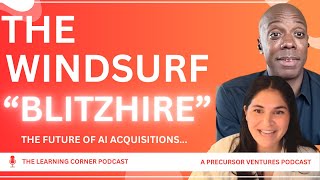
This is a transcript of a YouTube episode in which Mia Farnam interviews Charles Hudson about recent AI-era startup acquisition practices — in particular the Windsurf case and the emerging ‘blitzhire’ or "aqua license" deals where large tech companies license IP, hire teams, and sidestep lengthy M&A to move faster. They discuss implications for founders, employees, investors, and possible regulatory responses, and then shift to practical fundraising and founder behavior (how to handle 'no', honesty about investor interest, and when speed or secrecy helps/hurts).
Questions this video answers
$3 billion
A $2.4 billion deal to license Windsurf's IP and hire key staff
Chapters
Do this job long enough, it humbles you and you go, even if I think these people are not qualified, they still might succeed. So what's the benefit of saying in very prescriptive terms that people shouldn't do something or that they won't be successful? There's two things I always think about. One is this actionable and is it useful?
This additional paragraphs that you want to add of you're cheering for me and you're rooting for me. Just say that you'd want to stay in touch with updates and when I do actually reach out, please opt in for the call. But anything other than that, I've already moved on.
I think the only real thing that would put the brakes on me is some kind of regulatory action. And a lot of people said, well, this is the natural outcome of a lot of the antitrust stuff that happened. I'm like, well, I think Figma ended up better off, which is what I thought would happen all along.
Welcome to the Learning Corner by Precursor. I'm Mia Farnam and I'm joined by our GP and Managing partner Charles Hudson, where we will be talking through the articles and Goodread that caught our team's attention over the past week. Our first topic is one that has been the talk of venture in tech all weekend through early this week. It's the Windsurf acquisition, or whatever you want to call it, originally in talks to be bought by OpenAI for $3 billion. The deal fell through due mostly to Microsoft's deep entanglements and inability to carve out Windsurf's IP. Google quickly stepped in, structuring a $2.4 billion deal to license Windsurf's IP and hierarchy staff, including the CEO. This move follows a growing trend of blitz hires, a term coined by investor Vili Itchev in his recent piece the Blitzhire Acquisition, to describe these unconventional deals where acquirers are sidestepping traditional M and A to optimize for speed in this lightning fast paced world of AI, these deals often involve a licensing ip not exclusively to avoid HSR antitrust scrutiny, hiring the team and leaving the original company with people incentivized to stay a little bit longer. While clunky and arguably inefficient, this method allows big tech to secure top AI talent without regulatory delay. It raises big questions about the future of M and A and AI and how long regulators will let this fly. We talked about this topic for the first time, I think two months ago, and substantial blitz hires or aqua license deals have been struck at Massive scale. Any new thoughts, Charles, that you've had about this or insights on what the impact of these trends could be?
I have a lot of thoughts. It was interesting reading a bunch of the commentary about people's thoughts about what happens to the employees. You know, obviously senior management's getting something, the investors are getting something. And I think with the Cognition deal, it sounds like there's something there for the employees. I have friends who work at Character after Google made that acquisition. So a lot of my questions are, what happens to the remnants of these companies when these deals happen? And I kept asking myself, what's going to cause this? I also hesitate to call it a trend because it feels like there's a finite number of talented AI researchers that Google, Meta, OpenAI, Anthropic and others want to fight over. And at some point, most of the known people will have found a home. I wouldn't build an investment strategy around this. Unless you had proprietary access to these, like, AI genius people, then maybe you could do it. I'm very curious about how investors are going to feel about these deals long term. We have not heard much about what the distributions look like for investors. We've heard speculation. And on the one hand, I'm like, well, if you're coming in at a Series B and you're getting three times your money on a deal like this in relatively short period of time, that's actually not bad. It's not going to make your fun, but that's not bad. I kept thinking, what are the other structural things that would make these not work? One would be investors would stop chasing AI talent. I don't think that's going to happen. So I think the only real thing that would put the brakes on these is some kind of regulatory action. And a lot of people said, well, this is the natural outcome of a lot of the antitrust stuff that happened. I'm like, well, I think Figma ended up better off, which is what I thought would happen all along. Figma's gonna end up better off. It's gonna end up being a bigger, more substantial independent company. I think Facebook walking away from Yahoo. Obviously, we know how that turned out. And so it's unclear to me whether there will be regulatory action. There was at least mention that they were gonna look into the character deal. I think by the time the government figures these out, investigates one and comes up with a remedy, people are like, that's fine. We got the talent, we got the benefit. If we have to pay some future penalty, that's a fine trade. Yeah, I was really interested to read how many and maybe it's just the corner of LinkedIn that I hang out on. The amount of people who wrote up saying this seems like kind of a raw deal for employees. And should this change the way that employees think about joining hot AI startups and that like so much of the consideration seems to go to both the founders and the investors?
Yeah, it goes into my next question, which is more so around Cognition, which again was a last minute surprise that happened near to the end of the Windsurf saga. Cognition announced they would be acquiring basically the rest of the employees and the company of Windsurf. Certainly this is a better outcome than setting the rest of the company out for the next few years. And hopefully lots of efficiencies are gained by a company like Cognition. And I watched the interview between the new Windserve CEO and the CEO of Cognition on Bloomberg and they both acknowledge these types of acquisitions are disappointing because there's so much value left with all the employees who've worked their entire years. And I was talking with a friend about this yesterday to your exact point of if we do enough of these, could this lead folks who are extremely talented, who've been building their entire life to no longer see the big upside and advantage of being the first group of engineers that join a startup?
I mean, during the mobile era we saw this wave of acqui hires because they Facebook didn't understand mobile and a lot of people didn't have mobile, particularly iOS development talent. The difference is those deals were literally 1/100 of the size of these. Those were 20. But there was a period of time where I do remember this thinking kind of creeping into VC mindset for some, which is like I'm going to back this team that's doing this mobile thing and if it doesn't work out, I'm pretty sure we can get the team Aqua hired to Facebook, Yahoo, Google or Twitter. At a minimum, we'll get our money back. And that worked until it didn't. And then one day Facebook and Google and Meta and all the other folks were just like, well, we have the talent, we know how to build iOS apps. Getting these people in the door is no longer so urgent. I wonder when that happens for AI, because there are quite a few, I could think of just whole categories of AI teams, whether that's like the video generation, voice generation, other infrastructure companies, where I wonder if there'll be VCs who say, hey, like maybe the best thing we can do given the changing landscape is to try to get this company in front of open AI corp dev. And I'm really glad that Villi wrote the piece because Vili actually knows a thing or two about corp dev from his previous life. And so he can talk, I think, in much greater depth about the nuances and specificity about how these deals are structured. I'll be very curious, but I think if you're a talented AI researcher, it's kind of like, why shouldn't I go start my own company?
Yeah. For anyone who's listening, definitely give the full piece a read. It does a great job of creating context around traditional M and A, the lengthy process, et cetera. If I was somebody who I guess was on, I don't know, the Google team to no faul waiting weeks, you lose out on so much on this window of opportunity, of time and AI changes every month. So in their brains, if you waited a year, perhaps it'd be the difference between outsized success and zero roi.
I talked to somebody who is at one of the big AI companies on the research side, and he's like, look, this field is evolving so fast. The people who are truly on the cutting edge are incredibly valuable because they can see around the corner that's coming because they know what's happening to some extent. If you believe there's a finite pool of really talented AI researchers, it is actually rational. And you think that the delta between the really talented cutting edge people and everybody else is massive. It actually is zero sum. You're like, hey, we need to get as many of these people as possible. At some point that information will become more diffuse, maybe, but it isn't right now. And I think it's interesting to see Facebook say, hey, we have this balance sheet and it's not just what we can pay you, it's the number of gpu. I saw the article. I don't know if you saw the interview with Jessica. Lesson from the information. Just talking about the package isn't just the money, it's the number of GPUs, it's the people you're going to get to work with. It's the whole ecosystem of stuff you get by going to one of these hyperscalers. It's really hard to replicate that unless you're probably OpenAI or anthropic.
Those are my questions left in my brain about the wreckage that's left behind after some of these happen and the people that have been so important to the journey the entire time and where they go next. This one was a good example of a new type of deal that was struck that perhaps the employees of Windsurf are welcomed into a new company and can continue on and add value. There's a great quote by Sonia Oja in a different piece that I read. She said, quote, windsurf may go down as the first AI startup to be acquired twice in one week without ever being sold the first time. One company, two exits, zero precedent. I guess more to come Our next topic is written actually by a founder within the Precursor portfolio, Sergio Rodenzuela from Tansy, who wrote a short but direct post on demystifying VC for new founders on LinkedIn. His points ranged from the fact that VCs are constantly fundraising to the unspoken but real reasons investors pass and the importance of understanding ownership targets during these conversations between investors and founders, I personally have a favorite one of his points in my brain, but I wanted to ask you if this post made you think of any other knowledge imbalances that exist within the VC founder dynamic?
It's really funny because I'm here in Boston and I just gave a Talk yesterday at TechCrunch AllStage about how pre seed investors are really evaluating your company when you're presenting. And I think I've probably mentioned this few times before. I I'm very sympathetic to the plight of founders in this environment because when I started Inventure there were no blogs, there were basically no books, there were no online gurus, for better or for worse, who could help you with fundraising. There were no boot camps, there were no classes. And so it was very hard to find out what you were being evaluated on the first time you did this. Which is why first time founders oftentimes got raked over the coals by investors. They literally didn't know what they were doing. And I gave this presentation yesterday and a lot of people came up to me like this was really helpful. And I was like, it's a good reminder to me, Mia, that you and I do this every day, all day. We talk to thousands of founders every year and there's still a lot of people who don't really know. And in some cases the information they're getting is guiding them towards some traction metric or some presentation tactic that may or may not work. And I told the audience yesterday, a lot of it is about the team, especially at precede. And talking about people's teams is a delicate subject because you're oftentimes making subjective decisions about people you don't know very well and you also haven't spent a ton of time with and not everybody wants to hear that you think their co founder is weak. Not everybody wants to hear that. Like, hey, I don't think the two of you are the right people to go after this opportunity. And I think if you do this job long enough, it humbles you and you go. Even if I think these people are not qualified, they still might succeed. So what's the benefit of saying like in very prescriptive terms, that people shouldn't do something or that they won't be successful? And I think it's also great that Sergio wrote this because, you know, he spends time in the Midwest with a lot of founders who are not immersed in the Bay Area or New York VC scene where you could go find somebody in your network or on your block or in your coworking space who's actually raised VC money, who can give you real world experience. And so I thought it was a great post. I'm glad he wrote it.
Yeah, I agree. I think that was connected to one of his bullet points about when folks say the company's too early, it basically can mean 17 other things, including mostly the team. I even found I encounter this when I talk to my co investor friends who all say that they plan precede, I'll pass them the deal and they'll be like, too early. Love this space. Too early. And so even us, who we spend all of our days talking to investors, talking to founders, people sometimes won't even tell us on the investor side, but at least I know when they mean too early for us. I'm like, it's not interesting to you and that's totally fine. But if you were interested, no matter how early it is, I know you'd come in.
And it's also interesting to me that there are people who will tell me things about companies that I've sent them, knowing full well that I plan to tell that founder exactly what they said. But somehow laundering it through another investor seems to be a preferred way to deliver. I'm like, you could also just tell them that you have reservations about the team or that you have reservations about the tam, or you really didn't like this thing about the company. I'm also happy to deliver the message on your behalf of that attribution, but you could also do it and I don't know, I. I've told people some harsh stuff. I've always asked for permission before I do it. And I've told a few people, hey, look, I sat in this meeting with you and your co founder for an hour. You seem way more committed to this than he or she does or, hey, you seem to have a really relevant background. And I don't know why this person. I told someone last week, I don't know why that third person was in the room. They're like, what do you mean? I go, I don't know why this person's a part of your company as a co founder. I don't, I don't, I don't understand what they're adding. They might have been there at the moment of inception, and if that's, like, why they're here, great. But I don't understand this person's contribution or role.
Was that a portfolio company or a new net? New investment.
Was a new investment.
Yeah, Yeah, I know. You've been doing this for so long at Precursor. How do you actually balance what to share with existing portfolio companies when you're getting information direct from the investor and you have to decide what should I pass through to our founders? What's useful to pass through, and then what's just arbitrary information that maybe doesn't change and could be more harmful than useful?
Oh, it's really hard. Mia, there's two things I always think about. One, is this actionable and is it useful?
Yeah.
So the first thing I tell them all, I think it's a Jessica Livingston or Paul Graham quote. I'm not sure who said it, but, like, the gist of it is the most important information that you get in a no is the no. Like, whatever context is wrapped around the no. I, I swear it's a Jessica Livingston quote that I read one time, but maybe I'm misattributing it to her. But I tell them all, first of all, they passed. So whatever metadata or meta context I tell you about why they passed, it may or may not be true. It's actually not as important as the decision that they made. And so that's like the useful thing. I'll give you an example. We had a portfolio company that went out to fundraise. Before they went to fundraise. I was like, I think there's one really specific issue that we face with the business. We haven't proven this thing. It's reasonable for people to say, we haven't proven this thing and to decide not to invest in the company because we have not proven this thing. So if we were to fail to fundraise because people don't see evidence of this thing, I would not be surprised. And the person was like, yeah, that's what happened. I get it. But if someone's just like, I don't like the Founder that's not actually actionable and it's actually not useful. So sometimes I will just take that and figure out, is there a way I can deliver this message that will get through to them? Because if it's, hey, the content of the presentation or the way you showed up for the meeting is different from, I just don't believe this person will succeed as the founder. And I've had some people be like, I don't see in that founder what you do. I'm unimpressed by them. What does that person want to do with that feedback?
Very objective feedback. The most important thing is the no quote that you brought out reminds me of when I was, I think it was my first year in venture. It was the first deal that I led and it ended up falling apart in the end. But I had gotten really close to that founder and I remember trying to, like, structure a good email to kind of follow up on the news that we're not going to actually come in. And I remember reaching out to my friend who's a founder and recently just raised their series A yesterday. So it's fun to see all of that come full circle. But I was like, what's the best way to communicate no. And should I add this and this? And she was like, listen, I just went through the worst pre seed, seed fundraising period ever. Just saying no, it doesn't really matter what additional fluff you put around it, make it sound genuine that you at least listened and you thought about me. But this additional paragraphs that you want to add of, you're cheering for me and you're rooting for me, just say that you'd want to stay in touch with updates and when I do actually reach out, please opt in for the call. But anything other than that, I've already moved on.
Also, I always just tell people at the beginning of the email, I'm not investing. Almost all of my past emails have the same basic structure. Thank you for your time. Because they gave us their time, I made the decision not to invest. And you can stop reading there.
Yes. Don't make them dig around for it.
Don't make them dig. Some people are like, well, why do you put it up front? I'm like, because that's the answer. It's business writing 101. You don't put the conclusion at the end, you put the conclusion at the top. And I'll tell them, like, here's what I liked about the business and this is the thing I got stuck on. You might not think that was a good thing to get stuck on. But this is what I got stuck on and I don't get it right every time. And if I want to keep in touch, I'll say let's stay in touch. Otherwise I'll just tell people, hope you're successful. Like I don't.
Like you don't owe me anything.
Like, it's funny sometimes with our interns, I'm like, that's too many paragraphs to show we need to like compress the stock.
And even I find myself, I'm like, that is. It's too much. Because like, if you add too much prose about it in the beginning, I think everyone wants to do pro con, pro sandwich when they send an email. I'm like, okay, if you had that many pros about it, you would have just done the investment, tell them what they need to hear and let them go on with their day. Our last topic is a really entertaining read by Jared Hecht, one of the founders of GroupMe, who is now at USB, who walks through the realities of what happens when young founders play it fast and loose during their fundraising process. He reflected on doing it himself while building GroupMe, assuming every big name VC was foaming at the mouth to join their cap table early on in the journey. That approach created momentum in some ways, but also led to some hilariously unfortunate blunders which he shares about in his post. The two main takeaways for readers were 1 all founders mess up and that's okay, and 2 reclaiming a bit of intentionality even while moving fast, can perhaps save you a lot of headaches down the road. I think similar to our last topic by Sergio, there is this unspoken balance of pace and mystery that most, not all, but most investors want founders to strike to build that right level of excitement about a deal. Where do you think being fast and loose works well as early founders, and where do you think it crosses the line and does more of a disservice?
I think it does a disservice if the things that you say are going to happen don't come to pass. So obviously the worst thing you can do is lie and say somebody is in. And I saw that happen one time maybe 10 years ago, and the firm that they said was in made that founder write an email to everybody who they had told and copy them on it saying I misrepresented the firm's interest, they are not invest in our round and it was a first time founder and I don't know whether he misunderstood or if he was trying to. Like I can Just give you some recent examples. There's a bunch of AI related companies that I've met that are day one companies and I've gotten introduced to them. The person's like, well, they're meeting with Benchmark, Sequoia and Andreessen next week, so if you want to get to the front of the line, you got to do it now. I'm like, okay, so they have a meeting. Okay, that's useful information. I'm glad they got those meetings. I don't know anything about what that means, but, okay, that's a plus one on the FOMO scale. And then see, like, oh, they're going to partner meeting with this firm. And I'm like, yeah, but that firm doesn't take seed investing seriously. And so, yes, it is possible that they're gonna get three on 30 from some big firm that doesn't take me seriously. So I don't know. I. I feel like if you have real interest. I think at this point in my career, I'm pretty good at sniffing out when a deal is hot. And why. So sometimes I meet a founder, I'm like, oh, I get it. This person's super compelling. And I think everybody who meets him or her is going to see in him or her what I see in them. And so whether there's FOMO or not, this feels like one I have to move quickly on. And there's others where I feel like the person's constantly telling me that they're on the cusp of something. And I'm like, if you were really meeting with Sequoia, you wouldn't be reminding me that you have another meeting with Sequoia. You'd be focused on your.
You'd be spending time with them.
Yeah, you wouldn't probably even respond to my email. So I think there is the art of I tell our companies all the time when they're fundraising. At most firms, if you want to get your deal done, you have to be the number one or number two priority for that person at that point in time. And if you're not, they'll still work on the deal. It's just you're not going to feel momentum. And a couple times I've misread it. I've been like, this thing doesn't feel like it's got heat around it and it turns out that, like, it did. I just misread the signal. In other cases, I've had people who've told me they're on the cusp of getting a term sheet and six months later, they're still in market and I'm like, either you misread it or you were trying to deceive me. Either way, I'm glad I didn't invest in the company.
I've had one of those cases where I think maybe from an investor standpoint, I just should have leaned into my gut a lot more and just had conviction areas. I waffled a little bit more on a deal that I was like, I really like this person. I like their idea. Maybe I'll take another week to just make sure I understand the market enough. And at that time that I talked to them, no one was interested. Like, no one really is really talking to them. So in my brain, I've got time. And then lo and behold, two weeks later, when I come back, I'm like, love to kick off this diligence process. Well, it's done now. Good. I was the first of the line here. And then this is where we've ended. And most of it was not really even due to the founder's behavior. It was due to me just not just executing on conviction. And that's just something you have to build over time.
I told one of our LPs, I have good news and bad news for you. I said, many of our best investments are companies I committed to. Essentially at the end of our first meeting, in my mind I was like, we're definitely going to make this investment. And in those cases, speed was part of the reason we got into the deal. Also, some of our worst performing investments are also companies I at the end. And so my view is that speed is an input to the process. And I think, particularly if you're doing early stage AI stuff, I lost something recently because I thought I had communicated to the founders that we were in and they closed the round. They're like, well, we didn't understand that that's what you meant. Either I wasn't clear enough or you decided there was somebody else you'd rather work with. In either case, I didn't apply the right amount of attention to that opportunity and I didn't get it.
My one piece of advice, because I recently saw it last week and I did tell the founder after, try not to put the names of the investors on a SL who you're talking to, because I will always have a record of that moving forward. And then I also finished the call, Charles, and I was like, oh, I'm gonna be on this slide in a week now. Even though, like, I don't even know we're gonna continue on.
Also say, I'm also sympathetic to people who make honest mistakes. I had somebody who was like, oh, I heard Precursor's really digging in on this company. I'm like, I haven't met with them. Let me look in Affinity and was like, one of us had had one meeting with the company. No one had ever mentioned it to me. And I'm thinking, did the founder misrepresent it or did something get lost in the game of telephone and said, oh, I've had a meeting with them and like, they're going to get back to me.
And for all intents and purposes, that's what VCs say at the end of every meeting is I'm going to take a closer look. So that's also what I would think as a founder, too, until you tell me you've passed, is that you are digging in, when the reality is mostly they're probably not. If they haven't come back to you with tons of questions, it's not top priority. It could take them longer to dig in the way that they've promised you. Well, we are all out of time today. Thank you so much, Charles, for jumping in. Thank you to our listeners for listening as well. Please like and subscribe and we will talk with you all next week. Thank you.
Bye.
More from Charles









a16z Launches Its Own College | The Best & Worst Time to Build | When the VC Music Stops


VCs Only Fund Trillion Dollar Ideas Now | Funded Teams With No Plan | How to Be Legible to Capital