5 MINDSET STRATEGIES FOR SUCCESS with Leighanne Champion
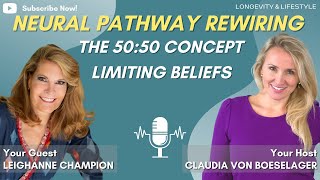
In this conversational episode of the Longevity and Lifestyle Podcast, host Claudia von Boeselager interviews certified life‑and‑mindset coach Leighanne Champion. They present five practical mindset strategies for success and explore a suite of supporting tools. The first strategy focuses on self‑love, encouraging listeners to prioritize their own well‑being (the “oxygen mask” analogy) and to use meditation, guided apps, and personal mantras to center themselves. The second strategy is gratitude and morning priming, where daily acknowledgment of even the smallest blessings shifts perspective and builds resilience. The third strategy discusses mindset choice, using the thermostat‑vs‑thermometer metaphor and the “50/50 of life” concept to accept both positive and negative experiences and consciously decide one’s response. The fourth strategy tackles limiting beliefs and fear, urging listeners to uncover childhood‑rooted narratives, reframe them with NLP‑style word swaps, and view fear as a gateway to desired outcomes. The fifth strategy addresses neural‑pathway rewiring, illustrated with a super‑highway versus jungle‑path metaphor, and suggests habit‑building challenges (e.g., 30‑day negative‑thought‑reduction) to create new thought patterns. Additional practices such as diaphragmatic breathing (using the Aerofit device), music, dancing, humor, and future‑self visualization (letter‑writing, vision‑board style) are woven throughout. The episode also shares recommended resources – books (Carol Dweck, Eckhart Tolle, Don Miguel Ruiz), a new 8‑module course on breaking negative thought patterns, and the free Z‑App frequency‑healing tool. The conversation is upbeat, supportive, and filled with actionable tips for listeners seeking to improve their mindset, emotional wellbeing, and overall performance.
Chapters
This episode is brought to you by the BioCharger NG. With the average American spending 92% of their time indoors bombarded by man-made energies, many of us are experiencing an energy shortage at the cellular level where it's needed most. The BioCharger NG is the world's only cloud-based health optimization platform that simultaneously generates 4 distinct energies known for supporting health and wellness, enabling your body to re-energize, refocus, and recover to be at your best. So check out how the BioCharger can energize your life and get $500 off by going to biocharger.com/ b-i-o-c-h-a-r-g-e-r.com/claudia today.
Welcome to another episode of the Longevity and Lifestyle Podcast. I'm your host Claudia von Boeselager, here to uncover the groundbreaking strategies, tools, and practices from the world's pioneering experts to help you live at your best and reach your highest potential. If you haven't done so already, remember to subscribe subscribe to the podcast. My guest today is Leanne Champion, and we are here to share some of the key tips for mastering your mindset. Leanne is an experienced certified life and mindset coach with a demonstrated history of working in the professional training and coaching industry for over a decade and a half. Leanne is helping clients make life-altering decisions and lasting changes as a health and wellness coach, certified life and mindset coach, master practitioner of energy leadership. With her clients, Leanne takes a deep dive into various topics like managing our minds, relationships, self-love, confidence, past-focused versus future-focused boundaries, people-pleasing, and so much more. Welcome, Leanne, to the Longevity and Lifestyle Podcast. I'm so excited to have you on today.
Thank you, Claudia.
So Leanne and I are colleagues, dear audience, and we became friends. So it's been such a beautiful journey, and we share so many passions, including around helping others be at their best, particularly around mindset.
Yes, I love nothing more than to help women soar and suffer less, right?
Exactly. So we're going to— we put this episode, special episode, together for you, dear audience, because we want to share 5, even though we've got a lot, but we wanted to share 5 of our favorite mindset strategies for success. And to help you be able to hopefully easily implement them into your life. So to kick off, the mindset strategy number 1 we wanted to share with you is around self-love and mindset. And here we really empower you to ask yourself or to do this sort of self-analysis, the question, do you spend more time beating yourself up than being kind to yourself? Do you practice enough self-love? And really just to think about this, but you need to decide to fill up your own cup first so that you can give to others from the overflow. And it's like they say on the airplane, you have to put on your own oxygen mask first before assisting others. So if you're a mess, how can you give from this?
Claudia, it's just so true. And every time I still hear that oxygen analogy, I'm always, my breath is taken away ironically, but Yeah. I think that's the self-care piece that women forget the most. But there are, is it okay if I share a few things that I love that have helped me? Yeah. I use these when my energy is feeling a little depleted, but I don't think, I know we talk, I think people talk about meditation a lot, but it's a lot of times people tend to leave that out. Don't you think? But it's, it's so centering and I think it's the best way to ground yourself. And if all of your listeners might be familiar with the Calm app, I don't know if you have that in your country or Headspace, right? They're just extraordinary if you're just starting off. And also I remember learning from Oprah and Deepak back in the day, but I think a lot of people are worried about the word meditation. They're like, I don't know, never been able to do that. But I think there's so many amazing guided meditations that can get us to that place where we can just stop and be still and recenter.
I agree. I completely agree. I think, and that the recentering is the point as well. And I think with some people, meditation, they're like, oh, I'm not religious. And I was like, it's not really. Yes, there are certain types of working that have a religious implication, but it's almost like this going into yourself. And we're the whole time so external and we have this beautiful gift inside of ourselves and just finding that peace and calm and serenity and having those Ideally, I recommend to my clients as well, those regular check-ins during the day to just refine that peace that's within. You carry it the whole time with you. So all this crazy monkey mind going on and stresses in the outside world, but like you have this serenity and peace on the inside. So yeah, I love that. Yeah.
Yeah. The monkey mind. Oh my gosh. Yes. But then what's helped me a lot is to come up with my own little mantra and you might, it's like one of those things, what do you mean when you say that? But it's just a personal sentence. Phrase, right? That we say out loud, and it's much to what we're talking about, but it's the thing that you say perhaps out loud in the mirror, you look yourself in the eyes or just in your mind quietly, but that it centers you, it settles you. And mine for many years was, I'm strong, I'm healthy, because I recovered from Lyme. So I needed to remind myself of that. I'm strong, I'm healthy, and ready to fly. Lately I've been really busy. So my latest one is, I can do very hard things. That's a pretty good one. Sometimes when our confidence is a little shaky, something like, I know this too shall pass, or you're going through something, those kinds of things are very helpful. Do you have one, Claudia von Boeselager?
Yeah, I have a few different ones and depending on sort of inspiration, I, from different times. And I think especially when you have setbacks or things like that as well, I love when I'm unstoppable, like just remembering those type of things as well. And then also I can. I can figure out, I can find a solution to anything, or there's an opportunity in every challenge.
Love that.
Almost like a puzzle, like a quiz or a game. Okay, what's the opportunity in this? You think it's like a horrendous situation or whatever it may be and be like, okay, there's an opportunity here. Like, where is it? It's like finding the Where's Wally, Where's Waldo, right?
Where's the opportunity?
Where's the opportunity in this? It's you train the neural pathway, you train your brain to look for that and being like, oh, okay, this is good as well. And with the self-love piece as well, I think just to be, for people to really realize if you're not going to be your biggest cheerleaders.
Who is?
And the whole beating ourselves up, it's almost binary, right? So you can't be beating yourself up or whatever as well and show up as your best. If you want to show up as your best, you have to be like, you know what, like, I make mistakes, we're human, that's okay. I pick myself up again. Yeah, exactly.
Love that. Another one, as I'm sitting here listening to you, is humor, right? I don't think— I think sometimes we take ourselves so seriously, we forget to laugh. I don't think there's anything better than a good giggle or a good I like the kind when they get me in the stomach.
It's so healing. I feel like that should be like a course in itself, like how to laugh more.
I don't laugh.
Like humor in anything, honestly.
In everything. And too, I was thinking this morning, like right before we met, I had the music on. It's always so nearby, our music, but we can't get it. It's just wild. But I don't think there is anything more powerful than to lift our spirits. It changes our state, it truly changes our states.
Yeah, I love that as well. And I think music, but even like dancing, because dancing is like somatic, right? So it gets you into the body and moving, and it opens up like the energy flowing in the body as well. And some people are like, I'm self-conscious, or what if a neighbor sees? I'm like, all the better if your neighbor sees you. You might inspire them, or you might get one to go, or you'll inspire them to start like dancing as well.
They're gonna come over for some coffee.
They'll be like, this one there is fun. Let me, let me—
I kind of want to know her.
Exactly. She's always partying somehow. So I love that. That's a really good point.
And then there's the times when it's been a little bit more of a go, like, and you're going through the things, but I, when I'm really going through that, I'll set my timer. Now this is a little more intense, but it works. I find that I just need to remember to breathe. I don't know about you, I can forget to breathe, which is crazy, like deeply and profoundly. But when it, I set the timer then for on my phone, like every 3 hours and you think, oh my gosh, that's horrible. But what it's doing, it's reminding me to breathe. And then it may, it reminds me to stop and bring in what we've been talking about, 3 things within that window that I'm grateful for.
Yeah.
So it's like a twofold. Breathe, breathe, breathe. Okay.
Oh, look at that.
This went well. This, oh, look at this. And so I think it's strengthening that muscle that we all need to see the good.
Yeah. To see the good. And I, it reflects again back on the self-love topic because when you're able to see the good, you realize like there's so much to be grateful for. There's so much to love as well, despite all the external perceived chaos, because it's always a choice, right? If you look for the opportunity, then it's, oh, I love a challenge because there's opportunity in it. But that breathing is such a key tool. And I, I'm actually trailing this very cool new device called an Aerofit. So for my listeners, more to come on that, but it's retraining the diaphragm because particularly women start shallow breathing and like breathing from the upper chest, myself included. And then the bad habit. And if the desk isn't perfectly aligned, our shoulders are mid-up and we breathe so badly. And taking that deep breath, that sort of Buddha belly breath, as they say as well, even putting your hands on your stomach and breathing into that, which at the beginning it was such a struggle for me. It was so funny. I couldn't do it.
I was like, I couldn't do it.
I'm like reshaping my spine to try and get in there. It wasn't working, but through the training and things like that as well, you just breathe better. You have a— it's diaphragm's a muscle, right? So you just need to expand it, getting it really strong as well and practicing those deep breaths, over-oxygenating yourself, checking in on your posture, recentering, rebalancing into that inner tranquility is just so beautiful.
I love that. I love that.
So let's jump to our next mindset strategy number 2. And we touched on this a little bit, but gratitude and mindset and with gratitude, somebody like, oh, I'm grateful for my family. I'm grateful for them. They're just listing off a checklist of what could I be grateful for? And I think there's a real shift and a real change when you feel gratitude and just like connecting with that. And what I love is to start the day, ideally when there's some sunshine out, but if not, just daylight and just presencing yourself and being like, what do I be grateful for? I have a bed to sleep in. I'm so grateful for that. I woke up today. And I find in really stressful times as well, I like go back to, okay, what can I be grateful for? And I just feel this like shift, right? Happen. It was like an energetic shift of being like, I was so stressed about these other things and actually they don't even matter. Like I'm alive today. I'll find a solution for this. It's not a big deal. So sometimes I challenge myself, like, what is the smallest thing I could be grateful for? And what I find is to be one of life's secrets is that when you can be grateful for the little things in life, more and more things to be grateful for start appearing.
Yes, a little law of attraction there, huh?
Yeah, but it's because all of a sudden it's, you've had this tunnel vision on like the negative. Yeah. You start being like, oh wow, this is okay. Electricity, like how amazing that we have electricity. I mean, getting really basic, but I love the expression, you complain about not having shoes until you meet the man with no feet. And we sometimes forget what a privilege. And I think a lot of people will be listening to this podcast live well or have at least a phone that they can listen to podcasts around the world or YouTube or whatever the case may be. And just finding little things to be grateful for and just to shift that mindset as well. So how much do we take for granted in a day? And implore my audience to have a think about what are some things to just check in, to be grateful for big things, of course, but like small things as well. Right?
Oh, I love that. Yeah. No, I found that it just a dedicated practice in the morning. I'm funny. I do definitely get up. I go straight to go get my little coffee and I go straight back to my place where I do get centered and I go into prayer and turn off the noise. And I think it's, it helps me to sit with those sounds of the early morning. And I love what you said that about the little things that we really sometimes take so for granted. I was thinking the other day, about this is it's more than little, but it's our, like our eyesight, the ability to, I'm looking at you right now. I'm seeing your beautiful face. I'm able to take in the nature outside. There's just so much of that. And it's made such a tremendous difference in my life. I go through things that I'm grateful for and listing, but I'm also setting intentions for how I wanna show up every day. And I know you are a big believer in this as well. And I take the time to think about what maybe I, where I was yesterday, but what I wanna be today. And it's Very powerful. And I think this is so big, this idea of gratitude and prayer, because it doesn't matter what faith you are, it's your faith. We're all different and unique, but this is, it's this more, this intention of stillness and gratitude, right? It's just a practice though. As a kid, we're told to practice this, but we should be doing this as an adult.
Yeah.
Having this practice teaches us how to settle and just, I think you said it earlier, it just helps us cope with anything that's thrown our way in the daytime. So I'm with you on that. I don't really like to miss it in the morning. I feel a little off-centered. Well, this is it exactly.
If I don't do my morning priming, like I just, it's a noticeable difference in the day for whatever is happening, but it just, it sets it up really to, to win. And you have a different, I almost call it like a buffer, right? Of like resilience that you build in versus one of another one you're more reactive and just trying to do.
Yeah.
Yeah. So beautiful. So our mindset strategy number 3, Geraldine, that we wanted to share with you is around mindset and choice. So I love the expression, you want to be the thermostat, not the thermometer in your life. And why is mindset so important? Mindset runs each part of your life. And mindset is really your set of beliefs and attitudes and values about yourself and the world around you, typically formed in childhood, unless consciously analyze and look at your mindset and your limiting beliefs and your belief systems. And so one way to think about it is if you want to be the thermostat in your life, not the thermometer, then you need to decide how you react to external events and environments. And the more steadfast you can be in that optimal state and that strong mindset, the happier and more enriching your life will be. And to know that you have a choice. Right? You get to decide how you react or don't react to external situations. And it's, you have the choice to be the thermostat and not the thermometer as well. And so it's starting with deciding who you want to be or what type of mindset you want to have. And by even writing it down, I think that's a really powerful, the power of the pen, as they say. I love to type notes, so I'm a big typer, but literally when I write things down, it's just this other form. I think it's because you're having the motion, whatever the power of it is, but writing them down, choosing how you want to be, and then looking at limiting beliefs that you might have formed in childhood when you were 3 years old that are still running you to figure out how you can clear those out so that you are coming from a place of a much stronger, powerful mindset that doesn't react to somebody cuts you off in traffic, to somebody's late to your meeting and you've been sitting there for 15 minutes, How do you react to that? Let's find a different meaning to the meaning of that as well. So these are really powerful tools around deciding for yourself. And we really want to empower you to know that you have the choice and you can have a very strong growth mindset by defining what that is for you, looking what's holding you back from implementing that, and then really practicing that each day.
I thought that— I love these tips and around the thermostat and all that. They're so good. One of the ones, if it's all right to Claudia von Boeselager was called that really helped me when I was first really looking at mindset and it was called The 50/50 of Life. And it was just this idea. Many of us, I think since we were really little, were raised to believe that the main goal of our lives is just to be happy all the time. When in reality, let's face it, that's not the case. And life's a mix, right? Of both negative and positive. So I'm gonna break it down. It's gonna sound a little simplistic, but Then I'll challenge you 50% of the time. Okay. This is just an idea, just a concept. We're gonna experience, right? The difficult, tough, uncomfortable periods in our lives, right? Those are the rougher times where we're gonna feel all the human emotions, like anger and frustration and sadness, overwhelm, right? Disappointment to name a few. But the other 50% of the time, we will be more joyful. We'll be happier and excited and will experience the emotions like creativity, peace, determination, all the things where we get things done. But here's the thing, 50/50, it's one that we think we know intellectually, but we don't really accept it very well in real time, do we? Especially when we're in the midst of turmoil. And we're often, I think we're often really appalled at what's happening to us or around us. We're responding with a indignation, you know, why is this happening to me? This kind of thing. But this lesson of the 50/50 was really a game changer for me because, and I'm convinced we all learn this for different reasons, right? Different times in our lives, because we're all uniquely wired. But for me, I realized that I had spent a lot of my life trying to feel good and assume that I was doing something wrong when I wasn't happy all the time. Does that make sense? Yeah. I'd ask myself, what is happening here? What am I doing? What am I doing wrong? I'm sure you, Claudia, and all of your listeners can relate. I think often in our humanness, we become very resistant to any kind of negativity or negative emotion. But what was so cool about the 50/50 concept, I felt as though someone had just given me permission or the green light, if you will, to just feel all my feelings, all my thoughts, good and bad. And then the past, truly, I had tried to run away from the difficult parts of life instead of just processing them. Yeah. Stop me. Yeah. Taking a look, allowing, accepting, and admitting my part in all the various scenarios, right?
Yeah.
This, the problems and the challenges, roadblocks, all that stuff. This is what we forget. Are gonna be there. And it's hard to comprehend in real time. And, but for example, I think marriage really is a powerful example of the 50/50. There's this beautiful honeymoon phase in many marriages. It's beautiful and lovely and romantic and all the things, but then life goes on. There's so many commitments. There's so many challenges. There's much joy and pain. You wouldn't trade it, but it's still a roller coaster, right? Yeah. And the people all go through this, even if you don't see it on social media.
I avoid social media a lot of the time. Yeah.
But another example of 50/50 would be parenthood. You're in it. You've got those precious little ones right now. They're so cute. But remember the joy of welcoming a child into the world. And then you're like, oh my God, you don't even know what to do. Like everything.
Yeah.
No, well, worry never stopped though. But the list goes on and on. And then they, then I always am telling you, then they launch and go off to college. Can you imagine how that's the audacity of them to leave us? But that's a beautiful 50/50 overall experience when we look at it, right? So much love, so much joy, but a lot of things in between.
No, I love the 50/50 and I love the simplicity of it as well. And I think that it's such a handy tool for people to understand as well that, oh, I'm in the 50%. 50% of the negatives faced right now, but what's the learning here? Or what's the opportunity for growth? Because, you know, that totally as well. I grew up with, you have to have a facade, everything has to appear good, whatever as well, like bad emotions, suppress them, et cetera. A, it'll make you sick.
That's right.
Not a good idea.
It's not going to be pretty.
And B is that if you ignore them, they actually don't go away. They have a way of festering and finding themselves to just pop out their head at another time as well. And through the work that I've done over the years as well, that just sitting with that and trying to curiously, without judgment, analyze why did a certain situation make me feel angry, or what was it triggering in me? Doing that analysis, and maybe it's 10 minutes, maybe it's an hour, maybe it's longer, maybe you have to sit a few sessions depending obviously on the situation, but by naming it, it depowers the emotion. It's there to teach you something. And so just appreciating that as well and just see it as an opportunity for growth as well. And even though it's uncomfortable, we don't want to be uncomfortable. We want to be in the second state, as you said as well, but we learn the most from the challenges. Yes.
And we're going, we want to also feel all the emotions out there. Sometimes we think we're not like, I think about your country right now. And I think of what everybody is going through. They're grieving the loss. Of the queen, and that's a collective grief, I would imagine. But that's what you're choosing right now to feel, right? You want to be able to choose that emotion of grief and feel that all the way through. So it's interesting, this idea, we want to have the full gamut is what I'm saying. The full gamut of emotions in our lifetime, because that's how we're going to stay healthy to your point.
Yeah, exactly. And I think, you know, embrace it. Before I was like, you don't cry. That was my thing. You don't cry. And now it's one of my— Mommy, I'm feeling sad. I'm like, cry, let it out.
Let it rip.
So much better after. It does. Just get in touch with that as well. And yeah, I think it's so important to use the different things. So for example, we went to leave flowers at Buckingham Palace with the kids on Sunday, rather Sunday morning. And there was a lady in the line, in the queue, who overheard us. I was explaining some things about the Queen and what she did, and she turned around and she like tears streaming down her face and she's like, yes, this is end of an era. And she was, and she really, the Queen meant a lot to her. Just to let her like be, I'm like, chill, like, why is she crying as well? But just to understand that there was the emotional attachment and now is the time to grieve. And I think what's so beautiful, go through experiences, use the time to grieve, to really feel it, feel that pain as uncomfortable as it is and enjoy the depths of being a human being. Strange as that sounds, yeah, of being able to grieve. There's not a cheetah running around the savanna that's able to cry, whatever it is. I'm talking about just animals in general. They don't have the spectrum of emotions that we as humans do.
What a precious moment you had there with the girls to share that with them and explain that to them. That's amazing. Yeah.
Yeah. Cause they're still little, right? But just to understand like, why would somebody cry about that? Cause obviously she didn't, they assumed she did, they didn't know the Queen directly personally, but yeah. But so yeah, exactly. So we learn day by day and again, it's like seeing the opportunity in it and the beautiful experience that it can be as well.
Totally.
Yeah, totally. So our mindset strategy number 4 is around limiting beliefs and are limiting beliefs and fears holding you back? So we touched a little bit on this before, but it's really just to bring light to the awareness around limiting beliefs. And how to face fears and how to reframe things. So how to face fears. If you think of fear this way, as what you want, what you desire is at the other side of fear. So your ego is typically the fear that's holding you back. I don't know, maybe it's you've started a new business and you have to cold call people, like the fear of that, like how the shame, the embarrassment, like we build up all of these scenarios in our heads. But like, how could you reframe that? Be like, what? The product or service that you're launching with your new business? I am there to like really help these people who are struggling with a problem. So I'm actually sales as a service, for example, right? So I'm really here to help the person and resolve their problem. How can you reframe something that you are fearing to do it in a different way? And whatever that fear may be, understanding is it coming from a childhood limiting belief? Like really dig into, sit with it, be like, why am I so— it might be fear of flying or whatever it may be, public speaking. Where is that fear coming from? And then how can you reframe it in a way that if you're public speaking, for example, you have to go up on stage, you've got this amazing invitation to speak in public, maybe make it about serving the people who need to hear your message and not about yourself. That shifts that focus as well. Just knowing that what's keeping you from being the best version of you are typically these limiting beliefs made up in your mind in childhood, and that there are strategies like the reframing that will allow you to step into the new you, step into the stronger, faster, better, whatever you want to call it, you, and really enjoy life at a whole nother level.
Yeah, I love that. That's so key. This is— I get all passionate around all this kind of topic because I immediately go to what are we thinking? And you Claudia, have you ever heard that saying, we are what we eat?
Of course. Yeah.
Which is a depressing one. It's a reality, probably. I think that's bringing it to— yeah. But I think the reality is really much more, if this makes anybody feel better, we are what we think.
Yeah.
And it's, I just think it's so incredibly fascinating just to reflect on all the negative emotions that We as humans share the anger, the jealousy, the pride, the envy, frustration, sadness, but they're all rooted where and what we're thinking about, right? Yeah. And so to your point, this awareness that you're speaking of is, it's all about our thoughts. It's so crucial. It's the first step in taking responsibility for what we're choosing to think. And we often believe it's all the things outside of us or the circumstances, right, in our lives. That dictate our feelings and reactions. And this is a bitter truth pill to swallow, but it's always our thoughts that we've chosen to think that are causing our emotional response.
It's pretty easy.
People don't really like to hear that one, but it's really true. And this better than most, Claudia, neuroscientists have been able to demonstrate that every thought we have is sending signals, electrical signals throughout our brains affecting every cell in our body. It's affecting our sleep, our digestion, chemical makeup of our blood, right? Yeah.
The fight or flight pattern as well. So you could be living in this high stress state where you assume that every horn that honks is someone like honking at you, whatever it may be, because you're in this hugely stressed way, cuz you're interpreting it as that everyone is against you and the world is against you and I have to survive this day versus like today is a gift. And like, I get to shift that.
So it's the data that, yes. And I just think it's important too that people understand how many thoughts we actually have flying through our minds. I think research is a little confused on this. They, whatever you read, it's somewhere between 6,000 and 50,000 thoughts that we have a day.
A lot.
Which is a lot. I can laugh at the 6,000 because I'm pretty sure I've already had 6,000 by breakfast. I guess it just depends on our brains, but really, if we really think that through, that's really either really good news or bad news because every thought we're having, right, is either moving us towards our potential or away from it.
Because that is so important.
What's, say it again?
Can you say that again? Because I think that's important.
Yes. Yes. Every thought we have either is moving us, I believe, towards our God-given potential or away. Away from it. There's this quote by Tommy Newberry that kind of blew my mind when I heard it. I had to like, what? But it, he said, he wrote, the secret conversations that you hold in the privacy of your own mind are shaping your destiny little by little. Like what? So I think we really need to think about that one and ask ourselves, where are we mentally shining or spotlight currently?
You know, is that negative self-talk or is it that being your best cheerleader and being like, okay, I've had a trip up today, but I got this. I can totally do this. And who can I reach out to, whatever, to help me? Like, I am solution orientated and I got this.
Like, I can. And it's beautiful when we catch ourselves, isn't it? It feels great. You're like, oh, look at me go down the rabbit hole.
Exactly. No, I'm smarter than that. I can.
I have Smarter.
I love it.
No, but I always say, turn your spotlight on your future self. I encourage people to consider their future self in 5 to 10 years from now. Who have you become? What have you created? Get excited about that. I don't know. We will have to have another conversation sometime around the future self. I think having an— I love to take my clients on a journey of letter writing to as to what their future self would say to them. Right now. Give them advice.
Can you expand a bit on that just for my audience as well? Because I love the idea of that. Yes.
It's this idea that our future self has the wisdom. So it's actually saying we actually, if we can listen long enough to our future self, they're going to give us the advice that we know intuitively already, but we haven't quite accessed. So if you take the time, as you say, put pen to paper and think of yourself 10 years from now, and I'm saying, dear LeeAnn, I know that you will have achieved this dream. You have, you've been working hard and now you're at a place where, and you get such marvelous advice when you think of yourself in a future place. It's really a lot of fun.
I really love that. And also just what immediately comes up is so many things then get put into perspective and things that you think are like a big deal or a big decision, you realize like in 10 years' time, I'm going to look back at, will I even remember this as well?
So good.
So I have, I think what some people call like the rocking chair test, right? So like when I'm 95, looking back, am I going to be like proud that I stepped out of my comfort zone and did this? Or am I going to look back and be like, oh, I missed opportunity. And so I want to be doing the things where I'm like, oh cool, I did that. And oh yeah, I was brave enough to do that. And oh my gosh, that was super uncomfortable, but I did it and I loved it. And that was amazing as well. I've had a thousand experiences in my life and each and every one of them have just confirmed the more discomfort it was to actually go and do it, the bigger the upside, if you will.
Exactly. And isn't it interesting too? It's something that we're tapping back into that we were so good at as children. But when we're writing from our future selves, we're, we're using your imaginations again. And we're also our intuition and our, we're being our best encouragers. It's fascinating. We're employing a lot of different things that are very helpful to us.
I love that.
Bringing the imagination back.
I heard once from an interview with Debbie Millman, she was saying she would encourage her students. So she would teach at a university in New York. And she would encourage her students to write the perfect day in 10 years' time, but like in such minute detail and read then and write it down and then go back each year and reread it. And then watch, she said, it's crazy scary that typically the things will unfold.
Yeah, that's amazing. That's almost like the same effects as a vision board when you take the time. Right?
Yeah. Yeah.
That's amazing.
And, and as we were saying, if you can imagine it, you can become it or you can do it. And so I think that's it as well. It's, it's stopping those limiting beliefs. It's coming to that thing. The only thing holding you back is because you think someone's going to say something or whatever, that it's all in your head. And this other person might never even have had the idea to criticize or make a comment on it as well. So you're holding yourself back for no reason.
Absolutely.
Absolutely. Your audience, myself, and I would love to empower you to just do it, just go for it. And absolutely, exactly. Yeah. So our mindset strategy number 5 that we want to talk about is mindset and neural pathways. And I love the expression neurons that fire together, wired together. And basically what you really want to be doing and thinking about is rewiring those neural pathways. And if someone's like, what is this? And I don't understand it. So neural pathways, normally what I tell my clients is You can imagine you have a jungle path in your mind. Those are the pathways that you don't use very often. You need almost like the old school machetes to cut through the jungle vegetation that you've got going on there. And then the other one is like a high-speed highway, high-speed motorway, high-speed highway. And those are maybe the negative thoughts that you're constantly going down. So anything you do triggers you to go down that highway to the same conclusions and the same reinforcing those limiting beliefs. So again, this is back to choice. You choose at any single moment to either go down that superhighway of negativity or to cut through the jungle path and start clearing it. You know what? I'm gonna choose to see the good in this. I'm gonna choose the positive side of this. I'm gonna choose to be my biggest cheerleader today. And the more you go down that jungle path, the more that becomes the superhighway and the more the negative superhighway becomes a jungle path, which is what you want. So it's rewiring those pathways in your mind and it's a habit, right? So just set yourself the goal, maybe do a 30-day challenge with yourself. How do I have zero negative thoughts? Or if I have one, it goes quickly back to a positive thought to rewire those neural pathways. So that's just the place that you come from. You just see the good in things.
I love that. I love the idea of the superhighway. That's such a good visual for me. I love that. And one of the things that we just have to laugh at, again, this is the humor part, but So many of our thoughts that we have every day, once you start to learn, as Claudia was saying, you catch them. If you just know that 90% of them are repeats from yesterday or the day before, it's like, oh, I love that. That's such a waste of energy.
What? No negative thoughts?
Oh, I know you're just old hat. You are old hat. Get out of here. But I just love what you're saying. We could kick those negative ones to the curb and by doing this, we're creating that. I love that highway visual. That is, it's a new neural habit.
Yeah.
So powerful.
And one hack I love around it as well. So I think another topic and maybe too much for today's conversation, but it's around NLP, neurolinguistic programming, and the words that we use. And it's so important to just check the words you're putting out there. Like the worst thing you can say to yourself is I'm so stupid. I can't do this. It's not possible or it's impossible. Etc. So all this negativity, you're putting a block in front of yourself for nothing. And instead, so very simple with the whole, like, I have to, like, oh, I have to, I have to get up at 7 and then I have to bring my kids here and then I have to do this and then I have to go to work and then I have to get to my workout done. It just seems so heavy and who wants to do that? So just swap those words for I get to get up at 7. I get to take care of my kids. I get to bring them to school. I get to go to the gym. I get to go to work. Just for anyone to just test it and try that as well, just to feel the kind of shift in energy, the power of words and the power of empowering words as well. And also the negative power of negative words as well. So just to be really wary of the words coming out of your mouth, the words you choose to use, and just choose better words. So a little to try as well.
That hearkens back to gratitude too. That's a choice, you know, wait, words you're going to choose. I love that. Really good.
Yeah. And I'm gonna shoot some rapid-fire questions at you, as I love to do. So thinking of the word successful, who's the first person who comes to mind and why?
I think, yeah, this is one that I haven't thought of before, but I think Oprah, probably for me, because I think that she just found her way through tough circumstances and then became such a light out in the world. And she just was all about service and really wanting to help other people and you could see her life trajectory just talking about all the things that people never really ever wanted to discuss. God bless her. So she was really, in my opinion, just such a forward-thinking light out there that has just done so much good.
Yes, I agree. Do you have a favorite quote or piece of advice that's been a real game changer for you?
I love some of the quotes by Wayne Dyer, who's passed on, but he's just extraordinary. But peace, and this says a lot about what I think about and the things that I love to teach around peace. His quote was, peace is the result of retraining your mind to process life as it is, rather than as you think it should be. I love that one. And if I could cheat, also I had one other one, Mary Oliver. Just because I think it's a really along the way, I love to help people. Her quote is something to the effect of, tell me what it is, what is it you plan to do with your one wild and precious life? Gotta love that one.
That's really good because again, it makes, forces you to hone down on one thing.
Yeah.
And that becomes the number one priority. And again, with the stuff I teach as well, like having that true north, knowing exactly and having that clarity and taking the time to get to that. Point of clarity, which I go through with my clients, it allows you to say no to so many things that are fluff in your life that are making you frazzled and pulled in thousands of directions. So even just knowing that one thing is just really phenomenal.
Yeah, it's precisely, I agree.
So, Liam, what are some of your daily and weekly routines that have helped you perform at such a high level?
I think we talked a little bit about it earlier. I think my dedication to getting up and getting centered with gratitude and prayer and all that. I think that's probably my main secret sauce thing that I don't like to leave out. That's the first thing that's coming to my mind.
Okay, very fun. In the last 5 years, what have you become better at saying no to, be it distractions or invitations, and what new realizations and/or approaches have helped?
Yes, it's really, it has been intentional for me to be excited about my purpose. And so I've had to get small in the sense of maybe not extending myself maybe the way I used to and be out there and try to be a little bit of a people recovering people pleaser here. So to harken into just to get very clear on what it is that I wanna do in the world and to let go of those extraneous things like people pleasing, not saying no to a million different things, and actually really getting a little smaller. A little more focused and dedicated.
I think that, that too. And yeah, recovering people pleaser here.
You too? Oh, that's another topic.
Yeah, exactly. I love people, but it's having that time and it comes back to self-love as well, like prioritizing your time. And also one, one hack I love around that is, so two things. I think this is from Derek Sivers who mentioned once, if you don't know how busy you're going to be in 6 months' time, but you know how busy you are right now. So if you get an invitation for something in the future and pretend it's for next week Tuesday. So, you know what your schedule is, right? If it isn't a heck yes, if it isn't an 8, 9, or 10 out of 10, and you would accept that invitation no matter what, then say no, because your time is more valuable than something that's mediocre. And just to be really strict on that as well.
That, see, you pushed me to the next level there. Thank you.
You're welcome. Again, work in progress.
Absolutely. 100%. Yeah.
And what has been your most exciting purchase in the last 6 months? I love—
I'm such a nerd, so this would probably be something you would love, Claudia. But I found a great new app and it's called Z-App and it's this great portable version of the Rife machine. Now, see, Claudia, when we first met, we definitely geeked out on all the things health and wellness because that was my first coaching search. Applications. So we love all this stuff, but it's, I believe your listeners would love it and it's free. You could try it out for free, but it, you can run a sound frequency towards healing for almost anything you can think of. Wow.
And that's amazing that they offer it for free as well. So that's the app. Okay. We're going to link that in the show notes for sure, dear audience.
You guys can, there's young group of entrepreneurs. I believe they're in Reykjavik.
Yeah. Amazing. What What is the book that you have most gifted, Liane?
I think I probably have most gifted Eckhart's A New Earth, which is an epic book, but really probably not the book I should have been gifting because it's a book that you should be finding on your own at the right time.
It finds you.
I found it found me at the airport sitting there on a seat. Wow. That's funny. So that I probably gifted that with the wrong— with too soon for too many people, but The Four Agreements is probably the other one. And I don't think we can ever give that one away enough. Have you read that one too, Claudia?
I have not read that one. So expand a little bit. I haven't read it while you've been running this down.
It's Don Miguel Ruiz. He, it truly has stood the test of time. It's a guide, I believe, to personal freedom. It looks at what we're talking about today. It looks at the self-limiting beliefs that may cause just too much suffering and unnecessary suffering. It's just a gem, a powerful little book, and you should just, it's one of those ones you just want to pick up every 2 to 3 years again, because it's got, it's just filled with so many gems.
Yeah, I'm going to be ordering that ASAP. So thank you for that.
Sure.
Liane, in the past 5 years, what new belief, behavior, or habit has most improved your life?
Absolutely hands down this idea that we're talking about Managing my thought life. And that's also, I teach a lot around this idea of emotional childhood and adulthood. And a lot of that is just letting go of ideas that we can control other people and letting go of manuals that we have for other people, which are like our own little personal instruction guides for people, for how we think they should behave. But all this kind of work, I believe that, I believe that since I have been through it, It's been so profound for me that I can be so much better of a teacher because I really had to learn these things powerfully. I'm still learning them. I'm still learning them in real time, but those are absolutely hands down managing my thought life. It gets me excited about everything when you're, as you were saying earlier, there's so much potential when we are doing that of growth, right?
Yeah. That's so exciting. Liane, if you could metaphorically If you could, generally speaking, get a message out to a billion people, what would it say and why?
I love you. You don't go small, do you, Claudia? No, no.
Think big.
Super billion. Well, bottom line, your thoughts really do matter. And thinking thoughts, as we were talking about earlier, that create confidence, that's a skill.
Yeah.
But you can do it. You just have to decide to do it. You have to decide to work at it. And deciding that I, it's a term that I use in my business, this idea of healthy mind management, that that is equally as important as working out or going to a gym. And I don't think a lot of the world looks at it this way. You and I look at it this way because we know how important it is, but I love to see the world make their emotional wellbeing, their emotional intelligence that much of a priority. There's a—
almost even more.
Right. Yeah.
Have a positive mindset, then you're going to take care of your body and you're going to eat perfect. Exactly.
For one. And then, then never do the workout. Yes. We just figured out the problems of the world, but there's, there is a great quote that people do not decide their futures. They decide their habits and their habits decide their future. So to your point, let's get our minds cleaned up and then our habits. We're going to get to that gym. Exactly.
And then make it a habit and then just automate it as what I love to do. So think once and then roll it out from there. Exactly.
Totally.
What is one of the best or most worthwhile investments you've ever made, Diane? And this could obviously be money, but also time and energy.
Truly, I just think any education, any growth is worth it. Friendships, the time that you spend really developing true friendships, my faith. Let's see, my family at the time that I've given my family, right? By far, by far the most and most important investments for sure.
Wonderful. Yeah. It just, it's the gift that keeps on giving. It gives so much back as well. And it's not just for giving back, but when you can learn to love just by giving, then you don't need even anything back as well. So yeah.
Number one thing. I agree. Oh my gosh.
And Leanne, what advice would you give a smart-driven student maybe finishing high school or finishing college, about to enter the real world, and what advice should they ignore?
Hmm. Ignore. Yeah. Oh, I love that. It's along the lines of what we're talking about. I would really like to get into actually a high school nearby me and talk to the seniors. They really need to pay attention these days to their emotional well-being for sure. They need to have classes now in school around this. They need the healthy mind management and it's a shame that this isn't a priority, but I think it's going to become a priority. I'm very hopeful, Claudia. I really think that the world is such that we're going to really make this more important, but I don't think there's anything more important. They need to get off their cell phones and learn to engage again. I see so many that are not able to communicate. I had to get off the phone and learn how to just talk again. And also to realize that all their experiences, that whole idea of failing is just a privilege, really. It's just part of life's process. It's nothing to fear. You need to congratulate yourself and say, hey, I'm putting myself out there. If you fail, that just means you're trying, which is epic. And they just need to learn how to be okay with discomfort because it's going to come out. But that's the key there. If you can make friends with discomfort, you are going to get away.
This is it. Like discomfort's your friend because you're pushing yourself out of your comfort zone. You're growing, right? A something that Sara Blakely said, the founder of Spanx, she said that part of her success, so she, for those who don't know, was the, I think she was at the time the youngest ever billionaire, female billionaire, right? And she said that part of her success was because fear was just never an issue. Why? Because her father at the dinner table every night would tell, ask herself and her brother, what did you fail at today? Or what did you fail at recently? And if you can say nothing, then you didn't push yourself out of your comfort zone. You didn't try hard enough. So I try to implement this with my kids as well. They're sometimes wondering like, mommy, but, but the problem with the school system is you're taught not to make mistakes.
That's right. That's, I love that, that you're rewiring their brains at home.
I'm trying. These probably kids are so confused, like, but my teacher said, my teacher said, what did I fail at today? What should I do? So trying to balance both of them as well. But yeah, I think it's just so important to see failure and fear as just growth and growing. And if you, I think there's, what is the statistic Michael Jordan said? Like how many thousands, hundreds of thousands of baskets did he miss? It's just that repetition practice. How many people have failed book deals? Beyoncé was rejected from music studios and now look at her, you know? So it's just, don't give up. If this is your dream, just go for it.
Don't give up. That's it. Stay to your passion. Stay to what you love.
Yes, exactly. Liane, for my listeners interested in understanding mindset better, what online resources or books what would you recommend to start with?
Carol Dweck has a book on mindset that it's just a classic. I'm sure you've read it, but it's this idea of really understanding the difference between a fixed mindset and a growth mindset. I believe that is a classic that everyone should have, should have on their bookshelves. I have, I'll be bold here. I have a new course that I've put up on mastermind.com called Learn to Break Your Negative Thought Patterns. And it's an 8-module course where I do get very in to teaching you how to train your thought and, and in doing it, you get to transform your lives. So.
And where can people find out more about you and what you're up to and also more about your course, Leigh Anne? What's the easiest way for people to connect with you?
You could reach out to me. There's my website. It's Leigh Anne. It's spelled a little interesting, but just think of Vivian Lee, L-E-I-G-H. So Leigh Anne, one word, A-N-N-E, Leigh Anne Champion. That's the easy part. Coaching, or just type in Champion Your Life and that you'll find, be able to find me. So I'm on Facebook and Instagram and TikTok, YouTube, all under LeeAnn Champion Coaching.
So amazing.
Or simply email me.
We'll include these all in the show notes as well. So thank you. Yeah.
Thank you.
LeeAnn, do you have a final ask, recommendation, or any parting thoughts or message for my audience?
First up, I just want to say thank you to you, Claudia. I love what you're doing with your podcast and how you are talking to so many extraordinary experts in this field of longevity and lifestyle, but there's just so much to it. Your heart's so big. I love this impact that you're making on the world, but this topic around mindset is so important. And I love, I'm so honored that you had me on here. I think we just need to remember that if we have a growth mindset, we're just going to be so open to a variety of new experiences. And we're gonna be willing to take risks and we're gonna be more resilient when faced with failure. So this is one of those important things that we need to constantly be looking at, constantly be considering. And on my podcast, I always say, what do we have? We have one precious life. Let's do this.
And on, on that note, thank you so much again. This has been so much fun. I really enjoyed coming on. I hope Dear audience, that you found lots of key golden nuggets of learnings that you can implement as well. So, Liane, thank you for your time. It was so great to have you on today.
Oh, thanks again, Claudia. Love you dearly.
Lots of love.
Hi everyone.
This is Claudia again. Before you take off, would you like to get a short email from me with some short but sweet fun tips, tricks, and updates on all things longevity and lifestyle? This could be cool products that I've discovered, interesting posts or articles I've read, and other fun and helpful things around longevity and lifestyle I've found for you. It's a very short piece of inspiration for you a few times a month. So if you want to receive it, check it out by going to longevity-and-lifestyle.com. And-lifestyle.com. That's longevity-and-lifestyle.com. And leave your email to sign up for the next one.
More from Claudia









Can Psilocybin Slow Aging? The Study on Telomeres, Inflammation & Survival with Dr. Louise Hecker

