Anti-Aging Powers of Spermidine: Nature’s Fountain of Youth | Leslie Kenny
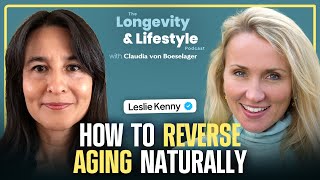
In this Longevity and Lifestyle Podcast episode, host Claudia von Boeselager interviews Leslie Kenny, founder of Oxford Healthspan and co‑founder of the Oxford Longevity Project. Leslie explains what spermidine is—a polyamine produced endogenously, by gut microbes, and found in foods such as natto, mushrooms, legumes, and fermented products. She describes how spermidine acts as a fasting‑mimetic that restores autophagy and modulates nine of the twelve hallmarks of aging, including stem‑cell function, mitochondrial health, gut dysbiosis, inflammation, and impaired autophagy. The conversation moves through concrete benefits: faster hair, skin, and nail growth; reversal of gray hair by shifting follicles from telogen to anagen; support for female germ‑line stem cells and fertility; normalization of cortisol, progesterone, DHEA, testosterone, and estradiol; and improvement of deep sleep via clock‑gene activation and glymphatic clearance. Leslie discusses dosing—1 mg/day for cognition, higher (≈5 mg) for hormone effects, and individualized dosing for hair—while noting the lack of standardized trials. She contrasts food‑derived polyamine sources (natto, shiitake, peas, fermented foods) with synthetic two‑dimensional mimics, emphasizing the importance of the gut salvage pathway and safety concerns. Product offerings from Oxford Healthspan (gluten‑free chlorella‑based blend with anti‑inflammatories, and wheat‑germ‑based Primadene) are described, along with cautions for advanced cancer patients. Leslie critiques a recent Lübeck study that used young adults, explaining why spermidine effects are muted in that age group. She outlines the typical age of endogenous decline (mid‑40s, especially post‑pregnancy/breast‑feeding for women) and the concept of biological versus chronological age. The interview also covers the Oxford Longevity Project’s mission to translate cutting‑edge research (autophagy, Yamanaka factors, AI, hormone optimization) into public events and practitioner tools, and highlights emerging trends: AI‑driven data integration, increased patient responsibility post‑COVID, mental‑diet health, and the social determinants of longevity. Finally, Leslie shares resources (aboutspermidine.com, OxfordHealthspan.com, social media) and a motivational message that even small actions can have big impacts.
Chapters
Spermidine helps with female germline stem cells. These are the cells that you need for egg production. For older women looking to get pregnant, it looks like these polyamines are supportive of fertility.
My returning guest today is Leslie Kenney, founder of Oxford Healthspan, co-founder of the nonprofit, the Oxford Longevity Project, and Bulletproof Coach. Leslie is a Southern Californian entrepreneur and graduate of both Berkeley and Harvard whose life was turned upside down when she was diagnosed with lupus and rheumatoid arthritis in her 30s. This led her down the path to healing, and she discovered and learned about a natural compound called spermidine, abundant in natto, which I'm probably pronouncing wrong because it's a traditional Japanese dish that she grew up with. Brimidine shows great promise supporting health as we age. Today, at 57, Leslie is living proof that we can get better with age so long as we take responsibility for our health and meet our doctors halfway. Welcome back on the Longevity and Lifestyle Podcast, Leslie. Such a pleasure to see you here again.
Thank you so much for inviting me again, Claudia. And you did pronounce natto perfectly.
Oh, did I?
Okay.
You did. My Japanese is not very profound. I've learned a little bit of Mandarin Chinese, but that's about it. Leslie, I'd love to start with, for those who may have missed our previous episode, and because you're such an expert in this and it's so important for longevity, what exactly is spermidine and how does spermidine help increase longevity?
Well, spermidine is one of a class of polyamines. Polyamines are just molecules made from amino acids, in this case from arginine and ornithine, with a little sami thrown in. It is joined in nature by some other polyamines, spermine and putrescine, and the three together seem to be present in high quantities in things like sperm or semen, human breast milk, and in the endosperm of seeds. In all these cases, they are there to help the next generation survive and thrive. It's so important for us as humans that we actually manufacture it in our tissues. But our gut biome, those healthy beneficial bacteria that make things like B vitamins, serotonin, they can also make spermidine as well. And we can also get it from plants. Now, when we're young, if we eat a lot of junk and we don't eat a lot of plants where it is found in abundance, we can manage because the body has this ability to manufacture it in those two places, tissues and the gut biome. But as we get older, their ability to produce this declines, and we do need to increase our intake from plants. Now, you asked why it helps with longevity, and it is because it inhibits 9 of the 12 hallmarks of aging. These are the pathways down which we age, and they include many things that your followers will, will already know about. So it's say, dysfunctional stem cells or impaired mitochondrial function, gut dysbiosis, inflammation. These are 4 of the hallmarks of aging that spermidine inhibits or slows down. But it also helps with something called impaired autophagy. Autophagy is a fancy word for cell renewal. It means in Greek, self-eating. So think of it as self-cleaning of the cells, constantly rejuvenating the cells so that they are like new again. And as we get older, that process becomes less and less good, which means the cells accumulate more and more rubbish. If you think of the cell as a hoarder, and a hoarder of, you know, old things that no longer work well, think of autophagy as your cell's own Marie Kondo that goes in and sparks joy by getting rid of the clutter, looking for things, salvaging things that might be reused in a new organelle or mitochondria or stem cell, but then burning the rest. And when you burn that rubbish, you create energy. And this is what happens when we fast. So we fast, the body has no food and says, right, I need energy. How am I going to do this? It looks around in the cells and says, oh, I see rubbish in the cells. Let's burn that. And it does. And it's— that's how the body unlocks energy in a fasted state. So you can fast to activate autophagy, but spermidine is a fasting mimetic. So for those people who either don't want to have to go through fasting or who shouldn't do fasting, let's say women in their reproductive years or, um, you know, older people who have sarcopenia or muscle wasting who don't have a lot of body fat to burn, or people who are hypothyroid. These individuals should not be fasting, and for them to unlock the benefits of autophagy, they can use something like spermidine to activate it without the negative side effects.
Beautifully said. So thank you for summarizing that. And let's talk about some specific, um, benefits also around hair. Um, so a lot of people who worry about gray hair, I know that this is a very big thing. So can you talk about, um, the benefits of spermidine for hair specifically and helping with gray hair?
Well, so the benefits that I just mentioned, the hallmarks of aging, those benefits are, you know, slowing those are things that are, are inside the body and we don't, we can't actually see the cells looking cleaner or functioning better. Areas of the body that have high cell turnover include hair, skin, and nails. Now, inside the body, our gut lining, which is only one cell thick, also has very high cell turnover and replaces every 72 hours. But we can say that the hair, skin, and nails, which are constantly sloughing off and being replaced, that these are, in a way, I'll say this as a non-scientist, a bit of a proxy for what's going on in the gut. And, uh, if you take spermidine, um, most people notice that their hair, skin, and nails all grow faster. Um, in particular their nails, they have to cut them more frequently. They notice that their hair needs to be cut more frequently, um, and their skin seems to repair faster. If you get a cut, the wounds tend to heal. Now All of these things have been supported in the lab, in mouse studies, in some cases in human studies. So let's talk about hair, which you specifically pointed out. There have been studies done in vitro. So in a Petri dish, they have taken, um, scalp tissue from people who were undergoing plastic surgery facelifts and where some of the hair at the hairline was actually cut away. And they put that into a Petri dish, and then they exposed it to spermidine. And they could see that within 6 days, something like between 25 and 30% of the hair that was in what is called the telogen, or the shedding phase, had moved back into the anagen, or growth phase. So why is that? Why does that matter? Well, the growth phase is the only time when pigment is produced. That's called melanogenesis. So when melanin is made. And it also— we want those of us who are older— so I'll be 58 in just a few more weeks, I can't believe it— but as you get older, one of the things you notice is that it's a little bit harder to grow your hair longer. And that's because it just doesn't stay in that anagen or growth phase very long. And this is why women, as they get older, will do things like, hmm, I'm going to get hair extensions, or, you know, they do other things to kind of mask the fact that it is harder to grow your hair longer. But if we can keep the follicle, the hair follicle in that growth phase, then we do have the opportunity for those individual strands of hair to elongate as well as pigment. So we have had, you know, people who have experienced repigmentation, and it doesn't really matter what your age is. What it really depends on is your, your status, your spermidine status. And I think I've shown you this photo before. I don't know how many people are going to be watching this on YouTube or someplace else, but this photo shows a 79-year-old woman who had been on the product for about 5 months when she began to get this stripe at the root of her hairline and it began to get dark again. And that was so unusual during COVID to see women with their roots dark and the ends white. It was usually the other way around.
Yeah, so if I can just interrupt you a second for people listening who haven't seen it. So it was just an image of this lady's forehead with short hair, the tips of which are gray, but the roots are actually dark. So it's like a reverse graying, if you will, because the hair is regrowing with the original pigmentation, the original color of the hair. So really exciting.
Yeah, so that was exciting. We've also had We have a 91, 92, maybe now, year-old client who had been, has always been white-haired, but had lost all the hair on the top of his head. So had a kind of friar's, you know, one of those friar's capes. And he began to regrow hair on top, which actually he didn't like because it was very, it stuck straight up. But of course it has to do that before it gets long enough to sort of lie flat again. But he also began to get dark hairs. Now it wasn't all the way across the head that he was getting dark hair, but what surprised him and his wife was that he was getting sort of clumps of dark hair, which was so strange because he says that he hasn't had this color hair for over 50 years. Wow. So that's why I say it's not impossible to have results even if you're older. And it really does. It depends not just on spermidine status. I know I said that earlier. It's not just that. It's multifactorial. Gray hair is a multifactorial problem. There are many root causes of it. Low spermidine, low spermine content. They're just, you know, those low polyamines are just one factor. Could also be low iron, low copper. Low B vitamins, poor thyroid function. I think thyroid function is a major culprit of hair loss and premature graying. Could simply be stress. You can have a chronic infection as well, which causes the body to do whatever it can to swarm that virus or that pathogen. One of those things that it produces is hydrogen peroxide. So to kill off a, a pathogen, it will create hydrogen peroxide in the body. And then what does the body do with that? Well, normally it uses glutathione catalase or superoxide dismutase. These are all 3 detoxifiers that the liver makes. They'll use one of those 3 to neutralize the hydrogen peroxide, and then it converts into harmless water. But if your liver function isn't great, if you are, let's say, under a lot of stress, you might be smoking, you might be drinking to relax, you might be eating a high-sugar diet, you might not be getting enough sleep. All of these things are reasons that there are things that weaken production of those detoxifiers or that deplete the liver of those detoxifiers., and then you don't have enough to neutralize the hydrogen peroxide. So your hair turns white literally from the inside out with that internal bleaching. And that's just to give you an idea of all the different ways that people go gray. That's a variety of the reasons. So I'm not going to say that you take more spermidine and spermine to help. But it's certainly not going to hurt. And in some cases, if all the other things are in balance and you're just missing this one puzzle piece, then you do have the opportunity to repigment and grow the hair longer.
What is the recommended dose for that? So for somebody listening who maybe for men that might be going bald and be like, okay, let me get on top of this, what can I take? Or but even for women who are saying, you know, I'm noticing the gray hairs or have a lot of gray hair. What is the recommended dose?
Well, so that's a really tricky one. What we— so everybody's dose is going to depend on their individual need. We have human trials for memory and cognition where we know that one, a 1 milligram spermidine daily dose improves cognition. So we know that that's on the memory side. For hair, nobody's actually done that study saying what is the standardized dose that is going to improve or repigment. What we do know is that, um, in the case of, let's say, alopecia areata, there's a study that, that came out, out of Korea called Altered Polyamine Profiling in the Hair of Patients with Androgenic Alopecia and Alopecia Areata, and they they simply were looking at the amount of these polyamines in the body of different people with these two conditions. And they noticed that those who had, who had a lot of this alopecia had very low polyamine status. So all I can say when it comes to both pigmentation and improving hair growth, increase the amount of spermidine and spermine that you take in from food sources and supplementation, and then see how you do. You can, because these are food-derived, you can simply increase the amounts. You can get it from shiitake mushrooms, from peas, or you can get it from a food-derived supplement such as the one that my company, Oxford Healthspan, makes. And you can, you know, you can double up, triple up to see, you know, is it making an impact? Most people will notice the growth of new baby hairs within about 6 to 8 weeks. Yeah.
When I was using them as well, I noticed the baby hairs sticking up. Yeah, it was quite cute, I thought. Because I have longer hair, I can, I can imagine your 92-year-old client was kind of wondering what the hair sticking up, but with longer hair I can kind of manage.
Yeah. Yeah. For those who have gone completely bald, it is, it's a You know, I'm not sure that they, I'm not sure that they love it because it's fuzzy, right?
Yeah.
But that is, that is kind of how it starts.
So that's the start. Exactly. The baseball cap at the beginning and then the— Yeah, yeah, yeah. Let's talk about female hormone health, such an important area and the effects spermidine has on female hormone health.
So there was a great study that was done in Canada several years ago which used a higher dose. So in this case, we do know the dose. It was 5 milligrams, and they took 5 milligrams of spermidine, and they used— they also had spermine in there as well, and that's the same as our Primidine original product. And the reduction in salivary cortisol levels in both men and women decreased by 58% in 30 days. That's really— that's a lot. So why do we care about cortisol? Cortisol is a hormone that is manufactured in the body in response to daylight. When we wake up, the photoreceptors in our eyes that have nothing to do with sight, but simply light entrainment, they say, oh, I noticed there's light, now make cortisol. Cortisol allows us to stand up so we don't fall over and hurt ourselves. It will raise the blood pressure. It just allows us to also deal with any predators that might be out there during the daylight. Now, as the day progresses, let's say by 4:00 as we're getting towards dusk, your cortisol production should drop and the body begins to produce melatonin so that we can run that glide path to sleep. If however, we are exposed to blue spectrum light and light bulbs or digital devices or mobile phones,, then those photoreceptors say, oh, I made a mistake. It's actually daylight. Keep producing cortisol. Now cortisol is made from progesterone, and progesterone is something that both men and women need. It helps keep— it keeps us calm. Uh, in women, it helps with, uh, the lining of the endometrium to make it ready for implantation of the egg, but it's It's an anti-anxiolytic. It also helps with sleep. Now, as we women go towards menopause, we often have dual responsibilities— teenagers at home, work, and we've got our aging parents. And we tend to give, give, give, give just at exactly the time that our progesterone is beginning to decline. Anyway, but we stay up, we push ourselves, we continue to have that chronic production of cortisol, and we even— we rob our progesterone stores even more, which is terrible. So having spermidine and spermine together decrease the cortisol is fantastic because we are able then to preserve our progesterone.. But that same study also showed that it normalized hormones that were precursors to progesterone, such as DHEA and pregnenolone. And it also normalized testosterone and estradiol as well as progesterone itself. So that I thought was really interesting. In men who were under the age of 50, that same study showed that testosterone increased by an average of 49%. In just 30 days. So, um, obviously a larger trial is needed to confirm those supportive hormone supportive effects, but it's, it's really quite, quite interesting. And there are some other interesting studies specifically for women and the reproductive tract, which obviously is intimately linked with our hormones. There was a study that just recently came out showing that spermidine protects the ovaries from reactive oxygen species, and spermidine and spermine together protect it from— protect the ovaries from hydrogen peroxide, which is interesting. And there's an earlier study out of China— that one study was from Korea— there's an earlier study out of China which talks about how spermidine helps with female germline stem cells. What does that mean? Well, these are the cells that you need for egg production, for something called oogenesis. And as we get older, you know, I delayed having children until I was in my late 30s, and then I found I couldn't have them and ended up giving birth at age 43. For older women looking to get pregnant, it looks like these polyamines are supportive of fertility. So both in protecting the ovaries, the female germline stem cells, but also in normalizing those hormones, because as mentioned earlier, we need progesterone to really plump up the lining of the uterus in readiness for an egg to implant. And Yeah. So those are, those are some examples of how it would help with hormone health.
Perfect. And I'd love to have a look at the Canadian study as well. And actually the Chinese one. And we can link these in the show notes for people looking to dive into it deeper. Also a repeat guest on the podcast, Dr. Jennifer Garrison, who I'm sure you know from the Buck Institute, looking at ovarian aging and extending or delaying menopause, I should say. Because of the detrimental impact on women's health because of it. So, um, you touched on sleep as well. I know sleep is such a big trigger. Um, is there other benefits with spermidine and sleep for people who might be struggling for sleep that this might be a really impactful supplement to try?
Could you talk about that? Sure. So, uh, in addition to the fact that it helps with progesterone, helps support hormonal balance, and these to precursors, pregnenolone and DHEA, which will help with production of progesterone. We also know that it helps with the clock genes. So spermidine will influence these genes that modulate circadian rhythm. So inside the brain, there's something called the suprachiasmatic nuclei or nucleus., and that is what, uh, what influences circadian rhythm, our sleep-wake cycle. And these clock genes, which 8 of them have been identified, we know that at least 2 of them are directly impacted by spermidine. We need more studies to see how this affects the other 6 clock genes. I know that Certainly anecdotally, this is probably one— this and the hair and nails thing are— these are the three biggest comments we get from our thousands of customers who say, oh, I can see on my wearable tracking device, my Oura, BioStrap, Whoop, Fitbit, I can see that my sleep has improved from the time that I took this product. Uh, it's very obvious. Most people will see an increase in deep sleep. Some people will see an increase in both. Few people will see an increase in, in rapid eye movement or REM sleep. Deep sleep is very important, especially to women, and the reason why is because it is when the glymphatic system is active. That's when the different compartments of the brain shrink and allow cerebrospinal fluid to flow between those different compartments and take away waste from the brain. And this was discovered by a Danish scientist at Cornell. You know, it's something that we didn't know. She believes that nutrients are also taken into the brain at the same time, though we haven't been able to prove that yet. And it's why people like Dr. Dale Bredesen, just like the woman you mentioned at the Buck Institute, has said that delaying menopause is beneficial to women because of the sleep aspect. If you in middle age do not get enough deep sleep, then the chances of getting Alzheimer's and dementia later in life are much higher. And women, as a matter of fact, have twice the likelihood of getting Alzheimer's or dementia than men. And if you ask Dale Bredesen about this, he'll say, well, look back at what happens in middle age, 15 to 20 years prior, these women tend to not be getting good sleep. And he is a big advocate of HRT for women, not just for heart health and bone health, but for brain health. And specifically with that link back to sleep and deep sleep. So that is Those are some of the ways that it helps with, with sleep.
Yeah, which is, is so important. For the intake of spermidine, right, so there are certain foods, and maybe you can discuss that, and foods versus supplementation, and then what are some best practices around supplementation that you would recommend?
So I mentioned earlier that you can get the polyamines in high quantities in things like mushrooms, but also in legumes, beans, seeds have them in high quantity. Peas would be a good example as well. They are, however, in all plants. They are in all living plants that you see. Some, like the legumes, have more. Now fermentation will enhance that amount, and that's why natto in Japan has the highest quantity of these polyamines of any other food source bar none. After that, you could then, if you're going down the fermentation route, of course, all these traditional societies that are renowned for longevity, whether it's in the Caucasus or in Okinawa, they have a fermented food practice. And so in Okinawa, they actually ferment their natto longer than the other Japanese. They ferment it for a year. And yet it's quite a different, different taste to the natto that you get in the rest of Japan. And kefir, kombucha, sauerkraut, kimchi, all of these are opportunities to get more of these polyamines into our diet along with the beneficial probiotics and colony-forming units that will be there and the prebiotic fibers in the, you know, in the cabbage for the sauerkraut, for instance. Some people, unfortunately, they react to high histamine loads. So all of any fermented food, whether it's cheese or sauerkraut, is going to have a lot of histamine. So if you are very highly allergic, then you're going to have to look for other food sources that don't, that have not been fermented. So we're back to our mushrooms and nuts and seeds. Um, in terms of supplementation, uh, try to go for a food-derived source of, of these— not just spermidine, but the polyamines. And the reason why is that spermidine, spermine, and putrescine are part of a salvage pathway, a recycling loop, and you don't want to miss the opportunity for your body to use that pathway. I've seen a lot of synthetic spermidine products on the market, and the two problems with that are, one, that you don't then get to access this salvage pathway, but, uh, and you also won't get these cofactor polyamines, spermine which is very good for DNA methylation, you know, turning on and off the genes in our epigenome. But you don't have then the precursor molecule putrescine to help you make more of both. But in addition, a synthetic spermidine is what we call a two-dimensional molecular mimic. So if I take my hands and, you know, I put them facing, palms facing each other, we would say, oh yeah, they look exactly the same. Those are identical, but we don't give two left hands to a human, right? And I would not be able to take a leather— a fitted leather glove for my left hand. I would not be able to put it on my right hand. And that is the problem with two-dimensional molecular mimics. And I, I actually wonder if that is why you have to use such high quantities of the synthetic to actually get the same impact of a perfect three-dimensional mimic that nature has created in food you know, you get the same impact. We have so many people who've tried synthetics and then they try ours and they say, wow, I never had this effect with the synthetic. Now I see what people are talking about, you know, with the benefits to sleep and the eyelashes and the hair. Um, so that is the other caution, is this two-dimensional mimicry. We also don't have any safety or efficacy trials in humans. On those two-dimensional molecular mimics. Whereas obviously we humans have co-evolved with plants for millions of years. And so we, you know, this has been in the food supply that we don't have to worry about the safety issue of that.
Yeah. Can you talk about the different types of spermidine supplements that you have?
As a company, we make two. We have a gluten-free version which comes from a very unusual strain of chlorella from Okinawa. I've been to the pools where they're grown outdoor in the sunshine. Very, very clean area. All the other chlorella in the world is grown in industrial areas, which is not great just because of nearby pollutants. Ours is grown in a sort of remote island. Then we add to that two other anti-inflammatories that also contain autophagy activators. We have an Okinawan lime peel, which has high amounts of something called nobilitin. That's an autophagy activator. Then we have Okinawan turmeric. That turmeric contains curcumin, which itself is also an autophagy activator. But anti-inflammatory. So that particular product has 3 anti-inflammatories and 3 autophagy activators. And then we have Primadene Original, which is a wheat germ, highly concentrated, defatted wheat germ version that has a prebiotic added to it that's going to feed the bacteria in your gut that can manufacture spermidine with the fiber they like to eat. So that, you know, when they're happy, they'll make things for you, right? They're like a little pharmacy. I think most people forget about this. Whenever we put something in our mouth to nourish ourselves, we've got to remember to nourish the mitochondria in our gut, you know, the, the bacteria that actually makes all these wonderful compounds like B vitamins and serotonin for us. So those are the, those are the two things that we make. There are obviously a lot of other products on the market. I've touched briefly on synthetic, but I'd like to also just mention that there are liposomal versions of spermidine and there is also an IV version of spermidine. And, uh, you know, I get this question a lot. Oh, I've seen liposomal. It'll get into the cell better, won't it? And that's only if you believe that these polyamines can't actually get into the cell. So polyamines again are made from amino acids. If we believed that the only way amino acids could cross into the cell was with a lipid layer around it, then we would all be taking liposomal collagen. But we're not. And that's because the collagen can get in easily. There is no need for that lipid layer. The other problem is when you put a lipid around it, it goes through the digestive system and it is not processed in the gut. Now, why is it important for it to go through the gut? Because of the fact that it actually makes— the gut makes metabolites that are helpful to the body.. And we know that in, in infants, when, uh, you know, when they get polyamines in the gut from breast milk, what happens is the immune cells in the gut are activated, and that leads to lower allergies in these breastfed children. So that is an example of why you want to have the gut be exposed to the polyamines. But the other reason is that the tight junctions of the gut. If you have leaky gut, you want to close them up. And spermidine does that. It actually tightens up those junctions. And so I think bypassing the gut is not a great idea because you want those benefits, right? The immune activation, and you want the tightening of the cells of the gut. And IV, of course, also completely ignores the gut. And its role in all of this, which I think is— I don't think bypassing the gut is actually a good thing. I think that this is where the magic happens, is in the gut itself. So that's just a way of explaining, you know, there's so many options out there, but why food-derived?
These are the reasons why. Yeah, no, that, that's pretty clear. Are there any contraindications for taking spermidine supplements?
Is there any category of people that it's definitely not Well, if you, if you have advanced cancer, you have to be very careful because polyamines, just like glucose, even ketones, some cancers can use polyamines in the same way they can ketones and glucose to grow. So you would want to, you know, to speak with your, with your doctor. That said, there was a really fascinating paper out by the Nobel Prize winner from 2018. So he was a co-Nobel laureate. From Japan, Professor Honjo. He co-authored a paper in October of last year on spermidine and its role in balancing the immune system such that the immune system could better target molecules like cancer, you know, cells like going rogue like, like that. And, um, you must always talk to your physician.
That would be an interesting paper to reference. And we'll link these in the show notes as well. I'll have to get them from you separately, Leslie. Of course. Let's talk about research. There was a research paper that came out that's questioning the impact of spermidine. What is your view on that one?
I know some people might have come across that. Was that the one out of the University of Lübeck, or was it— I have the link here. There was one out of Lübeck. Okay, so, so that one, yes, I talked to Dr. Gada Al Saleh, who's one of our scientific advisors here at the University of Oxford, about that very paper. So that paper actually only used university students from Lübeck. I believe the age range was 25 to 35, so they may have had some older grad students. And the problem is that with relatively young people under the age of 40, when you supplement, you're not going to see a spike because their levels are already high. The body does not say, oh right, I've got plenty of this and I'm just going to keep stockpiling more and more and more. It will use it for other things or it will excrete, right? This happens with B vitamins. This happens, well, with all the water-soluble vitamins, right? The body will excrete these things. And so this is, this is what, what we believe is happening. There was a study by Dr. Richard Miller at the University of Michigan. It was an NIH, National Institute of Aging, study as well in mice, and they had a similar, a similar conclusion. But in both cases, whether it was mice or humans, they were using very young, very young people. Now we know from the research done at Oxford, if you're looking at older people, you can actually see these levels increase. And it's not just even the work at Oxford, it's in other, at other institutions. In Japan, for instance, if you have an older cohort of people, you can see the levels, the blood serum levels of spermidine going up. Now, the, the, that Lübeck paper actually talked about how they thought spermidine was being converted into spermine. Spermine, I've mentioned, is important because of the DNA methylation power. So we use that to turn genes on that are beneficial to us and the negative ones off. So spermine definitely has a role to play. But I think again, in these young people, because their spermidine levels were already high, maybe then they thought, right, okay, we will convert some into spermine. And that's that polyamine salvage pathway that I mentioned where they can turn into each other. And with so much spermidine, maybe they just increased spermine and then tried to optimize the epigenetic expression. That's the only thing that God, and I could think of, you know, what was going on with that paper, you know, what, what did— what was actually happening with that cohort of very young people. And it's also why I say, unless somebody is exhibiting inflammation, um, active inflammation like huge amounts of acne or, uh, joint pain when they're very young, I don't actually say supplement with this product because you should be capable of manufacturing it in your tissues and gut biome. And yes, okay, of course, if you've had exposure to lots of broad-spectrum antibiotics and you've wiped out those colonies of spermidine and spermine manufacturing gut bugs, okay, well then yes, maybe you should supplement. But the vast majority of young people should not be in those categories. And their levels should be, should be fine. And that study also got rid of anybody who was unhealthy, right? So they would be the ones who would, they would be the ones who would have the faulty production and, and be in greater need of, of these polyamines.
Thank you for clarifying that as well. What would you say, I mean, the ideal ages if somebody's listening, that's maybe 30, is it 35? You were mentioning with inflammation in the body, but where do you see that sort of tipping point of natural spermidine production in the body start to decrease?
Is there studies around that? It really depends on your biological age, right? We have a chronological age, which corresponds to the birthday on our driver's license, and then we have a biological age. So if you are aging faster, right, and some people get premature gray hair. These people are possibly internally aging faster. If you have a higher biological age, then maybe you should start taking it. Generally, I would say that it happens mid-40s. Right. I've heard other people say, oh, it happens earlier. I've not seen definitive studies showing, oh, 25, this definitely happened. You hit a kind of wall, whereas By 45, a lot of women have had children, and we get— we women give up lots of our polyamines to our babies in our breast milk, and we don't top up. That's why women, after they breastfeed, oh, I'm losing all my hair, what's going on? I've delivered a baby and I don't have as much hair as I did before. Well, that's because you've given it all to the baby. When we are babies, we have the highest concentration of these polyamines in our body that we will ever have. And, and we do take it from our mothers. So around that time would be good. So let's say after pregnancy, um, and breastfeeding, before menopause, and that perimenopause time, I would say would be good. Men, kind of depends again on how much stress they expose themselves to. I have met men who, you know, are under great stress at work, they're ultra marathoners, or they're they're really pushing their bodies to the limit with Ironman after Ironman after Ironman. And they say, I don't know why my hair and beard have turned white. I'm so fit. Well, there is such a thing as too much of a good thing. Yeah, right. Yeah. Chronic inflammation. Well, maybe you need some anti-inflammatories. And as part of that group of anti-inflammatories, whether it's omega-3s, or curcumin, you might want to try some spermidine too.
Let's change gears and talk about the work you're doing with the nonprofit, the Oxford Longevity Project. Can you share more about your work there and, and what you're planning?
Well, and what we've done in the past, and this was a product of COVID really, um, my co-founders, Sir Christopher Ball, Professor of cardiovascular physiology at Oxford, Dennis Noble, and Dr. Paul Chen, who is a doctor to two of the Oxford colleges. We really wanted to bring the science at the lab bench. We wanted those discoveries to be brought to the public sooner. And it generally takes around 18 years to get these discoveries made in the scientific lab to the public. So our format is really having a breakthrough scientist explain what they're learning and put them together with a clinician who's basically translating that science into a protocol for patients. And in the past, we have really focused on this idea of autophagy. It is a big concept in regenerative medicine. If I look back at some of the biggest concepts, I would say the Yamanaka factors— that was in 2010, the Nobel Prize was awarded then. Then you had 2016 for autophagy and 2018 for cancer with Professor Honja. So these big ideas, we want to shine more light on them. And we've looked at, we've had Dr. Dale Bredesen speak on Alzheimer's. We've had Professor Jin Satoshima from Rutgers University Medical Center, who's an autophagy and cardiovascular expert, speak together with Professor Robin Chaudhary, who's one of our highest-ranked principal investigators, but also clinicians at the John Radcliffe Hospital, the teaching hospital of Oxford. So they were paired together. We had one specifically on autophagy, fasting, and women. That was Professor Abhinav Divan from Washington University in St. Louis. And Dr. Stephanie Estima was the translational doctor. Uh, she's a Canadian, um, clinician and author of a program called The Betty Body, uh, where she looks at how women can optimize hormones, uh, with diet. And now we are about to launch our very first in-person event at the University of Oxford on Saturday, the 8th of July. It's an all-day event with lunch inside the Victorian Gothic Hall of Keble College. So very Harry Potter. It's going to be Harry Potter meets longevity. And we have some great speakers who are going to present on everything from optimizing hormones for longevity, optimizing hormones for exercise and longevity, looking at the weight loss drugs, those GLP-1 inhibitors like Ozempic, Wegovy, Are they safe? Are they not? Looking at AI, use of AI and longevity, looking at what the A-listers in Hollywood are using to stay young as they get older. And then talking to two of our fantastic co-founders, actually three of our co-founders, two are in their 80s, Sir Christopher and, and Dennis Noble. And then Dr. Paul Chen will be presenting on using holistic approach to look at cancer. And how do we look at that if we have already had it and we're recovering, or if it runs in our family, we want to prevent it. So those are, you know, some of the presentations. I'll be the master of ceremonies. Nothing like free cheap labor to help with this, right? So I'll be moving everything along. But I think it's going to be a really fun day and an opportunity to meet like-minded people with an interest in aging vibrantly, right?
Beautiful. Yeah, so thank you for sharing that. Speaking of aging, uh, well, if you could live, Leslie, to 150 years old with excellent health, how would you spend those years?
Oh, I would definitely, I would definitely do lab research in endocrinology, probably immunology, Yeah, those two would be fantastic. I would absolutely go back to school, but I would want to do original research, probably on the thymus for the immune system and thyroid and adrenals because they're very close to my heart being a Hashimoto's survivor. Wow, there's so much I could do, right? Should I learn to surf? I think I would really like to take up ice skating again.
Yeah, I love it. I know I've got kitesurfing on my list. I've had two failed attempts. Well, not failed attempts. Once I broke my small toe randomly, so, um, that's the end of it on Zanzibar. Decided not to go to the hospital to get, um, to get that looked at.
But, um, that, that's beautiful. It's a good story.
It's a wonderful cocktail party story.
Exactly.
I have a few of those, I think, all the years of traveling. Leslie, what trends and developments in the longevity space in general do you find most exciting?
Wow, so much is happening. I do think AI is very exciting just to be able to draw all of these strands of data together. I think it's overwhelming for patients. The blood test we get, the gut biome test, You know, the cortisol test, all of these things. Who is actually looking at all of this and saying, oh right, now that I overlay the gut biome test on your blood test results, I understand what's going on? I don't see doctors able to easily do that. Um, we are actually co-sponsoring this with a Swiss company called BioLytica, and they have some software that does do that, and it's meant for practitioners. And I definitely see that being a trend. But the other trend I see is that patients after COVID, we all understand that we have a lot of responsibility. We have a big role to play here. And I think that that message of, well, I might not be able to solve the whole problem, but if I can make my body comparatively better, comparatively healthier, I have a statistically higher chance of fighting off these pathogens like COVID that might strike and we might not have a solution for, right? So I see patient responsibility increasing. I think that means that there are great opportunities helping people on the lifestyle front, optimizing movement, sleep, diet. I also see more people, especially in Britain, beginning to get the message around not just supplementing orally, but mentally. Now, what I mean by that is the thoughts that we feed our brain are as important as the food we put in our mouth, because if we are thinking toxically or we are exposed to a toxic environment, that's a terrible diet to live on. It's hard to thrive, right, when you have that, uh, that kind of let's call it mental diet. And so I see more people becoming aware of mental health as an issue. And we actually have the director of aging research at King's College. He's going to be in conversation with Donna Snowball around mental health, aging, and longevity, because that's, that's a big missing component. And in all these, these zones of longevity, we see it's not just those physiological levers that people move, but it's the social.
Yeah, right. So if you look at Harvard's longest running or the world's longest running study from 1938, right, on happiness and in longevity, right, in older years, that social connection, relationships was the key component of happy for longer.
Yeah, yeah. It's, it is, it's so, so underestimated. So, so yes, you know, you could look at exosome treatments and PRP in your knees or your scalp or, you know, whatever. Yes, there are all sorts of, of interesting sciency things, but I do think that there's a lot of low-hanging fruit out there, and consumers, patients are now really getting that they can access those.
Exciting times. Leslie, for my listeners interested in understanding spermidine and longevity better, what online resources or books would recommend they start with?
There's actually a pretty good website called aboutspermidine.com, and you'll find a lot of studies there on this, and they're sort of paraphrased. And in terms of the polyamines, that's tricky. There really isn't a sort of one-stop shop book on this, and maybe I should write that. There you go. Project. Yeah. In what time? But, but yes, there isn't really a one-stop shop to find out more about that. But start with aboutspermidine.com. And we have a few things on the OxfordHealthspan.com website. For those followers who are on Instagram or LinkedIn, I often post information at Oxford Healthspan is the handle on Instagram. I'm Leslie Kenney on LinkedIn, and you can follow some of— I'll post studies not just on the polyamines. I'll do it on the gut biome, on aging just generally. And so you'd be able to find some information there too.
Excellent. And we'll link those in the show notes. Great. Do you have any final ask or recommendation or any parting thoughts or message for my audience today?
Leslie, you're never too old. To make a difference.
Start today.
Even the smallest action has— can have the biggest effects. And there's a great quote from the Dalai Lama who says, if you think you're too small to make a difference, remember what it's like to sleep with a mosquito in the room.
I love that quote. Yeah. Leslie, thank you so much for coming back on the podcast.
It was so wonderful to have you on. Likewise. Thank you so much, Claudia.
More from Claudia









Can Psilocybin Slow Aging? The Study on Telomeres, Inflammation & Survival with Dr. Louise Hecker

