Dr. Cat Meyer - Sex Therapist's Secrets to Longevity and a Better Sex Life
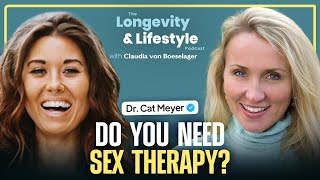
In this interview, licensed psychotherapist and sex‑trauma specialist Dr. Kat Meyer discusses how unresolved sexual trauma and chronic stress disrupt the nervous system, leading to physical ailments, reduced vitality, and sexual dysfunction. She explains her holistic approach—combining somatic practices, pleasure‑focused mindset shifts, erotic intelligence, yoga, tantra, and psychedelic‑assisted therapy—to help clients reconnect with their bodies, regulate their nervous system, and cultivate a vibrant, fulfilling sex life that supports overall longevity. Meyer shares personal anecdotes of autoimmune illness, the pivotal moment that led her to integrate Eastern philosophy, and the importance of curiosity, consent, and communication in relationships. She debunks common myths such as equating good sex with orgasm, outlines practical strategies (glimmers and glows, pleasure‑first decision making, communication scripts), and details how different psychedelics (MDMA, ketamine, psilocybin) can be used safely for sexual trauma healing, emphasizing intention, integration, and individualized medical screening. The conversation concludes with resources for listeners to follow her work.
Chapters
Sex hormones support the production of sex hormones. Stress supports the production of stress hormones. So how much are we putting the attention— where are we putting this attention that's going to help us to feedback loop of creating more and more and more of that thing?
Today's guest is Dr. Kat Meyer. Kat is a licensed psychotherapist specializing in sex trauma and ketamine-assisted therapy author, yoga teacher, and international speaker dedicated to evolving the relationship we have surrounding sexuality and our bodies. It's such a pleasure to welcome you on today, the Longevity and Lifestyle Podcast. Dr. Kat, thank you so much for coming on.
It's my absolute pleasure to be here.
Thank you. So I'm really excited to dive into this topic today. And I'd like to start with the fact that first of all, you help tens of thousands of people come back to their hearts, their bodies, and create erotically inspired lives through sex, love, and yoga. What exactly does this mean, and what is it that you do? Can you share with my audience, please?
Yeah, so I have been a psychotherapist working around sexuality and trauma for the past 13 years, and the manifestation of that, of that is really varied. So I have my own private practice where I see individuals and couples and even polykills, or, you know, whatever relationship.
Yeah.
And then I also hold retreats, in-person retreats. I do online courses. And I do podcasting and workshops and speaking and all the things.
I love it. And part of the practice, you say about, you know, coming back to their hearts and their bodies.
Yeah.
Why is there such— why do they need to come back to it? What are you seeing? What's been happening?
Many of us have a challenging relationship with our bodies, whether it's, you know, from these past experiences, these negative experiences, these messages that we inherited from our parents around our looks or how our body is supposed to be, or our worth, how our worth is attached to what we can accomplish, what we can control, what we can make happen or force happen. And even experiences around sexuality or our body, our expression in our body, or the erotic connection or the affection or the touch of it, or the sensuality of it all, the pleasure of it all. Like we're tied up, we're a compilation of all these different programs and messages that we've experienced. And that can leave us with this complicated relationship, whether it's we don't want to look at our bodies because we cringe or we inhibit our expression because we want to protect against the potential harm or pain of rejection. Or there may be a lot of fear residing in our body, a lot of anxiety in our body, a lot of discomfort or depression. Depression is the experience of us suppressing an authentic expression in our body in order to, you know, create protection for ourselves. And so all of that exists in the body. And, and if we don't want to, if we are trying to protect ourselves from that discomfort, then we're going to find these very clever ways to avoid being in the body. So whether we're distracting or we're avoiding, or we're using food as a way to manage the feelings in our body, or we're focusing externally on other people and other things outside of the physical sensations of the body, or we stay in our head and the very you know, quote unquote safe place it is to be in this intellectual space and analyzing everything rather than feeling. Yeah. So, so it's, it's about giving us these practices of how we can turn inward and face off with these, the complex layers of ourself, you know, whether it's the psyche, the mental aspects of it, the emotional, the physical manifestations of that. And even the meaning that we ascribe to all these pieces, our body, our sex, our love, our worth, for us to be able to find more freedom and liberation in the body. And then as a result, you know, yeah, longevity and vibrancy, which can only come if we're learning how to process some of these distressing past experiences or be able to process what our nervous system is trying to manage on a constant level. You know, whether it's fear or whether it's protection or otherwise.
And all the trauma that gets stored, right? I mean, it's—
oh my God. Yeah.
People think that, oh, I've, you know, I've suppressed the trauma. It doesn't affect me anymore. And when I hear that, that's always a bit of a flag and it's saying, you know, what have you done to work through the trauma? And it's down there and trauma always comes back. And so I think by ignoring it, it's just— it's going to manifest in certain ways. I mean, I used to be very well-versed at having a facade and everything is fine. And, you know, the house could be burning down behind me and it's fine. And then emotions are suppressed and physical and health issues tend to arise as well. So finding different ways to work through trauma is so important. And I love your practice and what you're doing, so I'm excited to dig in.
Absolutely. I mean, I used to struggle with a lot of autoimmune issues and alopecia and, and foggy brain and stomach issues. And I, I couldn't understand why I was having all these issues because I was a yoga teacher. I was healthy, I ate healthy, I exercised. But it was all this sexual trauma pieces that weren't— again, I was doing the same thing. I was suppressing. I was like, let's just focus on the positive. Let's just move forward. Right.
Just put the smile on. It's fine.
But we don't understand that the nervous system is still running on high with that because it's picking up cues in the environment and labeling it as danger. And so I didn't even realize I wasn't even physically connected to the fact that I was in a heightened nervous system state all the time. So of course that's going to exhaust me. And of course that's going to bring up these, these physiological manifestations because— and illnesses, because you're not meant to be in this fear state all the time. You're not meant to be anxious all the time.
Yeah, exactly. And the problem is that the longer we run at that level, that becomes a new baseline and we think we're fine and that we think that that's normal. And then this is where the chronic conditions come through, right?
And it's easy to hide that in this Western culture where we're so fixated on lots of coffee and producing more and go, go, go, go, go. I didn't have to pay attention to how the trauma was affecting me. I was just like, let's accomplish this and finish this and take on this. Busy, busy, busy. Yeah. Is this anxiety from unprocessed trauma or is this anxiety from all this, like, going, going, going? Like, it's the same heightened nervous system state, the same cortisol running, the same, like, adrenaline. It's, you know, so it's easy to mask.
100%. What was for you the real pivoting point?
So I got really sick and I also, I had zero sexual desire. Zero sexual desire, zero. I struggled with relationships, I would last in relationships about 2 weeks, and then I would be in full-blown panic and end them very just abruptly. And so like, after a while of experiencing this, like, you know, I'm studying sexuality, and I want that so much. But like, I, what's manifesting in my life is not that. And so I dove into studying all of this around, yeah, I started the physical and the academic route. And I wanted to learn as much as I could, you know, in research, but then I discovered more like Eastern philosophy and esoteric practices and energy and discovered that healing happens on many levels. It's not just this mental and emotional or physical health. It's like, it's everything. And then specializing more in trauma and doing my own trauma therapy work and also psychedelics and just got, you know, having these Realizations come up from an experiential level of realizing, oh, I'm not in my body. Oh, that's what it means to surrender. Oh, I've been clenching in my body the entire time, every day. That's why I have pain. Oh, the pennies drop. Yeah. Yeah. So it's been a, you know, it's been a progression over these last 15 years, but it's made it more of a holistic understanding by studying all these different perspectives and putting myself in these situations.
And that's what really makes a transformation, right? Versus this, that little scratching the surface. So what in your view is the importance of sex and sexuality for health, healthy living and longevity?
Yeah. And I think this comes back to exactly what I was saying. It's, it's like our sexuality is so tied up with our energy and our vibrancy. So the health of our nervous system both helps us to be able to have a healthy sex life, but also the sex life can also support the health of our nervous system. So we do see on a physiological level, this helps our immune system functioning, this helps our nervous system, this helps us manage stress. On the relational level, this helps us to be able to deepen and nourish the relationships that we have with other people. You know, this helps us to be able to feel close with somebody, to be able to— yeah, that connectiveness. But also, I really, I love to emphasize to my students around this concept of erotic intelligence, around, you know, the more that we can infuse sexuality not even just as the act of sex, but a living in our eroticism. Eroticism being how we transform the way that we embody this sexual body with playfulness or with creativity and imagination and and we engage that same concept with everything around us, you know, our environment or our coffee in the morning or our— I don't know what's in my environment right now. I've got candles. Like, I don't know, just really being in the pleasure of everything really helps us to, I guess, in turn, in coming full circle, helps us to be able to strengthen that nervous system, which we know is what helps us to maintain vibrancy in our life. Like, longevity needs us to feel, like, relaxed in the body. It needs to allow this energy to flow through us. It needs us to, to feel alive. And so pleasure actually helps us to strengthen that, um, parasympathetic aspect of our, of our nervous system, the rest part of our nervous system, so that we can feel more alive or feel more turned on or aroused.
And also present and centered, right? And there's so many beautiful hormones that are released, right, that help with obviously longevity, but just good, good health as well. What are some of the best ways if people maybe are struggling with their sexual health? And I know that there's a plethora of issues that people can have, but what are some things that you typically see if someone comes to you and says, you know, my either, you know, struggling with my sex life, or there's some issues that I have, what are some strategies that you recommend people look at first to improve their sexual health?
Yeah, the very first thing that I do is to bring them into more of this mindset of living a pleasure life, because sex is not just lives in its own vacuum. It literally infuses and affects everything around us. So if we can treat our everyday in more of a mindset of making decisions based from a place of pleasure, based from not from a productive standpoint, which that's important to, or a logical standpoint, very important, but also to include what feels good for me, that helps us to be able to strengthen the nervous system's capacity to hold higher states of energy flowing through it. So from, from the somatic standpoint, we need to learn how to self-regulate the nervous system. That means to calm nervous system down so that it can hold more energy. The reason why individuals come in to me and they have trouble with maintaining erections, or they have difficult time with orgasm or with premature ejaculation, like these signs are telling me that the individual has a difficult time holding higher states of energy coursing through their body. Many of these individuals have become accustomed to the, you know, more of a freeze state of their nervous system. So you've heard of fight, flight, or freeze, or fawn Pawning is another form of it, a freeze response. But if we stay in a state of frozenness rather than being able to embody more of our bigness, more of our, you know, like I like to use the word big cat energy, you know, like this more ferocity, then of course we're going to shut down. Of course our cock is going to go bloop and fall flat. Of course we're not going to be able to orgasm. We're going to clench up right as we're approaching that orgasm. Because we can't sustain high levels of stimulation. Pleasure and really focusing and savoring on pleasure. In somatic therapy, we call this glimmers and glows. Glimmer is the recognition, the fleeting recognition of something in our environment that feels good and opens the body. In my office, I have these trees surrounding and there's a bunch of little birds. When I catch the birds, it really brings an expansion in my, usually in my, in my chest and my stomach is where I feel emotion the most. And, and then if I stay focusing on that, I'll notice a response of my body, that's a downregulating nervous system response. So either I'll sit back into my chair, I'll yawn, I'll sigh, I'll have a smile come up. And every time we do that, it strengthens the nervous system more and more and more. So making decisions based on pleasure, focusing on glimmers and glows, allowing yourself to even get curious curious about, about your desires. It's such a vulnerable thing, but it's so important. You know, are we having the sex life that we think we're supposed to have, quote unquote, or are we having sex life that we're supposed to want, or that we want, that we desire, that actually resonates with us? And it comes back to, you know, recognizing somatically how that desire shows up for us. This relationship. Yeah.
Beautifully said. And I think what I hear— and before our conversation, I was asking around, speaking with some friends also, trying to get some feedback and questions. And I think where some people— what I hear is like, you know, life is so busy and you're just doing, doing, doing, and like, how are you supposed to have time? And some people are in, you know, longer marriages and things like that as well. Like, how do you reconnect with that desire if a lot of people feel like, oh, that part of me is kind of half shut down, or I'm not really connected to it? So how do you help for people who feel that maybe that they've neglected that part of them for so long that they don't know what to look out for, how to reawaken it. What do you recommend?
Tapping into your curiosity. So your curiosity expands you, it opens you. And certainty is the death of growth. So we really need to tap into the curiosity, the potential. What, what do I light up to or be drawn to? And so many people short circuit with the question, what do you want? Because it's a very loaded question. And, and that's very vulnerable, you know, is my answer going to risk the loss of you? Is my answer going to cause conflict with you? So I always suggest to people, fill your environment with erotic cues, or whether that is, you know, podcasts or Instagram accounts or erotic poetry, erotic literature, erotic stories, you know, follow these little threads that you come across and go down that if it's interesting to you. So your curious interest will expand you, follow that. Don't follow down something that you feel you're supposed to go down simply because, you know, I said so. But, but we all have different erotic languages, so to say, like my body is drawn to and turned on and really satiated by very specific cues. And then and somebody else will have very other specific cues. And so when we look at this in relationships, if we recognize that we are two separate individuals with separate needs, desires, um, turn-ons, and even breaks, what turn us off, then we can, um, individuate us and it becomes way easier to work through some of these challenges. We're not putting that on the other person to make us orgasm or to know what to do. Because they may speak a totally different language than, than we do. So maybe one of us is more sensual and needs like a lot of foreplay and warm them up and, and ambiance. And maybe the other person is more kinky, you know, or into more BDSM or bondage or, or like whole productions of scenes, you know, or maybe one of us is more energetic and highly sensitive and needs more anticipation and teasing and lightness in the touch. And maybe the other person is just like ready to stick it in and get an orgasm and let's go, you know? So when we can pause and recognize we are going to be different than our partner, that doesn't mean that we're sexually incompatible. It actually means that we can learn how to speak a new language and add to our repertoire. And it also means that we can infuse our needs with their needs. They don't have to be mutually exclusive and they don't have to be conflicting. There is a way that we can, we can interweave these. It's just going to take conscious attention and, and work in order to do that. I think we fall under this. There's this myth that sex needs to be natural or chemistry needs to be natural. And I just don't believe in that. I think that's the lazy way of doing it. But, you know, it— like anything, we can— if we put our intention around it and we really cultivate this, then we can all find resonance sexually with our partner.
Beautiful. And for some people to reconnect to that, are there certain questions that you think or recommend that are good to sort of ask or to start with? I mean, I love the curiosity piece, but is there any certain questions you say are really great to show up as a respect, you know, partner and say, you know, this is what my needs are and I've sort of done my own self-discovery and what, you know, what can I do to pleasure you as well? Are there certain things that you recommend?
Yeah, anytime we're having a conversation with our partner, I think one of the reasons why we don't is because we're afraid that they're going to feel that we're going to hurt their feelings or they're going to feel like they're, they're going to translate to mean that they're a bad lover. And so always starting these conversations with some form of, um, first of all, consent that we're going to go into this conversation. So I would love to have a conversation around it, um, expanding and exploring our sex life and making it really as juicy as possible. Would you be open to that? Or when can we dive into that? That way both people are consenting to a conversation like this, and we're not like surprising somebody while they're getting ready for work and be like, hey babe, I want to talk about our sex life. Yeah, I'm really not gonna land very well.
These are not my new needs.
Yeah, these are my needs. I wrote Yeah. And then starting out with appreciations, you know, we all want to be seen. We all want to be appreciated for our efforts and we are all making efforts. And so if we can acknowledge the types of touch that they're doing that we love. One thing that I appreciate about you as my lover is, and follow that up with, yeah, a touch or a look or the way they hold you or a position or a presence that they give you, an attunement they give you, whatever it is, give them that. And both of you share that. And then you can even go into one thing that I need more of, or one thing that I'm curious about exploring or trying out or playing with. I love the word play because it connotates this exploration and experimentation without having to be good at it. There isn't— it's— play isn't attached to our worth. It's not attached to an end goal or result. It's we're going into something, we're trying it out, and on the other side, we decide whether that was something that we want to keep doing or not do. And then even then, sharing with your partner on a spectrum of curiosity to reality, where does that curiosity fall? You know, is it something that that just wants to stay in fantasy land and we talk about the, the fantasy of having a threesome, or is this something that we actually want to do? And because those are sometimes something in fantasy we don't actually want to bring into real life, but if we told our partner that we have a curiosity to have a threesome, they might freak out and be like, you want to actually do that? You know, and that may not be the case. Maybe there's still a lot of steps leading up to that first.
Yeah. What are the biggest myths? Um, you mentioned one before, but what are the biggest myths about sex and health you've encountered?
Yeah, probably the biggest one is that successful sex or good sex is measured by having an orgasm. And I just, I don't subscribe to that. I think there's a lot of overemphasis on orgasm. I love orgasms. I love orgasms. Like, don't get me wrong.
I love them.
But right, right, right. But we can put a pressure on ourselves to experience an orgasm every time we engage in sex. And then that can turn a very enjoyable sexual interaction into, into work. So me and my partner, we're constantly having sex, like living in sex, not because we're having penetrative sex and orgasm every 5 minutes or not, but it's a constant, like grabbing each other and like breathing and moving energy and touching. And sometimes we have an insertion and we're just rocking and rolling in with each other and that's like 5 minutes. And then we're like, okay, okay, goodbye. I gotta go. You know? Yeah. Yeah. Or constantly bumping into each other, grinding into each other. And then that's it, you know, but it's like, Like that is sex as well, but it's almost like we've, we've narrowed the definition of sex into this very tiny image of this behavior that we do in bed at this particular time. And it has to have this whole production and it doesn't, you know, quickies can be, and quickies again, don't have to have orgasm. Um, there's some fun interactions I've done. With partners, and then I prescribe this to students as well, of like sometimes you setting a timer for 2 minutes or telling your partner you have 3 minutes left to do this, to do this thing. And then at the end of that, it's it. That's it. But you know, you create a container oftentimes for this, this wild energy just coursing through this vibrancy of like, yeah, cuz you, you have a time limit. You gotta get it in there, whatever it is, enjoy it as much as you can squeeze it out, you know, uh, squeeze out as much as you can from that experience. Uh, and, but like, if you pressure yourself that I have to have an orgasm in that, then that can totally deplete us and put us into performance anxiety, or I have to maintain an erection during those 3 minutes. No, you don't have to. And, you know, switch, uh, allow sex to be more of this breathing model versus this linear destination-oriented model. And that's where, again, like, we think about vibrancy can occur with that, you know, like sex hormones support the production of sex hormones, stress supports the production of stress hormones. So where— how much are we putting the attention? Where are we putting this attention? And that's gonna help us to, to, you know, feedback loop of creating more and more and more of that thing.
So would you say that it's as soon as you start getting goal-oriented that it goes into the head and actually the key to the pleasure is just staying in the body?
Absolutely.
Yeah.
And if you do get stuck in the head, or if you notice your partner get, get stuck up there, pause. You know, we try to override it because we're afraid of ruining the experience, but it ruins the experience if you try to push yourself through and you're not there, you're not fully present. Exactly. Yeah, I mean, some of the sexiest moments is when I've had partners stop me, like notice that my mind is elsewhere, and they stop and they're like, hey, what's going on inside your head? You know, and then And then we get to pause and I get to tune into it and I get to shift the direction of what we're doing, or I end up bursting into tears because there's something that, you know, yeah, that's something emotional that I'm holding back that I don't even realize I'm holding back because I'm just trying to stay in this experience. And, and I would love to, you know, help people see that that's what deepening sex is. Like to deepen with another person or persons in sex is to, to use those, be so present to the nuances and the fluctuations and the, the emotions and the, the, you know, mental distractions. And all of this is potent information for us to pay attention to and unlock even more, um, of us.
Yeah, that curiosity again, like, ooh, what's coming up? Why is this coming up? Like you said, the new person to tears, like what was happening? You didn't even notice, right?
Right, right.
Actually, to the physical experience, you talked before about the power of sexual energy, and I'd love to just touch on that. I have a friend who's a tantric coach as well, and she's a big fan of this. But can you share with my audience more about the power, this powerful force of sexual energy?
Yes. So from the tantric tradition, this is referring to more of the Kundalini energy. In the tantric tradition, we paint this image of the snake or two snakes that, that writhe up our spine when we have unlocked this power surge of energy. And so physically, we can see this manifested by the spine undulating or the body going into shivers or trembling involuntarily or voluntarily. We can reach these experiences with relaxing the body, you know, breathing, using sound vibration, and even movement of the body to both downregulate the nervous system, but then also simultaneously activate the energy so that it can flow through the body. And so there's space in the body for it to flow. And so then physiologically, the Kundalini represents, represents the health of that nervous system. So We see in tantra these two snakes that, that weave up the spine, and that's representative of the sympathetic nervous system and the parasympathetic nervous system. We need to have the health of both of those to support healthy sex life. You know, the parasympathetic is that rest and digest aspect of us. We need to relax because that opens the body for flow to occur. We can't flow if our body's tense and contracted or exhausted. Um, now the sympathetic system is all about the activation, the arousal. This is, this is where we get turned on. And that's in— that can be powerful energy coursing through us. And if we are, if we're exhausted, if we are in a fear state, if we can't hold high stimulation, then again, that comes back to, you know, struggle with orgasms, erections, even lubrication. You know, some of these arousal physiological responses. And so we have to find that, that balance between, yeah, between both of those. Of course, breath is going to help with regulating our nervous system. Of course, movement is going to help to open the body. This is why my company is Sex Love Yoga, because yoga is such a powerful avenue for opening the body, strengthening the nervous system, and even our connection with the body.
Are there certain practices in yoga that you say in particular are the most powerful for the work that you do?
I mean, everything. Yoga. So yoga is an 8-limb path, which means that there's several different aspects of yoga. There is the pranayama, which is the breath, and the breath helps with, again, nervous system regulation to be able to calm us, to open us, but also to activate energy in our body. Then we have the asana practice, which is the physical body movement. So this is the stretching, the contorting— contorting the body— practicing balances, you know, and, and there's a lot of bilateral movement there which helps with the brain regulation and the nervous system regulation, but it also helps to open the fascia, which is the connective tissue throughout the body, so that there is more of an open channel of, of energy and flow and feeling, and it helps to support our hormones. And then there's also lifestyle practices. The yamas and the niyamas are our principles to live life by. And then there's also the meditative practices. And meditation helps us in sex to be able to focus on the person in front of us or focus on our own sensation, reduces distraction, also helps alleviate so much of the built-up stress in our body. So I, I see all of these as benefiting in our sex life and our love life. Um, I, I see it as a very foundational piece. Absolutely. Yeah.
Yeah. Let's talk about sex therapy. Um, some people mightn't be that familiar start with, you know, what exactly is sex therapy? What does it entail? What are some sort of use cases? Why do people come to you for sex therapy? And what can be resolved with it?
People come to me for sex therapy for everything. Like, like, I don't know, I made this joke that I think everybody could benefit from a sex therapist or a sex coach. Because, again, we are wrapped up in so much cultural shame and programming mis-education even about how our bodies operate. And I went to a Catholic school in the Midwest of the United States, and it was all abstinence only or reproduction focus. It was like the messages I received of you can't masturbate, masturbation is a sin, you know, don't have sex before marriage. Like that is foundational to my, to my understanding of sex. And so imagine how how our bodies respond, you know, when we're approaching these situations. Um, I have so many clients who have shame from their religious upbringing, and this isn't to knock religion, but there's just— this is a really good example of how messages from somebody who's an authority figure that we look to for guidance and for helping us to understand how we're supposed to operate in the world, and at those formative ages is, that becomes our reality. And so then as we grow, we experience other situations where we then have to come up to like the body contracts, or we freeze, or our— we have a difficult time with getting turned on, or we get so turned on. And then we feel shame for having all these sexual urges, you know, like, what do we do with this? Why does this feel good that I'm like, you know, rubbing my crotch against this, this chair, but I'm not supposed to do this. Right. So we have to untangle a lot of that. And then I also have clients who come in with painful penetration, painful sex, sometimes sexual trauma, and whether it's a violation or even just the fear that comes with for a woman walking down the street and having eyes leering at her, you know, that leaves— that's left many of my clients feeling like they they're unsafe being in the body that they are. Their body is unsafe. They have to hide their body in order to protect them from, from harm. Many women in my courses, I teach breast massage, and there's tears. There's so many tears that happen because they don't touch their breasts and there's a negative relationship with them. You know, maybe they were made fun of, they developed too soon, or maybe their boyfriend friend, uh, you know, called them something terrible, or, you know, or maybe the mom's relationship with her own body influenced their growing up. And so it's like now we're touching them and it's like everything clenches, memories come up, and it's, it's such a precious, vulnerable moment. But it's also a physical somatic reprocessing of us, of like we're showing up for our or being affectionate and present with our own body. This can be wild. Also helping women with their orgasms. You know, there's so many women who don't realize how their bodies function. And so they, they are either aren't experiencing orgasm or they are experiencing orgasm, but it's like very light. And they, so they're like, I don't know if that's an orgasm or if I'm just sneezing. Yeah. So, so, you know, helping them to know like, okay, your body actually needs a lot of warmup. You know, We need about 30 to 45 minutes and we pressure ourselves to be in 5 or 10 minutes. And that may not be where our body's at yet. Um, or maybe we need more clitoral stimulation rather than just, um, penetration, or the body needs to be touched. Maybe we're tense in the pelvic floor. Like there's a lot of physiological, emotional, uh, reasons why we can be experiencing the symptoms that we are. And so it's unraveling that and having a safe place. Place for people to talk about. It's like, can I talk about sex with somebody that I don't know? It's scary. It's—
and yet I feel like so many people want to know more and be curious. I mean, one of the people I've had on the podcast was John Gray, who's a relationship coach who was 8 years a Buddhist monk. And then when he came out— and this is, I think it's just such a funny story because when he came out, he was like, okay, well, how do I do sex right? Like, he's like, I don't know anything about this. So he made it a point of like researching and talking to people and asking a lot. And he became, quote unquote, such an expert that people started going to him. And that's how he became a sex therapist, and then went on to become a relationship therapist as well. So he really just kind of dug in and did his research around it.
Curiosity. Yeah, exactly.
Yeah. And interest. And I guess he had a good story saying, I was a monk, and now I have no idea what to do. So can you help me please? But where I see a lot of women, just speaking to different people around this is the confusion with orgasms. And why is that? So, I mean, I know you said there's a lot of cultural things behind it as well. But I feel like so many women feel either like it's not possible for them, or it's super difficult, or, you know, they push themselves down, like, it shouldn't, you know, doesn't always happen to me, but that's okay. What do you recommend for women who are maybe struggling with, um, understanding their own bodies around orgasm and, and different ways to attain that?
Yeah, yeah. And so I want to start with, it is okay to not experience an orgasm. Like, I, I think this over-fixation on orgasm makes orgasm elusive. So if we relax the, the pursuit of it and we allow our body to express itself the way that it needs to, um, and allowing pleasure to be our purpose and go and to and following where it feels good, then that is foundational for experiencing orgasm. But if we're fixated on I have to experience an orgasm, oftentimes they hide from us.
It's like those unicorns, they just keep running away, right?
Exactly. So it's, it's so— it's almost like we have to take our eyes off the focus of it for us to, in order to experience it. But then also with that, it's, gosh, I take women through a process of, yeah, identifying what these, these negative self-talk, where did that come from, you know, in the culture, and then teaching them about how to be present to their body and downregulating their nervous system while they're being present and pleasuring and touching the body. Body because, and, and, um, and putting these in bite-sized pieces of, of exercises because a lot of women will be like, oh, you know, like I masturbate, but I get bored or I find myself getting distracted. And I'm like, yeah, so maybe you need to do practices that are even smaller than that, you know, like shorter than that. Set your timer for that. And if you don't experience an orgasm, and they're great, it's all contributing to the foundation of the reconditioning. Of, of the body. I remember when I first brought myself to orgasm in my 20s is I was, I was 23 when I first had sex. And then when I brought myself to orgasm, I was probably for the first time, I think I was like 26 or so. I had a lot of sexual trauma I had to work through. And I, I would keep coming back to the practice and keep coming and I would get so frustrated. I would, I would legit get frustrated. And then when I finally did, I was in this practice for 45 minutes before the orgasm decided to reveal itself. And I started crying after that. I was like, oh my God, I did it. I did it. You know? Yeah. But again, it was this, you know, consistency, devotion, stopping when I was getting distracted, bringing myself back, um, breathing, relaxing. And then yeah, the patience. The patience is really key. So it's balancing the layers of this, the mental, the emotional, the physical, even the spiritual. You know, what is— what does it mean for me to be with my body? What does it mean for me to have an orgasm? What does it mean for me to have— to be in pleasure? And making sure that those align with compassion and care for yourself versus Because it's like a form of self-love almost, right?
So reconnecting with yourself and, and, you know, finding that love for yourself as well and taking care of yourself. Yeah.
Yeah. Yeah.
One area you cover is around having insight from sexual intelligence. Why is this important? What exactly is it? And how can these insights be embodied?
So erotic intelligence is the fusion of 5 different principles of the health of our social intelligence, which is how we interact with other people. Emotional intelligence, how we attune to our own individual emotions as well as the emotions of other people. We're able to read, read them accurately, read ourselves accurately, and create the space for our emotional experience and expression. Body connection, body embodiment, you know, the connection of sensations of the body, openness of the body, expression of the body. And creativity, so creativity and imagination How well are we infusing that playfulness or trying something different or adding more, more production, more, more fun to, to the activity versus just having sex or being playful and flirty? I love flirting. Flirty is a great playful, creative way. And then also the inclusion of self-understanding. So the depth of how much you know yourself. Self-awareness, self-connection with your thoughts, your beliefs, your behaviors, your patterns. So the more that we can cultivate these and nourish these, we'll see the end product of vibrancy, you know, this heightened energy, this health, this even this motivation to keep doing sex, or to keep connecting, or to keep playing in that sexual space of ourselves. Again, whether it's in the bedroom or it's just in the way that we embody our sexual, sexual body and expression. Because if we're just subscribing to this, the sex of the culture, what the culture says, and we don't infuse that with creativity or imagination, or if we're not connected to our body, or if we're not attuning to somebody's emotions and our own emotions, or if we're not taking the time to understand ourselves, like, that's not going to motivate us to be in this sexual space. And it's actually going to result in more depletion. Sex as depletion, sex as boring, sex as not something that I'm motivated to do. It's a task, it's work. It's, it's like, oh, I don't have the energy for that tonight. Because of these things. And I always tease that if you hear from yourself or from your partner, it's like, I'm too tired, I don't have the energy for sex tonight, then you're subscribing to that socially constructed idea of sex. And one of these 5 is not being tended to. If you're too tired, have sex that's just like you and them, like mushing your faces together and just like holding each other and breathing. Like that that's pleasurable.
Low energy output and pleasure.
Yeah, right.
Yeah, yeah, I love it. Let's talk about sexual healing and psychedelics. Can you share more about your work on this?
Yes. Uh, so personally, psychedelics were a part of my sexual healing path, and I think it's really important. I see so many coaches and practitioners out there who, who speak to self-development and they have a background of psychedelics, but they don't tell you. And so I think, I do think it's important to be open and honest about, you know, what's contributed to our path. I've had years of therapy as well in so many other ways, but psychedelics were a big part of it too. Ayahuasca was my first introduction, and, and, or I guess psilocybin was for my first introduction, and then ayahuasca and going into more ceremonial perspectives. And then getting into the clinical aspect of it. So using ketamine in therapy practices and couples therapy and, and individual therapy. So psychedelics, and every single one of them has their own specific texture of experience and have— has their own way of addressing the physiology and the neurobiology to invoke these different experiences for us. So I, I can see how each of these can have their own way. These are their own lessons that we can access as reference points here in that psychedelic-induced state that then we can learn how to integrate that into our everyday life. So there's a lot of research around MDMA for couples therapy. And why does MDMA help us with couples therapy? Well, because it helps us to be able to connect with emotion and process emotion in real time. There, it's an empathogen, so it opens our hearts so we can be more vulnerable and we can be more positively receiving our partner and from a, from a compassionate and curious state versus a dysregulated or defensive state. We even see this with ketamine too. So in my practice, I've seen how individuals report, you know, being the, the pain and the heaviness of depression lifted so that they can work through what's underneath that trauma. Now we've been able to go into some of these, this trauma pieces in a way that they can face off with some of the pain without the dysregulation that happens from, from the, the intense emotions of that, of that moment. And so we can actually go in there and reprocess something Same with MDMA. Those two are really powerful in working with trauma because of that particular experience. During my ketamine-assisted therapy training, room full of doctors, room full of therapists, I had a full-blown energetic orgasm while we were, you know, experiencing ketamine. And I came out of that and we were all processing and everybody looks to me and they're like, what happened to you? I know. I had a great time. That was great. Let's do it again. I went in with the intention of how can I use this for sexual sex therapy? Like, is it possible to? Because I've heard from so many people, so many people told me, ah, ketamine, it's, it's a dissociator, so you're not going to be able to use it for sex therapy. You're, you know, there's nothing sexy about ketamine. But that's not the case that I've learned from, um, myself, from my clients, from I even have an ongoing survey where I'm collecting people's anecdotal experiences. And there are several people, I have over 550 participants in that survey. And I've had several people say that ketamine helps them to be able to access pleasure where they typically have a lot of anxiety, or it helps them to feel deeper connection and love with their partner, that they were able to put down their defenses. That they were able to feel energy moving through their body in a way that they hadn't before in sex. So it's, again, I think what it comes down to is how are we prepping and how are we setting up the experience with these psychedelics or, or, um, psychedelic therapy. You know, if we start with the intention of something related to sex and then we use practices that help us to, to connect with that part of us, then I think that they can really help us to, yeah, again, create that reference point of what's possible. And once we create a reference point of what's possible, it becomes easier for us to recreate that into a sober mindset. But that takes practice. It takes practice. It takes consistency and devotion. I think, you know, people will argue with me and say say, well, I can't feel experience a cosmic energetic orgasm in sober mindset. I can only have that in psilocybin and MDMA. And I would argue that I have very psychedelic sex without psychedelics. And a lot of that has come from my tantric background. And a lot of that has come from, you know, the sexual trauma work that I've done. And, you know, the devotion that I've put into that allows me to reach those But again, psychedelics helped me to realize I was not in my body. There was a lot of fear, there was a lot of clenching, there was a lot of, you know, even identifying where the exhaustion was coming from, how it was made clear in that space of psychedelics.
So, so beautiful and so powerful what can be done. I think it's such an exciting space, the research that's coming out, and I mean across the board, but to be able to help heal also for sexual healing and sexual trauma as well.— would you say that for different people, like different people would respond to say psilocybin better versus MDMA versus ketamine? Are you seeing that? Or would you say like, you know, ketamine is for everyone looking to experience sexual healing as well? Is it, is it across the board? Or how would you reference it?
Oh my gosh, that's such a good question. I will never say that psychedelics are for everyone, ever. I don't believe that. I think that there can be an overemphasis on psychedelics as this panacea, and I don't agree with that. I think similarly, again, each of these have different textures. Each of these also have different, again, physiological responses, and it's not physically or mentally appropriate for everyone. Ketamine happens to have the highest safety profile of all of these psychedelics. Meaning that it's more appropriate health-wise for more people. There are certain counter-indications, but ketamine has been around for over— I think it's been like 50 years. And originally it was used on the battlefield to help with soldiers. It's also used in— Yeah, it's used in pediatrics. It's used in Yeah, as anesthetic to— so more people can use that. The downside of that is it's also more highly addictive than the other psychedelics. So, you know, there's some considerations around that, some considerations around certain mental health challenges, and then also low blood pressure and heart conditions. MDMA is not appropriate for people with high blood pressure. You know, it's not appropriate for, but it's also appropriate for a lot of more trauma. It's excellent for working with trauma because it helps to quiet down the amygdala and the fear part of the brain so that we can work with some of these pieces. And then psilocybin isn't appropriate for everybody, for people on SSRIs or, you know, with other tendencies or a family history of psychosis. And so it ultimately, and there's more counterindications there too. I really want to encourage people to talk to their doctors. You know, what is the intention? Intention, what is it that we're going for? Because certain ones will help more effectively than others. But then also, what are— what is your physical makeup and what is your lifestyle and what's going on for you so that there can be, you know, one that's more appropriate for you too.
And which patient profile, if you will. So if people are listening and they're thinking, okay, I've kind of heard about psychedelics, I've never thought about psychedelics and sexual healing, maybe this is for me. Me, what are some questions you would typically ask a patient to see if this might be a good solution for them?
First of all, I have to emphasize that, you know, I don't promote illegal use of substances. All of this is for educational purposes. And we are seeing more and more rolling out legally across, you know, in the United States, but also in other parts of world. The Netherlands and Jamaica are both two countries that have psilocybin and truffles available legal. And so you can go to retreats there or work with therapists or practitioners there. So emphasizing that, so as for my ketamine work that I do, I have them do a medical evaluation with the doctor that I work with who prescribes. And then I do an evaluation of them in the first session and gather information about their mental health. And then even what the particular issue is that they're struggling with. Because sometimes, you know, I have clients who come in and they wanna work around the sexuality and ketamine. And sometimes I'm like, actually, we can just deal, we can just do regular talk therapy, sex therapy, and I can give you these things and we can work on that way.. But then sometimes they come in and I'm like, oh, I think the ketamine would be really helpful to help to alleviate some of this, that, you know, this symptom that you're experiencing so we can work on the root of it. And it'll just, you know, fast-track the, the healing. Yeah. So I would say that. And then also sometimes I work with couples in the ketamine space too. And so I find that to be really powerful when they can share the experience together.
So it's not only about being able to go deeper in terms of accessing different parts of, say, the mind and brain to relieve the trauma, but would you also say that the time period needed for the therapy gets condensed because of the power of the ketamine-assisted therapy?
It can be. It certainly can be. But I also emphasize that it's up to the client how much they— how devotional they get about the integration. So, you know, we can have psychedelic experiences and get a lot of insights, but then what are you doing to make sure that that stays in your life? And that's the key. That's where psychedelic is just a tool, but this is a lifestyle change. So you, you get these golden nuggets like, oh, like this is what self-love feels like. Okay, now we have to, you know, we can go back to what was programmed in us that's homeostasis, which is self-loathing. Or we can every day or every week do something that's really loving for ourselves or affectionate or caring, and that's what's going to change the neuro wiring for us, not the aha moment.
I guess that's part of the journey, right? And so you support then, I guess, patients also with the integration process of really becoming— rewiring those neural pathways, as you say, um, and embodying that. Is that part of your— oh yeah, yeah, yeah, super important. Dr. Kat, for my listeners interested in following what you're doing and learning more about sex and yoga, love, um, all this amazing work you're doing, what is the best way that they can follow what you're doing?
Yeah, so they can find me on Instagram at Sex Love Yoga. They can also find me on my website sexloveyoga.com. I have a podcast, Sex Love Psychedelic, and I also have a book called Sex Love Yoga, which is all psychological themes around those three concepts, but in poetic framework to really help you feel and feel, feel validated, feel held, and give you an emotional hug.
Beautiful. And we'll link all of those in the show notes. Do you have a final ask, recommendation, or any parting thoughts or message for my audience today?
I would remind people that you're Your sex life is infinite. The potential of it is infinite as long as you stay curious. Beautiful.
Thank you so much for coming on today. This has been such a pleasure in many ways and so insightful. Um, was great, and I would love to have you back at one point on for round 2.
Thank you.
More from Claudia









Can Psilocybin Slow Aging? The Study on Telomeres, Inflammation & Survival with Dr. Louise Hecker

