Dr. Jolene Brighten - On Owning Your Own Hormones, Hormonal Balance & Sexual Wellbeing
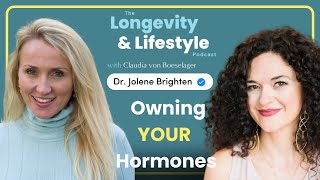
In this Longevity and Lifestyle podcast episode, Dr. Jolene Brighten, a board‑certified naturopathic endocrinologist and clinical sexologist, discusses the systemic problems she sees in women’s medicine and offers a functional‑medicine‑based roadmap for hormonal health. She recounts her own childhood illness, which sparked a lifelong focus on food‑as‑medicine and led her to reject the conventional, symptom‑masking approach of many gynecologists. Brighten critiques the routine prescription of hormonal birth control without thorough work‑ups, explaining how the pill can mask underlying conditions such as PCOS, endometriosis, and thyroid disorders while depleting nutrients, altering gut microbiota, and potentially compromising future fertility. She outlines the most common hormone‑related disorders (PCOS, hypothyroidism, adrenal androgen excess, insulin resistance) and connects them to gut health, inflammation, and lifestyle factors. Practical nutrition and lifestyle interventions are presented—anti‑inflammatory diets, antioxidant supplementation, fiber intake, fermented foods, and mitochondrial support—to protect ovarian health and overall longevity. Brighten provides detailed guidance on hormone testing (thyroid panel, vitamin D, fasting insulin, hemoglobin A1c, targeted reproductive hormones) and explains when and why certain labs are or aren’t useful. She empowers listeners with advocacy tactics: asking providers for differentials, requesting appropriate imaging, obtaining second opinions, and leveraging social media to find patient‑centered clinicians. The conversation also delves into sexual health, debunking myths about clitoral anatomy, orgasm, and libido, and highlights her work as a certified sex counselor. Throughout, she promotes her books “Beyond the Pill” and “Is This Normal?” and offers free resources such as the HormoneKit, while encouraging women to own their bodies, trust their lived experience, and seek evidence‑based, individualized care.
Chapters
where I realized that women's medicine is always done to them, not with them, not for them, not in partnership with them, but be a good girl, take your medicine, scoot your butt down the table, here comes the speculum.
This episode is brought to you by Leela Quantum Tech. In the past two centuries, our understanding of longevity has revolutionized from a mere 30 years average lifespan in 1800 to nearly 80 years today, we've made incredible strides. Now it's time to embrace the future of aging with Lila Quantum Tech. Lila Quantum Tech brings you products charged with quantum energy, designed to restore balance and vitality. These products can help in managing stress, improving sleep quality, and promoting mental clarity, contributing to a younger biological age. Our modern lifestyles can accelerate aging, and EMF radiation is everywhere. With Lila Quantum Tech, you can combat this trend and focus on utilizing the balancing effects of quantum energy to maintain your youthfulness and shield yourself and your loved ones' well-being. To bring balance to your everyday life, boost your health and vitality, visit leelaq.com, that's L-E-E-L-A-Q dot com, and embark on a journey to a longer, healthier life. And for you, dear audience, get a 10% discount on Lila Quantum Tech products with code LONGEVITY10. That's L-O-N-G-E-V-I-T-Y-1-0 at checkout today.
My guest today is Dr. Jolene Brighton. Dr. Brighton is a hormone expert, nutrition scientist, and a leader in women's medicine. She's board certified in naturopathic endocrinology. And trained in clinical sexology. She is the author of Is This Normal? A Nonjudgmental Guide to Creating Hormone Balance by Eliminating Unwanted Symptoms and Building the Sexual Desire You Crave. She is completely dedicated to uncovering the root cause of hormonal imbalances and empowers women worldwide to take control of their health and their hormones. Dr. Brighton is an international speaker, clinical educator, and medical advisor within the tech community. Dr. Brighton, welcome to the Longevity and Lifestyle Podcast. I am so excited to have you with us today.
Yeah, it's so great to be here. I'm excited for our conversation and a continuation of when we met up when I was abroad.
Exactly. Our last in-person meet was on the steps at a later hour, starting to drizzle in London, rain, having a great laugh and chat as well. So very excited to have a bit of a more formal conversation here on the podcast, but we'll keep it nice and casual too. And it's such an important topic and everyone hears about hormones and there's so much sort of misguided or misinformation out there. And I always point everyone in the direction. I'm like, if you have any questions, please follow Dr. Brighton. Please look at what the work she's doing. She does it in such a fun way, beautifully educational, and really gets down to the nuts and bolts of things as well. So what I'd love to start off with, Dr. Brighton, is if you can share a bit about your background and what led you to specialize in women's health and with the functional medicine components as well.
Yeah. Okay. So, you did that whole bio. I don't want to bore everybody, but I was a really sick kid. I was a kid that I had a lot of digestive issues to the point, I mean, they were like, maybe she's faking it. I had 2 endoscopies and they finally found after 10 years of me going through all that that I had H. pylori causing my chronic gastritis. And so, I got really interested in food as medicine when my provider said to me, You're gonna just take, you know, this PPI for the rest of your life. It's never been studied in women. It's never been studied in young women who are developing, uh, and you're just gonna take it. This can be the rest of your life. It's fine. It's just one, one pill. You're gonna be fine. And I was like, no. I was like, no, no. Funny thing is, is that, but I did let my other provider convince me that like I should take the pill, um, to fix my periods. Uh, that was partially a mistake, but also I'm a first-generation college student, so maybe not totally mistake. So, anyhow, I was like, "Well, wait a minute," making observations about my food. One of my superpowers is pattern recognition and being able to say, "Okay, connect the dots here. When I eat these foods," which is what people know as a CRAP diet, like refined carbohydrates and sugar, chocolate, but like the bad chocolate, guys, the caffeine, these kinds of things that like my heartburn is worse, my stomach pain is worse. And so, I just started to modify my diet. And my doctor, he was like, oh my gosh, like, how do you have no symptoms? And, you know, you're not taking this medication. I explained to him, he totally dismisses me. I think that every woman— leave us a comment if this is you— has experienced at least one provider who's just like, whatever you're experiencing is not real, you don't know your body, I know it better than you because I talked to you for 7 minutes. So I was like, hey, I'm going to study nutrition. Got really into nutrition science, thought I would go and be a registered dietitian, so I concurrently studied the didactic track. The only difference is that I didn't do a 6-month residency to be a dietitian, which means I just didn't work in a hospital with it. But, the big reason why I didn't is that I saw a huge disconnect in what was being given as advice to the patient and what the science actually said. And that, I am always so grateful that I studied both tracks because I'm sitting in one class where they're like, "You need to eat a fat-free diet if you want to prevent heart disease." And then, I'm in my science class and they're like, "Let us teach you about the atherosclerosis." atherosclerosis theory of, you know, so the inflammatory theory of how we actually develop plaques in our heart. I'm like, I realized I started to get nerdy, so let me just like break that down. Just basically how the problem isn't the fat, the problem is the inflammation and the immune system dysregulation. Okay, this is like 20 years ago, and even now we still see people saying you have to eat fat-free, you can't eat meat, you can't do this. And like, let me just say, if everybody's confused out there, uh, when it comes to nutrition on the internet, Yeah, I mean, I can totally see that. Know that the truth usually lies somewhere in the middle and it's not sexy, it's not glamorous, it's not the kind of stuff that any algorithm on social media will ever favor, unfortunately. So, I studied nutrition, getting my master's in nutrition, actually was going to go get my PhD, realized that I had a knack for breaking down the science to the individual and that I didn't want I didn't want to spin my wheels doing research, taking 10 years to publish it and another 20 years before a doctor actually does something with it. And so, I actually— I came across naturopathic medicine. I was going to be a medical doctor and I was going to go that route, but I just hadn't been served and neither had my family. So, my long lineage of very fertile women, had not been served by the medical community. And I just wanted to do something different that integrated lifestyle and nutrition and really looked at the cause of things. So, this is like pre-functional medicine. Like, you know, functional medicine was like coming on the scene, but like nobody was really talking about it. And this was the best track out there to really understand the root cause of medicine., and I was going to study gut health, of course, right? Because like I had all those problems and I can relate to that. I am so glad that this was my interest though, because when you go into the field of endocrinology, hormone health, I think a big problem is that everybody's like, we just need to fix those adrenal glands, those ovaries, the pituitary. These are all endocrine organs, right? Uh, we're not looking at, but the gut dysfunction, what is going on with gut health and how that interplays. And the big turning point for me to decide to step into women's medicine was sitting in class, having a lightbulb moment where I realized that women's medicine is always done to them, not with them, not for them, not in partnership with them, but be a good girl, take your medicine, scoot your butt down the table, here comes the speculum, not even asking for consent. Can I, may I please, you know, insert the speculum? Just so much. And my blood still boils about it because even in you know, having been in practice for over 10 years now, not a whole lot has changed. Not a whole lot has changed. And the things that I will say, uh, that I proudly have influence over is the conversations about birth control, which I stuck my neck out on a long time ago. I got a lot of hate, a lot of, um, man, when TikTok came out, I mean, there were like providers trying to get popular off the back of like attacking me, yet saying the same thing that I was saying. And, you know, a lot of my colleagues are like, oh my God, like, you have taken so much heat over the years. I'm like, yeah, but look at how they talk about it now. Look at how they're like on YouTube making videos trying to navigate that conversation in a much more conscious way, in a way that actually serves the person. Like, I did what I came to do, and I'm going to keep doing it. And, as much as they might hate me for it, I think about how I talked about libido and the pill, how it affected my body, how it has affected so many of my patients, and I got so much hate. People were like— I mean, gynecologists are like, "We're the experts of the pill." And, I was like, "No doubt that you can write that script all day every day, but when it comes to actually root cause discussions with your patients, the pill ain't it." Is it a tool? Do we need it? Sure. But the reality is, is that I was talking about all of that, you know, a decade ago, and I've been getting all this hate. And the New York Times just came out with an article and was like, hey, this, this sex drive pill connection is real. And I'm like, you wanna know one thing that I'm gonna say is that if you just believe women when they say they know their bodies, they just need you to listen. If you just listen. The science will catch up and validate what they're saying. It always is catching up, validating their lived experience. But when a patient comes to you and you— and they're telling you their lived experience and you're like, well, the science doesn't, doesn't support what's happening, so that's not real. That is such a disservice and such a hindrance to the progress that we can make in women's medicine.
I love that. And I think that's so important. And for some women listening, or even men and women, let's say, listening, I know I've been looking into the research as well, and I've been so shocked about the impact of the pill, but so many people don't understand it. And I was at a presentation on functional genomics and the impact on women's health and how hormones are broken down and how it's so important to know instead of just blanketing with, you know, HRT or with the contraceptive pill. I would love if you could break that down for people listening to understand. And I know in your first book, Beyond the Pill, you broke this down as well, but it's such an important topic. And these vulnerable Teenage girls are just listening to doctors and some of them are even saying you don't even need to have your period anymore. Just continue for 30 years on this pill and then good luck trying to have kids, you know, in your late 30s, 40s, whatever it might be. So can we take a little bit of a rabbit hole deep dive into this so that everyone can understand what are we talking about here and why it's so important to pay attention?
This is such a great question and a great point that we are. So, okay. Here is basically how it goes, right? I think this is the experience that so many people have had. You go to the doctor, you say, I have hormone issues, I have period problems, I am, you know, having irregular periods, I'm having acne, I'm having painful periods. They say, do you want to have a baby? Or they don't even ask you because they're like, my bias says that at your age you shouldn't have a baby yet. So if the answer is no to the baby, you are given the pill. And they say, come back, see, see when you wanted to have a baby, then we'll discuss it then, then we'll work you up then. But if you say yes, I want to have a baby, they're going to work you up. They're going to refer you. They're going to try to understand what is driving your symptoms. Maybe not acne so much, but these irregular periods, these painful periods, these things that relate back to fertility. To me, I think that is a huge disservice, and it's really— it's, it's just baffling to me that you would reduce a woman to her reproductive capacity, to whether or not she wants to have a baby. We know that more and more women don't want to have babies. Newer generations are like not so interested in that, or, you know, it's, you know, it's something I'm still on the fence about. And to say to them, well, if you don't want a baby right now, then the best healthcare you're going to get is essentially none. Just the pill, right? You're just going to get the pill and we're going to send you on your way. Now, is that to say that the pill doesn't help in certain situations? No. So pregnancy prevention— pill is really good at that. PMDD— some people it'll help with their PMDD, which is a, a very extreme, extreme form of PMS. And I say that not so that people are like, it's just bad PMS, but to understand that like suicidal ideation, the propensity to have suicidal thoughts can accompany the PMDD patient. And in some of them, using the pill actually gets their life back where their cycle has been taking 2, 2 weeks out of every month where they're depressed, they're having physical symptoms and feeling horrible. Endometriosis is another thing that the pill can sometimes be used to stop cycling because every time someone cycles, they have urinary symptoms, they have constipation, they have endo belly where they're bloating. There is— there are times that we can use this for symptom management, but never is there a time ever, in my opinion, that you should pass someone the pill without asking why they have the symptoms and doing them the service of working them up and understanding it. We should have forthcoming conversations to say, hey, listen, this is to manage your symptoms. This isn't fixing your period, a huge myth that medicine has perpetuated. This isn't fixing your period. Just because you bleed every month doesn't mean that when you come off, you won't be having irregular cycles again. So we need to be honest of when we're doing symptom management and when we're actually doing treatment on the underlying issues. Mm-hmm. That being said, as you said, when women decide to come off the pill, and this is a big reason why so many women are like, the pill made me infertile, is because they were put on it for symptoms, symptoms that pointed to conditions that we understand are not getting diagnosed. The delay in diagnosis for endometriosis, adenomyosis, for PCOS is huge. I mean, PCOS patients, they're going to go to 2 to 3 providers before somebody doesn't just try to slap the pill on them and actually does something for them. And then, when they do get the diagnosis, they're likely to just be offered the pill and maybe metformin despite new guidelines coming out saying Nutrition and lifestyle are the two places where you start. This is the initial therapy. Yet, it's like to be fair to doctors, it's really tricky when you've never been trained in nutrition and lifestyle or maybe you got 12 hours and you thought you consider expertise. Friend, I will tell you that is not expertise in nutrition and lifestyle, but they don't also don't have the time to talk about that. That's why we need integrative care. So, you know, back to your point about You know, processing things that we don't know. Okay. This is the bottom line, is that we know less about this medication that's been available for generations than many of the others that are on the market. So the studies haven't been done because in part that anytime you question the pill, you're accused of being anti-feminism. Right. And anything that isn't favorable, at least where I sit in the United States, can be used as fuel to the fire of those who are trying to take away access to the pill, which is just— all of this stifles science. It's problematic. And I want to just say for clarity's sake, I think we should always have access to birth control and medications because if you choose to use it, that's your choice. And if it's all that you can use because of where you're at in the world or what is going on in your situation, you should also have that access. But when you come off the pill, These things like PCOS, endometriosis, adenomyosis, fibroids, cysts— I mean, some of these are— well, almost all of those, they can contribute to infertility. But nobody told you that. They told you in school, right, you can get pregnant any time of the month, you should be super scared. Your doctor's like, oh my God, everybody, unintended pregnancies can happen like at any moment. It's like, well, firstly, there has to be sperm. Okay, check. Because sometimes I have patients who are in same-sex relationships and they're like, yeah, my doctor just insisted that I was going to get pregnant. And I'm like, they do know you are married to a woman. And they're like, yes. And yet they're like, it still happens. I'm like, why do they do this? It's crazy. Yeah. But so, you know, there's just that whole idea of like, I can get pregnant any time of the month. I talk about that myth in my book, Is This Normal? And then you do try to get pregnant and you realize you can't get pregnant any time of the month. And, that is really heartbreaking, but also that you've had PCOS brewing, you've had endometriosis brewing, you've had these other conditions brewing that you should have been working on a long time ago, but how did you even know to work on it? You didn't because nobody worked you up. And so, there is the "we don't actually know" bucket, which is what you were talking about with genetics and everything. Why do some people get so depressed with the pill? Why do some people feel better and their depression is gone on the pill? Like, why do these things happen? Likely, it's going to come back to genomics, but we don't understand that. And not to the degree that we should to be able to screen. And also, who funds the majority of studies? Not people that want you to screen and say that like, well, we've been saying 50% of the population with no diagnosable condition is valid, like a person who should just take the pill best, like, best business move and marketing of pharmaceutical history. But then, to have a study to come out and say, "Actually, only 30% qualify or only 25% qualify." Nobody is making money off of this wants that. So, there's that tricky component, right? The best we have when I talk about depression is let's go through your personal and family history. And, if there is a history of depression, that doesn't mean the pill is completely out, but it means we need to monitor you. We need to make sure that it's working for you because you deserve to live your life completely and feel your best as often as possible.
Yeah. I mean, there's so many really important points I think you brought up there that I'd love to fine-tune on. I think one is also sort of the myth you can get pregnant any time of the month. And I love like, yes, sperm needs to be present. Really important fact, right? And that we're talking about a few days a month. And this one presentation I was also listening to was like, if you think about it, there's like a 5, maybe 6-day window depending on the woman. 72 days a year where you have the potential of getting pregnant, yet you might be taking the pill for 365 days of the year. And there's also the health consequences. So I love your view, like, let's look at the root cause, what is causing the condition in the first place, and not just blanket it with, oh, this pill will help it or whatever as well. But like, what is the cause? Breaking that down and then looking at it. So let's say that there are women listening that are on the pill 10 years, 15 years, maybe the late 20s, 30s, and they think, oh, you know, someday in the future I might want to have kids. I don't know, but I've been on the pill for 15 years already, or whatever that number is, because I had acne, because I had irregular periods, whatever it is my doctor back then told me. What would you recommend these women to do? Should they— who should they talk to? What are the questions that they should be asking? And if they're not getting the right answers, should, should they go to somebody else?
Yeah. Well, if you're ever feeling like you're being dismissed, gaslit, you're not getting the answers that you need, then get a second opinion. Get 3 second opinions. Get a dozen. Like, whatever it takes, advocate for your health. So, you know, firstly, if you are on the pill or any form of hormonal birth control that suppresses ovulation, do not do fertility testing. Do not get an AMH. Do not get an FSH, LH, estradiol, progesterone. Don't go testing these hormones. They should look bad if you are on the pill because the pill's number one mechanism of action is to make it so you don't ovulate, suppress ovulation. How do we do that? We do it at the brain level. We stop the pituitary from signaling to the ovaries. So, FSH and LH, these are two brain hormones that orchestrate the menstrual cycle down. Your ovaries are going to look smaller. Your AMH is going to look dismal. That is a marker of ovarian reserve. It is going to look bad. And, if your provider doesn't know what they're doing because there are definitely providers out there, I've had patients come to me and they're like, "I'm completely infertile," and I'm looking at their labs and I'm like, "Whoa, what's going on here?" Because what we'd expect in perimenopause is FSH to be really high if your estradiol is so low. And, they're like, "Well, I'm on the pill." And I'm like, "Why did you wait? Why did they order these tests?" Don't do that because it is something that it's going to give you false data. So, you need to wait. And, in general, you're going to need to wait at least 3 to 6 months after coming off the pill before testing these things. It is something that if right now you're on the pill and you know that in the future you want to have kids and you are 35 or older, I think it's important to speak to a reproductive endocrinologist about possibly preserving your eggs if you haven't, if you're like, I'm not Ready? I don't know. I'll be ready when I'm like 40-something. Yeah, we should, we should preserve the eggs. Your fertility does not drop off at 35 like we've been told. It's not just going to plummet. However, oxidative stress, free radicals that we generate, things that we come into contact in our environment, and endocrine disruptors are hating on your hormones. If you're smoking, stop that now. Just stop. Okay, if you are drinking a bottle of wine a night, friend, we need to get you some support because that ain't it when it comes to your hormone health. And If you're listening to this and you're like, I don't care about ever having a baby, well, I still want you to listen because the longer we can get your ovaries working for you, making hormones for you, the healthier and longer you are going to live, potentially. You know, there's— they're like buses come along and you gotta look both ways when you cross the street. So, no promises, but our ovarian hormones are anti-aging and they are longevity hormones. So, if you are on birth control and if you're not. Okay. So if you're— let me just say antioxidants, you need to be bringing them into your diet. If you're on birth control, we understand that birth control can deplete things like vitamin C, vitamin E, and, you know, mess with CoQ10, which CoQ10 is declining as we age. And so these things are very important for protecting ovarian health. Things that protect ovarian health. So, if you remember my talk from the Health Optimization Summit, they protect mitochondrial health. So, every biohacker bro out there is like, "Oh, we got to love up those mitochondria." They don't say love up, they use more bro terms. I don't know. But, that's what I say, love up the mitochondria. Your mitochondria are just fueling your ovaries. They're very concentrated in your ovaries. Your heart and your brain are the other tissues they're very concentrated in. So, the things that you do to take care of your ovaries will take care of your brain and your heart. Oh, and your hormones from your ovaries also take care of your brain and heart. So, please keep listening even if you don't want to have a baby. So, we want to eat foods that are high in those nutrients. One of the easiest no-brainer ways to do this is plants, rainbows on the plate. So, looking at getting a variety, the goal now, there is new research coming out saying 30 different plants a week. And that can be hard for people to be like, "I have to eat all these different things." Necessarily because you can start to incorporate different things. You can bring in seeds or cacao nibs and bring in just different little elements that you're just sprinkling on your food that it isn't necessarily giving you high antioxidant overload kind of situation, but also eating these things because they're going to support your gut health. So, we've got our nutrients. It's been since the '70s, it's been documented that birth control depletes nutrients and there are— I've just seen so many providers out there be like, yeah, so just like tell people to like eat right. I was like, oh, like eat right and exercise. I can't eye roll hard enough on providers who are just so flippant of like, just eat a good diet. What does that mean, Jan? Like, what does that mean? Do you even know what that means? Probably not, because you didn't get educated in it. And the majority of people, we should be educating in school how to eat. In that way. But people, this is like so intangible. So, that's why when you are taking birth control, you do need to be much more aware of your diet. Nutrient density is key. So, my other book, Beyond the Pill, I give you recipes, I give you a meal plan, I take you through how to build a nutrient-dense diet. The other thing is gut health. Now, when it comes to gut health, we've got research to show birth control is associated with Crohn's disease. So, that's an inflammatory bowel condition. There have been studies saying, you know, it's very, you know, very hard on the intestinal lining, so leading to intestinal hyperpermeability or what's commonly known as leaky gut, and that it can mess with your microbiome because while you swallow that pill, not all of it gets digested and absorbed and processed through the liver. Some of it still makes its way to the large intestine. We don't have great studies on all of this, but what I am very cautious about and thinking about is that we know and we've known that gut health is vaginal health. And there's more and more research coming out about the microbiome of the endometrium, the microbiome of the tubes, of the— and not just the vagina, okay, the microbiome of the entire reproductive tract playing a significant role in miscarriages, in infertility. So, if you are messing with your microbiome in an unfavorable way, you best be doing things to take care of it. So, that's not to say jump off the pill right now and be afraid. That's to say you're on something that isn't favorable for your gut, right? There's lots of people out there taking medications we know are not good for gut health, but they have to be on these. So, what can we do? Now, someone might give me an eye roll when I say eat fermented foods, but it's so important. It's not just about fermented foods for prebiotic or for, excuse me, the Probiotics. Yeah. Like, I'm about to say pre, post, pro. The probiotics, it's about your gut also making the postbiotics and helping with short-chain fatty acids. We want to be eating, as women, 25 grams of fiber a day. 25 grams and not all at once. Okay. And if you're not eating that much, I recommend start with 5 grams a day and increase that every week until you get to 25 grams. And, that is just about supporting your gut health. You may need to also consider bringing in things like turmeric and ginger to help squash inflammation that's happening there. And so, there's a lot. I have a whole fertility chapter in "Beyond the Pill" because there's so much to talk about. And, I honestly could just write a whole book on this topic alone. But, the big takeaway is there's absolutely things that you can be doing now. And if you were put on the pill for symptom management, it is a good idea to go investigating.
Mm-hmm. So yeah, I hope everyone feels very inspired with that to understand, look at the root cause if it's that as well, and then what you can be doing. So highly recommend also Jolene's— Dr. Brighton's book Beyond the Pill to find out more information on that too. I'd love to shift a little bit to hormone imbalances. Right. And understanding, you know, what are the leading factors that you see amongst your patients or in the wider populations as well? And obviously we talked about nutrition and lifestyle, but like, what are concrete things that people should be more aware of? Like, how is it impacting their health by having these hormonal imbalances? And what are some actions that people should really be, be looking at straight away if they notice some of these symptoms?
Yeah, okay. So there's like so many directions we could go with this, right? Um, I first want to validate people that hormone imbalance is real, but what hormone are we talking about, right? So you see a lot of people out there talking about hormone imbalances, and I don't think there's anything wrong with that. Uh, we just have to get specific as providers. Like, are we talking about hypothyroidism? Are we talking about PCOS? Like, what are we talking about here? And so we need to understand what hormones are actually driving the symptoms that you're having. That's what I take people through. So, my book, Is This Normal? We stepped away from birth control. And I'm like, listen, maybe you never did the pill, maybe it's your teenage daughter, maybe there's so many scenarios in life that don't revolve around birth control. Let's talk about these specifics. And so, I see hypothyroidism and polycystic ovarian syndrome as two 2 major things that women are struggling with and often not getting the help that they need. So, for people who don't know, polycystic ovarian syndrome or PCOS, shocker, we haven't studied it well enough to completely understand what causes it. We do know that gut dysbiosis is playing a role, like everything, right? But also, that there is insulin dysregulation, roughly 70% of those with TCOS have hyperinsulinemia, so high insulin or insulin resistance. And there is also a high androgen profile. So this is where it's like, I'm losing hair on my head, I've got cystic acne, I'm growing hair on my body where I don't want it. And all of this can result in irregular periods and because of anovulatory cycles. So the irregular periods are because you're not ovulating. The problem is ovulatory dysfunction. If your provider— so everybody, I just want to put your, put your thinking cap on. If your provider says you're not ovulating, okay, you have PCOS, you're not ovulating, that's why you don't have a period. So I'm going to give you the pill that prevents you from ovulating and I fixed your period. How does that make sense? Is it inducing withdrawal bleed that could potentially prevent endometrial hyperplasia that could potentially become cancerous after years of not menstruating? Yes. However, that's not the same thing as fixing your period. So, with PCOS, the other thing that we have to think about is— so, I talked about the insulin component. There can also be an adrenal component where you're actually making your androgens by way of the adrenal glands. Interestingly enough, roughly 50% of our testosterone production is coming from our adrenal glands. This is why when you are postmenopausal, And I'll see people say like, "Oh, when you enter menopause, your ovaries aren't making testosterone anymore, so game over." However, some are going through the— and not just PCOS women, some people go through late perimenopause and menopause and they start having these hyperandrogen, these high androgen symptoms. And the reason is because the adrenal glands, they ain't quitting. Okay. That doesn't mean you might not need hormone replacement therapy, but they're not quitting. Okay. So, take care of your adrenals now and also understand that can be a place where testosterone comes from. In addition to all of that though, we know that there is a high rate of mental health issues with PCOS, so depression and anxiety. There is a high amount of cardiometabolic issues. So, I already talked about the insulin resistance leads to diabetes, but also digestive or, excuse me, not digestive but cardiovascular health. And I'm thinking digestive health and people are like, "Where does that come from?" Because I'm thinking about metformin and how that's used for insulin and that could be a side effect. I'm getting ahead of myself in my own brain. But, you know, anything that— any condition that has insulin resistance or cardiovascular issues is exactly— you knew exactly where I was going. You were going to risk brain health as well. And so, you know, I'm just touching on one area of hormone imbalance where the consequences, they're pretty dire if you do nothing. Hypothyroidism, same. Hypothalamic amenorrhea, losing your period, not making enough estrogen. Same. Like, all of these hormone imbalance conditions have consequences outside of reproductive health, outside of whether or not you want to have a baby. You want to have a baby and that's all you're thinking about, like, I feel you. And at the same time, like, understand that you are so much more than just a baby-making machine. And you have every right— again, I'm going to say it again— you have every right to live your best life to fullest capacity, and that's what we should be aiming for with women.
Yes, yes, and yes. Love that. And I think a lot of challenges are— and I speak to a lot of friends, many have kids, and they're like, oh, I'm just so exhausted all the time. It's just because of lack of sleep, or it's just this, or, you know, oh, it's that, or it'll be better then, or it'll be, you know. And it doesn't change, and it's year after year, and I just see the progression, and I'm like, you know, you need to really get on top on top of this, and I've tried to point them in the right direction and support them on these journeys as well. And so much is with the hormones, but they're like, oh well, I went to my doctor, the bloods look okay. Yeah, it wants to be okay, first of all. And second of all, like, did you really do full hormonal test panels? So what are the panels people should be asking for as part of their, their annual checkup, if you will, if not more frequently, to be able to really understand what is going on and if there is some deficiencies that need rebalancing?
Yeah. So at DrBrighton.com, I have a whole article about hormone testing that really goes into this in detail. As you bring up fatigue and you talk about annual screening, a thyroid panel I think should be part of every annual screening, especially as we get into our 30s, because it's more likely we're going to have thyroid dysfunction. And the reason why this is so important is that we know roughly 50%. So in the United States, the current statistics we have say 27 million have thyroid disease and roughly 50% walk around. They don't even know it. And hypothyroidism fatigue is one of the big symptoms. And I want people to understand that when they come up with the— so, there's the reference ranges that are the references that are in the research. And then, a lot of labs will give a reference range that's like, "This is based on the population we're seeing." We know from vitamin D research how problematic that is because a lab would be like, "My patient's in Alaska and their vitamin D is 19." That's fine. And then, another lab in a sunnier place is like, "No, the cutoff is 30." And, with thyroid, it's similar, but here's the thing to understand about thyroid. If that's how we're setting reference ranges, well, in the United States, when do people get blood work done? When they are sick or when they are elderly, but it is mostly sick people because it has to be justified. You have to feel completely awful before your insurance will pay for it. I'm like, "Brought to you by the people saying preventative medicine." What? We should be screening this ahead of time. The number one cause of hypothyroidism, much more common than Graves' disease, but both number one cause is autoimmunity. With hypothyroidism, what we see, the pattern is thyroid antibodies come up first. Okay. If we see that, we need to intervene. We need to start doing things to get the immune system happy Chill. Stop kicking your own butt, okay? This body is where you live. Stop this. So, we need to work on that aspect because otherwise, the progression is from antibodies, we go to tissue destruction. That is where the antibodies flag the thyroid, which is a butterfly-shaped gland at the front of the neck. And then, the immune system is like, oh, it's like the tree cutters. I don't know if you've ever seen this. I grew up where there was logging. I'm old even just saying that. And they go put an X on the tree. And then, the guy knows, "I got— man, I caught this tree," right? Like, we're flagging where we're going to cut. And, the immune system is the same. We get the antibodies that flag. Once it's tagged for destruction, the rest of the immune system comes in, destroys that gland. After we've destroyed enough of the gland, now we find ourselves unable to produce hormones. Now, the pituitary starts screaming. That's the TSH at the thyroid gland. And now, we get the diagnosis of hypothyroidism. But, all that time, we could have prevented, we could have saved a gland. And, you know, potentially. Sometimes life gets the best of us, but also, we could have saved that person a lot of time because you're not feeling good all that time but your labs are looking normal. So, that is one thing that I would say annually be looking at that. Vitamin D, absolutely be looking at that at least annually. Take a look at your fasting insulin and hemoglobin A1c. Not a fasting glucose. I could care less about your fasting glucose because maybe someone cut you off on the way to the lab and that stressed you out. And then you get to the lab and you're like, I don't trust this lab tech. They're like, oh, like, you know, is it— maybe you're scared of it. Is it clean? Or they're coming at me in a needle. What is all of this? This is all a good reason for your body to spike your blood sugar. That's normal. That's absolutely normal. What I want to see is Are you becoming insulin resistant? Because that starts first, and then the hemoglobin A1C, which is a marker of what your blood sugars look like over the last 3 months, then that starts to creep up. So, these are some things to think about when it comes to, like, you know, FSH, estradiol, progesterone. There's certain times of the month we test this, and we don't necessarily have to do this annually. I don't think it's, you know, it's not absolutely necessary in every single person. And, it's also something too that once you get to perimenopause, you're in late perimenopause, I'm like, why are we spending our money there? Because we know if your periods are regular, your brain, your FSH is up and your ovaries are calling it quits. We don't necessarily have to be chasing that down if we also understand your estrogen metabolites. So, if we understand ahead of time, what's your propensity towards things? But, why bring all this up about perimenopause is that There are providers who will absolutely obstruct somebody from getting hormone replacement therapy because they can't afford to do the lab work. It's really a problem in the United States. So, they're denying them like $10 worth of estradiol and progesterone for the month. That's not necessary. If you're in perimenopause, you don't have to have those hormones tested. Now, if you are younger than 45, I may be interested in wanting to investigate things because if your period is gone, you shouldn't be in menopause yet. That's not normal. So, I may want to investigate things, but nothing should really obstruct you from getting those hormones if it's for the treatment of perimenopausal symptoms. And so, and I mean that by saying you don't have to get an estradiol. You don't have to get a progesterone. If you're not ovulating regularly, we can't even test progesterone at the correct time of the month. It's a waste of money and a waste of time and a waste of a scary lab trip for some people.
I mean, HRT is so important as well, but I want to jump into your latest book, Jolene, which you brought out last Is This Normal? And part of your qualification is in sexology, which I love as well. Can you talk about the background to that? Why did you become so fascinated about it? What inspired you to write this book? And to share a little bit more about my— with my audience about it?
Absolutely. The beginning of the book is all about sex. Some people are really mad about that with me, where they're like, I just wanted to talk about hormones. And I get in and she's telling me like, what's a normal vulva and what's not and how to orgasm and like, you know, what, how to fix my libido. And I'm like, because I am asked so much about it. And I'm going to say, in writing this book, I did have a moment where I was like, let's put this in the back. And I'm like, I just feel like this is one more apology that like, we are sexual beings. And even the World Health Organization is like, pleasure is such an important component to everyone's health. So like, we should be talking about it. Um, and so rather than apologizing that we have a vulva or that our libidos are different or orgasming looks different than what we were all told in sex ed. I was like, I'm gonna put it up front. So yeah, I have been asked so many sex questions over the years. I actually, you know, a lot— sex therapist was one of the like, oh, that would be a fun thing to be, uh, early in life. But I, I think I didn't understand, uh, how much science actually goes into it. And I was definitely a very much mechanistic science nerd. Like, I wanna— I'm— nutritional biochemistry was like my thing. I'm like, yes, complex biochemical pathways. Like, I love this. So, uh, with that, I decided to pursue— I— so now I'm a certified sex counselor. I decided to pursue that because you— there is almost no medical school out there that is doing a solid service for practitioners in teaching them about sex. It's only after specialization that like urologists will learn more. But there's just so many myths. And as providers, we bring our own baggage into the room, and it is our job and our work not to do that. But when it comes to sex, it's really hard to do that if you haven't actually examined your biases and worked on those. So, you know, that really— I wanted to be able to more fully answer my patients' questions, to understand models and ways of talking to people about sex that dropped the shame, made it judgment-free, and actually got them the help they needed. I think, you know, in health we talk so much about— we talk— I talk a lot. Let me just say that. I'm gonna just own this. Like, you've asked me questions and people are just like, damn, she was just talking. And I, I have such an insecurity. Well, it's also like, uh, so like, I, I'm just gonna own this. I have ADHD, and my biggest insecurity is that I will just go and go talking about something I'm so passionate about.
Oh yeah, never change, own it.
I know, but like, I will get really insecure where I'm just like, oh man, am I talking too much? Well, thanks to my first grade teacher, Mrs. Greitz, who wrote on my report card that I talk too much and I would never go anywhere in life because I just talk too much. Uh, in retrospect, I get paid to talk all the time, all over the world, and I'm like, well, Mrs. Greitz, you showed her. Suck it. Oh, so anyhow, we should go back to what we were talking about. So with sexual health, you know, you can— I think, you know, you can, you can give all of the information, you can do a lot of education. And really, when it comes to sexual health, like, it's actually so much more simple of validating people's experience, validating what they're saying to you, and then giving just the tiniest, just the, the most like on-point information that they can implement right then and there, like not in your office, not right then and there, but like later, go home, or at least somewhere private. It doesn't— you don't have to go home, but you can't do it in my office. Okay. So, you know, that, that kind of framework was just so, so good for me to be able to learn and then just exploring all of the science around it. And so, you know, I am a certified sex counselor, but I don't see people for just one-on-one counseling. I'm like, I want to understand And here's the other thing is that in women's medicine, I don't care what your credentials are. I don't care where you trained. You most likely have the bias that there is something pathologically wrong with someone who complains of low libido, of somebody who can't orgasm. Like your first place as a provider, you're always like, make sure it's not a big scary thing, but you are so inclined to pathologize what is actually normal in a woman's body. And so, that was a big thing that I'm like, I want to be able to do the workup and understand, is it your hormones? Is it, you know, is it your stress? Is it these other things? Or is it completely normal what you're experiencing and I can actually help validate that for you? And so, the book called Is This Normal, that was actually after every single patient, person on the internet, and person— you know, when I speak at a conference, there's like a line of like hundreds of people waiting to talk to me. Not going to lie, it sometimes feels a little overwhelming by everybody listening. You are always welcome to talk to me after a conference, to, you know, talk to me in the airport. Just don't follow me in the bathroom. Okay? That's like, that's my boundary. It happens. I actually have to bring someone with me. You would think that you— I'm going to just tell a story. I'm going to tell— because we were at Health Optimization Summit, and if the person who did this is listening, it's okay. I'm not upset with you, and we're not— I'm not going to name name you, but I was in the bathroom and this person walked out and she was— so the year before, people were following me into the bathroom and I was like, I need a point person to help prevent this. And so we did that the second year I was there. And then I go in the bathroom and somebody— oh no, I come out of the stall. So somebody had followed me in, and so we didn't actually totally handle it, but people have to pee, so how do you know, right? Okay, so this person follows me in, I come out of the stall, she has this fangirl moment, is like, oh my I just like need to hug you. And I was like, I need to wash my hands. Like, I'm just like, this is so awkward because I'm a human, but everybody pees. So like this, you should just, you should wash your hands too, people. Um, and so I had to wash my hands. Uh, and it's like, I love those moments, just like not, you know, so were you listening to me pee? Because now I feel really insecure. Like, so anyhow, everybody, you're always welcome to come and talk to me. But what I will say is that all these people, you know, over like over a decade of my life. Is this normal? Blah, blah, blah is happening. Is this normal? I'm experiencing this. Is this normal? Is it normal to? And, you know, there's a good percentage of the time where it is normal because when we talk about normal, what is normal? It is a bell-shaped curve. Okay. This is just statistics. Not to like give anyone trauma if you went through statistics. I had to go through 3 or 4 statistics classes. Oh my gosh. So, but that's it. It's a bell-shaped curve. And the people that are smack dab in the middle, they're called normal. And the people who are a little bit on the sides, they're also called normal. And the people on the out— that are outliers, that might be their normal when we're talking about sex.
So that's a really good point too. Let's talk about women and sex as well and some of the difficulties or challenges or insecurities that you're seeing. I'd love if you could expand on that as well. So for people listening that they're like, oh, I'm not the only one. What are some of the biggest ahas that women have been having learning from you?
Only about 18% of women report that they can orgasm with vaginal penetration alone. 18%. And what is that based on? Their anatomy. Something you cannot control. It's basically the distance of like the clitoris and the vagina. And that was predetermined in utero. So blame your, your your father, I guess. Like, who are you? Like, that's not you. You're not broken. But there has been a big myth for a long time where it is very male-centered sex education that we receive because it's based on, like, you should only have sex if you want to have a baby, and the only way to it is with a penis. And okay, so like, who does it serve to tell women that the way that they should be orgasming is vaginal penetration? It actually serves men. But this is what I will When you talk to men, men are like, I want her to feel pleasure. I want her to feel happy. And they feel this tremendous pressure because society's like, you should be a stallion that can go forever and so desirable and please every woman. And they're like, I don't actually know because nobody taught us about the clitoris. So the clitoris is the primary way that women orgasm. And you don't run out of orgasms like some men do. And that is another myth where men will think like, if she's orgasming on her own or orgasming first, she's using up her orgasms, and then there'll be like nothing left for us. And in fact, women who masturbate, they actually report greater relationship satisfaction. So, they're not masturbating to have that. They are satisfied with their partner. They're happy with their partner. And so, they have a propensity to masturbate. And in addition, if she orgasms first, or, you know, however you get there, like that doesn't mean things end. And I think that men, a lot of the times, they're like, I ejaculate, then I'm flaccid. Therefore, we're done. They are like, you know, We all try to relate to others as, as we know our, our own self. So those are some of the things that I will say have really helped a lot of people in understanding that there— and I list like there's lots of different ways to orgasm because it's, you know, it's what's— it's a neuronal and brain event, right? It's a neurological system. So an orgasm, some people like— the people who can think off, like, let us know. I'm just like, how? Teach me, Obi-Wan. Like, I I need to know, how do you do this? But, you know, there's a lot of ways to have an orgasm, but the primary way is going to be through clitoral stimulation. And in the majority of medical textbooks that are out there, they're not actually true clitoral diagrams. Doctors are not even being taught about what the clitoris actually looks like. So if you feel like you're in the dark, I talk about the clitoral conspiracy in the book, like that this was orchestrated. By medicine to keep all of us in the dark about the clitoris, which is why I included 3 diagrams of the clitoris in the book so that people would know. And I overlaid a vulva on top of it, um, and was like, people need to know. Like, and, and then have a right to know. All people should understand this. If they— if you are going to have sex with a vulva owner, friends, know the vulva terrain and communicate. Ask them what they like. So, I think that's been one of the big shockers to people to learn that, you know, they're— it's actually an outlier to orgasm by vaginal penetration alone. That means no one ever touches your clitoris. Okay. And sometimes people are like, no, but I do. And then they get into explaining and I'm like, yeah, well, there's clitoral stimulation happening there. So, you are not alone. You are not the only one if clitoral stimulation has to be your, your mecca to the orgasm.
Yeah, I love that, that, you know, women are multi-orgasmic, right? I mean, it's such a gift. Yeah, ladies, just like tap into this, you know, there's so much more delights out there available. And but I want to also pick—
sorry, go ahead. Oh yeah, I was just gonna say, well, and I talked about in the book, the times where you're more likely to experience multiple orgasms orgasms, or it's more worthwhile to try to go after them. Because I think there's also— the other thing I'll say is I talk about the myths in the book when it comes to libido, being in the mood, what's normal, what's not, and also like vaginal dryness and self-lubrication and arousal fluid. This is something where I really just, I really just don't understand how men don't don't feel like it's so inappropriate for them, uh, to go on the internet and say the things they do. But also, like, I'm just like, this is— I'm secondhand embarrassed for you because you're on the internet being like, oh, uh, only postmenopausal women need lube, or if she needs lube, like, she's not the one. And I'm like, don't you know how hormones work and how they cycle and how these things change? Like, as they say in the book, a A lube-free bedroom is where good sex goes to die. So that's what I was going to say, but on to the next question.
It's so beautiful. I love that quote as well. Um, as we're finishing up, uh, today, Dr. Brighton, how can women better advocate for their hormonal health within the current healthcare system? And what are some resources and tools? We obviously talked about your books and, um, drbrighton.com as well. Where can people educate themselves more, men and women, I will say?
Yes. Okay. So, you asked two questions there. One about how to advocate with your provider, and I definitely want to get into that. And for people, I talked about nutrition, I talked about lifestyle things. I have a free resource. It's DrBrighton.com/HormoneKit. If you go there and you grab that, you're going to get a meal plan, you're going to get recipes, you're going to get more in-depth information of me just teaching you foundational stuff that you should be doing every day. I hate using the word should, but these are the things we should be doing if we want to have phenomenal hormone health. So to answer the question about how to advocate for yourself with a provider, there's very specific things that when you learn to say and do, you can move things faster with your provider. So number one is when they're, you know, you're asking them for things, they're dismissing you in the office, ask them, if you've come in specifically and you're like, I believe I have this condition, and they're like, no, you don't, here's a prescription, or, you know, we'll see you in 6 months or whatever, like, let's just watch and wait. You ask them, them. What's in your differential and what have you done to rule that in or rule that out? You ask them straight up, like, and the differential— and why I say to do this as a first place is you speak their language. So unfair that you have to speak medical jargon. So unfair, but it'll help get them in that mode of like, what is my differential? What things do I think? So differential is, hey, here's the top things that this could potentially be, and this is what I got, you know, and this is how we've ruled in and ruled it out. Like, "Oh, if it was endometriosis, I would expect you to have more period pain." But, you can say like, "Well, lower stages of endo may not have that and I am having difficulty with bowel movements. So, that could be a sign of endo. Not everybody with endo has period pain. So, what have we done to really rule this out?" You can start to have a conversation that way. Let's say just for the sake of endo that you're just using this as an example, but you can use it with anything. Thing is that you're asking for an MRI because you— so this is a form of imaging that if the people are trained well, they can pick up endometriosis and adenomyosis on it. Non-invasive way, there's no radiation, and it doesn't require surgery like laparoscopy, which is the current gold standard of how they're doing it. So maybe you're saying, hey, I want an MRI, and they're like, no, I don't think you need that. Well, what you need to say to them then is I am requesting an MRI. Please write in my chart that I am requesting this imaging, and please write the reason you are denying this imaging to me. I'm going to request my chart notes at the front, and I'll be taking those to a second opinion. That is good. They're going to be like, hold on, I got to document this, I got to put this down, and there's going to be oversight on why I'm making this decision. And you know, some providers are going to write in there non-compliant patient, patient hypochondriac. Like, they'll write, and if they're mean and spiteful, they'll sometimes write mental health stuff in there too, which can really make it a challenge with the next provider. But this is where it is so unfair, and I have to tell you, but I understand it's work, is that you have to keep advocating for yourself and find a provider who listens. Thank God we have social media now. Um, and because I feel like two things with social media— you can find people telling stories about really great providers, people they've worked with that you can connect, and you can also find providers online. And those providers will often show you who they really are. So I caution people that if you see a provider who has built their, you know, social media off of call-outs, shaming people, attacking people, but then they tell you, oh, I'm, I'm patient-centered and I'm always about my patient first. You showed us who you are. And if you are that person on the internet where you think it's okay to say like, this influencer's such an idiot, you're gonna be that person in the office. Because I'm— you— it is very hard for people to be, be different, like be different, you know, in different contexts, in different situations. And so I, uh, always believe you should show up and just be who you are. And I think that these people have. And so I say that because I've seen people say like, this person with this big platform, I went and saw them, it was the worst experience of my life, even though they said all of these things. People say one thing and they are not self-aware to even see that they are acting completely different. So, um, if you are looking for a provider, I would say let like get on social media and start looking at hashtags, start searching these things for these different providers. Providers, and you don't have to necessarily go to them, but you can just see what are the kinds of things they're telling you. Start writing down those questions. Start writing down those things that you want to ask and interview that future provider with. And then the last thing I'll say is, in Is This Normal, I gave you lots of checklists that I said it's unfair you have to speak the medical jargon. These checklists that are in there will help you. So with PCOS, for example, there's a checklist in there, and I tell you how it's diagnosed. If your provider's like, I don't think you have PCOS, because I don't, you're like, hey, wait a minute, I checked off all of these things and I know the Rotterdam criteria, and it doesn't sound like that. You, you will be so savvy that you will force change in medicine. And I have always said this, and I believe this, that me out here talking all the time, I'm never going to change doctors' minds. I am not going to change medicine as one individual. Healthcare providers in the system can't change it for the better. They can change it in their own practice for the patient, but it will be patients who are the people who pay demanding better that will actually change medicine for the better. So understand, even though this sounds so exhausting— and listen, I've been through my— I've been through it with providers myself, and I always have to remind myself, when I advocate for myself, I make it so much easier for the next woman coming in the room behind me.
Beautiful. And, and thank you for all the work that you're doing to to reshift the way that medical practice is taught and all that you're doing, and that you've expanded your reach into with the nutrition component as well. Because as you were saying, if they've even been trained 12 hours in their whole medical career, and it's just these foundational lifestyle interventions that are so important and advocating, and the checklists are such a brilliant idea that you included in the book as well. So thank you so much. Where can people follow you on social media? What are your handles, et cetera? Me on social media too, right?
So you can follow me at Dr. Jolene Brighton, and Brighton is B-R-I-G-H-T-E-N. And I'm like all over social media. You know, like we've got Instagram, TikTok, Threads, YouTube. I'm not on Twitter, hash, slash, X. No, I'm not there. But just about everywhere else you can find me. But my main hub is drbrighton.com, and that is what But I have been just so pleased that women will call the Google of women's medicine because you will find so much evidence-based information on how to manage your care outside of a medical practice, outside of the doctor's office, but also know how to advocate for yourself and when it's time to go to the doctor's office.
Yeah. And, uh, you also manage to portray things in such an entertaining way as well. So highly, highly recommend following, checking it out, and obviously Dr. Brighton's amazing books, "Is This Normal?" and "Beyond the Pill" as well. Dr. Breton, do you have a final ask or recommendation or any parting thoughts or message for my audience today?
I want everybody to just really own the fact that you are the only person who lives in your body. You are the only person who knows your normal. And if anybody is gaslighting you, break up with them just like you would with a bad boyfriend. It is, life is way too short to ever not feel your absolute best. And you won't always feel your best, but gosh, we should be really working towards that.
Yes. Thank you so much for coming on today. Love what you're doing.
Never stop.
Keep perfectly explaining and, and helping and, um, being the bold self that you are. So thank you so much for all your work.
Such a great to have you on. Thank you. I appreciate this conversation.
So wonderful.
Thank you.
More from Claudia









Can Psilocybin Slow Aging? The Study on Telomeres, Inflammation & Survival with Dr. Louise Hecker

