Functional Medicine Expert Shares Key Longevity Metrics and Tests | Reed Davis
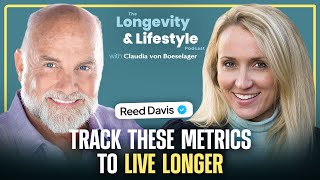
In this episode of the Longevity and Lifestyle Podcast, host Claudia von Boeselager interviews functional medicine practitioner Reed Davis, founder of Functional Diagnostic Nutrition. Davis explains functional medicine as an evolution from alternative to integrative care, emphasizing root‑cause investigation while still operating within conventional licensure and insurance constraints. He describes a suite of functional lab tests—saliva, urine, stool, hair, and blood—including cortisol/DHEA, secretory IgA, A1C, and hair tissue mineral analysis, arguing they reveal upstream metabolic chaos missed by standard panels. Davis introduces two practical frameworks: HIDDEN (Hormone, Immune, Digestion, Detoxification, Energy, Nervous system) for assessment, and DRESS (Diet, Rest, Exercise, Stress reduction, Supplementation) for intervention. Real‑world case studies illustrate how functional testing uncovered hidden sensitivities, corrected medication‑induced weight gain, and improved a child’s behavior. The conversation turns to biohacking, contrasting population‑level science (e.g., blue‑light blockers, HIIT, oxygen‑enhanced training) with individual applicability and the risk of costly, unproven gadgets. Davis stresses personal empowerment, urging listeners to take ownership of their health data, ask questions, and avoid surrendering control to the “paymaster.” He shares a hopeful vision of a future where self‑awareness, wearables, and community education restore health freedom, and points listeners to the Functional Diagnostic Nutrition training site for deeper learning.
Chapters
Why are you putting your health in someone else's hands? Aren't we supposed to be in control of our own lives and health and self-determined? And it takes some education, but you can do it.
Welcome to another episode of the Longevity and Lifestyle Podcast. I'm your host, Claudia von Boeselager, here to share groundbreaking strategies, tools, and practices from the world's pioneering experts to help you live at your best and reach your highest potential. If you want to get top tips, insights, and strategies on optimizing your life and more fun insights, grab my weekly newsletter by going to llinsider.com. My guest today is Reid Davis. Reid is a board-certified holistic health practitioner and certified nutritional therapist, an expert in functional lab testing and holistic lifestyle medicine. He's the founder of Functional Diagnostic Nutrition. Reid served as a health director at a wellness center in Southern California for over 10 years, and with over 10,000 clients, is known as one of the most experienced clinicians in his field. Reid serves on the advisory board of the American Natural Wellness Coaches Board and the American Association of Natural Wellness Coaches. Reid, it's a pleasure to have you on the Longevity and Lifestyle Podcast today. Welcome.
Thank you so much for having me here, Claudia.
I'd love to start with functional medicine and those who listen to me a bit longer, I harp on about the importance of looking at things from a functional medicine perspective. So excited to dive into it today. And for those unfamiliar, Reid, can you explain a little bit what is functional medicine, what are its main goals, and how does it differentiate from traditional medicine?
Well, it is a form of medicine, so it's kind of an evolution. So when I started 25 years ago, there was just basically standard medicine. You could call it conventional or what, what you like, uh, standard medicine. And then there was alternative medicine, which was considered kind of quackery at the time. It's just people looking and searching really hard for another way. And that's when I came to the field 25 years ago. And people were searching for another way. But anyway, we'll talk about that. But the evolution has been kind of from, from alternative to complementary. It was considered because a lot of people started to accept that, hey, these alternative guys have a better way, or they have a way that's a little different. So from alternative, complementary, complementary to integrative, where now it's, it's like expected. You want to have some alternative guy, you know, gal, you know, in, in your practice somewhere offering alternatives. So they— it's still parallel. And now functional medicine is the latest in that sort of evolution. It's still medicine, it still requires a license, it still is bound by a standard of care, a lot of the same rules apply. And, uh, yet it's a little further along in looking for underlying causes and conditions versus just treating symptoms or managing a disease process. So it's a good thing. And my commentary on it would be that it still has a way to go because it is still very much attached to standard of care diagnosis and treatment of disease. You have to label it, you have to have codes, you have to, you know, the financial model is very much the same. Going through insurance or national, you know, care, whatever that might be depending on where you live. United States is very much dominated still by the insurance companies. Then they're all independent and they all offer different, what's covered, what's covered, and that's what you get. You're gonna get what's covered whether it's a standard care physician or a functional physician. They might work a little bit harder to get you some of the, alternative labs like we do. And so I think that explains it. You know, there's, again, it's different in that they're, they're at least thinking about root causes, but it's the same in that they're still bound by standard of care and licensure and, and the paymaster. In the United States, it would be the insurance companies. Mm-hmm. So where's it going to evolve to? That was what we probably wanna talk about a little bit.
Yeah, so let's touch on that. And just to recap for people just listening, so also for me, just to differentiate for looking at the just disease and looking for a disease and trying to solve for that in the more traditional Western medicine app as is in 2023 versus a functional medicine perspective, which is more root cause, like what is causing this illness, what is behind it, and then researching that and trying to solve for that, which I just find so beautiful. It makes total sense in my view. But would you say that the challenge of the, as you call them, paymaster, like who's paying the bills, i.e., the insurance companies and what they decide, is that the biggest hurdle to adaptation of functional medicine as a gold standard, do you think?
I think it's huge. You know, there's a lot of influences on standard medicine. And it's hard to break away if you have a license. You're going to want to pay back your school loans, which can be extraordinary. You go out and you, you know, you start an office, so now you've got leases. Then you have equipment you have to buy or lease, and you don't even have any staff or customers yet. So physicians start off in a lot of debt and You know, there's, um, they sign contracts with insurance companies. That's how you get your customers. You know, they're not great marketers or even business people. Um, they just want to help, you know, but they kind of get locked into this system. And it's unfortunate that it hasn't evolved further yet. But the good news is that other sort of non-licensed types of practicing have evolved much faster. And so there is way for the people— the, the overriding concern for me is the, the people, you know, the, the sick people, you know, not, not the systems. I don't care about those and, and all the different machinations of what's going on. It's how do we get control back into the hands of the person who has something about their health that they want to change. And so they can go, you know, back where I started a quarter century ago, all just alternative. So the term medicine itself is, is, uh, we don't call it that. We call it functional diagnostic nutrition. But the nutrition is more nurturing, nutrition for the soul, nutrition for the mind and spirit and everything. So it's— we call it functional diagnostic nutrition. We're not bound by licensure. There's no, um, big white coat daddy or, you know, government or, you know, anything that's really going to, uh, keep us under that tight control. Um, we can absolutely— number one most important thing, the only thing that concerns us is what's best for that person, not who's paying the bill, because generally it's the person. It is generally considered a fee-for-service, which means the person who's sick is paying to get unsick, you know, and realizing that they need to be in charge of their own health. That's where it really starts.
Yeah. And part of that journey, of course, is testing. So let's talk about functional medicine testing.
Sure.
And, you know, what are the typical different types for people listening of functional medicine testing. And maybe you can share also for each of the different areas, what does the test do? Who is it for? How often should one get tested and what type of diseases can it help prevent?
Well, the answer to all these things is always it depends on the person. And yet I was able to very, very fortunately was able to recognize some patterns. In the functional lab work that I was doing. So functional lab work looks a little farther upstream for causal factors, and I, I pretty much quit using the term root cause. I mean, it's, it's— I used to have it in my signature, I find the root cause, you know, but it's so elusive, Claudia. There's not enough labs, there's no magical device or assessment tool there's labs are evolving, they're getting better and better at looking at different aspects of what I've termed now metabolic chaos. And so that term is really explains what's going on. If I was to show you some schematics and diagrams I have of how the body actually works, it's very confusing. It could be confusing. So in that 10 years that I spent in the office running labs, thousands. And I tried every lab there was. These were sometimes new alternative. To this day, Claudia, some of them are considered research use only. So doctors don't even use 'em because they can't provide a diagnosis with that test. So they use, we're called the in vitro labs and we are not bound by that. We can just use la— new labs that are looking for something going on upstream, some imbalance, uh, you know, some weakness, um, and these dysfunction, these kind of things. Which, by the way, this is another thing you won't hear hardly anywhere, is the discussion of all these causal factors and the effect they have on each other. Further, if, if I want— I don't want to say complicating, but creating more chaos that that can and does need to be sorted out for a person. So, so to answer your question, what's a functional lab test? It's one that looks a little farther upstream than just a standard blood test. And this, this came from when I first started. Amazing stories started to occur, just started happening because I was not interested in standard blood work. So many of our patients coming in that office when I first started in the last century, they'd already been told nothing's wrong with you. Like, their standard blood work didn't show anything of value because it wasn't far enough out of range to be labeled anything. So there was no diagnosis. And I mean, soon, soon became, or had no interest in diagnosing anything. Specifically. And by the way, you need a license to do that. So I was just a researcher who came out of the environmental law field and saving the planet, decided I wanted to work with people, changed jobs, went to work in a clinic that was— that allowed me to do some very interesting research. And that, after 10 years, resulted in, you know, when you start recognizing little miracles occurring, you know, it now you start to wonder, are you onto something? And I think that I was, and it turned into a, an actual step-by-step methodology. And so functional labs look for what's really wrong, or if they can't identify it precisely, they can get close enough to it. So these root causes, you may never know, but if you recognize enough of these upstream, I call it the, the constellation of healing opportunities. Now that provides a much more— a broader, um, much more relative, much more explanatory, understandable— it explains why people feel so lousy when no one else could tell them. Well, here's 10 things that are all out of balance, and they're having an effect on each other. So we just have a system, a way of thinking that that, that sorts it out and then is able to give the person things to do. So our protocols are drug-free and self-directed by that patient or person. Our clients, um, have to eat right and go to bed on time and exercise and reduce stress. And you've heard that word before, stress. And then, you know, and supplementation can be important and things. So it's lifestyle remedies for lifestyle-based diseases. And but we use the labs to sort it out.
Can you talk about some of the typical cases, if you will, of patients who come to you? Like, what are the complaints and what are some of the markers in their panels, their blood panels that come back that you're like, okay, this is clear. So in case somebody is listening and being like, okay, my blood results might be actually out of, be still in the normal range according to the, from what a traditional, but from a functional perspective, they're not optimized. What are some typical use cases you see?
There's that, but we have to go beyond that. Claudia, you, we run saliva testing, urine testing, stool testing, hair testing, and the blood work and make these discoveries and give people things to do or not do. And so early on, a lady came in the office and she'd been coming in for chiropractic care, mostly for her neck and back pain. She was middle-aged, let's say. She was looking very sad to me one day and I said, what's wrong? She said, it's just weight, you know, and this is a very common thing. Of course, she was about 40 pounds overweight. And, um, uh, that's substantial enough to cause her distress. So I could see it on her face, and I said, what's wrong? Oh, it's this weight. I'm so tired of this weight, and I just, um, really sick of it and not feeling good today about that. And I said, what are we going to do about it? Let's, let's do something. Oh, there's nothing I could do, she told me. She said, Claudia, I'm on this medication for the hives. She gets big blotchy patches on her skin. I'm on medication for the hives, and I've been on it for 2 years, and I can't get off it or I get the hives, and it makes me fat. And before I could say something, she said, and you know, Reed, I was at the doctor the other day for a checkup, and he told me— I told him how upset I was about the 40 pounds that this medication caused her to gain. And she said that he told her she could be fat or she could have the hives, to take her pick. And then before I could get it, I was ready to like say— she goes, and you know, read that, I told him how depressing that was, and he said to her, I'll give you some medication for depression if you want. So, so this is just one story of many, many, many. Like, this started to be a repeating theme here is I was offering people alternative testing, what they now call functional. The functional medicine wasn't a common term back then, it was just alternative testing. And so we ran some— I said, hey, why don't you find out why you get the hives? And it never had occurred to her or her physician or anybody. She goes, well, what do you mean? You know, she was in for chiropractic and her head turned so fast I thought she wouldn't need her adjustment that day, you know. So anyway, but we ran a couple labs, found out she was sensitive to some things in her environment, in her diet, eliminated those. And within just a couple weeks, she was off her medication and she was working out to a sweat, which she couldn't do before because even on the meds, the sweat would cause the hives. And she hadn't had a hot shower in 2 years because that gave her the hives even on the medication. So within 2 weeks, she's working out to a sweat, taking hot showers. Um, she certainly had changed her diet and some things. Um, and this is very common. So I knew I was on to something. And that, like, like that happened. I didn't even know what I was doing back then. I was just the guy in the office that ran labs on everybody, like anything they could afford to do. And it was all cash out of pocket. We weren't billing insurance for it. We were just doing what was right for the person if, if they were willing to invest. And I could give you many cases like that, uh, with kids, especially with kids, because they're so— well, they can be very reactive, but they also improve so quickly because kids are in an anabolic condition. They're, they're growing, so they can overcome. Then when you're in a growing state, we call it an anabolic versus catabolic. By the way, we measure that. It's cortisol and DHEA. We have— you asked about what labs would you run, and so I run that lab on every person. How catabolic versus anabolic are you? Is your body breaking down? You know, there's a balance that we— I mean, we all break down and we all rebuild, but there's a balance. So you can measure that, and when that's out of whack, you're in a catabolic state. Well, your sex hormones are going to be next. They're going to, you know, the estrogen to progesterone to testosterone, uh, those ratios change in a negative way. Um, the next thing that goes, your immune system. So we'll be looking at the gut and the immune system. The gut is 80%. So there's a measurement called secretory IgA. So by the way, you asked another really good question, who can do this testing and where does that where does it sort of fit in? Anybody can get their hands on these, and that's how it should be. That's how medicine should be. It should be, hey, here's all these labs you can run to find out what's really wrong instead of just labeling a disease and taking a pill for it. That lady was on a pill and had never even been tested for what was causing the problem. But, but in some cases you do get tested, you know, and, and I call it the sounds like method. But I want to give you a chance to butt in here because I'll do this all day. I'll go for hours and hours, and I love talking about health and labs. And I want to make sure I answer your question. Um, the labs we use are saliva, urine, stool, hair, and blood. Of course you use blood, but it's not the standard way of looking at it.
And the not the standard way of looking at it is that you look above and beyond for different markers and also different ranges? Or can you expand on what do you mean it's not the standard way of blood?
Well, you can— you— it's just, it's more a way of thinking about the levels. Like, let's say a person— and you asked me too, for what are some of the common complaints— if a person has tiredness and fatigue and their hair is thinning and they're gaining weight and can't seem to lose it, and they might even feel sad, blue, blah, they might be— have cold or numb extremities and constipation. Well, that's a very classic cluster of symptoms that points the finger at thyroid. So, and we might be inclined to— we'd look at all of our labs because we want to know what's causing it. But you'd look at thyroid and go, oh, I pat myself on the back, found your problem, it's your hypothyroid. And then what would you do? You'd give something to someone to change the numbers on the paper. Oh, this is low. So we call it treating the paper. You know, it's, it's like, okay, I— and, and again, some of these symptom or clusters of symptoms, uh, symptomatology, it's, it's very reliable. It will point the finger at the sort of immediate causal factor, low thyroid, and then, yep, you know, here's your medication, let's get it just right. The focus starts to become the level of medication. We call it titration. You titrate the medicine to get the numbers on the paper right, and the person might even feel better, like a little less tired and fatigued. But as soon as they have another complaint, it'll be, okay, well, that sounds like— so what I'm, what I'm talking about here is the sounds like method. Sounds like thyroid. Yep. I tell them, don't break your wrist patting yourself on the back, because there's— the minute you lay down that diagnosis of hypothyroid you're gonna forget about all the other things that that person could do to improve their function, the balance of the hormones, the immune system, digestion, detoxification system. All your systems need to be going. So that's the pattern that I recognize. Matter of fact, there's an acronym, it's HIDDEN, H-I-D-D-E-N. And it's, so that's our investigation, hormone, immune, digestion, detoxification. Energy production, and nervous system. There's very simple at-home testing that anyone could do. And that's your data. You deserve it. You need to know it. And there's, you know, I'm training this army of people to measure those things to help a person, to help you, the consumer, you know, find out what's really wrong. And then there's no take this for that. We don't wanna change the numbers on the paper. The numbers on the paper aren't the problem, they're the results of the problem. So that hypothyroidism is the result of something, usually some stressors that are further upstream, if you want to use that analogy. Um, and, and we have lots of analogies like that that help people. So that, um, you get like a kid— I'll just tell you another quick, quick one. The lady was coming in the office and She was doing quite well, and she said, Reed, do you work with children? And I said, well, yeah, I'm a football coach. I've been coaching for 15 years. I love children. I raised 4. So yeah, I think I work with kids. What do you mean? Why? Well, they want to send my son home from school for misbehavior, and unless I put him on drugs, they're going to kick him out of school. And I said, wait, wait, you're telling me there's a doctor at school told— sent this to No, no, this was just the teacher and the principal of the school, the headmaster, right? Okay, uh, well, that doesn't sound right. What— how old is your son? He's only 9 years old. And so it sounds like he's just being a boy, you know, he kind of looks out the window and pokes the other kids and makes the odd shout out inappropriately, you know, kind of like I was when I was a kid. And And I said, okay, I understand. Well, I don't know if I can help or not, but we could run some tests and see if there's something that's upsetting his nervous system or something. Sure enough, he was sensitive to some foods and to some other things in the environment. We always check for household cleaning products, personal care products, and there's labs and you could see levels of things that shouldn't be there and, or that he's sensitive to, the immune system's overreacting, lots of stuff. So long story short, this guy, this principal of the school, 3 weeks after we started the boy on this program, going to bed early, you know, a little more discipline, lots of discipline in food choices and blah, blah, blah. So the principal tracked me down and said, hey, this is a different kid. Like, he pays attention, he's getting good grades, and he's not upsetting the classroom. And this and that. And I said, yeah, yeah, that's good. Oh, that's good. Oh, I'm so happy to hear that, you know. But then his question was, what did you put him on? You know, and I, I was, oh, okay, you're looking for the magic pill, you know. I said, sir, I'm sorry to tell you, there's no magic pill. What we put him on was a better lifestyle, diet, sleep habits, and, and things like— and he's like, oh, okay, you know, like, kind of like, never mind, I thought we were going to start a revolution at that school or something. So anyway, you get my point. That by running lab testing, the alternative lab test, we're able to find out what was upsetting his nervous system. Or that with that lady, her thyroid. And so many other cases we have seen asthma and migraine headaches and you name it. Again, the easy ones are tiredness, fatigue, foggy thinking, overweight, sleeplessness, you know, or wakefulness. All these different common complaints that aren't a disease yet.
They're symptoms, yeah, of something.
They haven't changed the blood work to anything catastrophic or urgent or what they call emergent. You know, like your, your, your blood, your blood sugar's okay. You're maybe a little high. You know, that's a good one to look for. And lots of other markers like that. So we don't do medication. My I think, you know, I teach a course. It's fully accredited by the American Association of Drugless Practitioners, which, um, we're very proud of. And lots of other— you mentioned some boards that I belong to, and they asked me to serve because I'm a servant dude.
Um, you mentioned also about testing hair. For some people unfamiliar, why would one test their hair? What, what are you looking for?
So hair, which you can see I've either been doing a lot of testing or can't do it anymore. No, your hair contains minerals from that were kind of in your body in the last, uh, over a period of time. So they're great for mineral levels as opposed to, let's say, the blood. Now you could get mineral levels and some other markers from the blood, but they're more immediate. They're the more what's going on that day. So we want, how is it over time? So the hair gives us over time mineral levels, heavy metals, of course, lots of metals that are too high. And some of these minerals need to be more in balance. Low minerals could mean that you have poor digestion and there's other sort of functional assessments that can be done with hair. It's not our first test, but it's a good one. And yeah, so we, we will troubleshoot with hair. Maybe there's exposure to something. People with metals in their mouth, for instance, could do it, find out a couple different ways. Once through the hair tissue, we call it HTMA, hair tissue mineral analysis. So So yeah, and, um, you've heard of A1C for, for blood, like your, your hemoglobin A1C. It's a better marker for blood sugar because blood sugar will change from day to day and even throughout the day. So depending on when you measured it, you wouldn't have an accurate assessment of what's really going on over time. So we use now the, uh, hemoglobin A1C, just call it A1C.
Mm-hmm.
And yeah, that's a better mark. Well, hair's like that. It's what's going on over time, which is really helpful.
Yeah. Mm-hmm.
Yeah.
What about with saliva? What are you looking for there for people unfamiliar?
Saliva's a direct measurement of the bioavailable levels of whatever you can measure in it. And we mostly measure the hormones with DHEA and cortisol. Like I said, these are your stress hormones. And so you want those in balance so you can find out you're out of balance. Then while you're getting it, you might as well look at estrogen and progesterone and testosterone. And we look at melatonin. We even measure the secretory IgA, which is an immune system marker in that same saliva test. Saliva's great because it's time-specific and bioavailable. So it's, it's the levels in your system that are actually being used and available to the cells. That would be the receptor cells. So, 'cause you can look in blood and it's there, but it's not really being used. It's bound up by these binding globulins and things like that. So, so it's a bioavailable level and it's time specific. So morning would be different than night. And that's a good, good thing, you know, 'cause with cortisol you're tracking the circadian rhythm. So you want, You wanna see that that's normal. And we find out in lots of people it's not, it's a roller coaster. And they go, well, that explains me. And that's the beauty of saliva testing and the other tests we use is when we show our results to people, it isn't just so we, oh look, this is low, you need to take some of this to raise it or take some of this to block it, you know, to, to lower it, whatever it might be. So we're not treating the paper. We're saying people with these levels typically have certain symptoms, and, and people are always amazed that it explains how they feel. They're not used to going to a practitioner and being— and having it explained to, you know, they're not mysteries anymore. So there's these so-called mystery symptoms you know, and a lot of practitioners are just shrugging their shoulder. I don't know why you feel that way. Your blood work looks normal. So this is the alternative to that, which is explains exactly why you feel so lousy. You know, you're tired, you're fatigued in the middle of the day, you're exhausted, and then you go home at night and you're, you know, people are self-medicating a lot. You know, they don't need real medicine like prescription yet. Their doctor says, no, you'll be okay. Come back every year. We'll check you. And when you're really bad, then we can treat you. We're trying to do preventative anti-aging type of, you know, it's longevity and lifestyle medicine.
Exactly. I mean, I had a situation going back now a few years, but I felt terrible. Went to a doctor and he's like, oh, well, your markers are okay. You know, first of all, I'm like, These markers, like, who are they based on? My understanding is that from, you know, white male in the 1960s, first of all, I'm like, well, you know, maybe the optimal levels for this guy is not the same as me. And the doctor's like, no, no, these are what we use. So I was like, well, I'm not feeling well. And he's like, oh, but your, you know, bloods are fine, you're fine. I was like, I'm not fine, otherwise I wouldn't be here. And it took me down the path of, you know, trying to really understand what was going on and looking at things from a different perspective. And I think that's part of, do we want to go through life just being in this fine state and heading towards disease or taking back our health, using functional medicine tests to actually get ahead of the curve and ahead of any issues that may arise and optimize ourselves as well. So I think it's really powerful and really exciting.
It is. And you're absolutely right. But let's do this too. I want to always add in that If you weren't fine, let's say you go and you have a complaint and the doctor does find something, then that might be exactly what you want. And so early on when I was learning this, you know, I always say that when I switched from environmental law and conservation and saving the whole planet— air, bird, water, trees, bees— you know, and I want to know more about people. I'm going to study people instead just all that. And I had completely changed gears. Now I went to work in this clinic where everybody had already been to 8 practitioners or 10 or 12 and wasn't better yet. I thought that was a complete rip-off, that— well, that's a rip-off, you know, like— but what I didn't know is they were looking in the wrong place. So these physicians who are doing what they do, they do it very well. These clients coming in didn't have a medical condition. They had their kind of, their ladder was on the wrong wall and the wall that they needed to be on didn't exist. There was no one really wholesale doing the, the kind of lab work. It was very, it was hard to find somebody. That's why after 10 years I started training and I've trained 4,000 people because the world needs more of us so that you can get your ladder on the right wall. So those doctors aren't bad people, they weren't doing anything wrong. You just didn't qualify for their form of service unless it was just palliative medication to make you feel better, but not really doing much for you otherwise.
No. And I think that that goes back to medical school and how the model is, right? And how it's all about diagnosis, prescription, diagnosis, prescription. And something outside of that realm is a bit like, oh, there's no nutrition, for example, taught at medical school, which is the medicine you feed your body every day, right? Clearly there's a big gap in the system, which thanks to functional medicine and testing, there is helping people get ahead and to turn back any health conditions and become the best version of themselves, which is very exciting. Reid, I'd love to talk about biohacking. To start with, let's talk about the difference between science of the biohack versus the science of the individual.
That's a great question. And you know, like, here's a biohack for you. So these are called blue blockers. They're not dark like some you see. I bought 500 pairs of these and started hanging them out. So, so that's, there's a science behind blocking the blue light that's coming off of my computer that's right in front of me right now. And the other blue light that's in our lives on your cell phone. And it's, it's not that good for you. You should block some of it. So there's the science of that— how does that work, and, you know, what we've discovered about blue light and things. But as to an individual, it's just kind of a— that's why we call it a biohack, you know. You just— so you could end up with wearing these and putting some red lights on your head and putting— there's things for your ears and up your nose and, and all around. You could wrap yourself in this seaweed and Different things. So there's, there's people who sell that stuff and they know all the science as it applies to a population. Well, I'm not a population. You're not a population. You are a person. You're an individual person. So I think so. So, and I've seen people waste an awful lot of money on things. These are always a good bet, but, but there's some biohacks that are just, you have no clue if they're gonna help you, but they're 4 grand, you know, they're, they're $10,000 or they're, they're more, you know. And, and it's amazing how much you could spend on biohacking equipment and tools that you really don't know if it's gonna help you or not. Just 'cause it was, the science was applied to a population. By the way, that's how drugs are tested. You mentioned diagnosis, prescription, diagnosis, prescription. Don't forget diagnosis, surgery. If the pills don't work, they just, oh, we'll just cut the parts out, you know. And I want everybody listening to know that you don't have any extra parts, even if you got two of them, you know, you need them both. That's, that's the deal. So, um, don't take any parts away if you can help it. So the science of the biohack is very sound. There's lots of money being spent researching How it applies if you apply it to 100 or 1,000 people, but how it applies to you is different. And that's why you need the basic labs. We do hormone, immune, digestion, detoxification, energy production, and nervous system, the balance between sympathetic and parasympathetic when we talk about nervous system. So that assessment first, then whatever the hell biohack you want to try. That's good, but let's recheck you later and see what the measurements, uh, what changed. And so, um, I'm not saying I don't appreciate biohacks. I've got plenty of them around here. I've got— here's one. So this is kind of a biohack. It's, it's boost oxygen, you know. I have stuff— I mean, I could just show you right here on my desk, you know, like here's stuff I they're kind of like biohacks. Like, oh, I read this, you know, and I'm gonna try it and see if I feel any better. Most of it, I don't feel any different because I always feel good, you know. I start off every day with a mental exercise and a prayer, and, and so, you know, it takes a lot to kind of impress me. But, um, I do spray this in my eyes every morning.
What is it?
I can't think. It's, these are electrolytes and they, they support the mitochondria, the little engines in your cells. And the eyes are the densest mitochondria per cell, except for the brain. There's like thousands of mitochondria in each cell. Yeah. And you could, so it's a good way to get support into the body. So we use, we use You know, lotions, potions, powders, and pills, and all the stuff and all the things I have around. I mean, even little pendants that you could wear for energy support, you know. I mean, I tried everything. So all those little biohacks are great. They might even have some kind of placebo effect that you feel a little bit better when you wear them, when you're not. But, but I want to know by measuring hormones, immune, digestion, detoxification. And there's lots of markers in each category. So, so we're running 5 labs on every person now. That's the deal. Because there's no one test.
And get the full picture. Yeah.
Well, it's not even a full picture, but it's a big picture. It's multiple healing opportunities, like I said. And they're the ones that I identified working with thousands of people were the most critical. There's more tests you can run. I mean, there's plenty. So, but we get saliva, urine, blood, and stool from every person. And, and, and then we have a basis, you know, some kind of a baseline on these really critical systems. That's the science of the individual versus the science of the biohack. Hey, you can tell me all day long how fantastic these are. I'll probably buy them. Matter of fact, right up here on the shelf, I have 8 different types of blue blockers. Mostly because the suppliers send them to me for free because I'm in a position to be influential, but I generally am not. I don't sell very many things, and I vet everything very carefully.
Yeah. My audience loves biohacks and biohacking. So based on labs that you've seen and things that patients try, and obviously everybody's different and caveat, please always check with your healthcare provider before trying anything. But what are some of the biohacks you've seen, let's say for exercise or some of the nutrition things where you've seen exponential improvements also for people's brains? Hormone levels, metabolism. What are some of the favorite biohacks you've seen patients really uplevel their health with?
My favorite things may not be a biohack exactly, like with exercise you mentioned. So the progressively accelerating cardiopulmonary exertion, the PACE program. So it's, it's not really a biohack. It is in a way, but it's It's exhausting yourself in 60 seconds, whatever it takes for you to do in 60 seconds that gets you completely out of breath. Because now you're expanding, you're going what's called supra-aerobic instead of aerobic. Like people run it, they figure out what speed can they run at for an hour, you know, and that's below their aerobic threshold. When you go above your aerobic threshold, you get completely gassed. You, you literally can't possibly go any further. It'd be kind of like running, um, uh, once around the track, you know, 400, 400 meters. So you can do that in about a minute. For older people, maybe 2 minutes. But even a high school athlete can break 60 seconds. And so that's the ultimate sprint. Now that will do more for you than almost anything in terms of cardio and pulmonary, because you want the lungs to, you know, expand as well. So that means that let's— if you're doing that, if you're doing some sprints like that, then a kid— you see a kid in the middle of the road and you want to go save the kid, you know, because the car's coming. If you're not in shape, that could kill you. People have heart attacks because they're exerting themselves in a way that they had never done before, and their heart just kind of gives up, blows up, whatever. But if you've been there and done that through the PACE program, then you could, you could just do it. I mean, um, and that's really being in shape. So that's a hack, or a biohack if you want. That it's just— they also call it a high-intensity interval training. The HIIT training is close to the PACE. It's not quite as intense as the PACE training, but So there's a great hack for exercise. There's also EWATS, they call it, which is exercise with oxygen therapy. And you're getting more, you're burning more, you know, the oxygen is needed to burn to make energy. And, and so you're getting a little more oxygen, you're burning maybe a little bit more efficiently. So you can do, you can exercise a little bit longer. More intensely. Also with exercise, they, I've only tried it a couple times. I bought the bands again, kind of a biohack, and I didn't see that much improvement, but it's the restricted blood flow circulation.
Katsu bands, were they?
Yeah, I bought them when they came out and like, okay, I already done that. You know? And so lots of things like that. It's just, there's, there's exercise physiologists and that are more knowledgeable than me, but I have to say that exercise is a big part of our program and so is diet. That's number one. So I have another acronym for you if I could. So there's that H-I-D-D-E-N, hormone, immune, digestion, and so on, with the investigation. These are the healing opportunities. These are the baselines you need to know about yourself, and it's your data. Belong to your physician, belongs to you. Then what do you do about it? How do I make improvements? Well, it's all lifestyle and holistic, and, um, it helps you live longer and at a higher level of function. And that's D-R-E-S-S, which spells DRESS. And that's diet and rest and exercise, stress reduction, which we sort out, and supplementation. And I've yet to have my own brand, but I know a lot about them. Probably have our own brand pretty soon after 15 years finally getting around to it. But, uh, yeah, so diet you have total control over, I hope. Diet, rest— D-R is rest. You can rest your— not only your body but your mind and emotions and even your spirit, you know, um, and increase its potential. A diet, rest, and exercise we talked about. Stress reduction is huge. 'cause it's ubiquitous, comes in all these different forms. Sorting out the difference between mental, emotional stress, existential angst, you know, physical stress. Certainly I have a well-used body, lots of sports injuries and things. And then of course the chemical stressors from the environment and what's in food and everything. And then last is the supplements. So D-R-E-S-S. That's the, that's the answer. That's our answer. And we customize each one and people can just kind of generally hear, yes, to, you know, it makes sense and it gives you control over your, the input for longevity.
And for people looking to optimize, let's say brain health or hormone health, what are some things that you typically recommend?
Well, DRESS is what we recommend, but when it comes to the supplementation, Remember, you're genetically, you have genetic requirements. So I believe that meeting your genetic requirements excels and performs better than taking some specific nutrient, one thing to get, get more of. So if you can just meet your genetic requirements, you can live your genetic potential. The right ratios of protein, fats, and carbs are as important as anything, maybe the most important thing is how much protein, fat, and carbs you eat. And you can dial in those ratios like a fuel mixture that makes you feel super— I mean, super high energy all the time, and clear thinking for the most part, like a sense of well-being, happiness, joy, um, not to mention satiation. Like, you're not meant to have cravings. If you're craving, you're not getting the macronutrient ratios right. And you can play with that. We actually have a test, but you can play with that ratio. Then once you get the macronutrient ratios right, then you can play with the micronutrients. That's your vitamins and your minerals and essential fatty acids and antioxidants and trace elements and phytonutrients and the little particles that are in, supposed to be in the soil. Mm-hmm. You know, and then you eat the plants or you eat the animals that eat the plants. It's amazing what's not in the soil anymore. So that's where supplementation kicks in. But, but, um, I don't know if that answers your question or not, but you, you know, I generally take the 60,000-foot view. I find that most helpful to give people guidance, but not too much on specifics unless I've run the labs. So I haven't run the testing, then it's hard for me to say.
Yeah, because everyone is so individual as well. For my audience keen on becoming the best version of themselves, what would you say is the protocol, if you will, to biohack your way from normal to superhuman, Reed?
Getting up every day and being really grateful would be a good place to start. I mean, it's such a big question and I've kind of given you my overall philosophy is look for all the hidden stressors. Run some labs, get some markers that are very useful. We're coming out with more and more of these things. And there's some wearables too that might help you monitor. Like I love the glucose monitors and what they can teach you. But running labs to get off of foods that are irritating to your nervous system or your digestive system is critical. Your immune system gets really ticked off at the wrong foods for some reason. And we know why. So I run the labs and the H-I-D-D-E-N plus oxidative stress if you want. And then I follow D-R-E-S-S and it's customized. So you have to look at everything. There's no one area that's more important than the others, but everyone does tend to have a weaker area. So you might say, well, where would you start? Diet? Yeah. Well, what about sleep? Can't leave that one out. You know, what about exercise? Yeah, darn it, got to do that one too, you know. And then on stress reduction, there's so much to sort out. And then supplements, I just showed you, you know, like that's just what's on my desk. What about the kitchen cabinets and counters and, you know, even up on my nightstand and whatever, you know. So there's a lot to sort out. You know, you find a professional that's really well trained in the lab work and drugless protocols. And by the way, someone that will put you in charge, because I'll just quickly go back to when I first started. You know, I had a lot to learn, Claudia, nothing to unlearn. You know, I hadn't been indoctrinated in standard medicine or really anything. I was a pretty good athlete and ate well and all that stuff, but, and what bothered me probably the most was that people were putting their health in someone else's hands. So I think what you're doing with the Longevity and Lifestyle podcast and your, your program, it's, you know, it's good for everything. Your brain, your skin, your energy, your— that. So there isn't one thing. Yeah. Uh, it's, it's your attitude. It's your mental. It's taking responsibility. That's where it has to start. Um, I would get mad. I'd be out riding my motorcycle, which I do all the time, and, um, and I'd be thinking about back at the office, you know. And I had good health and was enjoying my freedoms. Uh, I'd done very well in another profession. Uh, the environmental stuff was very good to me, and, and I just felt bad for the people in the office, you know, like, but also kind of mad. Like, you know, they're not getting any answers anywhere else. That pissed me off. But the fact that, like, why are you putting your health in someone else's hands anyway? Aren't we supposed to be in control of our own lives and health and self-determined and these things? It takes some education, but you can do it.
I think that's a really important piece as well, that people feel empowered and that it's okay to actually want to have a copy of your, you know, blood test results to actually want to know what's going on. And to ask the questions as well. Like, can you help me to understand? Like, how do I interpret this? And to really step up and have more meaningful conversations. I mean, my mother has a medical background, so since a very young age, if I had a doctor's appointment, she's like, make sure you have your 10 questions prepared. I couldn't go into an appointment without my questions.
Fantastic. Yeah. Good for you. Yeah. Well, keep passing that along because that's what people need to know.
Yeah. Reed, what excites you most about the future of health, wellbeing, and longevity over the coming years and beyond?
You know, I think it is this movement to take back control, to understand that if you give up that control, bad people are gonna take it. You know, like, like who else, who would want control over your health? You know, like people that profit from it, you know? So there are, I mean, you might have noticed this little thing that went around a couple years ago. It was called, um, a pandemic. And first of all, I thought we were already in a pandemic. I really, I really said, well, boy, people's health is really bad. Well, then along comes this, this overwhelming, uh, worldwide pandemic that was easily recognized. And, and people took incredible advantage of that and of us as people and tried to strip our rights away and things. And I'm not being political, I'm just being real. I don't care what side of the fence you're on, that was bad. I'm excited about that. We're not going to let that happen again, that we are going to take control of our health, um, by getting data. You know, there's an intelligence in every cell. You don't have to teach any cells what their job is. And that intelligence comes from, you know, the same intelligence that holds the sun and the moon and the stars in their orbits and things. That intelligence, that is the same intelligence running the show inside yourselves, inside your tissues and your organs and your systems. And yeah, there's bad influence, of course, but we can control a lot of that. And so I think that self-awareness being disseminated nicely, you know, by those that really care and really want us to be happy and free You know, so if you enjoy— you know, it's about pursuit of those freedoms: health freedom and, um, time freedom, and, you know, God forbid, financial freedom. But, you know, there's lots of freedoms, uh, that we need to appreciate. Health freedom is way up there.
Yeah, for sure. For listeners interested in understanding functional medicine, functional medicine testing, testing for longevity better, what online resources or books even would you recommend they start with?
We have, um, yeah, it's called fdntraining.com. So what I just called functional diagnostic nutrition, I just couldn't think of a longer name. And so, so it's functional diagnostic nutrition. So we have FDN, we're known all around the world, FDN. So there's fdntraining.com/longevityandlifestyle in honor of this podcast. So that's where I would go if I was a listener. And if you're interested in taking responsibility and finding out how you could do that and get back in control of your own health.
So we'll link all of that in the show notes for people as well.
Okay.
'Cause it is a nice long name. Do you have any final ask recommendation or any parting thoughts or message for my audience today, Reed?
Yeah, get up every day and be thankful for what you have so that you can build upon that. And, you know, look at the world as the cup is half, at least half full, not half empty. Those with the more positive understanding of that have a better chance of being happy, you know. And you can't be happy if you're not healthy. So listen to Claudia's podcast and follow some of her recommendations. But no, it gets up— it's, it's how you get it up in the morning, you know, what side of the bed. And before you put your feet on the ground, just try to, you know, because we all swing our legs over and stand up, right? Most of us. So, so before you put your feet on the ground, think of, you know, your point of view. Like, is it going to be a good day? Hell yeah. Just tell yourself it is. Yeah, even if it's cloudy, it's a choice.
I agree, it's a choice. And one mentor told me once, you know, be the thermostat, not the thermometer, in your life. Um, and you choose how you react to the day as well.
Yeah, I'm gonna borrow that one, I think.
Sure, go ahead, you're welcome to. Reid, thank you so much for coming on today and sharing all your amazing insights. Really appreciate you coming on.
Well, thanks for asking good questions, and I'm here anytime you need me for anything.
More from Claudia









Can Psilocybin Slow Aging? The Study on Telomeres, Inflammation & Survival with Dr. Louise Hecker

