Gut Health 101: How to Improve Your GUT HEALTH and Test your GUT MICROBIOME with Morri Chowaiki?
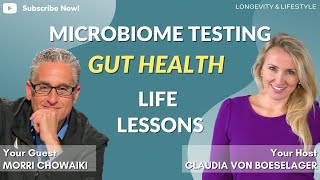
In this episode of the Longevity and Lifestyle Podcast, host Claudia von Boeselager interviews entrepreneur and microbiome expert Mori Chowaiki (also referred to as Maury). The conversation covers the challenges of translating complex health information into simple, actionable plans for older adults, the importance of testing over guesswork, and analogies that liken health diagnostics to car maintenance. Mori explains Viome’s metatranscriptomic microbiome testing, its AI‑driven personalized nutrition and supplement recommendations, and recent breakthroughs—including FDA‑awarded Breakthrough Device designation for a saliva‑based oral/throat cancer detection test with 95% sensitivity and 97% specificity. He discusses Viome’s business model (low‑margin testing, revenue from supplements), product availability across ~20 countries, and upcoming international expansion. The duo shares five practical health‑optimization tips (test, mental health, whole‑food diet, proper hydration, exercise/sleep) and highlights emerging tech such as Oura rings, wearables, and the metaverse that are reshaping longevity. Mori emphasizes the entrepreneurial mindset of collaboration, relationship‑building, and philanthropy, and encourages listeners to access Viome’s educational resources (website, webinars, Signal in the Noise series) and follow him on social media. The episode closes with a call to daily acts of kindness and a reminder to stay connected.
Chapters
This episode is brought to you by Oxford Healthspan. I was so excited to learn about Oxford Healthspan's Primadene Original and Primadene GF Spermidine supplements on my journey to staying younger for longer, and I'm delighted to now share this great longevity supplement with you too. They are the cleanest, purest food-derived Spermidine supplements on the market with zero fillers or flow agents. Spermidine has been shown to support cell renewal, cognition, and trigger autophagy, the body's inbuilt system of cellular cleaning and recycling, as well as to improve deep sleep and thicker, glossier hair, stronger nails, and better skin. Most fascinating to me, spermidine also inhibits 6 of the 9 hallmarks of aging. So check out OxfordHealthspan.com and use code Claudia10 at checkout for 10% off today. This episode is brought to you by InsideTracker. People age at different speeds, and the date on your license may not represent your inner biological age at all. If you're looking for ways to extend your health span and slow down the aging process, the keys to health and longevity run in your blood. That's why InsideTracker provides you with a personalized plan to improve your metabolism, reduce stress, improve sleep, and optimize your health for the long haul. Created by leading scientists in aging, genetics, and biometrics, InsideTracker analyzes your blood, DNA, and fitness tracking data to identify where you're optimized and where you're not. For a limited time, get 20% off the entire InsideTracker store. Just go to insidetracker.com/claudia. That's insidetracker.com/claudia to get your 20% off today. Hello, optimization friends. I'm your host, Claudia von Boeselager, and welcome to the Longevity and Lifestyle Podcast, where I uncover the groundbreaking strategies, tools, and practices from the world's pioneering experts to help you live at your best and reach your highest potential and reach your highest potential. Do you know how important your gut health is for optimizing your health, mood, and much more? In today's episode with gut and health intelligence company Viome's Mori Chawaiki, get ready to learn all about gut health, how to test your microbiome, the link between your microbiome, quality of life, and your longevity, how Viome uses artificial intelligence to discover what food and supplements are ideal for its client top tips on how you can optimize your health, Mori's interesting journey to becoming a voice actor, the first person to enter in the Shark Tank and leave with a job, as well as overcoming adversity to succeed in life. Dear audience, don't forget to subscribe to the podcast, and I ask you to please help spread the word by sharing the podcast with your family, friends, and colleagues. The more people we can help with this message, the better the world will be. So thanks so much for sharing.
Please enjoy. Welcome to the Longevity and Lifestyle Podcast, Maury. It's such a pleasure to have you on today.
Pleasure to be here, Claudia. Thank you for having me.
My pleasure. And I'd love to start with your interesting and colorful journey, beginning with being a voice actor and becoming the first person to enter the Shark Tank. Can you take us a little bit back on the start of your journey?
Sure. Just to correct you, I wasn't the first person to enter the Shark Tank, but I was actually the first person to ever be on the Shark Tank and then actually work for a shark.
Okay.
So I'll take you through that journey. I was actually, uh, an aspiring actor through high school and college. That's what I really wanted to do. And I had done that for many years. And after which I decided to go back to Los Angeles after college to pursue a film career. And I really wasn't so excited about film because I had been a character actor my whole life where I was doing all kinds of different dialects and voices and big, huge productions and singing. And during the auditions for film, it was a little boring. I was getting cast as the young lawyer, the young brother, and it was boring. So one of the last performances I did in college was a show called Little Shop of Horrors. And it's a musical about a man-eating plant. And I was lucky enough to get the voice of the plant as the lead role. It was an amazing thing to be backstage with a microphone sounding like an African-American soul singer, but meanwhile looking like me. So I decided to actually pursue that. And I actually started going out, and I got some— I started auditioning. And I became an animation voiceover artist and did that professionally for about 5 years. And it was amazing. It was really successful, always great. And then it got harder after the wonderful Robin Williams did the movie Aladdin, because he was the first celebrity to do a cartoon voice in a big feature. And when the other celebrities realized, I don't have to do my hair, I don't have to work out, I don't have to do my makeup, all of a sudden it became much harder for voice actors like me who were doing cartoons to get roles because celebrities were doing them. And then it just so happened that I ended up having an opportunity. A good friend of mine who was friends with my brother calls me up. This is 1994, and he says, my understanding is that you're acting, you're working in restaurants and managing restaurants and doing odd jobs. Do you want a part-time gig? I said, and what? He said, I just started an e-commerce company. I go, what's that? And he said, I sell things on the computer. I go, what?
How does that work?
Yeah. And he said, yeah, I started selling vitamins on this platform called Prodigy. I had no idea what that was. He said, I just need help a few hours a day packing boxes. Okay. So, I went to work for him part-time and that ended up growing into the next 5 years of my career. We were the first e-commerce site ever to sell any type of health products. We started on Prodigy and then migrated to CompuServe and then ultimately migrated to America Online. And this was all before the World Wide Web. And we went from typical two guys in a garage with 100 products to eventually 25,000 products with the only health store to millions and millions of people and a staff of 30 people. And it was an incredible journey and it was so much fun. And that was really the beginning of my business career.
If I can interrupt Mo for a second, just out of interest, how did you market even back then? You know, even to explain if you didn't have the World Wide Web, so how to explain that you can actually buy a product online, you pay and it will actually arrive?
Yeah, a lot of that was actually left towards the platform. America Online, for example, would have— you'd have to— you literally have the CD-ROM that you had to install on your computer. You had to pay a monthly fee to be a member. You signed on, you got mail, that famous saying. And it was when they had 2 million members and it was like a virtual storefront. And I remember going, we had a challenge with America Online when we started. They said to us, listen, you only have 200 products right now. If you want to join our service, you need to have many more products. What do we do? How do we do this? So I ended up deciding to go to a very large distributor that sold thousands upon thousands, I think 25,000 health products. And I presented them with an offer. I said, If you'll sell to me, just like you sell to the thousands of other small little stores, I'll carry all your products.
Who are you?
Where are you gonna carry this? Where's your store? Oh, it's online. Online what? You know, who, where, what? And so it was actually, it was a challenge. This is America Online was around '97 and we were, it was always a challenge to explain to people that we were virtual, that we were just-in-time. And the beauty was, so this was the challenge, was how do we make this deal happen? I ended up asking permission of this large distributor to basically camp out in their warehouse for about, I think it was 2 weeks. I brought with me a digital camera that was about this big, a lot of big massive computers, and about 10 kids that were on spring break from UCLA. And we basically sat in that warehouse and took photos and transcribed 25,000 products and loaded them into our database. And then the model was every single day we would get orders and those orders would have the SKU number of the individual products. We would download them all, charge them all. Remember, this is all back when the modems still made noises and it was manual text and all that. It was a nightmare.
Wow.
And then that afternoon we would order the product just like the physical stores did. And then the next morning they would deliver 1 of this, 2 of this, 4 of that, 5 of this, and we would ship it out. So it was all just-in-time inventory and the promotions and the marketing. There was no email marketing, there was no social media. So it was really about TV. We actually did a TV promotion with Turner Broadcasting, and then it was really at that point in time, it was really up to the platform to make yourself known.
Incredible. And I just love that dedication of, okay, how do we make this happen? How do we get just-in-time management and literally getting the cameras and a team in and writing down all the numbers manually. People don't realize, entrepreneurs nowadays, how easy they have it, how easy it is to start a business versus back then. That also doing TV ads, it's a huge risk if you do the shooting and everything. I mean, I was talking to one entrepreneur, he said it was $200,000 out of pocket and you don't even know if anyone's going to come.
Of course. And think about it, you didn't even have the metrics back then. Anything that you were selling in a physical location, you had no idea who bought it, where they bought it, how they bought it. Now You know, what they bought, why they used it, how they loved it, didn't love it. It's the metrics in the analytics are, you can really fine-tune now. Back then, even online, we didn't know what was happening. It was just throw your money out and hope that it works. Exactly.
But somehow it worked. And so you tried—
we had a very— and I just want to tell this one story because it's a real testament to just taking a chance. And I think that the luck of my career and things that have happened have have been— there's a famous Jewish quote, and it's not a quote, but there's— in Judaism, all the words that are Hebrew have a meaning. Every letter has a meaning, and together combined, that word has a meaning. And so I'm sure you've heard mazel tov, which is good luck. So the word mazel is made up of 3 letters in the Hebrew language. It's the M, the Z, and the L. Then they have the vowels in between. The M signifies the house, and the Z signifies like a clock. And the L signifies a mouth. So the meaning of luck is being in the right place at the right time. But that's not enough. You have to open your mouth.
Oh, I like it.
And that's really what I think. You got to just take chances. So what happened was what really took us to the next level, which is a fun story, is we were selling health products, right? We were selling all these vitamins and pharmaceuticals and everything from workout shakes to whatever. And we were called Health and Vitamin Express. America Online comes to be in, I want to say it was around November of 1998, and they say, we're launching a last-minute Christmas gifts collection on the homepage. Do you want to be a part of it? Of course I want to be a part of it. I had no idea what I was going to sell. And I remember going to my partner and saying, you know what, this is a great opportunity. We had just started playing with the gift basket idea. We were selling like these gift baskets for healthy people with like granola and bath salts and things like that. They were doing okay. I said, I want to try something different. I want to sell a few gift baskets. I don't want them to do with health at all because people don't want to buy vitamins for Christmas. And I want to even change our name from Health and Vitamin Express to HVE Gift Baskets. And we put together 5 gift baskets. One was the naughty or nice gift basket, which was a heart-shaped box with a little teddy bear and chocolate love paint and a feather tickler and a little mini massager. Then you had the mom's one and the dad's one, so on and so forth.
Fun.
Claudia, we put this collection up.
Mm-hmm.
December 11th, I walk into work. What normally was 70 orders was 650 orders, and that continued for 2 weeks straight. It was utter pandemonium. We bought out every gift basket company there was. The mini massager ended up looking very different at the end of the time because we had no other choice.
Yeah.
And And we were, it was pandemonium, but that is what actually caused the attention to exit in 1999. We were bought out right before the collapse, right before people started throwing millions and millions of dollars. We were all self-funded and it was just, it was a testament to just taking a chance.
Amazing. I love that as well. And I think, where do you think that came from? Do you think it was a flash of intuition or change the name and then change the baskets as well? What were you thinking in that moment?
I was, I've never had professional business training. And luckily I'm working with the largest business moguls in the world. My father was a serial entrepreneur with no formal education and was very successful, you know, but he put me to work early. I was selling rattan furniture in his showrooms at 12 years old. And I think it just has to— it's a different lens. If you— innovation doesn't necessarily come from technology all the time. Sometimes innovation just comes from putting two different people in the room. There's that famous story about how Frito-Lay had one of their most successful products, which is the Flamin' Hot Cheetos, and the person that came up with the idea was a janitor. I think sometimes it's just different eyeballs. A trained marketer would have said, okay, let's analyze, let's do that. Somebody like me is like, you know what, that doesn't make any sense whatsoever, let's try this. And you just got to try and try, and if you fail or you learn— I don't like using the word failure— you know, 100 times and you hit it once, that's what's important. And I think it just came from, who wants to buy vitamin C for Christmas? This is a tremendous opportunity to be on the front page of the site for 2 million people. What do people want to buy for Christmas?
Well done. I love that. Yeah. And that's just a true testament as well. And I think I've got two kids as well, and I'm trying to teach them to be a bit more risk-takers as well, because unfortunately the educational system is such that you don't make mistakes and you have to always be perfect. And that's totally wrong, because if you don't push yourself out of your comfort zone every day— a mentor told me this years ago, and I was like, oh, if I do push myself out of my comfort zone once a week, I'm doing well. But it's really every single day, do something that's uncomfortable because that's how you grow.
And you know what? We've all seen when you're— when you get a heart monitor, it's up and down, right? What happens when it's flat? You're dead.
Yeah.
The downs are what makes the ups. The bottom can be your trampoline. Adversity in my career has propelled me every single time. You don't know it at the moment it's happening. But if there's a possibility that you can just change your mindset just that little much to say, this hell that I'm living through right now is going to actually bear fruit, there's going to be something that happens from here that's beautiful, and it's not necessarily the end of the world, but it's the beginning of something else that's beautiful. If you can just maintain a little bit of that mindset, I don't want to pontificate and say, oh, I'm perfect. I really have been through some hell in my life, and that hell has bore beautiful fruit. And I think that it's just very important, especially in business, to realize That falling down is something you have to do 100 times before you figure out how to get up.
Completely. I like the analogy as well as if you see a child trying to learn to walk, you don't say, oh no, they've fallen like 10 times, we should give up now. You're like, no, they're going to do it. It's just practice and just keep going as well. So yeah, we share a mindset in that. And how did that lead you to go on to Shark Tank, Maury?
So it was really interesting. So after I, after we sold the company. Very luckily, about 3 weeks later, I got called by a recruiter and this recruiter was hiring somebody to lead e-commerce sales for one of the largest vitamin companies in the world. And I had no, again, no formal retail training whatsoever. No. And this company was like massive pharmaceutical, $1.5 billion company that was a contract manufacturer. So I spent 10 years at that company. Managing sales for all kinds of accounts, brick and mortar, e-commerce, direct selling like Herbalife, QVC International. And those 10 years ended up being my MBA, ended up being my business education. And then, so that was an amazing time, really got me an amazing amount of training. From there, I spent about 8 years at a software company where I was selling health and wellness software similar to like WebMD to all these big same retailers. At the time— so this goes back to 2003, 2004, something like that— I was married at the time. I'm no longer, but things are all fine there. But my wife at the time and I were in an interfaith marriage, essentially. So I'm Jewish, traditionally Jewish. She actually came from a Jewish mother and a Greek Orthodox father. For years and years of our marriage, wanted to have Christmas experience in the home. And I was like, hell no, not gonna ever happen. 10 years into our marriage, I finally caved and I said, okay, but just don't go nuts, because if baby Jesus is in my living room, I'm going to have a little bit of an issue. And so I come home one day and she says, go upstairs, don't go, don't come out until I call you. And I hear all this hustling and bustling downstairs. And then I walk downstairs and I see on the dining room table this little 2-foot little Christmas tree, like about this big. Okay, with all this Hanukkah blue and silver decorations and little ornaments all over the place, and on the top of the tree is a 5-pointed star. And I literally made a joke. I said, couldn't you get a Jewish star to put on top of the tree? She said, I actually looked for one and I couldn't find one. I said, I'm Mr. Internet, I'll find one. And I started searching, Claudia, it didn't exist.
Wow.
So again, my little head went on. I started doing market research, and I realized that there's a million interfaith households in the U.S., that 50%— good or bad— 50% of Jewish people in the last 20 years married outside of the Jewish faith, and 90% married somebody Christian. And I started researching this, and I started to use my old sweat equity mind, which was I didn't have the money to do this, but I— and I'm not a graphic artist or a patent attorney, so I called a friend who was a graphic artist, I called a friend who was a patent attorney, and I pitched them. I sold them on my idea and I said, guys, there's nothing out there like this. There is a demand. Yeah, let's go ahead and try it. And I got them to join us just with sweat equity. So gave them a percentage of the company and they did everything for me. To make a very long story short, I patented and trademarked a product called the Hanukkah Tree Topper, and it sold over 150,000 units out of my garage while I was working a full-time job selling software.
Nice.
And then in 2011, I heard about a show called Shark Tank, and I tried out, and I got all the way to the video round because there's a pretty amazing story on how Shark Tank works, how many people start, etc., which I can get into if you like. But I got to the video round, and then I was told, sorry, no-go, maybe come back next year when you have more in sales. And normally somebody would be like, yeah, BS, goodbye, never again. And I was, and I was devastated. The next year came around. Meanwhile, by that time I had already sold more online. I had personally gotten the product because of my experience in brick and mortar. I got the product into Bed Bath and Beyond, Toys R Us, Home Depot, Walmart, and a few others. Oh, okay. StyMo magazine, if you remember that, it was in there. And the next year I auditioned again and I got on.
Wow.
And it was a thrill.
For entrepreneurs listening, can you explain, because my audience is around the world, what exactly Shark Tank is? There's a different equivalent of it, but just so people understand the concept.
Yeah. So actually it started in the UK and Canada called Dragon's Den. And then the very famous television producer in America, Mark Burnett, brought it to America about 14 years ago. And the concept is entrepreneurs with an idea or a product or a business pitch their idea to 5 very well-known billionaire, millionaire investors. And they start off by saying, here's my company, here's my product, and I'm willing to offer X percentage of my company for X percent of money. And they go through a negotiation, and then ultimately they either make a deal or they don't. And I will say that of course there's some theatrical right? But it is truly what it is. These individual— call them angel investors— put their own money into business. But here's the kicker. The kicker is Shark Tank is the number one show on ABC primetime in America, has over 4 million viewership just the night of, and probably 10 million over the course of a period of time. So no matter what the product is, no matter whether you get a deal or not, No matter how they make you look, you're getting $4 or $5 million worth of advertising. Yeah. So imagine. Yeah. And it's been a very successful show and it's about to go into season 14.
Wow. Incredible.
Yeah.
And so you went back and you were able to pitch them live and how did that go?
So that's a, that's an experience. You do. So the way it works is 60,000 people apply. Every year. From that 60,000, they pick 2,500 to do a video pitch. From the 2,500, they pick 900 to come in and actually film in the amazing studio in Culver City in Los Angeles. You put your whole thing up. You like— you're pitching the Sharks, but you pitch the producers. From the 900, they then pick 200 to actually come in and film. And from the 200, only 120 actually go on TV. Wow. So you literally are— there's 120 out of 60,000 every year that get on. Wow. And so here's how it happens. I come out and I had studied and studied and I knew my numbers. That's the most important thing in the world is know everything in your head because you don't get a piece of paper, you don't get a PowerPoint deck, you don't get a calculator, you have nothing. Okay, if it's not here, they'll rip you apart. Yeah. So I come down and I pitch my business and I was— I had a very fun pitch. I did a whole character and I was memorable, but again, I was hitting the important targets of business and margin and lifetime value and all these different things. And I come down there and it's 5 sharks. And I remember I got grilled a lot. I was— and the common theme was, so your business is this one product that's bought by 0.1% of the population one month out of the year. When you buy one, you don't have to buy another one. This is stupid. This isn't a business. This is too good for you, or you're too good for this. Meanwhile, they didn't know that I had a full-time job and this was just a side hustle. 4 of the Sharks went out, meaning they said, no, you're amazing, you know what you're doing, this business is fun, but this isn't a business, this is a product, etc. Then Daymond John, who is one of the Sharks, and he's an African-American man who started the clothing brand called FUBU. Which has done over $6 billion in retail sales. Wow. He's the only one left. At this point, I'm thinking to myself, let's see, I'm a nice little Jewish kid from LA, this is the Black fubu dude from New York. Honey, get the car, we're done. And then all of a sudden he says to me— a lot of people don't know this about me, but I grew up with a Jewish stepfather because my father left my mother and I when I was 10 years old. And I really like what you're doing. I don't necessarily love the product, but I like you. And I, in my career, I've decided that I don't want to make deals for business— for businesses. I want to make deals with people. And if you're willing to possibly license this, I'm willing to make a deal with you. I was like, done. I'll be honest with you, Claudia, but you can't hit a target you can't see. And my goal from day one was not to get funding for a piece of plastic and metal. My goal from day one, if I got on that show, was to figure out my way to elevate my own career and somehow have a relationship with one of those guys because they're moguls.
Yeah.
So I accepted the deal right away. All the other Sharks thought he was crazy. And we— you don't get to even talk to him at that time. You know, his staff come, whatever. And, you know, after the show was done, I basically, you know, I was— who knows what was going to happen and who knows when it was going to air. It ended up airing like 3 months later, but I basically just kept in touch. And little by little, I would just, you know, ping him because I knew in my life, you know, the way I grew up especially— I grew up with very successful parents and around a lot of successful people— is you have to know when to push and when to pull back. Yeah, just that I was a part of that, just that I had the access to him was so special, and there was nothing that he told me that would happen. There was nothing. So we ended up— I, I remember, this is what happens next. 3 months later, I'm in New York, which is where he was based, and I was there on other business for my regular job. And I remember calling his head of licensing, who I was working with, and say, hey, I'm in New York if you want to get together. She said, actually, Damon's here. He wants you to come into the office and sit down. His office was the entire 65th floor of the Empire State Building.
Wow.
And I go up there and there's a big FUBU sign on the wall, which is a brand for hip-hop artists. I walk in and it's the funniest office you've ever seen. His receptionist is a Black man who's probably 400 pounds who was like eating his lunch at his desk going, what do you want? Oh my God, you're eating? Like, nice prim and proper kid. And I come in And I sit down at this big, huge wooden table. He comes in and we end up having the most beautiful conversation for an hour and a half. And that was when he kind of said, okay, you're normal because there's a lot of strange people that come on that show. Here's my info and whatever. Over the next few months, we licensed the product to one of the largest Christmas wholesalers. And to this day, it's still licensed. And I just collect my mailbox money, right? Every quarter I get, you know, a check. Which is amazing, but I wasn't satisfied. Um, I, I really wanted more. I liked him as an individual, I liked his team. And at the time, he was and still is one of the most sought-after motivational speakers in the US, probably the world. And he has this incredible keynote where he talks about his whole journey, you know, his life and, you know, how he started the company, went from broke to, you know, one multimillionaire and back and whatnot. And he invited me to a couple of these things, and I would see something so interesting. And he has an agency called The Shark Group as well, which is a full-blown branding and marketing agency where all the Shark Tank companies go through and all these big brands, and he's the face of the brands and books and celebrities and all these kind of things. And I remember going to a couple of these things and just seeing something that I didn't understand. He's up on stage, he's got a DJ in the back doing all his video and music stuff, and in the front row is the C-suite. You name it— J&J, Samsung, Ford Motor Company, T-Mobile— and everybody is going crazy. Standing ovation, the most incredible thing. And guess what? Nobody's talking to them. Like, don't you have an agency? Like, I mean, isn't And so I went to him out of the blue and I said, Damon, I see an opportunity here. He says, oh no, I don't want to be salesy, blah, blah, blah. You're obnoxious. I'm a hunter. I'm the guy that finds the opportunity. And I said, Damon, I really think there's an opportunity here. Do you mind if I come with you to a few of these things and just see what happens? Whatever, dude, it's your dime. Okay. For 6 months, I moonlighted. I was working software, selling software. And I was going on the road with Damon. My boss had no idea I was doing this. Everybody thought I was going to get fired. He would— Damon would post me on social media. I would beg him to take it down because I didn't want my boss to see it. And 6 months go by where I'm doing this. 6 months happen. He calls me over. He says, sit down. Oh yeah. He says, I don't understand you. Hell do you mean? He says, and excuse my French, you annoy the living shit out of me. Okay, what's next? He says, but in the last 6 months, you have initiated more incremental revenue to my agency than anybody on my team has in the last 4 years. Wow. So quit your damn job and get over here. And that's what led me being his head of sales and retail for about 8 years. So I was the only guy to ever go on Shark Tank who actually ended up working for the shark and actually being the guy that helped all the other entrepreneurs get their products into retail. So it was a full circle and it was beautiful and amazing.
That's so incredible. And I, I love that. And it's innate to you, right? Because you can't learn something like that. And it's going with what you are good at. And clearly, like, you see the opportunities and you go for it as well, and having that confidence as well. And I think I try to implore— I, I mentor some young entrepreneurs and things like that as well. Let's just go for it. Who, who needs to give you permission? And see what happens as well.
Exactly. And really, it's— I think it's about, like you said, knowing your strengths, but also being likable. I think theater honestly was probably the best sales training I ever had because it taught me how to gauge a reaction. It taught me how to be relatable. And if you think about it, why do you hire people? A resume gets you the interview, but what gets you the job? What gets you the job is, can I stand this person enough to sit next to them for the next 8 years of my life, 9 hours a day?
Yeah, exactly.
And you have to know when to go in, when to pull back, and what's in it for them. A lot of people forget this. When you're pitching somebody, what's in it for the person you're pitching? A lot of people go in and say, I have this great product. Who the fuck cares?
Yeah, I'm busy.
What's in it for me? And if you haven't done your research, you're lazy because today everything is out there, right? If you haven't really realized what's in it, what is it about this person that would inspire them? That's what it's got to be about. And so for me, they would never offer me a job. He never said, I want you to work here. I was looking and I saw a hole and I said, okay, I think I might be able to do this. I took a huge risk and it paid off.
So incredible. And now let's move over to Viome and what you're doing there. How did you transition from working for, for Daymond and going into Viome?
And I can't tell you how bizarre of a story this is. So, um, No, it's just, it boggles my mind to this day. So Fyome was founded by a very successful entrepreneur by the name of Naveen Jain. I don't even know how many years ago now, maybe 6 years ago. Out of the blue, I get a random LinkedIn message, and obviously I had some notoriety because of the whole Shark Tank, Daymond John thing. And this woman out of the blue on LinkedIn, she befriends me. She's from Australia, and she asks me if I'm familiar with Naveen Jain, and that based on my background and whatnot, she says that she's going to be attending an X Prize event in New York and at the United Nations, and I should come, and it would probably be a good idea to meet Naveen Jain. Okay, interesting. Then she actually introduces me to Naveen over email. We start talking, and I'll get into what Viome is in a minute. But what ends up happening is Naveen and I start to talk, and we realize that I have a skill set that he might be interested in. Viome was just starting at the time, and we actually met in New York City at the United Nations. And there was a star-studded crowd. I mean, Roger Goodell from the NFL was there, all these people. It was this big high-profile event about an XPRIZE, which is an entrepreneur's sponsor an initiative. And I think this one was to invent an app that worked for women who were in situations of danger in third world countries in order to not rely so much on Wi-Fi. And it was cheap to be able to broadcast a message of trouble, something to that effect, where they could get help. And so this woman is there and I meet her and whatnot. And then Naveen and I meet in person and She's there for a second and then she leaves. And I go to Nadine afterwards. I said, so how do you know this woman? He goes, I have no idea who she is.
How bizarre.
A random woman decided to introduce us. She wasn't a recruiter. She got nothing for it. And for some weird reason that happened. And so then we talked about things, and at the time it wasn't right. It was— Spion was still too early. And then a few years later, We connected again and it's still, for whatever reason, it didn't work out. And then lo and behold, COVID hits, right? Daymond was speaking in front of massive audiences every single day, multiple times a day. That all died immediately. And so my earning potential with Daymond ended up going down and I had to pivot. And he even told me, he's like, Rory, I'm going to give you the opportunity. Go do your consulting thing, do whatever you need to do. I can't do the regular employee thing anymore. Things are changing. Okay, fine. And so I started looking and I was doing consulting and whatnot. And then I got COVID in December of 2020 and I was laid out for a week and a half. Are you familiar with the audio streaming app or audio social media app called Clubhouse? Yeah. I started getting addicted to Clubhouse during that period of time and I was a Clubhouse fanatic and I built this whole audience and whatever. And I heard Naveen in a Clubhouse room. It's probably 2 years after I spoke to him. And after hearing what was going on with Vyome, I said, okay, this is really interesting. And I ended up calling him, we reconnected, and about a month later, which was March 2021, I became his chief sales officer.
Wow, incredible.
And I still work with Damon, and Damon is actually an ambassador to Vyome.
I love that. So full circle again as well. Incredible. And also this sort of person that came from Australia to New York City to introduce you and Naveen doesn't even know who he is.
I feel like I need to call her and send her a big gift basket. Maybe I have one of those naughty or nice gift baskets in my garage. I can send her with a Hanukkah tree topper and see what happens. Yeah.
Yeah. The feather might be a little bit wilted at this stage, but—
a bit.
But can you explain for my audience who mightn't be familiar, what exactly is Viam and what are you looking to revolutionize with Viam?
Oh God, it's such a great topic. So Viome starts out with a kit, and I actually have one here I can just show you just so you can get a bit of a visual. Sure. We start with one of these. You can't really see it with my weird background, but yeah, it's a bit tricky, but it's a black rectangular box. And inside the box is a collection. So what we do is we send these kits out to customers. The customer puts a small sample of their stool blood, and soon to be saliva. We licensed a technology called metatranscriptomics from the Department of Defense about 6 years ago. The Los Alamos National Laboratory developed this technology for bioterrorism.
This episode is brought to you by The DNA Company. Have you ever thought to yourself, when will I die? I know it's a touchy topic. But the reason we don't want to talk about it is because we feel powerless. Powerless is a sense that we can't do anything. Turns out that it's only partly true. While you can't predict the day you will die, you can prevent it from happening sooner than later. Knowing that your DNA isn't rigid but can, like light switches, be turned on and off based on things that you do is really empowering. So, you ask, how do you turn off the bad genes? This is exactly what the DNA company figured out. Through an advanced DNA test, they can tell you exactly what genes you have and what supplements, diet, lifestyle, and environment are right for you, giving you the exact information needed to keep those bad genes turned off and optimize your health for longer. Importantly, your data is encrypted, anonymized, and never sold. Join the 5,000+ executives, professional athletes, and biohackers and visit thednacompagny.com/claudia. That's thednacompagny.com/claudia. CLAUDIA for $50 off your advanced DNA test today.
Basically, they said, if we get hit with a dirty bomb that has a disease, how do we cure people? Because the cure for you might be different than the cure for you, and so on and so forth. So they really started looking at something called the microbiome, which now a lot more people know about. The microbiome is you have microbiomes in your gut, you have microbiomes in your mouth, but basically it's a term for the microorganism ecosystem, right? Bacteria, phages, viruses, et cetera. And there's a lot of research and discussion now about how the microbiome is more indicative and responsible for the progression or the avoidance of chronic disease than human cells. So what Viome does is it analyzes the microbiome using this technology called metatranscriptomics. The difference between us and other companies out there like 23andMe is we're looking at mRNA, not DNA. We all have become familiar with mRNA because of the amazing things that Moderna and Pfizer did with the vaccine. But see, the difference is DNA, it's amazing, but DNA doesn't ever change. DNA is the same whether you're healthy, sick, alive, or even dead. It's the same. It's the same in every single cell. DNA is the same if you find a dinosaur 65,000 years old. It's the same. So how can— okay, you can get a picture from DNA. You can say, okay, DNA says I'm predisposed to a certain disease, or I'm predisposed to a certain condition. But how do you ever know if you're doing something the right way, if it's always the same reading. So we analyze RNA, and the best way I can describe it is DNA is the letters of the alphabet and RNA are the words that they make. Okay, so DNA is genes, RNA is gene expression. How are the genes expressed? So we analyze it, we then come back with an analysis, right? We tell you, here are your scores. Microbiome, gut health, stress response, immune response, biological age, mitochondrial health, cellular health. We give you this great data, but then we go one step further. Hippocrates, who is the founder of modern medicine, said something 2,500 years ago. Let food be thy medicine and let medicine be thy food. And that's our mission. Our mission is to provide our consumers and humanity with data on what's going on inside their body that they've never had access to before. And then based on that, recommending personalized nutrition program. So for each customer, we tell them what foods they should avoid and why, what foods are their superfoods and why, and what foods they should enjoy and minimize. And the way we do this is by looking at the microbiome and saying, okay, we found or we didn't find something in there If you eat this food, this may happen. So we all think broccoli, spinach, kale, Brussels sprouts are wonderful for us. They may not actually be, depending on who you are as an individual and what you have in your microbiome. In fact, they may actually harm you and ultimately cause inflammation. And inflammation is the cause of most chronic disease. So we look at that, we give our customers a very detailed list of foods that are good and bad and why. And then we go one step further and we say, okay, you can't get all the supplementation and all the nutrients from your food that you used to 50 years ago because of all the generally genetically modified things and whatnot. And so we actually give all of our customers a list of supplements they should also take on a daily basis with exact dosages. And we don't charge them for this. We tell them, here is your exact list. And up until about a year and a half ago, the last— for 4 years before, that was all we did. We sold the kits and we said, here's your food list, here's your supplements. We had a lot of backlash. We had a lot of people saying, this is crazy, you're giving me this list, I can't find these products at my local retailers, it's too much. So Naveen decided to make a massive commitment and commit millions of dollars into a fully state-of-the-art robotic facility that actually makes every single customer's formula on demand. So we provide the food list and then we provide the vitamin list and we actually make the supplements. And then here's the kicker. 6 months go by because that's about how long it takes for the microbiome to adjust. We ask our customers to retest and when they retest, their scores have hopefully improved. Their foods have become different. Now all of a sudden when it said don't eat tomatoes, now you can eat tomatoes and here's why.. And then their vitamin formula has changed because their body has changed. It's always changing. And so at that point in time, we then completely revamp the supplement formula and we manufacture the new one on demand. So the whole point is test, analyze. Here's a solution. Try that solution. 6 months go by, retest, see if things have worked, optimize. So you're always getting what your body needs and nothing that you don't. And that's basically the consumer division of ION. And then there's much more on the other side.
Yeah, we'll talk about that in a minute as well. And I just want to hone in for people as well to, to realize, I think people are like, oh, I'm allergic to this, or I'm sensitive to this, and not understanding actually the science behind it and what's going on and what you can actually do. So what you're describing now perfectly is by taking certain supplements and regaining and building up certain good gut bacteria, you mightn't be allergic to something again. I hear people like, I'm sensitive to this, I'm sensitive to that. I was like, when was the last time you tested? Oh, 15 years ago.
Yeah. And I am, I am not scientifically or medically trained at all. Take what I say with a grain of salt. We have 200 PhDs on our team who are much smarter than me, both in the world of science and AI. We have our algorithm is built by one of the guys who invented IBM's Watson. But I will say this is that when you look at what we're trying to do, what we're trying to do is to improve humanity. Okay. And we don't look at the valuation of our company. We don't care about the money. We care about positively affecting the lives of a billion people. When you do that, you'll have a company worth $100 billion. And what we're really trying to do is look at, okay, what is— how do we give people the information they need to potentially make Illness optional. That's our tagline. I think it's on this box somewhere right in here. It says, yeah, our tagline is imagine living in a world where illness is optional. Cancer doesn't come from, and heart disease doesn't come from a virus. If we have a way to detect these things early enough, these elements of chronic disease won't actually develop. And that's really what our goal is. And it's truly amazing. The data we've seen, the science, the studies we've done, it really is miraculous. And I'm just a very proud member of this team.
I think being a fan here of health optimization and longevity, I always try to hone in just the importance of testing. And I was talking to some clients and things like that. I was like, oh, I had my routine blood test. How do you help people get their head around the understanding of going deep and getting the amount of data that you're able to produce versus the typical blood tests that they will get from their, their physician once a year or once every 2 years, even more?
Good question. I think good or bad, COVID helped us. I think COVID advanced healthcare by 10 years. Think about it. When was the last time you thought of telemedicine? When was the last time you thought— and people don't want They don't want to go to the hospital anymore. They want to get better at home. They don't want to go to the pharmacy for their medicine. They want to go to the farm. There's a lot of education. It is a complex product. We do a lot of webinars. We, we do a lot of education-based selling. What people don't understand is these food sensitivity companies are interesting, and you find out you're sensitive to a certain food. But why? If you have leaky gut, yes, you're going to be sensitive to certain foods. But you're going to always be sensitive to them if you don't fix the leaky gut. We're focused on fixing the leaky gut, um, or whatever it is that's happening. And by analyzing and biohacking, really, you know, hacking your body and looking inside and seeing here's what's going on, you can make the changes. You don't have to. That's why I say imagine a world where illness is optional. We can tell you everything, but if you choose to go out and still eat 2 Big Macs a day, there's nothing I can do to help you. You've made that choice. Yeah. I think that it really comes down to education. There is a lot of, there are a lot of naysayers out there. I think look at the Theranos model and what happened there. We're doing everything by the book. Everything is in line with all types of government and health organization regulations and regulatory affairs. And we're, it's all about science. The science and the AI are everything. And we're on it. We're on a very interesting path. And it's just, it's evident now in some of the things that we've accomplished outside of the consumer division that has gotten massive worldwide attention. And that's really where I think the entire goal is. We have now over 350,000 customers. It's all been direct to consumer. There's been no big partnerships. There's been no big retailers, no big— that's why I came in is to make it bigger. And I know that alone we can go real fast, but together we can go real far. And I think a lot of it has to do with strategic strategic partnerships and making this something that becomes more routine. Because if you think about it, a regular blood panel tells you, okay, your cholesterol is high. What does the doctor do?
Prescribes medication.
Exactly. Which isn't good. No. And it becomes, once you start, it's a never-ending story. And right now, a lot of naturopaths and HRT organizations and things like that are very big fans of biome. We have over, I think, 700 affiliates who promote biome, and many of them are naturopath doctors and different types of influencers and whatnot. And I think it is really important to get a sense of what's going on in your body and try to fix it by way of nutrition. And because without knowing, you're clueless, and then it becomes too late. If you're able to find presence of something that could alert you that there's a bigger thing going on early enough. I think they say 80% of fatal diseases are stoppable if you just found it early enough. I love this friggin world and I want to live here as long as I can and there's no reason why I can't live longer.
Exactly. Prevention is better than cure. I even had Dale Bredesen on. I'm not sure if you're familiar with his work as well. It was a protocol to reverse cognitive decline and Alzheimer's. As he says as well, it's a 20-year-in-the-making disease. And so it is completely reversible.
And, you know, we just did— so we just did a massive study with 5,000 of our patients where we looked at— I don't want to say patients, customers— and we looked at 4 chronic conditions: IBS, irritable bowel syndrome, type 2 diabetes, and then we went a little bit off the rails and we looked at anxiety and depression. And we told these people to just take their vitamins and eat the food, no medication. And we looked at the clinical score of their symptoms. They were actually using like A1C and very scientific types of measurements. We found in a 5-month period of time that the clinical score of their symptoms for all conditions improved from 35 to 45% with no medication whatsoever. How can food affect my brain? Come on. When you have butterflies, when you're scared or emotional, where do you feel that, in your head or in your stomach? There's absolutely a connection. And we're actually doing a— we're at the embark on a major study for both Alzheimer's and mild cognitive impairment as it relates to the foods you eat. And I think there's a huge connection there.
There is for sure a huge connection. And I think I heard not so long ago an interesting statistic that there's the same amount of neurons in your gut as there is in a dog, which we consider relatively intelligent brain. And so, you know, they say it's your second brain and, you know, I think a lot and the more you connect with that and I think People don't realize that by taking medication in general, but even antibiotics, it's like an atomic bomb for the good gut bacteria.
You know what's another one is mouthwash. The oral microbiome is the beginning of the digestive tract. And when you eat food, your intelligent stomach says, okay, this food's coming. Your mouth just sent me a signal. I know to produce these types of enzymes because I'm getting the feeling that your meat is being chewed up there. So there's a massive amount of intelligence there. What does mouthwash do? It kills everything. So there are— there's actual studies out there that show that mouthwash, alcohol-based mouthwash, is one of the worst offenders of chronic disease because it's the beginning of the digestive tract. You have no healthy bacteria to do anything, and just slowly by slowly things are deteriorating.
How do you help grow back good mouth bacteria?
So we have— we haven't— we are just starting with the oral microbiome, and there's an oral cancer product that we're coming out with which I'll talk about separately. It really has to do with nutrition. It has to do with the nutrition that's right for the condition that you have. And once we start coming out with saliva tests, it's going to be looking at your oral microbiome health, your gum health, breath, Gingivitis, things like that. And ultimately it all comes into nutrition and our algorithm. Our algorithm will say, here is your condition, here's your score. In order to improve that score, you need these foods and nutrients, probiotics, prebiotics, et cetera. And it just, for each and every one, we give a very comprehensive response on what is needed. And it's up to the patient to, or the customer to really take that up on themselves and be diligent about it.
How do you help your, let's say, average customer? You'll obviously have some who are super keen and do everything to the letter, but how do you help your average customer who's busy, maybe has kids, like whatever it is, distractions going on? How do you help them really make a change and implement?
So this is funny because when I started a year ago and I started digging into what was going on, and I noticed that only, I think, 20% of our customers who bought the kit ended up going on the supplement program. And I know we had a lot of, we had some focus groups and things like that, but I'm a knees on the ground kind of guy when it comes to getting my hands dirty. And I said, I wanna start talking to customers. And so I remember filming a small video of, you just got your result, you're probably confused. Do you wanna talk to me? And we started sending that out just as a test. To, to our customers. That has now turned into me talking to probably 10 customers a day and just understanding what was going on. Most customers who were that, call it less education of this whole world, were just overwhelmed by the amount of information and they didn't even know where to start. Plus, as a marketer, I look at our app and I look at our website and I look and I say, okay, a customer does not know to go here, to there, to here, to there. We have to guide them. What ended up happening is over the last 6 months, we've realized there's all this incredible feedback. We're redesigning our app, we're redesigning our readout. But what's more important is we've realized that customers really need to have their hands held and walk through this. What happened? First and foremost, I would say everybody I talk to, about 80% of them end up converting into supplement users because finally they understand it. And we're scaling this out and doing a massive program where we're walking customers through their results over a telephone. And that's, and that's the most important thing is saying, okay, here's the bottom line. Look at your scores. They're your benchmark. There are a lot of scientific terms in here. Don't get overwhelmed. This is what you need to worry about. Okay. First and foremost, the next thing you need to worry about is the foods. Here are your avoid foods. Here are your superfoods. The, the common misconception is it tells me to avoid tomatoes, I'll never be able to eat tomatoes again in my life. That's not true. It's just for a temporary period of time until you retest and you get things in order. Your superfoods— you've got 15 superfoods, 20, 50 superfoods. Don't think you have to figure out how to eat one at each and every meal. That's impossible. Go out and buy a bunch of them, make some smoothies, make some soups, keep some broth in the fridge and have a cup every day. Make it easy on yourself. Yeah. Then there's the supplements. A lot of people don't realize the supplement formula is for them and them only. It's not a general, okay, this is what we're thinking. Also, people don't know what to do if they're already taking supplements. What do I do? Yeah. So the biggest problem we have, Claudia, is people just get overwhelmed and they go numb. Yeah. And they just get stuck. They just need a little bit of handholding. And I've been a huge proponent to education-based selling. If you really teach, if you really guide— we started doing webinars, we started doing this telephone consultation where we're even going to— we're even looking at having actual dietitians available to walk people through their diet and things like that. That's really what's important here because this is new. As even though there's 10 years, 15 years of science, the average person still doesn't know what the microbiome is. And it's gonna take a while to become mainstream, but it will. I have no doubt in that. Okay. But it's really about, it's really about seeing it from their point of view and not looking at it from the eyes of our team, which sees it all day, every day. Sometimes we're just too close to it.
Yeah.
You've got to in business, and this applies to any business. Know your audience. Serve that audience.
Yeah. And help them along the way as well. And I think for me also, again, because I've been this and biohacking, doing different things for many years, but when I got my mother who suffers from memory loss on the Bredesen protocol, it was this overwhelm. This is too much. I can't deal with it. And I was like, oh, I just have to do this and the other because I know it and I can register it. And so I literally had to break down and bearing in mind now my mother's heading approaching 80 and my father's 83. It was literally coming up with a daily schedule, keeping it super simple. These are the 3 different breakfast options. These are the things that you can do. Just remember this and like step by step. And then in 2 or 3 weeks' time, add this part to it as well. And I think it's letting people know, A, it's okay to make mistakes. You don't have to be perfect all the time. I think, and I really like that as well, that education component, because it's like, what is the end result? What is the end goal? And really making that super granular, like why are you doing this, making this effort? Because of course it's easier to just say, you know what, I give up, I'm going to sit on the, you know, couch and eat potato chips, and I'm sure there'll be some pill at some stage. That's not the case. And then it's really letting them understand, like, when you feel that vitality and you have that energy and you can just conquer the world every day, it's such a beautiful place to be in versus worrying about which doctor's visits you have that day, how are you going to afford the medication, like the nursing home, whatever it is that might be the concern. And so It's making that comparison so realistic.
And it's not just the vitamins in the food. You have to think about proper hydration. Do you drink half of your body weight in ounces every day? Mm-hmm. All of it. But if you're given this intelligence on your nutrition and you're given— a lot of people say, okay, let's make recipes. You know what? Let's— if you know that these foods are not good for you right now, That's one step in the right direction. One step in the right direction is just knowing what foods are good for you and what foods are going to cause adverse effects. And that's the intelligence we provide people. And we help people every single day. No matter what we do, some people are going to be a little confused. But, you know, people essentially have a choice once we give them the guidance and whether certain foods are good for them. That's a beginning, you know. It's like, it's a great analogy I have when people who I talk to say, okay, yeah, I took a test, but I don't want to take the vitamins, I don't want to follow the program. I go, okay, that's interesting. Just $200 on a test, good. Let me ask you a question. If you took— if your check engine light in your car went on, what do you do? Take the mechanic. Cool. The mechanic's going to charge you a couple hundred bucks, and they're going to stick the little scanner into your car, and it's going to tell you, you have to fix your catalytic converter or else your car is going to die. What do you do? I fix my catalytic converter. And then after you fix it, you stick the scanner in again, and if it got fixed, right? Yes. And then you go drive your car. Good. Interesting. So why do you take better care of your car than you do your own body? Yeah. Why would you spend $200 on this test and then not what we tell you to do. It doesn't make sense. And sometimes I challenge people like that and it's true. So it's funny. And sometimes you just, sometimes people just want to know and may not change, but most people, most of our customers are taking advantage of this and really complying and are doing great.
Which is excellent. And I think by the sounds of it, what you guys are doing to make it as easy as possible for people to get up to speed is just incredible and offering for that one-stop shop in terms of all the separate supplements and everything that people need as well. What have been some of the biggest or exciting sort of success cases, if you will, that you've heard or customer learned?
So many things from— there's been a million and one people who have said their gut health has improved, bloating to all kinds of gastrointestinal issues. Funny enough, skin has been a big one for us. Biggest organ. Yeah, acne, psoriasis, eczema, things like that have improved. Drastically, fatigue. Testimonials come in every day. I, but I do wanna spend a minute on some pretty, some real powerful things that have come out recently. So about, I wanna say a year ago, we started noticing that because part of what we're doing with 350,000 samples is we've got pretty amazing data. We started looking at like biomarkers. We started seeing things and we started seeing that there was a certain biomarker biomarker because we're also asking questions that all people who had a certain type of cancer and it ended up being oral and throat cancer, we were seeing this biomarker. This is interesting. So we actually took it to the next step and we did a clinical trial with thousands of people that were diagnosed and those that were not. And we ended up taking this technology to the FDA about a year ago. And about 6 months ago, we were awarded breakthrough device designation, which means the FDA has found that nothing else out there exists like this and that it's potentially life-saving. So they put you at the front of the line with just a vial of spit. We can, with 95% accuracy sensitivity and about 97% specificity, diagnose— well, not diagnose, detect the presence of oral or throat cancer in patients in every single stage of cancer. Wow. So right now, you go to the dentist and they look inside, and if they see a lesion or they see a bump, usually that's in, like, stage 2 or stage 3. Yeah. We would see it in the earliest possible precancerous or stage 1 stage. We are actually launching a product called Cancer Detect in the near future, in several months, that literally with just saliva you can find this presence. And now we're doing the same with every other type of cancer you can think of— breast cancer, esophageal cancer, pancreatic cancer, lung cancer, head and neck cancer. So again, early detection. Most of the times pancreatic cancer is found in stage 3, stage 4. It's fatal. Imagine if we can just find the presence of it with stool saliva, blood that gives us that reading early on changes everything. And we were the first company ever to get breakthrough device designation on this. We also have— we're working with large pharma organizations where we're licensing our microbiome metatranscriptomic technology and they're developing therapeutics and vaccines. We're able to actually, just like we know whether broccoli is good for you or bad for that person, we're able to tell you as a diabetic Will metformin work for you or not? If you have high cholesterol, will atorvastatin work for you or not? So right now, doctors play roulette. Here are 20 medications that for that condition, let's try one. Oh, you got side effects on that one. Okay, let's try this one and this one. We're actually able to tell what will work before they even try it. We're able to test the glycemic index of foods and say, before you even try it, before you even have a glucose monitor, we'll tell you what foods will cause a high A1C spike or not. So those are the areas where, you know, I think we really have a potential. We have so many, going back to your other questions, so many positive testimonials. And now we've got like celebrities and really cool people joining our team. And Paris Hilton is an advisor of the company. She does all kinds of stuff for us and she loves the program. Damon John, my old boss. We have several others in the mix, but we have had just such great stories. And, but what's most important is the science. When we look at our studies and we see that the metrics of chronic conditions are coming down across a large group. That's what we really care about.
It's so exciting as well. And can you just, for people around the world, where is Viome available?
Yeah, so currently viome.com, V-I-O-M-E, is where you can buy all the kits. We ship to, I want to say, 20 total countries right now. So we don't ship everywhere, but we ship to a lot of places in Europe and countries and all over the US. Fortunately or unfortunately, our supplements are only available in the US right now. And we, that's just due to the fact that regulations in different countries are all different, but we are working on international shipment formulas soon. And then I do have some interesting relationships that we are targeting right now. Some large retail chains that we're working with, some large employer groups and insurance companies and doctors' offices and big, you know, health organizations that are looking to start carrying it as well. But best place to go right now is biohemp.com.
Mm-hmm. Directly there as well. What would you say are your top 5 tips, Maury, from what you're seeing and, and what's happening across the space, but as particularly what you're doing as well, what would be your top 5 tips for health optimization for people listening?
Great question. I would say number 1 would be to Know what's going on. Test, don't guess. Number 2 would be, I think you've got to focus on more than just physical health. I think mental health is so important. So do what you got to do. If that means taking an hour of each day for meditation or exercise or whatever it may be, that's hugely important. Yeah. Whole foods, very important. There are certain foods we should all avoid. Anything with artificial sweeteners, artificial, you know, additives and preservatives and things like that. They're just— they just wreak havoc. There's such a bizarre mindset of people, especially in this country, in America, who will go and eat a bunch of fatty foods and then drink a Diet Coke. The Diet Coke itself is so bad for you. And I think a big part of it too is hydration. Uh, I said it before, a good rule of thumb is to drink half of your body weight in ounces every day. It's a lot. It's annoying going peeing every 5 minutes, but it really makes it—
I'm used to it though. Yeah, I've always drunk a lot.
So yeah. Yeah. And I think moderate exercise and good sleep is important. And really right now, I think COVID also has done something really interesting and that's given us all a big pause button. It's given us all a moment to just recalibrate. And I saw a beautiful ad the other day for The Ladders, I think it was, which is a website that is devoted to employment placement and recruiting. And it was this guy who had been on the road 5 days a week and away from his family, who now has been home for 2 years and has decided that he doesn't want to travel anymore. So, you know, how do you find the right job for you now that you want to be home with your family? Do what you love. I've had one job in my entire life that I hated, and it lasted a week. If you're not jumping out of bed in the morning because you're so excited to do what you do, what can I say? That's not a way that, you know, one should live. Do what you love, because doing what you love and having a positive mindset and happiness around you and joy is not only healthy for mental health, it's very healthy for physical health and longevity too. And a lot of people I know— I don't want to try to speak from an ivory tower. I've worked very hard to get to the point where I have this. I spent years working, cutting meat in restaurants at 4 in the morning to get where I am today. So you sometimes have to do the grunt work, but it shouldn't be work that you don't like. And so I think that's a huge part of it is really trying to manage— listen, Money's great. That doesn't necessarily mean success. Money drives you to your same problems in just a brand new car. But if you're not doing what you love and if you're not— success to me is making a difference in this world. Navina said this multiple times. If you're not working every single day to improve humanity and make a difference in people's lives, you're just a parasite. So what a beautiful way to live, to wake up every morning and help people and serve. Yeah, that's my mission, is just to help people and I, I'll be honest, I've worked at amazing companies. I've worked with the most, some of the most innovative people and companies on the planet. You know, I know with Viome I am actually improving humanity every single day, and it's a joy.
It's really exciting. Thank you for sharing those tips and that inspiration as well. Just before we finish up, I'm just wary of the, the time now. We're having such a great conversation, but what are some of the most exciting trends and developments that you're seeing across the longevity and health optimization space?
Tech. It's all tech. For me, it's all tech. It's the Oura Rings, right? It's the metaverse. Yeah, it's the, it's the Nooms, it's the Viomes. It's, it's technology that— I was a Star Trek fan growing up, and I remember the little, the little device that they would just scan you up and down say, okay, this is what you got going on. It's happening. We're actually getting there. Every single year we're seeing technology that just— if I don't see cancer eradicated in my lifetime and in the next 10 years, I'm going to be shocked.
10 years. Well, that's a big call, but I agree, we're definitely on the way there and it's almost the biggest challenge I would argue is getting people to test and getting people to wake up to the, the possibility that actually they have so much control.
And it being affordable. We started Viome and our tests were $1,000. Our tests are now either $100 or $200 depending on which one you do. By the way, we make no money on our tests. We break even or we lose money every single time. We make positive revenue on the supplements and then the other stuff we're doing outside of the industry. I think more companies have to have that mindset. We have to all work together. And, and one of the things I love about being an entrepreneur is the collaboration, the cooperation. Truly see a partnership with entrepreneurs where they're happy for you if you're succeeding. Sometimes, of course, there's competition, whatever, but I think that the technology is there. There has to be more focused on stopping the obstacles. There are a lot of obstacles. We've all heard big pharma doesn't want to cure cancer and things like that because of the losing on all the money of pharmaceutical drugs and things like that. I just, I think that people are demanding to be healthier longer. They want to live longer. They want to be healthier. I think that it's, and there are more and more opportunities now to gain education and gain data about yourself. And when you do that, when you have that research on you— I mean, just think about this. We've had the analytics forever to analyze retail spending or our car or our education and stats and this and that and the other. But when have you last seen your body on a spreadsheet? We just don't do that.
And it's the most valuable asset we have, right? Life vehicle. Yeah, exactly.
But I think we have a, you know, perception that all will be well and faith, and that might be the way to live. You might be very happy living that way and saying, listen, I don't care and I just want to live this way. That's fine, but be true to who you are. And but I do really think that, and that's why I've been very very lucky to be at the forefront of sort of life sciences and health and tech for the last 30 years because that's— it's a very cool place to be. I just know some amazing things are coming and we're just getting smarter and we have more tools at our disposal. People have more tools at their disposal today than they ever did, and it's more affordable. But we have a long way to go because there are a lot of populations that just don't have the means to ever do something like Viome. But it's our mission to keep bringing down the cost as much as possible. And the goal would be to make it available to everybody someday.
Yeah, I love that. What a fantastic mission, Maury. And with Naveen together as well, and everyone else at the company, I'm sure working very—
And that random woman who introduced us, who I've lost touch with.
You need to find her again because— I know, right? Definitely gratitude that needs to be—
I know, I know, I know, I know.
Maury, for listeners wanting to better understand more about what the gut microbiome is and just to familiarize themselves, where's a good place to start?
We do, we have a lot of good information on our website. There's a learn tab which has a lot of data. We do webinars. In fact, I'm going to be doing one tomorrow and hosting a webinar tomorrow with our team. We have a, I think now a 5-part series called Signal in the Noise. And it's really about, there's a lot of data that you can Google, but our site's a really good place for it. And there's some great people out there who are not only incredibly educational, but are also big fans of Viome. Dave Asprey is one who's, you pretty well-known guy. Naveen does a ton of podcasts. Look him up. You're going to get a lot of information there. It is, it's even hard for me before really understanding it. I had to listen. It just, it comes down to being willing to listen to the experts. The most important thing that I find is that you have to find somebody who can explain it at a level that is not PhD, because once you get into the ones that explain it, you get lost. But really understanding it, there are some wonderful resources out there. But yeah, definitely our site has a lot of them. Great. What is the microbiome? It's like the first question that we get asked and we explain it. You explained it very well.
Excellent. And if people want to follow what you're up to and Viome, are there social media handles? Where can people see what you're up to?
Yeah, you can always find me on LinkedIn and then my social media handles are my first name and my birthday, 11/11. So Mori 11/11 is my handle. So I expect lots of birthday presents on November 11th.
Very good. Mori, do you have any final ask, recommendation, or any parting thoughts for my audience?
No, I just want to say thank you so much. If people are interested in learning more, I'm very accessible. I love talking to people. I'm— I do a lot in the world of philanthropy. I'm on the board of several big organizations, and it's just— I would just say the most important thing is do something, do something every day to help somebody, because you, you can never imagine what's on the other end of that. You can never— I don't know if it's because I've lived my life in a certain way that this, this karma has happened. I have no idea. I have faith it does. I do things to help others. That's what's the most important thing, is that's a meaningful life. And isn't that what it's all about, is living a meaningful life? At the end of your 80 years, if you haven't really helped people, you know how— I don't know. I, I just would say, if— let's all do something to help somebody else today and every day.
Love that. Thank you so much, Maury, for coming on today.
Such a pleasure. Such a pleasure. I really appreciate it. And here we hopefully have a lifelong friendship, and it came out of nowhere. And here we go. And that's the other thing I would say is you never know. And it's like what I said in the very beginning about good luck being in the right place at the right time and opening your mouth up. You never, ever know. Don't burn bridges. Get to know people. Especially with COVID It was so funny. It's like people are sitting there going, oh my gosh, my business. It's probably the first time in history that every single person is dealing with pain and suffering and they're all sitting at home doing nothing. Pick up the goddamn phone, call them, and call these people. Make a connection. I have more business that has come up in the last 2 years from people that I had done business with in 5 years who are now at a different company, who got me in the door, who— and it's all based on relationships. The best business relationships are friendships with a piece of paper. Yeah, work on the friendship.
Yeah, such wise advice, Maury. You were full of wisdom. Thank you so much for sharing with us today.
My pleasure, Claudia. Again, thank you so much for having me. I really appreciate it, and I hope you have a beautiful week.
Thank you.
Hi everyone, this is Claudia again. Before you take off, would you like to get a short email from me with some short but sweet fun tips, tricks, and updates on all things longevity and lifestyle? This could be cool products that I've discovered, interesting posts or articles I've read, and other fun and helpful things around longevity and lifestyle I've found for you. It's a very short piece of inspiration for you a few times a month. So if you want to receive it, check it out by going to longevity-and- and-lifestyle.com. That's longevity-and-lifestyle.com.
And leave your email to sign up for the next one.
More from Claudia









Can Psilocybin Slow Aging? The Study on Telomeres, Inflammation & Survival with Dr. Louise Hecker

