Healthy Relationships As The Ultimate Longevity Hack with Dr. Molly Maloof
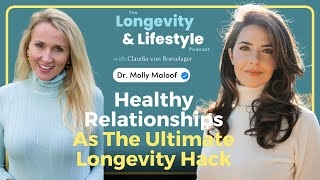
This content was created by Claudia von Boeselager. This content was uploaded by Claudia von Boeselager. This is a YouTube interview episode (Longevity and Lifestyle Podcast) titled "Healthy Relationships As The Ultimate Longevity Hack with Dr. Molly Maloof," created/posted on 2024-11-29. It is a conversational interview between host Claudia von Boeselager and guest Dr. Molly Maloof covering the role of high-quality relationships in longevity, intimacy education (the Adamo Method), sexual health and dysfunction, sex education, pelvic-floor mechanics, consent and sexual confidence, plus related topics such as conferences/expos, Ozempic and pharma critiques, regenerative therapies (EBOO, exosomes, NAD+ patches, neural therapy), environmental toxins, and broader concerns about AI, purpose, and human connection.
Chapters
Welcome back, dear audience, to another episode of the Longevity and Lifestyle Podcast. I'm your host, Claudia von Boeselager, here to bring you the latest insights and learnings to improve your health, life, and happiness for longer. Thank you so much for being part of this tribe, and I would love to hear from you. So please feel free to leave a review on Apple Podcasts or Spotify on this episode or in the show in general. Would love to to hear your thoughts and hear from you. And if you haven't already, make sure to sign up for my newsletter at llinsider.com.
That's llinsider.com.
My guest today is a returning guest, Dr. Molly Maloof, back by popular demand. She is passionate about extending healthspan through her medical practice, personal brand, entrepreneurial, and educational endeavors. And as a founder and CEO of Adamo Bioscience, Molly is at the forefront of bringing modern intimate intimacy education to couples with a groundbreaking program developed by her study of the science of love. She also emphasizes that close personal relationships significantly influence health, longevity, and happiness.
So I'm really excited to dig in today. Research indicates that high-quality romantic relationships can slow aging, while poor relationships and relationship quality can accelerate it.
Since 2012, she's helped over 50 companies in digital health, consumer health, and biotech with their clinical strategies, product development, research, and marketing. She recently launched the Adamo Method, a modern sex therapy for couples, and completed an IRB-approved study to understand the efficacy of the groundbreaking program, the Adamo Method. The initial results of the study were very successful, showing a significant improvement in female sexual dysfunction, satisfaction, communication, frequency, confidence, passion, intimacy, and emotional closeness. Dr. Molly is dedicated to modernizing intimacy education for couples, using her expertise to create programs that are both scientifically grounded and practically applicable.
Please enjoy. So welcome back, dear Molly, to the Longevity and Lifestyle Podcast. I'm so happy to have you back on. Was so great to see you earlier last week or the end of the week before at the Eudaimonia Summit in Palm Beach. Love to hear what your biggest takeaway was from that or what really resonated with you?
Well, I was really impressed by the exposome in particular. I've been to a lot of health conferences where, you know, there's basically been so many different, like, booths, and I've tried all— like, I've been to fitness conferences and tried, like, all the weird fitness shakes and bars. And, yeah, I've been to biohacking conferences where I've tried all the weird potions and supplements. And this is the first conference that I've been to where I felt really good physically leaving the expo. And I think it's a testament to how much this organization invested in the real diligence on these, these products. I got to learn about a lot of new products that I hadn't seen before, new supplements, new services. And, you know, got to see a lot of friends. I mean, it was really cool to see so many health people, people in the health space, founders, friends with were there. I also got invited to two very special dinners where I felt very honored to be amidst some really big names in health optimization. So, it was a really— I would say it was really special. And I'd never spent any time in West Palm Beach. And I'm really excited for the organization and how they're going to be making this a much bigger a much bigger thing in the next few years. I guess they're trying to kind of do a takeover of West Palm Beach and make it a bit more of a festival of health and wellness, like South by Southwest. And I have so many ideas of what I would want to do to contribute to that. So I feel like I think what they're doing is not just a conference, they're really trying to build a movement across the country. And I feel like the moment that we're in right now with RFK, really trying to promote this Maha movement and being given quite a lot of power to make some major changes. It's exciting. So inspirational. And it's funny because there's so much pushback from the mainstream media and there's so much pushback from, frankly, a lot of deeply unhealthy people that actually have no idea that they're sick. And I don't think people— I mean, this has been a pretty big year for me of realizing that even if you are like, even if you make it your job to be healthy, if you're living, if you're like a goldfish in a dirty fish tank, it doesn't matter how hard you work with your lifestyle. Our environments, our food, our— I mean, I tested levels of pesticides and glyphosate in my body that I never thought I would find because I thought that I did really a really good job at avoiding these things. And it just feels like all this stuff is, is kind of unavoidable right now. Like, you can't—
it's so hard.
You can't hide from it. And so to me, this conference has come at a time for our culture where everyone is waking up to like, we don't want to live this way anymore. We don't want to be sick and we don't want to be poisoned. And there's movement and there's a bunch of people that are like, that have been, you know, like me screaming at the rooftops for years, like the sky is falling. And yet nobody's been listening until very recently. And it's been this weird, weird moment where everyone's like, whoa, what are we doing in this country? Like, why are we paying so much for healthcare? Like, why am I spending so much money and not getting any return on my investment? Like, I'm not getting—
why are we being poisoned as well?
And why am I getting poisoned by the food system?
You know, I mean, it's— I'm really excited as well because I think it's so over— I know from people who work in the pharmaceutical industry, like even foreign pharmaceutical companies, make over 50% of their profit off of the US. Why? Because they regulate price of medication in Europe. So I think even at the conference there was that panel on the Ozempic, which was quite controversial. I don't know if you heard about it, but—
Oh yeah. So I'd love to know what was the big— I mean, I know there's an argument on Ozempic, but I just, just to bring that up, like, I think that there, there, there's a real common ground that Ozempic is truly a wonder drug. And these, these GLP-1 drugs are actually profoundly impactful. Now, I think the argument was that children shouldn't be subjected to having to be taking drugs. As young as 6-year-olds. Yeah. But I think that's how sick our kids are, is that they are, they're not getting like, I've worked in obesity clinics for kids. I've met obesity doctors. I actually went into pediatrics to fix the obesity epidemic. And the truth is, is that parents can't afford to feed their kids normal food. Kids are being marketed these horrible foods. And honestly, I, I think that culturally we're like— these parents and doctors are at their wit's end. Like, what else are they supposed to do, you know? Like, eating healthy is not affordable for families. It's not affordable in this country.
Yeah, because, because the mass-produced soy and all these other products, the ultra-processed foods, are being subsidized, so it's making it super cheap. And it's being put into the food pyramid, it's being put into the public schools. So that's the nutrition that's given, and it's made super cheap. So affordable, but it's killing them and it's making them highly addictive as well. I mean, there was a statistic thrown around that 50% of US 15-year-olds are overweight versus 3% in Japan.
How many?
50.
5-0.
Yeah.
Oh my God.
I just thought, how sad is that? And then instead of— so I think that the controversy on the panel, JJ Virgin was in the middle and she was kind of like the more neutral thing. You had Kelly Means and then there was—
Was he on the panel?
No, I'm blanking now and I should know the name. I'll put it in the show notes for everyone listening as well. And then you had Knight from UCSF who has research. Basically, he's very pro-Ozempic, but obviously from like he understands that there's been no weight loss drug until now that's had such positive effects. So he had a very thing. But Kelly, it's obviously been on the presidential campaign trail and used to kind of rallying crowds.
And so he was like cutting him off and being like, you know, worked for, you know, a lot of these lobbying groups, so he can, he can speak from direct experience that there is a pressure to just make a drug solution for all of our problems. And look, I've built a pharmaceutical, so I know, I mean, I literally worked at, like, I created a pharmaceutical company for sexual dysfunction, and I know what it's like to work with supplement companies. I know what it's like to work with pharma. I know what it's like to work as a doctor. I know what it's like to work as an influencer. So I get every side. And what I liked about the conference was that there was a lot of different perspectives being presented. Yeah, exactly. It's at the end of the day, you got to make the decision for you. But I, um, yeah, I do think that we are— we're in a pivotal moment in our country's history where it's going to be— I mean, I hope— I just hope RFK has like security because I, I think he would be a big target for— there's a lot of, there's a lot of like bad actors in the world that don't want that kind of change because there's so much money on the table at stake. And, you know, it's going to be a wild ride for the next few years. I'm excited about it, actually.
Me too. I'm really excited. And I mean, if you even look at the share prices of Pfizer, of Coca-Cola, like, they're all—
are they dropping?
Yep. Oh my God, etc. So thankfully people are waking up to it. And it's, it's, you know, again, and as you're saying as well, like, there is a time and a place for certain interventions But the fundamental system is broken, you know, that the FDA is pretty much financed by the big pharma, like the, all the incentives and everything. It goes so deep into so many different levels. So cleaning that up, and again, it's like just replicate models that are existing in other countries and, and guess what? They're spending less on healthcare and people are more healthy. It's like, what is the US missing in this whole thing? They should know better, right? So exciting times ahead. I agree.
Well, Yeah, I don't think all drugs are bad. I think that's important for people to realize that I do think that there is a role for pharmaceuticals in the world. But, I mean, if the only thing I— here's the thing I will say is like, this is going to be weird coming from a health influencer, but like, we tend to trust over-the-counter things because we think that they're perfectly safe because they have to be safe because they're sold over the counter. And we tend to distrust things that have, you know, You know, that, that have the stamp of pharmaceuticals on them. But the truth is, is that the quality that goes into producing a drug, like the intense standards of what it takes to actually get a drug to market are actually profoundly expensive and very, very effective at actually creating, in some cases, not all cases, but in some cases, consistency and reliability of the actual product you're getting. Now, is the research consistent and reliable? My experience with working in pharma is that if you know how to design a study properly, which is, you know, how to reverse engineer the p-value outcome that you're looking for, you can almost legally cherry-pick the kind of people that you put in your program. And that is not talked about enough, is like the actual people and the, and the inclusion exclusion criteria for these studies. Is not necessarily always what, what ends up on the drug packet of, because like usually there's a much broader application to drugs. So unless you are going deep into the research and actually understand how these drugs work and their side effect profiles, just because a drug is approved for a condition doesn't mean that you are the ideal candidate for that drug.
Yeah.
And that drug is ideal for your body. And that is the sad thing about pharma is like, there are some good things about pharma, like the standards of production of these substances is extremely high, but the research is often skewed, skewed, and, and biased. And like, that's the fun thing about science is that people think science is unbiased, but science is always biased because science has to be peer-reviewed by human eyes and has to be produced by human people. And so as much as people are trying to remove bias from science, It's almost impossible. It's literally— it's just as much a religion as anything else. So, I believe in science, but I also believe in a lot of things that are not necessarily perfectly scientific. So, I have a very magical side to myself too. And, I think there's a lot of healing that can happen from inside and from just honestly changing the conditions of your life. So, yeah, I mean, I think a lot of disease begins as dis-ease. And I can speak from personal experience, like this has been easily one of the hardest years of my health journey. And there was— when there's a lot of personal challenges, your body is weakened because you're literally at a lower vibrational state. So I love David Hawkins stuff because he was a psychiatrist who had a spiritual awakening after a near-death experience. And he basically came back from being legally dead and was basically enlightened and awakened at that moment. And he discovered that so much of his healing was about transmitting his higher energetic state to people that are in low energy states. And like, what's fascinating about illness and, and dis-ease is that when people encounter major life challenges like breakups, like deaths, like company changes, like financial loss, like those things tend to create— those tend to take a person from a higher energy state to a lower energy state. And I think that is biologically adaptive but psychologically challenging, right? Like, your job, if you do have a major life stressor or a bunch of life stressors, is to figure out how not to get stuck in an emotional low energy state while your body is actually in a healing state. This is something that I've really come up against this year is when you're feeling so shitty, sorry to cuss, but it's hard to get your mindset back into I am healthy, I am healing, I am whole. And that is actually what it's required to get yourself out of these spots. But it's also not enough. Like you have to look at what are the influences in your life? What are the decisions that you have made that have led you to this place? And some of this stuff is out of your control. Like sometimes bad shit just happens to good people. However, how we react to those bad things is actually what contributes to well-being or disease. And, um, I, I'm, I'm, I'm so grateful for every— everything that has happened to me in my life that has been a major challenge because it has taught me so much about healing. And like, when you're— I mean, I've been so healthy for so many years that I, um, kind of felt invincible at one point, you know. I had a really— I had a lot of challenges, like in 2012, and then 2020. But, and then this year, I'd say, but in between those years, I felt essentially unstoppable. And having overcome personally, I've overcome chronic fatigue, I've overcome ADHD, I've overcome— I haven't really overcome celiac, I don't think you can. But, you know, I've had to fix my gut many times, like, I've overcome migraines, I've overcome a lot of I mean, I had a bike accident. I had two head injuries in the last 5 years. You know, it's been— you get knocked around by life, but resilience is about having enough grit to keep going and enough inner fortitude to actually create the conditions to say, I'm not going to let this topple me. I'm going to keep going and I'm going to be stronger. I'm going to heal and become stronger. And I've discovered a lot of really cool things along the way. The last year is, yeah, I mean, the last year has been such a journey of regenerative medicine. So, I've done, I mean, I've had to kind of actually do a lot of like regenerative medicine this year because I've had a lot of challenges. And, I've done, let's see here, the year started with EBOO and I did some—
What's EBOO? I don't know that.
EBOO is this type of blood filtration using ozone. And what they do is they take your, they take your blood out of your body, they run it through a dialysis filter, and they remove all the inflammatory compounds and water. And then they also run it through ozone to kill off any pathogens. And then they run it through UV light, which also continues to kill off pathogens and then potentially affect the energy state of the cells that are in your bloodstream. And then they return the cells to the bloodstream. And it's really great for inflammation. It's really great for toxicity. It's really great for after you get a really bad infection. I had a bad cold in January. Yeah. And then it's great for, you know, mold and detox and heavy metals and also even mycotoxins.
Wow. That's powerful.
You kind of got to know where you're going and who you're working with and ideally, like, ask around and get some second opinions before you choose a provider. Because I did have my third round of it this year was the doctor used a little too much ozone. And so, I had what's called a Herxheimer reaction. So, I basically felt like I had the flu the whole next day, which is not pleasant, but it was a major detox reaction, which is not something you can avoid it, you just don't need to. He jacked up the ozone to the highest amount and I was like, "Dude, what the hell are you thinking?" I've also done exosomes to help heal my my brain. So, they inject them into the nasal— basically, the tissues inside here. The funny thing about— so, I did stem cells and exosomes in my nose and in my vein. And, the craziest thing about that is despite being challenged by serious things that would usually cause you to age faster, I feel like I looked better. Than ever, which is funny. Like, I do think it's amazing. My hair is great. So, okay, so I was in a relationship that was very toxic, and I broke up with him, and he was requiring me to be on a— he would basically— we had a chef, and he wanted me to be on a vegetarian diet. And I was like, look, dude, I'm an O positive, and whether you believe in blood type diet or not, I need meat. And so I was, I was like losing weight. My cortisol was low. My testosterone was low. I had anemia, and my hair— I lost like half my hair. And so this is like way thicker, but it's still not as thick as it was last year. It's about 3/4 of the way back to normal, but it's not nearly as thick as it was before, which is fine. I don't care. But it's— your hair is a really important barometer of your health, and when you lose half your hair, you know you're not well. And, um, it was really scary to like— because my hair— I felt like Samson. I felt like I was losing my power. Like, my hair has always been like a really important part of my I love my hair. I just, I just got to give myself a blowout because I got to do some content and 2 podcasts today. But, and then I also did, let's see here. I've been doing patches, NAD+ patches from Ion Layer. They're good. Love, love, love those patches for any injury. So I had a pretty annoying bike accident. And so I put those patches on and I do feel like I healed really fast from the bike accident. And then, what else have I done? Okay. So, there's this thing called neural therapy. And, there's two types of neural therapy. Okay. One is they're injecting the nerve ganglia with procaine and it's really giving you an autonomic nervous system reset and it's very much more of a parasympathetic activation, which I personally would only recommend that kind, but you got to find— there's only 250 doctors in the country that do this. The second kind is a different kind that I just experienced, which I do think was therapeutic but in a different way. So, they injected the procaine into acupressure points that were linked to emotion. So, he was basically testing different parts of my body. He was doing some sort of specific type of test. I didn't know how to do it. And so, when he would inject a spot and then literally I would have pouring out emotion. I'm talking like, wow, um, like a huge emotional release that actually ended up being like 12 hours of me on my— like, I did break up with someone that day, which, whether or not that was a good decision or not, I think it was the right decision for, for me because I didn't fully realize— I mean, I've been preaching human connection, which we can talk about next, as like one of the greatest factors in our longevity and our happiness, right? The first being your metabolism, right? That's number one. The second one— I mean, I wouldn't say number one, it's more of like these are the three pillars that I consider important. One is metabolism, metabolic health, blood sugar metabolism, um, and just overall, like, how are your cells metabolizing food? Second being human connection. Are you con— so energy, metabolism, energy connection. Are you connected to people around you? And if you are, are these connections healthy? So I had some pretty toxic relationships. And I had to ask myself, are these— like, what, what inside me was attracted to this toxicity? And is it that there is toxicity in me that needs to be let go of, or is it that there's— I'm incredibly empathetic, and sometimes toxic people are attracted to empath— like, people that are empathetic healers. That's, that's also common. I think it's a little bit of both. But I had not fully felt all of the emotions that had been held up in my body from about, like, let's say 2 out of the 3 breakups this year were pretty, pretty hard. And one was only a month-long relationship, so it wasn't that big. But I had some, I had some pretty powerful relationships that were not serving me emotionally and not creating the conditions of life that were allowing me to flourish. And so I learned firsthand. I mean, my theory was tested firsthand. Like, I love when you have a theory and then you test it and you're like, this is definitely true.
Who you surround yourself with is going to transform your life.
And in a good way or a bad way. And then the third is your human purpose. And I'd say like the one saving grace of my life this year, because my gut health got trashed and my relational health got trashed, is I have always had a deep sense of purpose. And that is something that I think most people do not fully grasp as like a foundational element of health. And also one of the biggest risk factors for the future of our humanity to decline. Like, I think that with AI coming and robots coming, like, humans are not going to have a lot of jobs left. And you have got to be thinking about your career 20 years ahead, not 5 years ahead, not 2 years ahead. Like, you got to be thinking about what am I going to be doing in 20 years? Because in 20 years, you might be obsolete in what you're doing today. So I'm like—
Even 5 years, I would argue, Molly, like the exponential rate of AI, it's just wild, right? I think you're right.
I think it's a 5-year. I think we're in like, have you seen the movie Ex Machina?
Yes. Yeah.
I just watched it and it's like Ex Machina and that other show that was on HBO anyway. Every time that you achieve AGI, they always want to kill the creators. And I'm not stoked about that. So I don't, I think we need to figure out like, what is a future where AGI doesn't want to murder us? Because like, it will, here's the thing. I think the way that it will happen is that the two things that it can directly affect is our human relationships, because people are going to start falling in love with AI. They already are. Did you see her? Yeah. But, I mean, that's already happening. A kid just killed himself recently because of character AI, a young 13, 14-year-old boy fell in love with his AI companion and killed himself to be with her. And then, that second is if AI takes over our jobs. We might all have great metabolisms because food can be fixed because you can have robots picking food and making food. But, I don't think that we will be a healthy population if we don't have purpose and if we don't have connection. And so to me, those are the two biggest areas of health that have to be looked at for the future of humanity to flourish.
Beautiful. Yeah. So let's talk about connection because it's so super important. And I'd be curious after about purpose because I know a lot of people are like, well, how do I find my purpose? But we'll, we'll touch on that. Yeah.
I've got a whole presentation on this actually.
Very cool. Okay. So let's talk about connection and the sad, shocking statistics. Or maybe you can share some of the statistics around what's actually happening to humanity in terms of lack of connection? What's, what's been going on?
We're basically in a huge crisis. Like, basically, um, I would say that like, okay, like, if you look at this really sad statistic, the marriage rate in 2022 was around 5.1 marriages per 1,000 people compared to in 2000, it was 8.2 marriages per 1,000. And I really do think that like the decline in marriage is actually the consequence of a few different things, but the empowerment of women is not a bad thing. But we, we need to look at marriage and family as like a, is like a valid, is like a really important part of life, right? But I think that the way that pornography and dating apps is influencing and social media is influencing our relating. It's like there's always something better around the corner. So And I think that people are starting to wake up to how much abuse is present in the world. And a lot of women are financially independent enough to avoid staying in an abusive relationship. But it's like, we are having a crisis in families and marriages, like no question. And I think that's sad because I do think that kids need parents. And I'd say that 15 to 20% of marriages are sexless. Which is really sad. Um, you know, 40% of the population has— a female population has sexual dysfunction, and 30% of men do. And so there's like— and 50% of the global population is sexually dissatisfied. So people are not having a great— people are not really loving their sex lives.
And hello, sweet friends, the most exciting time of year is almost here— Black Friday and the holiday season. It's the perfect opportunity to give the gift of health to yourself and your loved ones. I've curated an exclusive selection of the best longevity and health optimization tools, products I personally love and trust, all available at special Black Friday prices. From essential biohacking tools to transformative wellness products, these deals are simply too good to pass up. So visit LLGiftGuide.com now to uncover these amazing offers, but hurry, they're only available for a limited time. These offers are perfect for enhancing well-being and make thoughtful gifts for those you love. And you can share the website link with your nearest and dearest, so they might know what's on your holiday wish list too. Take this opportunity to improve your health, boost your energy, and embrace a longer, more vibrant life. Visit LLGiftGuide.com, that's LLGiftGuide.com, now before these amazing deals are gone.
And why do you think that is, Molly? Like, what's going on there?
I think that porn has given us, um, an unrealistic standard of what sex should be, and it's created a very masculine dominant standard of what sex should look like. And magnificent sex doesn't look like pornographic sex. It's way, way, way gentler, and it's way more in sync and in tune, and there's just more um, entrainment, rhythmic entrainment going on. Like, there's more of two bodies merging, and it's not one body attacking another body. It's like the two bodies are actually in sync. And I don't see that very often in porn. I see— and maybe it's the porn I'm watching— but, um, I don't really see a lot of— most what I see in porn is performative. Women are actually in a performative place. They're not really enjoying themselves. They're not actually orgasming because a female orgasm doesn't look like what they show in porn. And I think that that's problematic because men have, you know, I have, I have found that like not all men, but a lot of men are insecure about their performance in the bedroom and they don't want feedback. And so they're getting what they think is good sex from porn. Women are doing what I mean, I, in my twenties, I basically was like, well, if that's what porn looks— that's what sex is supposed to look like, then that's what I'm gonna do. And so we don't really have great sex ed. We have a lot of— a lot of— a lot of states in our country actually don't even require any, any sex ed at all. And so where do you learn sexual mechanics? Where do you learn how to have sex? You learn from experience. And a lot of people are not experienced because we do not consider having sexual experience to be a good thing, especially for women.
Yeah.
And so about it as well. Yeah. What, to share?
To share and talk about it as well?
Yeah.
Which is important. Yeah.
I'm like way, way more open about it at 40, but that's because I'm 40. And so I had, you know, I've had some really transcendent sexual experiences with some great partners, and I've gotten a lot of learning from those experiences. But I, I also thought I knew a lot, and then I was creating the Adama Method with these two sex therapists, and they were my teachers, and they basically taught me that I didn't know that much at all. I thought I knew it, and I just realized that, like, we don't look at sex as a skill. We look at sex as a natural, um, this sort of natural thing that you should just know how to do.
Activity. Yeah.
But it's kind of like running and walking, right? Like, anybody can run and walk, but if you want to be really good at it, you might want to get a coach. Like, in terms of, like, running coach. Like, if I, I had running coaches and I became a really good runner when I was in high school because I had coaches. So I really think that just like you get nutritionists, just like you get, you know, fitness trainers, just like you get functional doctors. Like, where do you go to learn how to have good sex? You just— there is nowhere to go because most sex therapists aren't even taught sexual mechanics themselves. So what I'm actually doing with this company is trying to educate people around how to have a healthy, satisfying sex life without it being a pornographic lesson, even though I do secretly want to get some healthy porn made of this because I want people to see what this looks like. But that's going to cost some money to do, um, at some point. And you should—
we will— have you come across Susan Bratton? I, I had her on recently on the podcast. Yeah, so Susan is great fun. So I feel like you guys should collab about this as well. Um, and I mean, she, she gave me an interesting statistic that it takes on average women 20 to 30 minutes to get to an arousal point.
So it's literally like knowing it just takes longer, but once she's there, like, yeah. And so like some women are spontaneously aroused and some people are receptively aroused. And I am spontaneously aroused, but I realize that that's not normal. That's actually the minority of women. And, um, so receptive arousal means that you need to receive stimulation whether it's yourself or someone else, in order to be fully prepared for your experience.
Yeah.
And I think that, um, that is something that we have figured out in our program, that we can create a sex ed program that can allow people to actually learn about how to engage in not— like, non-penetrative activity and penetrative activity. And what we do is we teach people about um, their psychosexual selves first. So we help people get to know themselves psychologically because all arousal begins here first. It begins with desire, right? You, you, you basically need to be mentally aroused and physically aroused to be prepared to have sexual contact with a person. Yeah. So this is the thing that people don't get, like, you can actually be physically aroused but mentally not aroused. And like, for example, in sexual assault cases, um, people will talk about how like the person who's receiving the assault, um, may have had an orgasm. And that is not because they wanted that experience. That is because their body literally is programmed for sex, right? And so that does not mean that they wanted that to happen to them. Right? So, this is really, really important. And this is a big piece of our program is how to actually embody consent. So, how do you actually create the conditions where your body is saying yes or no and reading that in someone else? That's another big piece of what we teach. Because if you can actually read someone's consent, then you can be attuned to them. And attunement is a really important facet of love. It's like, does this person actually see me for what I'm experiencing right now and able to actually give me this awareness of what they are seeing in me happening. And great sex is when someone's attuned to you enough to know when something doesn't feel good. And unfortunately, a lot of women don't actually have pleasurable sex. In fact, for, for, I read somewhere that like women's description of good sex is that it doesn't hurt. And that means that a lot of women are having painful experiences. And I actually thought that having some discomfort in sex was normal. And I discovered that that's actually just the fact that we have accepted that as a, as a standard of sexual contact. And it's not actually good sex. And not being able to walk for a few days is not a sign that you had great sex. It's a sign that you were not fully aroused and lubricated and that you're sore because, you know, no, no, if you're sore physically because you don't work out, different story. But, um, We teach a lot about pelvic floor health and how to actually create this mind-muscle connection between your brain and your pelvic floor so that you can play a role in creating the conditions for more arousal. So, being able to not just create Kegels because everyone's Kegeling all the time and they're getting too tight of a pelvic floor, but learning how to push out your pelvic floor just as much as you pull in is actually just important, just as important for creating the conditions for more arousal and lubrication because you're actually moving blood flow to that part of your body and you're creating more sensation in that part of your body. And, you're also pushing down your pelvic organs, which is actually bringing your cervix closer to the penis if you actually are having penis-vagina sex. And, cervical orgasms are insanely powerful, but a lot of women don't experience them because they don't realize that you can actually push down your pelvic floor and push out your cervix so that you can actually meet the penis more effectively, especially with men that are maybe not as larger sized. And there's this, there's this huge theory, like, it's a huge belief that like, you have to be a giant penis to have great sex. And that's actually such a misnomer. Like, you can have phenomenal sex with men that are average or even below average. And it's not fair to men to have this standard of believing that, like, you should be very, very, very big in order to— and that, that's what's going to mean you're going to have the best sex. Like, it's really not about size, it's about technique. And, and on that same note, porn is teaching women that you have to have these tight vaginas that look like preadolescent, and the women are getting these surgeries to have these, to have all extra, you know, tissue, tissue, and they're creating, um, they're really creating unfortunately a loss of sensation, I think. And there's this— I think it's psychologically damaging to women and men to have a— these like made-up standards of what genitalia should look like. Yeah, like bodies are beautiful the way that they came and they were made by God. And like, yes, I get that if you— it's going to give you more confidence in the bedroom, then go for it. But I just think that we have created this unrealistic standard that is not like that, that can lead to— I mean, I know women that have had damage to their body and they cannot have a clitoral orgasm externally anymore because they've had that surgery done. So, I just think we need to be— I mean, I don't think— I also don't believe in circumcision. Like, I think that circumcision should be the decision of an adult to make. And a child does not have the autonomy and the sort of ability to speak up for themselves. So I don't think kids should be forced into circumcision either. So I have strong opinions and, you know, I'm, I get that these are not necessarily mainstream, but, um, I just—
Molly, I'd love to talk briefly with the confidence issue and that the, what would you recommend to people who were like, you know, I'm ashamed or embarrassed or, you know, what would you, what would you recommend? Like how does one develop more confidence and self-love eventually that there's no perfect, there's no one size fits all, et cetera. So what would be your advice?
So, um, our program, the Adamo Method, uh, I have to plug it because it's, it actually, we did measure outcomes of our 9-week program. And one of the outcomes was improved sexual confidence. And I think the first step to having more better sexual confidence is having better sexual education. Like, I'm not like, like, okay, so I just learned how to shoot a rifle and I was just naturally good at it, right? Like natural. I've also went golfing and I was terrible at golf. So it was like, I'm like super confident at shooting a gun because I'm good at it naturally, but I'm not naturally good at golf at all. I'm in fact really bad at golf. And so for me to gain confidence in something that I'm not naturally good at, or maybe I have insecurity around, you have to get education. Right? Like, you need to educate yourself. And like, the best way to actually start educating yourself is learning how to develop better sexual communication. And that's another thing that our program improved, is being able to talk about sex is the first step to having better sex. Because if you can't even enunciate the things that are uncomfortable for you, or the things that you don't like, then how are you supposed to have better sex?
So, or even the things you want as well. Yeah.
Yeah. So a big piece is like, you need to know what you, what you're, what you're into. Right. One of my favorite practices with new partners is I have like a new boyfriend. I'm like, okay, I send them a— there's like questionnaires on like, what are you comfortable with doing and what are you not comfortable with doing? And it stems from like vanilla to kinky, right? And then I also have people fill out the erotic blueprint. So erotic blueprint is like, what are you— what is your erotic style? So Jaya developed this and it's basically a way of identifying, are you kinky, are you sexual, are you sensual, or are you energetic, or are you shapeshifter, which is all of them. And energetic is like the least amount of touch and the most around teasing. And kinky is the most amount of intensity of touch and the most power dynamics. And then sexual is just, I just want to have sex, sex. And sensual is I want to have beautiful lighting, beautiful music. I want to be touched. I want my senses to be aroused. And if you know your partner is— what your partner's erotic blueprint is, you can better provide for them and they can better provide for you if they know your blueprint. And if you're lucky, you find someone who matches yours, which is really fun. And if they don't match yours, then you can discover that actually you can learn to like things that you didn't know you liked. So, being able to talk about your likes and dislikes. Is a really, really powerful first step. It's like communication. Yeah. And also your boundaries, right? Like, yeah, you got to know what your nos are, and you got to know what no looks like. So if your partner is going like this and like crunched over, that's a no. If your partner is like this and open, this is a yes. Okay. Yeah. And so men and women will speak with their bodies unless— but if you're not able to listen or read what that looks like then unfortunately you may cross a boundary. And this is the thing that's really important is the best sex is safe sex. And safe sex means that you know you're not going to have your boundaries crossed without permission, right? Like, in kinky stuff, boundaries are crossed with permission, right? That's different than if you are in a scene and you have made it clear, you know, like let's say you and your partner have decided, said, I don't want this to happen to me. And then you're in maybe an erotic place, and then they go after and they do the thing that you told them not to do. That is crossing a boundary. And yeah, it had— like, what people don't realize is that, um, a lot of sexual assault happens in an initially sexually consensual context. Like, some— a couple came home after a date and she's like, okay, I just want to make out. I don't want— I just want to cuddle. And that becomes something else, right? Like, that is unfortunately what we don't talk enough about, is that space between, yes, I consent to you coming into my bedroom, no, I don't consent to you putting your penis inside me. Like, that's a— that is something that it seems so straightforward, and yet we don't teach that consensual stuff, right? So yeah, I think safety is really important for great sex because when you feel fully safe to let go and surrender, you're gonna have phenomenal orgasms because then you can just let go and you're not ashamed of what, what's happening. I think a lot of women are afraid to be seen in a state of ecstasy. I think it's a very powerful moment for a woman to be in complete total surrender and to surrender an ecstasy to a moment, right?
Yeah.
And I, I know that's true because I was like that when I was younger. I was afraid to be fully seen in my, um, and I think that comes from from religion. I think a lot of religion teaches you that you should not masturbate, and if you do, do it and hide. So you don't want to be really seen for yourself as a sexual being because it's not allowed. And that permeates a lot of challenges in people's romantic relationships because I've seen this in a lot of cases where, you know, in particular, people that grow up in a very religious upbringing find it really hard to surrender because they feel ashamed. So you have to— again, shame is like the lowest vibrational state in the Hawkins scale. So you don't— you have to have the courage to move through the shame into a place of love and re— and like, first of all, courage and reason, and then a place of love. And, um, that takes real effort, you know, and, and ideally a partner that can be with you through that process.
Yeah, I'd love to touch on the moment, but just in terms of, you know, fully surrendering and sharing yourself. Like, ask men what they find when women are fully aroused and orgasmic.
It's literally the hottest thing in the world. And the thing is, is that this is not just for heterosexual people, right? Like, a lot of gay men that I've spoken to have a deep amount of shame about their lifestyles. And it's not fair because I don't think there's actually anything in the Bible that specifically says that men can't be gay. And I just think that we have got to give up this whole this is right or wrong to being gay or straight. Screw all that nonsense. Like, be who you want to be and just don't, don't, don't hide yourself. You don't have to— I mean, I feel like people, people have to hide themselves in this, in this world. I mean, that's the craziest thing about what's happening in the world is people don't even realize just how many countries— how good we have it in America. Like, so many countries are so patriarchal that if you are gay or you are a woman that, is empowered at all, like, your life is at risk. And, um, it's really bad. It's really, really sad, you know. And I think there's an awakening happening right now in this moment for love and people being able to love who they want to love. And but the— but it really begins with oneself, right? It's so cliché, but it is so— so many people want love so badly. And I, and I know what this is like because I've been this person. You want love so badly that you're willing to compromise your values or compromise your standards for what you think is what you deserve, you know, which is not often, often really not good enough.
What would you advise people on that, Molly? Because I think that's a really, really big point where people are like, well, I really want to be in a relationship, I want love, and oh, it's not perfect, but I'd rather be with somebody than, than be alone. So What do you advise for people in that situation?
First and foremost, I have, I've gotten really in touch with my intuition, and this has taken me years. Okay. So I actually had an intuition coach who taught me how to tap into hearing my intuition. But you, just because you can hear it doesn't mean you listen to it, right? Yeah. Like you might hire an amazing coach to teach you how to be a great, a great business person, but then are you actually, are you actually applying the things that they told you? Exactly. It's about the hire a great doctor to tell you, how do I optimize my health, but are actually doing the things that they say. So I have, I have gotten a great, great slap on the, you know, butt from God in the last 2 years because I had this intuition coach in 2022 to 2023. And it was midway through 2023 that I was in a relationship that initially I broke off because I, my intuition was like, this ain't right, you got to move on. But he came back and he came back with a vengeance and was like, let's go to this, this Tony Robbins relationship seminar. And I was like, oh, I mean, I guess that means that you're like interested in really working on this part of your life and you want to do that with me. And so maybe this will be a good experience. And my intuition was screaming at me like, this is going to be a bad decision. Don't do this. But there was, but there's things when there's the intuition and then there's like all of the other things that you want, right? Which is you want a family, you want a, you want a lifestyle, you want, um, you know, you want experiences. And what are you willing to trade for the toxicity you're inviting into your life? And so I think that now, so the second time around that my intuition was quietly saying this person is not who he says he is. And it wasn't yelling at me because initially your intuition will just quietly talk to you until it has to yell at you. And then you're just fucked because if your intuition is yelling at you and you're ignoring it, then you're really screwed. And so I've been there. I know. Like, the truth is, is that your intuition, you can't hear it unless you are actually quiet enough to listen. So the first step to hearing your intuition is you have to learn to meditate. And you have to learn to get very, very quiet, and sit and let it come to you. Because it doesn't— first it whispers, and then it yells. So I, I just had my intuition was starting to speak to me in this whisper. And it was like, this person is not who he says he is. And it's not that this person is a bad person. It's that people often say things to you because they want you just as bad as you want them, but they are not actually being honest with what they are able to give. And that is where words— when words do not meet actions, then that is not the right person. If you do not like the person that you are becoming in a relationship, that is not the right person. Yeah, if the person is the right person on the wrong timing, that is not the right person. And so I, I really feel like you have to, you have to know that there are others available, and you have to trust that there is going to be more love available to you outside of what's not right for you in this moment, because that's going to give you the hope to move on from crippling pain. Because heartbreak hurts. It's really, really painful. It sucks. But if you don't feel it and move through it, then you're not going to invite new love into your life. And so I just believe that there's like boundless love available. But problem is, is that you— love is not something like, if you're lucky, love will just come to you. But Oftentimes you actually have to go find it, which means you have to go out into the world. You can't isolate yourself. You have to go to events. You have to meet people. You have to be present in your life. And, um, and if you're not dating anybody, it's kind of, you know, it sucks. Like, you know, you don't want to be going to things by yourself, but you just have to become really courageous to actually put yourself out there and, um, believe. You have to have a fundamental belief that there is love available for you because I have found that friends of mine that consistently find themselves alone are the ones that have given up. So like, just like your health, you're— if you, if you're suffering health-wise and you just believe that you're going to keep getting sicker and sicker and sicker, then you will keep getting sicker and sicker and sicker. But if you believe, and you believe deeply, that you are healthy inside, you're gonna get well and you are healing, then you will get better and you will heal. And like, I feel exponentially healthier right now today than I did 2 weeks ago. And, that's because I was like, okay, something's broken. I need to fix it. I'm going to put a plan in place. I'm going to make a concerted effort to put the plan in place. And, I'm going to actualize these things in my plan. And, it's like, I'm really grateful for peptides. I'm really, really grateful for peptides. I basically do believe that we are so lucky to have RFK coming in and saying peptides and psychedelics and stem cells and all these things that have been vilified are now going to be probably exonerated is really, really amazing. And, the thing about psychedelics is I want to breach on psychedelics because I spent a big piece of my career studying them. And, I was one of the first voices in Silicon Valley to come out publicly to say that these are performance-enhancing tools. These are healing modalities. These are sacred things for our spiritual journeys. And these are powerful tools that are double-edged swords because they can both heal, but they can also harm. And I was working on psychedelic love drugs for a brief period of time. And I realized that you could actually create medicines that could transform the way a person feels and behaves, which is That's when I started getting into the sexual ethics, psychedelic sexual ethics, because I was like, uh-oh, this is, this is powerful enough that this could hurt people. And I don't want to hurt anybody. So how would I create medicine that could heal and not harm? And that's when I realized that the only way to actually give psychedelic love drugs to people is to give them to people that are actually in love and not, and want to, and want to remain in love. I don't personally subscribe to the idea that they should necessarily be used to save marriages that are fundamentally toxic by nature. So emotionally or physically abusive relationships, I just don't believe that you should use psychedelics to save your marriage. Like, those relationships need to end. But if you are still— if you're just really struggling with your partner, and your life is hard, and you're like, dealing with stuff, I do think that they can play a role in maintaining a healthy relational dynamic because they can help get stuff to the surface, you know?
Yeah. Anecdotally, two separate friends' couples, um, one helped to heal their marriage. They chose to stay together. It wasn't a toxic marriage, just they weren't communicating like they wanted to. And I think that having those experiences in those heart-opening spaces and just seeing someone out of, in pure love and being able to have deep conversation was super helpful. And the other one, they knew that the marriage was ending but were able to communicate things out of love as to why, and they wanted to set the other one free. So for them, they were saying it was such a beautiful experience even though they knew it was the end of their relationship. But yeah, so I completely agree with you, what you're saying as well.
Yeah, it's beautiful. Well, I also think that they can be really great aphrodisiacs. So, the doses of psychedelics for trauma healing are high doses, right? Yeah. Doses of psychedelics for, you know, I'd say like deep, deep, deep trauma tend to be pretty high. And then, there's the doses that are kind of meant to be for just overall improvement of mood. Like, not everyone does high-dose ketamine and use it. Like, a lot of people are using sort of moderate doses of ketamine to help with their mood, and that can be useful. Now, there's the microdosing that is very controversial, but I still believe that it can work and can help with arousal. But the mesodose is like the dose that's right above a microdose where you have a body high but not a mental— you're not tripping. That is the dose range that I think is the most aphrodisiacal. And that's the area that we were working on. And we kind of paused all development of these medicines because we just don't have enough, you know, runway to wait for policy to change right now. But we did develop some really powerful aphrodisiacs that when the time is right and when these are legal, we'll be able to commercialize.
That sounds very exciting.
And then we'll directly be for sexual dysfunction in particular. Yeah.
I feel like there's, Tons of topics, Molly, that I would have loved to have covered, but our time is up unfortunately today. But for people who are curious to learn more, to understand more, who maybe feel alone and disconnected, where would you send them? What online resources or books, etc.?
I would say livingadamo.com, and then I would also go to my website, drmolly.co. And I would go to, um, let's see here, where else would I go? Social media? Yeah, @drmolly.co on Instagram. And, um, let's see what else. Um, Living at— Living Adamo on Instagram. And then @mollymaloofmd on X and LinkedIn.
Amazing. And can people try Adamo, um, before some— and also, is it for people that are not in a relationship potentially?
The The Tao Method is designed for committed couples. You can take it if you just want to have better sex ed. The sex therapy alone is effective. We ran a clinical study. We found it had powerful outcomes on orgasm frequency, orgasm quality, sexual satisfaction in couples that were in long-term relationships. So, you can read the paper on our website. So, you can just take the sex therapy alone without any psychedelics. But, someday, we'll be able to combine the two.
Yeah, exciting. Do you have any final ask, recommendation, or parting thoughts or message for my audience today, Molly?
I would say that, you know, love is easily the most powerful medicine in the world. But again, it's a double-edged sword. There's healthy love and unhealthy love. So try to find love that's healthy, that gives you life, that nurtures you, that protects you, that prioritizes you, and that feeds you and nourishes you.
Beautiful. Thank you so much, Molly, for coming back on today. Thank you to everyone for listening and tuning in. Talk to you again soon.
More from Claudia









Can Psilocybin Slow Aging? The Study on Telomeres, Inflammation & Survival with Dr. Louise Hecker

