How NAD Can Reverse Aging: Insights from Dr. Nichola Conlon
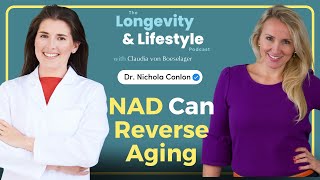
Dr. Nicola Conlon, a cellular-aging scientist, explains how NAD+ levels halve every 20 years and drive aging. Her company designed a supplement to restore the cellular machinery that makes NAD+, not just supply it. A trial showed it reduced biological age by 1.26 years in 28 days.
Chapters
what's been really surprising is the fact that the root causes of aging seem to boil down to only 12 key things. And these are actually called the 12 hallmarks of aging. So they are essentially 12 key processes that have been identified over the last 10 years that drive the entire aging process from within the cells. So I think an important thing, you know, an important mindset shift that we need to have is that whilst we traditionally think of aging in terms of seeing it on the surface or the effects of aging, actually everything to do with aging is starting in the cell. As we get older, our NAD+ levels do naturally decline. And this is quite a significant decline. And it's estimated that your NAD+ will halve every 20 years.
Welcome back, ladies and gentlemen, to another episode of the Longevity and Lifestyle Podcast. I'm your host, Claudia von Boeselager, here to bring you the latest insights and learnings to improve your health, live a longer and happier life in the meantime too. Before we dig in, I just want to take a moment to express my deepest gratitude for each and every one of you. Your unwavering loyalty and dedication mean the world to me. Thank you for tuning into the episodes, for sharing your feedback, for being part of this amazing tribe and wanting to improve your life and your health for longer. Please make sure to subscribe to our YouTube channel or our Apple Podcasts and Spotify, wherever you check out this episode. We'd love to hear from you. It also enables me to bring you more free content from amazing speakers. So having your support in that way would be hugely grateful. Again, so grateful for you as this community and tribe keep growing and growing around the world. Thank you. Welcome to the Longevity and Lifestyle Podcast. Today, my guest is Dr. Nicola Conlon. So excited to have you on.
Hi Claudia, thank you for having me. It's exciting to be here.
My pleasure. So for my people listening and watching, can you give a brief background to yourself, Nicola? And yeah, would love to, to if you could share that.
Yeah, absolutely. So I am a scientist. I specialize in cellular aging. So what exactly it is that goes on inside our bodies, specifically inside our cells, that causes us to experience everything that we see as part of the aging process on the outside and also how we feel on the inside. And I actually worked in drug development, developing drugs that were designed to slow cellular aging, because age is actually our biggest risk factor for pretty much every major disease that drugs companies are trying to treat. Now, however, I have a supplement company and I'm trying to incorporate a lot of the, you know, the expertise, the research, the testing from the world of drug development, but into dietary supplements that everyone can have access to, but that have really good clinical testing and research done on them because unfortunately a lot of dietary supplements don't.
Yes, exactly. So and that's why I'm so excited to have you on too, because as we know, there's a lot of claims out there and what is is, you know, that it can do this and that and the other. And I love that you come from a very scientific perspective. And maybe just for people who aren't so familiar, can we just dive in a little bit to cellular aging, essentially? Like, what exactly is happening there? Why does it happen as we age, get worse as well? So maybe just to touch on that, to set the background a bit.
Yeah, absolutely. And, you know, this is something that is relatively new even within the scientific field, this idea that actually we may be able to slow or even reverse the aging process at the cellular level. Certainly when I first got into this field around a decade ago, there were still scientists that argued that it wasn't possible and that you couldn't slow cellular aging. But now you won't find a single scientist within the field that will argue that this is not possible because the evidence is so strong. And I guess what's been really surprising is the fact that the root causes of aging seem to boil down to only 12 key things. And these are actually called the 12 Hallmarks of Aging. So they are essentially 12 key processes that have been identified over the last 10 years that drive the entire aging process from within the cells. So I think an important thing, um, or, you know, an important mindset shift that we need to have is that whilst we traditionally think of aging in terms of seeing on the surface or the effects of aging, actually everything to do with aging is starting in the cells. Yeah. You know, you name any sort of process of aging and there is a cellular root cause. And that surprising thing is that it seems to all go back to these 12 hallmarks of aging. And these hallmarks cover things like DNA damage and shortening of our telomeres, inflammation, senescent cells. Now, we could go into a whole science lesson on each of those things, but I know we don't have time for that today. But essentially, there are these 12 key processes that are failing at the cellular level. And as they get worse, it speeds up the aging process. And if you can actually make those processes better, it slows down the aging process.
Beautiful. Thank you for summarizing that as well. And so I guess the big question is, you know, as we age, why are these processes slowing down. And I'd love to take a closer look at, you know, NAD+. Maybe you can also explain NAD+'s role of what it is and what its role is in cellular aging and what's, what's happening in the, for the longevity space.
Yeah. So there are many things that are acting to either speed up or slow down these cellular hallmarks of aging. And I guess one important thing is that the reason that we now know that aging is something that can be slowed or reversed is that for a long time we didn't believe it was possible because we believed that aging was this programmed, fixed thing that once it started, you know, the march of time, it started, there was absolutely nothing you could do to stop it. But what we now know is that actually the reason that a lot of these, these aging processes speed up in our cells is actually not because we've, we've lost some part of our biology, but it's just been turned off. You know, we have everything in our bodies to keep us young and healthy. And that is why when we're young, we are young and healthy because there's processes in ourselves that are keeping us like that. But as we get older, they all become turned down or switched off. So a lot of focus within the space is actually looking at ways that we can switch back on some of these cellular processes that keep us healthy. And many of these processes are things like repair. Things that are repairing our DNA, repairing any damage in our cells. We have an army of repair proteins and enzymes that are constantly trying to keep on top of any repair in our bodies before we ever even notice that it becomes an issue. And it's these things that seem to slow and get turned down. And this is where NAD+ comes in. So NAD+ has been a molecule that's incredibly exciting within the longevity space because it's something that has been found to basically in our cells have a big impact on how fast this, the cellular process of aging will happen.
And so, sorry, continue. Yeah, because I wanted to dive into, yeah, what's happening exactly there and what impact does NAD+ have?
So, so basically NAD+ is a natural molecule and it's, it's not something that we're adding to the body. NAD+ is something that's naturally found in every single cell and it's critically important in hundreds of different reactions. But I guess the two things that it's most famous for are firstly, energy production. So NAD+ plays a very key role in basically taking our food and turning it into the ATP, which is the energy currency of our cells. And this happens in our mitochondria, which are our tiny little energy powerhouses that create all of this fuel. And NAD+ is a critical part of this pathway. So literally, if you had no NAD+ in your body, you'd be dead in 30 seconds because our bodies couldn't produce cellular respiration to keep us alive. So that was the thing that NAD+ was originally famous for. But actually, much more recently, it's been found that NAD+ acts as a fuel to drive a lot of these repair processes that I just mentioned in our bodies. So as a general rule of thumb, if you have high levels of NAD+, you have lots of energy so your cells can function correctly. And also you have lots of repair going on, meaning that your cells are kept in good health. Now, if you've got low NAD+, you get exactly the opposite. Energy levels in the cell decline and repair isn't functioning as well. Damage starts to build up. And this manifests as a lot of the signs and symptoms of aging. Now, the reason that NAD+ is, um, so exciting within the longevity field is it's, it's linked with aging, is that unfortunately, as we get older, our NAD+ levels do naturally decline. And this is quite a significant decline. Um, it's estimated that your NAD+ will halve every 20 years. Wow. So this is even from birth. So by the time you're 20, it's halved.
Oh my goodness.
Well, okay.
Yeah.
Yeah. By the time you're 40, that amount is halved again and so on and so on, which is scary. Like, you know, and I've just said if you didn't have any, you'd be dead. So, you know, 30 seconds. Yeah. Yeah. And, you know, that means that basically our cells can't produce the energy that they used to. They cannot drive the repair that they used to. It's not because those processes have disappeared. They're just getting turned down because the NAD+ that is not there to fuel these processes. So you start to get lack of cellular energy, you start to get a buildup of damage, and this drives these hallmarks of aging. And, you know, this is a cellular level, but on a more, you know, body level, low NAD+ will contribute to things like tiredness and fatigue that you get as you get older, not having as much energy and stamina in general as you did when you were younger. You know, when you see kids running around and like, how have they got so much energy? Because they've got loads of NAD+. And then, you know, also cognitive function, brain fog, all of these sorts of things start to manifest as NAD+ declines. And also your general, you know, your general resilience throughout the body starts to decrease as well.
So, so fundamental. And when you came across it originally, like, I'd love to maybe take us to that moment where you're like, well, this is this is huge, I want to focus on it, and then even to go and create a supplements company where you also incorporate clinical research, which I'd love if you could touch on as well. So what was that sort of aha moment and what made you decide like, okay, this is what I want to focus on and then go to create a supplements company? And so can you share that story?
Yeah. So, so I— my background is working in drug development and originally I worked in cancer therapy. And then one day my boss said to me, okay, Nicola, we're going to put you on a different project. You're going to look at drugs to slow Aging. And I was like, really? Is this a thing? Okay. Um, because, you know, this was— this is— everyone's talking about longevity and things like this now, but back then it was really not something that was very spoken about. It was very, very new. Um, so essentially I was given the job of looking into all of the scientific research that was happening in the longevity space to understand whether this science was strong, was it solid, was there anything in it, and was it pursuing a development program within that company, looking at drugs to slow cellular aging. So I had an amazing opportunity where I spent a whole year going through all the science, all the detail, meeting all the key scientists in the field and deciding, yes, absolutely, this science is mind-blowing. What is going on in this space is, is the future. And, you know, as I mentioned earlier, age is our biggest risk factor for everything that we're trying to, you know, cure. Treat with a drug, you know, way bigger risk factor than any of the other things that we're told are bad for us. So this idea that if we could just slow cellular aging just a little bit and reduce the onset of all of these age-related diseases, it would be massive. So one of the things during this time of research that really stood out to me was NAD+, because that seemed to be something that, first of all, had a huge amount of research already done. And that was very, very promising. It was something that seemed to affect not just one of the hallmarks of aging, as many areas do, but actually all of them. So as NAD+ went down, all of the hallmarks get worse. As NAD+ goes up, all of them get better. So it was this way of potentially having a huge impact with one molecule, which is quite unusual. And then finally, it was actually something that could be, you know, changed using a dietary supplement. It didn't have to be a drug. And that was the bit that really stood out to me, was that we had all of this fantastic research, all of this evidence. But if we were going to wait until we were developing a drug to boost NAD+, we're going to be waiting another 15 years because that's how long it takes to get a drug to market. And then you've got the old problems of is this accessible to everyone, you know, and things like that. So when we were looking at all the different molecules, um, a lot of things that worked really, really well were natural molecules, not your typical drug molecules. And unfortunately, a drugs company is not interested in them because they can't be patented. So commercially made total sense. Uh, ethically, I was like, actually, somebody needs to be doing something with these more natural molecules. So in 2017, I decided to leave the world of drug development and start a supplement company.
And how has that path been? Because obviously people have heard— some people listening to the podcast will have heard about NAD+ and heard that there's, you know, different forms and some are patches and some are injectables. And, you know, why focus on a dietary supplement? And, you know, by the way, for everyone listening, I do take my NuCheat one. So we'll talk about that specifically. But I really wanted to share the science. From Dr. Nicola Conlon here as well. So why did you decide to focus on the area that you did and what were some of the compelling reasons that you thought that this would be the most promising route?
Yeah. So, you know, as a company, you know, we're very much known as an NAD+ company. But actually a lot of our research is not only on NAD+, but on all the different hallmarks of aging. And we're developing things to look at different hallmarks. But for me, the, you know, the first thing to target was NAD+ because it's something that has such a profound effect on our cellular health because it's found in every single cell. That means that when it goes down, it affects huge amounts of the body and huge amounts of cellular function. And equally, when it's increased, it also has a massive benefit across the entire body. And, you know, longevity is a very new world for a lot of people, and there are a lot of crazy ideas going on in the longevity space about how we may be able to alter our genes or, you know, do some crazy therapies. And, you know, I don't think the world's quite ready for them, and I don't think the science is quite ready. But this idea that maybe we could do something with a supplement was something that really stood out to me as a way of getting this science accessible to the everyday person. And there were companies that were already starting to sell ways to boost NAD+, you know, supplements, drips, all sorts of different things. And when I looked at all of these different options that were already available, quite a lot of them don't make scientific sense based on what we know about the reasons why NAD declines and the chemical nature of NAD. A lot of these ways that people were using to boost their NAD didn't really make sense. So what I set out to do was develop something that was based on the latest science and actually did make scientific sense.
Can you expand on that and why it didn't make sense? I'd love for people listening so that, you know, if they have the opportunity to, to look at NAD a bit closer and to take supplementation, that they know what to look out for. What are some of those factors?
Yeah, well, when everyone in the scientific community realized that NAD was something that we wanted to elevate in our bodies, there was a big flurry of activity of how can we do this. And the first obvious choice was, well, let's just put pure NAD+ in a capsule and swallow it. You know, if we've got something short in the body, just eat it. And unfortunately, it was realized very early on that that's not a good way because NAD+ is a very unstable molecule. And so not only will there be no NAD+ left in the capsule because it just degrades in room temperature, and even if there was, it wouldn't get through the gut. So then people started saying, okay, well, if we can't, you know, if this NAD+ doesn't last very long, Well, then why don't we do an IV? We can put it in a bag, make it up fresh, put it through an IV drip, or we can inject it, you know, into the muscles or subcutaneous, whatever. And that will avoid this issue of stability. It will avoid the gut and we'll just get it straight into the blood. So a lot of companies are doing this. But the issue that we have with those types of therapies is that NAD+, it's itself is a very large molecule, and that means that it can't actually freely pass into our cells. It's too big to just diffuse through the cell membrane. And whilst an IV or an injection will get it into the blood or, you know, um, into the interstitial space, it doesn't do anything there. NAD does not do anything in the blood. It needs to be inside of the cells because that's that's where their mitochondria are that produce our energy. That's where all the pathways and repair processes are. So some cells do have little channels that are big enough to allow NAD+ to get in, namely the heart cells and some of our neuronal cells. But NAD+ is required in every single cell in our body. So that means there's a huge amount of our cells that aren't able to access these— the NAD+ if it's given via IV or, or via an injection. And also for anyone that's ever had these, they will tell you how unpleasant it is to have an IV of NAD+. And that is because NAD+ should not be found in that amount in the blood. So your body's massively trying to metabolize it, get rid of it, you know. So that wasn't the best way. So then the next sort of— we're going to like the history of NAD+ here.
And the next thing that happened to take the deep dive though, so people understand. Yeah. Offering and there's noise in the space. So thank you for breaking it down from a scientific perspective.
Yeah, absolutely. Because I think a lot of people don't understand. So the next thing that happened was they said, okay, let's go back to the dietary supplements again. Let's think how we can do this differently. And probably to date, the most famous way of boosting NAD+ is using an NAD+ precursor. And if you followed the NAD+ space, you will have heard of something called NMN or NR. And these are basically vitamin B3 derivatives that are precursors to NAD+. And what that means is they are like the building blocks or the raw material that your body will use to stick together to make the bigger NAD molecule. And these are better because they can be given orally. And it also means that they are small enough to be absorbed and small enough to get into the cells. Not all cells still, but enough. And then once in the cells, your cell has a special pathway called the salvage pathway, which basically makes and recycles these these precursors into the big NAD molecule. So that was kind of the— at the time, the best way that we thought we could boost NAD. But obviously with any area of science, the science is constantly changing and we're constantly learning new things. And over the last good few years now, probably since 2017 when I started this, all the science started to show that actually the reason why NAD declines in our cells is for two reasons. First of all, because that pathway that actually takes those raw materials, those precursors, and turns them into NAD, that actually declines with age. And secondly, inflammation. So inflammation degrades huge amounts of our NAD. So So that made me think, and it was like, okay, so if we're trying to boost NAD but we're ignoring the reason why it's going down, it's not going to be very effective. And I always get people to think of it with like a factory analogy. Using something like a precursor, a raw material, is kind of like going into this NAD factory and saying, why is my NAD production gone down? And then looking and seeing that the machines are broken, the pipes are leaking, you know, the stuff's spilling out all over the floor, and then going, We don't need to worry about that. Let's just order some more raw material and somehow we'll get more NAD+ out the end.
Like, it's a good analogy.
Yeah, yeah, you wouldn't do that. You go, my goodness, we need to fix the machine. We need to stop all this stuff leaking out. We need to clean it all up. And so that's exactly what I've spent a huge amount of time researching now. I've published several papers on it. Talking about all of the root causes of NAD+ decline and different ways that you can actually combat these to effectively switch back on your cells' own natural NAD+ production. Because your body's very good at making NAD+. A lot of, a lot of people don't realize we do not get any NAD+ from our diet. It all is made inside of our cells and it just gets turned down. So all we need to do is turn it back up again.
Beautiful. So how do we turn it back up again? What do we do, Nicola?
Well, this is exactly the— for the supplement, you know, the way the supplement that we've designed, exactly how it works to target these root causes of NAD+ decline. But actually, I think it's important to note that actually, you know, whilst I have a supplement company, I'm a big advocate of like getting the lifestyle and things like that in place first. You know, it's pointless, you know, spending money on supplements if your lifestyle is terrible. Because first of all, NAD+ declines naturally with age, but also your lifestyle will, will influence that. So anything that's damaging in our bodies and things that we all know about, like drinking excessive alcohol, smoking, an inflammatory diet, sunburn, these things massively deplete our NAD+ levels. On the other hand, things that we know are good for us actually increase NAD+. So in particular, exercise and fasting, both of those things we know naturally elevate NAD+. And the way they do this is basically by— if you think about exercise and fasting, they put your cells under a state of energy stress where your cells are like, oh my goodness, we don't have any— you know, our energy is going down, we don't have any nutrients coming in. We need to go into sort of conserve and protect mode.. And what they do is they say we need to switch on more NAD+ production. And that pathway that I spoke about, those enzymes, those machines in the factory, they actually naturally are elevated when you do exercise and fasting. So there's a particular enzyme called NAMPT, which is the key rate-limiting enzyme in NAD+ production in our cells. And there are clinical human studies that demonstrate that both exercise and fasting increase levels of this enzyme naturally. So that is always a good place to start. And then the second place would be a supplement that has been designed to do this, which is exactly what our supplement has been designed to do.
Yeah, so exciting. I think that's such a key part. I think there's people out there and, you know, people in touch with this world like, oh, is there not like a magic molecule? Can I not just take a pill? Right. And it's like the lazy route and it's at the end of the day, it's like start with lifestyle. I feel like normally I say start with testing to understand where you are. Start with lifestyle and then look what's missing, what's depleted, and what you can, can support from there. And that's where you really get that exponential upgrade depending what your baseline is as well and starting to feel better too. You mentioned fasting, Nicola, and I'd like to just touch on this point because there was a point where I was like, oh, fasting is amazing. Got to do intermittent fasting, longer periods of time. And then I realized that, you know, sometimes I would feel great and energized and mental clarity, and other times I'm like beyond exhausted or whatever. And it was not really supporting the energy levels and how I was feeling to do. So can you discuss, you know, fasting for women and what are you seeing in terms of also the research? Maybe you can share a bit about that as well that might not be for everybody, or what type of fasting would you recommend for women versus men?
Yeah, so we know a lot of the clinical studies have always focused on men. Clearly we are very different to men. And now luckily there is more research coming out showing that maybe some types of fasting, especially the more prolonged fasting, is not good for women just because of our biology. Now, when I talk about fasting, I, I don't really say it's got to be a specific number of hours or it's got to be this or it's got to be that because everyone is biologically unique, even between different women.
Yeah.
But when it comes to something like NAD+, what we know is that it's, it's just trying to get away from our modern lifestyle as much as possible. Okay. Because I always get everyone to think about aging through the eyes of evolution. So the way our bodies have evolved is not for the lifestyles that we're living today. Our body has evolved, you know, still for how our ancestors were living. This idea that we were having to forage, hunt, for food. Our life purpose was actually to reproduce, and everything in our bodies in terms of our cellular biology only makes sense when you view it through these eyes. So everything in our bodies is geared towards either survive or reproduce. And when you look at a lot of the beneficial pathways in our cells, so things that actually keep ourselves in good health, and so DNA repair or autophagy, which recycles damaged proteins, and things that reduce inflammation. These pathways are all sitting in our bodies, but they don't get switched on unless there's a threat, shall we say, a threat that we're not going to survive to reproduce. And this, this fasting is considered a threat. It's telling our bodies, okay, there's no food coming in, and actually we're going to have to, you know, be— not be wasteful and actually repair things and look after these cells until our next meal comes in. So when we're going for an extended period, and this can be as little as, you know, 12 hours, so that's not a great deal if you think— if you just have your last meal at 7 PM and don't have any breakfast till 7 AM, that's done overnight fasting essentially. It's nothing crazy, but unfortunately, you know, as a society we are now told that, oh my goodness, we can't possibly leave the house without having our breakfast cereal and we have to have something. And, you know, you must eat every 2 hours. And because of that, our bodies just are like, oh, this is great. You know, wasteful. We don't need to repair anything, even though these pathways are all sitting there waiting to be switched on. They just don't. So, yes, I think people have to be careful with fasting. You know, I think there has been a bit of a a thing in the past where everyone's just like, the longer the better, and 3-day fasts and water only, and, you know, one meal a day. And I don't think it needs to be as complicated as that. I just think we need to be mindful that we shouldn't be constantly snacking all the time as well.
Yeah, I've had Dr. Sachin Pandan as well, who runs Circadian Rhythms, etc., and a few other also. And I think the baseline consensus, what I've gauged, and where podcast episode 163 or 164, whatever it is now, right? So from different experts and things is that that minimum of 12 hours overnight and then ideally 2 to 3 hours, ideally 3 hours before bedtime, you stop eating so that you can digest and then allow that repair to happen overnight while you are resting as well. So I think that's like what I've gauged so far is the consensus of like the minimum that humans can do, men, women, or whoever alike, right? So yeah. Yeah. Thank you for expanding on that. Yeah. I'd love to discuss your clinical research and the trials that you've done and the results. Can you walk us through some of the maybe surprises in terms of what didn't work and then what actually came about that the successes, if you will, as well?
Yeah, absolutely. I mean, when I left drug development to start a supplement company, everyone thought I was crazy. They were like, you know, why on earth would you give up your career and all the training and everything you've done to start a supplement company and supplements don't work and they're snake oil and da da da da da. And I was like, hang on a minute, your body has no idea what is the difference between a drug, a nutrient, a supplement, a mineral. Like they all have an equally powerful physiological effect. It's just someone's put them on a different list, which as a society we're trained to think, well, it's not strong enough, it's not, it doesn't work. And so from the very outset, I was very passionate about whatever we did that it was going to have a full clinical trial done on it. Um, and that's unusual for supplements because there's no legal requirement to do that, and because of the time and the expense, many companies just simply don't bother. So when we were developing and formulating the product, um, we did a— first of all, a pilot study, and then we went on to do a full double-blind placebo-controlled crossover study, which as far clinical trials go, is the gold standard design. Yes. And we also wanted to do a few other things differently. First of all, we wanted to include women in this trial. So actually we have both men and women. And the second thing was we wanted to include a very broad age range, because if you look at any of the papers that were investigating well, pretty much anything to do with aging, but in particular NAD boosting methods like NR, NMN, they were all using 55 to 65 year old obese men simply because that is a cohort where you're going to get a result. We know obesity massively drives down NAD. We know by, you know, in a man by 55 to 65, they should have low NAD anyway. So on top on top of the obesity, you know, it's probably going to boost it. Um, so we did, um, actually age 20 to 80, um, and men and women. So it was a bit of a risk because, you know, technically someone in the 20s or 30s is already going to have fairly high NAD. Their, you know, NAD production method should be working still okay. We might not see as strong of a result. But again, we were like, this actually needs to be relevant to the average population and also the average population that is a consumer who could potentially benefit from this. So we set up that trial and the first thing we obviously wanted to look at was did it boost NAD+? And it did, thank goodness. And, you know, very, again, very exciting that we managed to see this result across across all age ranges. Um, and, you know, we— to begin with, we thought, well, maybe we see a bigger effect in the older people and then the younger people. But actually, we saw there was no correlation between age. All of these people were benefiting from elevating NAD+. And I think that is due to the fact, as we mentioned earlier, that NAD+ is already halved by the time you're 20. So, you know, even at the younger ages, you've already got a significant depletion.
But can I ask one quick question, Nicola, just for my understanding? So you said across the board the levels were elevated, but does that mean across the board from the 20-year-old to the 80-year-old they were elevated? Everyone had a 10% increase? Because I assume that the baseline pre-supplementation was varied, I assume, right? So yeah, was it everyone has a 10%, 20% increase, or can you just break down, just so for my understanding of the science, like what, what came about?
Yeah. So this was an average increase across the entire population. So obviously some of the study, which was 28 people, by the way. So obviously some people had, had bigger increases up to— I can't remember the exact numbers. Some people had up to 200% increase. Some people had smaller increases. So this was the average across all of them. But what we were surprised by was we really expected that it was the older people that would have the biggest increases and the younger people that would be the smallest. But there was no correlation. It was actually quite varied. And we think, again, this is because even the younger people, some of them could have been quite depleted. You know, some of the younger people had quite low baselines, which was surprising. Um, again, shows the impact of lifestyle on NAD+ as well. And certainly, whenever I do a talk on NAD+ and I show the— you know, I always show a graph saying NAD+ declines with age. I don't show smooth graph, I show this funny graph that goes like a mountain range. And I always say the reason I show this graph is because, yes, it declines with age, but your lifestyle will have a massive impact on this. And so it's important to understand that. So, so that was the NAD+ measurement. But I guess the more exciting bit for us was we actually have designed this supplement not just to boost NAD+ by giving the factory more raw material. We had designed this supplement with ingredients that that were gonna fix the factory. So ingredients that were gonna switch back on that NAMPT enzyme, that key enzyme in our salvage pathway that declines with age. So we actually measured the levels of this enzyme on the placebo before and after and on the real thing before and after and demonstrated that with supplementation with Nutrido TIME+, we actually elevated levels of this key enzyme. And this is the first human study that's demonstrated that a supplement can actually fix the root cause of NAD+ decline rather than just mask it by trying to, you know, top up with a precursor. So for us, that was really exciting because it not only showed, yes, we're elevating NAD+, but actually this is actually how it's working. We actually know we're fixing one of the root problems. And then the other things we went on to measure were much more what is, you know, biomarkers of aging. So yes, we're elevating NAD+. Yes, we're switching back on your cells' natural production. But what is this actually doing to our cellular health? What is it doing to the hallmarks of aging? So the next thing that was measured was something called SIRT1, which is a sirtuin. And anyone, again, following the longevity space has probably heard of the sirtuins. They're a very controversial area. And generally, for those exactly that might not be familiar, but generally what we know is that the sirtuins are— they're commonly nicknamed longevity proteins. And this is because they basically sit at the very top of a cascade in your cells, which when the sirtuins are active, switches on lots of downstream pathways that are beneficial for cellular health. So multiple things that reduce inflammation, that kickstart repair and that's, you know, just generally good things to have switched on. And certainly in long-lived animals and humans, it seems that overexpression of these proteins promotes longevity. So again, we know that the link between the sirtuins and NAD+ is that NAD+ is absolutely required to power these sirtuins as a fuel. So without NAD+, the sirtuins do not work. So we actually looked at levels of SIRT1, which is one of the family, and again saw that levels of this, this protein increased. So that was again exciting. And then it was okay. So we've got all the enzymes, the proteins. What about some clinical markers? So one thing that we really wanted to look at was inflammation because we know a key limitation of some current NAD+ boosting methods particularly NMN, is that it can actually inadvertently drive inflammation. And this is an area that a lot of people really don't understand. It's something that I talk about a lot because I think it's hidden by a lot of researchers and scientists. But effectively, if you boost NAD+ in a cell but you've got chronic low-grade inflammation, some of these inflammatory processes also use NAD+ as a fuel. Fuel. So they start to compete with our repair for the NAD fuel. But the interesting thing is that these inflammatory processes have what we call a much higher affinity for NAD than the repair processes. And all that means in simple terms is if NAD is available in the cell, the inflammatory processes will grab it and take it before the repair process even gets a look in. And this is why there's actually been a lot of papers coming out recently going, oh, NMN is driving inflammation and NMN is is, you know, causing this issue, um, and this is why. So what we have in our product as well is some ingredients in there that actually inhibit these inflammatory processes. So again, what we did was we, we measured levels of inflammation in these people, and we demonstrated that after 28 days supplementation, levels of particular inflammatory cytokines actually went down. So for us, it shows we're confident that this NAD+ is going towards beneficial things rather than going towards driving inflammation. Otherwise we would've expected to, to have seen that go up.
So exciting, Nicola. I love how thorough you are too. It's like, oh, there's a potential issue here. Okay.
We're gonna solve that too.
Yeah. And we'll solve that. Yeah. Really, really fascinating as well. I don't know. Did you wanna continue on something there or?
Yeah, I guess, I guess that there was a lot of things and I mean, this paper is published, you know, anyone could go on online and find this paper and we'll link it in the show notes.
Yeah.
Yeah. And read the whole study. Body. Yeah, but I guess the most exciting bit was we also measured biological age. So, um, we measured your biological age, which is the, the rate at which your cells are aging on the inside.
Using which test? Maybe you can just expand on that.
Yeah, so for this test, we actually used a test called GlycanAge, and people listening to the podcast for a while will be familiar.
They know Nicola, and they know mine is— my age has decreased to 26 years old.
So now So let's see where we get to. Yeah, well, I love GlycanAge. I think it's a very, very credible test. Amazing science. And it was the GlycanAge test that we used on all of the participants. And when they took the placebo, you know, didn't see any change to age. It went up slightly, actually. And then using the supplement, we saw a reversal of biological age of 1.26 years in the 28 days. Wow.
So you've done a test over a longer period of time. I wonder what— where you left it.
6 months. That is something. Yeah, that is something we want to do. So, you know, we do— I mean, just myself and people that I know that have been taking it for much longer. And we know— I mean, my biological age is 20. Amazing. I'm 37. And so, you know, I've been taking it for the longest period of time in the world. 5 years old soon since we're making it up in the lab. But yeah, no, we do want to do some longer-term testing as well on that because just simply because it's super interesting. But again, it's a way of actually demonstrating that this is having a real impact on the biological age within the cells. It's reversing cellular aging. So again, and we're really proud that, you know, we've managed to develop something that has great science, has good testing, and actually does what we want it to be doing in the cells.
Yeah, that's really, really exciting. And I think that we are at such a phenomenal time in terms of the science being there to prove different modalities and theories as well, and that you have the facts. And I know some people like, oh, it's all snake oil or not, but it's like, read the research papers. Yeah. Check how the clinical trial was actually done and who's funding it, by the way. Big, big important factor. Is it pharma? Yeah. And, you know, how it's done and double-blind placebo, etc., like you did it, like the gold standard. Um, and it's just really, really exciting there. So yeah, we will definitely link all that research, um, in, in the show notes. And, and Nick, like I said, I'd love to ask you as well, you know, is there a profile of person that NAD+ is not for supplementation now specifically? Um, are there any risk factors?
Yeah, so I, I always say for NAD+, because it's not something that we are artificially adding like a drug where there's like a contraindication. Our bodies are used to naturally having high levels of NAD+. So people say to me, well, you know, can your NAD+ go too high? Like, it's actually quite difficult to get it back to the levels that we had when we were young, even through methods such as this. So there's no risk of it going too high again. It's actually more abnormal for your body to have low NAD+ than it is to have too high NAD+. So NAD+ itself is something that is, is this, you know, there's no contraindication because we naturally have high levels when we're young. What I would say is if anyone's going to start taking a dietary supplement, particularly something like ours that has lots of different ingredients in, and they have a specific condition where they are taking drugs to deal with that, they would want to check with their doctor for any interactions or anything like that. Obviously, I can't go through every single individual drug, but, you know, we all say just check, double-check with the doctor before you start taking any supplements. Yeah. But yeah, in terms of NAD+ itself, again, not something that you artificially add in. Your body's used to having naturally high levels as well. And we know that NAD+ is incredibly beneficial for driving a lot of beneficial processes in the cells, but causes havoc when you don't have it at the same time.
Yeah. So potentially, and obviously with a huge disclaimer, speak with your medical professional, but then it's almost if you're taking this medication, there's no issue with it. You potentially could get off of the medication if you're able to, your body to heal certain processes. Obviously a huge disclaimer there and speak to your medical professional. But I think it's important to retest. Where I do hear from some clients as well is that they like, yeah, I checked with my doctor, but they have no clue what this is like.
They don't understand. Yeah.
So they're just like, better not. So what would be— how could people become a bit more educated about what it is so they can have a better conversation with their doctor and potentially share those links and that information with their medical professional?
Yeah, and unfortunately it's a huge issue. You know, the medical, medical doctors are, I'd say, around 15 years behind what the science actually shows. And it's, you know, it's not their fault. You know, they, you know, they're great in emergencies and things like that, but in anything preventative, generally, certainly in the UK, it's non-existent. And, you know, I, I do know people that even taken research papers, etc., etc., to the doctor will still go, we don't have time for this, you know, we're not going to read it. And functional medicine doctors, very, very different. You know, somebody that is actually trained in preventative medicine will absolutely understand what NAD+ is and, you know, why it's beneficial. And, you know, so maybe if you can even have a consultation with somebody that is more on the functional side, especially if you're concerned about preventative health. And as you said earlier, I think testing is, you know, pre-testing, things like that is, is very, very important. And a key thing to mention, though, actually, is that I always get asked, can people do like at-home blood tests for any testing NAD. And the answer is no. NAD is very unstable, and that means that you can't take a, you know, a blood sample and put it in the post, or drops of blood on a card and send it away like you can with the glycinate test. Yeah. And because the NAD just degrades, there are a lot of companies out there that say they can test it, and I have spoke to all of them and said you need to explain how you get around this stability issue and none of them can answer it. And so I'm not confident that any of the companies out there are offering something that's reliable. And just from, you know, being a scientist working in the lab and physically testing NAD+ myself, I know that if you leave a sample of blood out on the lab bench within 30 minutes, the NAD+ is gone. And that's how, how much of it, how unstable it is.
So yeah, Nicola, can you share what are the tests/biomarkers that somebody should request or could request from their healthcare professional to be looking at? Right. So just maybe to share that so they have the vocabulary, they have the right names. Could you go off the list of like what are the, those biomarkers and the tests, the labs that they should look for?
I mean, for us, I think it's, we we prefer to advocate using the biological age test. And, you know, I will talk all the time about actually looking at measuring glycogen age because we know that obviously is a reflection of levels of inflammation in your body, but also general cellular health. And so in terms of if the person is trying to increase their cellular health, increase their healthspan, definitely something like the biological age test. Test. If you did want to go to your doctor, um, you know, they wouldn't have a clue what a biological age test was and would probably look at you very strangely. Um, but if you wanted something, you know, more available from a doctor, if they take requests, you'd be looking at something inflammatory like CRP. Um, again, because we know the link between NAD+ and inflammation is there. We also know the link between inflammation and aging is huge, so much that we call, we call inflammation, inflammaging. Yeah, in our space. And so I think those tests are important. And just generally though, and when we're talking about supplements, a lot of people will ask me what supplements do I take, and I always say it doesn't matter what I take, it matters what your body needs. So, you know, general testing, because so many people are taking, you know, huge doses of vitamin D and B12 and vitamin C and this and that. And actually, not everyone needs everything, or you may need some things more than others. A lot of the, the common vitamins, minerals, things like that that you can test for, um, your biology will affect how you absorb them and things like that. So they can be very different between different people. Um, so I always say that if you're going to invest in supplements, do some basic blood testing to work out what you need. One exception though, and this obviously sounds super biased, but is NAD+, because we know that in every single person, male, female, and every single animal in every single species that has been studied, it declines with age. So it's kind of like one of those things where if you can't afford everything, it's like a safe bet because not only do we know it declines in everyone, but also it's in every cell and it's absolutely critical for cellular health. Health. So it's kind of one thing that you can get a lot of— a big result from just one thing.
And I'd also like to ask you about the dosage, right? So it says, um, you recommend to have 3 in the morning and then 3 at least a certain amount of hours— I think it's 4 hours before bedtime. Why is that?
Why the split? So first of all, the 6 capsules daily, everyone goes, oh my goodness, 6 capsules!
That's so— it's such a huge amount of supplements.
So I'm like, oh, this is okay.
Yeah.
Some people are fine, but quite a lot of people like, oh my goodness, that's a lot. And, you know, because a lot of people are used to getting a supplement and it's saying, oh, take 1 or 2 pills a day. And actually, if you look at a lot of supplements, the amount that is in this dosage that they give is so low compared to the amount that's actually needed to have the effect. And because a lot is lost in the gut, a lot is lost in metabolism, things like that. When we developed this, we were like, we want to make sure there's enough of all the active ingredients in in there to actually be bioavailable. So my, my PhD is actually in bioavailability of nutrients and drugs, and which is why I'm so particular about it being right. Um, and, and that was the amount. So there's no fillers, there's no nothing in there. That was the amount that was actually needed to have the effect, and we know that actually works. So hence 6 capsules. Um, we split it into 3 and 3, um, because it can help people get over that and, and split them up and take them. The reality is you can take all 6 in one go if you want to. We say not 4 hours before bedtime, just because one of the ingredients that we do use in there is, is green tea extract. And the reason we use a green tea extract is because we're interested in a very particular molecule in it called EGCG, which essentially fixes part of the pathway in the cell that is broken and causes some methylation issues with NAD+. And some green tea extracts can have natural caffeine in them, and this is a very, very small amount. We're talking 1 milligram per capsule, which compared to a cup of coffee, which has around 100 milligrams, is so tiny. But just in case anyone is super sensitive to caffeine, we, we kind of have to state that. Um, but actually we're working on some reformulations, um, where we're going to have a vision that doesn't even have a milligram of caffeine in, so that will not be an issue any longer.
Super exciting. What's your vision for the next year, 2 years out with Nuchido and the supplementation that you're doing, Nicola?
So our vision is looking at, um, you know, when it comes to aging, I always say NAD is not going to fix everything. I think, you know, there's— it's always going to be a multi-targeted approach looking at all those different hallmarks of aging. We're really interested in an area called senescence. Um, so senescent cells are these zombie cells that have become damaged. They go to sleep, but they don't sleep quietly because they secrete a lot of inflammation. And we, we know how bad inflammation is. Yeah. And so we're actually doing a lot of research, um, in, in collaboration with a few different universities, looking at different molecules that could potentially get rid of some of these troublesome cells out our bodies.
Beautiful. Yes. And in general, what is exciting you about the future of longevity and health, Nicola? What are you seeing? And, uh, What's, uh, giving you a spring in your step?
I, I just think this is such an exciting time to be involved in anything to do with aging, you know, anything, whether that's a scientist, whether that's, you know, someone researching it, talking about it, practicing it, doctor, anything like that, because the science that's come through certainly over the last decade is going to completely rewrite the way we think about aging in the future. It is it is going to completely revolutionize it. And the exciting bit for me is this is something that I have banged on about for years and years and years and got very strange looks. But now everyone's like, oh yeah, I've been reading this book on longevity, or I listen to a podcast and yeah. And I'm like, yes, this is what I've been talking about for a long time.
I'm not crazy, I swear.
I told you this. You know, but now everyone is generally like, okay, this is a thing. And like, you know, the average person is now getting interested in it. And that is great because that's only going to help push forward the research and help get some of this, this beneficial science out to actually benefit people, which is what we all want to do.
Yes, exactly. I believe so too. Where can people follow you, Nicola? What you're up to, what you're doing? Where would you send them? And about Nuchido, obviously. As well, where would you like them to, to check you out?
Yeah. So for me personally, I talk not just about NAD+ but everything to do with aging. And I do a lot of my content on Instagram. And so my Instagram handle is just Dr. Nicola Conlon, just my name. And for Nuchido, you can go to our website, which is www.nuchido.com. Com, or you can go to our Instagram, which is just Nuchido. So I should probably say it's spelled N-U-C-H-I-D-O. Um, it's actually loosely translated from, um, Japanese, a path to long life, based on a saying from Okinawa, one of the famous blue zones where people live to great age in good health, which is where the name comes from.
Well done. Yeah, beautiful. We'll link everything in the show notes as well. Nicola, do you have a final ask or recommendation or any parting thoughts or message for my audience today?
I think, as I just mentioned, this is really an exciting time, and just try and learn as much as you can, because unfortunately still it's not advice we're going to get from our doctors or government policy or anything like that, but it's there. So keep listening to podcasts like this, read books, learn, because it will just help you get ahead of the to when everyone else suddenly is like, oh, this is a thing. Exactly.
Well, thank you everyone so much for joining us today. And Nicola, thank you so much for taking the time to come on the show.
You're very welcome. Thank you, Claudia von Boeselager.
More from Claudia









Can Psilocybin Slow Aging? The Study on Telomeres, Inflammation & Survival with Dr. Louise Hecker

