How to be Human and Not Broken - Interview with Niall Breslin on Mental Health
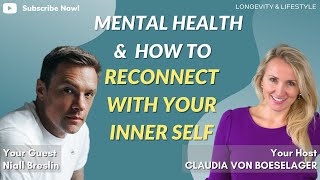
In this episode of the Longevity & Lifestyle podcast, host Claudia von Boeselager interviews Irish mental‑health advocate, musician, and former athlete Niall Breslin. The conversation moves from personal therapeutic work—using mindfulness to sit with darkness, de‑construct trauma, and address childhood belief systems—to broader societal topics. Breslin shares how he helps clients confront uncomfortable experiences with a psychologist‑guided mindfulness approach, emphasizing the need to treat mindfulness as a rigorous psychological intervention. He reflects on his recent purchases (a house and a 1964 Fender Telecaster) as symbols of identity and tools for mindful practice. Advice for young adults centers on working smart, recognizing that happiness is not found in achievement, and cultivating trusted relationships. The discussion then pivots to the future of psychedelic therapy, where Breslin expresses cautious excitement about MDMA, psilocybin, and ketamine, warning against media sensationalism and potential profiteering by big pharma. He critiques the opioid crisis and over‑reliance on pharmaceuticals, advocating for alternative approaches such as holotropic breathing. Breslin promotes his own podcasts ("Where’s My Mind" and "Wake Up Wind Down"), upcoming speaking engagements, and his broader mission through the mental‑health charity A Lust for Life. The episode closes with a philosophical reminder that life is non‑linear, relationships matter more than external validation, and that embracing the curveballs defines us.
Chapters
This episode is brought to you by GlycanAge. As you know, I'm planning to live well for longer, so having a true measure of my biological age is essential. GlycanAge tests are based on over 3 decades of scientific research and give a true indicator of biological age by looking at your immune system and inflammaging level, all from the comfort of your own home with a simple finger prick test. Once you get your results back, their Healthspan doctors guide you on getting on an even healthier path to reducing your biological age through proven personalized lifestyle interventions, all included in the initial price. To find out your biological age and start improving your health, check out glycanage.com. That's glycanage.com and use code Claudia, C-L-A-U-D-I-A, at checkout to get 15% off your order. Hello, ladies and gents. I'm your host, Claudia von Boeselager, and welcome to the Longevity and Lifestyle Podcast, where I invite pioneers and thought leaders in all things longevity and lifestyle to give you the strategies, tools, and practices to live better and reach your highest potential.
Welcome to the Longevity and Lifestyle Podcast, Nile. It's such a pleasure to have you on today.
It's brilliant to be here, finally.
Yes, exactly. We made it. So, Mal, I'd love to start with your passion for mental health and helping others with mental health. Where did that stem from?
It stemmed from an immensely personal place. Since I can remember as a child, I've had struggles with my mind. And when I got to the age of like 13 or 14, they became quite serious. And kind of went through my whole teenage years with chronic kind of insomnia and panic disorders and you name it, a big kind of cocktail of madness. And the thing about it was, I was on the outside, I was the captain of my school football team, playing rugby for my province, an amazing family. I had just come back from Israel where my dad was stationed for 2 years with the UN. And at the time, there was complete peace in the Middle East for like 10 years, which is quite unusual. And the day we landed in Tel Aviv, I mean, the day the Nine Day War started, and we drove up into the middle of it. So I think that had a kind of a flick in me that I felt immensely unsafe for that period of time. And it kind of carried throughout my entire career from professional sport into music. And it got very, very serious in my early 20s. I retired from professional rugby because of depression. I wasn't functioning at this point. I wasn't sleeping, wasn't eating. And didn't really know what was going on, couldn't put language to it, had no one else that was prepared to even come with me on it. I lived in a country that was unbelievably draconian when it came to actually any form of conversation around emotional well-being. And so what did I do? I repressed it and I internalized it, and it got worse because that's what happens, to the point where I was doing a TV show here in Ireland, The Voice, which is a big TV show around the world, but the Irish version. I was the coach on it, and I had a breakdown, and that was the kind of the point. When you hit rock bottom, you have two choices. Like, you literally have two choices: you stay there, you find a way out. So I went on this journey to get out, and it wasn't a journey to help others, it was a journey to get myself through it. And then that became a passion as I learned on the way. And then I went back into academia, and then I started to study much more about the mind and trying to grasp all aspects of culture and how culture influences how we feel about ourselves. And that just kept going. I started an organization, a charity, Lust for Life. We're in nearly every primary school in Ireland now. I started podcasts. I started working at political level with some policymakers, like in the EU and stuff. And I started to realize mental health is not at the table here. And if you're not at the table, you're on the menu. And that's unfortunately how mental health and emotional wellbeing has essentially been handled in our health systems in general. Well, I can really specifically talk about Ireland, but the NHS, where I actually got my first bout of help, is actually quite a good system, believe it or not, compared to what other people are served around the world.
Thank you for sharing your incredible story and for also what you're doing, right? So you're turning your own personal pain and suffering into actually doing good and really being a game changer in the space. I'd love to just drop into one of the aspects of it, especially for people suffering. And honestly, personally, I feel like the biggest pandemic is yet to come around mental health coming out of COVID isolation. I mean, it's just not physically, humanly normal to have, you know, gone through this for several years. And I think many different age groups have tremendously suffered and don't talk about it. So I think it's, you know, even just talking about it is really helpful. But what were some of the strategies and tools when you were at your low point or just coming out of your rock bottom? What were some of the strategies and tools at that point that you found most helpful for you?
I think it's a really— it's a fine line because I started to— I've always exercised, but I started to do it obsessively. And if you do anything obsessively, it's a red flag, you know, even if it's a healthy thing like work or exercise. And I was blindingly exercising. I was just going out for 12-hour cycles, and it was just nonsense, really. So I thought that was the thing that was pulling me through, but what was pulling me through was actually— what got me moving was a very, very intense conversation with my GP where I literally told the two lads in the waiting room behind me to go home because I wasn't going to be in here for 15 minutes. And I spoke to my GP for well over an hour and I fell apart. I mean, I fell apart. I was shaking. I was— at this point, I was struggling heavily with addiction and I just didn't know where to turn and what to do. And he just looked at me and he said, okay, Niall, now I'm accountable to you and you're accountable to me. And those were probably the most important words I'd ever heard in my life because he didn't make me feel small. He was so perfect. And then he said, we're going to have to figure out what to do here now. And I went on a therapeutic journey. I went into therapy with amazing psychologists and they started to unlayer stuff. And that's when I sustainably started to understand why I was the way I was and how I could actually deal with it. But I think we have to be careful because mental health is so subjective, and everybody has different things that may have happened to them. Even if they're small things, they can still have traumatic influence on you. You know, a cold mother, a relationship issue as a child. You know, in my case, where much of my mental health— I think mental health struggles came from was a deeply deeply physically abusive primary school where the teachers beat us up a lot, and Christian brothers and lay teachers. It was pretty horrific. And I speak about this quite publicly. It's not like I'm in any way in a situation where I don't. I've spoke about this school. This school is known for being quite a physically abusive school. And I remember as a child, just trying, like the most basic need of any child, any child. And that's why what we're seeing in the Ukraine and in Yemen and across the world is so terrifying. Is to feel safe. That's it. If you can make a child feel safe, that's port number one. That's your job. I didn't. I never felt safe as a child. So what do you do? You cut yourself off emotionally because it's a survival tool and it's a really effective one. So when I learned that, everything started to change because my therapist was like, that was the right thing to do. I was like, wow, because I used to blame myself for doing that. And he was, no, now we have to fix it because you don't live like that forever. And it was just so matter of fact. It was like, oh my God, where have you been all my life? Yeah. And that's the reality of it. And, you know, and I think everybody's different. I have a different personality than you have, and there's no right or wrong personalities, but we all deal with things differently. And I dealt with it differently, and it gave me my passion in life to figure out how I can help other people. Because here's the thing I do believe about the human condition. I don't believe it's rocket science. I believe we're looking for all the wrong things in all the wrong places. For me, what I realized changed my life was human connection, people, relationships. That's it. It's not money. It's not status. It's not achievement. It's people. And once I learned that, everything in life changed.
I completely agree. And obviously Harvard's longest running study, which I'm sure you're familiar with, that started in 1938 and it's still going to study what's the secret to longevity and happiness in life. And they showed number one was that connection, sense of community, sense of belonging. And I always think back to sort of that piazza square in Sicily or something like that, where there is that respect for elderly people that they're, you know, very connected and seen as, you know, you have the blue zones around the world. And I think with society, obviously, and I'd love to touch on this as well, you know, digital age and, you know, there's generations growing up where you don't sit and have a chat. You know, I'm part Irish, right? So my grandfather, you know, we have friends calling over, they just pop in, you know, they'd come unannounced and sit for hours and have a few cups of teas and chatting away and just that spontaneity of human connection versus just sending a WhatsApp message and not really connecting at a very deep level. And I'd love to hear your thoughts to share with my audience around the effect of sort of society now and digital age, social media.
Yeah, I don't think we need to lecture people on the reality of what's happening. You know, I'm a massive fan of technology. I'm a massive fan of what it's allowed us to do. But I'm also incredibly aware, and I am digitally literate and media literate. I've been training in this area for so long. I know what it's capable of. And it's the opportunity cost of connection. That's what social media is. If I had to weigh it all up, technology has generally made the world probably a better place. I think social media has made the world a worse place. I think every aspect of it. I think it's, there is obviously some pros with it. It's very funny at times. You can get information, but I genuinely, if you did a cost benefit analysis, and you came at this like an economist, he would be going, don't do this. And that's how I look at social media. But it ain't going anywhere. So we need to stop having that kind of idealistic, romantic view of the world that it's all going to disappear and we'll go back to living with no distraction. To me, the fact that social media is now how we connect and it isn't connection. Human connection actually requires to be in a— it does that real emotionally intelligent connection. Where you read the person, where you understand the body language. And that is my fear. It is a deeply distracting place and distraction. There's a war for our attention now. Our attention is the new oil, and we all know what happens when something becomes commodified. And we've commodified people's attention. The CEO of Netflix, Reed Hastings, says that their biggest competitor in the marketplace is sleep. Now, that's terrifying to me. It's a terrifying thing. Elon Musk buying Twitter, it's a terrifying thing to me. No one person should control any of this stuff. And that is how I look at our attention is now people scrambling for it in any way they can get it because it's so much money for them, that data, that attention. So we are running around slightly clueless and not connected because we don't own our own attention, which is why I study and teach and work with people through mindfulness-based interventions. It says, let's take that attention back now and let's decide where you want to place it. Because it's going to be harvested from you for the rest of your life unless you figure out what to do with it. And a lot of people I work with in organizations go, we don't have enough time, work is so busy. And I often talk about how much of that time are you distracted? So there is one thing around productivity in the conversation. But to me, that's what mindfulness does. It's the most important ally to the modern mind. I think we're only scratching the surface with it. I think we've commodified mindfulness too. It's called Mac Mindfulness often, you know, it's mindfulness light. Everybody wants the relaxation, but nobody wants to do the work. And that's my fight. That's how I try to change people's perception on how this works. So digital media, it's here. There's nothing we can say or do that's going to change that. Big tech are pretty much bigger than most GDPs and global economies. If you do regulate it, yeah, I mean, I love it, but by the time you regulate big tech, they'll change. They'll move. They're quicker than any economy, any bureaucracy. So we got to go with it and we got to play the game, but we got to take personal responsibility for our own behavior. That's all we're going to do here. We can preach about social media all we want, or we can actually revert back to ourselves. And I made this point, it's a really long answer, sorry.
No, it's perfect.
The world for years, the toughest thing, especially for Irish people to do, was to look internally. It was terrifying. Nobody wanted to do that. So we kept looking externally. Now the external world is so overwhelming and terrifying that people are going, actually, I'm going to go inside to myself now because it feels like a safer place to go, which is hilarious because 20, 30 years ago, we'd run a mile from having an internal conversation. Now it's like, that world is mental. Let's calm down here and sit with ourselves for a while.
Yeah, so beautiful and really well said. And I'm actually reading the book called Deep Work by Cal Newport. Have you read it?
No, I haven't read it. I haven't read it.
Okay. But if you actually think about it, and I think, you know, I love technology as well and all the benefits, but you know, what's happening in the world between machine learning, AI, and how as human race do we differentiate ourselves? Well, we need, you know, critical reasoning, public speaking. We need many different capabilities than machines can. We don't just need to be memorizing things, you know, by heart, but we need to have that self-awareness and high EQ. So how do you train it? And things like, you know, mindfulness, meditation, and really that, you know, getting to know yourself and deep diving into that, I think are so important. But Also, like, how do you produce good ideas and great work? Well, it's by actually having blocks of 2-3 hour times and getting away from that dopamine hit of like a WhatsApp message or sending emails, and really doing that analysis of like, what is productivity? Like, when do you do your best work? And I guarantee it's not when you're doing an email and then 20 tabs are open, and then you're jumping from one thing to the other as well. Have a read of it. I'd be interested to hear what you think. But let's talk about mindfulness. And how do you define mindfulness? There's obviously a lot of different versions out there. But for my listeners, you know, what would you say is mindfulness? And which type of mindfulness are you the biggest fan of, let's say?
I think there's many definitions of mindfulness. And I think the actual psychological definition is the one people know the most, but it's actually the most boring and irrelevant one. It's paying attention to the present moment non-judgmentally. Now, say that to a 14-year-old or 15-year-old that you're trying to teach, they're going to just go, Please stop. The language around mindfulness is the biggest obstacle to get people into it, I believe, which is what I'm trying to shift a little bit on the podcast. But for me, my definition of mindfulness is step into an ice cold shower, and the minute that water hits your back, tell me, are you thinking about tomorrow or what you did yesterday? No, you literally, you're shocked into the present moment. And that's a bit of a sensationalist way to look at it, but that kind of gets people. They then realize what presence feels like. For me, the mindfulness that I teach, that I work with, is insight mindfulness or insight. And that's what mindfulness is. Mindfulness is— you have transcendental meditation, you have mindfulness meditation, you have mantras, you have concentration meditation. Mindfulness meditation is not about relaxation. So any person who tells you it's all about relaxation, it's just not. It's a side effect of it, maybe. It's a side effect of acceptance. That's what relaxation is. For me, what mindfulness is, is gaining insight into yourself. It's actually Understanding how you communicate, how you react to stress, how all these different things, the emotions that you have, sitting with the emotions, even the really difficult, horrible ones. They're the ones where you learn more about yourself than anything. And the wellness industry has created this nonsense, bright sidey, just be positive all the time. It's such a silly, stupid, and actually dangerous thing to say because the human condition isn't built to be positive all the time. And in fact, if you were, you'd be dead. You know, our survival tools, our brains are security guards, and they're bloody wonderful at their job. So mindfulness for me is about learning about yourself. What type of thinker am I? Am I anxious? Is that because I'm always thinking about what I have to do? Maybe. And you learn this within insight meditation and mindfulness meditation. And a lot of people don't want to go on that journey. They're not too keen on what they're going to find.. But that's the stuff that changes everything. And then if it's just, listen, I just need to relax at the end of the day, and you just want to focus on your breath and do some concentration meditation, go for it. It's really useful. It's really helpful. But if you want to learn a lot about yourself, mindfulness meditation, and that's why it's so deep and layered, and it's been around 2,500 years, so there must be something to it. It's never been more relevant or important than it is now though.
There's different entranceways, right? And so some prefer maybe starting with breath. And also I encourage starting anywhere, because even just taking that first step, you will already start seeing some shifts and changes. But to make the first step into what you would consider the most effective way of the mindfulness and the inner work, what does that journey look like? Like, what do you like to teach there?
So the first thing I teach in mindfulness is the principles of practice. So without principles, without anything, so there's no rules to mindfulness, but there's principles, there's attitudes that you should bring, that really do help you build the practice. So you have to remember one thing about mindfulness meditation, it's a skill. It's a skill, and you don't learn or develop skills without some principles, without some kind of North Star or guidance, and more importantly, practice. So the principles of practice of mindfulness, the first one is non-judgment. When you sit to meditate, I want you to bring these principles to it. Non-judgment. So your entire world is built on judgment. Everything you do, everything you say, everything you basically have, it's all judged. It is just a cauldron of judgment, this world. When you go to meditate, you're in a space of non-judgment. If it's okay, I'd like you not to say these things: I'm terrible at this. I knew I'd be terrible at this. I hate this. These are all judgments. So every time you feel yourself doing that in meditation, let it go. Let it go. We've enough of that. Nobody's watching you here. There's no Olympic Games for meditation. This is your space. The second principle is non-striving. Problem with meditation is people who are anxious will sit down and go, I don't wanna be anxious when I finish this. They set a goal at the end of their meditation, or I want to be in a higher state of consciousness, or I want to solve all my problems. Don't set the goal because it does two things. It limits where it could go and it disappoints you if you don't go there. So non-striving is a principle. The next one is curiosity. Start being curious to how you feel, especially the difficult stuff. So if you feel anxious, don't go, I feel anxious, I'm opening my eyes and I'm moving on. Actually go, right, where do I feel this? How does it feel? Can I sit with it or is it a bit too intense? Is it too intense today? Can I step back? But come up to it, don't push it away. So be curious to every sensation you have in the body. The next one is chuck it in the effort bucket. That's my most important one. So everyone needs an effort bucket in their life. And what happens is when you sit to meditate, I'll tell you 100 things that will happen. First thing though, is your mind will get busier. It's the first thing that's gonna happen. And your mind is only doing its job, guys. So what we're trying to do is not to stop that. So here's an example. You forget to ring Mary, you close your eyes. I forgot to ring Mary. Oh God, Mary's going to hate me. Mary already doesn't like me. So will I get a pizza later? I'm eating so much crap. How many calories? I'm going to the gym. Now you're down a rabbit hole and you're anxious. You've created an emotional charge. You're anxious. The question is, in principles of mindfulness, the minute you realize you forgot to ring Mary, go up, fair enough, tip your hat to it and come back to the breath. And that is mindfulness. It's actually being aware that the mind is drifting and bringing it back. If you do that 100 times, you do it 100 times. And the final one is compassion. It's a word that's thrown around a lot, but no one knows what it means. Compassion is not this fluffy stuff. It's not, you know, going around doing cartwheels up the meadow. It's not that. Compassion is recognizing that humans are flawed Humans have cracks. We're silly, we're stupid, we're beautiful, we're all the above. Make some space for it all. Don't expect so much out of yourself all the bloody time, and have a little bit of care of yourself. That's it. So you can go to a 5-minute meditation. I'm not going to judge myself if this doesn't go. I'm not going to set a goal for this. I'm going to be curious to how I feel, whatever that is. When my mind starts drifting, I'm just going to recognize it's drifted and I'll come back to the breath. And finally, at least I'm doing something here for myself. I'm taking this space. There are your principles of practice. That's your starting point. There are a myriad of different types of ways to meditate. You can use the body, you can use visualization, you can use the breath. There is always a way in with the right teacher.
I love that summary of those key points as well, and so powerful. I mean, I've been practicing meditation for years. I've done many different types also with TM. And I also think personally for me, and I also talked to some other people who are almost just trying to just really just focus on one type of meditation and just do that and almost beating themselves up with it. And I kind of feel like it misses the point as well. I mean, do you do the same meditation or mindfulness practice every day or do you mix things up as well?
Or what do you— See, I don't structure it. I think that's the most important thing. Actually, one of the most important types of mindfulness meditation is informal. So the informal is the moments when you just stop. You know, you're going for a walk, you don't bring your phone, you just feel your feet on the floor, you look around you, you take in the world. You know, a conversation with a loved one, you're looking them in the eye, you're talking to them. Those informal practices, your first coffee, tasting it, you know, actually, even for 10, 20 seconds. When you start to build far more informal practices, the formal stuff feels a little bit less important, but also easier to access. So I do an awful lot of visualization meditations. I will visualize, especially nature, I'm a nature baby. The mountain meditations, the nature meditations, the lake meditations. I love it. I love water. I love all those things. So I use them a lot to calm myself down. The body scan is obviously the kind of principal, most key practice. The sitting meditation and body scan are the two most important. When I say important, the two kind of core practices. The body scan is to build that connection between the body and the mind. In a world where we, you know, as you said, I have a fitness watch as well, a watch that tells us how fit we are, how much sleep we're getting. We're disconnecting from our internal experiences. Learn about it. And you learn about that stuff from body scans. And then my favorite form of meditation is metta meditation, or loving kindness, which is an energy that you create and you transcend and you bring into other people. I think the world is very divided. I think the media divide it. I think politics divides it. Because it's good. It's good to divide society because For marketeers, for politicians, they know exactly where to aim and who to isolate. That's why Trump got into power. That's why at the moment, whatever your politics are at the moment, whether you're a Tory or whether you're Labour, we're watching absolute lies. And that's not opinion, that's just factual reality. Are we accepting that anymore? I wake up every morning, the first thing I think of is genuinely, I'm lucky to be alive. I absolutely love this world.
I love that your morning ones as well. I mean, This year I set myself mindset rewiring as my sort of meta theme for the year and little hacks to do as well, because, you know, and I think a lot of people will be able to relate, but it's so easy to go down that rabbit hole, right? So, you know, you start with a little bit and then, you know, other things come up and then before you know it, you're actually in that rabbit hole of like more negative thought than positive thought. And it's not just about the positive thought, but just checking that and that self-awareness as well. And so one of the things I've set myself to do when I wake up, even before I open my eyes, is to find 5 things that I get to do that day. I get to be alive today. I get to sleep in a bed today. I get to get up today. I get to go to work today. You know, I get to take care of my kids. And so it's just these little things and little hacks that you can do. And I think for some people that are suffering with mental health things, you know, one is that, A, self-awareness and knowing that it is okay. And, you know, I'm pretty sure there's probably every human being has gone through some sort of mental anguish and mental health issues. And The more that they can find outlets or, you know, information like your podcasts as well that cover tips and strategies and tools that people can do to even just try to make a change, because it's like a vicious circle, right? If you don't address it, it just gets worse and worse. You know, suppressing emotions is never good and it might manifest in increased mental health issues, but it's also physical issues. You know, where do you think cancer and things like that also come from and all these other diseases that are out there? And then I think that, you know, there's the one thing is recuperating mental health, but actually, you know, let's talk about the flip side. Like if you wanna optimize yourself, right? What are tools and strategies you've seen, you know, with like athletics, like peak athletes or, you know, even in business that are quite powerful and impactful to optimize performance?
And optimization of performance is probably the area I'm most interested in. Like, you know, I've spent all my life in different fields, different things. I am passionate about the full spectrum of mental health. How can we maintain and sustain and build? The same way the mind can be weakened, it absolutely can be strengthened. That's the thing that's so important. Anyone listening to this, no matter where you are in that spectrum, you can and you will and you should, but it does take a little bit of personal accountability. You have to take it on. Genuinely, I mean this. This might sound like a copper as a mindfulness therapist, but one of the most important things for any elite performance or optimization is learning how to rest. It is so crucial. It is so crucial to learn how to rest. I'm currently working on a book called How to Sit on Your Arse and Do Nothing and Not Feel Guilty About It. I actually genuinely think it's hilarious that we've created a world that that has become the most difficult thing for us to do. So, for example, as elite athletes, it takes time to learn that rest and recovery is the most important day of the week. Every aspect of it. It allows the body first to recover, to recuperate, to build the cells again to build all those things that you've destroyed for 6 days. It allows you to reduce those cortisol levels that are rampant around your body when you're putting your body through such intense periods, whether that's mental periods in work, whatever job you have, or it's physical and mental in elite performance like sport. If you don't learn to find and carve out rest, it is not sustainable. Your mind has a certain bandwidth. It is very effective when it's in that bandwidth, and it's absolutely pointless and useless when it's not in that bandwidth. Creative arts. My whole job for my whole life is I've been a musician and producer. I've done it all my life. I'm a writer. I have to take one full day off a week. If, for example, also I don't have— I'm struggling with a certain thing, I get into the shower. That's where I solve all my problems. Cold shower? No, just a nice warm shower. And I sit there and I think, and I just think, and I think, and I think, and I solve the problem. Because you go into your default brain network. But when you're working all the time, when you're constantly creating and you're constantly pushing, you're not there. You're in your limbic system. You're in the amygdala hijack. Your brain is trying to get you through the day and trying to get you to— anyone who's elite at anything generally doesn't have to think too much about what they do. They're so skilled at it. They don't think it takes a toll on their brain, but it does, and their body. So that is the one thing I will say. And not everyone will want to hear that. And that includes holidays. Holidays have never become more crucially important. They're the two most important things for performance, sleep and rest. And if you give your mind any kind of love, God, it will give you so much back. It really will. It'll prepare you, you know, and I try and explain this to people. Sit on your arse, take your time, take your boundaries because it's your job to rest.
So well said. What are some things you recommend to do on those days off? You know, I think some people, especially if they're the sort of extreme A-type and being busy is a thing. What are some of the most effective strategies? I know there's like walking in nature, connecting with people, and I really like the idea of that digital detox, right? So no screen day. What are some other tools and strategies you think are really effective?
I do think that, and I totally appreciate that some people really struggle with the nothingness of nothing. They really go like, what do you mean just sit here? I'm like, I can do that. I mean, I can go on holiday and sit. Like, the last time I had time off, I did a 3-day silent retreat. People are like, why would you do that? It's disgusting. It's so punishing them. But to me, it's heaven because I'm overstimulated all the time and I need not to be stimulated. So the one thing I would say about your rest day, you don't have to do nothing, but try not to stimulate the mind too much. Don't push it too much. And I think one of the best ways to do that is every time you have a day off, pick the person you like most to talk to in life and try and meet them. And try and just meet them with no agenda, with no transactional kind of thing where I need to get something out of you. Just have the crack with them. And the most important vitamin on earth, I'm telling you this, and I had to learn the hard way, is vitamin P. So playfulness, mischievousness, be bold, do anything once it's legal, do something. I think we've created a modern world that's so intense and everybody is on this stance where I have to be moral. No, just take a day and be bold, do something silly, do something for no reason. You know, and I think that is really important to me, a bit of mess and a bit of playfulness. We call it boldness in Ireland. Or crack or whatever it is. And that doesn't mean you go to the pub and get hammered. It's just finding that friend that actually you fall off a chair and you can't walk because they make you laugh so hard. That type of stuff is rest. Anything that's not asking stuff from your mind and your body, whatever that is. And if that is a walk in nature, I love rowing. I've started rowing. I live in one of the most beautiful places in Ireland. I live by the sea. I'm a terrible rower. I'm not trying to qualify for anything. I go out, I look silly, I look like a swan who's trying to get off the water, but I love it. I'm not trying to be good at it. So whatever you do on your rest day, you don't need to be good at it. And that's kind of what I'm trying to get at here.
I really like that analogy as well. And, you know, I kind of suffer from that A-type thing, like, you know, all I need to optimize it, like, how do I do it better as well? And it is a real, like, retraining to just be like, I'm going to do something that I'm not good at, or like, I'm going to do something what I would normally consider unproductive. But I completely agree that the mental health benefit and also the intuition, the creativity becomes so much stronger. And you were saying before, when you have an issue that you're trying to deal with, and you just go and have a shower, you just change locations. I mean, I think so many people will know, like, if you're trying to figure something out, and you'll be doing cycling or something completely different, and all of a sudden, like, the perfect solution will pop into your head. And it's not underestimating that. And something I've also been working on since last year is, you know, with mindfulness, but also embodiment, and how smart the body is. Like, we've become so disconnected with actually wisdom that our body is telling us things. And you were talking about, you know, suppressing emotions that are uncomfortable, but they're there because the body is actually trying to tell you something. And I'd love you to talk about also what you're doing at schools. But I, you know, would love to see on every school in the world that children are, because they are connected with their bodies and we teach them not to be. I would love to see that that connection would just be maintained and that wisdom and that innate sort of inner reflection that would come out of something like that. But can you talk a bit more about the work that you're doing to change the world, I'd say, around this?
I think the mind-body connection, one of the things I always say to people is never, ever, ever use the mind to calm down the mind. If the mind is spiraling, the mind is gone. It is in a world of its own. As I said, it's not trying to hurt you, but it just starts to go on these wild adventures. When I start to get really anxious or starts to lose rein a little bit, I actually ask my body to calm my mind down. So I locate firstly, where in my body do I feel this? I'm feeling it in my throat. Okay, I can feel really anxious here. My breath's heavy. Can I put my hand there? Can I soften this? Can I breathe into it? Can I recognize it's here? Can I narrow my focus down just to my breath? Yes. And now I'm using my body to actually slow everything down. And even the neuroscience of that, like the idea that you're getting the brain out of the limbic system. You're getting it out of that fight or flight reaction, and you're getting into that neocortex where you're kind of going, okay, this is okay. I'm safe. I'm all right. And you're giving your space-time to rationalize. It's your body who does that to you. So I think that's a really important thing to say to someone. Never disconnect from that because that body is talking all day, every day. It is your closest ally. It is everything. And a lot of people have difficult relationships with the body as well. And this is something we had to learn in our studies. It's like, Everybody has complex relationships. So when you speak about the body, you have to be very open about giving people allowance to not do that, if that's something that's uncomfortable for them. I knew very quickly, for example, I didn't want to be a problem admiration society. I didn't want to point at all the problems that exist in this country and across the world. And I've worked all over the world. But my passion is in Ireland, where I live and where I'm from. I look at our health system, our health system isn't for fixing. You can't fix it. It's too broken. It's too fractured. It is lacking accountability. It is all over the shop. It is purely a medical model in terms of mental health. It clinicalizes and pathologicalizes trauma all the time in a country that has so much trauma because they know that they can't really— we don't have the health system to go, actually, guys, we're gonna have to work through this in therapy, and we're gonna have to provide that therapy, and we're gonna have to provide that aftercare to therapy., and we're going to have to work with the medical models and the psychiatrists who are brilliant as well. I mean, you take a whole holistic approach to this. We don't have a health system to that. 6% of our entire health budget is spent on mental health. So it isn't, we ain't solving it. We're not solving it. So that isn't defeatist in any way. What we need to do is disband our actual health service and start again. That's the reality. And I think that's coming. I genuinely think that's coming in Ireland. What we do have in Ireland is one of the best education systems in the world. One of the most admired education systems in the world, and we have an incredibly educated workforce. That is something we have. So I went, right, let's use that. Let's not try to fix this with the health system. So I wanted from day one to build education systems of how can we help young kids early figure out what's going on in their lives, how they can navigate that, and not being naive that all kids have different opportunities and have different issues. We've worked at every level of school. We've worked in the most disadvantaged areas of Ireland. We've recognized that as a key part of this because equality is the most important form of therapy. So we have set up these programs, these emotional intelligence, mental health, and mindfulness programs for the schools, primary schools, essentially. I think we have about 2,000 primary schools in Ireland and we're in 1,000 of them now. We'll be in every primary school by the end of next year. It's a Netflix model for schools. So it's actually a scalable, sustainable model. It's a tech model. It's a safe model. It's a research model. We did it with UCD and the University of Sussex, the entire spectrum of it. And I remember my first question to all the stakeholders when I said, I want to get this into schools. I said, who's the main stakeholder here? And of course everybody puts their hands up and I went, none of ye. It's the kids. Until we start looking at it like that, it's the kids that are the stakeholders. What do they need? What do they need and how can we help them and how can we support them? And how can we support you too? Like, don't get me wrong, the two most important people in our society are health professionals and our teachers. I truly believe that with every cell in my body. So that's why we built the programs with A Lust for Life. It wasn't easy, it still isn't easy. And the other thing we built was Activism Academies. We want to teach young people that activism isn't shouting at people and canceling them. That's not activism, that is just noise, and nobody's hearing that anymore. We're past that. Activism is intelligence, it's politics, it's economics, it is psychology, it's all the above. And the most important type of democracy in Ireland and in UK and across the world is dinner table democracy. The ability for the kids to turn to their mum and dad and go, I care about this because— that changes the world. Because parents, the quickest person that convinces parents, it's their kids. And that's what we try to do with Lost for Life.
It's so incredible. And I love that you're bringing it to kids into school because I think if they connect with that from a young age, it goes through and just the ripple effects as well, and hopefully they will help their parents. Can you talk a little bit more granularly, especially for people in countries maybe that don't have such advanced healthcare systems? What are some of the tools that these children are learning, and what are some of the impacts that you've seen from them?
Well, I mean, the key things the kids are learning is the language to describe how they actually feel, which is a huge thing to say. Since I was a kid, I was told not to be scared, not to be sad, not to be anxious. So we repress, repress, we push it, push, push it, and we don't express it. So the first thing we teach them is to actually put a name on all this. Also, we teach them that they have no right to be happy all the time, that these fluctuations and how we feel are very, very normal and actually very important. And we give them real information around that. These are all programs. It's not me talking on some video, it's kids talking to kids. And then we have mindfulness programs, and then we've kind of emotional intelligence, psychology programs, how to read people, how to communicate without upsetting, how to deal with conflicts. Stuff like that. How to recognize if you're not okay, what do you do? What are the steps that you take? And actually, we normalize all of it. So that's what we do essentially. And what we're really seeing from kids now is their capacity to communicate this. They communicate how they're feeling, they express how they're feeling, they make sense of it. They also get supported, they get validated that they feel a certain way, and then they're given tools how to deal with that. The way it's complex is that every kid comes from a different household and some households have serious problems. We know this. So there's only so much we can do in a school setting, which then brings the real importance to our social settings, our social systems. How do we care for those kids if they're in really destructive homes? How do we get them into safer places? That's another problem here. There's no joined up thinking between health systems, education systems, and social systems. They don't talk to each other, and if they do, it's very broken down. And as I said, even once again, I look at the NHS system and I know people, it has its problems, but it's an incredible system that UK needs to be very proud of. It's a system that is functioning far better than what we have. So yeah, that's the complexity of all this, and that's what you face when you sit to try and solve these challenges. You cannot apply all the same principles to every situation. But you also can't put every fire out at the same time. So the health system is my biggest fear in Ireland. There's kids who need serious help and have complex needs, and there's kids from very difficult backgrounds who have parents with very complex needs, and we're losing them and we're not getting them and we're not helping them and we're not doing what we should do as a society. Now, my background, my academic background is economics. I know how countries function. I studied economics for 6 years. I'm not an idealistic romantic, kind of as everyone loves to call me, champagne socialist, because that's what politicians call people who challenge their work. They need to put a label on you. If you go, well, why do you have to call me a socialist? Because I don't like people dying. Why is that socialism? Can we not look at how people can be treated better and not label that? So the reason I say that is I kind of feel politically at the moment that politics is about the preservation of power. It's become less and less about people. And I genuinely believe, and I don't know what it looks like, there has to be some form of political revolution soon. I really believe that. I hope it's a very positive, proactive one. Politics had a chance in this pandemic to stand up and do something special, and they didn't. They failed. The pandemic was out of their control, I get that, but they fought with each other. They showed the very worst of capitalism at a time when they could have showed the very best of capitalism, because capitalism can work. And that's what broke my heart. And my saying on economics is, stop judging society off GDP. It is essentially an immensely blunt instrument to judge a society. Judge a society on how it treats its most vulnerable. That's what you judge a society on. And ask yourself, are we doing a good enough job? The UK, in America, in Ireland? I don't know if we are. Can we do better? I definitely know we can. Is the current political system going to deliver it?
I don't think so. Yeah, very powerful words and so logical. I mean, I think it's Bhutan, I believe, that has the happiness index, right? Yeah. They measure the level of happiness that people have as well. And I really like also about, you know, how does it treat its vulnerable? There's some societies that are really, you know, they're curtailed off and they're excluded and people just don't want to see it versus other ones where it's integrative. I think Scandinavian has a very strong model in terms of—
They always have though. It's always everyone kind of looks like the Scandinavians and people go, oh, they pay very high taxes. I said, well, actually, so do we. That's wearing thin very, very quickly. And you look at America, if you want to look at how health systems should not function, look at America. It's heartbreaking. It's heartbreaking to watch it. It's, you know, a lot of these issues in America are driven from people who can't get access. So I suppose to finish on health systems, I think it's important to point out that I've always believed and I will always believe that health is a human right. It's a human right that everybody who requires help can get it. Housing is a human right. I do believe that. I know people might say, well, you can't just give people's houses, but why? There's always going to be people who take advantage of systems like that, of course, but the vast majority of people who are in abject poverty, who can't get access to these things, what do you expect them to do? And a lot of them are in abject poverty, not because politics likes to label them as lazy or they're not working. A lot of them are in abject poverty because they never stood a chance from day one because inequality is set up to stop social mobility. That's not socialism, that's just fact. People don't like talking about this, but I can't talk about mental health if I don't talk about the things that drive bad mental health. But the stuff that drives good mental health, I believe is a society that feels it's equal, that feels that people are taken care of, that collectively feels it and individually feels it. I think that's important to Ireland. And the one thing Ireland has always been, I will always, always fight this, we have lots of problems, but the one thing as a collective society we are, we really do believe in fairness as people. We're very fair people. We're the first to stand up to it. We were the first to say, get the Ukrainian refugees over here now. Don't care. We don't care what's gonna— Get them in. Let's worry about the rest of the stuff. Get them in. This is heartbreaking. Whereas, you know, Boris was— and Priti Patel was sending them to Rwanda.
I really like that with the fairness as well. And I think that that comes back very nicely with connection and realizing, like, if you feel like someone else in society with you, you're connected somehow, right? You're another human being. It's not just them and us. Basically, it's that awareness of other people and your impact on other people as well, and that not just for you, focusing on yourself and your gain, but like, what can you do to give back as well? And I think that that's a really big thing. And obviously you're an example with all the initiatives that you're working on and doing as well. What would be for you an ideal world in terms of a society, a modern society, right? So we're not talking about 2050 or something. What would be an ideal world for you or society in terms of structure and model? Where mental health is really at the forefront as well?
It's a hard one because I mean, these are just opinions. I look at society and I always believe that capitalism as a construct could work. Conscious capitalism. I think the thing that has become most testing for the modern world is misinformation and the capacity to skew agendas purely by taking stuff out of context. I think that's going to become our biggest challenge genuinely, because if we try to fix anything, You'll always have some people who don't want that to happen. What I believe is something will have to change. There has to be a paradigm shift in how we're governed. Anyone listening to this who disagrees, just look at what's happened. Look at the utter car crash that we're witnessing. I'll give you an example. I was asked to go and speak to the EU Parliament and I was brought up in front of all of them. And the whole idea was how do we better communicate politics to young people? It went through the whole room and they're all asking, how do we? And I just looked at them all and said, why would they listen to you? Why would they listen to you? You've got to earn their attention and you're so far from doing that. So the world I want to live in is a world driven by youth, the youth generation, youth movements, because they now know what matters. They've copped on and they're driving that. Now, don't get me wrong, they have a lot to learn and we need an intergenerational approach. They have an energy that is very powerful. A lot of them are driven on energy, but maybe almost too idealistic. There's a few functional things. So I think an intergenerational approach to our collective problems as a society is the only way we're going to solve this. But the way I look at young people is they're leading me now and I need to facilitate them and support them in any way I can. That's how I look at the world. Our biggest challenge is climate change. If we leave it to the rich white men, it's never changing. We know that. And If you want to talk about— people talk about immigration and stuff. The most dangerous people on Earth are rich white men. There's no way of twisting that. I think we need to find a way to take the power out of their control. I don't mean that in a real mad revolution. I mean genuinely, we need to put the control into people who care about the preservation of people, not of power. As I said, I'm aware I might sound like a romantic arsehole here, but I don't care. We have to aim at something because it's not working as this. And it just breaks my heart that this is what we're now accepting as a society. And it's a joke to people. It's a joke to people that what we all went through in the pandemic where we lost loved ones, including myself, it's not a joke. So that's how I look at the world. I think it needs now a paradigm shift in how we're governed. I think young people need to be given the torch. More young people need to be in politics. And as I said in the EU Parliament that day, they're not going to listen to you because you're a mess. Give me one political role model in this room that you can talk to me with. Give me one role model here, somebody that we can all look at. But in terms of health, you said at the start that the pandemic, the wave kind of feels like it's gone out now and we're seeing the destruction that it's caused. Most of how we're all feeling right now is a really healthy human response. It's a very normal response to feel unwell and anxious and rinsed and tired and exhausted. That's a very healthy, good response that you feel that way, because what we've gone through, it's tough. So make some space from the fact there's nothing wrong with you. You're human, you're not broken. And I think that is how I look at the world. And before you ask, would I ever get into politics? I would rather eat my own shoes, because I've seen very good people, very, very, very good people go into politics. And have the life sucked out of them.
Yeah, I tried the model United Nations once upon a time, and already there I was like, uh, no, I don't have the patience and the diplomacy. I think it ends for me at a certain point. So I understand as well. But I think, as you said also, that there is a lot of power. And I think that, you know, with democratization of information, with digital age, right, people do have access to different information. There's obviously a lot of misinformation, but it does open up a power and a channel to get messages out that doesn't necessarily need to just come from a politician or a way of thinking as well. And to build sort of a following and a tribe around that and changemakers and to really encourage people to, you know, have an opinion. And even if their opinion is different, to voice that. I think, you know, the more different opinions, the better, because that collective thoughts will get you to a different outcome than just accepting the status quo, even though you're not happy with it. So the more people are proactively trying to make an impact and make a change, the better. So 100% in for that as well. And obviously, through mindfulness and that self-awareness, I think you get another quality of thought as well. So not driven from material or, you know, in the moment thing. And I think that's a problem with the political model, you know, particularly around the US, where it's all about election campaigns, you know, when is the next elections coming up? And so how are you going to have that long view strategic thinker that's making that 15, 20-year, 50-year plan? In Western societies, you rarely have that as well. And I think that's part of the broken system.
Any health system, any health strategy is that— it's that long. That's what it's going to take. None of these are quick fixes. I know that. But unfortunately, when you have one guy in power in America, or one woman in power, and then in the next 4 years another party goes into power with completely different views, it's a yo-yo. It's just— there's no strategy. And, you know, I think in America I spoke in America last two weeks ago, and I was told before I got up to speak, whatever you do, do not speak about American politics. Do not even go there. And my opening line of the entire talk was like, for the last 10 years, Ireland has felt like a pretty nice piece of beef between two shit pieces of bread. The whole room fell apart laughing. When Ireland feels like the big boy in the room politically, there's a serious problem. And I want to love politics. I want to believe in my politicians. I don't want to give out about them. I want to be really proud of them. I want to be behind them. I want to give them everything. But I haven't met any of them. None of them are leading. Leadership has just dissipated. There has been leadership in the pandemic, of course, but it's generally dissipated. I want to believe in politics more than anything in the bloody world. 'Cause it's not our job to fix all this stuff. You know, these people are paid to solve problems, and now all they're doing is solving problems that they create themselves.
Now, I'd love to ask you some rapid-fire questions before we tie up. Do you have any particular morning routine to set yourself up for success each day?
Same as you. I have the day framer, 5 things I'm thankful for in my life. I immediately shift the energy to what I have and what I don't have. That's how I wake up. And then about 14 coffees. 14 coffees, really? Yeah, depending on the day.
Yeah. Have you ever tried tea?
Green tea? I do drink green tea, but no, I don't drink 14, but I drink quite a lot of coffee. It's my only vice I have left now. So I kind of feel that I'm going to enjoy. I've got a ridiculous tolerance for high levels of caffeine. Okay.
So I had a brilliant neuroscientist guest on and she said for every coffee you have, if you can at least pair it with a green juice, so an organic green smoothie, then at least you're doing your body a favor.
Oh my God, I'm just gonna be sitting on the toilet for like weeing every 5 seconds.
Your body will thank you though.
I think I'll just cut down on the coffee rather than drink celery juice.
Well, you can mix it with some spinach and kale and things like that as well. But it is a game changer if you try it even for 5 days, I would challenge you. Organic green juice, just see how you feel. You will notice more mental awareness as well. I did take on the challenge and did notice a difference. Thinking of the word success when you're also mentioning politicians, but this can be from all times. So thinking of the word successful, who's the first person that comes to mind and why?
Oh, real success. First person come to mind, maybe not whatever, Anthony Hopkins would be the person I have a huge draw and love for because it feels like he has seen it. He's lived this and he's now out the other side. I think he's one of the most wise, beautiful human beings on earth and also been obviously one of the greatest actors of all time. But I think he's lived his life. I don't think he's left anything on the field. And he is now full of wisdom and just mad as a box of frogs.
And I absolutely love it. I love that. In the last 5 years, what new belief or behavior or habit has most improved your life?
I think the behavior is recognizing that I get so much from people. I'm quite reclusive. That's really important. I have to work to be social. So I started to recognize that I was getting these outrageous levels of uplift by just speaking to postmen, to people in coffee shops. I just found everybody far more interesting in life. I became really curious to other people. And their stories, and I was like a child again. I was learning new things. That curiosity, that childlike curiosity was just, you know, if you actually give the time to ask a few people, random people's stories, you'd be surprised what you're going to hear. So I think human connection has been— it's something I have had to work on and I've had to be really hyper-aware of. And it's— I'm glad I have been because I genuinely and generally love people. Not all people, of course, there's some absolute pains in the hole out there, but there's generally most people are lovely.
I love that as well. And I've really, through sort of my journey, picked up as well, like, you can learn the most interesting things from anyone in any walk of life. And it's having that sort of childlike curiosity and taking the time. And again, it comes down to human connection. When you know that you can learn something from everybody, it just takes anyone off their high horse to think that they might be above and beyond that. So no, I love that. What's your— or has there been a favorite quote or piece of advice that was the biggest game changer for you?
One of my favorite quotes is from William Butler Yeats, who I've loved ever since I started studying him when I was a kid. And he said, the world is full of magical things patiently waiting for your senses to grow sharper. And that's mindfulness. There's your definition. The world is full of incredible things. I mean, the simplest, silly, beautiful things, but we're missing it all because we think there's something bigger and we're so busy chasing a life that we ultimately miss living what's in front of us. And I'm gonna say this to anybody, whether they believe it or not, all the good stuff's happening right now. Don't miss it. And I think that's what William Butler Yeats was saying far more poetically than I was. The world is full of magical things patiently waiting for your senses to grow sharper. Than it is in social media.
I really, really like that. I'm going to write that down as a reminder as well. What would you say are some of the most valuable insights that your clients and people you work with that do training with you have found? What do they find most valuable?
I think one of the lines that people really resonate with is sometimes you see more in the dark. That's when you kind of learn a lot about yourself, when you do hit that wall. It's a very scary and difficult place sometimes, but that's when everything is open. And I think a lot of people have learned that work with me not to fear that place anymore, not to fear the things they may have feared before, and actually disempower the things that have disempowered them. And that's what I teach, you know, especially in kind of one-on-one stuff where you have the beauty of knowing the full spectrum of their life. And you're working maybe with another therapist or psychologist, so you know they're in good hands. And you start to bring them up to the stuff that they're really uncomfortable with, really uncomfortable with. And that might be— depending, it's a judgment call— it might be quite a traumatic thing, or it might be just a guy in work that they really struggle with, a guy that just gaslights them, makes them feel worthless. Sitting with that, seeing what it feels like, and deconstructing that. And it's a beautiful thing to watch, because once is removed, it's like something's lifted off them. They see the world differently. And if you carry all that anger and fear and pain all the time, it is too heavy. So my job as the mindfulness kind of in that area, I'm working with psychologists, is to take that off you and do it with skill. And I think that's the most important thing. You have to be very wary. Mindfulness is a psychological intervention. Whatever way you look at it, you have to be careful. You have to understand what you're doing.. And it can change people's lives. So that's the big thing, teaching people how to sit with the darkness.
I really love that as well. And also knowing that so many of these fears come from childhood belief systems. So we run by default on a belief that we formed between 0 and 6 years old. And unless you have that awareness and that mindfulness and knowing that it is a thought and you have a choice to choose to think that way or to see it in a different way as well. And I think it's so freeing as humans, like we just, this empowerment. To know that you can control, you know, your thoughts and your mental health and your health and, and your life and what you see. So yeah, it's such an exciting space. What's been your most exciting purchase in the last 6 months?
Oh, a house. Okay, I bought my first home, which was absolutely terrifying, absolutely terrifying. And it wasn't actually that exciting because it was so nerve-wracking going through the whole process. And house prices in Ireland are You swear to God, you swear it's Beverly Hills, lads. It's Ireland, for God's sake. Get over yourselves. House prices here, it's actually Ireland's more expensive than London now, which is saying a lot. But I think the most exciting thing I bought, I bought a vintage guitar. And I know it sounds ridiculous to people, go, who cares? But it is my life. I bought a vintage guitar. It was very expensive, and it was from 1964. And I just think about how many people have played that, what has been played in that, where that guitar has traveled to. It's, yeah, it's a very beautiful purchase. And the beautiful thing about vintage guitars is they continue to go up in price.
So yeah, that's why investment— why did you select that particular one?
Does it have something special? It does, yeah. Everyone has their own kind of, like, most guitar players generally have the kind of guitar that they're most close to. Mine's a Fender Telecaster, so I've always been a huge fan of Fender Telecasters and It was a mad thing to buy. And then, you know, I actually probably tried to lump it into my mortgage. But, uh, yeah, it's just a beautiful thing. You could sit with it. You talk about mindfulness. I sit behind the guitar and I just play songs I may have played when I was 12, you know. And even the other day, I found myself playing the whole— I didn't even know I was doing it. When I was younger, I learned the whole, every song on What's the Story, Morning Glory by Oasis. And I was just sitting there playing them. And I remembered every single note.
Yeah, it's in there. It's in— I mean, this is why don't underestimate the minds, right? I mean, so much more that we don't even realize that we know. The mind, yeah. What advice would you give to a smart, driven college student or 18-year-old about to enter sort of the real world, if you will?
And what advice should they ignore? The advice they should ignore is people telling them there's 25 hours in the day. Or there's that nonsense, everybody has the same 24 hours in the day. That nonsense, it's just a nonsense argument that's been peddled out by so many people. The biggest advice I will say is work hard, but work smart. And working smart is recognizing that if you just work hard all the time, what's the point? Genuinely, what's the point? Ask yourself before you start. The second thing I will say, that's probably the most important thing I'm going to say is I'm going to hazard a guess, I might be wrong. But your happiness does not lie in achievement. It doesn't. Your brain psychologically is set up in a way that as soon as you achieve that thing, you're just going to pick something else to go at. You're just going to move on to the next thing, and you're just going to be seeking happiness in constant things that don't have sustainable happiness. So that's the one thing I would say. Find somebody in your life that you trust, that you connect with, that you love. And don't go on the journey on your own.
I love that. Thinking of the future of mental health, and there's also things around psychedelics.
I don't know how much you've looked into that. Oh, it's my, it's my area.
I love it. Yeah. What do you see? I mean, I've had a bunch of guests also on the podcast as well who are experts and have some— there's, I don't know if you've come across Roots to Thrive, Dr. Pamela Crisco and her team. Which is absolutely brilliant. I mean, really, they do clinical trials as well. So they're seeing the same results that some people have had in over 10 years of talk therapy. So 10 years of your life versus 3 months of their program that they do. And it's just phenomenal. What is your view on the future of psychedelic therapy for mental health?
On one hand, I'm immensely excited by this. I also had Dr. Lucy Johnston on my podcast who got like one of the most, I suppose, long-term and deep and important researches ever done in psychology called The Power Trip, meaning She utterly dismisses the psychiatric model, and her research backs it up. And she is quite wary of the psychedelic movement in a way— is this just going to become another thing? I'm somewhere in between, you know. I've been in situations where people in my life have needed something to get them to a space where they can actually rationalize. So I understand the medical model. I was on many drugs for a long time. But psychedelics, here's the thing, if you choose to ignore it, you're ignoring science. You can't have a pick-and-mix approach to science. This is potentially a breakthrough in an area of health that hasn't had a breakthrough in quite some time. So I interviewed Rick Doblin, who's MAPS in America, and he, he has done the MDMA research. And my fear here is two things. It gets sensationalized in the media. And we run the risk of this incredible breakthrough science becoming sensationalist and people thinking that it's just great to go out and take acid and sit in a field and take 100 mushrooms. These are very serious drugs. These can do serious things to the mind and the consciousness. And you have to be very, very careful with this conversation. The media have to be careful with this conversation. We have to keep it very, very focused on the science. And not on what people think it is. We then have to look at, for example, some of the MDMA treatments are maybe 2 to 3 dosage treatments. My fear is, how's that gonna work for big pharma? Are they gonna start charging 14, 15 grand for a dose of MDMA that you can buy in a second, you know, at a rave? You know what I mean? This is, these are the difficult conversations. In Ireland, for example, psilocybin is naturally available everywhere. Some of the best mushrooms in the world grow here. Psilocybin's legal in America. It's FDA round 3, so it's gonna be legalized very soon. MDMA is FDA 4, so it's gonna, it de facto is legalized for clinical treatment. In Ireland, ketamine's being used as a clinical treatment. I'm excited by it because I've seen the failure of the other interventions. Mm-hmm. And I think we need to be very, very, very careful with the narrative around this., and we need to let science do its job. We need to be patient. But psilocybin, for example, I can see why. I can see why this could be the breakthrough thing. I can see why, you know, then people then go, I'm going to do ayahuasca. I've gone down to Peru to do ayahuasca. I've had friends who've ended up in drug-induced psychosis because of ayahuasca, you know, and people have had amazing experiences. But we have to control this conversation and The reason it's so interesting to me is because it's actually looking at the consciousness. It's not looking at the mechanical area. The idea of like, you know, up to this point, the consciousness is still not really fully understood by anybody really. The mind is just mad. And I think this is going to open up huge research into the area of the mind and consciousness. And I'm excited by it. I really am.
But I'm also slightly wary of it. I think the potential is huge. I mean, the different use cases and how many people have some form of trauma, PTSD, and it's actually really getting to the root cause. And I think, you know, for some people, I always challenge, like, what's the alternative? You know, taking all these, you know, chemically induced drugs, and then there's side effects to those, you're taking even more. I mean, if you kind of look at your average American medicine cabinet, you know, they're on taking drugs for one thing, but they have to take the three around that because of the side effects and another three, and you have this sort of overarching thing.
And so But just look at the opium crisis in America. Just look at it. We need to stop here for a second, and we need to take the narrative back. Dopesick was one of— I mean, we all knew it anyway, but one of the biggest providers of opiate medication, painkiller medication, is the biggest provider of the comedown drug for it. It is what it is. Big Pharma, you're never beating them. They're huge. But we need to have a conversation around this. Also, you look at even the medicinal cannabis and the other conversation, and people will look at me, but you're a mental health advocate and you shouldn't be advocating. I'm not advocating people to go and smoke their brains out. I'm advocating the science behind this. I'm advocating the fact that there's people living with chronic pain and serious health issues that are on drugs that are leaving them in bits. People close to me are on such high levels of things like steroids that they can't even function anymore. They're shaking all the time. They don't sleep, you know, and it's horrible to watch. And they've been on medicinal cannabis for 4 weeks and they're painless. Stop. We need to stop this, and we need to figure out how to help people. I teach holotropic breathing as well, which was developed by the very people who kind of were deep into the research of psychedelics in the '70s. And if anyone wants to kind of understand how powerful the consciousness is, you should do some holotropic breathing because My Jesus Christ, you go to another world.
Yeah, I do regular breathwork sessions as well. And yeah, it's a whole nother ballpark. It's amazing as well. And each time so different as well. For listeners interested in understanding what you are up to, following you now, where can people find out more?
The podcast really is the key to what I'm doing at the moment. I am on the Where's My Mind podcast on Spotify, Spotify exclusive. And then I do a double daily podcast called Wake Up Wind Down, which is like a reflection and then a meditation in the evening. So it's generally in the podcasts. I'm speaking at the London Podcast Festival on the 25th of May, I think, 26th of May. So they're looking for a more kind of face-to-face kind of conversation.
That's where I'll be at the London Podcast Show in Islington on the 25th of May. Amazing. And do you have any final ask, recommendation, parting thoughts, or piece of advice for my audience?
Life is not a straight line, guys. And most of our pain and suffering comes from the belief that it should be. And I think that's a really important thing. And that's it. I really believe that it's how you react to the curveballs of life that really define you. And the one thing I will leave you with is, take it from somebody who believed everything— all my success and happiness lay in what people thought of me all the time. It doesn't. The emptiness— where your connection is, is what people, people, people, people, people, whoever they are, professionally, good people, socially, personally, they make the world go round. So learn how to build those relationships and respect people and have those conversations. And don't let people divide us anymore.
We've had enough of that. Wise words, Bresi. Thank you so much for coming on today.
It's been such a pleasure.
Thanks for meeting Claudia, appreciate it. Today's guest is Niall Breslin. Niall is one of Ireland's leading mental health advocates and a public speaker. An active polymath, he is also a bestselling author, podcaster, musician, philanthropist, and a former professional athlete. Niall's personal experience has informed his journey to becoming a leading figure in mindfulness for individuals and organizations. Niall has completed degrees in both economics and sociology, a master's degree in mindfulness-based interventions from the University College Dublin, and is an honorary fellow of the Royal College of Surgeons. As co-founder and director of the mental health advocacy charity A Lust for Life, Niall has further contributed significantly to his standing as a key figure in the evolving conversation around mental health in Ireland. In this episode, we dig into mindfulness and mental health, being human, not broken, breath and how to slow it down, conscious capitalism, creating more conscious societies, how to unwind at least once a week, and much more. Please hit subscribe to the podcast and share the episode with those you love who could do with hearing it.
Thanks so much.
Hi everyone, this is Claudia again. Before you take off, would you like to get a short email from me with some short but sweet fun tips, tricks, and updates on all things longevity and lifestyle? This could be cool products that I've discovered, interesting posts or articles I've read, and other fun and helpful things around longevity and lifestyle I've found for you. It's a very short piece of inspiration for you a few times a month. So if you want to receive it, check it out by going to longevity-and-lifestyle.com. That's longevity-and-lifestyle.com.
And leave your email to sign up for the next one.
More from Claudia









Can Psilocybin Slow Aging? The Study on Telomeres, Inflammation & Survival with Dr. Louise Hecker

