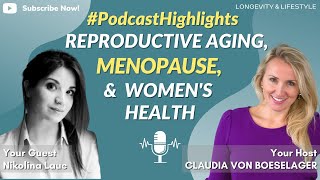
In this interview, Nikolina Lauc, co‑founder of GlycanAge (formerly LichenAge), frames aging as a gradual functional decline that is typically addressed only after severe disease manifests, highlighting a systemic failure of current healthcare to focus on prevention. She explains that glycans—complex sugar molecules on cell surfaces—are a neglected yet crucial component of biology, influencing blood groups, immune cell behavior, and inflammation. By analyzing glycans on immune cells, GlycanAge can detect early shifts toward pro‑inflammatory states (inflammaging) and predict the onset of chronic conditions such as arthritis, diabetes, cardiovascular disease, and perimenopause years before clinical symptoms appear. Lauc describes how their service combines a glycan‑based biological age test, a 50‑question lifestyle profile, algorithmic interpretation, and specialist telemedicine follow‑up to deliver personalized prevention plans. The company originates from the Human Glycome Project’s analytical lab, the world’s largest glycome research facility, and represents the first commercial translation of this research into a consumer health service. Throughout, she emphasizes personal responsibility for health, the modifiable nature of glycan patterns, and the potential to reverse biological aging trends through targeted lifestyle changes.
Chapters
Aging is a decline in function. And what we do now, we wait until it gets severe. So it turns into a particular disease and then we treat the symptom of it or we treat the problem while the cause is actually coming from this initial decline. And nobody thinks about it as health prevention, but that's what it really is. And if we're working on that before things start to break down, we're really managing our health to be healthier for longer. If you're going to any type of healthcare route or NHS, there's no space for prevention. They're just putting out fires. And it's this whole contradiction that's going to take a very long time for them to change. And also healthcare is seen as something that somebody is taking care of us, but really your doctor is not going to eat the food for you or cook it for you or take you out for a run or all of these things. It's you. So I think that's where the mismatch is as well. I had a very successful startup, which was actually in the property space. And I walked into this flat with this cleaner because we had something happening last minute and there was some leftover pizza and I was really hungry because I usually skip breakfast and it was kind of fresh leftover pizza. And I was so hungry, I went for a slice and I told the cleaner, hey, do you want a slice? And he looked at me and he said, I would never put that in my body. And I just looked at him. I was like, okay, well, I still had the pizza. But what he made me realize is that he had something that I didn't. I didn't have this high self-worth that he had. He valued his gut more than I valued mine. Glycans are a very neglected space in our biology, but they're hugely important. You have an ABO blood group because of glycans or blood cells. They're very important. In making us individually unique, and that was the first also successful personalized medicine, was blood transfusion. And with LichenAge, we look at these sugars, but sugars on your immune cells as a structural component, and they have a power to change their feature from more pro-inflammatory to more anti-inflammatory. And then when we look at this with aging, it's really the accumulation of damage Here, looking at overactivating the immune system for time, and then you have this low-grade systemic inflammation, which stays and increases with age, but it's moldable. So it's something we have an influence over and we can change, and we already know how you can change it. So not just that we can tell you that you have a problem, so a high biological age or inflammaging, but also what you can do to change it and reverse the trend. Into going backwards, having these women who had a higher glycemic, and we would say, oh, maybe it's related to your menopause. And they would say, no, I still have a cycle. I'm not in menopause. We learned about perimenopause and we learned that perimenopause can last an average of 4 years before actual menopause. It can sometimes last even 10, 15 years. So when women enter it in their early 40s, they really don't know and they don't get diagnosed for up to 7 years. And the symptoms of it are going from mental health, brain fog, to joint pains, to so many different things. They're so easily misattributed. So the majority of women just get prescribed an antidepressant. Glycans change years and years before the onset of a condition. So this was first seen 30 years in arthritis, where we saw glycan change 10 years before onset. But then we also looked at diabetes and cardiovascular disease, and we see it's been changed 5, 10 years before. So when we translate these into new biomarkers, which there are already some very close to market, like the diabetes one, We can tell somebody effectively you're 10 years away from this happening or you're 5 years away from this happening. And if you change your diet or your behavior in this way, you can delay it or it may never happen. So we can do actual prevention instead of what we're doing now, where we're in healthcare looking for the disease markers, which is already when it's too late, when you're symptomatic, when you're looking for the individual organ that's not working instead of going more at the start of it. So we come from this research lab, which is the largest glycome research lab in the world. It's also the main analytical facility of the Human Glycome Project. And that's a team of 50 academics and 1 admin person. So that's where we came from. We're a spin-off from there. So they're a research lab. They don't want to be commercial. This is the first translation of it. To be a complete product, you kind of need a service. So it's not just a test. If you like, if you just want the number, you can have that too. And you can have all your raw data. You own the data as our customer. But if you want us to help interpret it and help guide you on what to do with it, then we have an extra health profile where you give us about 50 questions on your lifestyle. And then we have a little system that makes conclusions already to say maybe this person's overtraining, maybe this person has a hormone imbalance, or maybe it's mental health or something else. And then we also pair it with a human being in the form of telemedicine who's a specialist. The algorithm helps us decide which one. So that could be somebody more in mental health or diet or a sports scientist. And they would help you understand this better and tailor an action plan on what you can do next.