How to HACK YOUR BRAIN WAVES for Optimal Health with BrainTap | Dr. Patrick Porter
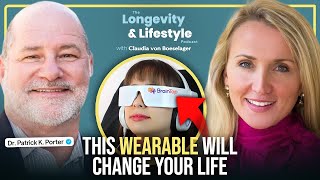
Dr. Patrick Porter explains how BrainTap uses light, sound, and vibration to shift brainwave states and reset the nervous system. A 15-minute afternoon theta session boosted productivity and cut depression scores by 70 percent, while dementia patients gained 39 to 42 percent neuroplasticity improvements.
Chapters
In ancient traditions, they would use singing bowls to do this, different singing bowls to reharmonize the brain. And it took the intuition of the shaman or the priest or priestess to do that. Now we can measure that with science and retune the brain.
My guest today is Dr. Patrick Porter, PhD, whom I've been following for quite some time and had the pleasure to meet in person at the conference at the Health Optimization Summit recently. He's the founder and inventor of the phenomenal brain biohacking device called BrainTap. He's a brain researcher, mental coach. He is a meditation leader and has given over 500 keynotes and is also a bestselling author. After following his work for quite a while, it was such a pleasure to meet him live and hear his powerful insights about the power of the mind, which I'm so excited to share with you today. He has over 20 years of experience operating the largest self-help franchise in the world. Dr. Porter is a highly sought-after expert within the personal improvement industry, and he's sold over 3 million of his self-help products. Worldwide. Dr. Porter has been at the cutting edge of brainwave entertainment technology for 32 years. Welcome to the Longevity and Lifestyle Podcast, Dr. Porter, or Patrick. It's such a pleasure to have you on today.
Well, it's great to be beyond and helping us to spread our mission of bettering a billion brains. So thank you.
My absolute pleasure. And it was such a pleasure to meet you in person finally recently. I've been obviously following your work for a long time. I am an active user of BrainTap. My kids in the meantime are active users. They absolutely adore it as well. So And they're 7 and 9 for people listening. So there's such huge transformation. I'm so excited to share with you, dear audience today. And I'd love to start with the topic of the power of the mind, Patrick, if we can, and the key to everything, including for reaching peak performance and for longevity for those listening and the beauty of neuroplasticity. And so for people perhaps unfamiliar, could you start walking us through what exactly is brain training? Like, how does that even work, right? People know they go to the gym to work out their muscles, but the brain, like, how is that even possible? What can it do? And let's kick off from there.
Right. When we talk about brain training, we're really talking about neuroplasticity and having energy in the brain. The capacity to think, perform, sleep, these are all functions of the brain. And if we don't exercise it, meaning that we do something different to challenge those neural resources, they will do what's called neural pruning. They will start to atrophy. Most people have a misconception. They think when we're born, we're like blank slates and then we add in neuroplasticity as we go. The exact opposite is true. We're born fully wired. That's why we can learn so much in such a short period of time with no knowledge, no textbooks. We're walking, we're talking, we're saying sentences by the time we're 3 and 4 years old. And all these things happen because of something called neural pruning. Now, if we don't control that, the brain will continue to rewire up to the time we get dementia and Alzheimer's because it's an energy hog. So it's always looking for ways to do that. So if we exercise it, and one of the best ways to exercise it is through breathwork, light, sound, vibration, dancing, movement, yoga. These are all things we'll talk about, but we need to challenge the brain. Exercise is one of the primary ways. The reason we have such a big brain compared to other animals and mammals is because we started getting up on all, getting on our hind legs and walking instead of on all fours. So there's a lot that goes into it and our brain is constantly evolving. So it's not like it ever stops, but it's either going, it's either building a stronger, better brain or it's basically atrophying.
Which is important. If you don't use it, you lose it, right? So that's with atrophy, it sort of starts deteriorating. So how does brain training work? What is going on with it? And then I'd like to talk a little bit after about your journey personally, which started at such a young age. But can you explain to people what it is first?
Well, part of it is something called brain priming. So when you think of brain priming, it's like some people call it mental rehearsal, visualization, these kind of things. But what happens is when our brain starts to imagine something happening in the future, like Einstein would do what he called thought experiments. Tesla as well as Edison would do what they call catnaps. These are all things that they would use their imagination to create a future event. And so the brain gets primed. And one of the best ways to examples for people out there, if you've ever bought a car and you probably did research, but then you went and got the car, you thought you had the only car like that on the planet. You drove it off the lot and you start seeing those cars everywhere because the brain wasn't primed to see those cars. It's almost like when we went to the Health Optimization Summit, there were a lot of things there that now that you've seen them, you're probably seeing them more often because you're aware of them. This is called brain priming. In marketing, they call it top-of-the-mind awareness. So when we— they're really priming your brain so that when you have a need, you think of their product. So when we think about brain fitness, there's a lot of ways to do that. But what I found in my early age and working with clients is a lot of people aren't in the right physiological state to do that.. And what I mean by that is when you're stressed out, anxious, nervous, and then you go try to meditate, you're actually amplifying stress, anxiety, and discomfort into your life. And that's because your brain only— your brain doesn't discern upon what you're doing. It only says, this is what you're spending your time doing. You must want to do it more often. So, you know, people get addicted to their stress, to their worry, to their fears. They even start to claim it as part of their family heritage. Which is ridiculous. Um, our body, we can learn from our parents, you know, and things like that, but it's not part of, it's not part of us. Those are choices we make. And, um, so what happens is the brain begins to wire around those ideas. So we can change our physiological state a few ways. You can do it through breathwork if you don't own the BrainTap. Um, and I always do a lot of breathwork during the BrainTap anyway because we need to do that, because the breathwork connects the, the brain-body connection or the heart. And if you don't have the heart involved in the process, it's not gonna work either because emotion drives behavior. So when you're looking at changing your behaviors or changing your outlook on life or creating more success in your life in any other area, you've gotta be fully present for to receive it. So part of that, part of that is, and the reason we use light, sound, and vibration is because we, you and I and everyone listening to this, your genetic ancestors actually were able to interpret light, sound, and vibration. Our genetics, everything that makes us who we are physically, mentally, and emotionally was there at the beginning of time. And we are still here. Now, some of the genetics didn't make it because they couldn't interpret light, sound, and vibration. They got eaten by a tiger, they fell off a cliff, and their genetic line didn't continue. But we're here. So we also have all of that feeding in and out of our awareness. And it's a feedback loop. So our genetics— and this happens to be our environment plays a big role. Like when we step into an environment, like let's say we step into the forest, we now know that when we're stepping in, they call it forest bathing in Japan. Because what happens is when you're walking through the forest, your interaction with the plants and maybe even the animals there, there's an interaction at a biological level. There's no separation anymore. In fact, here in the United States, our National Institute of Health actually said we now have a biofield, which most people in metaphysics or in ancient traditions knew that we had this energy field, but You know, it takes a while for scientists to catch up. And so all of this is to exercise, really, because we know Virginia Hunt, who was at UCLA— she's passed away now— but she did a lot of studies on Kirlian photography, actually. And she showed that as you slow down your brain frequency, meaning you take it from this high state of beta, which is the stress state that most people are running around in— we call it the reactionary mind— and you dip into the alpha state, which is your imagination, your creativity, and then you get— if you're able to get into the theta state, which is more of the inventive mind, then you're actually increasing this energy. They've shown that when you go, when you go up to 39, anything between, let's say, 12 and 8 and 39 cycles per second, you're actually draining your energy. But when, then again, when you get over 40, which just happens to be gamma, you start to expand that field of energy again. And these are all things that interplay all the time. So Part of it is how do we exercise this nervous system? Because the nervous system, 70% of the nervous system's in the brain. So when I talk about the nervous system and the brain, they're really interchangeable because if you're in the wrong physiological state, like you're stressed out, worried, whatever, you didn't sleep well last night, you're not gonna think very good. You know, there, there's a lot of studies that show that. So part of it is just setting up what you're gonna do. And a lot of people don't understand brain fitness. They think if they meditate a certain way, like they do a certain meditation, that they should do that meditation anytime during the day. And there's literally different meditations, and they have this in the ancient scriptures in India. There's different meditations you do at different times of the day because of our physiology. So that's where we've kind of captured that with BrainTap. I've, I've tried to look at ancient traditions and said, okay, these are where they used to do it and they work, but it take a lot of effort. So people don't want a lot of effort anymore. They want to just be able to go to their app, press play, and get their brain to do the change. And that's where we're at.
Which is phenomenal. I wanna dig into the, the library cuz you have so many phenomenal programs in there. But before we do, I'd love to just take a step back, Patrick, and if you could share more about, so at the age of 12, you began training in the Silva Method, which I've actually done a training in, but only a few years ago. How did that come to pass at such a young age? Can you share a bit about your story and, and where it led you to today?
We were very fortunate that our dad was an alcoholic. And that's what really triggered it. Yeah, the, the priest and the nun, Father Fitzpatrick and Sister Barbara, came over and they said, Michael— that was my dad's name— they said, Michael, we're going to take you to a seminar and it's going to teach you how to relax. And he was grumbling. I still remember it was a big to-do because, you know, they were helping us a lot. The church was helping us. There were 9 kids, so when your dad's drinking, it's kind of hard. And then, but when he came home from that seminar, he was changed. He literally, I mean, you could tell that there was something different about him. He started meditating himself and he never drank again. Wow. And so the, uh, he, he figured that, hey, if it's good enough for me, it's good enough for my family. And one of the things he did, I was a very negative kid, believe it or not. They call me Dr. Positive now, but I was a very negative kid. I, I truly believe that God had one job. And that was to make my life miserable. And, you know, and so I proved it right. Right. I proved that right. You know, and I was held back in second grade and all these things. And then he had me read a book called As a Man Thinketh, which is a really easy book. And I had to read it every day one— the summer of my eighth grade year, actually, or seventh grade. I can't remember which one it was, but it was one of the early years in junior high. And before I could go out and play, I had to tell him how I was going to apply those principles in my life. And he had me read a bunch of other books too. Along the way because he thought that the reason, and I believe it to be true, most of the cause is not people trying to be troublemakers or trying to be negative. They just don't know a better way. I didn't know that my thinking was creating my environment. And so when he taught me that, I still remember the first year, Christmas time, for those people that remember back to cassettes, you know, there was a— so you could record cassettes. I actually asked for Christmas that year an alarm clock that would wake you up with a cassette recording. And I, my dad would sit down with me every month and I would do my affirmations and that would be what would wake me up in the morning. And, um, ever since then I don't need alarm, you know, the, the alarm clock. Um, I don't always listen to affirmations in the morning anymore, but, but I did all the way through my high school and college career. You know, that was, that's how I woke myself up cuz I wanted to keep the top of the mind again. I wanted to do that brain priming every morning and look forward to my successes instead of counting on my failures.
Well, where's some of the biggest implications of that or, or transformations that you started noticing coming up because of this rewiring that you did to yourself?
Well, it happened with the whole family. I remember people asking my mother, you have 9 kids and they're all so well behaved, why are they doing that? And part of it was she also took us off sugars and dyes and all the negative foods, so that helped. And then we would all practice meditation every day, and we did it with the GSR machine, or galvanic skin response system. So we put our fingers on this device, which is still available on Amazon, by the way. You— it costs about $200, and it— you can set it to alpha because Silva's really big on the alpha. They call it level. So you go to level, and then when you go to level, you keep repeating what it is you want to achieve, you know, whatever your— the purposes of that intention. So we would practice that every day, and we would talk at the dinner table about what we're manifesting and what we're creating, and a very different situation. And then my dad became an instructor, so then that kind of exact— basically, I've probably been to Silva a thousand times. The, um, but then for me, my school, I became an honor roll student from being held back. I mean, I was, uh, all through high school I was on the honor roll. I became— I was very, uh, I still remember my dad was really into sports, so to impress him I said I was going to be a, uh, the captain of the football team, right? In the, um, but I was, you know, 98 pounds and never got to play. I was fast, but I wasn't I'm not good at other sports. And he says, well, you know, faith without works is dead. So we started to put together a training program and I became a 3-sport captain in high school and I became, I got a scholarship to college and things like that. And then for me, I went to school for electronics and it just seemed easy to me, almost like I was born to do electronics. You know, in that time there was no electronics like we have today. I mean, you had to be a real nerd and I was kind of an exception because I was a sports guy and a nerd. You know, so there wasn't a lot of people like that that were, that were out there at that time.
These are so phenomenal. I love the stories. Thank you. So tell us about the birth of BrainTap and for people perhaps unfamiliar, I know people will be listening and watching, but it's pretty much a headset. If you can see here that you have as a visor that goes over your eyes and it includes lights. So when you, it's turned on, you can see, let me just make sure that you can see this. So you can see the lights. It's a little bit tricky to see. And then when the app is playing, the lights are actually flashing and also over the eyes as well. So this very funky, beautiful device, what is going on? What's happening for people unfamiliar?
Patrick, can you share? Sure. Yeah. And we, we created the very first version of that in 1986, and then in '89 we got the best gadget of the year at the Consumer Electronics Show. But people didn't understand it. We were like aliens coming down from another planet, you know, what, what is this thing? But I stuck with it and started a franchise company that was very successful. I sold that in 2002, and, but I kept the rights to my my equipment because I was selling the equipment to the company that I sold it to. And then they went out of business actually in 2012. And I thought, wow, we can't let this technology just go to pass. So I went back to work and a group in the Bay Area, San Francisco, I happened to be living there then. So I was able to find some engineers to help me to make what you see today. Now, this is the 5th version you have in your hand now. There's a 6th version. Of course, we're always working on something bigger and better. Basically, it came about retinal flashing, just so everybody understands. People always ask, why the lights in the eyes? Well, most people know about binaural beats now that are out there. They know that if you put a 300 Hz frequency in one ear and a 310 Hz in the other, the brain hears a phantom sound of 10 Hz. That's actually been around since the 1800s because in ancient traditions, they would use singing bowls to do this, different singing bowls to reharmonize the brain.. And it took the intuition of the shaman or the priest or priestess to do that. Now we can measure that with science and retune the brain. But we, what we found in our science was that not everybody could follow the algorithm. That's why some people say binaural beats work, some don't. So what we did is we started to harmonize that binaural beat with something called an isochronic tone. And the planet itself is an isochronic tone generator. So if we sit by the ocean, for instance,. It has an evoke potential of 10 Hz. It happens to be alpha. So if you're sitting by the ocean or a large body of water, you just feel calm. And that's because the brain starts to create acetylcholine and other neurotransmitters. And then if you go to the mountains, you're going to also find that you can meditate deeper because the mountain itself resonates at 7.8 Hz frequency, something called the Schumann frequency. These are— that's theta. So there's a— in every cell of our body has something called a chromophore, which not only builds receives energy, but it also tunes to the environment. So these are called mirror neurons. Most people think of in our, in our body is always mirroring our environment. That's why they say if you're around 5 alcoholics, you're going to be the 6th, or if you're around 5 winners, you're going to be the next one, because you're actually sharing more than what the conversation is. Like when we were present together, we shared each other's biophotonic energy without knowing it. It was all unconscious, but it was still there in the, in in science now, they would say there was a quantum entanglement. So anytime you meet somebody, there's a little piece of them is in you, and you have a— they have a little piece of you, and this connection keeps expanding and working. So what we did is we also found that not everybody is able to tune their biological system the way we want it. So in the ears, this was when I was able to introduce what we call iridology. This was actually found 10,000 years ago by the Chinese tradition of acupuncture. But in America, Dr. Nogier came up with 7 frequencies of the body. Just happens to be a lot of things in the body are 7, you know, like this, the sacred centers and things of that nature. So he found these 7 energy centers that they vibrate. Our body is actually teeming and resonating with energy. Every cell is vibrating. And if they're out of balance, if any of these frequencies are out of balance, we'll be sick in that area. So what I decided to do was take the light the red and blue lights to mimic the, the sun rays that we really crave, really at sundown and sunset. And I put those in the ears because the ears are the best way to get light into the brain. And we need light in the brain to do work. And what I mean by that is that we can't change brain waves. It takes a lot of energy. Now, if you're young and, or you're a health optimizer and you're healthy, then you can probably do it. But when I'm talking about clients coming into my clinic, they were compromised. They couldn't do it. So we had to bring energy in. Light is the most underprescribed nutrient on Earth today, and mainly because of the smog and fog and all of those things, the biological systems that we're in. But our body needs that light to tell ourselves what to do. We now know that's true. In fact, there's something if the listeners want to look up called biophotonic exchange, where the evidence now shows that every 40 seconds, every DNA pair in our body adjust or shifts to whatever's happening in our environment. So every 40 seconds, we literally show up as our best self if we've eaten right, thought right, you know, performed well, or it can show up negatively. So we introduced this light to tune the body. Now, when you, when you bring in light through the eyes, sound through the ears, and light into the brain, what happens is you disassociate from the external environment.. So you're creating a space, they call it a Gaussian field in the brain. So you feel like you're in a spatial place different than where you're at. You could be sitting in a chair, lying in bed, wherever, but your brain, because it doesn't know the difference between real or imagined, is being exposed to frequencies that mimic nature. So people will create this, this feeling or this sensation of nature. Now you're in a position to tune the thoughts. The average person has 60,000 thoughts a day, and unfortunately 40,000 are negative. And this isn't, this isn't because they're negative. This is because of our upbringing. We have a what we call default mode network, or you can call it the reticular activating system. It's there to protect us. So we have two natural fears when we're born: the fear of heights and the fear of loud noises. Other than that, we've made them up. We've created all the rest. And So, but these fears, and they could be psychological because the brain doesn't care if it's physical or psychological or emotional. And so if we have a fear of being hurt, let's say we're in a relationship, we had a bad relationship and that relationship hurt us and now we're going to protect ourselves. So we're not going to let that happen again. So we might actually be repelling that relationship because of the fear of that. So that's why in order to really change, you know, we need to challenge that belief. If we can find our limited beliefs. So that's what we're doing with BrainTap. We're finding the limited beliefs. I wrote a book called Discover the Language of the Mind years ago, and it actually has my 13 core techniques that I learned over time. And I learned from the one time before I wrote that book, and that was in the '90s. So I've had a lot more training since then because I'm addicted to training. But at that time, I had 67 master teachers that taught me. So I can't really acknowledge one of them. But I tried the best I could at the beginning of the book because no one does this alone, right? Somebody's gone before us, done some great things. And what I've done is I was fortunate enough to have a franchise where we saw literally thousands of people every week. So I know what works. We know it works because we got great results and we had thousands of testimonials.. And the average person, I mean, we, our, our business was ran on 60% referrals. So in our average clinic back then when I ran it was about $1.6 million. So that would be about $3 million a year nowadays. I mean, we, nobody was doing it and we wanted to have a way, not just when I was one-on-one working with people. Yeah, I could do a lot of things, but I wanted to have a way that I could change the world. You know, the, I wanted everybody to experience what I experienced when I was a kid and, and realize that, The only limits we have are limits in consciousness. And that's really where BrainTap came from. And now we have 67 or 70 maybe now voices. So we have other people with their expertise and we're always looking for, you know, good sessions for relaxation, meditation, whatever, or hypnosis, whatever they want to do. And we can convert those into BrainTap sessions because we've, we've proven over and over again with every, everything that we've ever done, like music or relaxation techniques, we've always showed that we can amplify their results. Because if you get the physiology in the right place, the brain will accept, use, and then generalize that positive information into your future.
And now a quick word from our sponsors. Thank you so much for your support as it helps keep our content free for everyone. This episode is brought to you by ProLon. If you want the health benefits of fasting, such as healthy aging, weight loss, energy, and mental clarity while still being able to eat, ProLon's fasting-mimicking nutrition products are for you. ProLon is the first and only clinically tested, doctor-recommended fasting nutrition program based on over 20 years of research and developed by the Longevity Institute at the University of Southern California in collaboration with 17 other prestigious universities. I'm a fan of the ProLon 5-day fasting nutrition program. It's primarily plant-based, non-GMO food, is shown to rejuvenate your body's cells the same way fasting would, and if done 3 times per year, can reverse your biological age by 2.5 years. Check out Prolon's 5-day fasting nutrition program and subscribe to do the program every 4 months for the best results by going to prolonglife.com. That's P-R-O-L-O-N-L-I-F-E dot com. And for you, dear audience, get 20% off with code Claudia20 at checkout today.
And now back to the show. Can you share, um, from the health aspect, what is the impact of regular brain tap sessions and brain biohacking, if you will, on things like your general health, on stress, on sleep, energy levels? And what are some of the impacts you've seen?
First, let's talk about the physiology, because most people don't realize that your liver holds 25 grams of sugar, and it's holding that sugar just in case a tiger should show up or you need to flee from an enemy, those kind of things. But now it's doing it when we look at our phone or when we get a bad piece of information or when we think about the future. So a lot of people out there are using stress to motivate their system, what we call away from people. But what happens in the body is every time you have a stressful event, it's like eating a candy bar. So I always tell people, you're getting the sugar from the candy bar, but you're not getting the enjoyment of eating the candy bar. So it's a big difference. Now, when you do that, what happens? The implication is that your body can either be a fat burner, which is what your brain needs, ketones, or you can be a sugar burner, which your body will use and your brain will use, but at the cost. There's a lot of toxins. Probably the biggest toxic thing we can do is sugar. So, and it's not always what you're eating. So if you're listening out there and you're going, gosh, I can't believe I can't lose weight. I've done everything. I'm eating right. Well, you might be eating candy bars all day long because you're stressed out all day long. So we need to make the flip from being in the survivor mode, which most people are, into the survivor mode. And so there's 3 times during the day you need to reset this biological clock. Now, once you do it over the 21 to 28 days, you can get away with only doing it once or twice a week because the body will stay tuned. I still do it every day, usually twice a day, but it's up to other people. So in the morning, we need to wake up our brain. And just like we would in ancient traditions— I mean, we didn't wake up to an alarm clock when we were living in the cave. The light would come into the cave, it would hit our, it would hit our cranial nerve 2, it would tell us, hey, it's time to wake up. The earth would warm up, we would— cortisol, norepinephrine, and dopamine would be raging through our body. We'd get up and wonder if we're still alive and go out and hunt or whatever we would do. Those things happen. Now, what unfortunately what's happened to us is we don't to bed at the right time, or if you're binge watching television and then you set an alarm clock, which is one of the worst things you can do for your nervous system. The first hack I would do if you're losing alarm clock is change it to the most beautiful piece of music you can think of. Because think in terms of when you return back to your morning, you don't want that alarm clock going, you want it to be some piece of music that's going to tell you it's time to wake up. And then hopefully get you planning your day. So that's what we do with our 10-minute sessions. We call it digital coffee because it's going to do this without coffee. I'm not a big one for drinking coffee in the morning, but I will drink coffee, you know, like right before we did this, like 10:00. I have my cup right here. Usually it's at 10:00. I do just because I enjoy the taste of coffee. But, you know, have one cup. But then with the— in the afternoon, most people don't realize you're biologically using up energy. They know they do more in the morning. Like some people say, like Stephen King, the famous writer, I read his book and he only writes in the morning up to 11:00. Then he's done. And then he goes watch the Red Sox play baseball or something. That's his thing. And the reason for that is your brain is always fresher in the morning because you have more of those brainwaves, the interactive brainwaves, the creativity is going. But what we know you can do at 2:00 when your temperature drops 2 degrees because we're tuned to the light of the sun. We're— these bodies were designed for the Serengeti. They weren't designed for London or for New York or Los Angeles. They were designed for the desert. And what do we do in the desert? All the animals are sleeping at that time. So our body has this natural biological reset and most people rush through it. You know, the queen has her tea time, you know, or whatever. And we have our coffee, you know, the lines of the coffee shops here are crazy at that time. And, you know, that never would happen when, when, when I was younger, Nobody drank coffee after, you know, 10 or 11. Now I go by the coffee shop and there's a lineup at 10 o'clock at night. I'm going, wow. You know, what that means is they're using chemicals. They're using their biological system to run their electrical system. It's been— it's a proven fact now that we are light beings. We are energy. We are energy beings. And so we're transmitting and receiving energy all the time. This is what the bacteria known as mitochondria does. You know, it basically absorbs light and transmits light. And so if we— now we're converting whatever we eat, think, experience, involved in— you're always converting that energy into usable energy for us. But if you're doing things that are downgrading that energy, it will hurt you. So with, uh, in the afternoon, you need to do a reboot. So the theta reboot, which we recommend, that's like 90% of our sessions because that's the time that is the most important. When we did our peak performance study with the top performers performers at Google and Microsoft. We just had them do one session at 2 o'clock in the afternoon. And the one— there was a lot of surprising things, and they had improvements, 19% improvement in their work. And this was the top 1%, so improving them 19% is pretty incredible. The one thing that we amazed them with is we had them take the depression score survey, and we improved their depression score by 70%. They didn't know they were about to burn out. And we did the study because the mass burnouts they have right now, you know, after, after what happened in 2020 people were at home relaxed doing their work, then they were told to go back into the pressure cooker and they said, no way, I'm not doing that. You know, and then what happens is if you're dysregulated all day, you're like, if you're stressed out all day eating all the wrong foods and thinking all the wrong thoughts and worried all the time, then you lay down in bed, well, you're not going to sleep very well. You know, two-thirds of the world today is not sleeping well. And sleeping medication, there's never been a study that showed sleeping medication gives you more than 5 minutes of sleep. Now, you might be in bed, but you're not sleeping. It's almost like drinking alcohol. When my dad was using alcohol to sleep, he was passed out, but, but he wasn't sleeping. His biological system was working overtime to try to digest and get rid of that sugar. Yeah. So we have sessions in the evening that educate the brain, train the brain, in other words, to go from the wide awake state into deep delta. And the, the reason for the listeners that if they come across this yet, the only time your brain opens up something called the glial lymphatic system is during level 4 sleep. So if you're not getting deep delta sleep, you're not opening up the glial lymphatic system and you're not cleaning out the brain. You can have foggy brain, headaches, those, and anxiety and depression because you don't have the energy. It's all about energy. If you have high energy, you have high positive thoughts. If you have low energy, you'll have low thoughts. And negative thoughts because it's just— and hedonistic behaviors because that's what happens when you don't have energy.
So a few questions on that. I know that Ben Greenfield, for example, says that you should take the nap sort of 6 to 8 hours after waking up. He's getting up at 4:00 AM. Are you saying that across the board it's better to just always plan for 2:00 PM no matter what time, how early you get up at?
Or what would you say? Across the board, everyone at 2:00, your temperature is going to drop 2 degrees. It's a biological function of the human condition. It's just for him. If you look at his timing, he's right there for him. But that's not true for everybody. But it is true for everyone that your temperature drops between 2:00 and 3:00. Most people it's 2:00, wherever you're at on the planet, doesn't matter where you're at. And then at 2:00 in the evening when you're sleeping, it will increase 2 degrees. That's why when people say, I woke up sweating last night. Well, if your brain's dysregulated, by even 1 degree, meaning that you increase by 3 degrees or 4 degrees, you're going to wake up and you're going to be sweating. So once you get the brain back regulated, you won't wake up and you won't do that anymore.
Beautiful. So that's a really great reset. And you're talking about 10 minutes, right? I don't know. That theta program is 10 minutes reboot as well, which is really phenomenal. And that's 70% increase in productivity. I mean, I just want that to sink in for people. Like, we're talking about exponential results in 10 minutes. And at the conference I had the pleasure of doing this test. Can you walk people through the test that, that, um, I did? And it was just 15 minutes and the results were phenomenal. But can you share about this test that you have developed?
We're doing something that's invisible, right? How do you take something that's invisible and make it visible to somebody? Because most people will feel BrainTap, they'll feel rested and relaxed, but they don't really know what happened. So, um, about 12 years ago I ran into somebody who was developing a piece of technology that measured heart rate variability on a professional level. And then when I was talking to him, we started sending people over and we were showing this big result, this positive result with BrainTap. So I talked with the company. I said, what else can you get from this information, from what they call the RR function, the pulses and the frequencies between the heartbeats? And they call this time domain in HRV. So we can pull that out. There's 7 different frequencies in your heart. So you're broadcasting out. We now know that we can measure HRV from 18 feet away. It's a magnetic field, and the brain itself is electrical. So we got to use right on the brain, we got to use the caps and things like that. But for the heart, we don't have to. And we can also use the wrist, so we can send a low-level current through your body. We know how fast it should move through the system. And if it— in the computer, it has a little decoder on it, and it decodes those frequencies and tells us the resistance in your body. It's also GSR, just like I was talking about, what started my meditation a long time ago. So we're using galvanic skin response, so we're measuring the resistance in the body to tell us about the body. And so it's mirroring back things like, are you in nervous system dominance? Are you in sympathetic? You're in parasympathetic? Are you in neurohormonal? How much energy do you have across the hippocampus? We call that the psychological feature. What's your biological age? We can say, hey Claudia, you're— you rank with everybody who's 19 or 20 or whatever, rather than whatever your age is. And most people come in, they're 6 years older than they are. And we've, we've measured this in, in the clinics against telomere studies, and we've always been within a year or two. So what we're doing is we're just taking the biological profile of all the 30-year-olds, 29-year-olds, 20, whatever year it is, and we're putting them together. And then we're saying, hey, you showed up more like this person.
Person.
And, and then we also can show— because everything is energy, we can show energy down the spine. Think of the spine as the keyboard to the brain. That's why chiropractic or osteopaths, when they adjust the body, it's adjusting the brain. And then, uh, we can also show the energy field because we do a lot with AIMS India, the All Indian Institute of Medical Sciences, which, um, I've had 3 papers published with them with PubMed and with pranayama breathing using this device, and also with BrainTap, of course, to show stress reduction. But the, the device makes it so easy. We can do a 5-minute test beforehand, we calibrate, we call this the baseline. Once we have the baseline, then we can do any therapy. Now we're using BrainTap because that's what I created, but you could use PMF, you could use cold plunges, you can use, uh, whatever if it's affecting the nervous system, which is even supplements., we can show you if it's working in a positive way for you or not. Now, one thing I will say about PMF, and I love that product that use PMF, but it— you can't measure it right away. Some things got to wait 4 hours. So it's kind of like a workout. You get— after a workout, you're going to have stress in the body, which is what you want, because that's going to, that's going to recover and give you more resilience later. The same is true with PMF, but BrainTap will give you an instant Our one study we did with the National Institute of Health had a 38.3% improvement across the board with 100 people tested that never meditated. So they were able to get into those deep levels of meditation without meditating, because it's not really meditating, it's the machine doing the stimulus of light, sound, and vibration that's doing it.
And I think for me, I mean, within 15 minutes, obviously it was the second day of the conference, it was the evening, the evening before there had been events, there was a bit of lack lack of sleep going on there. And I think if I recall correctly, I was at about 85%. And is that right to say that was brain capacity? And within 15 minutes of just sort of relaxing in the chair and listening to a BrainTap episode, it went back up to 100%. So I was like, okay, perfect. And so that just shows the power of this reset and 15 minutes, which, you know, I mean, they say people are like, oh, I'm too busy to take 15 minutes. Well, if you think you're too busy to take 15 minutes, then you definitely have to take 15 minutes, right?
Yeah, I've heard it said by some people that if you don't have time to do 15 minutes, then you need 30.
Yeah, I love that one. And I have sometimes when I talk to some people about sort of BrainTap versus other meditation methods, like, well, I meditate already, or I do some breathing. How would you describe for people the difference between what you've developed with BrainTap and somebody sitting there doing mindfulness or doing some deep breathing for 15 minutes?
Well, for your physiology, not just psychologically, they're probably getting a lot of benefit. But physiologically, we've measured over 30,000 brains, and we've only had a handful of people that could do even close to what BrainTap can do. And those people that do breathwork beforehand do better because breathwork can shift brain function. That's proved actually with the pranayama breathing and things like that. But the— most of the time, people aren't getting what they think they're getting from meditation. And meditation isn't sleep, and it's a, it's a high focus point. And, uh, we find that in fact 95% of the time when we measure people, we see them having a downgrade experience. Now, we did a, we did a research study with, uh, the Guru Daji who has the Heartfelt Meditation in India, in Hyderabad. And they have a practice where you basically do this breathing exercise and you meditate sending energy from your heart to another person. So you basically pick somebody. They could be there present or they could be remote somewhere. And what we showed was the person who was actually sending the energy actually got better results than the person getting the energy. And I think it has to do with the old saying that whatever happens to you happens through you. So the more you give away, the more you get. And I think it's all about focus. Because they were focused on giving the energy away. The other people were focused on getting. We're designed to give. We're designed to be a community just as a human community. That's why anyone who does the negative behaviors or becomes self-centered, they start to hate themselves and they usually have really negative responses because it's not normal for us. The normal state is to be loving and sharing and be a community. I mean, we're like a community of cells in our body. But some people act like the nose isn't part of the face. You know, we got to— we all got to work together and make sure that works.
I want to touch on something. Actually, I had a conversation with your brother at the— one of your brothers, I should say, Michael, at the conference as well. And he was talking about some of the results he was seeing with elderly people with Alzheimer's and Parkinson's, which I thought was really phenomenal. I'd love to touch on that. What are you seeing in people with neurodegenerative diseases?
We're having fantastic results. We have a Parkinson's study going on right now in Brazil. We don't have the findings on that, but the early information is good. In our 4,000 clinics we have here in the US, they all report back really positive. Like, because if they do a BrainTap session once a day, the tremors usually go into abeyance, so they don't have them. And then with dementia, we're doing a big study right now with Seminole College here in Florida. Based on our pilot study we did with Dr. Kelly Miller in his book, Saving Your Brain. And what we did is we— you can get better results using other things as well because we just use BrainTap for the study because that's the way studies work. But what we found was within 6 weeks, we took every— they were all women. We took each woman. They were between 55 and 65. They are all diagnosed with dementia. Within 6 weeks, they were all taken off the dementia scale. And when we measured their neuroplastic change, it was 39%. So that means they had 39% more energy 6 weeks later. Now, when we tested them 6 months after that, they had 42% more neuroplasticity because they continue to do it. So there's going to continue to be an incremental change. That's that 85 that you were talking about that you had went to 100. Basically, when you're functioning at 100% neurological capacity, then you're going to have— you're going to be able to think, sleep, and perform better. Better, you know. So that's what we're looking at. And what happens with the brain, mostly because of diet and lifestyle, you know, they say that sitting is the new smoking, but I argue that sitting is worse than smoking. There was a study that just came out that showed sitting for 3 hours, it will reduce the oxygen in the brain by 10%. Wow. Smoking won't even do that. So you're— we need to be— we're designed to move and breathe. If the sun's out, we should be out there moving. You know, uh, that's not going to happen for most people, not going to happen for me because I've got to be—
how do you do that?
I was like, you just walk all day outside, right? I mean, that's why there's a group here called the Amish. You know, they don't need extra exercise. They walk over 25,000 steps a day, you know, where most of us don't even get 5,000.
Yeah, I tried to get about 15,000, but doesn't happen every single day. But yeah, but I think one point to what you were saying before about time spent indoors, I was just looking at some research around the average American, and even the average British person spends 90% of their day indoors. 90%. And so just that energetic thing, especially if you're living in a city where you're in these tall buildings or concrete around you, a lot of electromagnetic fields, all the more important to be getting outside or be connecting with something like BrainTap as well to support them. Also BrainTap for kids. Let's talk about that. And what have you seen? Obviously, you and your family were doing that growing up, but actual children.
Yeah, we see a lot of great results with kids. Primarily with kids are only 10-minute sessions if they're below 12, because they shouldn't need to offload all the stress that adults have. But we do need to engage a brainwave. We do need to engage that alpha brainwave. So if they have too much alpha, then they're going to be hyper, you know, attention deficit with hyperactivity. If they have not enough alpha, they're actually going to have symptoms like Alzheimer's. So I mean, I'm sorry, not Alzheimer's, but autism. Autism. So in the— but by the way, the dementia profile is almost exactly like autism. I mean, when you look at the brain, you wouldn't know the difference because it's lacking brainwaves. It's lacking brainwave activity that causes the brain to function. But we find kids are— it's almost like a digital Adderall but without the negative side effects because it creates focus and the resiliency that they need. And I go over it all in my book, Awaken the Genius, because I believe every kid is a genius. They know what they have, certain talents and skills. We just need to activate them. And it might not be math and science, so they might not ever be an honor roll student, but it could be they could be a savant in physical activities like a soccer player or something like that. So when you think about these things, and we're finding that the main thing is that when the children are de-stressed, they act better. You know, they have better— they're more pleasant to be around. They're more you know, they'll spend their time learning. We actually have an accelerated learning course for kids in the BrainTap, so they can, they can use that to improve their learning. But any of the sessions for the younger children are great. I just had a call with Maya, who's our youngest voice. She's 8 years old, and she voiced a meditation for focus and success for children. It's awesome. She's going to do more.
So we even have sessions by children for children. Oh, beautiful. I'm sure if you're looking for kids, I think my ones would be happy to do so. Yes. Oh, really beautiful. Patrick, if you could live to 150 years old with excellent health, including brain health, of course, how would you spend your time?
Well, I think I would do pretty much what I'm doing now. I still feel like I'm doing what I used to do for free before I got paid to do it, and I love it. And I'm just building out a community here. I bought 88 acres here on the river. I'm building it out into a health retreat. We're calling it Health Sanctuary. And hopefully that will be thriving by then and we'll have people coming in and we'll be restoring health and vitality. Because I do believe that we, we do expire before we biologically should. You know, there's a lot of things we can do to increase it, but the main thing that I want is having a great life. Every day, not, not waiting. I don't want to live to be 150 and, like you said, have good health. I want to have good health. I don't want to be just living to 150 on a bunch of machines and pills. And I still shock people because I'm, I'm going to be 62 here in a few weeks, and, uh, when I go to the doctor, they say, what prescription you're on? None. I don't do prescriptions. You know, if I need prescriptions, I know they're, they're short-term and you need to get off them. You know, our body knows what to do.
We need to get our body to tune up and, and do what it's supposed to do. Yeah, that's phenomenal. I'd love to hear about your sanctuary, um, project.
Can you share about that? Well, I'll— if somebody knew me even when I was 24, just starting out, I always said I was going to have a healing retreat center where people could come and spend a week or two with us. So we have everything you could think of in a biological lab. We have full light beds, we have whole body vibration systems, we have PMF, we have sound vibration, we have meditation rooms. And these are all in my clinic. I have a 6,000 square foot clinic here. And then I'm going to be moving that all out to the property because I believe grounding and getting out in nature, doing yoga, tai chi, and those kind of things. And this just happened to come up here. It's only 20 minutes from our home, and we'll probably eventually get out of the home we're in now and build something out there because it only has one building on it right now. So we're looking at people to do some sacred geometry and make it a real healing retreat with all the right— there's something called feng shui, the ancient art of placement. So we're looking at all these things. I want it to be physically, mentally, emotionally, and spiritually driven, where people step in and they actually begin to feel it as soon as they step on the property, that this is a place for positive change.
So beautiful. And it's in Florida, you said, right?
For people.
No, this is in North Carolina. I'm in North Carolina.
Okay. That's what I thought. Right on the Outer Banks. If somebody knows the Outer Banks, We're on the land side, but the Neuse River comes right from the sound, and we have dolphins swim by every other day, if not every day. We— I got great pictures of them jumping out of the water, and it's just beautiful. Yeah, right off our dock.
So all those fun things. Oh, beautiful. Patrick, what excites you most about the future of health and well-being and longevity over the coming years and beyond?
I think just the ability for people to take control of their own health, that we're not giving it away. You know, I kind of think of it like, um, in the old days we couldn't really have a spiritual experience without going through a guru or something. Now we can have it directly. I think we can have our own direct experience with health. We can learn, evaluate, and find out what works for us, because everyone's a universe of one, so they need to find out what works for them.
Wonderful. For my listeners interested in learning more about brain health and neuroplasticity, and also to find what you're up to, where would you direct what's some good online resources?
If they go to you, my YouTube channel at Dr. Patrick Porter, there's a lot of videos. I'm always adding things. I did over 35 interviews at the biohacking conference and with Dave Asprey. So those are going to be being posted and it's a lot of great content, a lot of the great biohackers that are out there. They can also go to BrainTap Tech at BrainTap Tech because that's where we might have some of our other leaders in brain sciences in that. I'm usually always interviewing people that are the top of the field and sharing those information, just like I'm here sharing with you.
We do that all the time. Do you have any final ask or recommendation or any parting thoughts or message for my audience today?
What I like to tell people is you're not the sum total of your brothers, sisters, mothers, fathers, preachers, and teachers. You are a unique individual and you have infinite potential. You know, there are no limitations to what you can do, only limits in consciousness. So just know that you're far greater than others have told you about and start exploring that and expanding that. It first comes from the relationship within yourself, and then your personal relationships will change, and then your life will get better, and you'll change the planet by doing that. There's something called the Maharishi Effect. They've actually proven that when a group of people, like-minded, pray— they prayed and meditated about about peace in New York. And while they were doing it, crime went down. When they stopped, it went right back up. So my goal is to better a billion brains, and I hope you'll enjoy being on the journey with me because we all need to do this so we can change the planet by changing the frequency of what we see.
Beautifully said, Patrick.
Thank you so much for coming on today. All right, thanks for having me, Claudia. It's great to be a part of it, and thanks for helping us spread the word and better those billion brains. So if you're listening, it's your brain we're talking to right now. Let's, let's keep improving it.
More from Claudia









Can Psilocybin Slow Aging? The Study on Telomeres, Inflammation & Survival with Dr. Louise Hecker

