How to Naturally Reverse Hashimoto’s Disease with Dr. Anshul Gupta
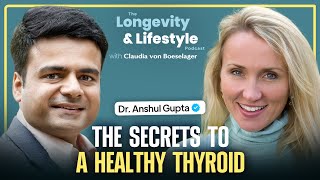
In this Longevity & Lifestyle Podcast episode, host Claudia von Boeselager interviews Dr. Anshul Gupta, a board‑certified family physician with functional and integrative medicine training, about Hashimoto’s disease. Dr. Gupta explains that Hashimoto’s is an autoimmune attack on the thyroid that leads to hypothyroidism, outlines its prevalence (the most common autoimmune disease, especially in middle‑aged women) and discusses why incidence is rising due to modern environmental changes. He details the thyroid hormone cascade and the full set of laboratory tests needed for accurate diagnosis (TSH, free T4, free T3, TPO and thyroglobulin antibodies). The conversation contrasts conventional care—primarily levothyroxine replacement—with an integrative, root‑cause approach that targets five major contributors: toxins (heavy metals, glyphosates, mold), food sensitivities, chronic stress, nutritional deficiencies, and chronic infections (EBV, Lyme, etc.). Dr. Gupta describes a stepwise protocol that begins with lifestyle changes (diet, stress management, sleep, exercise) and then adds targeted supplements (vitamin D, selenium, zinc, omega‑3, magnesium) while cautioning against unsupervised detox regimens. He offers practical advice on selecting functional‑medicine practitioners, prevention strategies (rainbow diet, organic when possible, grass‑fed meat, wild‑caught fish), and shares a detailed success story of a 37‑year‑old mother whose antibody levels normalized and symptoms resolved after a 4‑6‑month program. The interview closes with Dr. Gupta’s vision of longevity trends (peptides, stem cells), his book “Reversing Hashimoto’s,” and online resources. The overall message is hopeful: with the right functional approach, Hashimoto’s can be managed and even reversed.
Chapters
Most people with Hashimoto's disease have between 2 or 3 root causes playing a role together to cause this disease. So if you want to get better, if you want to reverse it, then we have to work on all of those root causes so that we can get better.
Are you ready to boost your longevity and unlock peak performance? Welcome to the Longevity and Lifestyle Podcast. I'm your host, Claudia von Boeselager, longevity and peak performance coach. Each week we'll explore groundbreaking science, unravel longevity secrets, share strategies to grow younger and stay up to date with world-class health and peak performance pioneers. Everything you need to live longer, live better, and reach your fullest potential. If you're ready to defy aging, optimize health, and promote peak performance, visit LLinsider.com for more. My guest today is Dr. Anshul Gupta. Dr. Gupta is a bestselling author, speaker, researcher, and world expert on Hashimoto's Disease and How to Reverse It. Dr. Anshul Gupta is a board-certified family medicine physician with advanced certification in functional medicine, peptide therapy, and also fellowship trained in integrative medicine. He has worked at the prestigious Cleveland Clinic Department of Functional Medicine along Dr. Mark Hyman. He has helped thousands of patients to reverse their health issues by using the concepts of functional medicine. Dr. Gupta has appeared as a guest on several media outlets, including the Dr. Nandi Show, Newsmax TV, The Mind Body Radio. His expertise has also been featured in various publications such as Reader's Digest, Woman's World, and Yahoo Lifestyle. Welcome to the Longevity Lifestyle Podcast, Anshul. It's such a pleasure to have you on today.
Absolutely, Claudia. Thank you so much for having me on the show. I think you are doing amazing job of educating and sharing the cutting-edge technology of how people can keep healthy. So I'm, uh, It's kind of really a pleasure being here.
Thank you so much. So I'd love to kick off with, if you can explain for those unfamiliar, what is Hashimoto's disease and how does it affect the thyroid gland?
Absolutely. So Hashimoto's disease is an autoimmune condition of the thyroid gland. In this situation, what is happening is that the body starts producing these antibodies and these antibodies start destroying the thyroid gland in a very slow fashion. And this process is kind of going in the background sometimes for weeks, months to years. And a lot of people do not have symptoms in the initial phases until the thyroid gland is destroyed to the point that it is not able to produce enough thyroid hormone. And most people get diagnosed with low thyroid or hypothyroidism, and they get started with the medication to replenish the thyroid hormone. But in reality, the underlying problem is these antibodies, which is destroying the thyroid gland. And that's what Hashimoto's disease is.
How common is Hashimoto's disease and who is most at risk for developing it?
So in fact, Hashimoto's disease is the most common autoimmune disease world over. So millions and millions of people are being affected with it and it is actually underdiagnosed because most people actually, when they go to their regular doctor and they get diagnosed with a low thyroid condition, they don't even get blood work to check for Hashimoto's disease. So that's the unfortunate part of it. The second piece of it is that, you know, like, these tests are available each and every lab all around the world. So these are not very specialized labs that people have to do, and the same blood work that is collected to check the thyroid levels through a TSH, the same blood work can be used to check for Hashimoto's disease also. The second part of the question, who's at more risk? So the, the people who are most risk for are middle-aged females between 30 years of age to 65 years of age is the most common females being affected. But what we are seeing actually is that an increase in the incidence of younger females and males like in teenage years being diagnosed with Hashimoto's, as well as older males also are being diagnosed with this condition now.
Why is that happening?
The problem with Hashimoto's is that, you know, we have very limited amount of research behind why Hashimoto's happens. The only thing at this point of time we know is that Hashimoto's is an interplay between your genes and the environment around you. Now, the environment around us can be defined with the food that we eat. The environment can be the stress that we go through. The environment can be the toxins that we get exposed to or the infections our body gets exposed to. So this is all environment that we are dealing with. And in the recent past, like, let's say in the last two decades, our environment has completely changed. We have more and more chemicals being poured into our environment, more toxins being released. Our food habits have changed drastically. Our food has changed drastically. So I think those are all major reasons that more and more people are being affected with it. Along with females also, definitely their incidence has increased. But I think, you know, children and males, because of these environmental conditions, we are seeing an increase in the incidence.
Is there a reason why females are more affected than males in general?
Again, you know, we don't have great research studies supporting it, but the theory behind is that, you know, females have a little bit more complex hormonal system. You know, we have this endocrine system you know, which has several hormones associated. And thyroid is just one hormone, but females have much more complex systems with having estrogen, progesterone, and they go through these cycles, you know, every month, you know, every female is going through these cycles, but they go through these major cycles in their lifetime when they get pregnant or when they hit menopause or when they start their periods. So these are major places that we see that a lot of females do get diagnosed with Hashimoto's disease. Because whenever there is a big shift happening in our body, our body takes some time to get adjusted to it. And if our body is already weak, then, you know, there is a high chance of having autoimmune conditions. And that's where Hashimoto's disease happens.
So can you talk about some of the common symptoms of Hashimoto's disease and how can they impact a person's quality of life?
Absolutely. So unfortunately, Hashimoto's disease literally affects each and every organ of our body. So the most common symptoms are people feel tired or fatigue. You know, that is a very common symptom. Then the second most common symptom is that people have trouble losing weight. They gain this weight and they're not able to lose it, or they continue to gain weight. The third one is mood changes. Sometimes they will feel anxious, sometimes they will feel depressed, or they will alternate between low mood or like stress or anxiety. Then brain fog is another major symptom that we are seeing very recently. Now, the brain fog is actually a term which everybody defines differently. So the brain fog is a collection of symptoms where, you know, people might feel their brain is not functioning to the optimal capacity. They're forgetting things, they're not able to pay attention to things, they're not able to concentrate on things. They just feel that mentally they're not present all the time. Then gut-related symptoms like constipation, bloating, diarrhea, abdominal pain, Those are again very common association. Infertility in females is also on the rise, and again Hashimoto's disease play a very important role. Menstrual irregularity, that they are, you know, like menstrual periods are very irregular or painful. PCOS is another issue that, you know, a lot of females go through. Feeling cold all the time. So literally, as I said, from head to toe, each and every organ system gets affected with Hashimoto's disease, and Anybody can have all of these symptoms.
So let's look at diagnosis. Maybe there's some people listening and are saying, okay, check the box, tick the box, like, oh, this sounds a little bit familiar. How is Hashimoto's disease typically diagnosed? You talked a little bit about testing before and that it's more easily done than maybe many think. And what tests should patients request from their healthcare provider to actually specifically test for it?
Before we move on to the, like, the complete diagnosis of Hashimoto's, I want to kind of understand a little bit how thyroid hormone is being produced in the body so people have an idea of what test to get and what is happening. So basically, like, it all starts in our brain. You know, in our brain, we have this master endocrine gland called pituitary. The pituitary secretes this hormone called TSH, which is the thyroid stimulating hormone. This hormone travels from the pituitary and goes to the thyroid gland, which is located in our neck. And ask the thyroid gland to produce the thyroid hormone. The thyroid, the thyroid gland produces a thyroid hormone called T4. This is a major thyroid hormone being produced, but this is an inactive form of thyroid hormone. Now this T4 goes in the circulation all over the body, but before the cells can utilize thyroid hormone, it needs to be converted to the active form of thyroid hormone called T3. So this is the whole cascade of things. Now, when people go to the regular doctor, the only blood test they are getting is a TSH. Now, TSH is not even a thyroid hormone. It is actually a pituitary hormone, a signaling hormone which is being secreted. So when people are getting TSH, we often miss the diagnosis of thyroid disorders. So first of all, people should ask for a complete thyroid profile that includes the TSH plus T4, T3. Especially the free T4 and free T3, because those are the levels that determine how much body is getting. So that's the first thyroid panel. The second thing is checking for Hashimoto's disease. So as I explained, Hashimoto's disease is an autoimmune condition, so we can check antibody levels in that. So there are two antibodies. First of all is TPO, which is the thyroid peroxidase antibodies. So that's the first test people should ask for.. And the second one is thyroglobulin antibodies. If any of these antibodies are higher than the reference range of that particular lab, that is diagnostic of Hashimoto's disease. A lot of people will say that, well, you need to get an ultrasound, we need to get a biopsy. All of those things can be done but is not required. If antibodies are present, that means you do have a Hashimoto's condition going on.
What are the optimal ranges? And now also looking from a functional medicine perspective, what are optimal ranges ranges of free T4 and free T3 levels that we want to be seeing?
So the problem is that, you know, because we are talking to the audience world over, you know, like, unfortunately, the labs check these things at different levels. Yeah, even the measurement units change from country to country. And then plus, you know, like, because the labs, you know, calibrate their machines in a different fashion, So that the range also can change. So that's the reason I'm a little bit hesitant in giving the, like, the lab values, because then people might know how to interpret them. But the easiest way to look at that, you know, there is always a range. Most commonly, the range of TSH is being given as, let's say, from 1 to 4 or 5. So I will say at least try to be in the middle of that range. Okay, that's what you want for the TSH. For your free T3 and free T4, you at least want to be on the upper 75th percentile of that range of whatever is given. That's a very loose way of telling people, but I think that's the best way people can actually look at their ranges and see if their thyroid is functioning at the optimal level.
And if they are suboptimal, it doesn't necessarily mean— I'm talking about the T3 and free T3 and free T4— if it's suboptimal, it doesn't necessarily mean that it's Hashimoto's., but it just means that that needs correcting and then they should test for the antibody on top.
Is that correct? That is correct. Yes. So just the thyroid levels doesn't tell people that they have Hashimoto's disease. To check for Hashimoto's disease, they certainly need to order the antibody levels. But in reality, the number one cause of hypothyroidism currently is Hashimoto's disease. More than 70% of people who have low thyroid condition currently world over have Hashimoto's disease. So if you do have a thyroid condition, most likely you do have a Hashimoto's condition too. Wow.
So a lot of people— I mean, I know a lot of people, my mother included, who have low thyroid, and I need to check with my father if my mother's actually ever been tested for Hashimoto's. So it's really, I think, so helpful to be sharing your information today. Let's talk about treatment. How does an integrative medicine approach differ from perhaps a conventional medicine one when it comes to treating Hashimoto's disease?
First of all, the reason conventional doctors, you know, again, I'm also a conventional doctor right before I'm an integrative medicine doctor. So I'm not saying anything bad about anybody. But the training of the conventional doctors is that if you do have Hashimoto's disease, they cannot do anything. The only treatment available with conventional doctors is that once your thyroid is destroyed to the point it cannot produce enough thyroid hormone, They are going to give you the medicine called levothyroxine, you know, which is basically thyroid hormone, to put a Band-Aid on your thyroid so that your body can get enough thyroid hormone. Conventional medicine doesn't have a medicine that cannot do anything to lower the antibodies, to lower the inflammation, or to safeguard the thyroid gland from being destroyed. So that's the unfortunate story. And that's where I started researching, is that, you know, is there a possibility of reducing these antibodies, safeguarding the thyroid gland, so that we don't have to go on medications, or if we are on medications, can we regenerate the thyroid gland? So through my extensive research, that's what I found, that there are ways that we can apply or we can do things so that we can actually safeguard the thyroid gland, you know, like reduce the antibody levels as well as improve the quality of life for people. Because again, research suggests that more than 60% of people with Hashimoto's disease, even though they are taking the treatment and their lab values, which is the TSH, is normal, still continue to suffer from symptoms. That's a lot of people, you know, like more than 60%. So those are the people that can benefit from an integrative medicine approach. First of all, they will get their quality of life back, and second of all, they can, you know, safeguard their thyroid gland.
So how does that look like? What is a typical protocol? Obviously, everybody is different, but maybe you can share a little bit about the details of what you look at for an integrative approach.
The integrative approach is actually looking at the root cause kind of approach. So, you know, as I explained to you, Hashimoto's is an interplay between your genes and your environment. You know, we cannot change the genes, right? But that's not the end of the story. If you change your environment, you can control your disease. So that's what our focus is on, the environment. So identified 5 major root causes that are playing a role in Hashimoto's disease. So first we need to identify what root causes are playing a role in those people and then make a stepwise plan to address all of those root causes. Obviously, like, you know, because we are integrative medicine or any integrative medicine practice, they focus on the lifestyle changes first, you know, like how you eat, what kind of best diet is there for Hashimoto's, how you process stress, What kind of exercising is good, sleeping better techniques, and then taking certain natural supplements that can again support your body in those processes. So those are definitely the cornerstone of things. But beyond that, we also need to identify the root causes of Hashimoto's disease for that individual and then address those also.
What are some of the typical environmental factors? Could it be like exposure to mold? Does that affect it? Does there like toxins in the body, maybe heavy metals? Are those some of the drivers that could potentially be causing the autoimmune disease?
Absolutely. So 5 major, you know, like, let me kind of share these 5 major categories of root causes which are causing Hashimoto's. So first of all, what you mentioned, toxins. Yes, toxins are the biggest driver. Each and every person who has Hashimoto's disease has some kind of toxins. Either it is the heavy metals like lead, mercury, arsenic, aluminium, or it is the environmental toxins, which can be either the glyphosates which are being sprayed all world around in our food, Either it can be other insecticides, either it can be chemicals in our household, things that we are using, or the chemicals which have been poured into our environment, or it can be the mold toxins which actually, you know, like, are present all around us in our buildings, in our workplaces, in the hotels, and all those places. So toxins, definitely I feel that each and every of my clients definitely have some kind of toxins playing a role. So that's a very big factor. The second factor is food sensitivities. Now we all know food is medicine, but wrong foods can actually lead to autoimmune conditions. And we have a fair amount of research now that a lot of people are developing food sensitivities and that are leading to autoimmune conditions. The third factor is stress. You know, our world today has been going through a lot of stress, you know, whether it was a pandemic or anything else going on. And this stress is not only mental stress, This stress includes mental stress, physical stress, emotional stress, spiritual stress, any kind of stress our body gets exposed to. This again leads to kind of Hashimoto's disease. The next one is nutritional deficiencies. Our thyroid glands needs a lot of different vitamins and minerals to produce thyroid hormone, and most people are low in these vitamins and minerals because our food itself is low. So there was a recent study done which compared the current food from 2020 to 1980s, and what they saw was that the same food and the same vitamins and minerals were lower in proportion in the current food as compared to 20 years ago. So even though we are eating the healthiest, you know, because our food itself is low in these vitamins and minerals, we do get low, especially the thyroid vitamins like selenium, zinc, magnesium. Our food is very low into them. And the last one is the infections. First of all, there is a viral infections like Epstein-Barr virus. Several research studies have already shown that people, you know, reactivation of Epstein-Barr virus can lead to Hashimoto's disease, which is also known as infectious mononucleosis in different places. We have several other parasites which has been associated, you know, with Hashimoto's disease. Then we have some other infections mainly based in the US, kind of Lyme disease and Bartonella and Babesia. Which have been associated with Hashimoto's disease. So again, these chronic infections can also lead to that. So these are the 5 major categories of root causes which are playing a role in Hashimoto's disease. Now, the other thing is that most people are looking at that one root cause, and that's the old thinking, right? That, you know, okay, we have just one thing that we need to address and everything will be fine. Most people with Hashimoto's disease have between 2 or 3 root causes. Playing a role together to cause this disease. So if you want to get better, if you want to reverse it, then we have to work on all of those root causes so that we can get better.
And how long does it take to work on the root causes, for example? So say someone came and they had 2 or 3 root causes. Is it a step-by-step approach? Do you try to tackle it all at once?
How does that work? Yes, we cannot tackle all at once because this is too much for the body, you know, like, you know, so we have to make a stepwise approach. So what we typically do is that, you know, we get— when we meet our clients for the very first time, we do a very comprehensive, detailed look at what is going on with their body. And mind it, these root causes are just not right now. These might be ongoing since childhood, right? So our body, like, you know, how you've heard, our body keeps a count, right? So these root causes might be there with the body for a very long time. So that's the reason sometimes people miss it because they've forgotten these things. But we go all the way to childhood to, you know, like their adulthood and identify what major root causes are playing a role and what are the minor root causes. So the major root causes are addressed first and then the minor ones are addressed after. So it takes between 4 to 6 months, you know, like I feel, for people to actually start working on all these root causes. And then I think between this time, depending on what the severity of the disease is, We can address all of these root causes in this time frame.
Which is phenomenal. Instead of medication for years and years and years that is still, you know, not making major changes. You said 70% of people were still suffering from symptoms as well. So that's pretty, pretty amazing. Are there any potential side effects or risks associated with this approach?
So the only side effect or any potential risk is when people actually listen to podcasts, listen to me talking anywhere, or listen to anybody talking on internet and doing things on their own, right? They buy, they go to the grocery store, buy a bunch of supplements to start taking. I tell people these are not candies, right? If we can cure or if we can reverse a particular disease with them, they certainly, if not taken properly, can be harmful. So I'm going to give you an example of this lady who I'm actually working with currently, a 62-year-old lady who came to see me 4 months ago. She was diagnosed with Hashimoto's 4 years ago. You know, she was going to the regular doctor, but obviously they were— she was put on medications. Every year the medicine dosage was being increased, but she was not feeling good. You know, she was having this terrible tiredness or fatigue that she had to take a nap during the day just to function. She was having brain fog, and she was actually running a business. So for her to forget things, not able to remember her clients, not able to remember a transaction, that was scary. Somebody told her, well, you know, I heard this person, you know, online who said that mold is a basic problem with all these Hashimoto's disease and you should do a detox. So she listened to the podcast and then obviously she bought a bunch of supplements and started taking them on her. Within 1 month, her situation actually got worse. She was not able to kind of remember anything at all. She actually went to a neurologist. She was diagnosed with dementia, you know, within that 1-month timeframe. She was totally scared. She stopped all the supplements. She said, well, supplements made things worse for me. So that's where she said, okay, well, let me actually look for somebody else who can help me out. She came to see us. So then that's where we do a thorough evaluation. So certainly mold was playing a role, but the protocol she was doing was totally harming her body because detoxification is a 3-step process. You know, first of all, we kind of— these toxins are hiding in your system. So we need to get these toxins out in your system. Then we also have to use certain things to remove these toxins safely from your body.. And also these toxins do damages to your body. So we have to simultaneously use antioxidants and other things so that the damage can be repaired. So all these 3 processes have to be done together. She was only doing the first step, not doing the others. And that's the reason those toxins which were stored in her body all came out suddenly and actually started damaging her liver and her brain. And that's the reason she did that. So the good part was that there was no permanent damage. So we were able to actually work with her and reverse the damage, you know, which she did on her own by taking those supplements. And then plus we improved her Hashimoto's disease, improved her brain fog and tiredness. And after 4 months of working with us, she's actually back to her normal work. She's able to remember all the transactions. She said, you know, I have enough energy actually to do all my work. So the approach works, but that's where I caution people is that, you know, Just, you know, like, be careful of what you're doing. Just do not use things blindly because each and everything can have interactions and things. So it's always best to work with a practitioner who understands what is happening with you, or because everybody has a personalized approach, right? You know, because there are genetic changes and some supplements might be best for you and some might not.
In terms of finding a practitioner, my audience is listening in from around the world. How does one select a practitioner who is more open to, if you will, alternative ways of looking at it, looking at root cause? What would be some advice you would have on selecting a practitioner more familiar with this way of thinking?
So there are a couple of different ways, you know, like, so first of all, you know, like if you are located in the United States, then, you know, you can go to the website called Institute of Functional Medicine and they have actually certified practitioners with them. So obviously they do a great job in educating their practitioners into the integrative medicine and functional medicine base. So that's the first way of looking at it. If you're located anywhere else in the world, again, Institute of Functional Medicine educates practitioners all around the world. So you might be able to find one in your country for that. But let's say that is not the case, then maybe calling their practitioner and asking them what is their approach. Do they include lifestyle changes? Do they understand the root cause approach? Or have they helped, you know, Hashimoto's people reverse that situation? Those are the questions that people can ask, and they will get an idea whether, you know, those practitioners are good or not. Several people actually are providing online consultations for people around the world. So again, you know, they can find those practitioners, you know, who have an integrative or a functional medicine approach, and they're providing, you know, consultations all around the world. So maybe you can get help through that also.
Well, that's really helpful. A question on the results. So you talked before about, you know, how quickly we're seeing patients have results, which is phenomenal. But does it last or do they need to reassess or how does that continuity of recovery, if you will, that process, how long does that last?
The lasting also depends, right? You know, because we spoke about all these environmental causes, right? Majority of our clients The best thing is that, you know, like, we educate them of what is best for their body. Obviously, when they work with us for these 4 to 6 months, we are a little bit more like, you know, doing an in-depth protocol for them. But when we— when they're exiting from our protocol, we understand their body by the time. So we tell them, okay, well, these are the 4 or 5 things which are really bad for your body, so you need to kind of stay away from them. And these are the few supplements that might be useful for you, so you continue taking them. So if people follow those things maybe like 60 or 70% of the times, then the relapse doesn't happen. Their antibodies actually continue to get better, their thyroid levels continue to better, and obviously they feel awesome. Now sometimes, obviously, life is life, right? You know, like let's say you go through very stressful situations, right? And people might fall that, you know, their relapses happen. But the best part is that your body is stronger. So, and now you know what you can do to kind of, you know, go over that, uh, like flare-up that you are having. So people, you know, who have worked with us, you know, like quickly can implement the same protocol again and can get out of the situation very quick. So that's the thing. So that's what I say, people, is that you cannot expect that suddenly you do a protocol for 4 to 6 months and you can just start doing the, like, the same thing that you were doing before. Eating processed food, eating fast food, fried foods, you know, like you're abusing your body again, then your body is going to break down again. Nobody can do anything about it. But in moderation, if you keep your body in good health, then the relapse generally doesn't happen.
In terms of supplements, which you touched on before, and obviously people need to tread with a lot of caution, one is on the detox ones. But you said that typically it's low levels of selenium, zinc, and I've forgotten the third one you mentioned. Are there certain supplements for people who maybe are doing the more conventional route at the moment of taking medication but low on supplementation? What would you say? Would you say it's good to supplement and just support the thyroid gland, or is it better to first find a functional medicine practitioner and then get to the root cause and go from there?
I think a few things people can always do, you know, like obviously, like because the functional medicine doctors like me are like very difficult to find., and it might be challenging for people all over the world to work with them because sometimes, you know, like, it can be very expensive too, right? So I think starting from lifestyle is always the best, you know, working on your diet, right? That's— everybody can do that today. Working on stress management techniques like, you know, deep breathing exercises, yoga, meditation, right? Making an exercise routine for yourself, whether it's walking, jogging, running. Optimizing your sleep. More than 80% of people world over do not get good quality sleep at least once a month. Again, that research proves that, right? So we need to optimize that sleep, right? Because that is needed for our body repairs. So that's the base everybody, everybody can do today and should be doing. Beyond that, there are certain supplements which certainly people can use. So one of them is vitamin D, right? I feel everybody is using it, but definitely vitamin D has good research that it supports thyroid health. You know, again, very simple test. World over, people can get to check their vitamin D levels. And if your levels are in the lower normal range or low, then people definitely should supplement with vitamin D. That is one supplement easily people can use. The second one, as you suggested, you know, like, was selenium. Again, selenium is a great supplement which supports your thyroid health, you know, like improves the conversion of T4 to T3, as well as reduce inflammation in the thyroid gland. So again, and if you do have Hashimoto's disease, there are at least 10 research studies which has shown that it can reduce the antibody levels. So people can supplement around like 100 micrograms of selenium, which is kind of a safer side to do. We do see selenium toxicity, but again, it is rare to see that. In people who are taking too much of selenium only, that happens. But around 100 micrograms of the dosage is pretty safe world over generally that we have seen. The second one is zinc. Again, zinc is needed for conversion of your inactive thyroid hormone from T4 to T3. Zinc, again, since the COVID you know, we already know that it is very helpful for our body's immunity. It can reduce inflammation, it can help us to fight infection. So zinc is another supplement which can be useful. The third one is omega-3 supplements, okay? Because again, a lot of people are deficient in omega-3s because we are not eating food which is high in omega-3s. And omega-3s can definitely reduce inflammation, can improve your brain functioning, can improve your thyroid functioning. So that is another supplement that, you know, people can use. Again, not much of a side effect with omega-3s most of the time. And then comes the magnesium. Again, magnesium is one of those wonder supplements that I think everybody needs it. Magnesium is needed for more than 300 enzymatic processes in our body. So such a crucial mineral. Yes. And again, most of us are low in because as I explained, our food itself is low in magnesium and that's the reason. So again, that is another supplement that can be beneficial. Different forms of magnesium are there. So, you know, people have gut issues, there is a different version of magnesium like magnesium citrate. Citrate. Yeah. Especially for constipation. If you have issues with sleeping or brain fog, then magnesium glycinate can be great. There is magnesium threonate, which is very specifically more for brain issues like brain fog, dementia, all that stuff. So I think these are very basic supplements which I think can definitely help a lot of people. Always recommend before taking any supplement, you know, as you're following with the doctor, make sure you talk to them so that, you know, they can recommend that, you know, based on what other medical issues you have, is there any interaction?
Yeah, always that word of advice there. It's very, very important. In terms of prevention, let's say there's someone who has a family history of Hashimoto's. Are there strategies— and you were talking about lifestyle interventions, so I guess it would be to do a lifestyle assessment— but what would be some strategies you would recommend for someone looking to prevent the onset of Hashimoto's?
So I think definitely I will recommend the lifestyle changes, and diet definitely will play a very big role, and the stress management. So in diet, again, you know, like staying away from processed foods, staying away from fast food and fried food. For most of these people, actually gluten and dairy again shows that can be detrimental for them. We do have some genetic testing that people can do that will show whether they are a little bit more prone to celiac disease or gluten sensitivity. I'm not sure how easily they are available world over, but at least in United States, those genetic testing are easily available. But if it is possible for people to do a gluten-free or a dairy-free diet, that might be useful, or at least reduce the consumption of those foods. And I think your body will function better. And then eat a good diet which is, you know, like high in vegetables, all these non-starchy colorful vegetables. I call this like a rainbow diet, that every day if you're eating between 8 to 10 colors in your food, then you are eating the right diet because each and every color has a different antioxidant, has a different vitamin and mineral which is safeguarding your body, which is also providing you with an overall right amount of vitamins and minerals to support your body. So try to kind of achieve that rainbow diet. Don't shy away from vegetables. Certainly they're a very important piece. Good quality protein as well as good quality fats. Again, you know, like since the last, you know, like 20 years, you know, we have been told all fat is bad, but you know, like there is good fat and there is bad fat. So certainly bad fat we need to stay away from, but good fat our body needs. Our brain, 70% of our brain is made with fat. So if we don't give our brain that good fat, it doesn't work, right? So again, know your food, what is good for you, what is not good for you, and then make sure you're, you know, like working on that. And stress management, very important key. Everybody doesn't feel— a lot of people who are working in corporate jobs or busy jobs, they say, well, stress doesn't bother me, I'm not stressed out. Well, I say, well, you might not feel the effects of stress in the typical fashion, but your body is breaking down from inside. So for that itself, everybody should cultivate a de-stressing routine. And we're not talking about once a week or maybe once a month, like you go to a spa or a massage or something like that. I feel that should be kind of part of your life. Just 5 minutes, just 10 minutes, that's more than enough to do that. Deep breathing exercises, meditations, you know, like journaling, reading, all of those things are a great way to kind of cut that cortisol response in your body and again can safeguard, you know, your thyroid gland. So I think a majority of the people, if they do these two things itself, They will do a very good service, you know, to their thyroid and can definitely safeguard themselves from getting Hashimoto's.
And phenomenal for their overall health as well, right? In terms of the vegetables and then obviously the meat and even the fish, are you— would you highly recommend sort of organic, only selecting organic to avoid the pesticides and the toxins there and wild— sorry, grass-fed meat and wild-caught fish.
Are you, you know, is that really, really important, or what's your view on that? So my view actually is more of a practical situation. Okay. So again, this was like, you know, an experience which happened with us, you know, when I was working in the clinic. So there was a mom that came to see us, you know, her daughter had Hashimoto's disease. And obviously I was very early into my functional medicine practice at the time. And I came, mom came in, I said, well, everything should be organic, you know, like all your vegetables, all your fruits, everything, you know, your daughter should be eating is organic. And as I said, wild-caught fish only and things. She came to see us 3 months ago, but lab values actually worsened and daughter was feeling awful. And I was like, what is going on? This has never happened before. And I could not say, are you like, you know, are you taking all the supplements? You know, like, are you doing everything? She said, yeah, I'm doing everything else, it's not making sense. I said, okay, well, what are you eating? And she started telling me about the diet, and actually they were eating a worse diet than before. Now, like, what happened to all the fruits, what vegetables and things? She said, well, in a local grocery store we don't get organic, you know, like vegetables or organic foods, all of them. Or, you know, like the wild-caught fish was too expensive for me to afford, so we are just kind of not eating them. And just whenever we get organic, we eat them. I was like, oh my God, I didn't realize that. Okay, well, some people cannot afford it, or these things might not be available everywhere. So that's where, you know, I tell people, yes, eating organic is very important when you can afford it, when it is available. But let's say, you know, eating between a burger and let's say eating like, you know, or a conventional, like, you know, an apple or like spinach, you know, or any other vegetable, I will definitely go with conventional food in that fashion. So that is very important that first of all, if you do have access to organic fruits, vegetables, everything, absolutely go for it. But if you cannot afford it or if it is not available, then that's okay. You need those fruits and vegetables. Same thing with fish. Now fish is actually a couple of different problems. A lot of these fatty fishes are high in mercury, right? So we have to be very, very careful where the fish is coming from. So in that, obviously wild-caught fish is the best. Now in this, the caution is also about the supplements too. A lot of people that come to see me, when we check their mercury levels, they are very high. They don't eat fish, but when I inquire about them, they're taking omega-3 supplements for years, and their omega-3 supplements itself is coming from fish, which is high in mercury. So you see, these things can be hidden all of these places. And, you know, like, through our experience, we have, we have identified so many problems over there. So again, whenever you're buying these supplements, especially the fish oil, make sure you look at the company which, you know, like, makes or checks them for mercury at least. And then, you know, like the red meat, again, yes, you know, like, uh, like grass-fed red meat is different. So red meat is definitely one of those things which I'm very particular about, that if you get grass-fed, then only eat red meat, otherwise don't eat it, okay? Because we have other protein sources like chicken, fish, and turkey, which are really good, okay? So we don't necessarily need red meat. Because the way the red meat is processed, the regular red meat is actually very, very inflammatory to the thyroid conditions unless it is grass-fed. So that is the only food I tell people, you know, like if you don't get grass-fed, just don't eat it because that is going to do more harm than good to your body.
That's really helpful. Can you share some of your favorite success stories of some of your patients and clients who've implemented the strategies you've recommended?
So again, a recent client of mine, you know, that came to see me, she's a 37-year-old female, I think, came to see me 6 months ago. And again, she was diagnosed with Hashimoto's disease 7 years ago. She was feeling tired a lot before that, you know, and was having mood changes. Again, she was getting to a local doctor, they were checking TSH, it was absolutely normal. She said something is wrong, something is wrong. They told her no. She just delivered her baby. She said, you are just the mom, you know, like you're too stressed out, that's the reason you're feeling this way. She said, no, no, something is wrong. But obviously they were not checking for Hashimoto's, just checking the TSH, and that's the reason it was not caught. Finally, after like 2 or 3 years, her TSH actually became abnormal, and they said, bingo, now we found your problem, now we can fix you. So they started on levothyroxine, the medicine. Nothing got better, you know, they keep on increasing the dose of the medicine. She's actually started having side effects, she was feeling jittery. Her mood was even making worse. She said, well, the medicine is making me sick. They said, no, it's just in your head. They started her on a psych medication for depression, anxiety that made even things worse. So she stopped the psych medicines. And obviously, she was not finding an answer. That's where she found me again, like, you know, listening, kind of reading my book and listening to me. So she said, okay, well, is there a way I can get better? And by this time, her life was completely gone. Her quality of life was very nil. She said, you know, like, again, my fatigue is very bad that, you know, morning I will wake up, I'll be able to function for an hour, and that's it. I'll be done. I'm just laying on my couch the whole day because anything I do after that, basically, I— my whole body hurts. Her brain fog was getting worse. She was having a lot of bloating as soon as she will eat food. Literally, she was eating 5 foods when she came to see me because as soon as she will eat food, she'll feel bloated. So she cut down to only 5 foods. Uh, she was feeling cold all the time, mood changes. Obviously she was very depressed, all those things. So again, we did a complete evaluation for her. We found major issues that, you know, obviously when she delivered her baby, um, you know, she went through this big stressful time. So stress was playing a major role. She was exposed to mold toxins because 5 years ago she moved in this new house, which had like, you know, water leakage, and then they, they repaired it, but you know, the mold was growing. She had no idea about Her gut microbiome was very poor. She had something called leaky gut issues. So we identified all of those problems. We started working on them. Within 1 month, you know, she started feeling better, that, you know, her, her energy level was getting better, you know, like her brain force was improving. And then slowly and slowly, you know, like as we continue to address her gut, her nutritional deficiencies, and lastly, once we address the mold, bingo, she turned totally upside down and she said, well, I am feeling so great. My energy is great, you know, I can function through the whole day. She was still not doing exercising, but you know, at least she was able to take care of her house. That was big for her. Able to take care of her kids, again, that was big for her. She previously was not even able to go to any of the games, you know, like for her kids, because she was just done. Now she said, I'm going to the kids, you know, like games. I'm enjoying my life. My brain is functioning great. And her antibody levels, which were in the range of 700 to 800, came back normal just the last visit when we did, you know, like 700 to 800. Her doctor totally flipped out. She said, no, no, no, like, you know, this is not normal, this is a lab error. And she said, no, I'm working on this. He said, no, I've never seen this happening, I want to repeat it. She said, I don't want to get another blood work done. And they said, no, but because I want to do it. She said, okay, let's do it. And he did it again and again, it was negative. So she said, Dr. Gupta, I'm so happy that finally my antibody levels are back to normal. You know, my MS, like, you know, all the symptoms are gone. I can enjoy my quality of life. So she was totally satisfied and happy with that. So both quality of life and the results got better.
It's so beautiful. And I think people listening know from different podcasts, it's the importance of managing our hormones well. And this is such— I mean, you essentially gave her her life back if she was spending her day on the sofa and she she could take part in life again. So if with anyone who listening who thinks that they might be a candidate or might have Hashimoto's, then, you know, do seek out medical advice and have it tested as well. Anshul, I'd love to ask you a longevity question. So if you could live to 150 years old with excellent health, how would you spend it?
I'm actually gaining towards more a spiritual life these days. Because I understand that, you know, there is a purpose to our lives. So I think if I live even beyond 100, then I'll move towards a more spiritual life, very close to nature. So my typical day would look like that, you know, I'd probably be living like, you know, in the middle of the nature. If we still have any forests left in 150 years, middle of the forest, very simple approach, eating out of my own garden. Meditating as many times in the day as possible, and again, trying to help people. You know, like, that will definitely be a very big part of my life because I've gained this knowledge, and I think it is very empowering that, you know, I can make a difference in people's lives. So that will be a big part of my life in whatever way or fashion I can help people.
Beautiful. What trends and developments in the longevity space in general, um, do you find most exciting?
I think there are a lot of trends in, you know, like which are happening in the last 10 years. I will say one of the trends I'm very excited about, which I'm also trading into, is peptides and stem cells. You know, I think those are like revolutionary peptides specifically. We have so many different peptides which have come up, uh, which are making a huge, huge difference, you know, into our health, not only in prevention of the disease but also treatment of the disease, but especially actually improving our survival because all these peptides are actually working on our different processes, on our mitochondria, on anti-aging processes and things. So very excited to kind of see more research into this field and how we can utilize it. Stem cells is another thing that, you know, I think, you know, is very promising. We still do not know where they stand and how we can utilize them in the best fashion, but I think definitely that, that will also grow and that will play a big role into improving our health.
For my listeners interested in understanding Hashimoto's disease more, what, what would be some online resources or books you would recommend they start with?
So I do have a book out, you know, it's called Reversing Hashimoto's, which is available world over on Amazon. The book is written in a very simple, easy language so that people can understand what is going on with them. And it is research-backed. So again, like what I'm talking about in the book is just not my words. It's actually, I have at least more than 150 articles, research articles, you know, reference over there. So I think that will be a good book for people to read. You know, it's like maybe 3 or 4 days people can do that. Uh, we do have an active blog on our website as well as a YouTube channel. Our handle is Anshul Gupta MD. Again, we share great resources or great videos over there. So again, people can gather a lot of great information on what they can do or what's going on with their body so they can kind of move forward.
And we'll link all of that to the— in the show notes. Just the website URL.
What is it?
It's anshulguptamd.com. Okay..com. Perfect. Yeah. Anshul, do you have any final ask or recommendation or any parting thoughts or message for my audience?
So I think I just want to share this message is that a lot of Hashimoto's or thyroid people have been told that there is no hope for them to get better. They have to live their life which is defined by Hashimoto's, whether it is, you know, like taking the medicine, whether it is struggling with weight, whether it's struggling with tiredness or brain fog. And I want to give hope to each and every person. Don't let anybody tell you that you could not get better. If you do the right things, you can get your quality of life back. You can win over this disease. So do not give up.
Keep looking for answers and you can get better.
Wonderful.
Thank you so much for coming on today, Anshul. It was such a pleasure to have you.
Same here. Thank you so much for having me on the show.
More from Claudia









Can Psilocybin Slow Aging? The Study on Telomeres, Inflammation & Survival with Dr. Louise Hecker

