John Gray - On How Hormones Affect the Way We Have SEX and Fall In LOVE
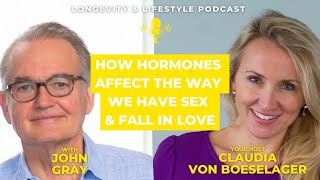
John Gray, author of Men Are from Mars, Women Are from Venus, explains how testosterone, estrogen, dopamine, and prolactin drive attraction and bonding. He says men need to ask questions and plan novel experiences, while women should avoid complaints and create anticipation. Ritual and novelty trigger hormonal spikes that sustain passion.
Chapters
Hello, John, how are you? Good afternoon, Claudia.
Thank you so much. I'm writing now again, and I'm, I'm in a timeless zone, so I really—
flow state, the optimal thing we're all looking to achieve as well. Good to see you again, and thank you so much for making time. And it's perfect because it's just before Valentine's Day, so So relationships are on everyone's mind. You are a total professional speaker, much better than I am, so I won't bore you with anything. It's a global audience in 110 countries around the world, so everyone needs your relationship advice, John.
Thank you so much.
Welcome to another episode of the Longevity and Lifestyle Podcast. I'm your host, Claudia von Boeselager, here to uncover the groundbreaking strategies, tools, and practices from the world's pioneering experts to help you live at your best and reach your highest potential. My guest today is none other than John Gray. John is the author of the most well-known and trusted relationship book of all time, Men Are from Mars, Women Are from Venus, listed by USA Today as one of the top 10 most influential books of the last quarter century. Dr. Gray's books are translated into approximately 45 languages. So for those of you around the world, this will definitely be of interest. Dr. Gray has written over 20 further books. His most recent book is Beyond Mars and Venus, and John helps men and women better understand and respect their differences in both personal and professional relationships. And we will dig into all things relationship today. John, it's such a pleasure to welcome you on the podcast.
Claudia, what a pleasure to see you again. Thank you again for having me on your podcast.
No, my pleasure, John. And I had the pleasure of seeing you speak live. Obviously I'm familiar with your work from before, but for all those listening today, you're in for a real treat because anyone who listens to John can be captivated for hours and hours and hours. So we'll hope to have an interactive conversation today. I will try to remember to ask questions because John covers all topics so beautifully as well. But I'd love to kick off, John, with you sharing for those perhaps unfamiliar, a little bit about your very interesting journey beginning in Texas, going to the Maharishi Mahan Yogi for 9 years, I believe it was, and on to becoming a world-leading relationship expert. Can you share a bit about your story?
It's always funny when people are known for something and kind of go, how did that happen? Even before I became an expert on relationships, I was an expert on sex. And before I was an expert on sex, I was a monk who didn't have sex for 9 years. Okay.
This is the spectrum, right?
Really cover the spectrum. Well, for me, even my teaching is very, a little bit different from most people's teaching on sex, which is, it's usually about technique and it's about increasing pleasure and more pleasure. And mine is using pleasure only to use pleasure in order to create more love. That's what sustains passion for a lifetime. At 71 years old, I have amazing sex life. I've always had an amazing sex life. And it really is not a sex life. It's a making love life. But sex is a part of that, a big part of that. And most people, when they start to feel pleasure, kind of like when you're eating ice cream, if you eat ice cream, you just want more and more. No matter how full you are, it's so pleasurable, you can just eat more and more. Well, when people have sex, certainly this is— it feels more and more pleasure, feels great. And then it doesn't. And that's why people have to start using vibrators and they have to start using whips and they have to start having threesomes and they have to use porn and all these other things to sort of keep it alive. Because pleasure is not the point. Pleasure is just what our animal nature— it's so pleasurable that it will make us make babies. But as soon as you've made babies, that's it. You're not interested in sex if you're an animal. They only have sex at certain times when the female is ready to make a baby. So as humans, we have the ability to be sexual all the time, whenever, in the appropriate situation. But it burns out real fast because we're not animals, or we can be like animals. But if we use our lower self and integrate it with our higher self, which is love and wisdom, love and wisdom. So use your sexuality in a way which is in order to increase the feeling of love. And that can only be, and I would say only in my limited perspective, with somebody you deeply care about in a monogamous relationship. If it's not a monogamous relationship where you have a commitment to this person, what happens is you get lost in just trying to seek out more pleasure and more partners and newness and whatever. As opposed to taking the sexual energy, feeling it, and then don't run with that, but run with it to express more love. You know, like with my partner, I can say, or making love, I say, you know, you're the most beautiful woman in the world for me, and you're the only one I want to be with, and I'm so lucky to be with you. That touches a woman's heart so deeply because it reaches a very deep core of women which needs security. To meet and feel safe. Because when a woman feels safe, she can open her heart. If she doesn't feel safe, like you're gonna come and go and you're gonna be gone, now she has to start all over. So when she, when she doesn't feel safe, she can't make as much estrogen. Estrogen is the magic hormone that allows her to be orgasmic. So you get to much higher levels of multi-orgasmic pleasure if a woman feels loved and safe. And ironically for that, if a woman feels loved and safe at a very high level, a man's hormones that get produced in his body are different than regular sex. And he actually— they've done the research on this, and married men who have a good sex life, their body makes a hormone after sex as a result of sex called prolactin. And prolactin is, for a man, the monogamy hormone. You know, people are going, what makes men monogamous? It's getting married and having a successful relationship. Now you start becoming more and more monogamous. Monogamous. Other women as sexual creatures become less and less interested in me, but like beautiful flowers that they are, but less and less of a need to connect with them because I'm getting what my essential nature requires at a higher level, which is love. And so you can measure this in married men, they make prolactin, and single men, they have sex, they don't make prolactin. And when you don't make prolactin, then when you have sex, you lust after more sex with a different partner. And that makes it harder and harder. And then when you, you know, if you have a girlfriend and you're somewhat in love and you're having sex, you'll make a little prolactin. Marriage will produce a lot more prolactin. Now the downfall of this is, and it's a downfall for all of our relationships, is the newness of a relationship, novel experiences. That means new and different. Oh, we're going to go to Napa and we're going to have a wine tasting. We haven't done that in a while and get a hotel room. That's a new and different place. Sex is gonna be better. Happiness is gonna be better. And it's only better because women need that novelty in order to feel more estrogen. And when women feel more estrogen, then men's testosterone goes up. So that's the male desire and enjoyment of sex, but not just the sex, it's his capacity to love. Whenever a man stops loving, It's because he feels inadequate. That's it. And that's why newness of a relationship is great, because he hasn't yet heard a complaint from his partner. He starts out fresh. You know, it reminds me of when, when I was in school, which I didn't really like. I think they're all stupid. But anyway, that's my point of view. I like learning certain things. But anyway, I didn't like school very much, and it would bore me and I'd fall asleep. Every September when the season would begin, I had so much energy, you know, because I wasn't backlogged on all this history, you know. I'd had no baggage of the last semester. It was like having that new beginning. And that's what happens for men when men feel like, I have a new beginning, a new chance, I can do well— surges of testosterone. Now that's what we need, relationship skills. That's why I like Valentine's Day as one of those basic relationship skills. Which is it's an opportunity for him to bring her and do something new and different from the routine. Break the routine, do something new and different, and provide a higher level of validation for her that she's special. Now, a lot of men just think, what is this? I don't need, I don't need that estrogen, so I don't need to feel so special. Every day is a Valentine's Day. No, every day is not a Valentine's Day. Every day is not that. You're doing your best every day. But this is above your best. You put in extra effort on that day. You know, I put in effort into my relationship, but women need, women need times, you know, birthdays, anniversaries, special occasions. And Valentine's Day is one of those special occasions where you go a little bit more than normal. And it's really the healthiest thing in the world. Everything can make me happy. I'm a good guy, I'm a good husband, I'm doing all the good stuff I do. But women need to feel special. That's why monogamy again is another aspect of this, which is you're more special than anybody else. I prioritize you, not just with my attention and my affection and my warmth and my body and the way we talk to each other, but also with my money. Okay. And your money. We do this together. That specialness is very, very important for women, for their estrogen levels to go high. Because for women, if estrogen does not go high, they can't feel romantic feelings. This is why Often in marriage, after many, many years, women don't feel a lot of romantic feelings, and part— and men don't either. And part of that is because at the newness of a relationship, you make that newness brain chemical called dopamine. Now dopamine gets produced. Now one of the functions of dopamine, besides giving you a feeling of aliveness— I'm excited, I'm ready to get up, go— all right, dopamine stimulates testosterone in men. And dopamine stimulates estrogen in women. So what you get, the sexual attraction between men and women, the foundation of feeling all that pleasure, which then allows you to go to a higher level of love. The, the foundation of testosterone, estrogen creates the attraction. In the beginning, it's being caused by newness. I don't know you yet. I've never seen your body. We've never had this interaction. I can take you to all the things I do, and that's new. And she can share the things about her life. And that's new. Just like when you probably saw my dog walk by, it perks your attention. Something new and different. What's that walking by? You see that? But once things become familiar, okay, routine sets in. Literally something happens in the brain which is called habituation. And you just don't make as much dopamine. It just stops making dopamine from your relationship, from your partner, from your wife undressing in the bedroom, you know, for— in our relationship, which was one thing my wife wisely does, she would undress in the closet. So I don't get to see stuff that often, you know? So at least it sort of perpetuates, but that's just a little thing. The point of this is that you're not gonna get free hormones, testosterone in men and estrogen in women. You don't get it automatically after a while in a relationship. We can do little things, and that is like Valentine's Day, doing something out of the normal, doing something different, new and different, that will give a trigger for it. And so that's, that's a standby, a practical value to the special date. And by the way, it doesn't always have to be on Valentine's Day because sometimes you can't. My wife and I, we just said, let's make another day for Valentine's Day because it's easier to get reservations and there's more room at the best hotels or whatever it is. So you get better deals. All, you know, these are fun things to know. But the, the free hormones from newness go away. So what do we, how do we keep the passion? We do certain things like on Valentine's Day, special gifts, special responses, our best behavior. Like for the week before Valentine's Day, a woman could practice never complaining about anything. A week before that, she could share with him, oh honey, I was thinking some nice things we could do for Valentine's Day that would be really special. She can help him. Don't be an immature person thinking he should know everything. Men don't know everything. So what you do at that point is a couple of weeks before you say, I was thinking about Valentine's Day and something special we could do that I would love is this, this, or this, and would you pick? See, that's much more romantic than she says, honey, I want you to do this. No, that's not it. It's got to have a little surprise to it, a little bit of him coming up with it. That makes— that's a feather in a woman's cap, because let's say I picked going to see Hamilton. That was one of my best anniversaries. I got good seats for Hamilton. So, and but she told me she wanted seats at Hamilton, but she also wanted a few other things, and she said, you pick. And so I picked that, and then we went to Hamilton. Then everybody said, well, you know, did you tell John to do that? And she says, no, John just picked that. See, because if she's in control, It's like not a feather in her cap that she came up with this, that she made it happen. And let me give you an example of that. These are just simple, playful things. Imagine a woman's working in her office and a delivery man comes up and delivers roses to her. Well, that's a feather in her cap that my husband arranged this to happen for me. Not like she did that for him. Now, and he feels successful when she says, oh, everybody loved it when they saw the roses. What does he feel? Yes, I provided that for her. So when a man succeeds in providing something that makes her happy, that's a feather in his cap. And for a woman, when a woman is treated in a way that's in a sense one-up better than everybody else in the office, that's special. That's what special means. Then her estrogen goes up. So we're really dealing with men and women are truly different. And what makes us different is our genes, okay? We have these genes, the genetics of the genome of a woman is different from the genome of a man. Now, every man has a little variety in his genome, that's the genes, and every woman has a variety, but all women have a very similar genome that's very different from the male genome. So there are these realities, and what we wanna do is activate the optimal gene expression in a woman by doing these certain things, which will lead to her feeling more love and more happiness and less stress in her life. And a woman can do things that will optimize a man's genes to go in harmony with his, in a sense, ideal genome, because the genome needs interaction to be expressed. So our genes only get expressed if, if, like, I have the expression of I want to write a book. Okay, I'm a writer and I'm going to be motivated. Well, in the past, what really motivated me to write my first book, of course, was to help people. But now I got 20 books. I don't need to write another book. To help people. Okay, I can just talk about this one or this one or this or this one. But when new science comes out, and I can now realize, oh, I can help people even better than these books, because there's new science to validate how men and women are different, which is my theme. People don't realize how men and women are different. And people who do accept that men and women are actually very, very different, if you, if you accept it, you still don't understand how to utilize that knowledge. And how to correctly interpret it. Like with Valentine's Day, it's like a metaphor of everything important for men to know about women. And what that is, is for a woman, little things make a difference equal to big things. So all acts of love that I can do for my wife have the same response estrogen-wise in my wife, whether I did something big or something little. So I can say, honey, I made so much more money this week. And she goes, oh good, we have more money to pay the bills. So that's a surge of estrogen. I can also come home and say, honey, where are you? I want to come give you a hug. And so I find her to give her a hug. Now she knows every day I'm going to give her 4 hugs, different times in the day. When I get up, when I go, when I come back, when we go to bed. She's always around that time, she's going to get 4 hugs. Now why do I do that? Because 4 hugs is, think of it like 4 points. And being a good provider, which I am, is 1 point. That's all it is. Every day I get a point for being a good provider. I get a point for coming home or connecting with her every day. He came back, he's back. So that's another point. And then I get another point because I'm monogamous and she knows she's special. Now, people might say, hey, if you only get 1 point for monogamy, what's the deal with that? I say those 3 points are the golden points which allow her to then shift mode to a hug is equal to every other thing you do for her, where a compliment is equal to that, where manners of when you're walking in the street, the man walks on one side to protect her from the cars going by, a little consideration of that, a pause to notice, oh, what a beautiful moon it is tonight. And just, yes, let's enjoy the beauty. That validates a part of her that wants to just enjoy the moon or needs to be reminded that this is a special moment to enjoy a beautiful sunset or a beautiful this. And men often don't see those things. And when a man doesn't acknowledge or see those things, the message a woman gets is she doesn't see— he doesn't see my beauty. These are beautiful things. I value beauty. And while men do, it's sort of a subconscious evaluation of beauty. It's not always articulated into words. And words Ultimately, we know when it comes to the porn industry, words are porn for women, and naked women online are porn for men. But what we're going to do is come back to these natural genetic differences, which is words of acknowledgement. So I want to share with everybody who has a sexual partner for this Valentine's Day, when you're making love with your partner, men, try saying something along the lines of, while you're having sex instead of this quiet thing going on. I just love you so much. I'm so lucky to be married to you. I'm so lucky we found each other. Uh, at the restaurant tonight, I looked around and you're the most beautiful woman there. I felt so proud that you're my wife. See, these are things a man can say that he actually feels, but he never puts it into words. You see, we can feel these things and they just drift away. Now, likewise for a woman, what she can practice is Valentine's Day. Is when your husband— first of all, whatever happens, don't complain about anything. Even if he takes you to a restaurant and the soup is too cold, don't even complain. This is a special occasion, okay? On special occasions, you don't need to change the restaurant. You don't need to get, you know, I want to speak to the manager. You know, this soup is too cold. I should have warm soup. You know, let it— forget about anything not perfect. Just focus on the good. On this special occasion. And other times you can say something, but you don't realize as her estrogen goes up because he's doing something for her. Estrogen goes up when you're depending on someone for something. Testosterone goes up when you're depending on him for something. Or when children, for example, need their mothers, testosterone goes up. When clients need your, your expertise, your testosterone goes up. And that's good for women, good for men. It's just that men need 10 times more. Men need 10 times more, particularly maybe even 20 times more when they're to be romantic. See, this is amazing concept here. It's when a man's testosterone can go so high in the presence of a woman, what happens then is his estrogen also starts to go so high. If a man's estrogen goes too high compared to his testosterone, that means he's more feminine than masculine, then he'll be needy, he'll be moody, he'll be picky, he'll be demanding. The worst qualities of masculinity only occur biologically. What's correlated with that is whatever his mindset is, is the mindset is not producing, actually not activating the genes to express themselves as estrogen rather than to express themselves as testosterone. We need to have this balance inside of us. Genomic expression is like the foundation a great romance, but we're out of balance. So romance helps us come back into balance, which is men being primarily the givers and women being primarily the receivers. But a woman's job as a receiver is to be good at helping him be successful at giving. So that's why you want to spend a few weeks before, or even the day before, you could even say to him, now, honey, this is a special occasion. So these are 3 things I would love, and this is what it would look like. You'd wear your blue suit, or you could wear your green suit. Give him a few options. Always give options so you're never telling him what to do. But these are things that would make me feel really special. And a lot of women don't have the courage to even say on Valentine's Day, this is a day to make me feel special. And what would make me feel special if you went and got a card and said something sweet that maybe you've said 50 times 10 years ago, but I'd love to hear it again. Women never get tired of hearing I love you, you're special, you're so important to me. Oh, your hair is beautiful. Oh, I love, I love that outfit you're wearing. Now these things, that one is not so natural for men to say because we're not so fashion oriented. But you can practice a few little lines there that will at least let her know that you notice, that you see. Because ultimately for women, I'm seen, I'm heard, and I'm heard in a positive light. Well, you will always be heard in a positive light, women, if you practice not complaining on the romantic date no matter what. So an example comes to mind for me is actually so romantic that I, I realized that was the moment I wanted to marry my wife. And I was driving her to, we were going to a seminar event. It was another town. And, and, uh, it was, we're gonna be late because I realized I'd taken the wrong turn. And I saw a sign that said, you're now entering the state of Nevada. And I was supposed to be in California. So I pulled the car over. I felt highly embarrassed cuz I'm dating this woman.. And, and I'm thinking, oh, she's gonna be so upset. We're gonna miss the talk. And we took the wrong turn. And why wasn't I following the map? What's wrong with me? I'd heard that before from other women. I tend to be a little absent-minded and timeless in my, cuz I had this meditative background. But anyway, so I pulled the car over thinking, oh, she's gonna be upset with me. And it was the sweetest thing she said. She said, I don't know where we are either. 'But this is the most beautiful sunset I've ever seen.' I just felt like I wanted to drop to my knees and thank God. This is what I want in my life. Now, not that she's going to be that way all the time. We're human, we make mistakes. But on Valentine's Day, practice your best behavior. For women, don't complain about anything. And make a point— and here's something you can do all the time, it's just good behavior around a man— he's talking and he pauses If what he says makes sense, say that. Oh, that makes sense. 20 minutes later. Oh, that makes sense. You think he's gonna get tired of hearing that? He doesn't even know you're repeating the same thing over and over. Just like a man can say to a woman, I love you many, many times. You can say, that makes sense. Another one is whenever he's right about something, you're having a conversation. Well, you're right about that. That's true. Okay, see, you acknowledge you're right about that. Men so much wanna be right. Women wanna be right.
Affirmation that helps the testosterone levels, would you say?
Yes, yes. Positive affirmation, what he thinks and also what he says or what he did, which is helpful. That was so helpful. I'm so glad we did that. Oh, I had so much fun. See, these are positive messages. Say what he did provided something. So I take my wife to Hamilton, you know, she just buttered me up. How did you get these seats? You know, this is amazing. I'm so lucky. We're so I just keep thinking about the songs. It was so great. So this is, you know, on the trip home where this is her foreplay for great sex with me is that she's acknowledging not me. She's acknowledging Hamilton and what Hamilton's show did. You see, this is what women have to understand is what a man provides that you want to love. And that's why complaining about anything, but particularly about what he provides, you might think, don't take it personally. Oh, that, that movie was horrible. She doesn't realize that emotionally, if a man provides a movie for you, he wrote it, he directed it, that's his starring role. So you can acknowledge what he provides. That was so great, or that was wonderful, or the moon tonight is so beautiful. I feel like on an emotional level, yes, I provided that moon, and now I'm aligning myself with God. You know, so this is how to boost him up to have a wonderful Valentine's Day.
Really, really fabulous. I love sharing this with my audience, and thank you for expanding on it, the hormonal impact as well, because I think many people don't consider that. It's more about, you know, being a lot in the head as well. But if you really— it's a biochemical reaction that happens in the body, and you depict it so clearly, I think, to help people really understand and share the strategies. And so, you know, just to kind of summarize a little bit, you'd say, John, that, you know, focus for women to let men know what they've done right and reaffirm what they've done, and vice versa, that men can obviously look beautiful, you look nice, and just really, really support them. And acknowledging in a positive way, ideally with flowers in front of their office colleagues, as you mentioned as well, how special they are. So it's for building that connection in order to have great relationships and great sex as well, as you were saying. Is that a fair synopsis?
Very good. And as you review a lot of those ideas, I've become aware of what I left out. The most powerful every day, every day, but even particularly on Valentine's Day is where you— because it's a special occasion, your brain is going to be going, got to practice this now, I got to practice this now. What you need to practice, men, is asking more questions than talking. Okay? I still have a sticker which says don't talk. I'm such a talker. All right, you can see I can talk forever. So for me, particularly if my wife says something, I'm ready to talk a lot. If she says something, ironically, if she doesn't say anything, I have nothing to say. But I will bounce off of things, or if she needs something, she wants some advice or whatever, but she's very self-sufficient. And so basically she will start to talk about something and I will have an— I have an opinion on everything. It doesn't mean I'm right, but I have a point of view. I feel very confident about my point of view and that suppresses her. So this is what men sort of have, this built-in gene which is confident until I'm proven wrong. Okay, so If nobody knows the answer, I got an idea, and will be very confident about it. Women will tend to research things more before they build up confidence. But you can see this in boys in school. Teacher asks a question, they all raise their hand, and the girls are like, well, I don't know enough yet to give that answer. Okay, 'cause she literally wants to form an opinion based upon many, many points of view and experience. Men, to feel like they have a good idea, they don't need a lot of experience. Whatever pops in their brain, they can tend to be very confident about it. And I'm just saying to the men, that can make a woman feel not heard, that can make her feel excluded, that can make her feel like her opinion is not important. Like, one example of this was when I married Bonnie, and, you know, we went on one of our vacations, and Bonnie had two little children before we got married, and then we had a child together. And so it's our first summer vacation with her kids, and she was pregnant. So I said, honey, I was thinking this summer we could go to Disneyland. And she immediately took that personally, like, you just decided. And my experience, I didn't just decide, I'm just thinking. But I just said, I think we ought to go to Disneyland, but with so much confidence. In her mind, it was like, you're not open to my opinion, like what I care about. And men don't realize this. It's just our attitude, our tendency tends to be sound like we don't care about what you think, when really we're just throwing out that idea and you interpret it as you can't come up with another idea. So just know that when you hear her say something, don't just immediately come back with a response. Instead, use these 3 phrases. One is, help me understand that better. That's it. That's showing interest. Okay? That's showing interest. And then to show more interest, because remember, the more interest you put on her is going to raise her estrogen more. See me, hear me, touch me, love me, validate me. That's our female side. And that's what you want to, particularly at that special occasion, support her female side. And, and, you know, when you get into the routine of being married or whatever, you, you've seen your wife before, so you don't always notice she's in the room. It's just, or you don't even notice that she's undressing, you know. He's like, okay, nothing. That's called habituation. So you, you want to fight that. And the way you fight that is by consciously choosing to acknowledge. Like, we go into a room, I always want to go into a room with my wife's there, I go walk by her first, maybe touch her shoulder, stroke her hair. Hey, honey. And just nothing but just to acknowledge she's in the room. Then when she leaves the room, this is very funny. Sometimes she'll sneak out of the room at night. I'll be watching maybe the news and she wants to go to bed. I just say, oh, honey, are you going to bed? And that's a point. You see, that's a point. I'm a good provider. That's a point every day. I notice she's going to bed before me. I just notice it. Oh, you're going to bed. If you're going on a long trip, you say, oh, does anybody need to go to the restroom? You know, that's noticing, noticing other people have needs. Very, very important stuff. If you're going on a long trip, know that women's, their biology is different in how they process carbs. A woman will not have any warning that her blood sugar, that's from your carbs, has dropped. Now, as women, many women, because they've eaten too much sugar, bad fats, or whatever, They have a— we all have a tendency to have unstable blood sugar. Well, for women, it's much greater. For women, what happens for them is they have no warning from normal blood sugar to a dramatic drop. And when there's a dramatic drop, she will stop making the brain chemicals of happiness. Okay, so she's suddenly unhappy. If she says, let's stop and get something to eat, code blue alert, get something. Even better, open up your little glove box and pull out a little candy bar for her or something healthy for her. And that's showing your consideration. Another thing you can do is when you're planning your date to go somewhere, in your mind, men, think 20 minutes before I would normally choose to go. 20 minutes before. So if there's a traffic jam and she's worrying, are we going to get there on time? He said, oh, I planned it so we have an extra 20 minutes just in case this would happen. Big points. A man who thinks ahead, a man who thinks about his future. And these are Subtle messages over and over and over, letting a woman know that she's safe, she's special, she's a priority. And then some men will say, well, what about me? Well, I did say women don't complain a few things there, but the bottom line, if you do these things successfully as a man, she will give you what you need automatically. If you give a woman— respecting her, understanding her, caring more for her— she will trust you more, she will accept you more, all your flaws, and she will appreciate what you do for her. Rather than take it for granted. So we are so reciprocal in this way. But what we need is, again, the right hormonal balance. And what really restores the right hormonal balance, which puts us in harmony with actually the set of genes that we're born with, because we go out of genetic balance as women become more like men, men become more like women. We have to restore that balance. And again, the behaviors I'm describing on Valentine's Day actually help to do that, or any special occasion. Or every getaway, you know, every— ideally every week, there's something special that two of you do where the kids aren't around. That's an important thing too. But the bottom line here, the greatest of all things that I keep not saying is listening to her when she can talk and you don't interrupt and you don't rush her to get to the point. Researching this new book I'm writing on our genome and our genes, talking to all these really advanced scientists. These are, these are, and they can go down rabbit holes and have to learn a whole new language and everything. And I just kind of, would you get to the point on that one? Would you get to the point? They're like, women, they're going on. I'm like, but with a man, I can say, hey, cut to the point on that. What, why are we talking about that? You don't do that with a woman, okay? You don't do that with a woman. But what you do is, well, help me understand that better. If you want to sort of point it in a direction, because men kind of go, where is she going here? You know, she's like opening up her purse and pulling things out, you know. I don't know what is the goal. What am I supposed to do? Well, I'm going to tell you what the goal is, man. What you're supposed to do is patiently show interest in helping her express whatever's inside with great understanding, without judgment or criticism or trying to stop it. And if you try to stop it, it will last longer. Some men will laughingly say, oh, if I listen to my wife, she'll go on, tell me more, she'll go forever. I said, no, she won't. No, she won't. You have a history of her going forever whenever she did talk because you keep interrupting her. And it's a sense if you interrupt her, it's like you have to start over and then start over. I have to say it a little differently. He didn't get it. So she hasn't gotten it all out. And it's surprising to me how good women can be when they feel safe and articulate, expressing what's going on inside. And your whole key there is to validate. And the way you can validate— you don't have to agree with whatever she's saying. Validation just means I can understand how that must feel. And I guess that's frustrating for you, or that's disappointing, or that must make you so happy, or that, that's a good idea too. You can do that with her. But the key thing to this is getting her to talk, getting her to feel safe. And our tendency as men, if a woman starts to talk, is to get her to the point, to solve the problem, to try to fix it, when really solving the problem, which we love solving problems because it raises testosterone. Solving problem. The problem is she needs someone she can share with and feel safe. You see, a woman doesn't undress in the workplace. It's not safe. She'll draw on people being critical and judgmental and look at that, look at that, look at that. So you feel safe by putting on clothes. Well, in the workplace, women feel safe by suppressing their emotions and their feelings. They don't let them be known, and you shouldn't, by the way. So other woman who teaches these ideas, her ideas about gender says, women, you need to express your feelings in the workplace. I say, yeah, and you're gonna get fired. Men know you don't do that. And I don't complain to my clients either. You know, I'm serving them. The workplace is a different dynamic of where we're selfless serving others. It's not primarily about us. The outcome is for us to get paid so that we can go into a relationship at home with our spouse and our family, which is a give and take. I'm here to receive, but I'm also here to give. We're giving and receiving and trying to find an equitable balance there. But the workplace, it's a different dynamic. And women going into the workplace, they have double the stress of a man. We know this is factual. Okay, you can measure stress levels by cortisol levels. You measure cortisol level of the workplace, and it could be the actual workplace or a way a woman interprets her workplace, or even if she has a healthy, happy workplace, but if she's solving other people's problems all the time, waiting to get a reward for it, what happens is she's making more male hormones than female hormones. And whenever a woman is making more male hormones than female hormones in balance, okay, there's a balance they need. That's too far on their male side, not enough on their female side. Their cortisol levels will go high. And those cortisol levels and other studies show that when women return from work, whether they like their job or not, their stress levels are twice as high as men's in the workplace. And when they return home, whether they're married or not, their stress levels double again. So this is really a hard thing for women. They're having to adapt to having jobs to make money. You see, the instinctive thing in women, the basic genome of a woman produces estrogen when you're nurturing a child or when you're nurturing someone who needs your help, not for money, but out of love. You see, love is the whole thing. And yes, you can love your clients, but are you really gonna do that for your clients if they don't pay you? If somebody doesn't pay you, see, your children don't pay you. You never get paid by them, but you do get, and that's called giving from a place of love rather than giving from a place to get a reward. Giving to a place to get a reward, still good. We all need to do that. But that is more of our male side. And for women, the most powerful estrogen stimulator is to give from a place of love. So, you know, we all know giving makes us feel good, but you give to children, you give to your garden, you give to helpless people, or you give unconditionally. See, those situations, you can't get anything back. Okay, what's everybody get back? Forces you to access a part of you which is unconditional. And that's your loving side, and that's your estrogen side. And women are— really don't have enough time to do that, so their estrogen levels go down. That's one aspect of it. So romance— this is a great solution. Romance saves the day. If a woman doesn't have estrogen production because she's nurturing and feeling safe and feeling relaxed in her life, romance says you're special and I'm here, I've got your back, I'm thinking about you, you don't have to think about me. This is all for you. So she gets to not only get that on Valentine's Day, but even more powerful than getting it on Valentine's Day is anticipating getting it on Valentine's Day. So anticipation is a huge process for women to pump up female hormones. And then one example of that, which I'm thinking about very playfully, is how many days in advance my wife packs when we go on a vacation. She's already 2 weeks ahead. We'll go to Hawaii. She's already putting outfits out, she's organized it, she put the whole thing together. I pack in 30 minutes, okay? It's done. I do it on the morning before I leave. All of that anticipation of something good happening is pumping up her estrogen all that time. And when a man has these good skills I'm teaching them, you don't have to do it all the time. You know, you're a good guy, but you don't have to like work so hard. Just knowing there's, there's places where she can anticipate she's going to get it then she's gonna be getting her female hormones all week long because she knows there's gonna be something happening on the weekend that's special for her. And then over the year, there's this buildup inside of women. And on an emotional level, am I really that special to him? And it's not a reflection on him at all. This is something called habituation. It's just biological response, which is countered. It's countered by another biological response women have, which is anticipation of something special is gonna happen. So something more special than just the weekly date is going to happen on Valentine's Day. And it's kind of like all year long for women, they're kind of, well, let's see if he really loves me like he used to. Let's see what Valentine's Day is going to be. And a man doesn't get this because men are like, come on, of course I love you even more because I provide for you, I'm committed to you, we've had all the experiences together. How can you be thinking I don't love you as much? Because She'll think that way because you're no longer doing like all those little different things, new and little things for her. Because in the dating, that's all you can do as a man. You hold her hand, you put your arm around her. Oh, that's so interesting. I didn't know that. Tell me more. And then once you know your partner, there's no reason to do that stuff. So it kind of fades in the background. But men do not realize how important it is for women to have special occasions. Also, they like to look pretty. And they want to put on a little more makeup at that time, wear some more jewelry at that time. She needs to dress up. Not all women, but my wife for sure. She's got all these beautiful— where can I wear them out? You know, John, you got to take me somewhere and then you have to put on a suit. So again, one of the things we did when it comes to this whole idea of choices, Bonnie would say to me, now this is special occasion, so I want to be your fashion director. Is that okay? I said yes. And then she goes in my closet and then she says, well, there's this and it goes with this, or there's this and it goes with this or that. Two or three different choices. That gives me my power back as a man, which is I'm in charge of what I wear. Because the way I remember this bad habit in the beginning of the relationship where I first got dressed in one way, we went out on a special occasion dressed in a special way and allowed her to dress in a special way. You don't want to Go out in a beautiful outfit and jewelry and everything and have your husband looking like a, a, what are those guys with a, that Google executive who only wears shorts and who's got so much money he doesn't even dress up. See, in high-tech land, they all dress like slobs, you know? And there was a place where I was very successful and felt like I don't have to dress up at all. And I had these, this jacket I used to wear until one woman said, I thought that was, I wasn't sure if that was you or a homeless man.
They're really amazing tips. I wanna touch on this topic for some people listening that might really struggle with relationships in general, right? I love these beautiful tips for how to improve relationships, but what if some people listening have experienced some sort of relationship trauma? What is your advice on healing that before perhaps looking for a new relationship or dealing with previous relationship trauma to show up as a better person in the current relationship? What do you advise?
Okay, there, there's a I've got a lot of books on these things, right? And there's one called Healing— it was one, one called Mars and Venus Starting Over. It could be after death or after a breakup, after a divorce. You know, you have to start over each time, right? And there's a lot of things we do to sabotage starting over. So let me give you some statistics for a moment. A failed relationship for a man and a woman, we'll call that a divorce. And statistically, a man is already married 3 years later. He's not carrying that trauma with him, at least consciously. A woman waits 9 years, and many of them don't get involved again. These are statistical truths. Now, why does she take so much longer? Because women, in order to have well-being, they need to have more estrogen. That's a part of their genome. Women perform better. They are who themselves. They have good self-esteem. They're happy and fulfilled is equated with the expression of the genes that produce estrogen. So you need to be producing that estrogen. And a devastation of a breakup makes you feel, I don't know what I did wrong, and therefore I'm powerless to get what I want. And you see, whenever you— most women, not all, but most women will blame the man for his deficiencies in the relationship. Many times they're very obvious after many, many years. It goes from I'm ignoring you to I say mean things to you. That's called escalation. But it starts with he's ignoring her, and she's not appreciating him anymore the way he used to. And then when he doesn't feel appreciated the way he used to be, then he's not as motivated, and he doesn't do things. And then when he doesn't do things, she goes into, well, he's changed. And when he's changed, he's not doing those things. Let me be— let me take the higher road and be more loving to him. And when she's more loving to him, she tends to give what she thinks should make the relationship work. But the relationship didn't work. Why didn't it work? Because her choices to give more are not those things that are most valuable to a man. Okay, that's it. She's going to give more, but it's not what he needs more of. He's never been taught the differences between men and women, how to bring out the best in a man, or how to bring in the worst of a man. So for example, women, what they'll tend to do is they'll give, and then they feel, I didn't get back, he didn't come back to me. And so then they feel resentful. As soon as you have any resentment, you've just sucked all the air out of a man's testosterone. If he's the problem in your life, there's no— gonna be no more passion. And if you don't have times to make love where you're actually making love, it goes away. You have to keep— like, you have to keep making dopamine, you have to keep making testosterone, you have to keep making estrogen in your body. Well, in your relationship, you have to keep making love. Rarely are people having— almost impossible to be making love regularly and want a divorce. So basically, when you don't know how to make love in a relationship, both outside the bedroom and inside the bedroom, then what occurs is resentment builds up in her. And every time she does something for him now, which she thinks is going to make the relationship better, uh, everything she puts effort into the relationship and it doesn't come back, she now builds like a little brick of resentment. And then another brick and another brick around the heart until she's got nothing left. And she's not going to be able to open her heart again to another person until she removes that wall. And that's called healing trauma. Healing disappointment, healing sadness, healing anger. And in a relationship, without having to actually do a lot of deep work, which I, you know, some people can really benefit from therapy, other people are not interested. My books teach you how to do it for yourself, which works for some people. Some people need someone to do it for them, with them. So there's a lot of range here, but none of that works, in my opinion, if you don't first recognize that relationship failed because of him, talking to a woman, but also equally because of me. And there's no way— at least every woman I've counseled, and there's thousands of women I personally counseled, and millions I've counseled in front of stages and audiences and bring people up and people clapping and all that because they're relating to it. So this is what I've seen over and over, is that women do not see how they contribute to the problems in relationships. And until you see how you contributed to the problems in the relationship, you can't trust that I can do something different and have a better relationship. Men tend to think, if I can just get a different woman, I'll have a better relationship. But women will think I'm powerless to get a better relationship. And they go into fear of I can't trust men, I can't trust myself. Now, ironically, most people, most women don't see When they go in and they say, I can't trust men, which is a block to opening your heart to men. But actually at a deeper level, it's not just I can't trust men, I don't trust myself. This is a key, key thing. If I don't trust myself, what that means is I fell in love. Every woman, when they get married, he's the one, I love him, this is great, I found, finally found the right man. Women are looking often many for their whole life, you know, they're looking I found him, okay, and now everything's going to be better, as if it's all the man. And then when it doesn't work out, it's all the man. And it's my mistake for picking that man. And sometimes you made a big mistake by picking the wrong guy. There's no question about that. But the reality, even when you pick the wrong person, as the problems increase, she doesn't realize how she was an equal part of the escalation of bigger problems. You know, when a couple comes to me for counseling, when I didn't understand the dynamics of relationship the way I did, I learned I bring a couple in. Okay, what's the problem? Like a typical male, you know, let's solve the problem. Okay, what's the big problem? We'll solve it. And then I realized solving the big problem is very, very hard. Okay, very, very hard to solve the big problem. So let's put all big problems to the side and let's start solving little problems. And once you're solving little problems that actually gave rise to those big problems, see, it's all escalation. You know, for many men, they don't go drinking unless because they don't feel successful at home. Many men cheating on their wives, only cheating on their wives because they're not having great sex at home. He's habituated to his wife. It's not as thrilling. A new and different woman approaches him, boom. And if he thinks, you know, he thinks, oh, if she doesn't, know what happened. It's not going to hurt her. He doesn't want to hurt her, but he doesn't know. And again, we just don't understand the energetics of affairs, whether it be a woman or a man. When you're making love with somebody else, you're robbing energy from the relationship, and then you have to start over, and there's a wound. You don't have to know. I've witnessed all this stuff where I know the man's having an affair, or I know the woman's having an affair, and because they tell me, but don't tell my partner. Okay, so I'm not going to tell your partner. And then I get to see their partner's a little crazy because they don't know what's going on. And so that's, that's a trauma that has to be healed again. And so healing trauma is its own thing. But for trauma to be healed, the prerequisite is personal responsibility. If you're just going to your therapist to complain about what's going on, you're just actually growing more pathways in your brain to see what's wrong with people. Rather than growing pathways in your brain to be more loving and accepting and appreciative and trusting and caring. And these are all positive attributes. But when we complain, it's addictive, particularly for women. Complaining is addictive. Now, as men are becoming more feminized, they complain, which is a sorry state. It's happening more and more. All you guys out there that can't sustain attraction, can't sustain commitment, don't want to commit, whatever, because you don't feel— a part of you feels powerful making promise and following through on it. All that is weak testosterone inside of you. And one of the major reasons for it— there's environmental factors that are affecting our genes, without a doubt. You know that pesticides turn little boy frogs into girl frogs. I mean, this is happening today. There's so much confusion, gender confusion today, but it's all about your hormones on one level, from one perspective. And one of the things that defeats a man's male hormones is to complain. Or to talk about his feelings. If you've got very good confidence and healthy male hormones, then it's great to talk about your feelings and bring your estrogen up. And now you've got them making love. Making love is— what's happening in a man's body when he makes love is testosterone is going higher and estrogen is going higher, and they're just going higher and higher and higher. And that's ecstasy. And, you know, here I'm at 71, I've never had better sex in my life because I've got my male hormones and I know how connect with a woman, so her female hormones go higher and higher. So this is what we can— this is the long-term benefit of a loving relationship. You cannot even get close to that with a stranger or with porn or whatever. What you can get in porn for men is a temporary surge of testosterone, which I'll experience for hours if I have time to have that much sex, and it extends into my life. Whereas for when you do porn, you do get a glimpse for men or verbal porn for women. And also therapy. For a lot of women who go to therapy, the way that's done therapy is verbal porn. She just gets to complain and complain, have somebody listen and go, yes, I know, yes, I know, men are terrible. Oh, he did that to you. And oh, he did that to you. That feels good. Just like a guy having sex with a woman he doesn't care about feels good. Women complaining feels good. And it's addictive. They did MRI scans of women who complain a lot. And who live in unhappiness, and they found that talking about her unhappiness or even thinking about her complaints produced so much dopamine as if she was taking cocaine. See, we get in this habit. So too much talking about problems unless you're sharing, like with a therapist. You know, all the women I see, okay, let's talk about what's going on. And then I hear what's going on and then I help them understand what their emotions are. When they feel, oh, I feel unloved, I feel ignored. But now feelings are not facts. And if you validate a feeling as a fact, you're only causing that person more stress. Feelings are not facts. Negative feelings— I feel ignored— if you keep saying it over and over, then you're just repeating, I'm not seen, I'm ignored, I'm no good, I'll never get that. It's like a fact. Well, in that moment you were ignored, but the other day you weren't ignored. But you see, so When you have a feeling, you always— they're a doorway to healing. You look at what your feelings are and then look at what emotion that causes. Now, emotions are not facts other than, yes, right now I'm sad, but emotions can't be sustained. If you feel an emotion and somebody connects with that emotion, then you let go of the emotion because you, you're basically connecting, and then you find another emotion. So I have a technique that women can do if you want to heal your heart. My book Mars-Venus starting over is just filled with these tools to heal your wounds, and also the wisdom to take responsibility of how you contributed to the problems. Not that you're the only problem, you contributed to them. That gives you confidence that now I can make a change in my behavior in order to get a different result. If you don't see how only a new seed can create a new crop, it's not a new man, it's you. You've got to find Wait, something I do that doesn't work, that sabotages that relationship. I misinterpreted, I reacted, whatever. So that's only one part of it. The other part of it, particularly for women, is processing the emotions. So that would be to start over again. You probably need to write about 20 to 30 of what I call feeling letters, where you think back to the relationship, you write that person a letter, and you go through a series of emotions that feel like anger, And then disappointment, which brings you to sadness, and then sadness and disappointment brings you to fear, worry. And go back to times where you were scared and imagine you're at that time writing out what you couldn't express at that time. I'm angry, I'm sad, I'm afraid, and I feel regret. I'm sorry I married you, or I feel bad I said this, or I feel ashamed that I'm in this relationship for so long. That's so horrible. You've got to get down to those deeper, deeper feelings that nobody wants to admit. And after every emotion like anger, you say what I want. And you say under disappointment, what I wanted. And fear is what I don't want. And you have to get back to desire and express those negative emotions. So 4 levels of negative emotions, and then several expressions of what I want. Then what you do is you imagine your partner listened to you and miraculously took 10 of my, read 10 of my books or took my seminars and could actually hear you and validate you and call and say, please forgive me, it was my fault. I did this and I did this and I shouldn't have done that. And you deserve this. You actually create the narrative in your imagination. First of all, what you're feeling, see, all of our emotions are based on imagination. We always imagine life to be worse than it is. We imagine it may be worse, but we imagine it to be worse than it is. So when you process through those emotions, then you imagine having someone— and really it's you loving yourself here— by writing out a letter to yourself from that person saying, I understand why you're angry. You're right. I understand why you feel sad. I'm so sorry. I understand why you're afraid. I promise I won't do that again. I'm going to do this for you. I'm going to do this for you because you deserve that. And I feel bad because, you see, they go through validating all your feelings. And then when it comes to that, I feel so bad that I said this or did this. You didn't deserve that. I'm so sorry. Please forgive me, please forgive me. And then what will happen is automatically you will experience, by creating this situation, the automatic forgiveness response. The forgiveness response is not what you did is okay, I let it go, I'm just letting it go. And when you let it go, I can move on. So as long as you have these unhappy feelings or fear feelings or judgmental feelings or criticism feelings, that's called an emotional charge about your ex. You're just not ready to move on. That's why you take a long time. And then you tend to find the same person, or you tend to think this person's the same person. And then you, you go, not good enough, not good enough. I can't tell you how many women in their 40s who are divorced, who date around, say, yes, he can do this and this, but I can't, I just have no feeling, you know, he's not the one. I can't get that feeling. I want to have that feeling of being in love. Well, that's your problem. But you can solve that problem of being able to be in love where now you can find a lot of guys that you can be in love with. And now you're picking from a field of guys who can do more for you that you also can feel love for. Be a source of love, a radiant source of love. You know, I see these people, they go, I love everybody. Well, that's rather unrealistic. They don't know everybody. The real test is to be with a lot of people, meet several men, and just realize I can love this man. I feel love., and then one's gonna really trigger you to go, I'm in love. You know, this is meaning basically your estrogen levels are going to super high levels, and that's gonna be some chemistry, but it's also based upon a lot of healing of the heart.
Such wise words. I love these tools as well. So thank you for sharing, John. Before we finish up today, for people wanting to maintain the healthy relationships, a loving relationship over prolonged period of of time, what would be your top tip? I know you've given several already.
I've got more and more and more, but here, here's what I'm gonna say to the ones who are dating. It is Valentine's Day and it's a dating time, and a lot of women have stopped dating. They're already imagining what this person could be. There's another way to date than most people date, particularly as you're getting older. At any time, if the clock's ticking, that puts a lot of pressure. But after the clock stopped ticking, There's still, I don't wanna go through what I went through before, so I gotta make sure before I, you know, have to take off my clothes again. So I have to go through that journey. So there's this concern, there's this goal, I wanna find the right guy, right? I gotta find the right guy. I suggest don't look for the right guy. Now I'll tell you why is if you're looking for the right guy, then you're gonna be testing them all the time. Is he like this? Is he not like this? He not like this? And your brain goes into a bias to look at negativity. Okay, so here, let me give you an example that everybody can relate to. You're buying a house. Okay, so if you buy a house today, my daughter, my, one of my daughters bought a house. And now what they do when you buy a house is, okay, you, you put your money down, you say, we may buy this house, but first it's conditional. I like this house. But it's conditional. I gotta hire some people, experts who are gonna come in and find out everything wrong with the house to see if it's worth it. Okay, this is what the brain does. You see a guy, he's dating you, kind of go, well, is he good enough for me? You know, does he have mold in the basement? You know, do the showers work? You know, is the plumbing outdated? Does he have squeaky doors? Your brain immediately goes there and you suddenly are no longer enjoying yourself. And that's the key, is create the goal in dating. It's what your intention is changes everything. You see, if you just go into it, I'm dating, well, most women when they're dating, they're looking for the right guy to have a serious relationship with. Okay, so at whatever stage, someone who will respect me and care for me, prioritize me, and so forth. So instead of having that as your goal, certainly it's a secondary goal. Ultimately, you want to check that out. But first of all, If you don't have a partner and you're wondering why I don't have a partner, start dating. And no matter what stage you are, what age you are, pick the men that want you more than you want them and use them to create a positive dating experience. That your whole goal is to create a positive dating experience with someone that I don't know if there is right or not. And the key to this is even better if you're not even thinking they're the one. 'Cause if you're not thinking they're the one, you're thinking this would be fun and this would be safe. Fun and safe. And by fun, I don't mean I'm gonna have wild sex with them, okay? I mean you're gonna do some enjoyable activities together. I really think that we all jump into sex too soon depending on our maturity. As you become more mature and you really find someone that is gonna work for you and you feel really heard and seen and safe, fine. But the reality is people have sex too soon, and that's why you hear from women all the time, we had sex and he never called me back. We had sex and, and I'm no longer important in his life. Or we have sex 10 times and now he's interested in somebody else. That's because you had sex too many times too soon. That's it. That's a, that's the reason. Not you. It's that you had sex too soon before you bonded with him in your mind and in your heart and in your body. Body comes last for women, and men are the opposite. We want to have sex right away. Don't give it to them. This is what women have known for thousands of years. But there's so much pressure on women to have sex right away. And for men, of course, huge pressure to have sex right away. It's biological and a culture that says it. What then? Well, let a man off easy when you reject him. And this also makes it safer for women to go on dates, to know I don't have to have sex with this guy just because he paid for my meal. Okay. There's so much pressure. It's insane. See, the wisdom of the past was, men, you don't get sex until you basically give up your life to her. You gotta commit. No more anything, other options. Give all your income to her, protect her, prioritize. You don't get that. You know, it was a big deal. You have to get married before sex. And that was the reason for it, which is you really bond a lot if you have to win your way in to have her have those feelings of wanting to have sex with you. Today, however, society just pushes women into it. You're just a prude if you don't have sex right away. So what frees you to not— because you're rejecting him, he wants to have sex and you're saying no. How to say no without rejecting him, having hurt his feelings, is maybe it's a kiss that you start to feel like you want to give a kiss and that's all. Then let's just connect that way and let it sit for a while. And people don't realize that this is the foundation of the kiss. You're in the friend zone to a certain extent until there's just a little kiss on the lips. A kiss on the lips transmits chemicals to your genetic and your genome goes, boy, this could be a good match. This is all intelligently done, or there's no match at all. It's too familiar. We need something different from us. And so it needs a little time. It needs a little time for her to think about him and wonder about him and for him to miss her and wanting to have sex with her. See, this is pumping, keeping his testosterone high because he's wanting it, not yet getting it. He'll feel, I have to earn it, I have to do more. It's a natural thing unless you give in. As soon as you give in, he loses that I have to do more. So what you want to do is, so you do the kiss, or maybe you're making out, maybe you're starting to get really hot. That's where a woman has to put on the brakes. Don't go with it, okay? Don't— just because it feels good, don't do it. Just like you're eating ice cream, just because it feels good, don't finish the gallon. Okay, so you basically, you have to be the one to regulate that. You've got the opening, you've got the doorway, you let him in so far, and then you say, oh, this feels so good, but I, I need to slow down. I need to slow down. And he goes, what do you mean? Let's just do it. Doesn't it feel good? Oh, it feels so good. I just need to go slow. I know that about myself. Otherwise I unknowingly sabotage, or just, it feels so much better for me to go slow. I have one appetizer after another, and then I have my main meal. Whatever metaphor you want to use, it's just— I've just learned I need to go slow, and then it just gets better and better and better, and I can't wait for that. So you say that to him, to the male ego, which needs to be fed. The female ego gets fed by all this attention and specialness. That's just a different way. A male ego, he doesn't crash. You see, we all want to feel special in some way, and now you You don't wanna throw him out. That can hurt him, make him go away, as opposed to build him up, which is can't wait for that to happen. He's gonna negotiate many. Well, when, when is it gonna happen? I don't know. I don't know. Well, when? We'll find out. It's gonna be, I just, it's so exciting to me. You don't have to give a time. You don't have to give a date. Just basically repeat your message. I don't know. I just know this feels so good and I can't wait. I can't wait for the big meal. But right now appetizers are feeling really good to me. Then he might even say, what about me? What about me? I said, oh, I know, I know how men are. If I'm happy, you'll be happier. I know that to be the case. That's it. And he said, some of these young guys, they got all their life. Well, don't you respect me? I said, I respect you completely. I want you to have the best experience. And don't you respect me? Because that's what my wish is. But I do look, always balance it. But I do look forward to that. Because that's going to soften his ego. Feed his ego, give him what he needs, his emotional need at that time. And you know, if you've got a jerk anyway, you can see if he's a real jerk if he doesn't respect you. What women need most is respect from men, but men don't give you respect unless you set the boundaries. You got to set the rules. If there's no rules, he's not going to respect you.
Such wise relationship advice. Thank you so much, John. When is your new book coming out? I know you're in the process of writing. Did you Do you have any timeline?
I don't have a timeline for it, but it's gonna come out this year or something. It was, it's, it's so amazing to look at the new research on, you know, everybody knows about the human genome. Yeah. And everybody's a little confused about masculinity and femininity anyway. Well, biologically, how do you know the difference between men and women? You have to know the biology. So I spent years writing books about brain differences. Then I went into the brain differences cause us to produce different hormones. And the hormone differences is really what allows us to sustain passion. And now we get to the deepest level of research after they explore the human genome and they've got all these things to understanding the genome, what feeds the genome, what allows the genome to stay flexible, brain plasticity and so forth. So there's certain nutrients you can take that increase brain plasticity and cellular plasticity, genome plasticity, cuz once you've been fixed, for example, If you've never been taught language at a young age, the genome is very malleable. It's expressed. You see, it's got all this potential, but it has to be expressed by external stimulation. If I just sit there and don't interact with the world, I'll be flat. So I have a potential. So the genome is your potential as a human being, but has to be stimulated through education as well as love, acknowledgement, appreciation, support, all the messages that come in. Activate aspects of our genome in a healthy way or an unhealthy way. And then once we're adults, we do have the ability to rebalance the genomic expression inside of us. But we need that flexibility and we need different types of stimulation, either that which we give to ourselves or we have other people give to us. And one of the most important things, if we want to self-correct the genome that didn't develop our potential in childhood, that didn't develop our potential to have high self-esteem, creative potential, motivation, love, self-love, all this potential that we come with who we are doesn't get activated. It becomes rigid. But there's a time in our life where we're able to start to change it. And that is around 28 years old. We can self-reflect and we can begin to challenge our reactions and actually cause different genetic expression to occur through self-awareness and the right kind of stimulation. So if I'm a guy and I'm with girls all the time and we're in a sewing class, and that's what I do all the time is sewing with the girls and chat with them, what's gonna happen is my female expression is gonna come out. My male expression is not. But if you allow me to go hunting with some guys, then I'm gonna start feeling more masculine. If I never go hunting with the guys or I never have a competitive sport, Or if I never have a job that's dependent upon sacrifice on my part, I don't activate my unique genomic balance and I just stay feminine. I need to activate it to become masculine. And boys, for example, why you never want to determine whether you're a boy or girl before puberty. Boys don't even have the potential to access their real masculinity until puberty happens. And it's all on a clock. And when puberty happens, our testosterone increases 5 to 10 times. There's another surge later. But that's when we start experiencing our masculine side, the qualities that will carry through our life. But it requires certain stimulation from the outside. The Native Americans, for example, you go on a vision quest. African tribes, the boy at puberty would be stolen from the mother. The whole time he's with the girls, he's with the mother. You know, for me, I slept with my mother, with my other brothers when I was a kid. At a certain point, you got to get out of the bed and not have mom support and get out there and do things on your own with masculine support. And that's what we're missing today. And so boys don't know who they are. And girls don't know who they are. Girls, if you don't have a father who's loving your mother, you don't learn how to trust a man. These have to have these experiences. So then you need to read a lot of books written by men to trust men again. Then you need to start dating men who are more interested in you, or come back to that point and finish off. These men who are more interested in you are men usually that you're not interested in. Just to get that, a symptom, a symptom of low self-esteem that so many women have today. They think they have high self-esteem on their male side. They do. On their female side, very weak. So what, in that case, what they do is they seek to pursue a man. When you want to pursue a man, you're on your male side of pursuing, and that only keeps increasing the gene expression of your masculinity rather than the gene expression of your femininity that can only be awakened if you have a man pursuing you more than you're pursuing him. And in that situation, you can develop new patterns, which I talk about in my book, Mars Venus on a Date. In that book, I explain how to be a woman when you're on a date, and as opposed— and the man, how to be the man on the date, as opposed to not knowing. Because there's so many things women don't know. For example, and I try to finish up, the, the thing women don't know on a date is they're always asking men all these questions. They want to get to know him. You don't care about getting to know him. He doesn't need you to get to know him. If he thinks he does, he's on his girl side. You want him to get to know you. And sometimes to get conversation going, you have to ask him a few questions, then interrupt him, and then start talking about what you feel, what you think, what's going on inside of you. And then what he'll tend to do is— the mistake men make is they'll either disagree with you, they have a different opinion, and— or they tell you why your thinking is wrong, or you shouldn't feel that way. That's their feeling to one-up. They want to feel that they're seen as something. So whatever he says, you basically go, well, that makes sense, that's a good idea, I hadn't thought of that, and then come right back to point of view without arguing his point of view. Don't argue a point of view on a romantic date. There may be debate time in your high school, college, or your politician go out and debate. This is not romance. On— for romance, you don't debate. You give a different point of view from the factor of— actually, a good debater does not get emotionally involved anyway. They just let that person's ideas land, and then they give their point of view. And that's how a good debate goes. There's not all this emotional back and forth. Arguing back and forth, but people don't have those skills in dating. So when he expresses his disagreement, or he's trying to improve upon what you said, or says, just use your magic phrase. That makes sense. Well, that's true. Well, you're right about that. And my feeling is da da da da. And what I think is that without needing to change his perspective, every man wants to be with a woman who's not trying to change him. And every woman wants to be with a man who doesn't try to change her but support where she is. See, this is the big mistake we make. It's so easy to practice not trying to change somebody, for a woman, when she's pursuing, when she's not pursuing him. And then comes, you're using him. Men do not mind being used. Okay, we are tools. There'll be some men that don't like what I just said. These are the whiny female men who have no confidence in themselves. They haven't developed their sense of competence. It goes to the fact that a lot of bitter, bitter men are like, all women want is money. Well, that's because they don't have any money. Okay, if you actually have money and a woman says, I love your money, great. That's one of the things you can love about me. One of the things, not the only thing, but it's one of the things. Why not? But if you have no ability to provide money to a woman and she wants to have a partner who can take care of themselves at least and maybe provide for her if she doesn't have a job, she's making babies. What's wrong with that? Of course she needs that. But what happens is men will go into, oh, I just don't have a lot of money, so that's why women don't love me. No, it's you have no relationship skills. There are so many women that fall in love with men and are happy with men, less and less today, but they're happy with men who don't make a lot of money because they actually have the highest wisdom that women can bring into this world, is you don't have to have more than everybody else in order to be happy. You can make your partner more than any other partner. And that's what makes us happy and makes us feel special. We can come back to healthiness and reality. There's a lot of people in this world who love their partners who don't have a lot of money. And there's a lot of people who have money who are very, very unhappy. And the more money you have, the higher your expectations and entitlements are. Okay.
100% problem, then.
You can talk to flight attendants about people in first class how needy and demanding they can be. Now, not everybody, but so many people, as soon as you make money or pay more money for something, you feel more entitled to better service. And if you're more entitled to more and you don't get it, you get rather upset. Rather, you lose your generosity and your graciousness that may have helped you get that money in the first place. You lose it and you become arrogant and demanding and unhappy and nothing satisfying you. It's a trick. It's trouble. And then now a woman One of my women clients, always critical of her husband. I keep trying to help her understand him. The, you know, these are people who are really challenged. She's a multimillionaire. Okay. And he makes half a million a year. But to her, it's always, you're not using your full potential. You can make more. We're not getting enough. We can have this, we could have that. You're not doing that. And I say to her, you know, if you didn't have all that money in the bank, you'd be really happy to have a husband who makes half a million dollars and your marriage would be so much better. You're so demanding now. She got it. She got it. It's, it's a handicap. As soon as women can make more money than men or have more money than men from their inheritance or whatever, they have another challenge in life. Doesn't mean they can't have good relationships, but they have to know what their challenge is. So if you don't need a man for money, what do you need him for? Well, I'm not a happy woman. And so I need to take responsibility to become happier so that he can then have the job of making me happier. But I have to first find my baseline of being happy. Because it's so surprising to people who actually make a lot of money, they wake up one day and they go, gee, this is not making me happy. Actually makes you unhappy because you're so entitled and demanding that life make you happy. But you think it's going to make you happy. So you keep imagining you're going to be happy. So you get happy now. But once you realize it's love, and it's relationships and quality communication based upon Understanding men and women are very, very different. And the world is going the wrong direction today. And that's why you see so much suffering everywhere. And that all these problems of addiction, all these problems of unhappiness, all this violence only comes from children who are raised by parents who don't love each other. That's it. It takes a man and a woman to make a baby. And that baby can't grow up without a man and a woman loving each other. And so we have, you know, so many women just can't trust men because they never saw a father take care of their mother. So many men are not interested in women or sustaining interest in a real woman because they never saw a man making a woman happy. And as soon as she's unhappy, you know what to do, he just blames her, moves on anyway. So we see there's a big problem today. The solution is learning how to love each other with better communication skills and wisdom. To recognize what's most important to my partner, what's most important to me, how to communicate to them, my partner, in a way where they can hear. And that's where communication skills are big.
Excellent, John. Thank you so much. This has been such a pleasure. Where can people follow you, find what you're up to? And I know you have an upcoming relationship weekend. Would you like to share more details on that?
Yeah, we have a few more spaces available if people rush to it, and it's in Marin County near San Francisco. In a very nice, uh, hotel. You can find the information at my website. And if you go to marsvenus.com and then you go to the events page, it will talk about this weekend course that I do. It's a 2-day life transformational experience with other people. And I'd say you get a good several years of therapy from a great therapist in just 2 days because I work with other people than you. For example, you don't have to get up there in front of everybody and have me change your life. But what you do is you get to see yourself through that and you go through it with that person. So we do exercises with question answers. We do strategies for single people, married people, people in trouble in their relationships. People have great relationships, you know, they wanna make it better. And people want great sex. A big part of it is I teach the secrets of great sex. I'm a master of sex. There's no question about it. And, and just back in the beginning, you asked about my past. Well, the, you know, I'm born teacher. I have that aspect of who I am. Meditation helped me find myself. But so now when I came out into the world, I was no longer celibate. That's a fun story. But I went around having sex with lots of women. And during that time, I interviewed women on their bodies and what made them happy in sex. And I didn't know any of this stuff. I'd come from being a teenager who'd had sex to celibate for 9 years. So I learned a lot. And I thought, well, I learned so much. I wonder if other men know this stuff. And they didn't at that time. And so I said, let's have workshops and I'm going to make it safe and fun for women to talk about what makes it good for them, men to talk about what makes it good for them, and we'll learn from each other. And that was the beginning of my getting that women are so different. I mean, what makes women happy in sex is the opposite of what makes men happy. I mean, it's two different forces coming together. And so if we can identify that, then how do you sustain that new sex that's so good in the beginning? Is love. And what's the point? You know, the whole theme of the course was the purpose of sex is to share and express love. That's the purpose of it. If you don't get that's the purpose, it's not the whips and this and that intensify and let's do role-playing. That, that's just trying to create more pleasure, which is tension, build tension to release it. Instead, learn how to generate the hormones of attraction through the mechanics of sex itself to help you then fully express the love you feel. And then your ability to recharge your feeling and feel back in love. For me, it's great sex, making love, that I feel in love. And that will start to just sort of wear off to habituation after a few days. It's kind of like, you know, we love each other, we care about each other, but we're not in love with each other. See, that's that wonderful feeling that everybody thinks is ephemeral, what goes away, but it comes right back if you learn how to have sex and make love. And this is another thing I teach at the class, and I do them every few months, but the one that's coming up May 4th in the Marin County area, it's a small group. It's just 40 people and people can interact with me. I like to keep it in a place, at least for these kind of workshops, where you don't need a microphone. It's as soon as you use a microphone, you're separating yourself from the audience. And then the only people that want to interact with you are people that are different from everybody. They're willing to take the risk to stand up there and talk. It's more friendly when you're no microphone and people can meet each other, do these exercises, talk a lot. So that's available to them. We have classes. If you can't come to those courses, we do have online courses. They're— the best ones are done by my daughter, Lauren Gray, for women only. And I think it's really good for men as well to secretly just sign up and watch it, even though it's for women only. They're fantastic for you to understand women and what they don't know about men. And also learn about yourself. Because what I explain, what Lauren explains to women, is what men don't know about themselves. So men can't always articulate what's going on inside of them. They're not as subjective as women. So it's a whole 6-week course for women online, and it's called— if you go to our Academy, it's our most recent one. Lauren and I took a year and a half to create it, but she actually does it, and we worked on the scripts together. And it's called Understanding Men. I highly recommend it for any woman anywhere around the world, is go on there and get that class. Because it will change your life. It will change your life.
Amazing. We'll link all of these in the show notes. John, I cannot thank you enough for coming on today. Thank you so much for sharing all this wisdom. As the longest-running study at Harvard showed, the power of human connection is key for longevity and living well later in life. And you are a living example. So thank you for sharing your wisdom today.
Thank you.
Thank you. Pleasure having you on. Hi everyone, this is Claudia again. Before you take off, would you like to get a short email from me with some short but sweet fun tips, tricks, and updates on all things longevity and lifestyle? This could be cool products that I've discovered, interesting posts or articles I've read, and other fun and helpful things around longevity and lifestyle I've found for you. It's a very short piece of inspiration for you a few times a month. So if you want to receive it, check it out by going to longevity-and-lifestyle.com. And-lifestyle.com. That's longevity-and-lifestyle.com. And leave your email to sign up for the next one.
More from Claudia









Can Psilocybin Slow Aging? The Study on Telomeres, Inflammation & Survival with Dr. Louise Hecker

