Kashif Khan On Functional Genomics: The Link Between Your DNA and Your HEALTH
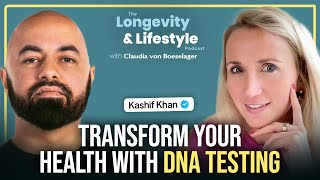
Kashif Khan explains how DNA analysis reveals why your body's systems are prone to disease, then prescribes precise diet, supplements, and lifestyle fixes. He covers cardiovascular health, hormone disorders, and mental health, and points to modern estrogens in birth control, Teflon, and cosmetics as major culprits overwhelming our ancient genome.
Chapters
If you weren't born with it, you don't have it. It gets caused. You just need to know what choices you make that lead to that choice. Give me anybody, throw it at me, what's the problem? I will tell you why it was caused if I have your DNA.
Welcome to the Longevity and Lifestyle Podcast. Kashif, it's such a pleasure to have you on today.
Pleasure to be here. Good to see you again.
Good to see you. So I'd love to start with, for people perhaps unfamiliar, what is functional genomics?
So functional is the key word there, right? And the easiest way to understand is the same difference between medicine and functional medicine. Medicine is, here's what we call your disease and what pill you have to take, right? It's kind of diagnose and prescribe. Functional medicine is, let's figure out why you got sick, as opposed to what it is. There's something that you did. It's a lifestyle habit, it's nutrition, there's something going on, and let's unpack that. So genetics is you have an 80% chance of Alzheimer's, good luck. Functional genomics is, well, that's where we start, and let's look at all the biological pathways to then understand what system is failing that would actually cause that to happen. And now we know what action plan to unveil for you, you know. So it's much more actionable, and it is akin to functional medicine. And so we found that the impact's been massive.
It's super exciting. And also the fact— and perhaps you can talk about that— so a lot of people think, well, it's my genetics, I can't do about it. How do you, how do you help people understand that that's not necessarily the case?
So that used to be true. You know, it used to be that our understanding was your genes point to this thing. You know, your doctor will ask you, do you have heart disease in your family? Do you have diabetes in your family? And then all of a sudden your risk goes up. And we believe that, quote unquote, genetically you're prone. So what we now understand is that you're not genetically prone to cardiovascular disease, for example, What you're prone to is a combination of factors, and yes, they are genetic, that make it easier for you to get the exact same disease that everybody else can get because you have lower defenses to it. So as an example right there, we can determine the quality of your cardiovascular hardware. When you look at the arteries where disease actually happens, do you have robust, resilient arteries that can handle inflammation and inflammatory insults, or are they more prone to inflammation because the material is just not the best, right? So truly the quality. Then we can look at, okay, park that. I wasn't born with inflammation. Something has to trigger it. So we can look at detox pathways to understand, are you not doing a good job with inhalation-based airborne mold and chemicals, example? Or is it more your gut that lets things in? Or is it more you making internal oxidants and toxins? So where, where's the threat coming from? Then we can look at how you fight the inflammation that you're causing to that bad quality hardware by these toxins that you let in. So now you kind of triangulate these 3, 4 pieces. You say, here's the point where things are failing, right? Here's what was genetic in your family. You guys are missing this key detox gene that allows your gut to prevent toxins from entering with your food. That's the thing causing inflammation. To this bad hardware that then leads to cardiovascular diseases, which is why everyone in your family has this. Now that you know that, it's no longer everybody in my family has diabetes and heart disease, I have to wait and see. It's more like, here's the reason why they get it. Now, if I action this, I'm not getting it. And if I have it, I can work on reversing it because I know what's triggering it now. And you can speak to any chronic disease in this context and kind of unpack it.
Can you talk about some use cases? Because I think for some people they're probably thinking, how is this possible? How is this not more widespread in medicine? So you talked about, you know, your arteries, cardiovascular disease. What other type of diseases fall under this umbrella where you can use it?
Well, I would say the biggest area that needs the most support is female health, female hormone health. So we spent a lot of time researching. In fact, to be precise, we spent 3 years with 7,000 patients. This is why we have the insights we have. Genetic researchers understand DNA, most clinicians understand the patient, and they don't speak to each other. So there was a gap. So we realized that was the research that was needed. So we set up a clinic, we spent 3 years with 7,000 patients, one by one by one, to apply what was known in genetics. And the area that we saw that needed the most support was everything around female hormone health. It was horrible, you know, and we— and I had no clue until I actually got into it. No clue, even though My mom had a hysterectomy. My niece had anxiety crashes. I've had breast cancer in my family. But you just think that these things are supposed to happen, right? It's your hormones. Good luck. Right. So, but the truth is, the hormone cascade is actually very black and white if you understand the genetics of it and all of the things from crazy menopause to crazy menstrual cycle to infertility to fibromyalgia, all of these threats we understand the root cause and they don't necessarily need to happen. So what we find is that some women genetically make a lot more estrogen than other women, so they're estrogen dominant. And those same women may also convert that estrogen into a toxic metabolite. Some of these women, not all, they may also not have the detox pathways to clear that toxic metabolite. So now you have estrogen dominant women that every month in her menstrual cycle turns it into something toxic. There's a potential to turn it into something nontoxic, but we don't know which bucket you're going into. Your genes will tell us, right? And then how well do you clear it? So if you're making this inflammatory insult month after month and you're doing it in today's context where epigenetically you're breathing in things, eating in things, putting stuff on your skin that all mimics estrogen, and elevates that number. Because people would ask, well, why would I be wired to make a toxin that makes me sick? You are wired for a different reality where everything that you eat and breathe and smell wasn't an estrogen mimic that didn't push that number way higher, right? So now all of a sudden you combine the genetics— here's a profile: estrogen toxic, candy toxic— in today's reality, living in a city, breathing in and eating the wrong stuff.. And that's where all of a sudden disease gets triggered because the combination of the two is too much. That inflammatory load is too much. So this is where we've had women with endometriosis about to get surgery not need surgery. It's been reversed. You know, this is where we've had women that just cannot get through their crazy menopause, you know, and all of a sudden relax and calm down and they're, they're surviving and they're sleeping properly and We've had young women that have anxiety issues that literally can't go to school, you know, don't have them anymore and they don't need medication. So that's the biggest area of impact. And everyone that's listening is probably saying, I've had all of that, right?
This sounds familiar. Yeah.
Yeah. So yeah.
And are these only in cases of estrogen-dominant women, or have you seen this?
No. Well, there's the opposite, androgen dominant. So some women don't make enough estrogen and they're more androgen dominant. It's like we had a patient who her father was an internist, so very well-educated clinician. And she spent 6 years. So she got her first menstrual cycle when she was 16. And from the age of 16 to 21, she had 6 menstrual cycles. Right. And she had crazy, crazy acne to the point where she used to take a rubber donut with her to sit down on because she couldn't sit on hard surfaces. Wow. Her hair was falling out, but she had amazing six-pack abs and ripped muscle all over her body. Didn't have— never needed to worry about what she ate or what she exercised, right? So her dad thought she had a liver toxicity issue because her skin was, you know, creating all this crazy acne. She went to every clinician, every specialist, could not figure it out. We unpacked and unraveled this in 6 weeks. So in 6 weeks, you— in 6 years, what she couldn't resolve She came to the clinic crying after 6 weeks saying, it's the first time in my life I feel like a girl, right? So what was going on? She was highly, highly androgen dominant, and she made a version of testosterone called DHT, dihydrotestosterone, which is a very potent superpower version which gave her her six-pack and her ripped muscle, but also gave her her hair loss and her cystic acne and her inability to have a menstrual cycle. She wasn't making any estrogen, so that hormone flow. We've mapped out what your body does with hormones, and we've connected which gene instructs each step. So now if I know the genes, I know what taps you're turning and how much you fill each bucket, and I know where the red flags are. And in her case, it was very specific. She did not sip 1,9A1. It's the gene that takes testosterone and converts it into estrogen. She didn't do that job. SRD5A2, the gene that takes your testosterone and converts it into DHT super, super fast. UGTB1A7 and 1A5, these are the genes that get rid of your DHT. She didn't do that job. So too much testosterone does not convert into estrogen, it all goes into DHT, and she does not have the genes to get rid of the DHT. She is wired for the reality she was living, right? So, um, it was reversed and she's fine now. So it supplementation, diet, teaching her to exercise the right way to use those androgens that she was gifted with. And then all of a sudden, she felt fine.
Beautiful. And for women listening, perhaps in sort of perimenopause, menopause years, what can be done? I think so many people just think, well, it is what it is. And they go to also many doctors that are just like, you can't do anything about it. It's natural. Right? And obviously, you had Jennifer Garrison on and different people that are working on phenomenal things. What can be done for women listening that are perhaps in perimenopause or menopause years?
So first of all, pay attention to perimenopause a lot earlier. Today's reality, again, the hormone disruption that we live in, we're seeing perimenopause in early 30s now, right? And we have women calling us that are 42, 43 saying, you know, I feel like this, but it can't be menopause, I'm too young. We're like, no, you're 10 years late according to today's standards, you know? So and it's not that women have changed, the environment environment has changed, the food has changed, the cosmetics have changed, the sunscreen has changed. Everything has hormone-disrupting chemicals in it. So that's the first thing I would say is be aware of the triggers. There's so much relief to be found, and this is true for men also. Women— men are so estrogenized today. Libido is gone. Uh, the, the vigor and that manly man attitude isn't there anymore. Right? There's, um, beautiful hair and skin all of a sudden on men, but there's things like gynecomastia, man boobs. Why do I look like this, right? Why can't I see my six-pack? Why do I always have fat on my stomach? You're overly estrogenized, and it has to do with the environmental insults that are doing that. I would say that that's a big thing to pay attention to, is to strip away the things, the epigenetic inputs that are accelerating it, the catalysts that you probably aren't thinking of, right? This is what we're seeing in our research. There's so many threats. But beyond all that, yes, for sure, the woman who is either in perimenopause or approaching or is in menopause, there's so much that can be done. It has to be personalized. A lot of women go on to hormone therapy, for example, BHRT.. And we believe that that is beneficial if you do it right. There's women that we talk to that are on estradiol, for example, and then we show them their genetic map and show them that why that estradiol is fueling breast cancer. Well, right. But there's other women where we say, go ahead and take estradiol. That's exactly what you need. So precision, I guess, is the key word. Once you have your genomics in hand, you can do exactly what your body needs. And feel right on, on the first choice, which is beautiful too.
And I mean, it also includes, you know, sleep or some of the other areas. Maybe you can talk about the different areas that you get insights in as well.
So you name a chronic condition, a health and wellness question, you can probably use your genome to answer it. But there's 7 key areas that we provide that we believe that everyone needs to know.. And then beyond that, if there's more, again, that same data can answer any question, even as much as like, what career should I have, for example. So let's start there. Yeah, mood and behavior. So one of the first, and actually the biggest section we map is the brain. Here's everything about the neurochemicals of your brain. Here's how you think, here's how you be, here's why you procrastinate, here's why you're more entrepreneurial, right? So we understand what neurochemicals drive what behavior and what versions you have because of the genes you have., right? So that's one. Everything about mood and behavior— anxiety, depression, addiction, you know, reward-seeking behavior, all of that. Second one is definitely hormones. Everything about, you know, how your hormones work for men and women. All of the major things from libido to body development to burning fat, um, to energy to vitality in your older age, all that stuff. Then chronic disease. So how do you understand what your body is at risk of, from Alzheimer's to diabetes to cardiovascular disease, not based on the disease itself, but the, the combination of factors that equal that problem, like I described for cardiovascular disease. So we lay it out like that. Then there's innate immunity and inflammation. So how healthy are your cells? Why is it during COVID that some people were asymptomatic and walked around, didn't even know, and some people were in the hospital? The innate cell, cellular health, which is key to everything. If your cells aren't healthy, well, things aren't going to go well, right? Diet, diet, nutrition. Should you be a vegan? Should you use the keto diet? You know, should you, for example, do you need to worry about carbs and starches? Is it really that big of a deal for you? Micronutrients like vitamin D and C and zinc. And what do you actually need? To what degree? So we get deep into that. Then we look at everything around sleep, like you said, which we think is so key. If you're not sleeping properly, you're not recovering, you're not making your hormones, you're not making your neurochemicals. And so we, we go far beyond I can't sleep at night. That's too simplistic of a concern. Genetically, there's many different versions of I can't sleep at night. There's I can't fall asleep. There's I can't stay asleep. There's— I sleep through the night, but when I wake up, I don't feel like I got any rest. Those are 3 different things, and we can figure them out. Then we look at longevity. How do you take everything I just talked about and reinterpret that to add 10 healthy years to your life or reverse your biological age? How do we go and take all this stuff and teach you exactly what you need to do to be younger on the inside? Right, which I've done for myself, by the way. So to frame all this up, if you take all of this stuff and package it all together, when we started this journey, I was chronologically 38 and biologically 43, which set off some alarms, you know. And I was sick. I had 5 different chronic conditions. I'm not sick now. And so I was 43. I was 5 years older than myself, which If you go around North America and kind of throw a dart, you're going to find that majority of people are there, right? I now actually am 43, so I'm 5 years older and I'm biologically 33, right? So the delta value there is 15 years, you know? So, and this, it's, so it's not just about slowing things down and preventing, it's also reversing. You can, you can turn the clock back if you start to do things right.
We're very resilient. Right. Yeah. I mean, I'm 15 years younger, as my audience will know too, biologically based on a GlycanAge test now. So I need to see my DNA Company results too. But that's the beauty of it, right? And then it's the— I guess the, the next step is to get down to, say, 20 or whatever age you want, minus 20, and stay like that until I'm 150 plus, and then enjoy life in the process too. Kash, I wanted to pick up on a few points you mentioned with environmental hazards, and maybe some people have alarm bells going off thinking, well, where is this estrogen? What am I doing? Can talk about some specific environmental hazards, starting with the estrogen in the environment, but then just in general that can negatively impact genes?
So there's some things that are very conventional habits that we don't think of and some things that are new. How many women are on the birth control pill, right? And for not like the box says, for temporary use, but for 5, 10, 15 years. Massive estrogen mimic, right? How many women don't understand that their Teflon-coated frying pan is loaded with estrogen mimics, right? How many women don't understand that their Lululemon yoga pants have forever chemicals and they happen to be exactly in the crotch lining, which is the worst place they could be while you're sweaty and exercising, right? Um, you know, so all of these things that are— and then there's so many more that your, your cosmetics have phthalates and, you know, all these chemicals in them that in some countries are actually illegal, you know. And the United States is probably the worst off for everybody that's listening, depending where you are. There's things that are allowed in the U.S. that are legal in parts of Europe, you know, that are legal even like in China, in UK, like everywhere they're illegal. But in the U.S., they're open for use. We just have, you know, more aggressive lobbying from this chemical industry, so things get through. There's hormone disruption in your water. You know, all of the birth control pills that women are taking that they pee out, that goes through sanitation and comes back into your water supply— when you use hormones, they do not become inactive when they leave your body. They're still active as if nobody ever touched them, and they are still in your water. And this is why men even are so estrogenized, because the tap water is full of or estrogen from birth control, right? So you have to think about today's context and the systems and processes we have around how we live and realize it's not what we're wired for. In fact, our genetics are a quarter million years old. So the DNA that we walk around with is not, you know, a couple generations ago. We didn't inherit, you know, what you can remember, you know, grandma or whoever you can think about. You inherited a caveman or a cavewoman's DNA who you wouldn't— you don't even realize is your lineage, right? Um, our DNA has not changed in a quarter million years, so we are wired for habits and exposures of that time. And our current industrialized reality is very short, like what is it, 100, 150 years old? And really, the proliferation of chemicals and everything that we're exposed to is 1970s and beyond is really when things got crazy. So this tiny, tiny, tiny blip of 50 years versus 250,000 years of habits that we're wired for. Why is everyone so sick?
It's no surprise. So it's so important for them to look around. Yeah. And just be, be more familiar with what's in the environment as well on so many different levels. Let's talk about mental health. How does personalized medicine and functional genomics— where is the role with mental health in that?
So what I believe, and this is what we learned this, by the way, because we spent time with 7,000 people. So we literally had conversations with them for weeks and months sometimes. And what we learned is the majority of what people call anxiety, depression, addiction, yes, is what they were feeling. The symptoms spoke to that. But the thing that drove it was actually their strength, but a context caused it to be a problem. And I'll explain, I'll use myself as an example. So the dopamine pathway is what allows you to experience pleasure, but it also allows you to experience reward. And the way your body does it, the biological function is there's anticipation. So you smell some tasty food and dopamine starts getting released.. And then there's these receptors in your brain that bind it. And genetically we have different density of receptors. So the intensity level of that anticipation and feeling, smell it, taste it. We, we feel things at different intensities, right? Then there's two genes that one breaks it down and breaks the dopamine down cuz eventually you need to get back to normal. And then one comes like a broom and kind of sweeps it up and gets rid of it. So me, I have the lowest possible density of receptors, so I don't feel much, and I have the fastest possible metabolism and clearance, so it doesn't last. Yeah, while it's happening, it's almost gone. So if you take that and put me in the context of here's the world, depression is where I'm going to be, right? And I'm going to use that word and like, life sucks, everything's no good, I don't understand what people are happy about, nothing's good, right? Or if I find something that gives me pleasure, I'm going to use words like addiction because it's never enough. I can't feel it and it doesn't last. And while I'm doing it, it's already done and I need to keep going and keep going and keep going. And I structure my day around because I'm just not used to feeling good. That's addiction. Or option 3, achievement, because dopamine also powers reward. And ultimately both of those lead to satisfaction, pleasure and reward. And you only need one, you don't need both. So the same sense of I can't get no satisfaction from pleasure, same thing with the reward. I achieve something, I want to try harder and take a bigger risk and do it again. And all of a sudden you do what I do, which is become a crazy entrepreneur that people think is a psychopath. Right. But guess what? I've experienced all 3 of these things. I've experienced depression, I've experienced addiction, and I've experienced achievement because I've had multiple contexts in my life. When I was young and we grew up very poor and I didn't have access to what everyone else has access to, I was depressed. And I also was depressed later in life when I had achieved and stopped trying and went back to the status quo. Wasn't good enough, right? I was also addicted because while I was young, a friend gave me something that he shouldn't have given me, and it gave me a sense of pleasure, and I just kept going. Then my father passed away, and I had to take care of the family and work, so I started working, and I just kept going and going and going, and I got hooked on the sense of reward. So this is why I say that your net result and the language you use around things like anxiety, depression, etc. Are based on your misalignment in context. Most of us are wired with extreme superpowers when it comes to our cognitive ability. And I'm not saying that you're more intelligent. I just mean that you have a job that you're designed to do. And if you're in the wrong context, it's not going to feel like a superpower. It's going to feel like kryptonite. It's going to feel like a massive burden. And it's understanding how your brain's wired, but it's very hard to do that Again, without understanding the genetics that drive all these chemicals and who you're supposed to be. And as a last example, so you might say, well, that's you, you figured it out, but how is everybody's thing related to context? Well, I could take the opposite and say that what if I had the best dopamine and the slowest clearance? It doesn't mean that I'm doing good. I still need to be in the right context. So you could have the maximum possible density in you. It's so easy to feel pleasure and reward., right? And you have a very slow clearance, you stay in it longer. So based on the story I just told you, that sounds like it's healthy. I should never be depressed, I should never be addicted, and I should not be a crazy entrepreneur. I can have a balanced life, right? Well, it's so easy for you to experience and it lasts so long that these people end up binging. So we've worked with people that are extreme marathon runners, for example, that have run across the Sahara Desert and up and down mountains And almost every one of them got there because they were first in substance abuse. They first were either in jail because of the drugs they were on, and they— or they, you know, had abusive relationships or something along those lines. You're like, well, how does this make sense? They don't have addictive tendencies. They don't have addictive tendencies. Addictive is I need it every day on time. Binging is I don't need it, but when I do it, I get stuck. And I can't get out of it, and I'm going to disappear for a week, right? So it's also a context problem. If you put that person into a— there's no work to do and, you know, let's go have some fun— and you give them a very particular type of pleasure, they get lost, right? I don't need to drink, but there's a very specific whiskey that when I taste it, oh man, I'm gone.
I drink the whole bottle.
That's me with my margaritas. Exactly. Yeah. So now that's where we're saying that any cognitive profile has its superpower or its problem depending on the context, and you need to know what you're wired for and what context you should be in.
Let's talk specifically about you and what lifestyle and other changes did you make in order to— based on the knowledge you gained in order to transform and have a more balanced and healthy lifestyle?
So this is exactly why I wrote this book, The DNA Way. Yeah, let's talk about it. Yeah.
And I keep forgetting that I wrote a book because you're on to the next task, right?
Yeah. Dopamine. Yeah. But this is exactly why we did that, because that, that question is a very important question. None of us know that this should be part of our toolkit. None of us know that this is something we should be thinking about and using and going back to to answer all of our questions every day. And so I wrote this book literally detailing, um, here's exactly what I did in every system. We talked about sleep, we talked about disease, we talked about diet, we talked about all of those various systems. Here was my red flags, and here's exactly the habits I adopt. Some of them were simple, easy, and straightforward. Some of them are completely counterintuitive, right? Um, so as an example, I did experiment with the keto diet and, you know, I have good friends that were flourishing on it. Yeah. And I did feel good in the first few weeks. You know, you start burning fat as fuel, you get into ketosis, your brain feels amazing. And then all of a sudden, 7, 8 weeks into it, I felt horrible. And I didn't blame the keto diet because it felt so good in the beginning. I was like, what am I doing wrong? So I stopped picking on things and I realized genetically that the APOA2 gene— I don't metabolize fats well. It's a big problem for me and my insulin response is horrible. And ultimately fat becomes glucose if you don't use it as fuel. And so it's triggering my insulin. And so it was making me feel really bad. And a very simple tweak that I had to make. I kept getting tested for B12 and it was always low. I was like, no, I'm taking my B12. I don't understand what's wrong here. So genetically I don't have the genes to actually metabolize B12 in my gut. So my ancestors didn't eat beef. There's a very specific form of B12 that comes from beef, and that's not what I do. And so instead, I need it sublingually, under the tongue. My ancestors ate more sheep and lamb, and they have genetics to absorb it while chewing. So simple tweaks that make all the difference that you would never think of, you know, unless you understand that map that tells you how your body works. So I could go on and on and on and on, but there's so many examples of little things, you know. And if we talk about sleep, for example, so my problem wasn't that I can't fall asleep. I could fall asleep right now if you ask me to, right? I don't have a problem. Another feeling. My circadian rhythm is amazing, and I work hard enough where I'm ready to sleep. My problem is I can't stay asleep. So I'll sleep in the beginning portion of the night, and then the second half is not the same. And if you wake me up and disturb me, I'm, I'm done. The night is ruined. And I, I figured out what's going on there. My serotonin response— serotonin being the neurochemical that allows your brain to understand what stimulus to prioritize. And so it leads to anxiety, depression, words like that. But it also leads to superpowers like being a lawyer, because you can't prioritize stimulus, so you notice every little detail and you could read contracts and understand stuff., right? So again, put it in the right context, it works. In the context of sleep, in that second half of the night, your brain is waiting for sunlight to signal time to get out of bed. And serotonin is a neurochemical that gets bound to then truly wake you up, and then you start making cortisol and you're up, right? So if your serotonin pathway is dysregulated, your brain doesn't know what to respond to. So it's too hot, it's too cold, Somebody's pulling on a blanket. There's a cat that just jumped on the bed. Like, whatever's going on, your brain is like, oh, sunlight? No, back to sleep. Sunlight? No, back to sleep. The squirrel response, right? And so that was my problem. And so I had to build this. It's not always a supplement. It's sometimes it's an environment or lifestyle habit. So I had to build a sleep cocoon. I had to get a weighted blanket. I had to get a cooling pad to maintain the temperature.. I had to black out the blinds. I had to wear a sleep mask, but a very comfortable one that doesn't signal to my eyes, wake up, wake up, right? So there's a bunch of habits that I adopted. I sleep amazing now, you know? And yes, there are supplements you can also take, and I do depending on the day, but I truly sleep amazing now. So, and again, we can— you ask any question about the choices we have to make every day, and I can comment about something that I changed.
Where I now feel better.
Amazing.
And so tell us a little bit more about the book. So you wanted to explain about your journey and what you've done.
What else can people find in The DNA Way, your book? Yeah. So at the, at the time when I started writing it, I wasn't— or I should say we as a company weren't really commercial, meaning we were a research company. So we didn't know if the world was ever going to be tested. Right. We didn't know as a research company, when you're a biotech early stage, is this information going to get plugged into hospitals? Is it going to get plugged into clinics, or are we actually going to have a website where people can buy DNA tests, which we now have, right? So I started writing the book thinking that, and it was really triggered by my niece who had an anxiety crash multiple times to the point where she ended up running away from home and was being prescribed anxiety medication. And I learned it actually had nothing to do with anxiety. What was going on was I remembered, like, my, my mom, my sister, and my niece lived together, and they were both calling me. And I looked back at the text message and phone calls, and like clockwork, they were every 28, 30 days. I was like, wow, this is related to her menstrual cycle somehow. So, but why now? Because she's had her menstrual cycle for a couple years, so why all of a sudden? So I looked at her genetic map, which I didn't do the first couple times. I just, like any other parent, the doctor says anxiety. I was like, okay, she has anxiety. And I went with it and she wasn't prescribed anything yet. But the third time when she ran away from home, she was about to be prescribed something and that's when I intervened. And so what I found was that her hormone cycle, she doesn't make enough hormones. And in the beginning of the cycle is when you have the least, like zero hormones. So she had a much deeper valley that she would crawl into, right? So already teetering on biological function is not optimal. But 2 years of cycle, she didn't yet have a concern. So why then? Well, this happened during peak COVID in Toronto, where she was being homeschooled in the winter and hadn't been outside in 5 months. Wow. Which meant zero vitamin D. Vitamin D is a potent hormone that manages the gene expression of 2,000 out of your 24,000 genes. So 10% of your human biochemistry is dependent on one thing being available in adequate amounts. Her genetic profile around vitamin D, and it's a complex profile, it's not just this gene allows you to use it. Step 1, you have to take D2 from the, from the sun and turn it into D3. That's one gene. Step 2 is you need to transport that material to the cell. We actually use it. That's another gene. Step 3, you need to bind it and connect it. That's another gene. Vitamin D is the only vitamin that has this complex of a pathway because our ancestors had a very different context where they got too much. They were in the sun all day, every day. So they had to actually mitigate and be able to store and use later what they got from the sun. We're the opposite. We don't have enough. And so now we don't get enough even with our supplementation. So her hormones were causing this biological failure like clockwork every 28 days. She had zero vitamin D, so that was being exaggerated highly. And like her crazy uncle, she had a bad dopamine pathway, so it was already difficult for her to experience pleasure. So that's the thing that failed— anxiety crash, right? So all I did was I gave her high-dose vitamin D and I split it. So I gave her 5,000 in the morning, 5,000 midday, because remember, she doesn't transport and bind it. So if I gave it all to her in the morning, she doesn't use most of that. She uses it little by little, right? So I gave her a couple doses. Then I gave her L-theanine to boost her dopamine, a supplement that you can buy in any health food store. That was it. It's been 2 years and she has not had an anxiety issue. Wow. Right? From the day that this started she has not had an anxiety issue, that we gave her these supplements. She would have still been on an anxiety pill today if this hadn't been figured out, right? So that was the day that I realized that everybody needs to know. And so I started writing the book. I didn't know where we were going as a company, so I said, at least this book will help everybody understand how to access this tool. But since then, again, the company evolved alongside the time that book came out to market. It takes a long time., and now testing is available to everybody, which is a beautiful thing. We didn't know we were going to get there, but that's the whole thinking, is, you know, how do I teach everybody in an easy way how to use their genome?
And that's why we wrote The DNA Way. It's so exciting, Cash, because I think there's so many people— especially mental health is such a big topic, and, um, even, you know, I've had menopause specialists on, Dr. Louise Newson, etc., and typically women are prescribed antidepressants when actually it's their hormones, right? And the doctors don't think to check the hormone levels and how things are going. But would you say for anyone who maybe is experiencing depression or anxiety to, you know, number one, have their DNA checked with you? And, you know, what is the pathway then thereafter? Because I know people, I was speaking to them about the DNA company and they said, well, I'm not in Canada, what can I do? My doctor doesn't know about this. So can you help people understand what the sort of post-testing care is.
So first of all, even the very best depression medication only works 40% of the time. Wow. Right? There's current data that says that exercise works twice as well as the best depression medication. I saw that. Yeah. Wow. 50% of your neurology is in your legs. And if you're not moving, If you're not walking, your brain's not going to feel good. It's a lifestyle problem. So it's a context problem. It's you're wired for something and you're in the wrong place. It's your body is not doing what it was designed to do. And so your brain all of a sudden is healthy. It's a food problem. The vagus nerve and the connection between your gut and your brain. If you're not understanding how dysbiotic and inflamed your gut is, then you're also not understanding why your brain, your brain doesn't feel well. If you're not understanding that there's a blood-brain barrier that protects your brain from toxins, but the current toxins that we breathe and eat all day, our blood-brain barrier was not designed for, and they can then pass and enter. So there's all these functional insights that, first of all, you can lean on to understand. It's not just, I feel like this, what do I do about the feeling? The feeling is too late. It's because you've had 5, 6, 7, 10 years of the wrong habits. So let's start talking about the habits. So yes, we can use genetics to understand what is the red flag. Is it your gut? Is it your brain itself? Is it your neurochemicals? Is it your inflammatory response? Where is the thing that if you work on this one thing, 80% of the problem is solved and then you can slowly chip away at the rest, right? So yes, for sure, the test can be used for that. And the process is, first of all, ship globally, right? We were shipping everywhere. There's a couple of countries that are problems like Mexico. Their customs is an issue. France is a bit of an issue. Vietnam. But the majority of the world, we don't have a problem. We ship everywhere. After someone gets the test report back, if you really dive in and you understand how your body works, don't look for depression. Look for understanding your neurochemicals and then interpret it for the problem you're trying to solve. That's the job that you have to do. And if you move forward beyond that, and say, well, I'd like support. Well, we do have functional genomic practitioners that are fully trained on how to interpret the human genome and build a plan for you. Here's your genomic playbook for you. Here's how you fix the problem you want to fix. And by the way, here's 5 other problems that you didn't even know were coming that we're also going to fix for you in advance, right? Because we can read your genome and understand it. So yes, we do have practitioners that are science scientists, medical doctors, naturopaths, depending on what problem we're trying to solve for the individual. That can work with you as an individual and solve all that stuff. But, you know, if you, if you dive into the data, you should be able to figure things out. And that's kind of what it looks like. It's a saliva sample. So you go online, you order a test, a kit gets shipped to you, you spit in a tube, you ship it back. We extract your DNA. We have a very unique way of thinking about that DNA. So even what we believe the DNA means is very different than other genetic companies. We're not looking for you have an 80% chance of Alzheimer's. We don't care about those genetic insights. We care more about biological pathways, and here's the way your body does a certain job. So based on the way your body does that job, whether it's good or bad, here's the potential problems that could lead to. Because one gene is not a single problem. One gene could be 25 different problems, right? If you understand what job it's supposed to do and what job is failing. You know, like, my window is broken. That could mean that it's too cold. It could also mean that it's too hot. It could also mean that there's mosquitoes coming in. It could also mean that the kid is leaving out the window. That could lead to many different problems, right? But the way we look at genetics is the window is broken, you're too cold, and it ends there, right? You have to think about the job in the context of how we live in our body. So, uh, then there's the epigenetics of now that I know my genome and how my body works, what are the environment, nutrition, and lifestyle factors for me not for everybody, not a podcast that says here's how to exercise, which worked for me and saved my life. It probably did, but I'm sure you spent 5 or 6 or 7 years figuring things out before you found that thing that was perfect for you. And although it's perfect for you, it may not be perfect for 7 out of 10 people, right? But the 3 people that it's perfect for, amazing. So let's get out of that trial and error. Let's get out of that one-size-fits-all And let's use this human instruction manual to always make the right choice. It's that simple. Beautiful. And it works every single time. Yeah. I mean, your genome doesn't change. Your genome doesn't lie, right? It's not like blood work that's variable, and it's not like anything else that depending on what you did, you're going to get a different result. Your genome is your genome. It's the only test that you only need to do once. In your life because your DNA will never, ever change and it can't lie. These are instructions that your cells follow to a T. They cannot vary from what that instruction is. So this is what your body does and it's very clear.
So now you know how to handle every choice. Speaking of advances, and let's talk about technology and its role in helping people live a better lifestyle and interpret. And where do you see things going with interpretation of data and insights? Also getting larger data sets as well, like what insights Do you think that you will start to get more and more as more people test? And in general, for personalized medicine, what excites you about technology in this space?
So there's, there's two halves of that. The personalized medicine part that we'll talk about, it's really exciting. The big data stuff I don't believe is as useful as people think. So the big data stuff is trying to say, hey, here's a $5 million grant for autism research. Let's get as much data as possible and let's figure out the solution, right? And they're looking for this magic switch to turn off this gene, this autism gene. But that's not the way the body works. Why do we call it autism spectrum? Because there's not one single thing we can point at. It's kids not developing properly. Their behavioral development is lagging, whether it's speech, whether it's movement, whether whatever, right? So the things that lead to it aren't singular either. It's, you know, why do some parents say, well, this vaccine caused my kid issue. Some parents say that my fine— my kid was fine until he got exposed to this chemical. Oh, there's a cell phone tower that got built and now my kid is changing. So all these things point to there's a functional answer. It's not a switch that was turned on or off. And I use that example because, um, the big data is going to solve genetic conditions, things that you're born with, which is a tiny fraction of today's healthcare problems. Those people really need that answer. However, there are some kids that are born autistic that have a gene switch that was turned on or off. One day, big data will figure that out. And here's a shot that you can take. And guess what? It's gone, right? There are other diseases like sickle cell syndrome, other genetic conditions that you have. The majority, majority, majority, like 90% plus truly is chronic in nature, meaning it's developed, it's caused by our choices. That type of research is not going to fix these problems. What's going to fix these problems is the second thing you said, which is personalized medicine. And personalized medicine is not treating the symptom but supporting the system. How do I know how your body functions? And how do I know what jobs your body doesn't do well? And how do I support those jobs? And if I can maintain the health of your cell so that you never have inflammation, you cannot get a chronic disease. You need inflammation. The cells have to be burdened for something to trigger. If I can do what you're saying, maintain my biological age of 20 and the youthfulness of your cellular function of that age, the mitochondrial function of that age, you can't get a disease. It can't set in. Why doesn't cardiovascular disease, breast cancer, etc. For the most part happen at that age. Yes, there are people that get sick early. Those again are genetic conditions, those are rarities. But the majority of people, it's 55+ is when things happen, right? It's because your body's resilient, it will fight the stuff off until then, and then all of a sudden your mitochondria depletes, your cells are more inflamed, you've had 50 years of exposure to the thing that you're not supposed to do, you will get sick. So we think that we know what to target, we understand how the body works, and it will go beyond get a DNA test and talk to someone and take some supplements to gene therapy. So right now there, we already know of a major gene therapy that was dropped globally, and there's some controversy on whether it should have been dropped or not, right? But the underlying technology, now whether there are nefarious or problematic, you know, motivations behind that one and what it does to you versus the technology that was used, and if somebody with good intention, use that technology for something good. If I know, going back to the very first thing we talked about, if I know the 9p21 gene tells me that I have good or bad cardiovascular hardware, and if I know that cardiovascular disease is rooted in having inflammation, and I know that I do have the bad version, and I could create a gene therapy that makes that gene work harder, and give me the good version. That's a very healthy, positive way to use this new technology. So I think that's what's coming. We are working on that right now. We're working on not the technology itself. There's other companies that are good at that, but more supporting each other in terms of what to target and how to use the technology better. And I think that is what we're going to see coming fairly soon as the next wave of personalized medicine.
That's really exciting. Thank you for sharing that. Is there any candidates, potential patients and clients that it might be sort of too far gone to do interventions with? Yeah.
So with every condition, your, your cells in your body are getting damaged. So for example, when we're working with dementia and Alzheimer's, yes, we reverse it. Yes, we take people that have Alzheimer's and dementia and they no longer have it. But there's some people for whom it's progressed so far that, yeah, we can stop the progression, but they're not going to be the same, right? So you waited too long. Just like you can take your car off-roading and beat the poop out of it, right, and maintain it. But if you just keep beating the poop out of it and never maintain it, there's a point where you're not going to bring it back. Same thing with things like cancers, they progress. Same thing with things like diabetes. So diabetes is the one area where I would say that type 2 diabetes that it's almost like anybody can experience reversal. You know, I was just speaking to a clinician 2 days ago. We were talking about fasting for diabetes. And there's been people that are 25, 30 years in that have had their type 2 diabetes reversed. Wow. So that's probably the easiest place to do it. Yeah. But there— yeah, there are some conditions where if it's too far gone, damage has been done. That yes, you can stop it, you can bring it back somewhat, but you may not get back to status quo and baseline. But most people aren't there. You know, if you're listening here today, you're either able to prevent something that you don't even know is coming, or you may be feeling the beginnings of something that you don't want to have, right? Or you know there's a familial history that you want to avoid, or maybe just an energy thing or a performance thing, or What type of exercise am I supposed to do to actually live to 100? Because if you look at most people that are 100, 120 centenarians, they aren't professional athletes, right? They're nonna, they're, they're grandma, right? The habits that actually create longevity are not what you think. It's not that fit Instagram model. That's, that's fitness. That's not necessarily health. So understanding what actually drives longevity and health, um, It's unique for each one of us, the habits that we need to have. Some people, we will tell them, never ever do cardiovascular training. You should not be running on a treadmill because it will age you. Some people, we tell them, go do cardiovascular training 4 days a week. That's what your body is wired for, right?
So just getting personalized around that, and all of a sudden you can feel amazing. Exciting. I need to get this playbook, Kashif. I think I dig in a little bit deeper as well to optimize. Um, and that's, I think, the beauty of where we are today in this pivotal point with personalized medicine and precision medicine as well, to really nail it. So speaking of longevity and aging, if you could live to 150 years old, Kash, with excellent health, how would you spend it?
I'd probably keep doing what I'm doing, which is I don't get up every day and feel like I'm going to work. I get up every day angry, wanting to fight certain narratives that are out there around what people think is possible with their health. And I work on it tirelessly because I believe that if we truly understood how our body works, there's a very different reality that living to 150 with good health— why not? Why not? The reason we age isn't innate. It's we are aging far faster than we should because of our habits. Because of our environment, because of our food, you know. So if we understand why we age, if we understand why we get disease, um, at the age of 150, I would be doing the exact same thing. It's just going to be, you know, 100 years in the future, so I'm gonna have much better technology to do it with. That's the only difference. And my intention is, I believe we have— we're born with this God-given gift of health. It's my responsibility to return this body in the condition that I got it in, right? If I was given this gift, what the— for me, you know, think about it religiously, it's like the highest form of worship to be thankful and to have the gratitude to return this in the condition that I got it in, right? And so that's what I would be doing is still figuring out more and more and more of what needs to be figured out so that people can learn more and more and more what to do.
Beautiful. Kashi, for my listeners interested in understanding DNA, genomics, functional genomics more, what online resources resources and books, and obviously your book, The DNA Way, um, would you recommend they check out?
Uh, yeah, so the— you can actually go to thednaway.com and you'll see, um, the book is there and you can learn a little bit. I think there's a, there's a sample chapter as well if you want to just poke around. Um, if you go to thednacompany.com, you'll find a few things. You'll find a blog where we have articles about certain case studies and how people are doing, and it'll help you understand how these things apply, right? There's also a podcast there where we speak on various topics and sprinkle in genetic insights in there. So you'll also understand how this stuff applies. And those are the two big ones, you know, we're, we're always speaking at various events. So if there's a specific health concern you're thinking about, there's various medical summits, et cetera, that we're talking to about. So, you know, you can contact our team if you'd like to learn more about Alzheimer's or fibromyalgia or whatever. We've probably spoken about it somewhere at some point and can find you the interview, you know. So yeah, there's a lot out there, but the website has the blog, the podcast, there's—
and the book itself will really help you understand. Exciting. Where can people follow you and see what you're up to?
What— where are you on social media? Instagram is where I spend my time.
That's where I go to vent, you know. By the way, for people listening, he has really incredible— he takes research shows the research and explains why it's false or totally misrepresented as well.
So it's, it's a very good place to, to follow Kashif. Yeah, I just feel like there's so much that we don't know that's right under our noses. There's things that we're consuming and exposing ourselves to every day that we're told by our governing bodies are okay that are truly not. And so my intention is to just to allow people to self-govern and figure it out on their own because we're not being supported there.
So it's, it's Kash Khan Official, Kash Khan Official on Instagram, and you'll be entertained. I can tell you that. I can confirm that as well.
Do you have any final ask recommendation or any parting thoughts or message for my audience today? Well, I would say that I am fully confident in what we've seen in our research that chronic disease is a choice. It's not a, I have Alzheimer's in my family, let me wait and see what's happening. It is a choice. If you weren't born with it, you don't have it. It gets caused. You just need to know what choices you make that lead to that choice, right? So that is the big message. And I am 100% certain in this because we've seen it over and over and over and over again.. And we now know, give me somebody, give me anybody, throw it at me, what's the problem? I will tell you why it was caused if I have your DNA. So we're confident in that chronic disease is a choice. Know that you now have the technology to make it a choice, to understand what's coming and prevent it, to slow aging down and age at the pace you want, to have optimal energy and performance, libido, sleep, all the things that you want can be the way they should be. Anything that is not the way it should be is just a sign that you're in poor health, even though you don't have a symptom. It's just early stages of poor health.
So you don't have to be there, right? It's truly a choice. Thank you so much for coming on today.
As always, such a pleasure. Thank you again. No, great to be here.
More from Claudia









Can Psilocybin Slow Aging? The Study on Telomeres, Inflammation & Survival with Dr. Louise Hecker

