Metabolic Health, & Delicious Healthy Chocolate with NOMOSU Founder Sakiko Reuterskiöld
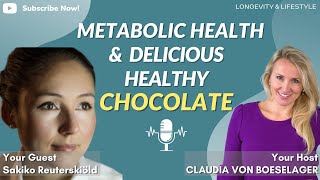
In this episode of the Metabolic Health podcast, host Claudia von Boeselager interviews Sakiko Reuterskiöld, founder of the low‑sugar chocolate brand Nomosu. The conversation opens with a discussion of how the COVID‑19 pandemic has heightened public interest in metabolic health and the science behind sugar. Sakiko explains the metabolic dangers of fructose and liquid sugars, linking them to insulin resistance, glycation, and skin aging. She walks listeners through how to read food labels, exposing deceptive "sugar‑free" ingredients such as maltitol, and compares a range of sweeteners—artificial, stevia, monk fruit, allulose—highlighting the benefits of Nomosu’s water‑extracted organic stevia. The interview then shifts to product development philosophy, emphasizing taste, health, and guilt‑free indulgence, and the importance of personalized nutrition. Sakiko recommends Ben Goldacre’s Bad Science as a primer for critically evaluating nutrition research, and offers practical dietary tips: avoid liquid sugars, favor low‑sugar foods (<5 g/100 g), and test foods personally. She shares her morning routine, Zen meditation practice, and the role of mentorship in her entrepreneurial journey. Finally, she outlines Nomosu’s branding strategy—private social media presence, an Instagram hub, a monthly newsletter with research infographics—and announces the brand’s market rollout: UK launch in Planet Organic stores, online sales across Europe, and upcoming expansion to Scandinavia and the United States via Amazon and other retailers. The episode concludes with Sakiko’s parting advice to stay skeptical of nutrition claims, personalize dietary choices, and enjoy sugar‑free chocolate without guilt.
Chapters
Hello, wonderful listeners, and welcome to the Longevity and Lifestyle Podcast, where I invite pioneers and thought leaders in their respective fields to give us the strategies, tools, and practices to live better and help reach our human potential. Today's guest is Sakiko Reuterskuld. Sakiko is the founder of NoMoSu, which stands for No More Sugar. NoMoSu aims to be the world's go-to honestly sugar-free, organic, delicious chocolate brand. I've had the pleasure of trying some. It's out of this world. With a Master's in Science in personalized nutrition based on functional medicine, and with personal experience of the transformative benefits of giving up sugar, Sakiko began exploring ways to have delicious, healthy chocolate without the negative effects of sugar. After thorough scientific investigation, Sakiko discovered the world's only organic, solely water-extracted stevia which makes it possible to create delicious organic health-enhancing chocolates that are honestly sugar-free. Sakiko realized this could help many people significantly improve their health, free them from sugar's grip, and enable them to feel truly joyful. In this episode, we talk about the misconceptions around fat and sugar, the dangers of fructose, and the impact of sugar on metabolic health. Glycation and how sugar affects aging, the health-supporting stevia plant, the importance and pitfalls of food labeling, keto diets and intermittent fasting, Zen Buddhism, and much more. Please enjoy.
Welcome, Sakiko, to the Longevity and Lifestyle Podcast.
I'm so happy to have you here today with us.
You have such an interesting background, being half Japanese, half Swedish, and growing up in Belgium, the land of delicious food and chocolate. Can you tell us a bit more about that?
Well, it happens that in Belgium all half Swedish and Japanese people live. No, it's not.
It's just, but, uh, very happy because as you said, it is a really foodie kind of place.
People think of France, of course, France has delicious food in Europe, but Belgium actually is surprisingly delicious and accessible. And yet they just have great pastries and chocolates as well. So that's why I got hooked on chocolate from an early age. And also my parents, my mother being Japanese, Japanese. I grew up with amazing home cooking Japanese food from her, and my father and mother both love delicious food, so I was spoiled by going to great restaurants and so on.
So you're so lucky, Sakiko. Yeah, amazing. So beautiful. And you're quite an accomplished expert on nutrition, and amongst other things, you have a 3-year master's degree in personalized nutrition based on functional medicine, which is for me the medicine of the future. Have you always been aware of the importance of healthy nutrition and avoiding sugar?
Uh, no.
So I, like many people, grew up understanding that, you know, we should have sort of low-fat yogurts, we should have low-fat this and that because, you know, fat makes you fat. That was kind of the logical—
I grew up with that too.
Yeah. Yeah.
That most people understood. And it was not only our fault, but actually some misguided US government guidelines started the whole thing about an anti-fat kind of movement. And the food companies followed suit and created a lot of low-fat products, as you know. And in order to make them taste good, they had to increase the sugar because otherwise it tastes like nothing. So progressively sugar crept into so many food products in the supermarkets. But yeah, I still, until about like 8 years ago, I was convinced that, you know, that was the case and that sugar was just sort of empty calories, like not really nutritious. Or anything, but just sort of calories. And so I definitely didn't come at this feeling from a very young age that sugar was bad at all. And in fact, I have a memory of being in the supermarket in London, in Sainsbury's, and this lady was looking at me as I reached out for the sugar package for doing baking, because I love baking. And she looked at me, she's like, "That stuff is poison." And I looked at her and I was like, "Uh, whatever." And I brushed it off. Like a year later, I was deeply into sugar science and couldn't believe how it's not neutral. It's, you know, actively toxic is a very inflammatory word, but I really feel it's on that.
But it is.
Yeah, I agree. Harmful to the body, actively harmful, not just neutral.
I'd love to dig into that a bit more because I feel like, you know, sugar Everyone knows the word sugar. Some people are addicted to it that they might know or not know about. And can you talk a bit more about what exactly is sugar and how to best tell when buying a product and reading the food label what to look out for?
Yeah, basically sugar is biochemically sucrose. That's what we normally think of as sugar. And sucrose is just a word that means a disaccharide of two things, glucose and fructose. And those bonded together equals sucrose. And you can tell if it's the sort of harmful sugar if it tastes sweet. So what is particularly problematic about sugar is the fructose component. Many people argue about this online and so on. But genuinely, if you look at the body of research and evidence, there is a lot of evidence that excess fructose in particular is very damaging.. And so that's half of the sucrose molecule, if you will. So table sugar, half of that is fructose. But also it's also problematic when they're in combination and in all sweetening, typical sweetening ingredients, you will find varying combinations of free-floating fructose or fructose bonded with glucose and so on. And that goes for dates, you know, date syrup, coconut sugar, table sugar, raw cane sugar, brown sugar, honey, those sweetening ingredients. Are all slightly different varying combinations of glucose and fructose. So they're essentially the same. They're broken down into the same things, glucose and fructose, and they have the exact same pathway, metabolic pathway in the body that is harmful. So there is no difference between brown sugar and white sugar. In fact, in the supermarket, a lot of brown sugar is allowed to be called brown sugar when in fact it's white sugar where they've added back a bit of molasses to make it brown. So it really— there's no distinction. When you taste something sweet or you have a sweetening ingredient, unless it's one of these few organic— and I'm sure we can talk about them— non-sweet, healthy ingredients. There's a few of them out there. Yeah, thankfully. Unless it's one of those, then you know it's got fructose in it. You know it's sugar, basically. So by your taste, like literally by your taste. And even with fruit, for example, if you have a bright green banana, it doesn't taste very sweet. Yes, you have very ripe banana. Very sweet because fructose has formed in that fruit during the ripening process. So you can tell by your taste of the food you're eating, if it's sweet, it's got fructose. And then in terms of food labeling, you want to look at the back. And luckily in the UK and Europe, everything is per 100 grams, whereas in the US for a while it was like per servings only. And then it's difficult to compare.
It still is, by the way, because I had to point something out to my sister 2 weeks ago and it was per 30 grams because she's like, oh, it's only, you know, this amount of sugar.
And I was like, no, no, actually This is a lot of sugar per 100 grams.
Because you can just think of it like as a percent.
Exactly.
If it's 40 grams per 100 grams, you know that 40% of the weight of the item you're holding, the food item, is sugars, which you should be a bit alarmed by, I would say, and think of it as a real treat or candy. So personally, I try to avoid any packaged food that has more than 5 grams per 100 grams.
Of sugars. So it's quite low.
So less than 5% of this item is sugars. And I don't worry too much if it is less than that, if it's a natural kind of product or healthy product, because it's really hard to have genuinely sugar-free food products because you have trace amounts of sugars even in like almonds or hazelnuts or so. You know, that's another warning sign. If it's, if it's really 0.0, then usually it's sweetened with an artificial sweetener if it tastes sweet. Or that it's not a natural thing. So I would say if you're looking at food packaging, try to go for things that are less than 5 grams per 100 grams. And I don't even pay attention to anything else on the nutrition label. Like, I don't care about calories. I don't care if it's a natural kind of healthy, like with natural ingredients and it has less than 5 grams per 100 grams of sugars. I think it's fine. And you'll be surprised that many sauces and everything from ketchup to salad dressing, you'll find sometimes added sugars. So just check the label and look at that amount.
It's really incredible because I guess I had the fortune, you could say, of being handed a book. And I'm trying to think back, and this is going to date me, but I think in the sort of early 2000s, it was called Sugar Busters, and it was by 4 US doctors around the pandemic around sugar. And so it really opened my eyes. And after reading the book, and they also explain how to read a label, right? And I was looking at the US supermarkets and I was seeing that they were putting sugar into bread. I was like, you know, who puts sugar into bread? And I was thinking, you It's such an addictive substance, and I'd love to talk about and hear your view around that as well, that in absolutely everything, as you said, in ketchup, I mean, you know, even now with children, I try to be really careful about how much sugar they're actually getting unless it is like genuine treats. And that's okay. But otherwise you're feeding them sugar left, right and center. Can you talk a bit about the toxicity of sugar and the addictiveness, I guess, as well?
Yes. Okay.
Maybe I'll take the addictiveness first. So Everyone quotes these famous studies with rats where they're having free access to sugar, liquid sugar, or cocaine, and the rats go for the liquid sugar every time. And they also do these brain scans and show the areas that are associated with addiction that light up when it's, when there's sugar, which is so scary in itself.
I feel like everyone should know about this study. Yeah.
Yeah. So that's kind of a hint towards the addictiveness of it. And then also what's particularly, I don't know if you would call it addictive, but I think it's on the spectrum of addictive quality, is that of all the food ingredients and food items we eat, sugar and in particular fructose is the only one that does not activate our satiety hormone, which is leptin. So it actually suppresses the effectiveness of leptin. So the leptin that's secreted in your body when you eat doesn't work with fructose. At the same time, fructose actively increases the hunger hormone ghrelin. So on both sides, it makes you more hungry and it makes you less full. So result, you keep eating whatever, not necessarily sugar, but whatever you're eating, you're going to eat more of everything if you're on a high-fat diet, on a high-fructose diet. So sometimes they do these studies, like they're called isocaloric studies, where and give people the same amount of calories, but one group has more glucose in the diet versus fructose and one group has more fructose in the diet. And they keep the calories the same and they check them over a week and see what biomarkers change and so on. But it's really misleading because in reality, in the real world where your diet is not being fed to you in a controlled research environment, just simply by being on a higher fructose diet, you're going to eat more calories. So that's just step one in like gaining weight.
Right.
So that's the thing about sugar in terms of, I think it's related to the addictiveness topic because it makes you eat more and usually more sugar because you're eating that anyway. So that's the really problematic thing. And in terms of toxicity, I could spend hours and hours and hours talking about toxicity, but so maybe I will just start with, I think like the most important toxicity factor basically is that the nature of how fructose is metabolized is quite special. When you eat fructose, it goes into your gut and some of it is absorbed through the intestine. And if there's a lot of it at one time, especially some of it eventually gets processed by the liver, which is your detoxification organ. And in the liver, it goes to this pathway that basically the end of the pathway, the steps through the metabolic pathway of fructose ends up in triglycerides formation. So the creation of fats, triglycerides are fats and they are packaged up in these particles called VLDL particles and they get transported into the blood. And so most people, when they get checked up by the doctor as adults, this is a typical test that doctors do. They check your LDL cholesterol, they check your triglyceride number.. And you want that number not to be high for many reasons, including heart disease, which is the biggest killer of human beings still. Heart disease kills more humans than cancer and all these other chronic diseases put together. So that's a very important factor for that. So basically fructose creates more triglycerides just by the nature of its metabolism. The other thing about fructose metabolism is that it's not a negative feedback loop. So with glucose, there's a negative feedback loop. So when you've got like enough, it kind stops the process and makes it not keep going. Whereas with fructose, you can drink gallons of Coca-Cola or fruit juice and it'll keep pushing this pathway and it'll keep producing these fats. So that's the problem because— sorry, I'm trying to keep this short.
No, it's good. And this is so informative.
No, it's great. Yeah. Okay. So I think most knowledgeable, up-to-date medical doctors, general practitioners, people in functional medicine and nutrition believe that underlying the main chronic diseases that cause so much pain and problems in people all around the world is this condition called insulin resistance. So insulin is this hormone that we need in order to get glucose. So when we talk about blood sugar, we're talking about glucose in the blood. And by the way, most things we eat have glucose in them, like everything from broccoli to tomatoes to rice, or, you know, everything has energy source. Yeah, exactly. Yeah, we use glucose a lot for energy. And so what insulin does is it helps to get the glucose that circulates in our blood into the cells that need it to be burned for energy or to be actually used as storage, as glycogen. And so when insulin resistance is happening, then that insulin isn't able to activate that process of getting the glucose into the cells. So you end up having high blood glucose, high blood sugar, and your cells are actually starving for energy, not functioning properly and causing a lot of damage. And the way that they actually test this condition and so on in animal models, the fastest way is to give them liquid fructose. So they make the animals insulin resistant by giving them liquid fructose.
Wow.
So that's a hint to like what is a strong causal factor of insulin resistance is sugar. And I forgot to mention liquid sugar is really the worst. So like if you have some sugar, like please don't have it in a fruit juice, you know, have it in a piece of cake once in a while because liquid sugar causes all of these things in a much more rapid fashion. Wow. And actually, there are studies that have proven a direct causal link of having liquid fructose, liquid sugar too much, and that causing directly colon cancer. Like directly.
But is that like the concentrated unhealthy fruit juices, or is it a fresh-squeezed orange juice that you make at home? Or there's like the organic apple juices.
Is it— yeah, you know, when you say old juice, I mean, unfortunately they're the same biochemically. You know, some fruit juices that you are packaged, they've added even more sugar to them, but that's quite unusual because there's plenty of sugar in the fruit juice, maybe just a natural juice. Unfortunately, even if you make it at home, it doesn't matter. It's the fiber is pretty much eliminated and it's just pure fructose, almost pure fructose. And you cannot eat like 5 apples easily because there's a lot of fiber in there. But if you put them in a juice, you can easily drink 5 apples of juice. Yeah, that's the problem. It's a huge hit of fructose all in one go in a liquid form, which really accelerates all these pathways. And so there's still a huge amount of research on all the causes of insulin resistance. But some of the leading researchers, they've concluded that you can already see insulin resistance in the muscle cells. So the muscle cells are where a lot of glucose is disposed as glycogen as a storage. And when that is not working, they've noticed that they can tell that that's not working in the muscle cells. And they think that the cause of this is fat within the muscle cells. And how does fat get within the muscle cells? That's if the mitochondria, these little organelles in the muscle cells, are not working properly or as efficiently as possible, and/or they are inundated by triglycerides floating around in the blood. And what causes triglycerides to float around in HEMA? Fructose. So I think that might be the mechanism at play with why fructose causes insulin resistance in a big way if you have too much of it.
That's super enlightening. And I think most people are familiar with, you know, table sugar is so bad, etc. So it's a very, you know, narrow view of what is actually sugar. But fructose is obviously fruit-derived. Are there any fruits that are still okay to eat, but then smaller quantities?
What would you say? Yeah, I mean, I really like the amounts of fructose in most fruits versus the fiber and vitamins and micronutrients. Like, usually the And that is like most fruit is good to have, you know, one portion of fruit a day because they have micronutrients, they have fiber, they don't have that much sugar, you know. However, it does depend on the fruit and like dried fruit, for example, which is very sweet, really should be thought of as a candy. I mean, there is some fiber in there, but like the amount of sugar in there is just not justifying the fiber, I would say. So if you like dried fruit, have it once in a while. But really, it's like candy, basically. Whereas like berries, wild blueberries, raspberries, strawberries, blackberries, they have great micronutrients, polyphenols, healthy things for you. And they are relatively low in sugars. Whereas for example, grapes, you know, they're very sweet. They're not very high in fiber. They're more, you know, less that you would want to have. And you can really tell by the taste, like if it tastes really sweet and many of the things, like if we were to eat a strawberry from like 100 years ago, we would be like, God, this is sour. It's because, you know, all the farming is geared towards crossbreeding towards more and more sweet fruit. So yeah, I don't avoid fruit entirely. I eat berries every other day or something like that.
Yeah, me too. I think my go-to is sort of the blueberry and then sometimes raspberry and strawberry as well. Organic also. Let's touch on longevity. And if you had to choose one function of your body to focus on to optimize for longevity and lengthy healthspan, What would it be?
100% metabolic function, because it's the basis of all other functions, because it is the basis of you being able to create energy in your body and everything from your immune system to your, you know, all your endocrine system, nervous system is dependent on your ability to efficiently and in a clean way, like clean as in not lots of peripheral damage, which can happen like with reactive oxygen species being created when when we don't process food and don't metabolize and create energy in an efficient, clean way. So definitely I would optimize metabolic function.
Always.
That's the key.
Yeah.
There's a really cool Silicon Valley startup called Levels Health. I don't know if you've come across them and they have really cool app, I guess, interface. They use the Abbott Laboratories continuous glucose monitor. You just basically have it stuck on you for 2 weeks at a time, but you see your personalized metabolic response to different foods, to different things you drink, but also to stress, to exercise. And it's really fascinating. And I think the future as well, because I completely agree that metabolic health is so far-reaching in so many different aspects of life. And to have that personalized, which is fantastic what we have available nowadays, to have that personalized response because, you know, it's not one size fits all, right? So I saw my metabolic response to sweet potato soup. I thought I was, you know, being super healthy eating sweet potatoes. Well, for me, it just has this extreme glycemic response and insulin response. So that's really exciting, I think, what's coming out of that. Can you talk a bit about sugar and skin aging? Does sugar have an effect on skin?
Yes, it totally does. As I mentioned, I would focus on metabolic function for longevity. That's also because your body prioritizes, you know, it has a limited amount of resources and you can increase that energy resource or decrease it by being metabolically healthy or not. And so when your metabolism is not functioning optimally, it's going to deprioritize things that are not essential for your survival, including your hair and your nails and your skin and so on. So that's one indirect pathway whereby having too much sugar is going to suppress your metabolic function and it's going to deprioritize your body's ability to, you know, have nice skin renewal and so on. And then also what happens is this thing called glycation. And maybe your audience has heard of these advanced glycation end products, which are called AGEs. And that conveniently is a sort of pun because it really causes aging. And what happens is that sugar attaches— sugar molecules attach to the proteins that, you know, our body is mostly made up of protein, our muscle, our skin is made up of mostly protein.. And when this process happens of them attaching to the proteins, that's called glycation. And fructose, by the way, does this like a million times more than glucose. So it might not be a million, but a lot more than—
a lot more.
Yeah, I know. And it's because it's very reactive. And when that happens, that totally sort of distorts the structure of those proteins. And when that structure is distorted, then you're much more likely to get wrinkles, and it's a direct cause of cellulite because that underlying layer underneath the skin, the subcutaneous fat, basically starts to get distorted because of this natural protein bedding gets messed up because these sugar molecules get attached, get attached, get attached, and mess up the structure. And then you have this dimpling of the skin, which is cellulite.
So both—
which nobody likes.
I've yet to find someone who's happy to have cellulite.
Yeah, so wrinkles and cellulite, definitely if you want to avoid them, then you want to have a low sugar diet.
Yeah, right, very good to know. One key issue preventing longevity is of course chronic disease, and in your view, how can we best optimize for this chronic disease pandemic that we have currently around chronic disease?
As I mentioned, the metabolic function is so, so important. And so I would say that, well, obviously we've been talking a lot about sugar, so you should try to avoid or reduce your sugar intake dramatically. And in doing that, you know, you, you can eat more of like healthy protein sources and healthy fats. And the thing is also about like our metabolic function. So, I mean, we've been talking a lot about what to avoid, which is sugar. But what really can help is to make our metabolic function more human-like. And I'll explain that in a second and also more flexible. So for most of humanity's existence as a species, we really did not have access to refined carbohydrates. I mean, farming, agriculture started around 10,000 years ago, which is like 0.1% of our existence. It sounds like a long time ago, but actually in the big picture, it's not. And also actually having access to a lot of sugar happened even less time ago. So we were eating for most of our species' lifetime, you know, wild animals, fish, things that we caught, things that we collected, nuts, seeds. So the diet that we're on now is not sort of normal for most people. And you can say, oh, but my grandmother had bread and sugar and so on. But like, that's still not going far back enough. So we haven't evolved to catch up with this current diet and our our metabolism is genuinely evolved to be able to burn fats for energy and to switch even to burn some protein for energy. So now I think we need to retrain our metabolism and not retrain it, sorry, to give it the nutrients and foods that it is capable of metabolizing in our evolution.
So that means having more fats in the diet that are healthy fats, like avocado, olive oil, olive oil, butter from grass-fed, grass-fed, exactly.
Grass-fed butter. Yeah, those things. And by avoiding the sugar and increasing those fats in the diet and maybe doing some fasting overnight, which I think is— everyone can do, which is basically— they don't know the exact number of hours, but having more than 12 hours, 12 to 16 hours of not eating, that'll naturally kickstart your body's sort of ketosis process, which is basically burning fat for energy. So you're training your body to burn fat for energy, and you're not allowing it to take the easy route of the just getting some carbs and burning those quickly. So by doing that, your body, even when you're sitting around not eating, like when you've gone through a long fasting period, maybe 16 hours overnight, your body is going to burn your own body fat. So if you're wanting to lose body fat as well, which is a longevity factor, and it's not just an aesthetic thing, you know, fat is not good for longevity to have too much body fat, you know, that's going to really, really improve your body's ability to be flexible with different fuel sources. And optimize for longevity, for sure.
Yeah, that's amazing. I'd love to jump into a few rapid-fire questions and then get on to your journey to becoming, I guess, an expert in all things sugar, but also the reason why you created Nomoso after. So starting with a few rapid-fire questions, what are some bad recommendations you hear in your area of expertise? So I think you must hear people recommending an expert in apostrophes, recommending certain things around sugar, like maybe you can eat artificial sugar, but you don't have glucose. What are some things that really make you cringe when you hear them? Okay.
So one would be that, yeah, definitely the artificial sweeteners. I am not a fundamentalist. And I mean, I like having organic food and I think inherently it's probably more likely to be good for me. And there is research showing that it is higher in nutrients and less chemicals from pesticides.
Obviously.
But I was open when I started this journey. I was open to all sweetening ingredients that were not forms of sugar. So I did look at the artificial sweeteners, but one by one I crossed them off because there is enough research to show that they're not helpful to health. And some of them are actively damaging. And then others cause a lot of laxative effects that are quite strong for some people. And basically I crossed them all out for evidence-based reasons. So people who say like, oh, but, you know, There's no research showing that sucralose causes cancer. It's not only about cancer. You know, there are other things that can go wrong. So I get a bit annoyed when people who haven't done the research, haven't read the research properly, say those things that artificial sweeteners are fine. I don't think they're fine. Another peeve, which is not what people say, but that sugar-free food companies use maltitol as a sweetener, especially in chocolates and so on, because it tastes just like sugar. It functions just like sugar. It acts like a preservative, just like like sugar, but you can say sugar-free. But once it's broken down in the body, it's broken down into glucose and fructose ultimately, which is sugar.
So inside the body, it's sugar.
For people not familiar with it, how do you spell that?
Maltitol. It's M for Mary, A-L-T-I-T-O-L. Maltitol.
Maltitol. So people know to look out for that as well because it's so deceiving if it says sugar-free and then you're having the same metabolic response or insulin response.
Worse because the breakdown process of maltitol breaking down into those components is this thing called the polyol pathway, basically, in the body, and that causes reactive oxygen species damage, basically. So the process of maltitol turning into fructose causes a lot of damage. So it's, it's almost maybe potentially even worse. And many people with diabetes buy these chocolates and it's really damaging to them. And it's just, it makes me very angry that the food regulators allow this this to be going on. Yeah. And often you will see companies say, oh, sweetened with stevia on the front, and on the back the first ingredient is maltitol and the last ingredient is stevia. So they're just using the stevia as a marketing thing. I know.
And that's why I think the education around reading food labels and actually understanding what these different, you know, fructose or, you know, the syrups or the corn syrup or even like coconut sugar, you know, I think coconut, oh great, but it's sugar, right?
So yeah, it's the same. So yeah. And then the third thing I think that really bothers is that the, this health halo around like agave syrup, or which is, by the way, I would prefer to have table sugar than agave syrup because agave syrup is higher in fructose and it's liquid. So it's terrible, I think. And there's this some kind of health halo and some kind of idea that, oh, these are natural sugars or natural sweeteners, but sugar is completely natural. Like, you know, sugar comes from sugar cane, sugar beet. Yeah, there's nothing unnatural about sugar. So the whole natural argument is totally irrelevant and misleading marketing as well.
I know.
And I feel, you know, people who take things at face value and maybe aren't paying that much attention and, you know, come into a supermarket and especially, you know, for example, in the US where you have, you know, healthy and diet and this is good for you and whatever and no sugar added and they're thinking, great, you know, this is all healthy. But yeah, actually, actually packed in sugar and is super detrimental to your health. And until the day, if it ever comes, where it's a real genuine packaging that actually tells you the truth— if you don't need to be, you know, a scientist to know this— but I think it's Dr. Mark Hyman who says, you know, if any supermarket, you should just stay around the outside, never go into the aisles in the middle. The fresh fruit, fresh vegetables, like any wild-caught fish, grass-fed meat, and then check out. Don't go anywhere in between. I love it. Do you have any particular morning routine to set your day up as a success?
Yes.
Well, a couple of things I do. Basically, I fast, so I don't have breakfast. And that is not necessarily a circadian rhythm optimization thing. It's just that I like to be social and have dinner with friends and so on. So in order to get that sort of 16 hours of not eating, it's easiest for me to skip I skipped breakfast. And the first thing I do is a bit of yoga, which I've been doing since I was a teenager because I had an Indian family friend who had a yoga— like nobody heard of yoga at that time. Amazing. He gave me a routine and taught me and I've been doing it ever since. So I do about 20 minutes, 15, 20 minutes of yoga. And then I meditate for about 20 minutes. So that's my morning routine.
That sounds perfect. And your meditation practice, you follow any certain one?
One for listeners maybe interested? Yeah, so I'm half Japanese and I've spent a lot of time in Kyoto in one particular temple. It's a Zen Buddhist temple called Nanzenji, and I learned from them, the monks there. They give some meditation sessions that you can join for, and you can stay at the temple. So I've stayed there quite a few times, and so it's basically Zen Buddhist meditation, which is just breathing and counting the exhalation up to 10 and then back to 1 again. You focus on the exhalation, a long, deep exhalation, and you focus on your sort of stomach area and that deep breath of exhalation. Then you just release and then the inhalation kind of happens naturally. And it's really amazing. It fills your lungs. And yeah, that's kind of very simple.
I'm feeling so relaxed even just thinking about it. Incredible. What a way to start the day, right?
Set yourself up for success.
Have you had any particular mentors along the way that have made a big impact on you?
Yes. I mean, I've had some who I've met and some who I haven't met. Yeah. So there is one British doctor called Dr. Yudkin who wrote this book back in the '70s called Pure, White and Deadly, which is at the turning point when all these food dietary guidelines said, oh, we should decrease our fat in our diet. And he was like, no, no, no. No, no, no, no. Look at this research I've done. Like, look at these studies. Like, no, it's sugar. It's sugar. That's the problem. But he was harassed by the sugar associations and really went through a tough time. And so he was like the first person— pioneer— pioneer.
Yeah.
So he was definitely an influence for me. And also in real life, who is my actual mentor, who I see regularly, is Renee Elliott, who's the founder of Planet Organic. And she's just like such an inspiring, amazing person. And I heard her give a talk. I went specifically to that event to hear her talk, and she was just so genuine and so passionate about creating a place where people could feel safe walking into a food store and they knew that it was sustainable, good quality, organic, you know, healthy. Ingredients and products. And yeah, she's really completely led by her heart and vision. And then also she's incredibly intelligent and just a wonderful human being. She's amazing. And it's interesting because I really, it really resonated with me because for me, for creating my own brand, Nomoso, it was also like, I want people to see this brand on the shelf and they don't have to look at the back. They can if they want to, but they don't have to worry about the ingredients. They don't have to worry about the nutrition label. Like they know it's going to be healthy for them and that's it. You know, that's kind of the— I had a similar feeling of what Renée was saying about she wanted that to be the feeling people get. Yeah.
So walking into the store, I mean, maybe there needs to be a new approval agency that there's a special logo or a special stamp on these products so that, you know, I don't need to think about it. I don't need to turn it around and look at the label. Maybe that's the vision one day. I'd love to change gears and understand more about your journey to actually going about creating inamatsu.
Can you tell us about that? Yeah, so yeah, back as I mentioned before, I thought sugar was just empty calories, but then I— my health started suffering. I started baking a lot more when my ex-partner kind of moved over with me, and I was— more sugar crept into my diet inadvertently. And I got a personal trainer for a while, and he pointed out in my diet log like, oh, you're having a lot of sugar. But I was like, oh, you know what? And but it was all in the form of like dried fruits and low-fat yogurts with sugar in them, and it's. And so he told me, like, you need to change this. And I did. And I increased my protein. And then I thought, okay, I'm going to go all the way because my skin was suffering also at the time. And I was getting really energy slumps in the mid-morning, in the mid-afternoon, which I wasn't that used to. And so I went on a sugar-free diet, like really no sugar and no fruit even for 3 weeks. And everything improved dramatically. And I felt better than I'd ever felt in my life before, because my whole life I've had a bit of sugar every day. I think it's normal for us in this day and age to have that experience. And so having this incredible sustained energy, I never knew that was possible to feel that reborn. Yeah, it was amazing. And I was so happy. But then I realized like, oh, I really miss chocolate. And so that's when I started doing research. And after work, I went to the British Library in the evening and was reading all these papers and journals from food science and also from metabolic health and so on perspective. Then I found a few ingredients that were not sugars, that were not unhealthy artificial sweeteners, that taste sweet, that nature has provided. And I was so excited and I started experimenting with them. And just to list them, there's stevia, xylitol, erythritol, and monk fruit extract. And then another one called allulose, which is not available in Europe yet.
But yeah, so I was reading about these and experimenting with them.
And then I found I could make initially chocolate chip cookies that were healthy and genuinely sugar-free, honestly sugar-free, and tasted good.
So with almond flour or coconut flour, or—
yeah, a mixture of different non-gluten flours: buckwheat flour, brown rice flour, white rice flour. Yeah, that kind of combination. I mean, I was so pedantic. Like, almond flour is great, but it does have trace amounts of sugars that didn't allow the cookie to be sugar-free. You want 100,000 bits of legume. So the products developed over time and people started buying from me. So basically colleagues at work were like, oh, I'm trying to quit sugar too. Can I? And they tasted the cookies and they loved them. And one friend in particular ordered like 50 a week. And she said, wow, she needed it. And I was like, yeah, I need them too. And she's like, you need to make a business out of this because these products don't exist. And she— sorry, before I started making my own products, I did go to Planet Organic and Whole Foods and looked for honestly sugar-free, healthy treats, chocolates, cookies that I could eat. But none of them met that bar. They were either sweetened with, you know, natural, as they say, sweeteners like honey, agave syrup, dates, etc. Or you can find these artificially sweetened sugar-free products that are not healthy. So it was one of those two categories. There was nothing that was honestly sugar-free and natural and organic and healthy.
So that's the reason I started Nomosse, because I wanted that for myself, to be honest, and then for my friends and colleagues.
And people apparently really wanted this as well. But I only could create seriously, seriously delicious because it had to be that benchmark, because nobody wants to feel like they're sacrificing, or there's no point. Like, I would rather have some chocolate with sugar in it versus one that tastes like dirt, you know. I wanted it to taste fantastic, amazing, equally good to premium chocolates, if not better. And the only way I could do that is by meeting the founder of this company that creates this stevia that is unique in the world. So most stevia in the world comes from China and is grown with a lot of chemicals and pesticides and so on, and the sweet molecules are extracted from the plant plants using a lot of harsh chemicals as well.
So what do you end up with? A, you end up with a different molecular structure of the sweet molecules. Like, literally, the structure of the molecule changes, and that changes the way it reacts with our taste receptors, and it tastes bad. And also, the chemical remnants are there, and that also tastes like chemically. So it's not a pleasant taste. So that's so unfortunate because many people have tried a lot of products sweetened with stevia and say they don't like stevia, but that's because it's this totally distilled one. And so the company that we use, their stevia is grown organically all the way and it's extracted using just water. So they've created this amazing process just using membranes and they just extract it using water, no chemicals at all. And that maintains the molecular structure and it reacts nicely on our taste buds and on our sweet receptors and it tastes great and it finishes and it's complete and full, lovely natural sweetness. And this explains to me why I was wondering, why are people in the Amazon and in South America eating stevia? They've been eating it for thousands of years. If it tastes bad, like, why would they do that? And actually, natural stevia tastes great.
So what's the name of the company?
It's called SWT Stevia.
S-W-T, stevia.
Okay, I'll link this for everyone listening in the show notes as well so they can find it.
Right now it's mainly like a B2B business, so for food companies who want to create sugar-free products, they can use their ingredient. But we've collaborated with them and we're going to soon come out with a B2C, so retail product, which will be an organic sweetener, sweetening ingredient that's like a sweet mix that is a 1-to-1 replacement for sugar.
Excellent, because it's so hard to then find the products. And, you know, like baking here too, but you take the stevia that you can find. So it's great to have that eye-opener of where the traditional stevia is actually being chemically produced in China, which defeats the purpose really. Yeah, yeah, that's really helpful to know. Could you talk a bit about the vision that you have for Numosu and what you would love to achieve with it?
Yeah, well, I really, as I mentioned, I want it to be a completely trusted brand and that it'll be the go-to brand for sugar-free, honestly sugar-free products and ingredients. And really, we are starting with these chocolates. We have 8 different flavors that we've started with, but we have many other products in the pipeline from like cocoa drinking powders for hot chocolate, from keto-friendly chocolate spreads using MCT oil, hazelnut spreads. And as I mentioned, there's sweet mix, which we've, by the way, tested with a lot of pastry chefs so far. And they're just— and also Renee, who's an amazing pastry chef in herself, and everyone is blown away by how it exactly tastes and behaves as sugar, but it's not sugar and it's organic. So that's one thing. And then also we have like syrups and maple syrups coming. We have lots of different sweet ingredients and sweet products that that we think can help people. Also cookies, the chocolate chip cookies that I started with, we are working on to make them perfect. And so the vision is to have Nomossu be like the go-to brand for honestly sugar-free treats. And I really hope that mothers can give them to their children because that's a really important age where you're developing your tastes and so on. And also for their long-term health, it really helps for them to not have a lot of sugar in their diet. And also I should mention that we've really, if you taste the chocolates, you know, like the milk chocolate is sweet tasting, but we've really tried to calibrate very carefully the sweetness levels in all of our products, not to be like overly sweet. We could make them super sweet, but we don't think that's necessary. And also all the delicious flavors of the chocolate of the cacao can come out if you don't put too much sweetness in there. So it's a really nice, and And we got great feedback that the balance of sweetness is really good.
And I can vouch for that because I had the pleasure of trying some of them and they're absolutely delicious. And I love the way that you've been able to really contrast it with the sea salt, dark chocolate, all the different dark chocolate ones were delicious as well. The almond butter is so smooth with the hazelnuts. I mean, I could go on and on, but they even look beautiful from the beautiful packaging. Even my children love the packaging. They thought it was for them, but like these beautiful rainbow colors. And I thought they're vegan, they're organic, they cover and tick so many boxes. So it's, it's such an exciting product. And thank you for making this impact on the world that give people the choice to still enjoy chocolate without the guilt of detriment to their health. Speaking of bodies and body composition and sugar, what have you seen through your research as the main driver and impact of weight gain? I think a lot of people obviously still, and we're becoming slowly more aware that, you know, fat is not the enemy.
And we touched on this before, but maybe you can dig a little deeper into body composition and sugar.
Yes. So as we touched on before, actually, in order to burn your own body fat, you need to train your body to burn fat, which means eating fats. That's a key point, which is a bit counterintuitive at first, but when you think about it, it makes So that's why having higher fat versus carbs in your diet can definitely help your body to burn fat. So as I mentioned, inherently in the fructose metabolic pathway, the sugar metabolic pathway, is the creation of fat. So the end of that pathway ends in triglycerides. But also insulin resistance itself, which is caused by excess sugar intake, is a condition where you're going to be storing fat. More. So just getting into that condition is a setup for storing more fat. So you don't want to get into that condition. And what causes that is having excess sugars. And also fructose in particular creates a particular type of fat called visceral fat, which is fat in and around the organs, the central organs, liver, the pancreas, this area. And when those organs start to have more fat, then they dysfunction as well. And that accelerates the whole process of insulin resistance. Substance. And so that causes fat gain and fat being kept in your body. The other point is that the fructose is very inflammatory and also promotes chronic inflammation, and that also is a state of stress. And when the body is stressed, it stores fat. So when the body senses that there's something stressful in the environment— and that can be signaled to the body by the food you're taking in or the lack of certain foods. So if you're not taking in enough omega-3, healthy fats that are essential, for example, or you're lacking some key nutrients, your body is going to think you're in a deprived state even though you have enough, plenty of calories. If you don't have the right micronutrients, you will be in a stress state and you will store and retain fat. And the other key point to point out is I did my dissertation thesis on fructose and atherosclerosis, which is basically heart disease. And I saw during that research that fructose fructose turns on genes and turns off specific genes. So there's this thing called epigenetics, which is the turning on and off of genes based on your environment or diet. And fructose epigenetically turns on fat creation genes, fat production genes, and turns off fat burning genes. So again, this like super combination, which is likely to cause you to gain fat or store fat.
I'm sure a lot of people are very interested to understand that. Yeah. So, and that's just fructose. So glucose, is that— someone's going to think, okay, I can eat table sugar, but I can't eat fruit. How would you interpret that for someone on a day-to-day basis?
Yeah.
Okay. So remember, like, table sugar is half of it is fructose. So it's, you know, and when you have like some white rice, it doesn't taste very sweet. So white rice is mainly glucose. And I would definitely prefer to have a bowl of white rice than a bowl of sugar, even though neither is fantastic, because the white rice will spike your blood sugar. That's another point that people should note, is that they used to give fructose to people with diabetes because they saw, oh, fructose doesn't spike your blood glucose acutely, but over time it totally messes up your metabolic function and causes high blood sugar. So glycemic load is— or glycemic index is not the only thing to consider in this. And so you don't want to be having lots of white rice, potatoes, and so on every day.
Every meal is starches.
Yeah, it's not great, but it doesn't have fructose in it. So they're bad for different reasons. But I would much rather have once in a while some white rice or some potatoes than to have a high-fructose diet. Generally, having all the healthy fats you mentioned, lots of healthy protein sources. By the way, protein is the food that really satiates us for the longest, so we really can feel full for a long period of time on protein. So protein is really important from that factor. So the other thing about fat gain and weight gain is it's really hard to fight against our natural feelings of hunger and fullness. Like, they're so natural and they're so strong, and we're So we don't need to be counting calories because those hormones work for us and make us eat a generally reasonable amount that keeps us at the right weight. So it's only when we have this really high-sugar diet, which, as I mentioned, makes you hungry, makes you less full, that it's so hard to fight against those urges. Like, you just— you can't. And when people are in the state of obesity, then the endocrine system is dysfunctioning and they literally feel really hungry a lot of the time. Their body tells them, don't move too much. You know, you need to stay still because you're in a sort of dangerous state. So that means they sit and they don't exercise. But these are hormonal urges that are really hard to fight against. So, so we have to be empathetic. When you're getting in this metabolic dysfunctional state, endocrine dysfunction state, it's really hard to come out of that.
So you really just— vicious cycle, really, right? Yeah. You have the peak and then the trough, and then the body is just so low for mental health as well.
Yeah, it's not about that. It's really like about hormones.
Yeah, yeah, yeah. And it's interesting because through my mother who suffers with memory loss, and another podcast guest we had, Dr. Dale Bredesen, who's a focused scientist on neurodegenerative diseases, and where they're seeing a lot of the causes also insulin resistance, and the percentage of people around the world who have some form of insulin resistance. And you know, you're on a clear path to one or the other chronic disease, be it cancer, be it cardiovascular disease, type 2 diabetes, or, you know, Alzheimer's. And just having that awareness and the importance of having good metabolic health, but also avoiding of sugar and moving towards healthy fats as well. And you touched briefly on the ketogenic diet. Would you say that that's the go-to diet? Is that sort of one size fits all, or what's your view on the ketogenic diet, which obviously doesn't include any sugar.
I think the ketogenic diet can be, from what I've read and heard, very, very therapeutic in certain conditions, including certain cancerous states, because the condition of insulin resistance causes cancer to spread, and cancer cells famously feed off of sugar, glucose, and fructose, to be honest. And so that is one condition where ketogenic diet can be extremely useful. And there are other conditions including type 2 diabetes where I think a ketogenic diet protocol could definitely help to maybe even reverse the diabetes. But I think there's a couple of things to note. So personally, I choose not to be on a 100% ketogenic diet because I feel you have to have such few carbs that it's really hard to get a lot of micronutrient-rich, even vegetables. In. And I love vegetables and I believe they're healthy for you, but definitely, and they have a lot of micronutrients that we need from minerals to vitamins. If you're on a really strict ketogenic diet, you need to have a very little amount of— you cannot have a lot of even vegetables, not just carbohydrates, but even just plain vegetables. So that's why I choose not to do it for myself. And also, I think people say, sometimes say they're on a ketogenic diet, but where they're eating quite a lot of fat and a reasonable amount of protein, but they're still not meeting the extremely strict amount of carbohydrates, which is like 20 grams or something like that.
Nothing.
Yeah. So they end up having a high-fat and not so low-carb diet. So in order to be in ketosis, you need to test yourself every day with these keto strips or whatever tests you can get for testing your ketones to make sure you're in that level. So that's why I think they're a bit dangerous in terms of unless you're super hardcore and testing yourself, you might not actually be achieving the ketogenic diet even though you think you are. And you might be eating just a lot of fat and quite a lot of carbs.
And that's not great either. And not great either. Exactly. Yeah. Yeah. No, I agree. And it's also interesting because when I was with my mother now recently and I put her on the ketogenic diet because of her memory loss issues and to sort of refeed her brain with the ketones, which you have as well, and we were doing the testing as well. And it was interesting because she was at a 1.1 mmol/L, right? So that's— it measures the BHP, the ketones in the blood. And I was at 0.7. And I was kind of like, you know, hey, how is she producing more ketones than I? So even— it's so individual, it's so personalized as well. And that's why I think what I actually love about nowadays, you have the opportunity to test and to see. And we had from Abbott Laboratories the Precision Xtra finger prick testing for the ketones, which is apparently the most effective. But, you know,— it is apparently very great for your DNA repair, etc., to get into ketosis intermittently. I mean, if you don't need to for a medical purpose, you know, some people recommend— I think it's Dr. Peter Attia says once a month for 3 days, you can do like a 3-day intermittent fast. You can take exogenous ketones like MCT oil, etc. That's another topic, but very interesting as well.
Just to mention also, you can get into ketosis by fasting as well. You don't have to be on the ketogenic diet.
Diet.
I haven't tested myself recently, but I believe I do get into ketosis when I've fasted for a good number of hours as well. So it's— and I think it should be intermittent, you know, getting into ketosis for general people who are not in a disease state or something like cancer, where if I had cancer, I would definitely go on a strict ketogenic diet. And also if I had cognitive decline and so on. But you can go in and out of ketosis, and I think that's great for longevity.
There's a really cool app. I don't know if you know it, but this sounds like it would be for you. It's Zéro. Z-E-R-O. Yeah.
Yeah.
So Dr. Peter Attia is actually the co-founder as well. And as soon as you stop eating in the evening, you kind of click start and it shows the different states that you're in. And it tells you that after, you know, for me it was after 16 hours that I'm in a ketosis state as well. So it's nice to be able to track it as soon as you start eating again. So for people doing intermittent fasting or even a few-day fast, fast. It's kind of a companion or coach with you that lets you know what's going on in the background in your body, which is really great. Just to change gears a bit, how has a failure or an apparent failure set you up for later success in life?
And do you have a favorite failure?
A favorite failure?
Favorite failure, right? So apparently Yeah, it's hard because there's so many little failures along this extremely challenging route too. Well, I'm speaking mainly about my experience with creating Nomosu. So I had— I mean, I think it's, yeah, it's not like one massive failure, but many, many, many, many, many small failures along the way, especially in terms of creating the perfect formula recipes because I really— my benchmarks, as I mentioned, were very high and I wanted to tick every single box and not only tick everything, but think even more deeply about how can I make each product actually adding a lot of value to your health and diet, not just being neutral, like no sugar. You know, I can make sugar-free products like, like I could make a simple butter cookie with, you know, white rice flour and stevia and it would be sugar-free and it would be gluten-free, but it would spike your blood glucose. It would be high GI and it wouldn't be great. So all of our products are high fiber and high in polyphenols. And we've even gone to the lengths of researching cacao fermentation to optimize for higher polyphenol contents, which is—
wow.
Cacao is a superfood antioxidant, right? It is full of amazing ingredients and polyphenols, antioxidants. But if you just go on PubMed and you research cacao health benefits, cardiovascular health, cognitive health. It's a fantastic, fantastic food. So yeah, I had many failures along the way because I was trying to make as extremely healthy as possible products and as extremely delicious as possible at the same time. And I didn't want to give way on either side. So I had a lot of times where I was just crying, like so sad because I didn't feel it was tasty enough. Or, you know, one friend said like, no, I still get this different taste. It doesn't taste like sugar. And I I, I went through a lot of failures on that front until I got here, but I'm so happy that I went through them. And I guess I learned through this whole process that you, if you really believe and have hints along the way that it's something is possible, that just you should persevere, persevere, persevere.
It's great advice.
I like that. What has been your most exciting purchase in the last 6 months?
I—
God, it makes me sound so boring.
All of my exciting purchases are like health, COVID allowing. No, we all love this stuff, uh, my listeners included.
Love brands, models. Yeah, I just— I'm sorry, I'm not sure if it is the most exciting purchase. I— maybe something else will come to mind after our conversation. But like, for example, I love this thing called— it's very simple, you can buy it on Amazon— it's called a mindful Mindfold. It's a blindfold, but the name is Mindfold. And it's just a really nice one where it's got foam around the edges and that you can actually open your eyes while wearing it and see darkness. So it's dark. So, you know, usually blindfolds have—
they press onto your eyes. Yes.
Uncomfortable.
And they hurt here. I think I saw an image of it. I must try it because I'm very light sensitive and obviously looking at sleep and hacking sleep and getting better at sleep. Important. So I'm going to try this.
So mindful, do you recommend it? Yeah, exactly. Like the curtains in the room that I'm staying in, it's not pitch black. So having this really helps me to sleep better.
Yeah.
Okay.
I'm going to try this as well.
Very geeky, small thing.
Oh, I love all this stuff.
Oh, one other thing is I'm— so it's an American brand of earphones called Shure, S-H-U-R, and they're the ones that fit into your ears. So obviously you can have the big, like Audio-Technica. Cozy ones, but the ones that fit into your ear, the Shure brand, they have the best ones and the sound quality is amazing and it's noise canceling and I really recommend them if you want.
I must try them. I have the Bose ones as well, which I love, and I think especially if you travel or something like that, to get that background noise out, it just also for brain function is really good. So I'll be sure to try them. What is a book that you have gifted most often?
Some of your favorite books to gift? So one is The Count of Monte Cristo. Yeah, it's just a page-turner and a great read, so I've gifted that quite a few times. And then in terms of science and sugar, the—
oh God, Dr. Lustig's book. I think I've heard of him.
Yeah, there's The Bitter The Bitter Truth.
Sorry. Yeah.
Dr. Lustig and The Bitter Truth. He writes really well and he's very, very passionate about particular fructose and so on. But he writes in a way that I think is accessible to most people. And it just definitely alarms you to the issues with sugar. And then also on a more sort of philosophical, spiritual side of things is Perennial Philosophy by Aldous Huxley. So Aldous Huxley, you know, is famous for Brave New World, mostly as a dystopian, like future kind kind of, and so on. But he was an incredible writer, reader, intellectual philosopher, philosopher, sorry. And he was the editor for the Encyclopedia Britannica for quite a while because he's read everything and he summarizes and synthesizes all this wisdom and learnings from different religions and spiritual practices and things from around the world and does it so eloquently and beautifully and humbly. And I think his book, The Perennial Philosophy, is just wonderful and so insightful. And you basically don't have to read all the different spiritual traditions around the world because he's got them in there in such a succinct and deep way.
So yeah, that sounds excellent. I'll make sure to check it out. And have you come across Joseph Campbell's work? And there's actually a great documentary called Finding Joe, and he summarized also mythology over the years from all different cultures and contents. And there's just a common theme, be it from Japanese culture to Greek mythology, all of them. So also really interesting. Yeah. Yes, exactly. The hero's journey. For my listeners who'd like to learn more about nutritional health and toxicity of sugar, stevia, we talked about the book The Bitter Truth, but are there any other online resources or maybe from your website or newsletter that you would recommend for them to start with?
Yeah, from our website on nomosu.com, you can read the science section, which has some pages about sugar, about fructose, about artificial sweeteners, and so on. And then we also have an ingredients page where you can read about the healthy ingredients in our products and explains to you the science behind why stevia is a great choice as a sweetening ingredient. And there's all references to scientific papers there, which you can read, the original ones as well. So that's a good resource. I spent a lot of time trying to make it accessible, but still very scientific so that people can read that. More than online necessarily research people, as you mentioned, Dr. Peter Attia, I think his work is so valuable and his podcasts are so amazing and his show notes, like you should definitely subscribe because they're extremely scientific with the most wonderful leading researchers in their fields, and he's a great interviewer. And so his podcast is definitely my number one top for scientific metabolic health, longevity, et cetera. And then also I do love Dr. Rhonda Patrick, who has a podcast called Found My Fitness. And she also has great scientific material and she's able to convey it as well in a technical way that is relatively accessible. I think her and Peter Attia are really top in doing that and not dumbing things down. I think most people are intelligent. And can read and research and look up words if they need to. And I just think it's wonderful that they don't like dumb things down, which is— there's too much of that going on, I think, online.
Exactly.
And I think with COVID as well, people have become more interested in the science behind things and the effect on the body, etc. So I think it's this new era of health that we're really seeing. So that's exciting. Where can people learn more about what you are up to and what you would like to share with people people, maybe social media, or what's the best way to follow you?
I've remained kind of private on social media for quite a few years. I think I'm going to start sharing more science information on my own Instagram, but I think more useful for people would be to follow @Namossu because basically it's all the writing there is from me and the posts are from me. So that's a good place to learn more about what I'm up to and what Namossu is up to and where we share the science. Science behind our product and about sugar and so on, that's going to be on there a lot. And then also, if they do want to sign up to our newsletter at nomosu.com, we will also be sharing just like once a month research that we've read and analyzed, and we will have some infographics and illustrations and hopefully share a lot more about Metellos in an accessible way.
Exciting.
And that's nomosu.com, right? N-O-M-O-S-U. Yeah, it stands for No More Sugar. So it's the first two letters of No More Sugar.
No More Sugar. I love it. And you can see it really nicely on the packaging as well. And if people wanted to try the products, are you available in Europe or where, where can people try your products?
So from May 4th, we will be in the UK in Planet Organic in their 11 stores and also online. We also sell on our website nomosso.com within the UK and Europe for now. And we are planning to launch with a bunch of other retailers in the UK and in Scandinavia soon. And also hopefully we're looking to work with some retailers in California and other places in the States within the next year, within this coming year. Very exciting. Also Amazon, of course, Amazon Europe, Amazon UK, we're getting set up with them and hopefully in the States eventually too.
That's exciting. Do you have any Any parting thoughts or message for my audience, Akiko? This has been a real pleasure, but anything to part with?
I would say if you're interested in really getting deep and reading research papers and so on, really like science about metabolism and everything, I really recommend reading a book first called Bad Science by Ben Goldacre, who is an amazing doctor and researcher. And his book Bad Science makes you understand all the flaws and biases and things that can go wrong in scientific research. And nutrition research is extremely prone to a lot of these flaws because people are passionate about food and diet. So there's a lot of biases and things that can go wrong and just poorly designed studies and so on. And so just keep that hat on when you're reading research papers and you're looking at people publishing stuff about nutrition, is that just be aware that there can be a lot of biases. So I would say that's one thing. And when you listen to people online, like, take everything with a pinch of Try things out for yourself. Also, I studied my MSU in personalized nutrition. It really is personal. Like people's bodies react differently to different foods and so on. So I would say that. And then about the sugar, you know, really try to avoid liquid sugar, anything that's liquid and sweet unless it's like sugar-free sweetened with stevia, for example. You know, it's not going to be good for you. And yeah, look at the food packaging. Just look at the grams per 100 grams. Grams, you know, if it's less than 5 grams per 100 grams, go for it, I would say, in sugars. Also, you can tell if something has high fructose in it really by the taste, unless it's sweetened with one of the organic healthy sweet ingredients I mentioned, like stevia or xylitol or erythritol and so on. Then it's going to be high in sugar if it tastes really sweet. You know, if it tastes really sweet, you know it has fructose in it. So yeah, those are some key tips, I think.
Amazing advice. This has been so helpful and so enlightening as well. Thank you so much, Sakiko, for your time and sharing your knowledge. And so exciting to see Namasu out there and expanding, and look forward to enjoying chocolates on a very regular basis with no guilt.
Thank you.
Thank you so much.
Hi everyone, this is Claudia von Boeselager again. Before you take off, thank you so much for listening to the podcast today. I hope you learned as many valuable insights on living better for longevity as I did. I'd love you to join our longevity tribe so we can learn and grow together, as well as hear your feedback. So please subscribe to the podcast and leave a to let me know what you thought. Thanks so much and take care.
More from Claudia









Can Psilocybin Slow Aging? The Study on Telomeres, Inflammation & Survival with Dr. Louise Hecker

