Red Light Therapy for Brain & Gut: What Science Is Revealing Now with Sarah Turner
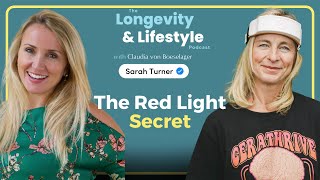
Neurobiologist Sarah Turner discusses red-light therapy's effects on brain and gut health, explaining how near-infrared light activates mitochondria and modulates inflammation. A 2024 study showed it reversed stress-induced cognitive decline and restored microbiome balance. She recommends 10-minute sessions three times weekly, often paired with 40 Hz frequencies to synchronize brainwaves.
Chapters
Hey there, I'm Claudia von Boeselager, a former investment banker turned entrepreneur, longevity coach, biohacker, and mother of two. Once burnt out and overwhelmed with chronic health issues, I've transformed my life and helped thousands of people do the same. I've even reduced my biological age by 17 years. Yes, I'm 26 again. Now I'm here to share the tools, strategies, and inspiration to help you live healthier, happier, and longer. On this podcast, I interview world-leading experts in health, biohacking, mindset, and performance, and share personal stories and learnings to bring you the latest insights and tips. Think of this as your go-to space for real talk about all things health and optimizing your life. Ready to unlock your best self? Let's dive in. This is the Longevity and Lifestyle Podcast.
My guest today is Sarah Turner, a trailblazing neurobiologist, red light therapy innovator, and co-founder of CeraThrive.
C-E-R-A Thrive.
She's on a mission to revolutionize brain and gut health using light. With a background in neuroscience, nutritional medicine, and photobiomodulation, Sarah blends hard science with cutting-edge tech. She helped create the Sarah System, the world's first FDA-listed red light therapy device specifically designed to target the gut, brain axis. But Sarah's journey didn't start in a lab. It took shape through years of pharmaceutical research, deep dives into quantum biology, and boots-on-the-ground immersion in the global biohacking community. Through Sarah Thrive and her Rebel Scientist podcast, she's making light therapy not just accessible but actionable. Think better focus, energy, digestion, stress resilience, and maybe even a longer, sharper life. Today we're diving into the science of light, the secrets of the gut-brain connection, and what the future holds for health optimization.
Please enjoy. Welcome to the Longevity and Lifestyle Podcast, Sarah. I'm so excited to have you with us today.
Thank you. It's lovely to be here.
Oh, it's wonderful. And actually, we go way back to a panel discussion in Miami. I think it was 2021. Could that be possible? So it was so funny where even I remember at that conference, people were like, oh, this world of like biohacking and longevity, like they were kind of big-eyed and all new. And everyone feels like nowadays it's like total, oh, of course, like I'm doing this for so long. But back then it was a little bit more original. But you have been doing amazing things for so long. Maybe you can give a short introduction to yourself before we dig in, Sarah.
Yes, thank you. Yeah, I kind of was involved in the, in the biohacking thing initially. I moved to California from England and got involved in the biohacking thing. And you're right, it's probably like 11 years ago now, because they all had their 10-year anniversary, didn't they, last year?
Exactly.
And I was at the first one of many. And so I've done a variety of things, but really my main focus has been the effect of light on biology. So I actually started off researching how light structures water, and I kind of went down that pathway for a while. But I have a neuroscience background, so I, I settled on kind of, you know, why don't we just cut out the middleman and directly affect our bodies, you know, which are mainly water, you using light. So I focus almost exclusively now on red light therapy for brain and gut. So I have a company, Sarah Thrive, with exactly that aim, to, to produce devices that focus on mainly on brain wellness, but of course gut wellness, you know, so intrinsically linked that it's—
yeah, exactly. And I'm so excited to dive into that too. Yeah, it's, it's beautifully linked together, and I think the more we understand it and the more people understand the importance of repairing gut health for your brain, which powers the whole, the whole biology essentially as well. So you've taken red light therapy from theory to tangible tech with Sarah Thrive. And for people interested, Sarah Thrive, obviously Sarah is called Sarah with an S, but it's Sarah Thrive with the C, so C-E-R-A system. What sparked your obsession with the gut-brain axis, Sarah? And what was the aha moment that made you bet your career on light, essentially?
For sure. Well, I like to say my— but I have biology backgrounds. I started off with a biology background, you know, way, way back, and then I went into pharmaceutical research initially and did a variety of experiments. I was mainly on drug delivery rather than actually on the drugs themselves. And, you know, one of my aha moments was kind of working out that actually the way that drugs get deposited in the body depends on the state of the body, you know, rather than the drug. I did a lot of experiments actually with grounding apparatus How interesting. And so then I went into nutritional medicine and various alternative therapies and, you know, all of the biohacking and got involved in structured water. And let's say I also have clinical neuroscience master's, so I'm always thinking about the brain and how we can potentially optimize the brain. I mean, now everybody's kind of moved from biohacking to longevity, and I'm also about— God, yeah, we even more reason to think about the brain because who wants to live longer if your brain's not optimized?
You know, 100%. My mother's had has dementia and late-stage dementia. And so this is a real passion area of mine, and I'm just so fascinated about it. And I've had the opportunity to speak to a bunch of different people. I'm so happy we're speaking now as well. If you get the brain nailed and you can be super sharp— I mean, Garnet Dupuis, I'm sure you know, of NeuroVizr, he's in his 70s and like, he's like totally— he's got brilliant recall and all the rest of it too. So yeah, it's, it's so important, right? So if we want to live longer, we want to be sharp.
You want to have a good brain. And so I was thinking, I was thinking even then when I was doing the structured water to research, you know, why aren't we applying this to the brain? And actually, there are a lot of people— I found out then, I didn't realize, but now I know— there are a lot of people doing research into red light therapy for the brain. And I was lucky enough to get myself on a trial because I have a research background. I could just go and volunteer on a study. And it was a dementia study, actually, it was Parkinson's. And I saw for myself that it worked, you know, maybe not in a way that people— oh, instantly people don't have Parkinson's. No, not at all. But I saw that people started to get their personality back, you know, It was a double-blind study. We had some people on a sham, some people on an active. By the end of the study, I could tell who was on the active just from the way they were interacting. And I was just thinking, you know, this should be available because we currently don't have a pharmaceutical treatment for dementia. And initially, when I started making this particular device, I really just wanted it for myself and for kind of the people that I was doing a little bit of brain coaching with, because the devices on the market then— this is probably like 2018— were these big clunky devices. You had to be plugged into a main port. You know, there was all kinds of other things going on. So I took my design to a Dutch company and they've, you know, we're now partners in this kind of company where we've made a small portable lightweight device with the addition of the gut piece. Because I think, you know, I was also thinking, God, how can we make this therapy even more effective? And of course, you know, from my point of view, I have now a bit of a holistic background from all of the kind of the biohacking and all the alternative medicine is let's try and maximize the therapeutic effect. Yeah. So that's, that's my aha moment was really doing, was taking data on that initial study into that study of Parkinson's.
And just in out of interest, what was the protocol? And like, bearing in mind that probably the red light devices at that stage were not as developed as they are now, or would you say that the devices nowadays are same quality as back in 2018?
Well, I think things have moved on. For example, the device I used, they, they weren't able to sink the heat from the device, and there are standards about how much heat you can add to the device. So this particular device had great big fans all sticking off it, and it was heavy, and it, and it used one wavelength. It was only 1068, which is a fairly high wavelength, one that's not normally used, but that was the device that I was using. Using in that particular one. It's, it's one that was developed in the UK, actually, but not tested in the UK, sadly, because, you know, at the time, and even now, the UK is not so open to these kinds of studies. So it was actually being tested in under Baylor Scott White in Texas.
Well, hopefully that will change at some point. Share our conversation with the more people who need to know this. And what was the protocol though for the Parkinson's, just specifically around that research?
Yeah. So the protocol was to use red light therapy, near-infrared. So that wavelength that I mentioned is near-infrared, not visible red. So one wavelength, near-infrared, and it was 3 times a week and it was 10 minutes having it on the head. And then they were doing gait analysis, they were doing reaction times, they were doing QEG and blood biomarkers.
And that's just to highlight the power. So 30 minutes a week, a week, right? So people are like, we don't have time, or these are so complicated. 30 minutes a week of, and I don't know if anyone, if anyone hasn't yet tried red light therapy, it's actually very comfortable nowadays because you don't, it doesn't get as hot. You feel quite relaxed. And a lot of people who fall asleep doing it as well. It's just so powerful. So in 30 minutes a week, it was even reversing Parkinson's. So it's just mind-blowing the importance of this. And I really want to drive home that point for people who are skeptical and like, oh, it's just light or whatever. So you decided to bet your career on light. That was your aha moment. And so you went ahead and then co-founded Sarah Thrive. And coming from a traditional medical background, what were some of your biggest personal challenges in disrupting conventional medicine with something as non-traditional as red light?
I think I'd been in, I've been in alternative medicine for a for a very long time now. So I have a pretty thick skin about that. Because you have to get kind of totally written off. But, but actually, you know, there are a lot of people who are very, very receptive to alternative ways of, of— and they shouldn't even, you know, some people like the word complementary, whatever word you like, but maybe non-pharmaceutical ways of healing. Yeah. But actually coming into like the brain space, there's even more resistance. And I think a lot of it is because we're just we don't have this education in any of our schooling. You know, I have, I have like 4 science degrees now, and in none of them did they say to me anything about the effect of light on biology, on the brain, on the cell, on the mitochondria. So even now, to a lot of people, you know, here in— I'm here in England right now, I face a lot, most of resistance here because people are very much They're very conventional in their thinking. So doctors here will say, well, no, of course you can't get light onto the brain. And I'll say, well, you can look, you know, you know, here's a light, you know, and here's a light going through my hand and you're showing it on the other side. And they're kind of like muttering like another crackpot, you know, because I think people are very— we're very, very conditioned. We're very conditioned in our paradigm. There's a lot of inertia against change because people don't, you know, obviously people invest a lot in their studies, you know, to kind of throw that all out. Well, actually, physics is kind of playing a bigger part in biology than this biochemistry that everybody's obsessed with learning.
And I wonder sometimes, would it not trigger in people a curiosity to at least be open to reading the research, to looking into it, and not this sort of shutdown like, I never learned this in medical school. No, I know in the US a lot of the top medical schools are funded by Big Pharma. So it's very clear you have the diagnostic prescription model and that's that's the one that's given and not to question, hmm, maybe things are interrelated and correlated, but instead the poor patient is sent to 20 different specialists on 20+ different meds, et cetera. And I'm not sure in the UK who funds the medical schools, if it's privately done or is pharma playing a role in it too. But I think, you know, for people listening that might be in the medical profession, that just awakening that sense of curiosity and reading research and just forming your own opinion as well. I think even just starting there would be amazing, right? Yeah, so it's 2020.
So I was going to say, even last week I was asked to speak at the British Students Neuroscience Community event, and, uh, and of course I readily accepted because I thought this is brilliant. And then I actually received a letter to say that the students had invited me, but actually they'd reviewed what I was going to be talking about and it wasn't deemed suitable. For students because it wasn't— what I was saying wasn't scientifically validated. To which I went back and said, well, how is it ever going to be scientifically validated if you don't interest the students to want to be the ones to validate that? Correct. To which I got, you know, silence, crickets. So I, you know, I think that is just an indication of somewhere we're at. However, now I think there is an overwhelming amount of people who are willing to take their health into their own hands. Yes, that, you know, that is going to become what will probably move the needle rather than trying to move anything in establishment. Because once people really do start to see the benefits, you know, then that snowballs. So I see more and more and more people now who are willing to try something different.
Which I love too. And I think in part, if there's anything sort of positive out of the whole COVID thing, was that people really decided to look into the science and start taking a deep dive into health and building your immune system and what are different modalities and giving things a try. So it's almost like this grassroots movement that needs to come up instead of, you know, a top-down heavy, because until decision makers, you know, have an experience themselves and try it and realize, hey, this actually works, it's hard. But I mean, you have research on it as well, right? But it's that willingness to be open to even look at the research. I think it's, it's, it's a journey. So thank you for, for doing what you're doing as well. In 2024, the study in Journal of Affective Disorders found that red light applied to both the gut and brain reversed stress-induced cognitive decline and restored microbiome balance. What's your take on why treating the brain and gut simultaneously leads to better outcomes than just isolated approaches?
Well, I think, I mean, we call the gut the second brain, and we do that because, you know, it's where we make a lot of neurotransmitters. There's actually a lot of neural tissue in the gut and So there's a constant communication, a bi-directional communication going on via the vagus nerve and also via the bloodstream. So the gut is very intrinsically implicated in the health of the brain. And now I think the whole research into microbiome is also exploding as people begin to understand how important having the correct microbiome profile is to brain health. So red light actually is very good at targeting the gut. The gut is a very easy access point. You can get a lot of light into the gut, and you can probably— with near-infrared light, you can probably shine that light fairly deep, and you're actually getting the surface of the, of the gut lining. You know, most people today have what we call leaky gut. You know, it's just when the gap junctions, those kind of cells in the gut, don't knit together properly. And so people have systemic inflammation. I mean, a lot of people are walking around with systemic inflammation just because we're subjected to toxins and pollutants and all kinds of other things that interfere with how that gut knits together. Yeah, actually shining light onto that area, we already know that near-infrared light is very healing. And in fact, you know, the FDA and the European medical directives do actually acknowledge that red light therapy is good for healing, wound healing. So this is just another application of that. So things like healing the gut lining, also you can charge a lot of the blood. So there are a lot of mitochondria floating around in the blood. And mitochondria are just the little organelles where we make energy in the body.
The energy packs. Yeah, exactly.
And they're probably the main receivers of the light because there's a certain enzyme within the mitochondria that receives light and turns that back into chemical energy. So you can create a lot of energy using red light therapy delivered to the gut. And, and anything where you reduce systemic inflammation is going to have a hugely positive effect on the whole body. But also on the brain. You know, if you have inflammation in your gut, you're gonna have inflammation in your brain, and this is one of the leading causes of brain symptoms is inflammation.
Brain fog, et cetera, yeah.
All of those things. Once you kind of drop inflammation in the body, sometimes, you know, I think, you know, sometimes just the body panel is enough for people to have an effect on their brain. Because once the gut starts to heal, you know, the whole body starts to heal. I kind of see the gut as a starting point. For any kind of health regime. And then doing the brain at the same time, we know from, from other research that we can reduce anxiety, we can reduce stress, we can increase blood flow in the brain. Well, that also has a knock-on effect in the gut. We know that if we're in a constant state of anxiety or worry, that it affects the gut. You know, our body goes into fight or flight mode and starts to change how our gut functions.
Yeah, exactly. And we hold on to the stress.
We hold on to the stress and our bodies start to do behaviors that we need. You know, if you're stressed and your body feels like there's a threat, you don't want to be digesting food at that time. No. You know, you want all the energy in your brain and in your legs, but that just means you never digest food if you're in this constant state of stress. So you end up with undigested food in the gut, you end up with gut issues. So it's very much, you know, one thing plays into the other. And so from my point of view, treating them both at the same time is the best way to optimize the success.
Is super powerful. And you were mentioning how well the gut area, the stomach area, let's say, absorbs the red light, right? So it penetrates through the skin. It even goes into the intestinal walls. You were saying, how can you just explain the difference? Because obviously if someone's thinking of the head and so the Serathrive actually goes through by the prefrontal cortex, if I'm not mistaken, right? What is the difference? Because there you have then the brain— sorry, the bone tissue, the bone matter. Does it penetrate as well? Does it really, you know, go through into the brain matter as well, or what's happening there?
Yeah, different, different substances that the light will penetrate to different degrees. Yeah. So bone is a little bit more of a barrier. But actually, you know, near-infrared light, which is a longer wave than red, will penetrate through the cranium and get onto the surface of the brain. It's just, it's just a smaller amount of that light probably reaches the brain than reaches the gut. But the body is very, very energy efficient. And we know from like quantum biology studies of things like photosynthesis that you only need a very small amount of, of light to have an effect on the body. So although we're only talking about a small, small amount, so maybe even like 3% of the light shining off of your device is actually getting to the brain, that seems to be enough because we, we have, I don't know, like 600 peer-reviewed studies to to show an increase in brain function after using the light. So even though it's a small amount, it has an effect. And the interesting thing about the brain is the brain is pulsing or oscillating at different frequencies depending what we're doing. You know, brainwaves— we have different brainwaves depending on whether we're alert, whether we're concentrating, whether we're—
beta, alpha, theta, gamma.
Exactly, all of those things. So you can also pulse light in a way that entrains those brainwave frequencies. Frequencies. So for example, that gamma frequency, this is a 40 Hz frequency. It means like a 40 times a second oscillation. So not only can we put light onto the brain, but we can also pulse that light 40 times a second to get the brain into a gamma frequency. So there's lots of other things you can do with the light on the brain. It's not just about getting the light onto the surface of the brain.
Oh, I love that. And I— because we've had Garnet on as well from NeuroVizr, who I'm sure you know, um, well as well. And, um, it's fascinating, the research around pulsating light, but it's through the eyes, right? And I guess it would still be exactly the same through Serathrive, right, with the device further up, that it would trigger the brain and allow the same benefits of neuroplasticity that the optical pulsating light would. Is that fair to say, or is there a differentiator between the two?
It is different light receivers in the eyes. Yeah. In, on the brain. So in the brain, in the eyes, we have photosensitive ganglion cells in the eyes. And also when you see flickered or pulsed light on the eyes, it's flickering on the visual cortex. So it has a slightly different effect because what you're doing there is you're kind of stimulating the visual cortex in a way that it kind of gets overwhelmed with the signal and then kind of goes to a blank page. And that's when you potentially can create new pathways because the brain's sort of like, okay, I can't cope with—
I don't know what this is. I surrender.
I give up. Let's wait until we get a better signal. And then maybe, you know, it gives you or the brain the space to kind of of make new pathways. But when you shine light onto the surface of the brain, like my device, it goes flush. You're not looking it in the eyes at all. You are maybe potentially entraining the brain's natural brainwaves. So you're not kind of forcing it into anything. You're just kind of showing it a signal, almost like a tuning fork, you know, like, okay, this is 40, ding, ding, ding, ding. And then the brain was, you know, potentially will slowly entrain or synchronize with that frequency. It is a different effect. And also the light that goes through this near-infrared that goes onto the surface of the brain, is a very healing therapeutic light. So it directly activates the body's innate healing, and that has an epigenetic effect. It actually causes the cellular DNA to activate healing proteins, which the flickering light doesn't, because the flickering light, again, it's kind of like stimulating the visual cortex. So they are very different. They're both beneficial, like you say. One is helping with neuroplasticity, the other one is is probably having a more direct healing effect.
Wow. And I wonder, have you— maybe our friend Pavel has like done both at the same time or alternatively?
Yes, yes, I'm sure. Well, Pavel actually, Pavel of Nourish and Nourish, he's actually done me some very good sound files because the other thing that I do with mine, because if I'm thinking about pulsing at that gamma frequency, you know, we can get that gamma frequency from sound as well as light. So Pavel has done me some amazing meditations that are in my app that we quite, you know, I quite often recommend that people pair it together. So he would do breathwork and sound at that 40 Hz to get your whole body into that frequency. So if we're talking about maximizing effects, you know, do— you can do the light on your brain, you get a good effect. Do it on the gut, you get even better. Pair it with sound files and breathwork, you know, you kind of just stack them. Yeah, you stack and you kind of— you're doing— you're getting more bang for your buck, if you like. Exactly.
That word just came to mind as well. It's like optimize your time.
Optimize your time and optimize the therapy because everything's working synergistically. The body is such a kind of interconnected system.
Yeah, it's so beautiful. I want to have a look at resetting inflammation pathways. And so a 2025 study showed that photobiomodulation reduced neuroinflammation by 37%. Through vagus nerve signaling. Can you explain how red light resets essentially the inflammatory pathways of the gut-brain axis and how Serathrive taps into this mechanism?
Yeah, as I was mentioning before, like when we have like leaky gut, that's one of the main reasons why we have inflammation. And what happens is you have small openings in the junctions in the lining of, of the gut and maybe food particles leak out or sometimes metabolites from bacteria will leak out and then they're small enough they can cross the blood-brain barrier. You know, the body thinks that this is something alien and starts to kind of have an immune response and this leads then to inflammation. So I think one of the main ways that we can dampen that down is to do things like heal the gut. And it's also working the same way in the brain. You know, you also, you have leaky brain as well as leaky gut. You know, so leaky brain is just, you know, when you have that, the kind of the blood-brain barrier, which is, you know, again, it's cells that make up this kind of lining around the brain. We also want to— we don't want to have anything leaking in and out of there. And if you do, that potentially can cause this immune response. But also, I think we kind of talk a bit simplistically about how light works, because we haven't really worked through all the intricacies. But we do know that cytokines are affected by red light therapy. We know that other inflammatory markers are are either upregulated or downregulated depending on which of which light we shine on the brain. It's a very fine balance. And actually, when you shine light onto the brain, you activate reactive oxygen species. Now normally we think, well, don't you take antioxidants to get rid of excess oxygen? But in this case, it's kind of like a low-level stress. So you're creating oxidants but at a very low level. So you trigger like a healing response. So you kind of aggravate the brain a little bit and it kind of responds. Yeah. So there's a very difference between having a lot of reactive oxygen species in the brain, which, you know, unfortunately people are triggered now by potentially Wi-Fi or a lot of blue light or, you know, poor food choices, or, you know, there's lots of things that can trigger those responses. So red light therapy, I think, is working on so many different ways to reduce inflammation, it's difficult to kind of say, okay, this is exactly how it's working. But I think it's probably a cumulative effect of, you know, stimulating the body to kind of be more resilient by producing some anti-reactive oxygen species, dampening down the, the cytokines and the other inflammatory markers, and then also make healing those parts of the body where potentially you're getting metabolites leak out that trigger that strange— you know, it's, it's an immune response that, that goes out of control because the body's constantly trying to deal with something and it's constantly there. Yeah. You're never getting to the root cause unless you actually heal the leaky gut or the leaky brain.
Yeah. And I think that's so important for people to realize that so many things are systemic and it's important to understand where it's actually the origin is. So they're like, oh, I feel brain fog. Let me have, you know, extra espresso or I'm just going to, you know, focus on one thing or I have a headache. You know, it's getting to the root cause of it and realizing and as you said, right, typically it's starting somewhere in the gut because it's so interrelated as well. I mean, my personal journey as well from, you know, when I was at boarding school back in the day, not eating well, didn't like the food, like high stress, etc. And when I started on my, my healing journey, it was focusing on the gut first and already like exponential changes. And I've had clients as well that I work with that when we focus on the gut, like, I mean, beautiful results. Reversed my biological age now by, according to GlycanAge, by 17 years. I have a client that's 37 years younger. So it really works. And I think this is a really beautiful modality using the red light to be able to focus on that healing process as well. So yeah, a study in BMC Geriatrics found that full body photobiomodulation photobiomodulation improved cardiovascular health and extended lifespan in mice. So looking from a longevity perspective, do you believe that red light could become a proactive tool for longevity, not just treatment? And if so, what's the next frontier for human trials?
Well, longevity is the new— is the new word. And I've been to a lot of longevity events lately, and all of them are doing red light therapy because it just— it just helps with general wellness. Yeah. You know, if you're reducing inflammation in the body and if you're increasing blood flow, if you're increasing oxygenation in the blood body, if you're helping the mitochondria to kind of migrate and proliferate, then of course all of that adds up to, you know, what we want to do, which is to have better homeostasis, increase your metabolic age and everything else. So I think most people who are in the longevity space are utilizing red light. I don't see anybody, you know, if you look at, if you look at anyone in the Longevity Olympics and I speak to a few people who are kind of doing that, they're all, they're all doing red light because everybody understands, okay, in order for my body to function well, I need to have good mitochondria, I need to have good metabolic health, which is what you're doing with red light therapy. Yeah. Going forward, I think, yeah, it does need to be something that is studied in more depth. Because there are all different ways to do these therapies. There are ways to combine it. You know, potentially there are like activated drugs that people might try. I mean, I know there's a lot of crazy things going on in the longevity space, you know, even gene activation. I mean, who knows where that's going to go? I mean, I've seen some crazy talks lately where people have been extending the lives of animals like 4 or 5 times. So, you know, the potential is there. The funding needs to come from somewhere, but if enough people get behind it, then I'm sure that there's going to be some pretty crazy experiments. And I know, you know, obviously I think red light will definitely be part of that, part of it too, because it is so powerful.
And I'm curious, what is your red light or your daily protocol, Sarah? And I'm sure like above and beyond the red light, but also with the red light, do you use it daily or multiple times a day? And what else do you stack onto your health optimization protocol?
I, at the moment, I'm fairly, fairly low-key. I mean, I tend to try things as I like go to events and then I think, right, I'm going to do one thing. Otherwise I'm kind of doing so many things.
Yeah. Your whole day's gone.
Red light is a basic for me. So I'm so used to it now. I mean, I'm just looking around my room, you know, I've got like 4 or 5 of these panels and a couple of headbands. I tend to do red light if I'm, you know, like I did yoga yesterday, so, you know, I feel a bit sore because I haven't done excess— that kind of— I did like Bikram. So I just use it on my back before I go to bed. I always do one session of my headband. Sometimes I get lazy because I've got different programs with different pulsing, but a lot of the times I just have it on red light. Like, I call it the energize function. I do, I do a lot of simple biohacks. I mean, I'm here in England every morning before I turn on any lights, I'll go down and stand on the grass and look at the sky because I really think grounding is one of the most underrated tools we have. Yeah. And I'm just about to bring out some grounding mats for people who genuinely can't get outside because I think that that's something that really does go well with red light therapy. I am taking some peptides, but not because I endorse it, but it's because someone has given them to me and asked me to try it. Um, so I'm taking them, but they're the more— they're the one— the, the ones that you take, you know, they're not the injection ones. So it's more bioregulators, more of the natural kind. So the jury's out on that at the moment, but my baseline is normally quite good to know how much better I feel. You know, I don't have a massive way to go. I normally feel quite energized. So my, my protocol is fairly simple. I try to do something non-screen related in the evenings, but the only thing that I don't do, which I, you know, I try to do when I'm away, is the cold. When I'm in England, I can't face it. But, you know, it'd be on a hot summer day, a hot summer day, and different vibe, like doing a cold shower in Miami when you kind of can go outside in the sun to kind of do it in a cold country. I I do do it when I'm away. I do do the cold and I do face dunking with ice. You know, all these things are so simple and accessible. Yeah. Why wouldn't you do them? So easy.
Just a, you know, face in. It's great for skin as well. Exactly. There's a lot of benefits. People spend all this money on their skincare and it's like, you know, ice and cold water works wonders too. I know I have periods where I'm better, but that's, you know, when in need, it's kind of just turning the water cold at the end of the shower and just breathing through it for a few minutes as well. So it doesn't even need to be a different bath.
Oh, I can't do that.
It depends on the temperature outside though. I do agree. If it's freezing outside and I'm cold, it's like, I'll go for the heat shock proteins of really hot temperature instead.
Heat shock every time. If I had a sauna, I would do that every day, but I try I try to do hot yoga as my supplement.
Yeah, which is really great too. I need to do more of that in my life. I pulled my back last week and I don't normally get in that state, so I know, okay, need to focus on certain things and modalities as well.
Yeah.
Yeah. So in your opinion, what's one overlooked or misunderstood benefit of red light therapy that has massive potential for cognitive or physical optimization? What would you say?
What if you could wake up every day feeling unstoppable, limitless energy, razor-sharp focus, and a body that's biologically years younger? This is your invitation to upgrade your life. For those that don't know me, I'm Claudia von Boeselager, former Goldman Sachs investment banker and serial entrepreneur turned longevity and peak performance coach. After reversing my biological age by 17 years and counting, I now help high achievers like you do the same. My peak performance and longevity coaching is designed exclusively for visionaries, entrepreneurs, and leaders who refuse to settle for burnout, fatigue, or suboptimal health. Together, we'll optimize your energy, longevity, and performance so you can thrive in business and life. This is a bespoke, science-backed coaching experience integrating cutting-edge biohacking, longevity science, and high-performance strategies tailored to your unique biology and goals. If you're ready to unlock your next level, let's talk. Book a complimentary exploratory call now. Just answer a few quick questions to started. Head to the show notes for the link, and I look forward to speaking with you.
Well, I, I'm— I kind of came into red light from a bit of a funny angle because I didn't, you know, I wasn't ill, I wasn't kind of searching for anything. And in fact, I was more looking at how light structures water, which again is something which is not entirely mainstream, although a lot of people are now starting to write about it and accept it. And initially when I was researching, there was only one guy that was talking about, which was Professor Jerry Pollack in Seattle, over near Seattle way. And he wrote the fabulous book Fourth Phase of Water, which I recommend everybody read because it's extremely interesting. But I think that is potentially something that people don't realize, is that light actually changes the structure of water.
Yeah, let's talk about this. I'd love to understand that better. How does that work?
So when you shine light on water, especially water which is next to— they call it a hydrophilic surface. It just means like a charged surface. So a cell membrane, for example. So if you shine light on water that's next to a cell membrane, you actually change the structure of the water. The water becomes more ordered. So it forms a lattice shape, which sounds odd, but think about ice. Ice is just lattice water that's got very strong bonding between, so it's solid. And it's slippy because it's lattice sheets. It's like honeycomb lattice sheets. So when you stand on ice and you slip, it's because one of the sheets has kind of slipped out from under you. But when you shine light onto it, it starts to form like ice but without the strong bonding. So you have these like slippy sheets and they're negative because what bonds them together in ice is hydrogen, which is positively charged. So you end up with kind of like a slippy gel-like layer next, directly next to the cell membrane. Now, this is hugely important, you know, if we think about this in biology terms, because if you have like a— it's almost like a lubricant. And what doesn't work better? You know, think about a car engine. It works so much better if you actually put oil in it. Yeah. So it just means that all of our blood vessels become more lubricated. It means like the little engines in our body, which— ATPase, which is how body actually makes chemical energy, is in fact a little mechanical motor. It's like a little biological motor. All of these things work better if they have this gel-like water, you know, next to them. Proteins fold because they they are attracted to different charges. If you've got this kind of charged water all around the proteins, you know, they fold better, you know, work better. And so I think this is something that's a little bit overlooked in biology. And there are people who are looking at it actually, shout out to Dr. Lou Lim, who has a competitor brain company, but he's one of the only people I know who actually does do talks on things like how photobiomodulation or red light therapy can structure water. So from my point of view, I think that's something that people are going to start to, to work out. What does that actually mean for biology? And how much structured water is it? Because at the moment, I'm talking fairly theoretically, although it's been shown in experiments, we don't know exactly how much of the effect of red light therapy is due to changing structured water and how much is just due to— or not just— or how much is due to increasing energy in the mitochondria. So I think structured water is something that is overlooked at the moment in red light therapy. It's something that will be big as people start to realize, you know, our bodies are made of water. And, you know, we are, we are really animals that are designed to be outside, made of water to interact with the sun. Yeah. You know, that's kind of— I think that's maybe even lost knowledge. You know, when I, you know, I have a very good friend who's writing a book on this at the moment, Peter, and he He, you know, talks about how lost civilizations knew this. You know, there's plenty of evidence of how people were, you know, using sun and water basically as our main medicine. So yeah, that is something that's hugely interesting that I tend to follow up on. Like I say, it's not the main documented mechanism of red light therapy, but I think it's, it's, it's very interesting if it's not as important as it seems.
Yeah, no, I love that, that, you know, that opportunity for research around understanding how it's benefiting structuring the water versus powering the mitochondria, essentially. Yeah. And understanding that split. So if there's any researchers listening, maybe you want to do your PhD on this.
Do a PhD. There are people doing it, you know, there are people who have done a lot of work on this kind of different phases of water, especially like you say, because the mitochondria is a little bag of water. Our cells are bags of water.
Yeah, it's all the fat cells are mainly water as well.
So it's all just water. So there are quite a lot of people who are studying it and it comes under the umbrella usually of quantum biology because you're, you know, it's if, if it's true that you have these kind of transient charges on the water, then that allows for a slightly different mechanism. And, you know, and it allows for some of the quantum processes we see, which are mainly charge-based. So there are people who are researching it. It's just yet we kind of yet to have to apply that research to exactly what percentage of the effects are due to structuring the water and what are due to charging those enzymes in the mitochondria. Yeah, there are lots of other things in the body that actually resonate with light too. You know, so we could find it's a combination of many things.
Well, this is true, and I guess it will depend on the individual stress levels, diet, lifestyle, etc. A couple of questions also to follow up on that in terms of light, right? So obviously if we're in the sunlight, we have full spectrum, but here we're talking specifically about red light, or are you talking about the benefits of also different spectrums as well?
I'm mainly talking here about red and near-infrared light. And especially with the brain, the red light won't pass through the skull. So you're only talking about near-infrared light. But all lights have— all lights are having an effect on our biology, but it, it depends on the penetration. So, you know, you people see people with red light masks for wrinkles. That's because they're targeting just the surface level, because red light is fairly shortwave compared to near-infrared. And it won't penetrate deeper than the skin. But that's good for a mask because you— that's where you want to get. You want to get the skin. Yeah. But when we're talking about these, these different effects on like water in the brain or kind of deep in the gut, we're really only talking about near-infrared light.
Perfect.
That's good. And all the other colors are shorter still. So all the other colors are also superficial. So people are looking at green light because green light activates different also like opsins, which is something that we also have in our skin. But that light is not going to penetrate deeper than skin deep to have that profound healing power, which is a healing effect. They're probably doing other things because, you know, like you say, the sun has all different wavelengths. We're going to be utilizing all of them to some degree. Yeah, we know that the red is particularly healing and that's— we see that at sunrise and sunset. So it makes sense because at sunrise you want to get that healing light because your body needs to kind of be ready. You need to kind of do your healing, be ready for the day. Yeah. And in the middle of the day you don't want to be healing, you want to be kind of foraging or looking for a mate or doing all the other things that daytime animals do. And then in the evening that you see that red light again and it activates the healing, so you heal while you sleep. So it's not the body is totally doing its whole thing in train with what's going on in your environment.
In nature. Yeah. I think the challenge is so many people are so removed from actual nature circadian rhythms, right? And so if you are in the wilderness, let's say you are rising with the sun, you are going to bed with the sun, et cetera. But we have so much artificial light. I mean, that's a whole nother discussion. But just going back to that moment of recalibrating yourself with the sunrise, sunsets, is so powerful and then boosting it for those unable to have that access with the likes of, of a Serathrive device. And I have a question also for you because I know some people are huge fans of the red light beds. Where is the differences for people wondering is between the red light beds versus the more gut-brain focused Serathrive device?
So yeah, the beds are great, but the beds are giving like a whole body treatment. The thing with the beds is, is you're not pushing the light like onto the brain, because as I said, it's fairly difficult. You know, you only get a small amount of light, and really to get light onto the brain, you have to contour the light and actually kind of have it directly on the head. It needs to be at the right angle. So if you're laying on a bed that's flat most of that light is kind of bouncing off if you have a curved surface. So, you know, where your back is flat on it, you're getting all of the light, but obviously your head, you're not getting very much of that light. So you do need to have something that contours to get the light onto the brain.
Okay, that's a really important differentiator, I think, for some people wondering like, oh, why don't I just use a bed? I can have the full body, but you want it to get into the brain and into the gut.
And by having it so close as well, I guess that —Yeah, so the gut ones potentially, if you have one of those clamshell beds, you know, or you kind of turn over, you can get light into the gut. But then also it's just how often can you get on a bed. It's not many people who have a bed at home. Yeah, exactly. I'm in America. There are, there are some, but it's that again, this is why it— in order to do it, because this is the thing with light therapies, you have to do it consistently. It's like exercise. It's— I see it as very similar to exercise. You know, if you go to the gym consistently, consistently you see a result. Yeah. If you drop off for like 6 months, you know, everything goes again. You know, you don't keep the result. And it's the same with light therapy. So that's why having like a small portable device makes it easy, because then you can keep it up every day. Whereas if you have a bed, you— I think they're good, but you do have to go. Very regularly. You can't just go every now and then and get the effect. But although saying that, as a top-up or injury recovery, just to go and get some sessions on a bed, they're still great. I still, you know, I, I fully endorse the beds, but not for a brain function perhaps.
Yeah, and they're not as functional, you can't travel with them, etc. So it's, it's handy to have that. And so red light therapy has been tested by NASA. I for space missions and neuroprotection. So what futuristic applications of PBM, so photobiomodulation, gets you most excited, Sarah? Maybe pediatric brain health, AI-assisted protocols, space travel.
What do you think? That's a really interesting one because at the moment there is a lot of funding going into space health. And, you know, I went to a few events recently in Vegas where I had no idea the amount of funding and research money and just time and effort that's going into research and even things looking at having a baby in space, having sex in space, you know, what are the implications on biology? And there are people who this is, you know, they're focusing on.
Wow.
Because it's— we don't know, you know, what is the effect of being in a different gravity or being in a different atmosphere? Because we are, you know, we're terrestrial animals. We're designed to be on this planet. It. So I'm kind of very excitedly looking at this space because obviously if we are going to travel long distances to other planets, we can't take sheds and sheds full of drugs with us. You know, there's just no way. So we need to have something that people can use that's— that's— that they can take with them and just charge, like red light therapy. So right now there is a lot of interest in small portable health devices like red light therapy for space travel because, you know, that's going to be the best option, you know, when you've got very, very limited space and you don't want to run out of a drug that people have relied on. So the space thing is hugely interesting. And I think, you know, even now I kind of am a few groups where people are starting to look at space health. There's the SpaceX Prize where people are trying to work out You know, there's all kinds of things where people are really putting a lot of focus on space travel. I mean, I don't even know what I think about that. You know, I'm certainly not putting my hand up as one of— as going to be on the first trip to Mars. But certainly I think it may help, even if it helps us now here on planet Earth, to accelerate the funding for things like red light, because, you know, because those people really want to have something that's going to work on space explorations. It's hopefully going to push forward the research on how these things work that we will get the benefit of. Well, exactly.
Yeah. Because I think, you know, some people are listening like, oh, space, what is this? And there's enough people suffering on planet Earth to not have to focus on hypothetical scenarios in the future. But if it expedites research that is needed to make red light more mainstream in terms of healing modalities, is, then why not, right?
Yeah, why not? That's kind of the camp I'm in. I'm sort of all for it, and I participate in these space health webinars and things because I think exactly that. Yeah, I kind of like— I kind of focused on helping people deal with stuff here on Earth, but if we can kind of accelerate those programs— and it is interesting, you know, you can't help but be interested by, okay, what what is our biology going to be like in different atmospheres? But at the same time, you know, yeah, let's just accelerate these technologies because we need them. You know, we've also got finite resources here on Earth. Anything that we can do that just helps people deal with their issues in the most efficient way, yeah, it's got to be a winner.
Exactly. Watch this space, literally, pun intended. Exactly. Do you have a few Time for a few longevity rapid-fire questions. Yeah. Okay. So what's a surprising biohack or longevity tool that has had the biggest impact on your health? And I know you're going to say the red light therapy, but is there another one that comes second place?
A longevity biohacking tool? Yeah.
Well, see, that was surprising.
Yeah, that's difficult because we're not going to know for another 50 years, right? I'm doing things, but I mean, if I'm gonna live to 100, you know, if I'm gonna live to at least 100, I got 50 years. If I'm gonna live to 180, like they say, you know, I got a long time to try different things.
There's still to come besides red light, still to come.
This is the amazing thing because everybody's doing all these fascinating hacks, but we're not— we're just not gonna know for another 50 years if it pays off. But yeah, I don't know. I say I am— I do take bioregulators, I do my grounding, I do my red light. I'm pretty simple with what I'm doing, although I do have a gene which is a high risk for Alzheimer's. I do.
Yeah, a single copy. Do you have a single or double copy?
I have a double, double APOE4, which is the highest risk. Yeah. So recently I was at an APOE4 conference in Miami And they're doing some fairly interesting things with gene editing. And, you know, who knows, in— I don't know how many years it will take for them to kind of maybe have a tool where they can change that kind of genetic profile. I'm not— again, I'm not entirely sure I'm putting my hand up to be the guinea pig.
Well, I think Brian Johnson's already— not that he's got both copies, but are you familiar with the work of Dr. Dale Bredesen? Claudia von Boeselager. Yes. Yeah. So he, um, has protocols that are reversing cognitive decline, even for people with the, um, two copies of the APOE4. I have a single copy and my mother has dementia, so we assumed she would have it. She doesn't have a single copy. My father, who's 86, has it. My mother has, um, had several head trauma incidents and lack of HRT, um, post-hysterectomy in the 1990s, um, was was her main driver. So yeah, we've had Dale on a few times and I'm inviting him back on again. He was on with Dr. David Perlmutter also recently. So I think looking at that and just keeping within certain parameters, of course, a lot of lifestyle interventions, the keto diet is very powerful for that and, you know, enough sleep, etc. You know, a lot of these things too. But with 2 copies, if you do nothing, they say it's up to 50 to 70% lifetime chance of getting it. So it's reversible, you just need to keep your, your markers in the right ranges, Sarah.
So, um, yeah, sure. And I've just ordered Dale's book, he's brilliant. I'm copy— you know, and let's say I attend— yeah, I'm actually very optimistic. Yeah, because if you go to these events, you know, people are making huge strides. And actually, I'm not, I, I'm not a genetic determinist either, you know. I don't— I think that I think that the way that we express our genes is totally down to our lifestyle and the way we live, and also our mental health. Yes. So I kind of push away this sort of Damocles. Yeah. Oh, you've got this, you know. Yeah. And I think, well, I don't buy into that, actually.
Yeah, I agree. I think it's important. Yeah.
But maybe we'll have another podcast in 50 years and see whether hopefully we'll both be forgetting things like such would like.
So what did you just say? Now I can laugh about my mother with dementia as well, unfortunately. But obviously it's a sensitive topic for many. But I think that that's the exciting part. And the beauty is that it is preventable, it is avoidable, and you just have to get on top of it. And that's why proactive preventative measures are so, so important for so many chronic diseases. Starting with reducing inflammation in the body because that really ages it as well. And so I think with red light, it's, it's super exciting. I know we just went down a bit of a rabbit hole. This was supposed to be rapid-fire questions. I'll keep you on. Sure. That was, that was me too. If you could only keep one longevity habit for the rest of your life, what would it be?
Nature. Just going out in nature, just spending a fair proportion, you know, a reasonable proportion of my time outside. Yeah.
What has been your most exciting purchase in the last 6 months for say $100 or $200 or less? And I love specifics, brand, model, where you can find it.
Oh my goodness. I—
Anything, not necessarily health, but what has lit up your life in the last 6 months?
You know, my, I bought this from my friend, a concentric lens that enables me to focus solar energy. Wow. It's a lens and it's super cool and I love it. And I've been focusing solar energy on water, on stones, on crystals, and having all kinds of fun just experimenting with that.
That sounds amazing. And what does it do if you focus solar energy on a stone? Like, what, what happens?
Well, you need to do the experiments. I mean, it's quite amazing how much solar energy actually you can harvest just by using just a single lens. You can crack stones, you can boil water, you can do all kinds of crazy things.
This sounds very cool. I must get the link to it. What's the name? And I will link it in the show notes. Fresnel lens.
Fresnel. Fresnel.
Fresnel.
F-R-E-S-N-A. F-R-E-S-N-A-R, I think. It's like the ones they have in— old-fashioned lighthouses that kind of focuses energy. Wow.
Sounds very cool. Let's check it out.
I kind of go, but I don't buy many biohacking things. I go to these events. You know what it's like. You kind of overwhelm with them.
So many of them. No, but it could be anything. We've had some interesting purchases as well. Sarah, what's a book or resource on health you find yourself recommending over and over?
Oh, ones that I recommend. Um, there are some good— let's say I highly recommend everybody reads Jerry Pollack's Fourth Phase of Water. It's not on health, but it will definitely educate you about water, which, you know, it's not too much of a jump for you to apply that to health. For red light therapy, Simple Access ones— like Ari Whitten wrote a good one that I recommend to people as a good intro one. That's pretty cool. And then for people who are kind of into like retro John Ott wrote a really good one about light. How do you spell Ott? O-T-T. O-T-T. Isn't that fascinating? I mean, I think it was probably— I think it was written in 1971 or something, but he did some brilliant experiments using light. Wow.
Okay, so we'll link everything in the show notes. Yes. Amazing. Sarah, what's one piece of advice you'd give to someone in their 20s or 30s or 40s looking to set themselves up for healthy aging?
In their 20s? In their 20s, I, I really think that now what I would advise, and what I'm advising like my nephews, is to try and find some kind of work where you're not just on a computer day in, day out. And I think that's going to be harder and harder for people to do, and I don't quite know how anyone in their 20s is going to do it. But I think the more that you can orchestrate to have a little bit of time outside, or standing or actively doing something, you know, however that's gonna play out. And in 40s, I think that is the time to really start paying attention to things like brain health. So do, you know, to make sure you're on top of all of the, the kind of brain hacks. And it's, you know, again, it's simple, like being outside, not eating processed food, you know, being moderate in, in behaviors, you know, exercise. Yeah, exactly.
Connection, relationships. Yeah.
And having fun, not, you know, not taking things so seriously, because all of that kind of adds into it. And in fact, you know, I think, you know, I think if you look at my heart rate variability, I don't know about you, but my heart rate variability is best when I'm out with my friends doing things that I love. You know, it's not, okay, I go to the gym and I've just lifted this and then I'm checking my heart rate. That doesn't move the needle as much as community and, yeah, that kind of sociability and having a purpose in life that you believe in, you know, that also I think contributes. So I think that's, yeah, that's just general advice that I think most people kind of understand.
Yeah, but I think it's important that people remember, I think some people are, as you were saying at the very beginning, like looking for that one magic, you know, thing, but it's, it's cumulative. And I think that that's the point as well, that not everybody feels comfortable with. They're like, oh, well, I'm just going to wait till they develop a pill for it. It's like, no, we are holistic beings as humans. You have to bring different pieces together, but you can have fun while doing it as well. So I think that that's super important. And for the 20-year-olds and/or others, I think the opportunity with AI personally is that you can actually do a lot of brainstorming while walking. You can literally talk to the AI. It can then transcribe everything and bring you, put out a report and stuff. So it's figuring out modalities to leverage AI so you can be more outside in the daylight interacting and then and not just be stuck at a computer all day.
So maybe there's ways of the future. And I would also advise people to think twice about taking any pharmaceutical, you know. Especially, you know, if you can find another way around it, especially when you're young and your body is more resilient, find another way around it if possible. Yeah.
Try to heal what's the— find out what the underlying is and try to heal for that and see what happens. Yeah.
With pharmaceuticals, it's kind of, you know, as something to fall back on, not as a first line of, you know, what you would do.
Yeah, I know that you'll probably get pushback from a lot of traditional— um, well, traditional medicine is almost wrong because that comes more from Asia, but, uh, the Western medicine practices. So yeah, exactly. Sarah, this has been so informative. Thank you. For listeners who want to dive deeper into red light therapy and biohacking, where can they find you, your information, where would you send them to? And we'll link everything in the show notes. Sure.
So it's Sarah Thrive, spelled C-E-R-A like brain, C-E-R-A, sarathrive.com. And then all my handles on social are the same, Sarah Thrive or the Sarah System. People can find me through any of those, or Sarah at Sarah Thrive, S-A-R-A-H, Sarah at sarathrive.com.
Wonderful. Do you have a final ask or recommendation or any parting thoughts or message for my audience today?
No, I think we've covered a lot of ground. I think for most people it's just about your light environment is just as important as like these red light therapy devices. So what we're doing with these devices is we're supplementing deficiencies in, in red light. So, you know, one of the first things you can do to really help your health is to try and remedy some of those deficiencies by getting outside at sunrise and sunset, you know. Exactly. It's kind of a really good way to supplement after. But, you know, some of, you know, some of the Some of the best biohacks are the free ones.
I love it. And that's so important for people to realize. It's not about spending $2 million a year, but actually your breath connection, giving a hug. A lot of these things can be free. So yes. Thank you so much, Sarah, for coming on and sharing all your wisdom today. It was such a pleasure. Thank you.
Always a pleasure. Thank you.
Hi everyone. It's Claudia again. Before you take off, would you like to get a short email from me to you several times a month with top tips, insights, and strategies to help optimize your life, health, and business? This could be interesting posts or articles I've read on life and longevity optimization, cool biohacking or lifestyle products that I've discovered, and other fun things to help you be at your best. It's a very short piece of inspiration for you, so if you want to receive it, check it out by going to llinsider.com.
That's llinsider.com, and leave your email to get the next one.
More from Claudia









Can Psilocybin Slow Aging? The Study on Telomeres, Inflammation & Survival with Dr. Louise Hecker

