Reproductive Aging, Menopause & Women's Health with Nikolina Lauc
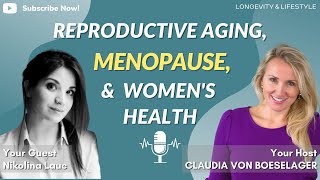
In this Longevity and Lifestyle Podcast episode, host Claudia von Boeselager interviews Nikolina Lauc, co‑founder and CEO of GlycanAge. The conversation begins with Lauc’s childhood in Croatia, her dyslexic background, and early entrepreneurial experiments (selling frogs, hamsters). She reflects on the influence of her scientist parents and the Brain Awareness Week they organized. The interview then shifts to her rapid‑fire inspirations, morning routine, and the impact of Vipassana meditation on stress management. The core of the episode explores GlycanAge – a test that measures glycans (complex sugars attached to immune‑cell antibodies) as a biomarker of biological age. Lauc explains how glycans reflect a mix of genetics (30‑50%) and lifestyle, and how their patterns correlate with inflammation, immune function, and age‑related diseases. She discusses key determinants of glycan‑age: BMI, weight change (twin study), exercise intensity (interval training vs over‑training), diet diversity, chronic stress, and especially hormonal changes during perimenopause/menopause. Evidence is presented from a placebo‑controlled HRT trial (estrogen patches slowed glycan‑age increase) and ongoing work on metformin and insulin management. Success stories illustrate how personalized adjustments (diet, fasting, training) can shift biological age by up to 12 years. Lauc describes GlycanAge’s service model: a laboratory backed by the world’s largest glycome research lab, an algorithm that flags likely issues, and human tele‑medicine specialists who co‑create action plans. The company’s growth strategy (B2B2C, influencer outreach, rapid product iteration) and market trends (prevention focus, early disease prediction, gender‑specific aging patterns) are outlined. The episode ends with resources, discount code, and a vision of using glycans for decades‑ahead disease risk prediction.
Chapters
Hello, lovely listeners, and welcome to the Longevity and Lifestyle Podcast, where I invite pioneers and thought leaders in all things longevity and lifestyle to give us the strategies, tools, and practices to live better and help us reach our highest potential. Today's guest is Nicolina Lauck. Nicolina is the co-founder and CEO of GlycanAge. A serial entrepreneur, Nicolina first displayed her gift for enterprise by selling frogs to her classmates in kindergarten. She has since undertaken a variety of startups and ventures ranging from property to biological testing. GlycanAge is a simple, groundbreaking test that analyzes your glycobiology to determine your biological age. With over 70% of diseases being preventable, the team at GlycanAge believe that our health is in our hands. In this episode, we are introduced to glycans and biological aging and reversing it, and consider their links to everything from diabetes to perimenopause.. We also discuss the true effects of dieting and exercise and how GlycanAge testing can help clients to prevent chronic illnesses and promote health and longevity.
Please enjoy. Welcome to the Longevity and Lifestyle Podcast, Nina. It's a pleasure to welcome you here today.
Thank you, Claudia. I really appreciate you having me.
I'd like to start with what it was like growing up with two parents who are scientists and created a Brain Awareness Week in your hometown in Croatia. Can you tell us a bit more about that?
Yeah. So I probably couldn't even put the titles before their name correctly for a long period of time. They would always ask me in school and I got it wrong. My mother's a neuroscientist. It was really her initiative. And it was coming from the fact that school books were created 10, 20 years in the past. So when you're teaching, you have to follow the script. You don't have an opportunity to teach about everything new that's going on and all of the latest research. So she wanted to expand that curriculum, curriculum, yeah, and make it more accessible to more people. So they organized this, which is like a 1-week-long daily, from morning to evening, lectures about the brain. And every time it was a different topic, from foods to how our brain responds to foods, to everything, flavors, our connection with owls and everything else. So it was for me to go and see that. I think the first one was when I was about 11.
Those are the weeks you spent in childhood learning all about the brain. Clearly this has been since an early age and how revolutionary for your parents as well to come up with an initiative like this. And were many people coming to this? I mean, what type of people would be in the audience?
I'm from a quite small town in Croatia, probably 80,000 people. And it was a nice student town, so you had a lot of universities and young people, and it would mainly be students, but then they would bring their parents and there'll be all kinds of other people just coming in and enjoying it. And I always enjoyed what my parents do, and they always integrate me somewhere. And I'm also highly dyslexic, same as my mother, so I learn in a different way. I have to have kind of more interactive images to storyline than the classical textbooks.
A lot of creativity that comes through as well. So yeah, you have other superpowers, which I think is really cool. And we'll talk about GlycanAge, the company you co-founded and are CEO of, shortly. But first, can you talk about your incredible serial entrepreneur journey that you've taken from childhood, having two scientists as parents and trying out different businesses successfully over the years? Can you talk a bit about your journey?
Yeah, I think that was always the confusion. I had two super intelligent parents, and then I was a dyslexic kid, and I did very poorly at school. So it was a complete mismatch in a way, but I always had this other natural gift, which was more entrepreneurship oriented. So I think I always struggled with the classical academia, but I did really well on everything else I did on the side. And that—
You and Richard Branson, right? He's the same situation.
And a lot of others. It's like a really— we just don't fit into that environment, and we kind of— it doesn't really do you good. My mother is also dyslexic, and she went to her doctor's degree, but she had a father who literally beat her every time she had bad grades. And for my generation, they come from this new, your kids be free and what they're supposed to be. Yeah, that's why I ended up in art school. Well, I probably would have done better in biology. So I think—
You think it was too liberal by then?
Yeah, it was probably a little bit too liberal. I had little ventures as a child from kindergarten. I would collect tadpoles. They grew into little small frogs. And then I sold them to other kids.
I love that.
And then I had hamsters, probably at age 11 or something. And they— I kind of created a little farm where eventually there were 50 of them, but I wouldn't sell them to boys. But you have to eventually. The house will be full of hamsters. And that was really, really good until we went on holiday and there was a lady who came to water the flowers for us and feed the hamsters. And when she was feeding them, she would open up all the cages and then go for the food. And then by the time she walked back, all the hamsters were out of the cages. So when we came back, they were like, 10 hamsters in the cages and 40 running around the house. It was amazing. I had to, yeah, I had to shut down the business after that one.
One way to end a business, the goods escape. That's really, really cool. Before we jump into Glycan Age in more detail, I'd like to ask you some rapid-fire questions, Nina. Thinking of the word successful, who is the first person that comes to mind and why?
So for me, it's not the traditional people you would name because it has to have a really good other meaning, more moral compass behind it. So I say Dame Stephanie Shirley. She's an engineer from the 1960s, '80s who created the first women's software company.
Oh, wow.
And took it to an $8 billion business eventually, but she started in her kitchen with no money, employing women working from home and even hiding the fact they were woman, she would call herself Steve and that's how they got more business.
Wow.
Yeah. And they were called freelance programmers, I think.
And why do you find her so particularly inspiring? So just because she had the courage to go out and do that, or because of what she built? What are the particulars about her that really inspire you?
Well, she had an amazing character and she was the first and it didn't matter how society was back then. And back then you needed your husband's approval to open up a bank account. Really did something amazing. And initially, all of the people employed were women, women working from home. And back then, that was really something rebellious to do. Some would not tell their husband they're working. But they built it into this huge business where they even programmed the black box in airplanes. And that was given to women working from home. So I think what she did was absolutely amazing. And then there's other People I liked, like Muhammad Yunus, who's more behind the microfinancing and the whole movement around that. He even got a Nobel Prize for it. So I liked the concept of the social business where it's not just about the profit. We have a purpose incorporated into that. I obviously love Richard Branson, but because he was the first dyslexic entrepreneur I learned of, so I was obsessed with him for a little period of time.
Yeah. I've read his books. I love his work as well. And his personality is just so gregarious. That's amazing. Do you have any particular morning routine to start your day as a success, Nina?
I wouldn't say as a success. I would say as my way, and that would be to enjoy a coffee in a calm environment. It kind of sets me up for a non-stressful day, no matter how stressful it is. That kind of 20 minutes after the coffee, 20 minutes to really enjoy it, and that's all I do, and I just think.
So do you think about work, or do you try to focus on visualization, like how you want your day to go. Is there anything in particular you think about?
I, I think about everything that's ahead in the day, but in a more kind of calm way. And it's probably a very Croatian thing to do. We sometimes drink coffee for hours, so they have a good quality of life there. So I, I took down from like a couple hours to 20 minutes.
Exactly, you've done the London pace of the Croatian coffee thing. Yeah, but I agree that it's so important to have that calm before the storm almost, to start your day. So yeah. What is an unusual habit or an absurd thing that you love, Nina?
I like to run at night. I don't know why, but it kind of— and it can be 11 PM. It's more of like also space to think and to get some fitness in when I usually don't have time during the day. It's really kind of this alone time and where I am, it it's quite safe, but also kind of the parks are really nice, or going around because they close them anyhow. Um, but I don't know, it's something I do quite often. Maybe it's a little bit weird.
No, I think it's quite interesting. And you basically use it to think and then obviously get your exercise in as well. And is it just because of timing, or is there something calming that you find about night running?
It's something calming because there's not a lot of people around. So I kind of get this alone time.
Yeah. Oh, very interesting. Nina, in the last 5 years or so, is there a new belief or behavior or habit that has improved your life?
Oh, there's probably many. One thing that was really good for me, maybe about 7 years ago, was this meditation called Vipassana and It's like a 10-day silent meditation retreat where you literally rewire your brain in a way, but in a way how you respond to stimulants, so positive or negative, where you realize, your body realizes that nothing is permanent, no pain or pleasure. I think that helped me really deal with stress as an entrepreneur, because before I would lose months of sleep, I would constantly be anxious or nearing a burnout, and a lot of it was self-created or recreated. And that really had a permanent lasting impact on me in a way that when I came back from the retreat, my environment didn't change, but I just wasn't stressed. It slipped away. If I had a bad day today, tomorrow is going to be a better day. Or if it's a bad morning, the evening is going to be a new evening. So it kind of changed my perspective.
So you did the one 10-day course, and do you do a daily practice, or was that one 10-day course still has the knock-on effects?
I do it every couple years. The prescription is once a year and supposedly meditate 2 hours a day. I, I don't have that time, so I would do maybe a couple a week. But I think just this rewiring that happened there was permanent in a way. I didn't expect it at all. I, I didn't believe in meditation and I was super hyperactive, so it took me 6 days just to learn how to meditate to start with. But they do this one thing that works great where they kind of make you stay in the same posture for an hour, 3 times a day. And they prepare you mentally the day before. They say, you know, you're going to feel pain, like pain in the back or pain in the leg. And no pain is permanent. It won't be there forever. And then you're like, okay, I get the concept. But when your body goes through that, so it's a connection body and mind, it really rewires it. Your body learns that this stimulant is really going to go away. So I had like a 40-minute dead leg where it was absolute agony, and then it turned into pleasure, and it was 10 minutes of pleasure, and then it went back to pain, but it was 10 minutes of pleasure as well. So my body really realized that nothing is permanent, and it really helped survive as an entrepreneur afterwards, because you deal with an incredible amount of uncertainty, anxiety, risk, And living through that is hard unless you know how to manage stress levels and anxiety.
That sounds amazing. And if I understood you correctly, so one is how to redefine what is actually pain. So if there's anxiety and stress and things like that as well, but would you say it also increased your pain threshold?
Maybe in terms of you not recreating it. So I think the problem is when you experience something negative, you keep having this aversion of it's going to happen again. Then you recreate it. I did this with sleep. I had like one poor day of sleep and then went to bed the next day and thought, oh, I'm going to have a poor day of sleep again. And then I had 6 months of poor sleep until I read a book with a woman who had 14 years of poor sleep. And she realized the only thing keeping her from sleeping was her mind. So the mind is really powerful. And we're the only creature that can self-create stress. If you're an animal running from a threat, you're just going to be stressed in that period running from a threat. But we actually are stressed all the time because of all kinds of stupid things of like, what is that person going to think about us? Or what's going to happen tomorrow? It's not— we're not running from any threat, but we're living as we are. So that, I think, helps manage that better.
I really like what you said there. Yeah, we create our own realities, right? So we create it as stressful or not as stressful as well. And it's our choice what we choose to focus on. So yeah, I'm still a student on this journey trying to understand it better. But Wise words, Nina. I'd like to change gears and dig into the incredible work that you're doing at GlycanAge. But first would like to start with a quote from your website that I really liked. And I quote, health prevention is unfortunately still a very small segment of our healthcare system, less than 5%, and most prevention happens outside of the system, wellness, while over 70% of disease is preventable. This means our health is in our hands. To guide it correctly, we need the right tools, tools that can warn us of upcoming problems before it's too late. Can you talk about this incredible quote and some of the statistics as well and what you're seeing happening in the overall healthcare system?
I wrote that when somebody asked me why I'm doing what I'm doing now. And I think for me, the journey, well, it started with my father's research and he was convincing me to join in on this for about a decade. But I think first time he told me about it was about 20. So I didn't really care about age or aging. It was more about not admitting my age, I think.
Or trying to be a little bit older, right? 20.
Yeah, saying you're older than you are. But then I think putting it into more perspective, what it really is, it's aging is a decline in function. And what we do now, we wait until it gets severe. So it turns into a particular disease and then we treat the symptom of it or we treat the problem while the cause is actually coming from this initial decline. That perspective is still a bit of a taboo in a way, I think, because of what happened in this anti-aging space. It's like it needs a rebranding. It's been wrongly branded. It's like a stigma. It's not something you want to say, oh, I'm treating my biological age or working on my anti-aging. It sounds like plastic surgery.
I'm looking pretty old. Exactly.
Already. And nobody thinks about it as health prevention, but that's what it really is. And if we're working on that before things start to break down, we're really managing our health to be healthier for longer. And I think for me, all the other businesses I had were very successful financially. And I think I always looked for a little thing there that was motivating beyond that, but I would get pretty bored as soon as we did so well. And I could never get bored doing this because there's so many exciting things happening around it. And it is a tough space because if you're going to any type of healthcare route or NHS, there's no space for prevention. They're just putting out fires. And it's this whole contradiction that's going to take a very long time for them to change. And also, healthcare is seen as something that somebody is taking care of us. But really, your doctor is not going to eat the food for you or cook it for you or take you out for a run or all of these things. It's you. So I think that's where the mismatch is as well.
I completely agree because I think they call it healthcare, but it's almost disease care, right? The way the system currently is, is that have the disease, get the diagnosis, and then take the pill that a lot of the time it's not going to actually cure you, right? It might help or prolong things or alleviate some of the pain in the short term in different areas. So I also think really interesting, Dr. Jason Fung in Toronto, he made a really valid point. I think that, you know, if you look at the medical training of most doctors, if at all that they have another 5 to 7 years of medical training one hour of nutritional training that is already doing really well. So one hour in 7 years. And actually it's the medicine we feed our body every day. So I think there is slowly picking up this trend and shift in thinking around so many things are preventable. It's what you do consistently on a day-to-day basis. And then through the help of tools that your company provides. And I'd love to talk about that now. Nina, can you talk a bit about what is Glycan Age? Why did you found it and why is it so important as an indicator of biological health?
Glycans are a very neglected space in our biology, but they're hugely important. So you probably know about them because you have an ABO blood group because of glycans on blood cells. They're very important in making us individually unique. And that was the first also successful personalized medicine was blood transfusion. And also right now we have this one-size-fits-all, but it doesn't fit our biology. And with LichenAge, we look at these sugars, but sugars on your immune cells as a structural component, and they have a power to change their feature from more pro-inflammatory to more anti-inflammatory. And then when we look at this with aging, it's really the accumulation of damage here, looking at overactivating the immune system for time. And then you have this low-grade systemic inflammation which stays and increases with age, but it's moldable. So it's something we have an influence over and we can change. And we already know how you can change it. So not just that we can tell you that you have a problem, so a high biological age or inflow aging, but also what you can do to change it and reverse the trend into going backwards.
That's really exciting. And can you explain for people that are not that familiar, Nina, what exactly is a glycan, maybe in a little bit more detail, and why this is such a success successful measure for biological age?
Glycans are sugars, but not the sweet sugars. We can't put them into your coffee. They're sugars as a structural component of our cells, and all of our cells have sugars. And the most exciting thing about them is that they have this complete picture where about, you know, 30 to 50% is influenced by genes and everything else is behavior and environment and even past environment for epigenetic influence. So it gives us a very holistic view of what's going on. And in this case, we're looking at antibodies, so glycans in IgG or IgG glycosylation. And it's the most abundant antibody we have in blood, and it's key to our immune function. And our immune system keeps us alive. So if we can keep it younger and healthier for longer, then we know already correlates with lifespan and healthspan, but we also know that you can move the needle.
Can you talk about biological age contributors? So some people, there's results and you have testimonials on your website, have a biological age as a result of your GlycanAge testing that is, say they're 50 years old and they're coming back as 20-something. And I'm sure you see also cases where somebody's maybe 40 coming back as a biological age of 70. So what would you say are the main contributing factors that influence that and what would be a typical advice that you would give? You have, I believe, consultants in place that help one when one receives the test results to optimize biological age.
Yeah. So our dataset was based on 150,000 people that some were followed over 20, 30 years. So we had samples from biobanks. There were some collected 30 years ago and including Twins UK. So we have a really good baseline for over 27 different populations. We know that this average, so your glycan age on average is 9 years older or 9 years younger. So there's far more variation than, for example, epigenetic age, which really seems to be following your chronological age with a smaller error margin. And this variation is your biological age. So having a bit more of a variable marker, we have a bit more space to influence. And some things are very obvious. So like one really obvious one is BMI. People with higher BMI will have a higher glycan age. But we just published a twin study where we know that twins which lose weight or are losing weight, they age slower, while the twins who are gaining weight, they age faster. And it's even true in identical twins. And this is actually the first study where you demonstrate changing of a biological clock with statistical significance. So it's a clock that we can functionally use and get feedback if our lifestyle is working for us. So I think this was back maybe 2016, 2014, we published the first publication and then we thought that going to the gym will make everybody younger. So we had this big misconception that that some kind of magic happens in the gym and we all should be 2 hours in the gym every day and we're all going to live a healthier life for longer. Really, it's very easy to overtrain. So we did several studies. We know that, for example, interval training or high intensity in short periods of time does work in a positive way, and it made a group of people, in this case guys, younger within 3 months. So exercise is good for us. We should have it. But also you can very easily overdo it. So we see with competitive sports and we looked at competitive bodybuilding, they're actually much, much older and they will get along with the training in a way that they start relatively close to their baseline and then they become very pro-inflammatory and high in biological age as they compete. And then they recover some months after. But also some of this damage accumulates and every year they have more of a pro-inflammatory baseline. Whenever you train, you're doing tissue damage and that creates scar tissue and it activates this natural system we have to repair tissue. And if we have just the right amount of damage and repair, sometimes it even benefits it and makes us a little bit younger because we activated the system, which was asleep in a way. But if we overdo it and do more damage than we can repair, then we're actually causing harm. And that's probably why athletes have a very short career time. And now we're working a lot with sports medicine to see if we can offset that damage and extend their career time. And some of it, we even know how the mechanism works in terms of causing harm. For example, for women where they suppress the reproductive system and their periods would stop, or they will have a whole number of things which are a little bit less obvious to see in guys. Very common that women also don't have a cycle. And a lot of them are not aware that this could be their training. They will blame something else.
Interesting. I know I did gymnastics years ago, but I know it was very typical that gymnasts, because of the extreme amount of training, things like that, also were affecting their cycle too. Would you say more cardio exercise is better for bringing down biological age, or would you say that weight training is more detrimental, or it's just a balance?
It's just a balance. Here we did interval sprints and that worked really well. Probably yoga works in the same way. There's a lot of different sports that work in the same way where you have stress and then you relax and it kind of, if it's the optimal dose, but you can take everything to an extreme. So I think unfortunately we have this mentality sometimes of all or nothing, or more is more, and more is not always more, but one on the Gymnasts, you mentioned, and actually in a lot of sports, particularly when they started young, and that's in ballerinas, they on average get their cycle at age 19. Wow. The average age is like 12 or 13 usually. Yeah. And it's one thing we, we don't think about enough. And that's probably one reason why weight loss in the gym doesn't really work as well. So we all still have this misconception that just sweating it out will fix the problem. But a lot of times we don't achieve the weight loss really well in the gym. And one of the reasons is we overburden the immune system or we suppress it to a point that you get into a survival mode where you shut down digestion, you shut down immunity, and you shut down reproduction.
Super helpful. So you mentioned a few different contributing factors. One was BMI and training, but I guess there's some other environmental factors. I would think stress as well would probably be a contributor. What are some other things? Maybe also nutrition? Have you found that these are different contributing factors?
So when I say exercise, I see it as physical stress. A little bit of it, or intermittent stress, is great. Chronic stress is not so good. With diet, it's more complicated. When we just look at weight loss, it is like a. But it shouldn't be too low BMI. So we see even if you go too far, then you're going to have the same negative effect. So it's a balance, it's a healthy weight, not too high, not too low. When we did the diet study, which hasn't been published yet, but it's going to be in draft in maybe the next month or two with 600 people on 5 different diets followed over a year. And we see that in every single diet group, no matter that it was controlled for calories and nutrient proportion, proportion. Half people benefit, half people don't. And that's why we have this whole debate in nutrition. We are different. There is no one size fits all. There's no magic diet. It's about finding the right diet for you. And we do see that you can use this as a tool to see if your dietary change is working. So we see some people really have a good response from keto or high fat and other people have a really negative response. It's about finding which one are you. One other thing that's— one thing that we see is that men and women age very differently. And that's one thing that a lot of the other clocks don't— they don't see this gender difference. And we see that in a way women are protected against inflammation in reproductive age. And then they have this inverted U-curve around perimenopause and menopause when they switch roles and catch up with men and even move a little bit faster than them. Well, men are really linear. They just go up and down in a very straight line, accumulating these bad glycans and losing these good glycans. So there's a very interesting hormone connection because it dips in a very short period of time.
Have you found the secrets to maintaining that? Is it hormone replacement, or what is recommended in order to keep the youthfulness for longer?
So there's still a lot of Same taboo misconception, lack of education. And I think now, particularly in the UK, there's really good momentum and advocacy around HRT, and we have way less stigma around the contraceptive pill, which is, in a way, same components of the drug, and far more around HRT. And HRT is also very different. So contraceptive pills are still synthetic. HRT has changed that we now use Or you have the body-identical transdermal HRT, which is the same molecules as we produce. So it's natural and it's extracted from wild yams. So it's, it's not the old form which was made from pregnant horses' urine 20 years ago. It's a new drug. It still sometimes comes with the same stigma, and it works like that.
And by how much, let's say, I mean, maybe you could just walk through like a typical case. So have you done a study with someone who doesn't take any replacement and the bioidentical hormone replacement? What differences have you noticed in measuring their biological age?
We did a proper placebo-controlled trial, and this was done 10, 20 years ago with Harvard, but they biobanked the samples. And this was a cohort of 36 women. Premenopause or chemically induced menopause. And then— and they can recover 6 months later.
But I know I was going to say, I don't know who volunteered for that one.
It was done 10, 20 years ago. I think more like 20. So then it was a good experiment. But it's a great feedback for us because if you want to do real science, you need the proper placebo-controlled trial. And half of these women go on a placebo, half on the estrogen patches. And the placebo ages 9.1 years within 5 months, while the ones in estrogen patches remain in this healthy range. And then both of them recover 6 months later. But that's the first time we saw this huge influence. And keep in mind, it's not so easy to change your glycan age with weight loss, lifestyle. It's far more gradual and takes some time. But this really had a dramatic 30% to 50% change in a short period of time. So we— I first was also very skeptical. And the first person I called was my mother. And she said, HRT causes breast cancer. Well, it wasn't her field. She hasn't really read enough about it. And now looking back, it really comes from one poor study done a long time ago that was done on women who were 13 or 12 years post-menopause. So they haven't had hormones for a very long period of time. And then when they were introduced, it was like a big shock and your body in a way would reject. So there's a lot of things coming out of that where it's being broken down and they're seeing actually if introduced in the right time and the right type and also HRT is different now, there's no risk or there's even reduced risk of breast cancer on the estrogen only. So I think that's kind of this sensitive space that we're doing a lot of work in now, but we do see it influences your immune system and influences your risk of Alzheimer's and dementia and probably cardiovascular disease and diabetes as well. So it's same as aging. We have this controversy of it's natural, we should live through it or suffer through it. But it's actually this inflection point for all the chronic conditions we have later on. So if we address this now, we can delay the condition for as long as possible.
Which is really amazing. Can you talk about one of your favorite success stories? What were the path that this person took to improving their biological age and how much were they able to improve it through following advice that your consultants recommend?
There's one story I really like, and that was even before we were commercial. So that was 2017 or '18. We tested this group of 30 nutritionist, and one of them came back 8 years older than he should be. And he then actually told me about this microbiome conference he was on 5 years ago, where it was the first microbiome testing company in London. And they tested 20 of the UK top nutritionists and then another 20 people from the lab as controls. And then when they got the results, the nutritionists had much worse microbiome. The guys in the lab who ate everything and anything, it really highlighted later on when they digged into it is that there was this big misconception about elimination diets and everybody was following elimination diets where you actually minimize diversity. And they even kind of created these false theories that stop eating a food for 3 months and then try eating it after 3 months. If you have an intolerance response, you were always intolerant to that food. You're just more sensitive now. But what actually happened is you had a certain bacteria that digested this food for you. You didn't feed this bacteria for 3 months, so it died off. And now when you try to eat this food again, you have an intolerance response. So we didn't understand the biology and we had a wrong concept about nutrition and we minimized diversity instead of optimizing it, which is good for our microbiome. And he told me that story. So he was like, okay, maybe I'm doing something wrong. And he was in a very strict keto diet and he ran some other blood tests which showed that he had oxidized lipids and his glycogen age was 8 years older. And he was also fasting, which was the magic pill for longevity, for 18 hours. And if you fast too much, you can also suppress your immune system. So we tested him again this year, and instead of being 8 years older and he's 40 now, he was 28 or 12 years younger, which is— wow. Shift, and he changed his diet. So he stopped the keto, went to more lean proteins, and added back in healthy carbs. He reduced fasting. He still fasts, but only 4 times a week, 16:8. Increased his training load, but it actually had a positive effect because everything else was not too much. So I think admitting sometimes that we may be doing the wrong thing, although in the best intentions, It's something that's really exciting for me because most of our early customers are really the health enthusiasts or the health optimizers. And it's hard to convince them that maybe doing something wrong, but it's really powerful when they can realize that, oh, maybe fasting is good, but not if I do it every single day for 3 years. Or, you know, maybe the gym is good, but not if I do it every single day for 3 hours and things like that.
And that really resonates with me as well because, you know, I've tried different things and the keto diet, I find that Temporarily, it's excellent and as a, like, a reset, but it's not for me personally as a long-term thing. And then obviously the intermittent fasting as well. And I found with male friends, the intermittent fasting works better than for females in general. But also, thanks to someone who was also on the podcast as well, who's a gut health specialist, and actually she's used GlycanAge herself. I was in touch with her about you, Elena Letiagina from Gut Philosophy. I don't know if you Yeah, exactly. And she picked up, interestingly, because I was testing a Silicon Valley startup, Levels Health, which shows your metabolic score, and I was hypoglycemic during the night. So my blood sugar was dropping so low because I thought I was doing so well taking long fasts from early dinner to the next day, and I wasn't doing my body any favors. So I'm very curious to get my glycinate results. But she said, you know, to solve it, have a spoonful of healthy almond butter with no palm oil or sugar at 9 o'clock at night. And, you know, I wear the Oura Ring, so I see my sleep tracking, and I didn't have these cortisol response during the night where I was waking, not even realizing it, but instead I'm getting much better quality sleep. And it just, it's such a game changer on energy levels, on fitness levels, etc. So it's so exciting to be able to have these tools to see how you're doing and then tweak accordingly because you just feel so much better and you can really maximize every day to another degree.
Can you talk a bit about your team at GlycanAge and the wealth of experience your team So we come from this research lab, which is the largest glycome research lab in the world. It's also the main analytical facility of the Human Glycome Project. And that's a team of 50 academics and 1 admin person. So that's where we came from. We're a spinoff from there. So they're a research lab. They don't want to be commercial. This is the first translation of it. And on that side, we really had to mix the team up a bit. Because when it was just the scientists and the academics, it was very technical. It was completely non-translating to the normal person, or even the fanatics were a little bit confused about what it was. So we got to this more common language. And we also realized that to be a complete product, you kind of need a service. So it's not just a task, just giving somebody a number doesn't mean much. But if we can give them the right type of guidance. So it's combined now with, if you like, if you just want the number, you can have that too. And you can have all your raw data. You own the data as our customer. But if you want us to help interpret it and help guide you on what to do with it, then we have an extra health profile where you give us about 50 questions on your lifestyle. And then we have a little system that makes conclusions already to say maybe this person's overtraining maybe this person has a hormone imbalance, or maybe it's mental health or something else. And then we also pair it with a human being in the form of telemedicine who's a specialist. The algorithm helps us decide which one. So that could be somebody more in mental health or diet or a sports scientist. And they would help you understand this better and tailor an action plan on what you can do next. And we find that this human thing is really important if the results are high. Because if you have a high biological age and you can have a very high biological age with Lichenage, in a way it's a personal insult, which can be motivating if taken in the right way, but it can also be dismissive. So having somebody who takes you through finding what it could be and you at least testing if that's that is quite encouraging for you to do something about it rather than just dismiss it and say, oh, this is rubbish. I'm 20 years younger, not older. Or I should be 10 years younger.
Well, the body doesn't lie, right? So, I mean, you have a solution for it. It's not like, you know, okay, well, you have this and that's it.
It's a biological test. We can't hack our biology. Sometimes we want to and people try. Well, we can, but we can kind of game it in a way. We see this a lot when they go and they try and overdo things like, oh, I'm going to do all of these 10 things in 3 months and that's going to help me. And it does the reverse. And then when you take it down a notch and you take it step by step, it actually works how it's supposed to work. So it's completely objective.
So yeah, you have the formula, so you have the tools, the testing, and then you're able to provide the formula to successfully reverse it. So I'm very curious to see what comes back and take it from there as well. And you've had phenomenal success. If I understand correctly, you grew 500% in the last year. Can you talk about this success? What trends you see happening in the space that there's such an awareness around longevity and health maintenance?
Well, we only really started like a year and a half ago now. It was really just in research before, and we had some ideas, but it was stuck with the academics and they kind of never moved with it. Going on to one decision that we made last year in February is also to open up consumer. We do work with clinics, so we have a B2B2C side, and they're also doing great work. But when something's new and there's a lot of education around it and you have to get to know your customers, having this direct contact with them is far better. So we learned very, very quickly. And we changed the product about 10 times over the last year. So it went through all kinds of different models. Yeah, exactly. And now I think we've hit the right note. And it's also not the stand. We don't really advertise. We don't really spend much advertising budget at all. It's more education, awareness, and then finding the right advocates, which are mainly doctors or specialists in the field who can really understand it, but also narrow it down to something that fits their community. So quite a bit of influencer marketing. And one very interesting application that we didn't think about. So in research, we before saw something happen around menopause because of the age group, but we never really know what stage of menopause or what it was. And then having these women who had a higher glycinate. And we would say, oh, maybe it's related to your menopause. And they would say, no, I still have a cycle. I'm not in menopause. We learned about perimenopause and we learned that perimenopause can last an average of 4 years before actual menopause, which is diagnosed 12 months after you haven't had a cycle. So it's diagnostic. 18th century. Nobody's going to tell you 1 year after you've had arthritis and 1 day you feel arthritis. Backwards, but it can sometimes last even 10, 15 years. So when women enter it in their early 40s, they really don't know and they don't get diagnosed for up to 7 years. And the symptoms of it are going from mental health, brain fog, to joint pains, to so many different things. They're so easily misattributed. So the majority of women just get prescribed an antidepressant as something that's really going to fix the problem.
It's incredible because you're offering basically the opportunity to pick it up on time. And, you know, I think I really like that you focus on education because I think if more people were in tune and knew about listening into symptoms like the brain fog and different factors that the body's actually telling, you know, it needs more support. And obviously traditional medicine doesn't pick up on that. Like, oh, you're fine. Or as you said, they get antidepressants, which clearly is not the answer instead of maybe a hormone replacement therapy, right? So it's exciting times that we have here. What other trends in the longevity space do you foresee and how do you see GlycanAge playing a role in this?
Yeah. So what I like about the test, and of course I'm biased, but yeah, we're the first one that actually responds to interventions and it's not one, it's usually the right one for the right person, but you can really see a high response. So It does need to have proper science until we can have claims, and we don't claim anything until we've had a proper placebo-controlled trial and good indication that that could be so. But one other one is maybe managing insulin or metformin. So metformin is being trialed as a longevity drug and may not be for everybody, but we do know that this regulated glucose response or high HbA1c and insulin resistance are correlated with longevity very highly. And we only have individuals who are trying this now. It doesn't work for all. And I've actually seen a few women who haven't had a good effect or had a negative effect who tried it. But we saw a few men who had dysregulated glucose response who reversed 11 years within 4 months. So it's a target for those people. So now doing a proper placebo-controlled trial, I'm very optimistic about it. And also probably metformin is not the only way to manage it. We can self-manage it with having the information and then with the glucose monitors and then tweaking our diet accordingly, or even some natural supplements like maybe berberine or other things which are harder to get a clinical trial in but could be a great alternative for it.
Yeah, it's so exciting, like what Levels Health is doing. I look forward to when they come to Europe to have access to it as well. But when I was doing it, I used to always think sweet potato soup would be really healthy, but I had I got such an insulin response from that. I mean, it was such a peak from, from nothing else. And it's knowing your personal body, how it reacts to certain things, and it's a game changer. It's really exciting times. Nina, has there been a piece of advice that has been a real game changer for you over the years?
Unfortunately, my advice mainly comes from my experience. When people tell me things, I'm really stubborn until I've actually had some solid self-proof I guess this is not advice, but I had a very successful startup, which was actually in the property space. And I walked into this flat with this cleaner because we had something happening last minute and there was some leftover pizza and I was really hungry because I usually skip breakfast and it was kind of fresh leftover pizza. And I was so hungry. I went for a slice and I told the cleaner, hey, do you want a slice? And he looked at me and he said, I would never put that in my body. And I just looked at him. I was like, OK, well, I still had the pizza. But what it made me realize is that he had something that I didn't. And I think I was about 24 at the time. I had quite poor health. I had all kinds of allergies, all kinds of skin responses, digestive, everything. And I always felt crap, my energy was low. Like, I feel so much better now than I did at 24. And I realized that it was really this— no matter that the company was turning over a couple million and we were in a really good place financially and the cleaner was paid £10 an hour while we technically made a lot more, I didn't have this high self-worth that he had. He valued his gut more than I valued mine. And I think having this realization that, you know, no matter the monetary circumstance, it's really this self-worth that you also need to have really changed my habits. So I think that's when I did everything the reverse. So I tested probably a million and one different things and got into sports back again and found time for myself and meditation and everything else. So I think unfortunately all of my big advice comes from some kind of realization That's probably a story or an experience.
First of all, thank goodness for that cleaner, right, who opened your eyes. Otherwise you'd probably be in a very different space right now. But also the fact that you acted on it, right? So maybe you've just shrugged your shoulders and said, their loss and more pizza for me, and continued your way. So it sounds like you really changed everything around, which is exciting. Nina, do you have any exciting purchase that you've made over the last 6 months that you absolutely love now?
I think toys are really fun, but you can get bored of them. One I really love, but I just don't usually have time to use it. It's called the Inna Lab.
Uh-huh.
What is it? I think they're a year in the market. It's a startup and I love startups. It measures your progesterone on a daily level and you can use to kind of get to know your cycle. They use it now for pregnancy planning by can probably be so many different applications in women's health. And I'm just using it for fun. So I'm not planning pregnancy. I could just— I didn't even know how it works when I first got it. I just got excited about it. So, and I loved it for at least a month. I think maybe if I was doing pregnancy planning, I'll be using it more often. But I think having this hormone self-data is really important, particularly for women, because you are technically 2 or 3 different people within a month. And my partner would tell me that I'm a different person every 2 weeks or something like that.
It's men tend to say this, yes. I think women don't really realize it as much, but yeah. And tell me how it works. And just to recap the name, it's Innerlab, is it?
Inner.com or.co, but it's Innerlab as in I-N-N-E. They're based in Berlin. I loved also their motto. I think it was Radical self-knowledge or something like that, that, that was the thing that got me. And yeah, I think what they're doing is really, really cool. I do think taking this daily, you have to be motivated to do it, but it's like a little strip with saliva. Then you put it in and 5, 10 minutes later it gives you a result. And it used to be every day. Now they're even saying, you know, do this after 5 days or do this at this day. So I think it won't be even every day later, but Yeah.
And it's saliva, so you don't need to prick your finger, which is great. No blood. Yeah. Okay. Oh, very cool. I'm going to check it out. Thank you. For people interested in understanding glycans and longevity better, what resources or books would you recommend they start with?
Oh, I wish we had some popular science book. We really, really need it. I think that would change the space dramatically. I wish we find one of those scientists, but I definitely will be the last one to write one because I'm quite dyslexic. But where to learn about it, we try and put lots of resources on our website. So we have a self-care blog, which is more commercial audience, and then a science blog, which is written by all the researchers from the lab, and they try to translate it into far more popular and understandable terms. And we do lots of these Instagram Lives with different specialists and doctors and all kinds of lectures everywhere. So just typing into Google GlycanAge or glycans, you're probably going to find our chief scientist somewhere or the Human Glycan Project. The lectures are really good.
Could you just for everyone interested, just say the, your web address and the handles on social media so people know where to follow and find you? So it's all GlycanAge. So www.glycanage.com. Y-C-A-N-A-G-E.com. And on social media, you're on Instagram, and the handle is just Klaikenage. Perfect. And I'll link it also in the show notes, of course, as well. And for people looking to try your product and service, I guess, where can they find that?
On our website, we have a few plans, either one with a consultation or two tasks where you do an experiment in between and you have 2 consultations around it, they can use your discount code.
Oh, that's kind.
Thank you. So it's LONGEVITY, all in capitals, and it gives them a 15% discount at checkout.
Thank you, Nina. Perfect. And I'll link that in the show notes as well. So those listening who would be interested in finding out their biological age and improving it for longevity, LONGEVITY is the discount code. Thank you so much. Nina, do you have any final ask, recommendation, any parting thoughts or message for my audience? Yeah.
So just one thing I didn't mention that really goes into the prevention space is that what's really exciting about this side is that glycans change years and years before the onset of a condition. So this was first seen 30 years in arthritis where we saw glycan change 10 years before onset.. But then we also looked at diabetes and cardiovascular disease, and we see it didn't change 5, 10 years before. So when we translate these into new biomarkers, which are already very— some very close to market, like the diabetes one, we can tell somebody effectively, you're 10 years away from this happening, or you're 5 years away from this happening. And if you change your diet or your behavior in this way, you can delay it, or it may never happen. So we can do actual prevention. Instead of what we're doing now, where we're in healthcare looking for the disease markers, which is already when it's too late, when you're symptomatic, when you're looking for the individual organ that's not working, instead of going more at the start of it, they get a particular pattern. So this is all looking at inflammation that link to these particular things. And you can see where you personally could break down and stop it years before it could happen.
It's so exciting. And one of the other people I had on the podcast was Dr. Dale Bredesen, who has a protocol for reversing Alzheimer's. And he says, also, it's a 20-year-plus disease. You can see it coming, right? So if you catch it on time, it's reversible. And I have one of the APOE4 genes, speaking of genetics before, that means that if I don't do anything about it, I would have a 30% lifetime chance of developing Alzheimer's. But because of the fact that I know, I can actually do certain tests and prevent it as well. So it was really amazing to have you on today, Nina, and so amazing what you're doing at GlycanAge as well. Thank you so much for joining the show.
Thank you. Thank you for having me.
Hi everyone, this is Claudia again. Before you take off, thank you so much for listening to the podcast today. I hope you learned as many valuable insights on living better for longevity as I did. I'd love you to join our longevity tribe so we can learn and grow together, as well as hear your feedback. So please subscribe to the podcast and leave a review to let me know what you thought. Thanks so much and take care.
More from Claudia









Can Psilocybin Slow Aging? The Study on Telomeres, Inflammation & Survival with Dr. Louise Hecker

